Why Is Your Arizona Agave Red? How to Tell Normal Color from Damage
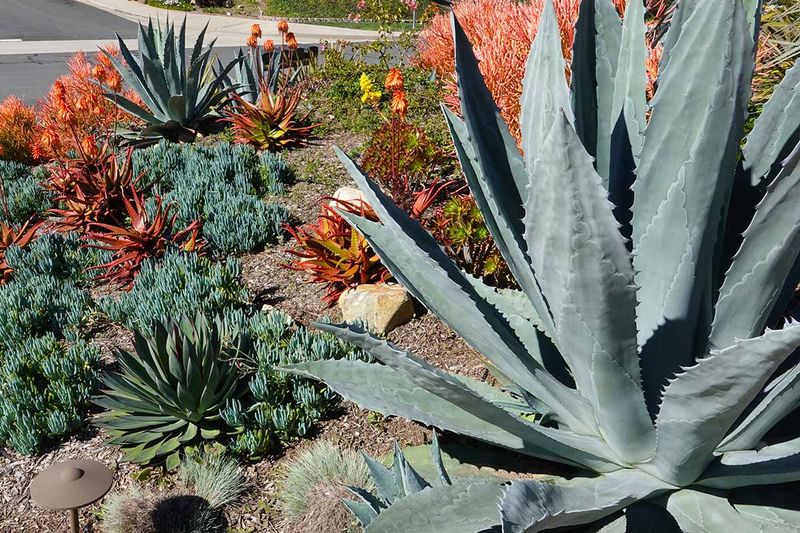
A red tint on an agave leaf can mean very different things. For some plants it is just how they look every day of the year.
For others it might be a clue worth following up. This guide shows Arizona gardeners how to look closely, slow down, and sort normal color from real trouble before changing any care.
Start With the Color Pattern, Not the Calendar
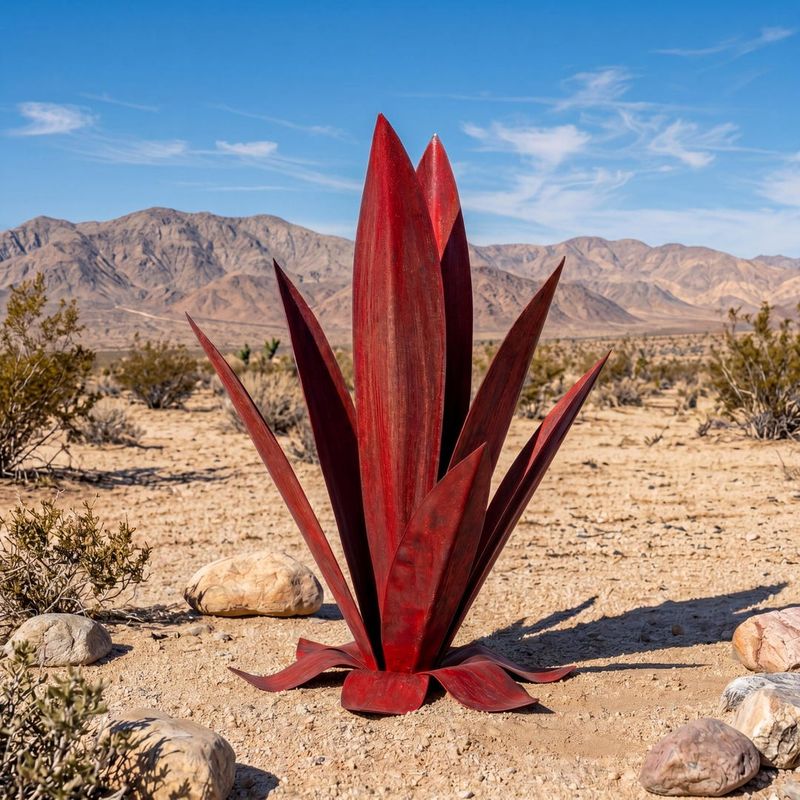
Seeing red on an agave in winter makes it tempting to blame the cold. But the season and the color together do not tell you the cause.
Plenty of things can change how a leaf looks, so treat the color as a clue and not an answer.
Start by looking at the pattern. Is the red even across the whole plant, or does it show up in patches, streaks, or rings?
Check whether it sits on older leaves, on leaves that get the most sun, or on new growth in the center. Each pattern points toward different questions.
Then touch the leaves gently. Firm, plump tissue is a different story from tissue that is blackened, dry, or crisp.
University of Arizona Cooperative Extension guidance on agave problems treats cold, sun exposure, drainage, and pests as separate possible causes, so notes on color and texture help you sort them out.
Jot down what you see and snap a few photos. Those simple observations will guide every section that follows, from species and sun to lesions, pests, and watering.
None of them is a diagnosis by itself, but together they build a useful picture.
Could Red Be This Agave’s Normal Color?
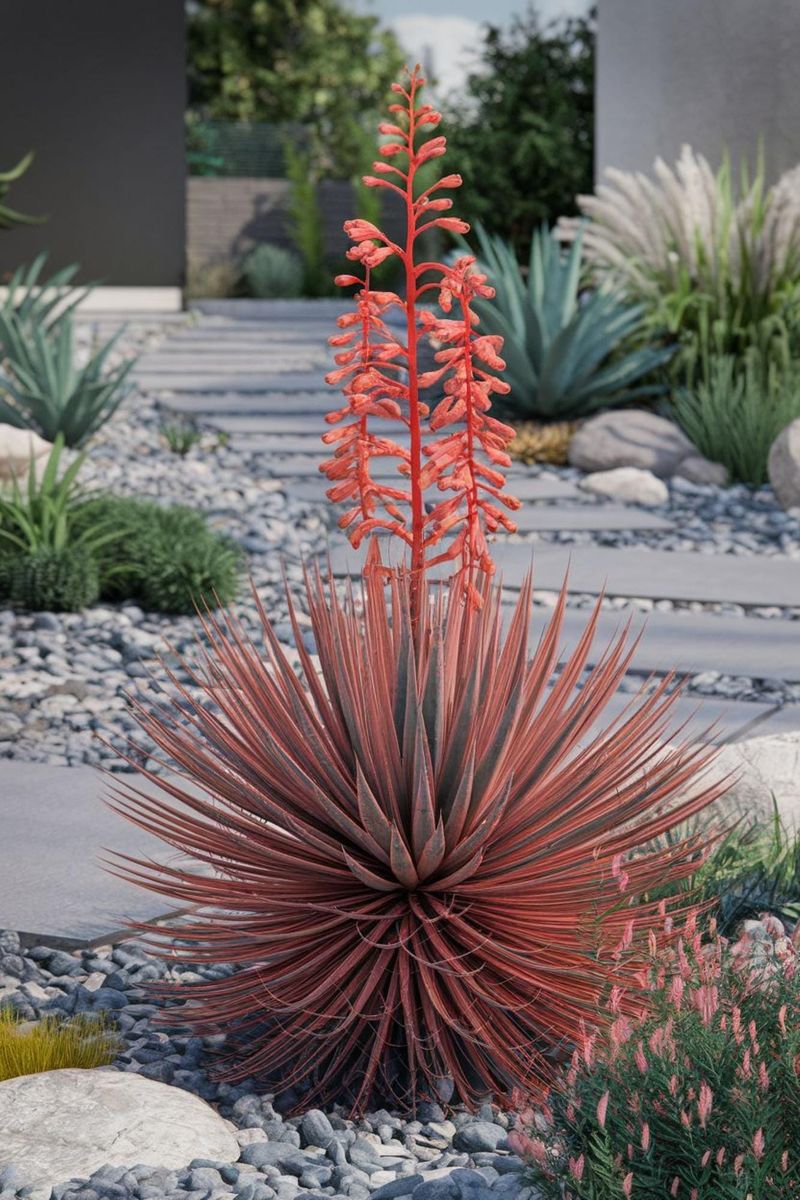
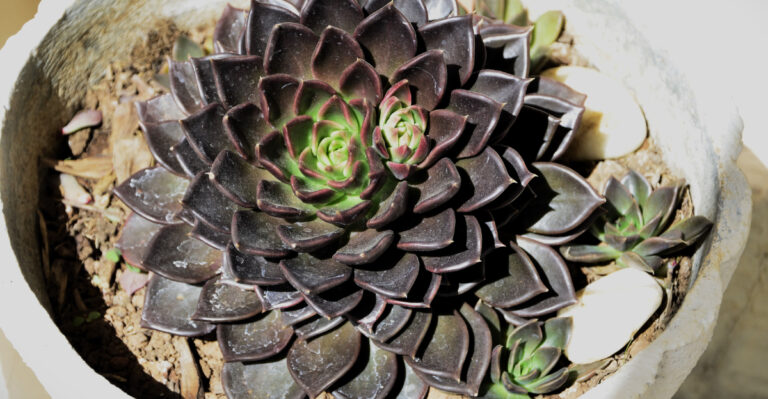
Agaves come in many colors, and not every red one is a problem. Blue-gray, green, yellow-edged, and reddish forms all exist, and color can vary by species and even by morph within a species.
One documented example is Agave striata. Research on red and green Agave striata morphs describes a red form whose leaves stay red throughout the year.
For that plant, red is simply part of its look.
That does not mean every red agave shares the trait. It is one example, not a rule.
A plant that has looked the same since you bought it is a different case from one that changed color recently.
So the first practical step is to identify your agave. Check the original plant tag, your purchase receipt, or photos from past seasons.
A local nursery or Extension office can help with a name if you are unsure.
Once you know what you have, you can ask a better question: is this color normal for this plant, or is it new? Winter does not have to be the explanation for something you only just noticed.
Pink Seedlings Do Not Explain Every Red Agave
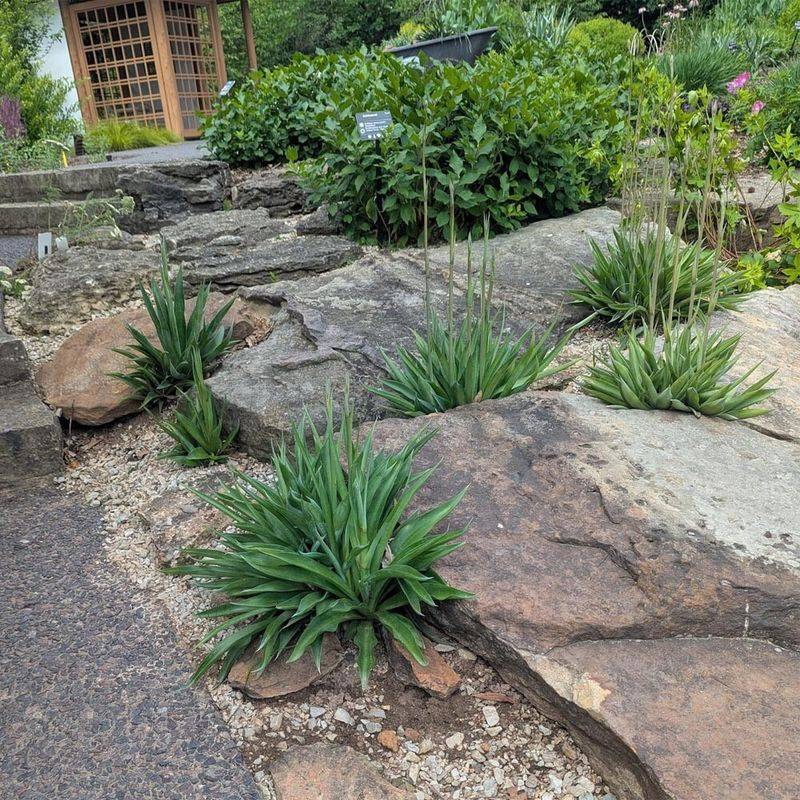
You may come across advice that agaves turn pink after cold. That comes from a narrow source, so it helps to see exactly what it says.
Bat Conservation International’s guide to growing agaves says young agave seedlings in a nursery setting may turn pink after cold or frost. It adds that affected leaves may also blacken and later become crispy.
Notice the limits. The observation is about young plants in nursery conditions.
It does not describe an established agave that has grown in your yard for years.
The guide also mentions several hours below 32°F in connection with likely damage to young agaves. That is not a safe or harmful line for every species, and it should not be applied to mature landscape plants.
If your agave is large and established, a pink or red tint tells you less than you might hope. Look for the other signs, such as blackened tissue or crispy leaves, and keep the plant’s species in mind before drawing any conclusion.
Cold Damage Leaves More Than a Blush
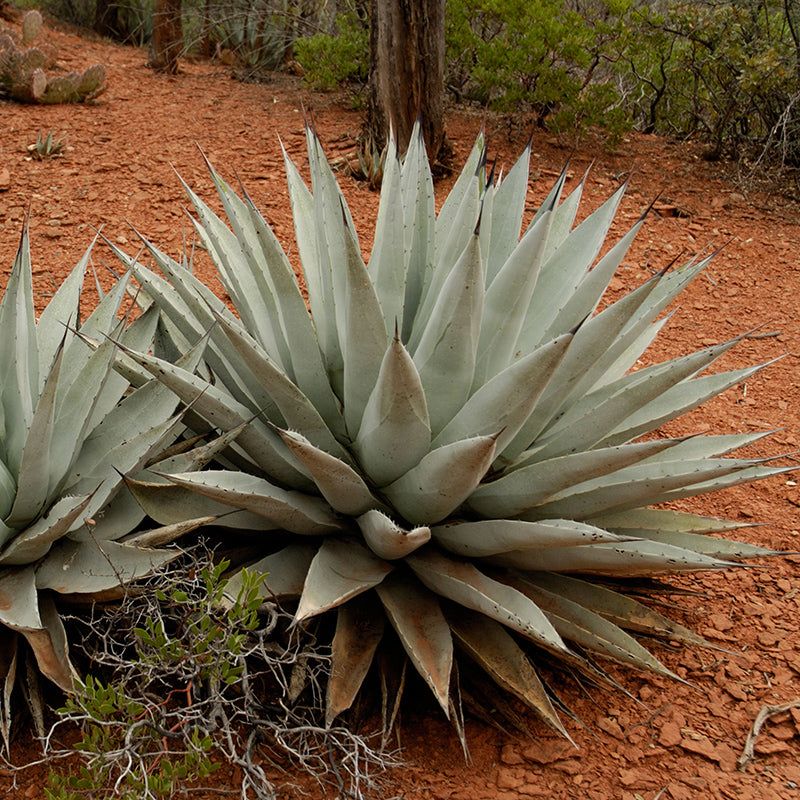
Cold injury has a look of its own, and it goes beyond color. Exposed tissue may blacken first.
A few weeks later, that tissue can dry out and turn crisp.
That timeline comes from University of Arizona Cooperative Extension, whose agave problems guide describes how damage shows up. It also notes that injury depends on the species and how exposed the plant was.
That is why one temperature cannot be called safe for every agave. A plant tucked against a warm wall faces different conditions from one in an open, low spot.
Learn the cold needs of your particular agave.
So a reddish leaf by itself is not cold damage. Cold injury shows up as changes in the tissue, such as blackening, then drying and crisping.
Check the most exposed leaves first, especially the tips and upper surfaces.
If you see those tissue changes, note where they are and take photos over time. Watching how they develop helps an expert tell you more later.
Sun Exposure Can Shift Color, Within Limits
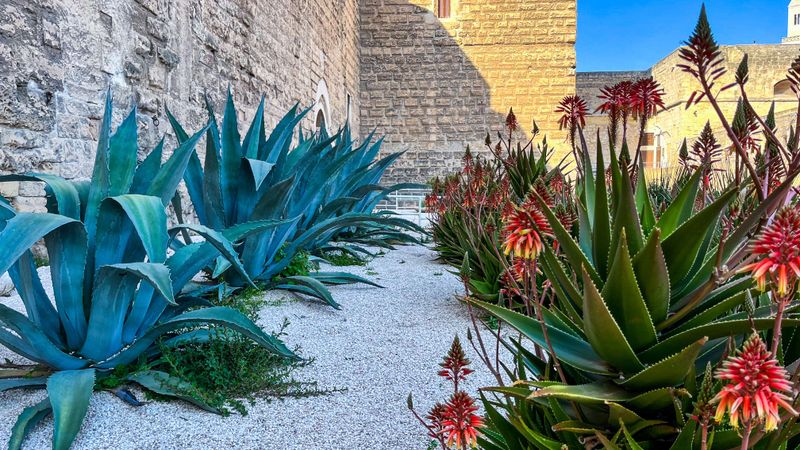
Sunlight can change how a leaf looks. In one study, researchers followed Agave americana seedlings and linked purple coloration to increased solar exposure.
You can read the research on Agave americana leaf coloration during acclimation for the details. It looked at seedlings, not established garden plants.
That finding does not explain why your mature agave is red. It also does not mean your plant has sun injury.
Think of it as one possible reason color can shift, not a diagnosis.
Still, exposure is worth noting. Which side of the plant is reddish?
Does that side face the afternoon sun, or reflected heat from a wall or pavement? Is the change on outer leaves, or across the whole rosette?
Write those answers down and keep other explanations open. Species, cold, lesions, pests, and drainage can all play a part, and a tidy sun story may hide something else.
Sunken Rings Deserve a Closer Look
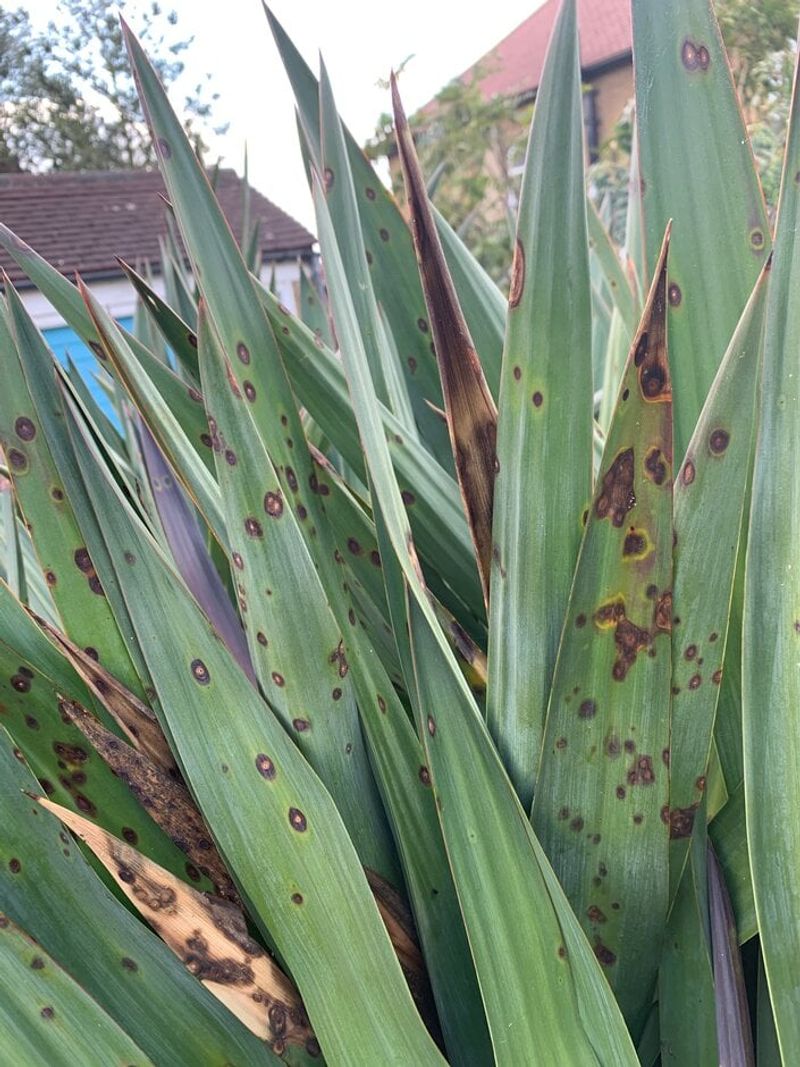
An overall reddish blush and a ring-shaped spot are not the same thing. A blush spreads across a leaf or plant.
A ring is a defined lesion with an edge.
Watch for red or reddish-brown rings that develop halos and become sunken. A UF/IFAS Extension report on agave ringspot virus describes lesions like these on an agave in Florida.
That report shows this is a possible alternative concern. It does not show how common the virus is in Arizona, and color alone cannot confirm it.
Look closely at the leaf surface. Are the spots flat or sunken?
Do they have a pale ring around them? Are new ones appearing over time?
If lesions spread or multiply, ask a Cooperative Extension office or plant diagnostic service for help. Bring clear photos that show both the spots and the whole plant.
Pest Damage Has Its Own Calling Cards
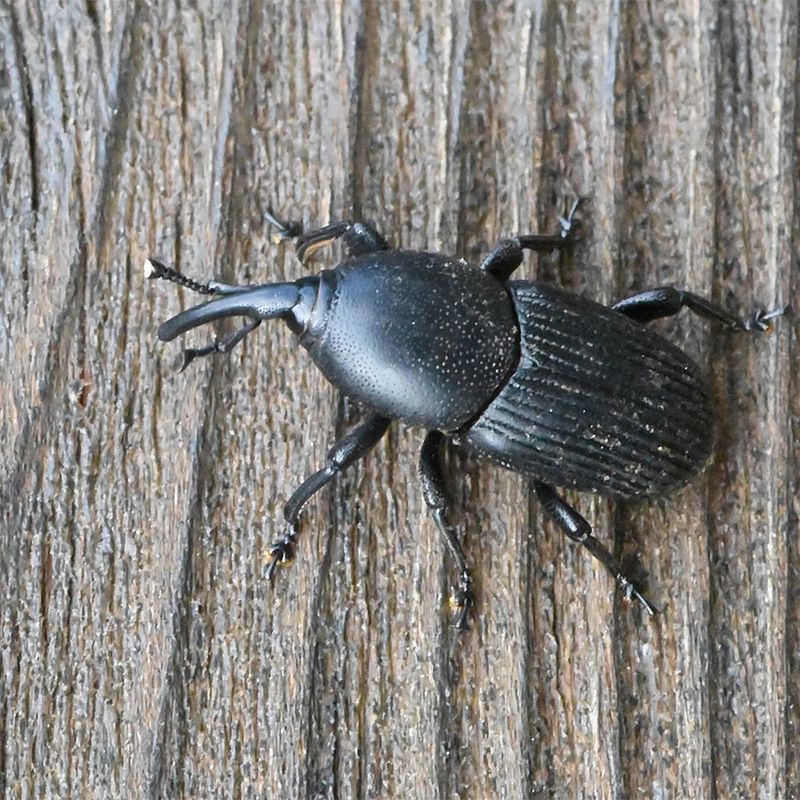
Insects leave specific marks, and redness is not one of the main ones. Learn the real signs and you can skip the guesswork.
For plant bugs, look for scarring or stippling on the leaves. An Arizona IPM guide on agave plant bugs recommends monitoring for those signs and notes the bugs are often more active from mid to late summer.
Weevils look different. According to University of California IPM guidance on agave and yucca weevils, adults can leave punctured discoloration or small holes.
Larvae bore into the base of the plant and can be linked to decline or collapse.
Red foliage alone is not evidence of either pest. Instead, check the leaf surface for stippling, scarring, punctures, or holes, and look at the plant base for boring damage.
If you find those signs, an expert can confirm the cause. Holding off on sprays until you know what you are dealing with is the careful move.
Water for Conditions, Not Red Leaves
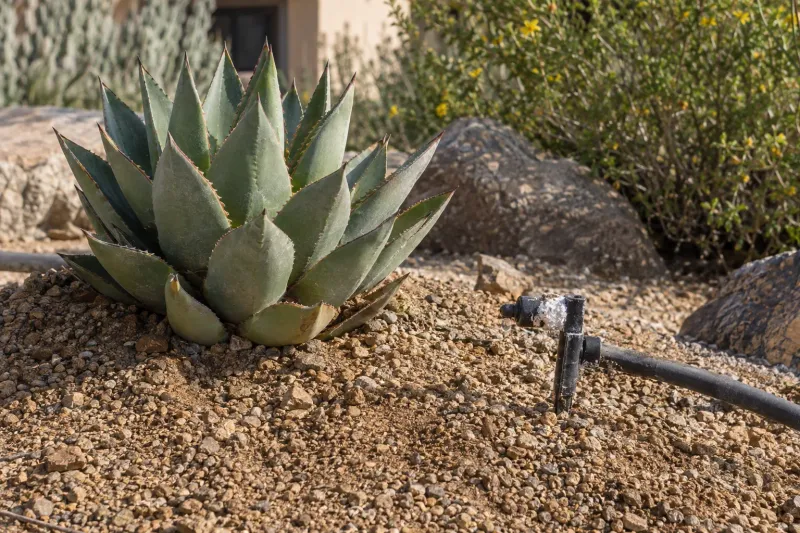
Red leaves are not a reason to grab the hose. Extra water can create new problems, especially for plants that prefer to dry out.
A University of Arizona watering guide for Southern Arizona lists agave, cactus, and yucca at every 21 to 28 days in spring and fall, with no irrigation in winter. That applies to established landscapes in that region.
New plantings may need more frequent water while they settle in. Containers dry out differently, and conditions in other parts of Arizona differ too.
A fixed calendar does not fit every plant.
Drainage matters most. University of California IPM advises well-drained soil, minimal or no irrigation after establishment, and letting topsoil dry between watering events when managing weevil risk.
So check the soil and the site before you change anything. If water pools around the base after rain or irrigation, fixing that is a better first step than adding more.
When Should You Ask for Help?
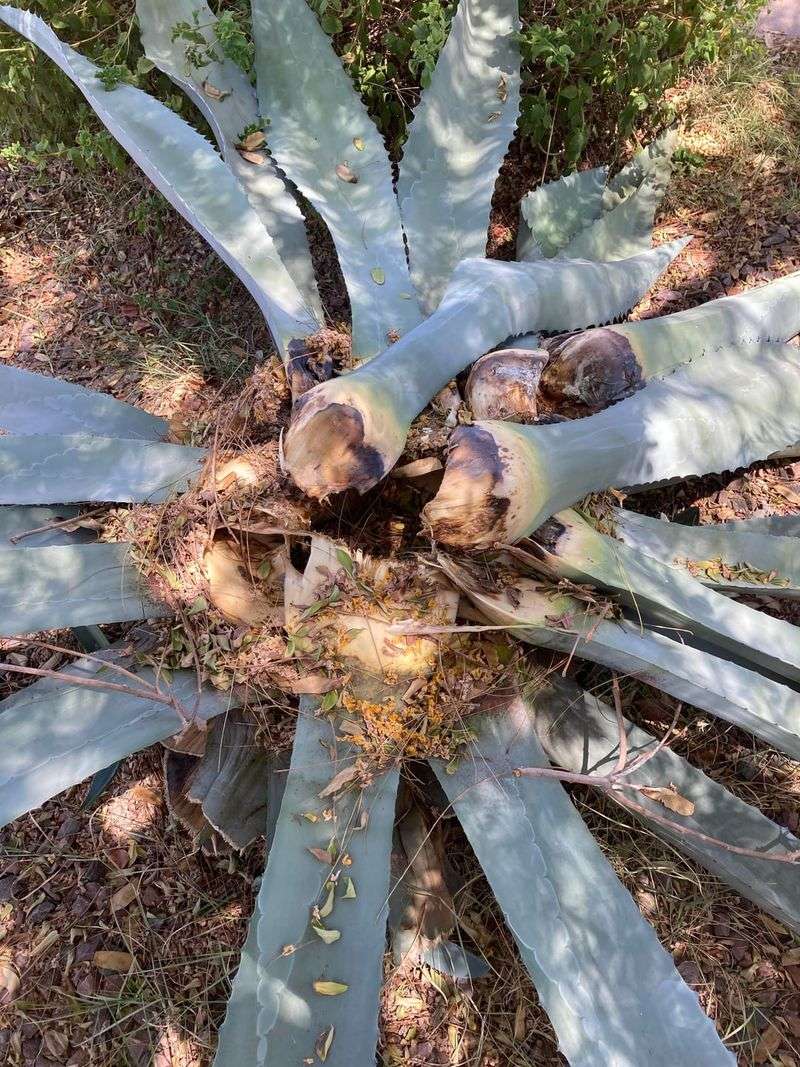
Here is a simple path. Identify your agave if you can.
Note where the color appears, then check the leaves and the base of the plant for specific changes.
Look for blackening, crisping, sunken spots, spreading lesions, punctures, holes, or softness at the base. Skip treatments based on redness alone.
Removing leaves or spraying without a reason can add problems.
Reach out if symptoms progress or the crown is affected. The University of Arizona Extension publication on problems and pests of agave, aloe, cactus and yucca is a good starting point.
A Cooperative Extension office or plant diagnostic service can look at your photos and notes.
Send clear images of the whole plant, the colored leaves, and the base, along with the species if you know it.
Red is a clue, and a clue is only the start of the story.