Why Ixora Beside Florida Sidewalks Often Turns Yellow
A slab of concrete can slowly sweeten the soil beside it. That fresh pour holds lime, and rain carries a little of it into the dirt where nearby roots feed.
I didn’t expect a sidewalk to act like a quiet soil amendment. Yet that is roughly what happens along countless Florida walkways, and certain flowering shrubs notice fast.
Truth is, I spent one whole summer blaming my hose. The leaves kept fading to a lemony shade while the veins stayed stubbornly green, and more fertilizer did nothing. That stripy pattern turned out to be a clue, not a mystery.
You’ve probably walked past the same scene a hundred times. Bright red flower clusters on top, pale leaves underneath, right where the pavement meets the mulch. What exactly is that concrete edge doing to the roots below?
That Pale Ixora Hedge Along The Sidewalk Has A Concrete Problem
Concrete looks harmless, but it carries a chemical surprise. Cement contains calcium compounds, and as rain and sprinklers wash over sidewalks, driveways, and foundations, some of that alkaline material seeps into the soil next to them.
Ixora is a picky eater about soil pH. University of Florida IFAS Extension notes that ixora grows best in acidic soil, with a pH of around 5. Once the soil turns alkaline, the shrub starts having real trouble.
Here is what makes the sidewalk spot so tricky. Florida soils in many areas already lean alkaline, especially in South Florida and along the coasts where limestone and shell fill sit just below the surface. Builders often add crushed limerock as a base under pavement, too.
Stack those together and the strip beside a walkway can end up noticeably more alkaline than the middle of your yard. That explains why the same ixora variety may look lush in one bed and washed out a few feet away.
So if your yellow shrubs line the pavement, the concrete is a strong suspect. It rarely acts alone, though. Think of it as the starting push that makes every other stress hit harder.
Green Veins On Yellow Ixora Leaves Point To Hungry Roots
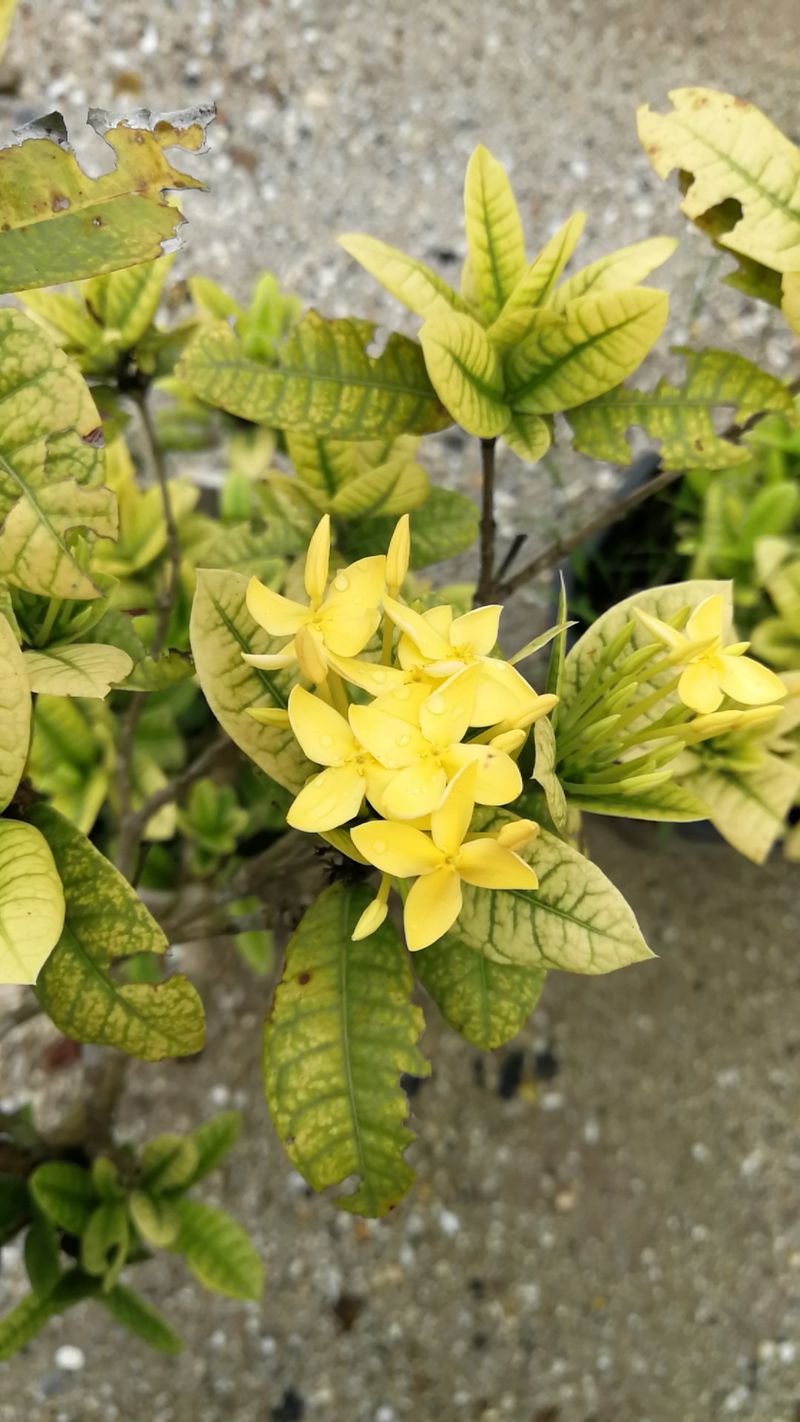
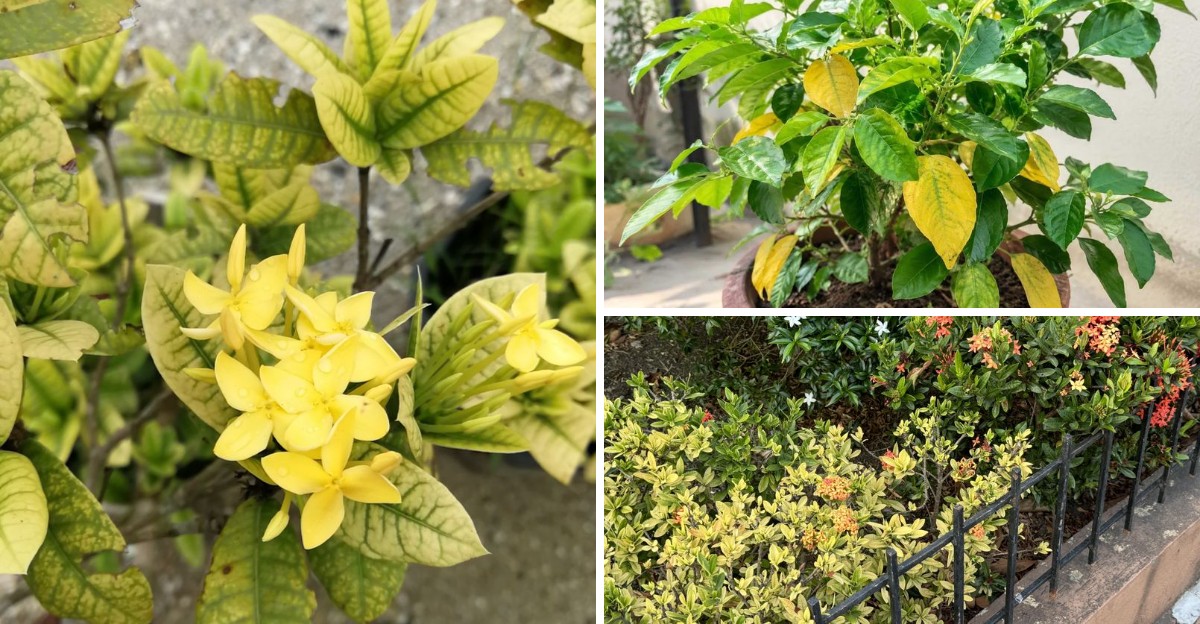
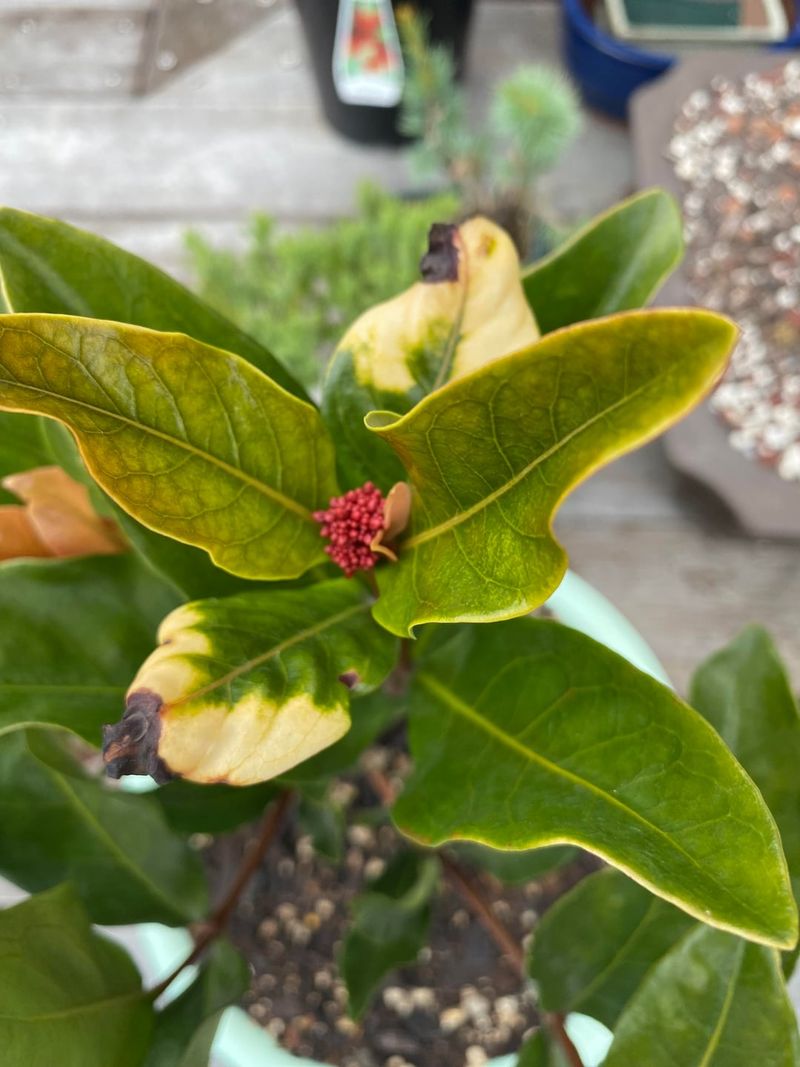
Grab one of those faded leaves and hold it up to the light. If the tissue is yellow but the veins stay green, you are looking at interveinal chlorosis, the classic sign ixora flashes when it cannot get enough iron or manganese.
The odd part is that these nutrients are usually sitting right there in the soil. High pH locks them into forms the roots cannot absorb. UF/IFAS notes that ixora often suffers iron and manganese deficiencies in high-pH Florida soils.
Iron shortage tends to show up first on the newest leaves at the branch tips. Manganese shortage often looks similar, sometimes with a slightly mottled or speckled feel, and the new growth can come in small and weak.
I used to think yellow meant my shrub wanted a big scoop of regular fertilizer. That mostly wasted money. Pouring more nutrients into soil that keeps them locked up is like adding groceries to a pantry with a jammed door.
A soil pH test from your county Extension office clears up the guesswork quickly. Once you know the number, you can pick the right fix instead of guessing.
Chelated Iron And Manganese Sprays Can Green Up Ixora Fast
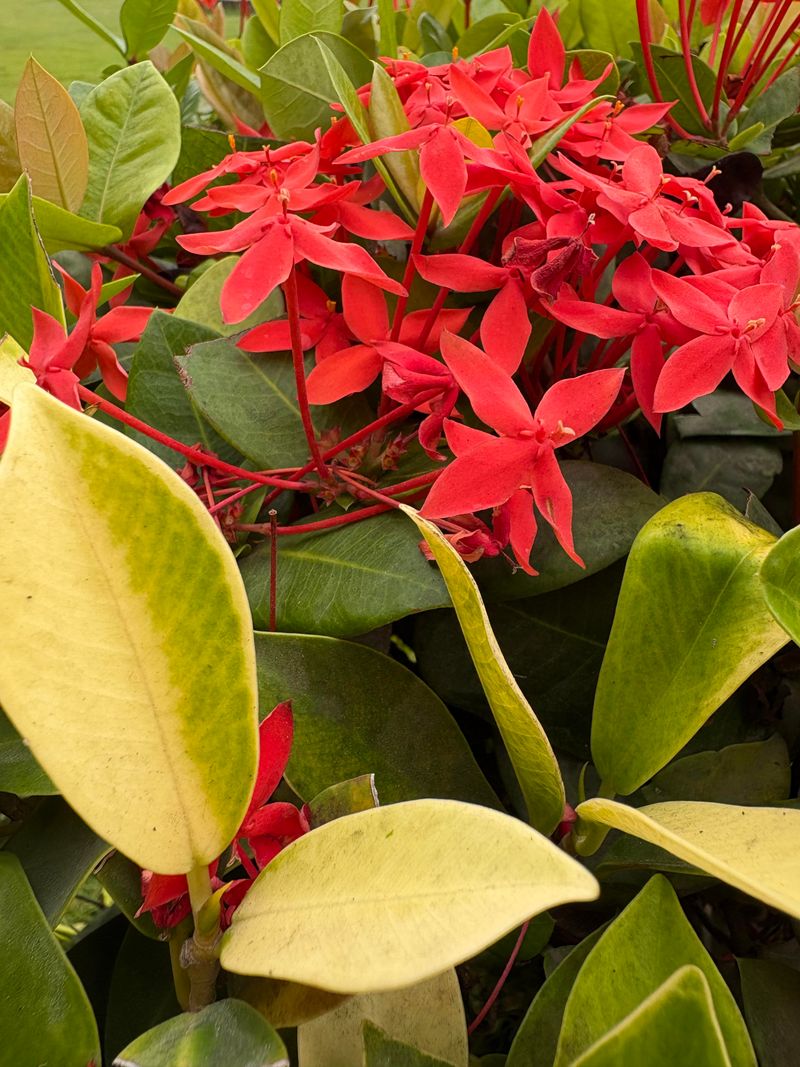
Quick relief is possible, and it comes in a bottle. Chelated micronutrients are wrapped in a molecule that keeps them available to plants, even when the soil pH runs high.
For ixora in alkaline soil, look for iron chelate labeled EDDHA, which stays usable at higher pH than cheaper forms like EDTA. Manganese sulfate is the usual pick for manganese shortages. Many Florida garden centers stock both near the palm and citrus products.
Foliar sprays tend to show results fastest. The leaves soak up the nutrients directly, and new growth often comes in greener within a few weeks. Spray in the cool morning, cover leaf undersides, and follow the label rate carefully to avoid scorching.
Fair warning, the improvement is temporary. Leaves that already turned yellow may not fully recover, and sprays need repeating as fresh growth appears. Soil drenches with chelated iron last a bit longer.
Pair the quick fix with a fertilizer made for acid-loving plants that lists iron and manganese. That way you treat the symptom now while slowly building better conditions underground.
Soggy Or Bone-Dry Ixora Roots Send The Same Yellow Signal
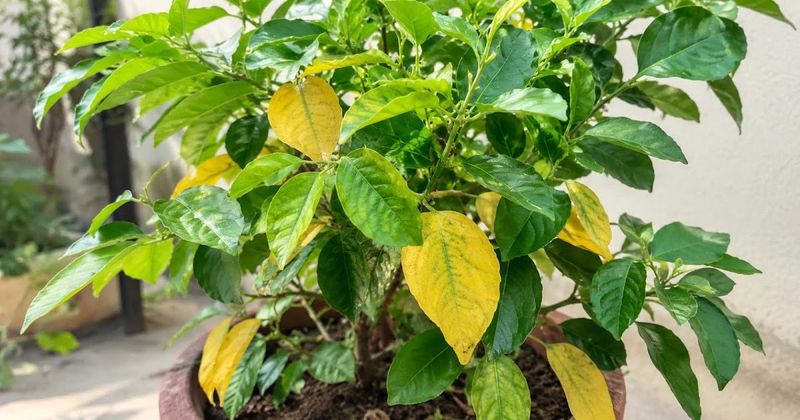
Watering mistakes can mimic nutrient problems almost perfectly. Ixora likes steady moisture, yet it hates sitting in a puddle, and both extremes leave you with sad, yellow foliage.
Overwatered roots run short on oxygen. They weaken, rot can move in, and the plant stops pulling up nutrients well. Leaves often turn yellow, go limp, and drop from the inside of the shrub first.
Underwatering looks a little different. Leaves may wilt in the afternoon, yellow unevenly, and develop crispy brown edges. Sidewalk strips heat up fast in Florida sun, since pavement soaks up and radiates warmth, so these beds can dry out quicker than you expect.
Not going to lie, sprinkler zones often cause the trouble. A head aimed at the lawn may blast the hedge daily while another dry corner gets missed.
Stick a finger a couple inches into the soil before watering. If it feels damp, wait. Once established, ixora usually does fine with deep watering a couple of times a week in hot, dry weather, with less during rainy summer stretches. Check local watering restrictions, too.
Packed Soil Beside The Walkway Leaves Ixora Roots Gasping
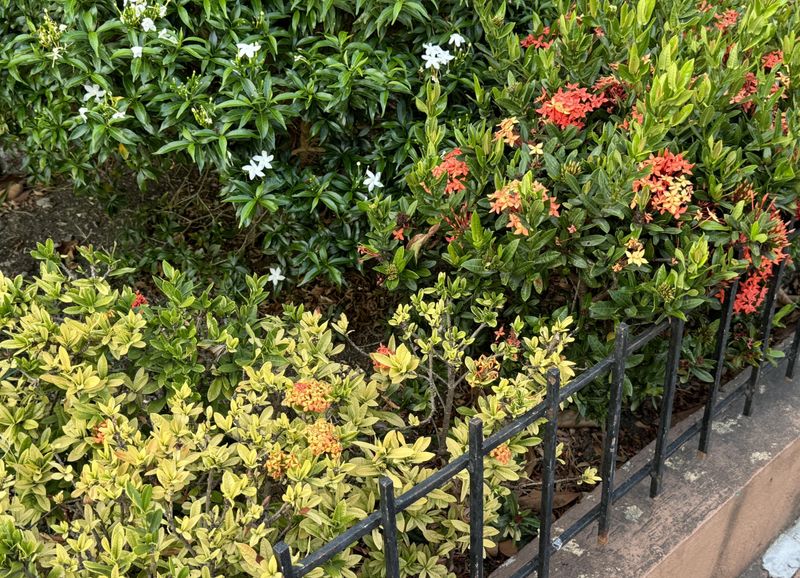
Construction crews are tough on dirt. Heavy equipment rolls over planting strips, fill gets tamped flat, and years of foot traffic keep pressing it down even harder.
Compacted soil loses the tiny air pockets roots rely on. Water either runs off the surface or sits in the low spots, and roots struggle to spread out. A shrub with a cramped, shallow root system has a harder time finding water and nutrients.
That narrow gap between a sidewalk and a curb is often the worst spot of all. Roots get boxed in by concrete on two sides, and the soil there may be mostly construction fill mixed with rubble.
Guilty as charged, I once planted ixora straight into a strip like that without loosening anything. They sulked for a full year.
Gentle fixes help. Loosen soil carefully around the drip line with a garden fork, avoiding big roots. Spread two to three inches of organic mulch, keeping it a few inches away from the stems. Over time, mulch and compost feed soil life, which slowly opens up that packed ground.
Scale And Aphids Hiding Under Ixora Leaves Steal Color Too
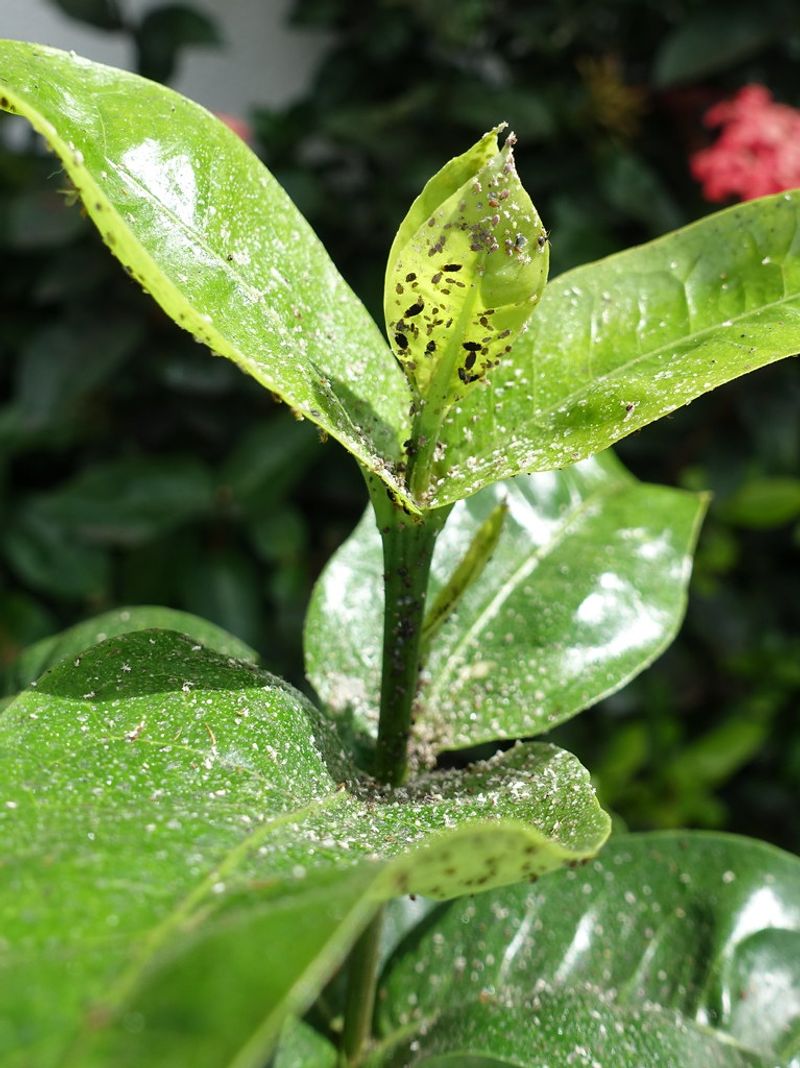
Flip a leaf over before you blame the soil. Sap-sucking insects love ixora, and they often hide on leaf undersides and along stems where you rarely look.
Scale insects look like tiny bumps or shells stuck to the plant. Aphids cluster on soft new growth, and mealybugs resemble little cottony tufts. All of them drain sap, which leaves yellow speckles and weak, stunted leaves.
Many of these pests also drip a sticky liquid called honeydew. Black sooty mold grows on it, coating leaves in a dark film that blocks sunlight. If your shrub looks dusty and gray-black, insects are a likely reason.
Fun fact, ants often guard honeydew producers like tiny farmers. A busy ant trail running up your ixora is a strong hint to check closely.
Start with the gentlest options. A strong spray of water knocks off aphids. Horticultural oil or insecticidal soap smothers scale and mealybugs when applied as the label directs, ideally in cooler parts of the day. Healthy shrubs bounce back faster, so fixing soil stress helps with pests as well.
Old Ixora Leaves Turning Yellow Can Be Perfectly Normal
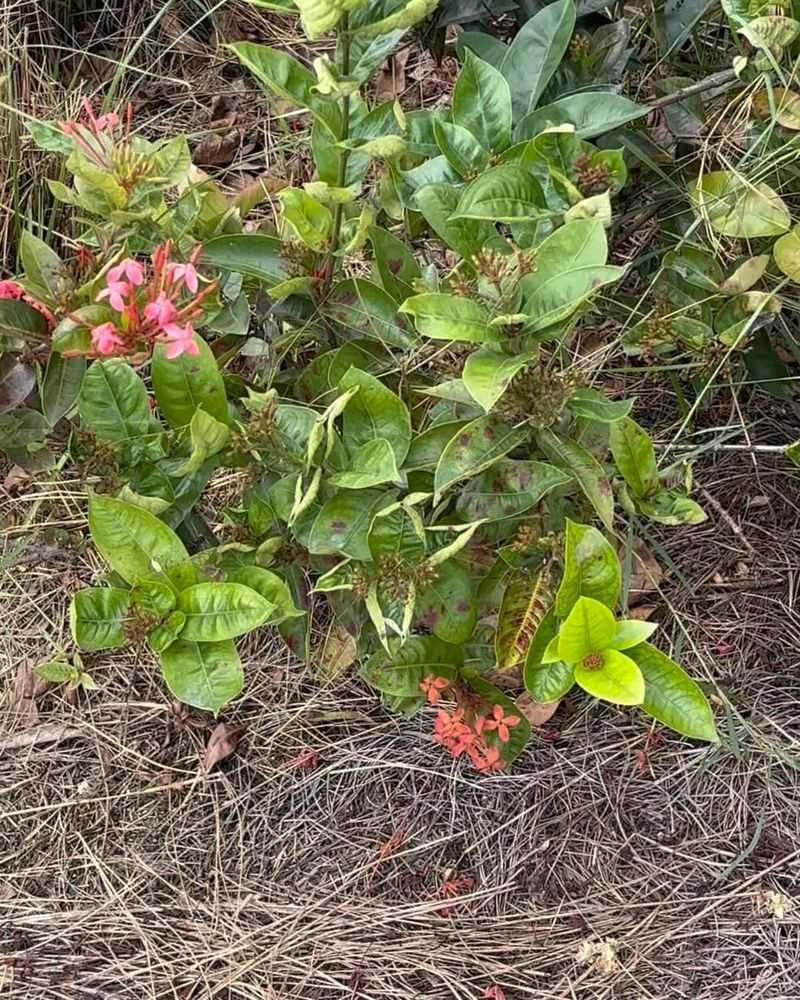
Some yellow leaves deserve a shrug, not a panic. Ixora is evergreen, but every leaf has a lifespan, and older foliage near the bottom and inside the shrub fades and drops now and then.
The location of the yellowing tells you a lot. A few old lower leaves turning uniformly yellow while the tips stay deep green usually means routine leaf turnover. Pale new growth at the top points back to nutrients and pH.
Cool snaps play a part too. Ixora is tender to cold, and in North and Central Florida a chilly winter night can bronze or yellow foliage. Plants in South Florida rarely face that issue.
Nitrogen shortage is another look-alike. It causes older leaves to yellow evenly across the whole leaf, veins included, and the shrub grows slowly overall.
I’ll say this much, a quick walk around the plant saves a lot of worry. Check top versus bottom, veins versus tissue, and new versus old leaves. That simple pattern check usually narrows the cause in under a minute.
Smarter Planting Choices Keep Sidewalk Ixora Hedges Green
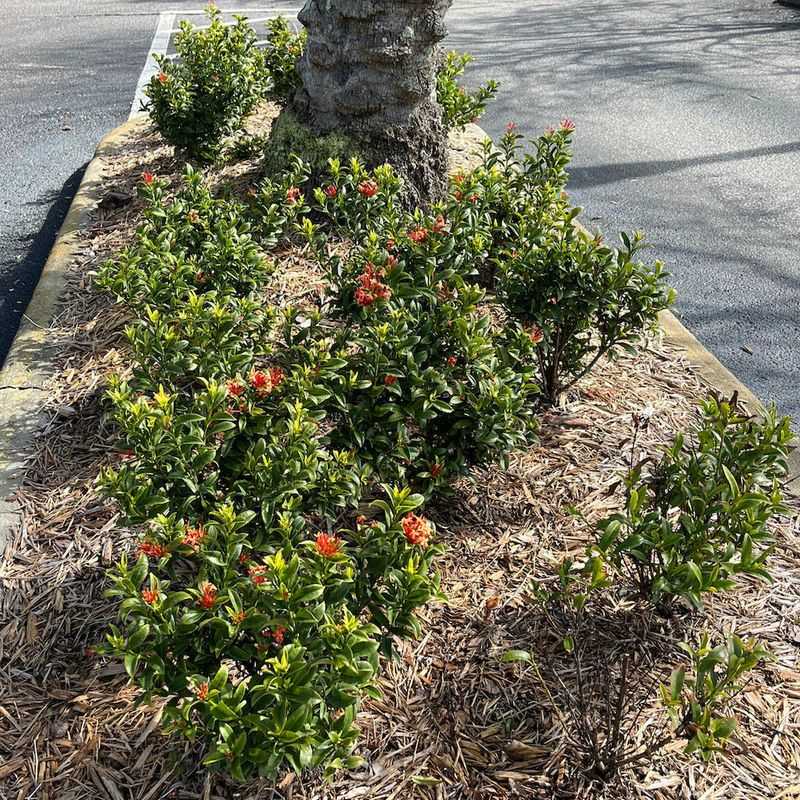
Prevention beats a lifetime of sprays. A few planting choices can save you years of fighting yellow leaves along the pavement.
Give new ixora some breathing room. Planting a couple of feet back from concrete, rather than tight against it, puts roots in less alkaline soil. Mix compost into the planting area and keep a mulch layer in place to slowly improve soil structure.
Test soil pH before you plant. If your yard runs strongly alkaline, regular acid-loving fertilizer and periodic micronutrients become part of normal care. Elemental sulfur can lower pH slightly, but limestone-rich Florida soils often push back over time.
Sometimes the smartest move is swapping plants. UF/IFAS suggests choosing shrubs suited to high-pH soil for these tough spots. Florida natives such as Simpson’s stopper, coontie, or firebush handle alkaline conditions better and attract pollinators.
Trust me on this one, matching the plant to the soil feels far better than nursing a hedge every month. Love ixora? Keep it, feed it wisely, and give it the friendliest spot in your yard.