Why September Is A Bad Time To Give Florida Crepe Myrtles A Major Cutback
A Florida crape myrtle can look like it is begging for a cleanup by the time September arrives.
Blooms are fading. Seed capsules are forming. A few long shoots may stick out beyond the canopy, and the whole tree can start to feel untidy after months of heat and growth.
That is exactly when one of the easiest pruning mistakes happens.
The weather still feels warm enough for the tree to respond, but the season is already moving in a different direction.
A hard cut at this point can trigger growth the tree does not need, remove foliage that is still doing useful work, and create weak shoots that carry problems into the months ahead.
So what should actually come off now?
Much less than most gardeners think.
September is better for observation, small corrections, and patience than for reshaping the entire canopy.
The smartest move is often leaving healthy wood alone and saving the major structural work for a much better window later on when the timing is safer.
1. Major Cuts Trigger A Rush Of New Shoots
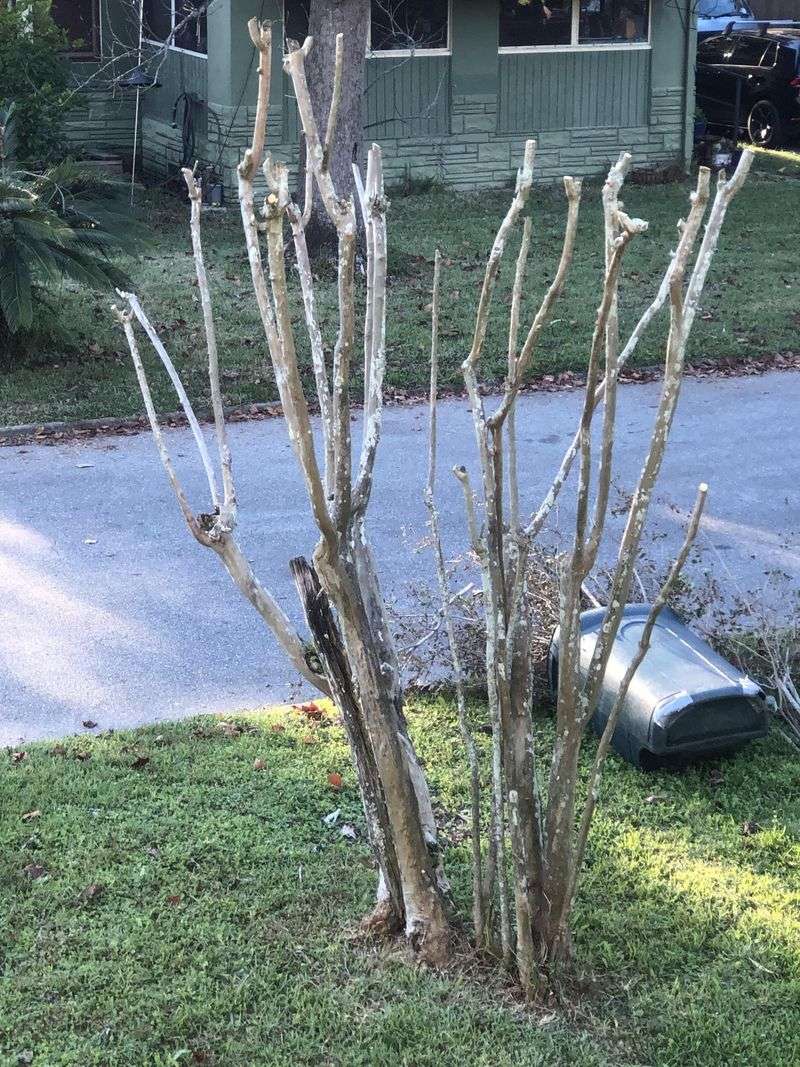
A severe September cut can wake up exactly the growth you do not want.
Crape myrtles respond to heavy pruning by pushing vigorous shoots from buds below the cuts. That rebound is normal, but timing changes whether the response helps or hurts the tree.
In late winter, fresh growth arrives with an entire warm season ahead. In September, especially across North and Central Florida, the tree is moving toward shorter days and cooler nights even when afternoons still feel like summer.
A hard cut can redirect stored energy into a flush of soft shoots just as the season begins winding down.
Those shoots are often fast, succulent, and poorly positioned. Instead of strengthening the framework, they crowd around the pruning point and create more work later.
That is why a September cleanup should stay selective.
Remove a broken limb, a hazardous branch, or an obvious sucker when needed. Leave healthy structural wood alone. Faded flowers and seed capsules do not justify reducing the canopy by several feet.
The goal is to avoid forcing the tree into a rebuilding cycle at the wrong moment.
A crape myrtle does not need to look freshly shaped heading into fall.
It needs time to finish the season with the canopy and stored energy it already has.
Save major structural cuts for late winter, when the response is more useful and the next growing season is ahead.
2. Fresh Growth Gets Less Time To Harden
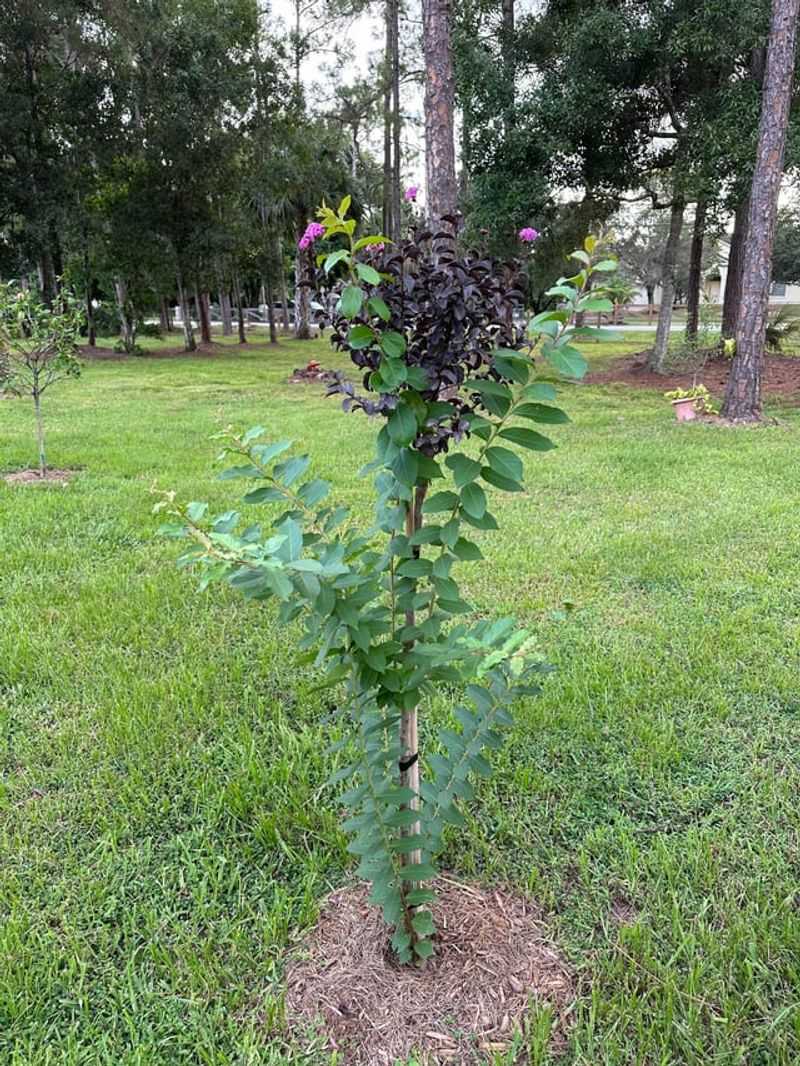
Fresh shoots need time to become tougher wood.
That process matters more in Florida than September weather can make it seem. Warm afternoons can disguise how quickly seasonal conditions are changing, especially in the Panhandle and northern half of the state.
Heavy pruning can trigger tender replacement growth from dormant buds below the cuts. That new tissue contains more water, has thinner protective structure, and has had very little time to mature.
A sudden cold spell can damage those shoots much more easily than established wood.
Your Florida Garden Changes Every Week. Your Plan Should Too.
Gardening in Florida changes quickly throughout the season. Every Friday you’ll receive a simple weekly plan showing exactly what to plant, prune, fertilize, harvest, and protect so you never miss the right timing.
The risk is not the same everywhere. South Florida has a much longer warm season than Tallahassee, Gainesville, or Pensacola, but there is still little advantage in deliberately pushing a flush of unnecessary late growth.
Waiting removes that problem.
Late-winter pruning allows new shoots to emerge as days lengthen and temperatures trend upward. That gives replacement growth a better opportunity to mature naturally instead of racing against fall.
Do not treat this as a reason to ignore storm damage.
A broken or dangerous branch should be corrected whenever safety requires it. The mistake is reducing healthy canopy simply because the tree looks oversized or finished blooming.
September warmth can make a major cut feel harmless.
The tree reads the season differently.
Leaving healthy branches intact lets the plant move toward dormancy without spending extra reserves on shoots that may never become useful framework.
That is a much better trade than a tidy canopy followed by tender fall regrowth.
3. Topping Creates Long Floppy Branches
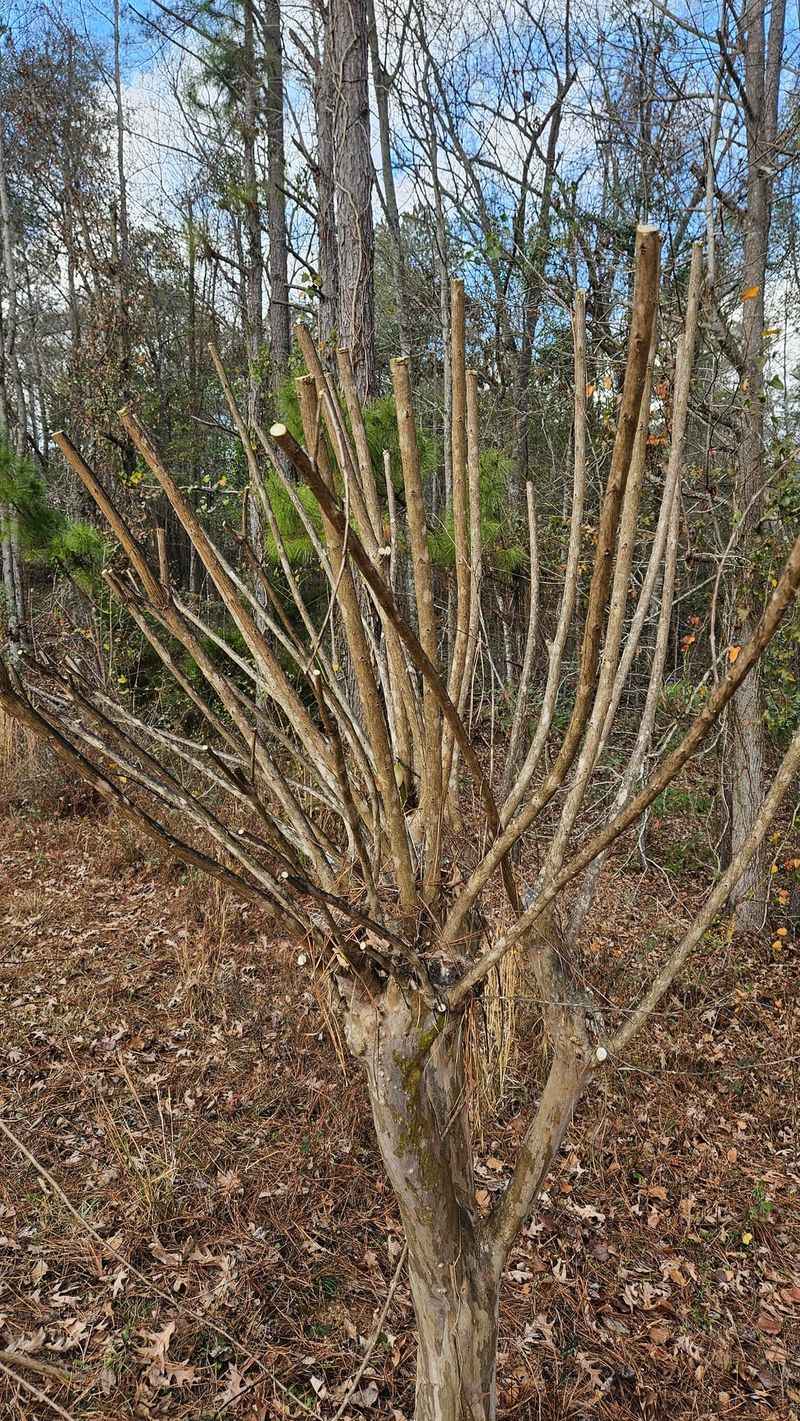
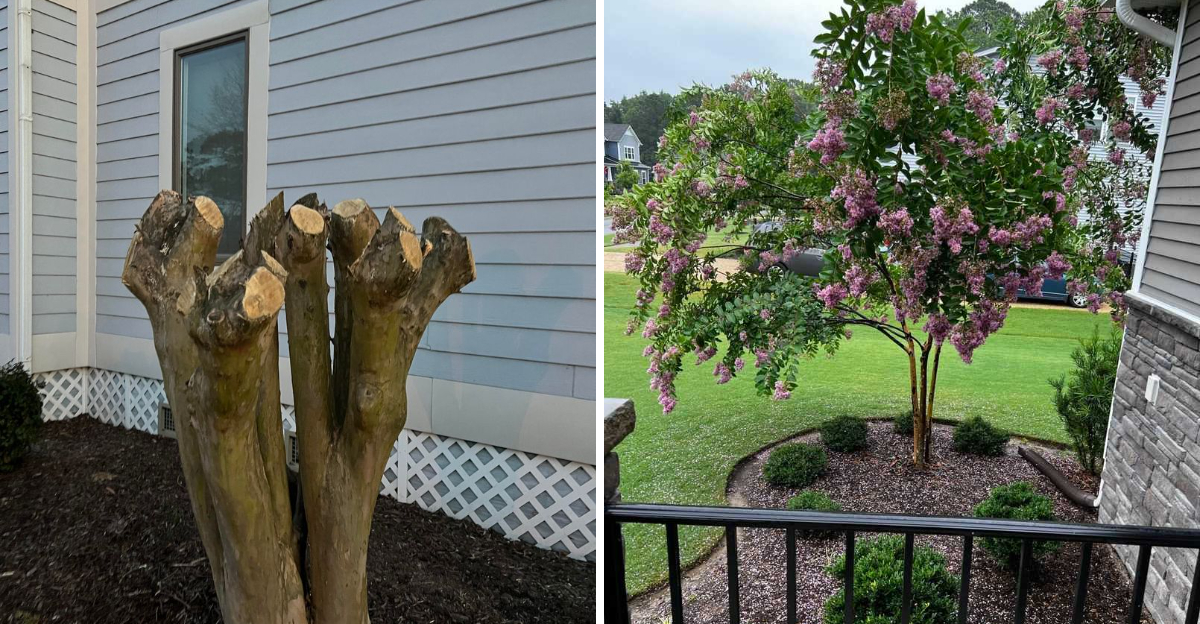
The worst September cut is usually the same one that causes trouble in every other month: topping.
Cutting major limbs back to blunt stubs removes the natural taper and branching structure that gives a mature crape myrtle its graceful form. The tree responds by producing clusters of vigorous shoots just below each cut.
Those shoots can grow quickly, but fast growth is not the same as strong structure.
Several stems often emerge from one narrow point and compete for the same space. They can become long, upright, and weakly arranged, especially after repeated topping creates swollen knobs at the ends of old branches.
September makes that response even less useful.
Any shoots that appear after the cut have less time to mature before cooler weather arrives. The result can be a mop of soft regrowth sitting on top of a damaged framework.
Avoid trying to control height by cutting every limb to the same line.
Choose a cultivar that fits the available space, or use selective reduction cuts when a legitimate structural correction is necessary. Remove branches back to an appropriate lateral branch rather than leaving random stubs.
Established crape myrtles generally need far less annual pruning than many Florida landscapes receive.
A few purposeful cuts preserve form.
A major September topping creates a problem that may demand corrective pruning for years.
The seedpods will disappear eventually.
Those swollen pruning knuckles can stay with the tree for a very long time.
4. Severe Pruning Spoils The Natural Form
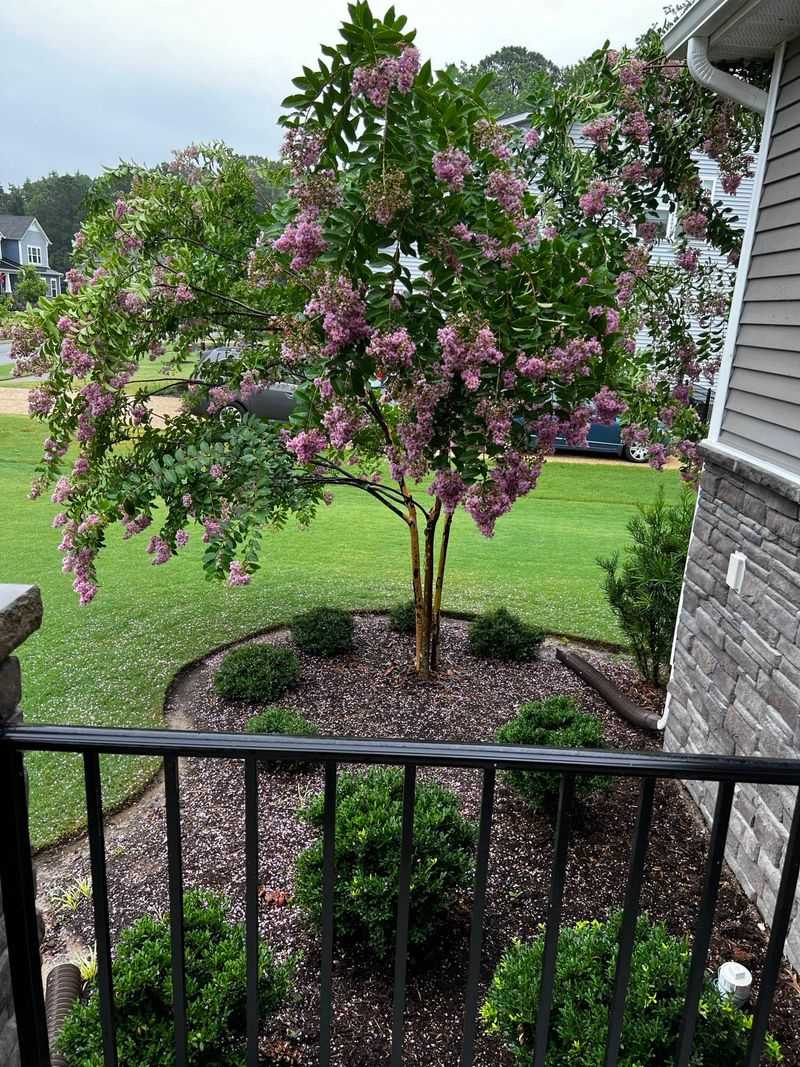
September is also a poor time to erase the structure a crape myrtle spent years building.
A healthy tree naturally develops an open, multi-stemmed or single-trunk framework with arching branches and attractive exfoliating bark. That shape is part of the ornamental value, especially after leaves drop and the trunk becomes more visible.
Severe cutbacks replace that architecture with abrupt stubs.
Repeated pruning at the same height creates enlarged knuckles where new shoots emerge year after year. The canopy may look controlled from a distance during summer, but the underlying structure becomes increasingly awkward.
Florida gardeners do not need to prune crape myrtles heavily to make them bloom.
These trees flower on new growth without requiring annual topping. Light structural pruning can improve form, remove defects, and keep selected trunks clear, but routine major reduction is not the same thing.
Use September to study the tree instead.
Notice which limbs cross, which shoots are truly misplaced, and where the canopy naturally balances itself. That makes late-winter pruning more precise because you already know what problem each cut is meant to solve.
Avoid cutting simply because blooms have faded.
A finished flower display does not mean the branch has finished serving the tree.
Healthy wood is still supporting leaves, storing energy, and defining next year’s framework.
Keeping that structure intact now saves you from trying to rebuild it later.
A crape myrtle usually looks better when pruning follows its natural shape instead of replacing it.
5. Fall Cuts Remove Useful Canopy Too Soon

Green September foliage is still working for the tree.
Every healthy leaf continues capturing sunlight and producing carbohydrates that support roots, woody tissue, and stored reserves. Florida’s long growing season makes that especially relevant because many crape myrtles remain active well after gardeners farther north have started fall cleanup.
A major cutback removes that productive canopy early.
The tree loses leaf area at the same moment it may respond by spending energy on replacement shoots. That is a poor exchange when there is no structural reason for the pruning.
Leave healthy foliage attached until the tree is ready to move through its seasonal cycle naturally.
This does not mean every September cut is harmful.
Remove broken branches, storm-damaged wood, rubbing limbs that pose an immediate problem, and unwanted basal suckers when necessary. Those are targeted corrections rather than canopy reduction.
The trouble begins when gardeners take off large percentages of healthy growth purely to make the tree look cleaner.
Fading blooms and brown seed capsules can make the canopy seem finished, but the leaves are still doing useful work behind them.
That remaining photosynthetic time supports the next season.
Late-winter pruning happens after the tree has finished that work and before strong spring growth takes over, which makes it a much more logical window for structural changes.
September is not wasted time when the loppers stay in the shed.
The canopy is still earning its keep.
6. Heavy Pruning Encourages Extra Sprouting
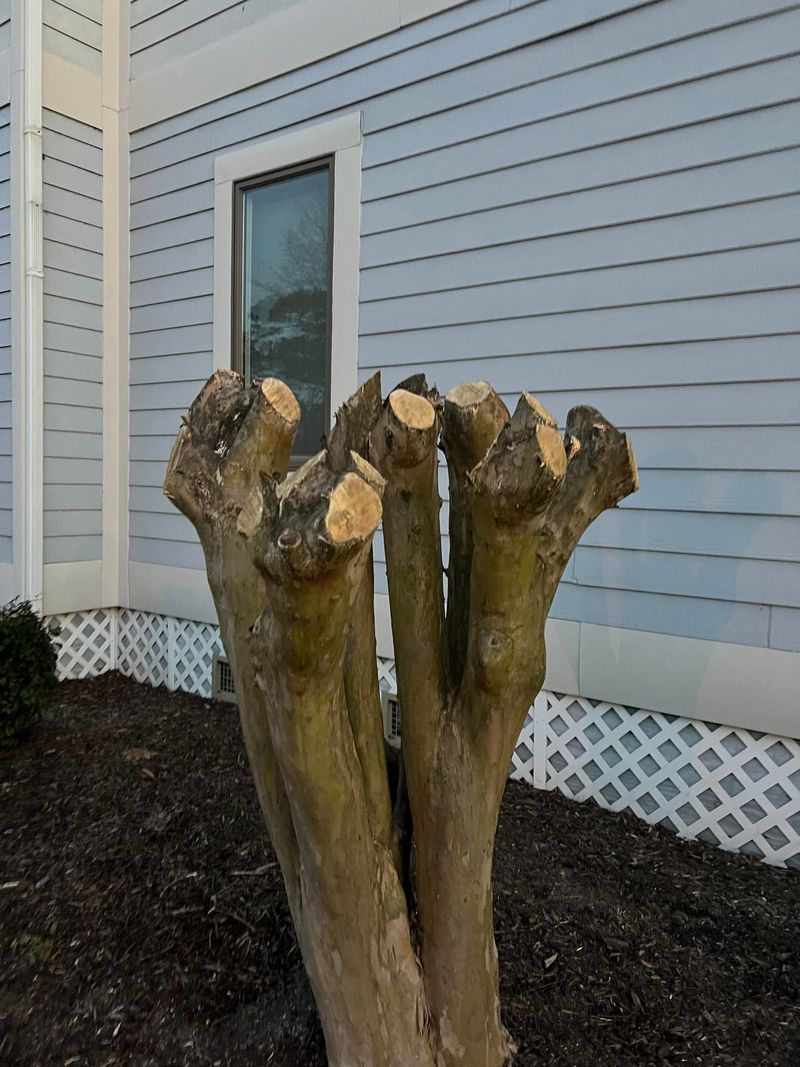
Heavy pruning tends to create the exact maintenance problem gardeners were trying to eliminate.
Cut a mature crape myrtle back hard and dormant buds near the wounds often respond with clusters of vigorous shoots. Additional sprouts may also appear from the trunk or base after the tree loses a large portion of its canopy.
That regrowth quickly becomes crowded.
Several shoots compete around the same cut, creating dense tufts that need thinning later. Repeated topping can turn a once-simple tree into an annual cycle of cutting, sprouting, and cutting again.
September is an especially poor time to start that cycle.
New sprouts may emerge while Florida weather is still warm, yet they have less season left to mature. The gardener then heads into winter with more weak growth than before the pruning began.
Restraint reduces future work.
Leave well-positioned branches alone and remove only the stems that solve a specific problem. When structural pruning is actually needed, wait until late winter and choose individual branches rather than reducing the entire top.
Good pruning should simplify the canopy.
Topping usually does the opposite.
It creates more stems, more crowded attachment points, and more opportunities for future corrective cuts.
A neat-looking September silhouette can therefore be surprisingly expensive in maintenance terms.
The easiest crape myrtle to care for next year is often the one you did not force into unnecessary regrowth this fall.
Less cutting now can mean far fewer shoots to chase later.
7. Seed Capsules Do Not Require A Major Cut
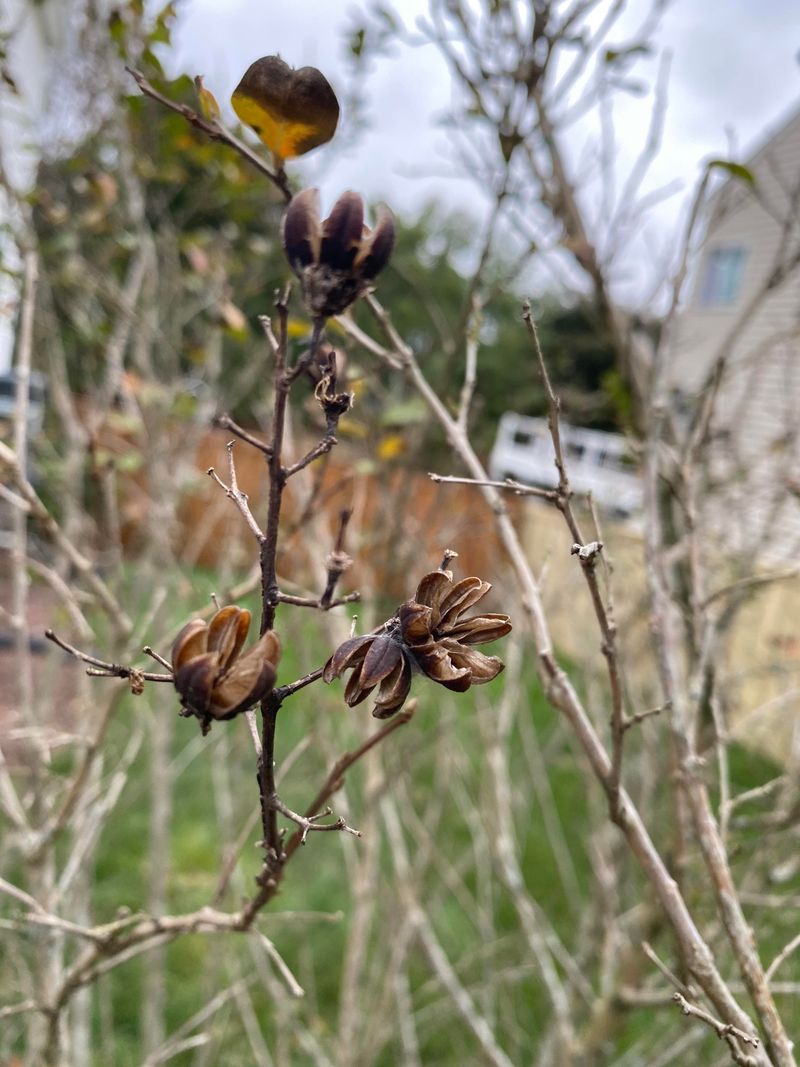
Brown seed capsules can make a September crape myrtle look as though it needs immediate attention.
They do not.
Those capsules are the normal result of flowering and add very little weight to the branches. Their presence is not a sign that the tree needs to be shortened, reshaped, or stripped of healthy wood.
Leave them alone when they do not bother you.
A crape myrtle does not require routine deadheading to return and bloom the following year. Flowering comes on new seasonal growth, and removing old seedheads is not the same thing as creating that growth.
Where appearance matters, clip an occasional reachable seed cluster with hand pruners rather than cutting back the branch that carries it.
That keeps a cosmetic task cosmetic.
Do not turn seedpod removal into topping.
The same principle applies to faded flowers. A few brown tips near the edge of the canopy may look untidy for a while, but they are not worth sacrificing healthy branch structure in September.
Florida’s long warm season makes it tempting to keep grooming trees well into fall.
Crape myrtles need less help than that.
Leave the major framework intact, allow the canopy to finish its seasonal work, and make structural decisions later when the tree is easier to see and the timing is better.
Seed capsules are temporary.
A bad pruning cut can become part of the tree for years.