Wisconsin Gardeners Who Service Tools Now Give Spring a Better Start
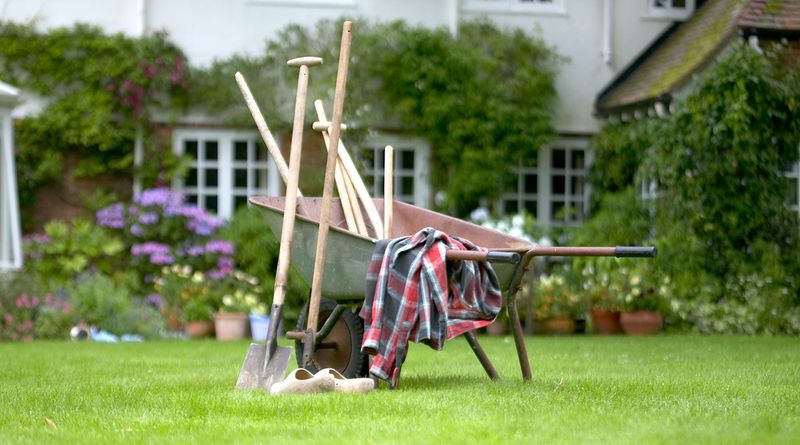
Every fall, Wisconsin gardeners put away shovels, pruners and shears that still carry soil, sap and the beginning of rust. Those tools will sit through months of cold and humidity before anyone picks them up again.
Cleaning, drying, selectively sharpening and protecting tools before winter storage can reduce corrosion and make spring work easier, though no amount of fall care can rescue a badly damaged blade or guarantee a perfect edge come April.
Wisconsin’s Final Major Use Starts the Winter Tool Check
After the last tomatoes come in and the garden beds are put to rest, Wisconsin gardeners have a narrow, practical window to service their tools before winter sets in. There is no single statewide calendar date that triggers this work.
The right moment is simply after the final major use of the season, when tools can still be washed outdoors or in a utility sink and dried completely before storage.
Starting with an honest inventory makes the rest of the process more efficient. UW-Madison Extension’s November gardening guidance recommends taking stock of tools before winter and identifying what needs attention, repair or replacement.
Walk through the shed or garage with a critical eye: check for caked soil, sticky sap on pruning tools, surface rust, loose or missing bolts, cracked handles, bent blades and any deep pitting that has gone past the surface. Wisconsin winters are long enough that minor problems left unaddressed in October can become serious ones by March.
The most important premise to carry through this whole process is a realistic one. Cleaning, drying, treating rust, sharpening appropriate edges and applying a protective coating can reduce corrosion risk and improve spring readiness.
UW-Madison’s tool maintenance guidance confirms that clean, well-maintained tools require less effort than tools buried under soil or rust. However, fall servicing cannot guarantee that every blade will cut cleanly in spring, and it cannot reverse structural damage.
Tools that are bent, deeply pitted, cracked at the socket or worn beyond use need repair, replacement or professional attention, and Wisconsin gardeners are better off making those calls now rather than discovering them at planting time.
Wisconsin Cleaning Comes Before Abrasives, Oil or Disinfectant
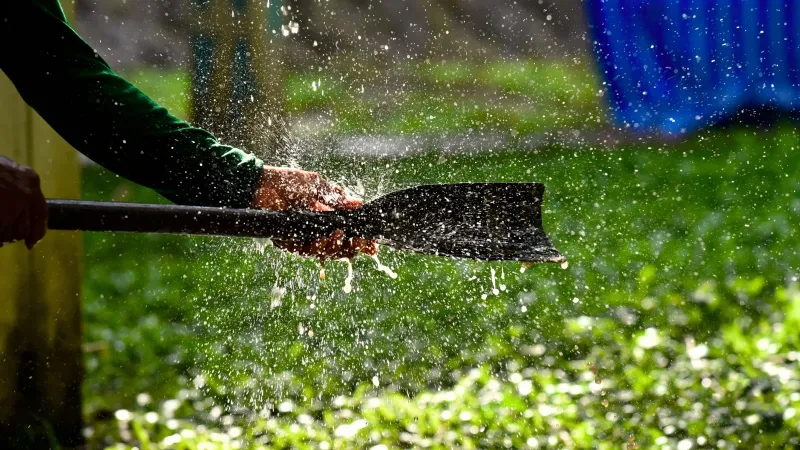
Soil, plant debris and pruning-tool sap have to come off before anything else happens. Reaching for a rust remover or a can of oil while grit still clings to the metal only traps moisture and contaminants against the blade.
In Wisconsin, where tools can sit through months of freeze-thaw cycles, starting clean is the difference between maintenance that holds and maintenance that peels.
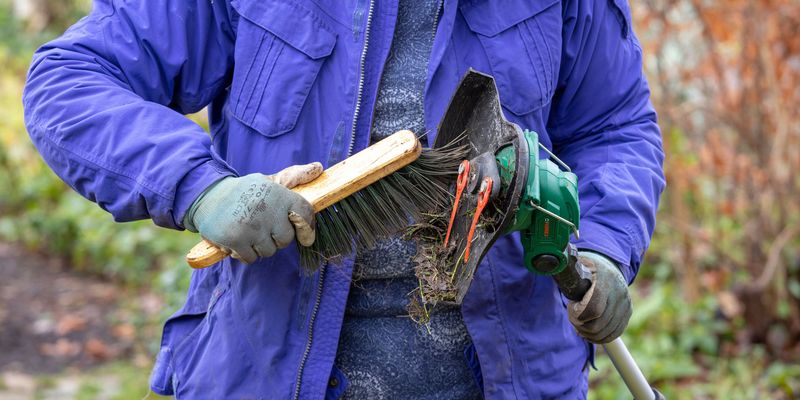
For most tools, water and a stiff-bristle brush handle the bulk of the work. A wire brush reaches into textured surfaces and around bolts where soil packs tightly.
Stubborn sap on bypass pruners or loppers responds well to soapy water; for heavier residue, an appropriate solvent used according to its label can help. University of Minnesota Extension’s tool-cleaning guidance also notes that removing all organic material before applying any disinfectant is essential because plant residue can reduce disinfectant effectiveness.
Your Wisconsin Garden Changes Every Week. Your Plan Should Too.
Gardening in Wisconsin changes quickly throughout the season. Every Friday you’ll receive a simple weekly plan showing exactly what to plant, prune, fertilize, harvest, and protect so you never miss the right timing.
Wisconsin gardeners who skip the cleaning step and go straight to sanitizing are not actually sanitizing, they are just coating dirty metal.
Complete drying is non-negotiable before moving to rust treatment, sharpening or lubrication. Moisture left on metal, even in small amounts in a seam or around a rivet, accelerates the corrosion that the rest of this process is meant to slow.
Oregon State University Extension’s tool care guide reinforces that tools must be thoroughly dried before oiling or storage. A dry cloth handles smooth surfaces; a patch of old towel works for joints and crevices.
In Wisconsin’s damp fall weather, bringing tools inside to a heated space for an hour or two before the next step is a practical move that costs nothing.
Wisconsin Surface Rust Has Limits That Maintenance Cannot Erase
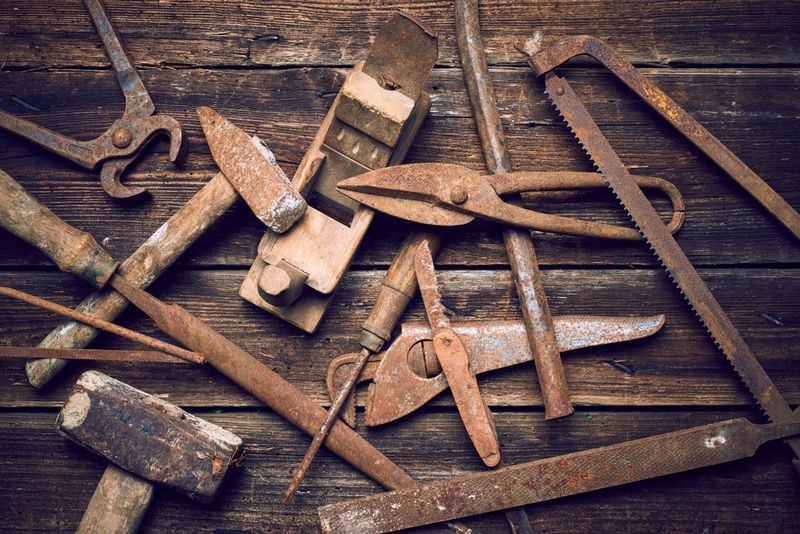
A shovel or hoe pulled from a Wisconsin shed in spring with a thin layer of orange rust is a familiar sight. Light surface corrosion that developed during storage is generally treatable at home, but the outcome depends on how deep the damage goes and what the metal looked like before it was put away.
Coarse steel wool, a wire brush, pumice or sandpaper can remove light rust from clean, dry metal. UW-Madison Extension’s tool maintenance page lists these options for addressing corrosion before storage.
The caution worth keeping in mind is that aggressive scrubbing leaves scratches, and scratches create microscopic channels where moisture collects and rust returns. Work with enough pressure to lift the corrosion, not enough to score the underlying metal deeply.
Wisconsin gardeners should also recognize that abrasive work is most productive on light, flaky surface rust rather than on pitting that has already broken through the surface layer.
Utah State University Extension’s winter garden preparation guide echoes the value of a thin protective coating on clean, dry metal to slow future corrosion. Once rust is removed and the surface is dry, a light application of tool oil, mineral oil, WD-40 or a similar rust inhibitor gives the metal a barrier against Wisconsin’s winter humidity.
That barrier reduces corrosion risk, but it does not prevent all rust. Condensation, salt, poor ventilation and residual moisture in joints or seams can still cause damage even on oiled tools.
Tools with deep pitting, cracks or structural damage that abrasives cannot address are candidates for professional repair or replacement, not repeated rounds of sanding that never fully resolve the problem.
Wisconsin Blade Geometry Controls the Sharpening Method
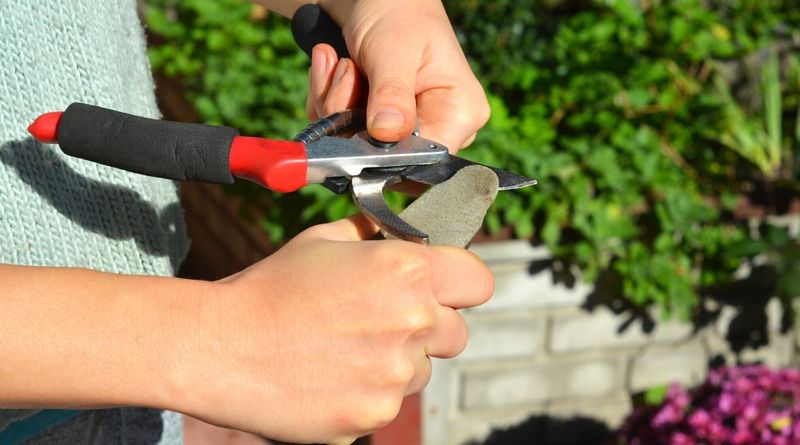
Sharpening is not a single action applied to every tool in the shed. The right method depends on what kind of cutting edge the tool was designed to carry, what condition that edge is in, and whether the original bevel angle can still be identified.
Wisconsin gardeners who approach sharpening with a one-size approach risk changing a blade’s geometry, which can shorten its working life or prevent cutting surfaces from meeting correctly.
Shovels and hoes with dull, square edges benefit from a mill file worked along the existing bevel. UW-Madison Extension’s tool maintenance guidance offers approximately 30 degrees as a starting-point angle for inexpensive stamped shovels and hoes whose original bevel has been lost.
That figure is specific to those tools, not a universal sharpening angle for every blade in a Wisconsin garden. When the existing bevel is still visible, follow it.
The goal is a working edge, not a razor, because an edge that is too sharp can wear prematurely on the rocky or sandy soils common across many Wisconsin regions.
Bypass pruners, loppers and hedge shears require a different approach entirely. On a bypass tool, two curved blades pass each other like scissors, and only the beveled cutting blade receives sharpening.
The flat side of that blade stays flat. Anvil-style pruners work differently: a single sharp blade closes against a flat anvil, and the sharp blade is the only surface to sharpen while the anvil remains blunt.
After sharpening either type, the cutting surfaces must meet evenly across their full length. A gap, a twist or an uneven contact point means the tool will crush stems rather than cut them cleanly.
A file or whetstone is the appropriate tool for pruners, shears and loppers. Oregon State Extension’s tool care reference supports hand sharpening for these tools and cautions against methods that can overheat metal or remove too much material.
Grinding wheels can damage a fine edge on pruning tools quickly, and Wisconsin gardeners should reserve them for coarse work on heavy blades, if at all. Preserve the factory angle whenever possible; deviating from it changes how the blade meets the material it cuts and can make the tool harder to maintain in future seasons.
Wisconsin Saw Owners Need a Replace-or-Professional-Service Boundary
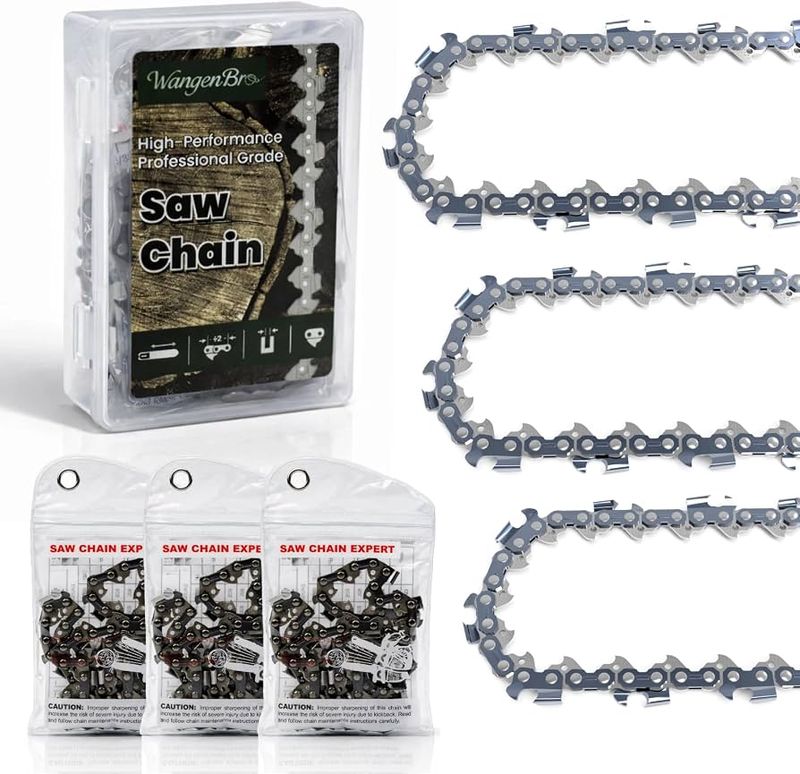
Pruning saws occupy a different category from shovels, hoes and hand pruners, and Wisconsin gardeners who treat them the same way often create more problems than they solve. Most pruning saws sold today carry hardened teeth that are designed to be replaced when dull, not resharpened at home.
Attempting to file those teeth without the correct equipment and technique is likely to damage the saw and accomplish little else.
Oregon State University Extension’s end-of-season task guidance makes this boundary clear: pruning saws are often replaced rather than sharpened, and chainsaws require specialized procedures and safety training that go well beyond ordinary hand-tool maintenance. Wisconsin gardeners who find a pruning saw that is pulling to one side, tearing bark instead of cutting cleanly, or simply working harder than it used to should evaluate the saw’s age and cost before deciding whether sharpening, replacement or professional service is the right answer.
Chainsaws raise the stakes further. Chain sharpening requires correct file sizes matched to the chain pitch, consistent filing angles and an understanding of depth-gauge settings.
Getting any of those wrong affects both cutting performance and safety. Wisconsin residents who use chainsaws for storm cleanup or firewood cutting and are not already experienced with chain maintenance are better served by a local dealer or small-engine repair shop than by a first attempt with a round file and a YouTube tutorial.
The practical rule for Wisconsin saw owners is straightforward: if the saw is a simple folding pruning saw, check whether the blade is replaceable before reaching for a file. If it is a chainsaw, assess your own skill level honestly and contact a professional if there is any doubt.
UW-Madison Extension notes that identifying tools that need professional attention is part of a sound end-of-season inventory, and saws are the clearest example of that principle.
Wisconsin Handles, Hardware and Oil-Treated Materials Need Inspection
Wooden handles take a beating through a Wisconsin growing season. Repeated exposure to soil, moisture and UV light dries out wood fibers, raises the grain and creates splinters that turn a routine task into a frustrating one.
End-of-season handle care is straightforward and takes only a few minutes per tool, but skipping it means handles that crack, loosen or break at the worst possible moment next spring.
Start by wiping handles clean with a damp cloth, then let them dry completely. Run a hand along the full length of each handle, feeling for splinters, soft spots, cracks or any looseness where the handle meets the socket or ferrule.
Tighten loose bolts and screws; replace any hardware that is stripped or corroded beyond use. Oregon State Extension’s tool care guide recommends keeping wooden parts off soil and concrete during storage because both surfaces hold moisture against the wood and accelerate deterioration.
A wall rack or a freestanding tool holder keeps Wisconsin handles dry and off the ground.
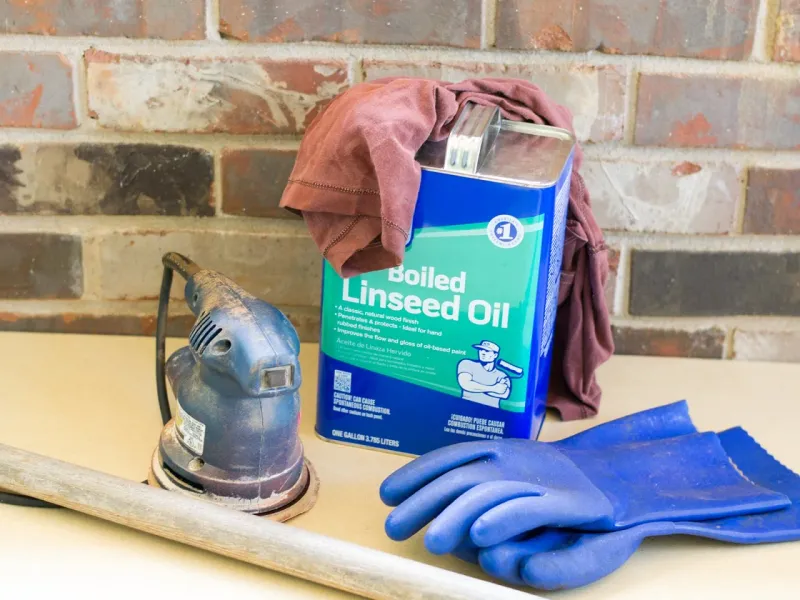
Linseed oil or another suitable wood finish applied to clean, dry handles helps preserve the wood through winter. Work a thin coat into the grain and allow it to absorb before wiping away any excess.
UW-Madison Extension specifically flags the spontaneous-ignition hazard of linseed-oil-soaked rags and applicators. Oily rags can generate heat as they dry, and if they are bunched together or left in an enclosed space, they can catch fire without an external flame.
Spread used rags flat outdoors to dry, or submerge them in water in a metal container before disposal, and always follow the product label. Wisconsin gardeners should treat handle finishing as a safety-sensitive task, not an afterthought, and keep these materials away from heat sources and out of closed containers.
Wisconsin Disease Concerns Change When Disinfection Matters
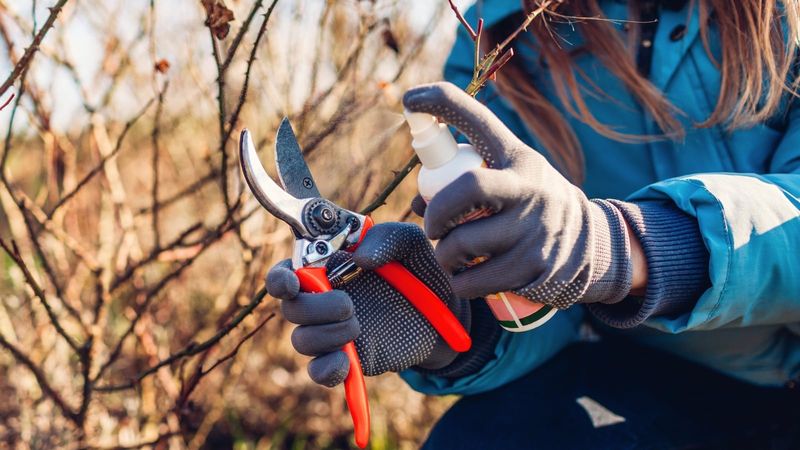
Cleaning and disinfecting are not the same step, and treating them as interchangeable can leave Wisconsin gardeners either over-treating healthy tools or under-treating ones that actually carried disease. Ordinary end-of-season cleaning removes soil, debris and sap.
Disinfection targets pathogens, and the need for it depends on what the tool touched during the season.
Routine disinfection deserves the most attention after pruning visibly diseased plants, when moving tools between different garden sites or if tools were stored without cleaning after a season involving disease problems. For ordinary hand-pruner sanitation after disease-free use, University of Minnesota Extension’s cleaning and disinfecting guidance lists 70% isopropyl alcohol as an option and notes it is less corrosive to metal than bleach.
Alcohol is flammable, so Wisconsin users need to keep it away from open flames, work in a ventilated space and follow the product label. Allow blades to dry before storage or oiling.
Bleach is not a safe default for sharp metal tools. Minnesota Extension’s guidance is direct: bleach can corrode metal and create pits and nicks on cutting edges, making it a poor choice for pruners, loppers and shears.
If bleach is used for appropriate surfaces or specific disease-management situations, it must be diluted according to the label, applied fresh and rinsed away promptly. CDC guidance on cleaning and disinfecting with bleach requires adequate ventilation, gloves, eye protection and label compliance.
Wisconsin gardeners must never mix bleach with alcohol, ammonia, acids or any other cleaner because the resulting fumes can cause serious harm.
Disease control also depends on more than the cleanliness of a blade. UC Integrated Pest Management guidance on fire blight and related pear disease management guidelines both indicate that where a cut is made relative to infected tissue can matter as much as whether the tool was sanitized.
Tool sanitation reduces risk but does not replace correct disease diagnosis, proper pruning technique or careful disposal of infected material. Wisconsin gardeners dealing with a known disease problem should research the specific pathogen rather than assuming that a wipe with alcohol covers all concerns.
Dry Wisconsin Storage Preserves Better Spring Readiness
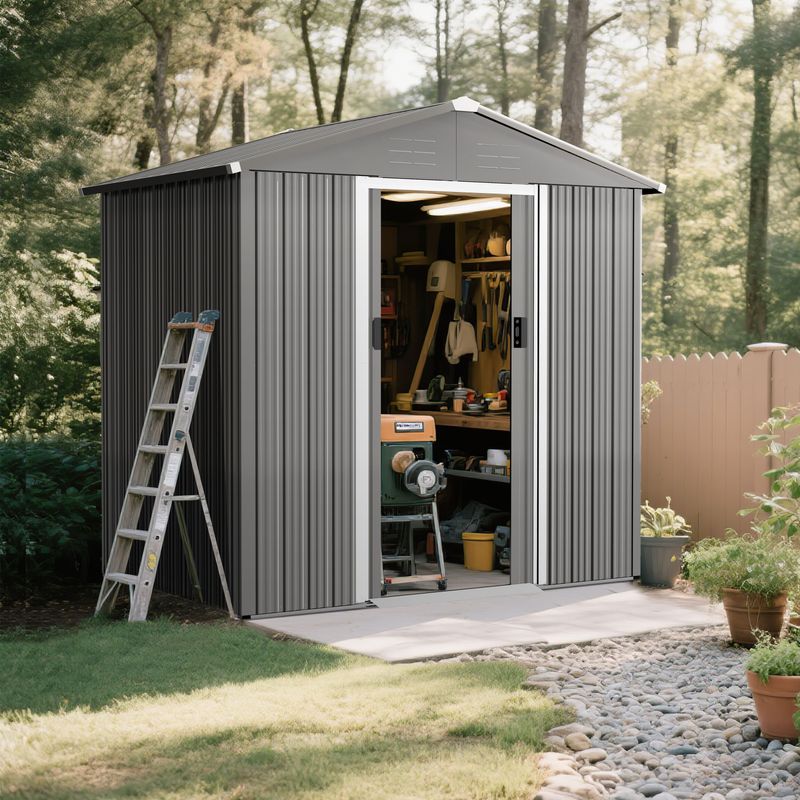
All the cleaning, rust removal, sharpening and handle care done in the previous steps can be undone by poor storage. Wisconsin winters bring extended cold, humidity fluctuations and the kind of condensation that forms on metal surfaces when temperatures swing between freezing nights and warmer days.
Where tools spend those months matters almost as much as how they were prepared.
A clean, dry shed, garage or enclosed tool rack is the right destination. Oregon State Extension’s tool care reference advises keeping wooden tool parts off soil and concrete, both of which hold moisture against the wood and metal alike.
Hanging tools on wall-mounted hooks or storing them blade-up in a dry rack keeps handles off damp floors and reduces the chance of accidental contact with corrosive materials. UW-Madison Extension recommends dry winter storage as a core step in tool care, and Utah State University Extension’s winter preparation guide reinforces the value of a thin protective coating on clean metal before any tool goes into storage.
Even with good preparation, Wisconsin storage conditions are not fully predictable. Humidity, condensation, salt tracked in from driveways, and any residual moisture left in joints or seams can still cause corrosion on oiled tools.
Storage reduces risk; it does not eliminate it. Tools that go into storage with existing damage, deep pitting or structural problems will not improve on their own over winter.
UW-Madison’s November gardening checklist frames winter preparation as a forward-looking task, and that framing is the right one. Inspection, cleaning, selective sharpening, handle care and dry storage give Wisconsin gardeners a better chance of opening the shed in spring to tools that are ready to work.
The ones that are not ready will make themselves known quickly, and the answer then is repair or replacement, not regret that fall maintenance was skipped.