Wrapping Palm Trunks Does Little To Protect Georgia Palms From Winter Cold
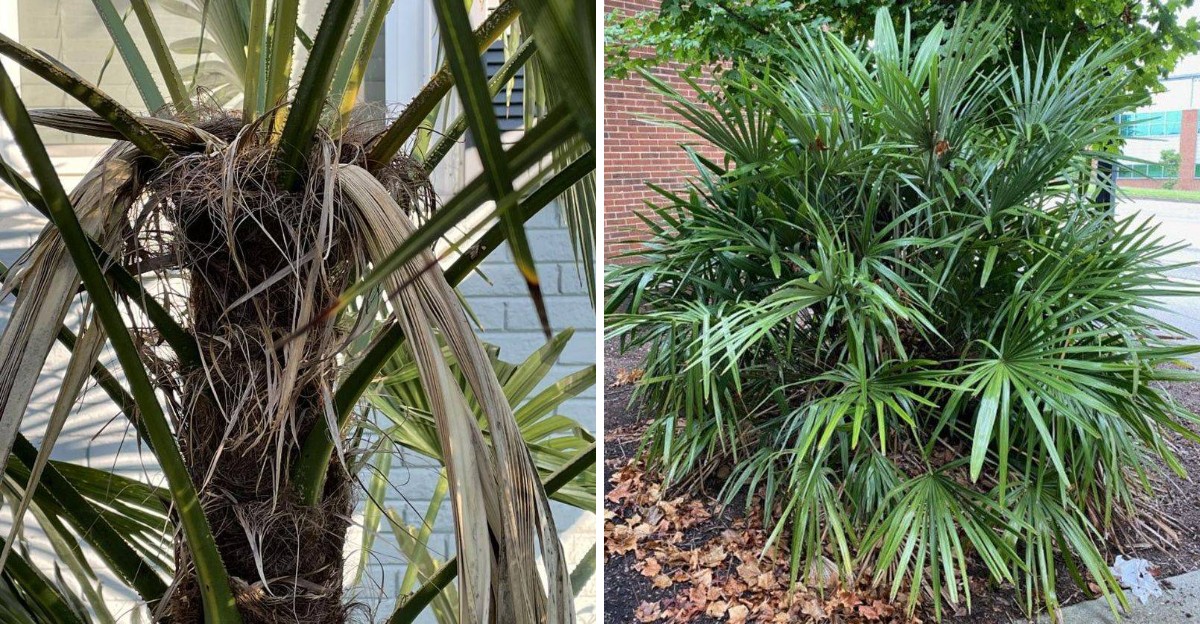
Palm fronds that look fine the week after a hard freeze can turn brown and limp by spring.
Such a delay leaves many homeowners convinced their cold protection worked, at least for a while.
Wrapping the trunk in burlap or blankets is a common precaution. It looks thorough but covers the part of the palm usually least at risk.
Each palm grows from a single bud high in the crown, and that bud largely decides whether it survives a Georgia winter.
Trunk wraps do little to keep that spot warm and can even trap moisture that invites rot. Choose cold-hardy species for new plantings, since some handle winter far better.
Where you focus effort before the next freeze can matter more than how much material ends up on the trunk.
1. Freezing Weather Hits The Top Of The Palm Hardest
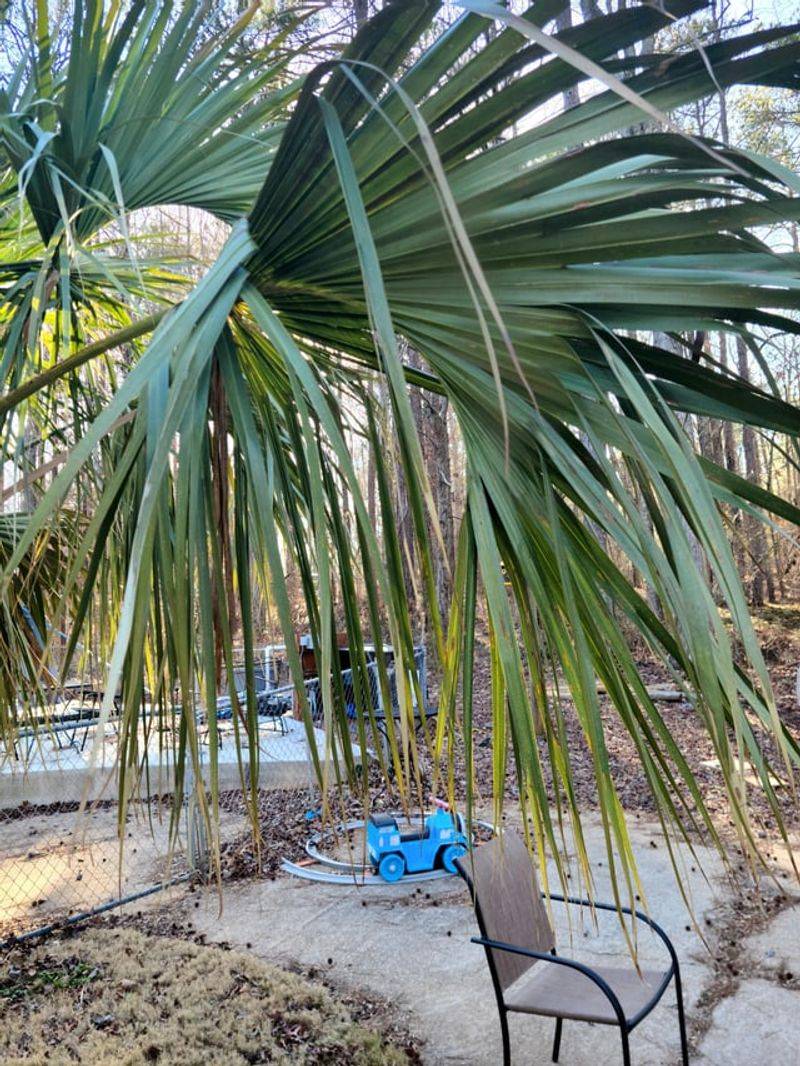
Look up after a hard freeze, and you will usually spot the trouble first in the canopy. Fronds turn tan or brown while the trunk below looks almost unchanged.
Leaves sit out in the open, exposed to cold air, wind, and frost from every side.
Palm trunks are different. Their dense, fibrous tissue holds some warmth, and the lower trunk often stays a bit warmer than the air around the crown on a still, clear night.
Wind makes the upper part of the palm even more vulnerable. A breezy cold night can pull moisture and heat from fronds faster than a calm one, which can lead to more visible browning.
Leaf damage does not automatically mean the whole palm is lost.
Older fronds often take the worst hit, and some palms push out healthy new growth later in spring if the growing point stayed alive. How things turn out depends on the palm type, its size, its health, and how cold it got.
In Georgia, a palm near a warm brick wall may come through a freeze looking much better than the same kind of palm sitting alone in an open lawn.
Paying attention to where the cold lands helps you protect the right part of the tree instead of spending effort where it matters less.
2. Everything Depends On A Single Growing Bud At The Crown
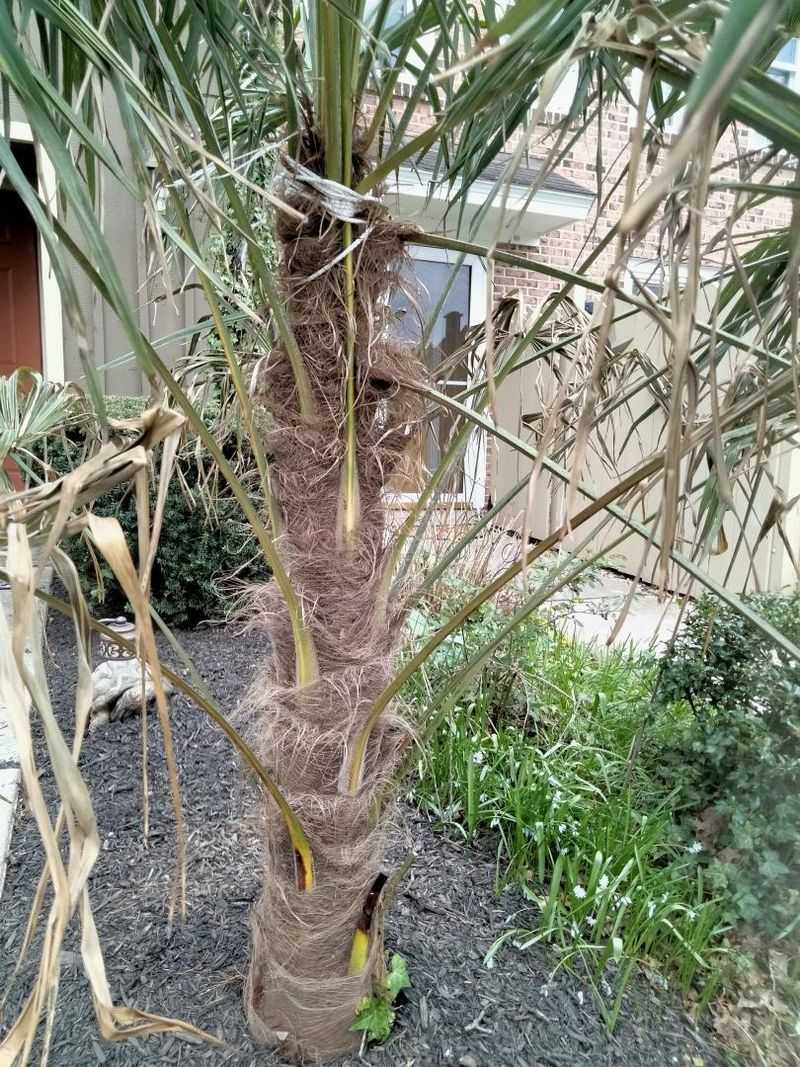
Oak trees can sprout new branches from many spots, but most palms cannot. A typical palm relies on one growing point, often called the bud or heart, tucked deep inside the crown.
Every new frond comes from that single spot at the top of the trunk.
If the bud survives a freeze, the palm has a real chance to recover, even after losing many leaves. If the bud is badly damaged, the tree usually cannot replace it, and it may slowly decline.
Gardeners often check the spear leaf to gauge bud health. That is the newest, tightly folded frond rising from the center of the crown.
A spear that pulls out easily with a gentle tug can be a warning sign of rot.
Results are not always clear right away. Damage inside the crown may take weeks or even months to show, so an early inspection does not always tell the full story.
Your Georgia Garden Changes Every Week. Your Plan Should Too.
Gardening in Georgia changes quickly throughout the season. Every Friday you’ll receive a simple weekly plan showing exactly what to plant, prune, fertilize, harvest, and protect so you never miss the right timing.
Some clumping palms, like needle palms, grow several stems, which gives them more than one bud to fall back on.
Single-trunk palms in Georgia, such as queen palms, do not have that backup. Knowing this simple fact explains why gardeners focus their winter worries on the crown instead of the trunk.
3. Protecting The Crown Matters More Than Wrapping The Trunk
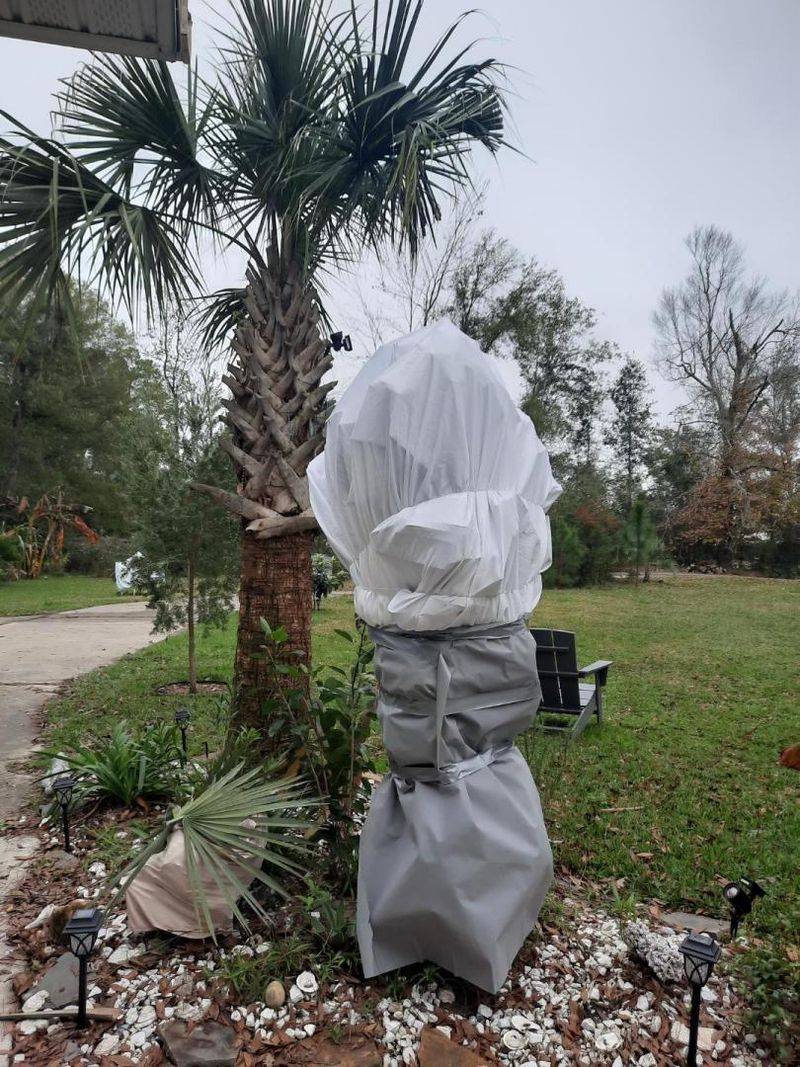
Burlap around a trunk looks cozy, but it misses the part of the palm that needs help most. A wrap around the trunk does very little to shield the bud sitting up at the top.
Shifting your attention upward is a better use of your time and materials.
On smaller palms, some gardeners gently pull the fronds upward and tie them loosely with soft twine. Bundling the leaves this way may give the bud a little extra cover from wind and frost.
Covering the whole crown and canopy with breathable fabric can also help during a short cold spell. Remove coverings once temperatures rise so moisture and heat do not build up.
Plastic sitting directly on leaves can trap moisture and may cause more harm than good.
Watering before a freeze can help too, since moist soil tends to hold and release more heat than dry soil. Just avoid soggy conditions, because wet crowns and roots can invite rot problems.
Tall palms are another story, and most homeowners cannot safely reach the crown.
Climbing a ladder on an icy Georgia morning is risky, so for big trees it is often wiser to accept some leaf damage. Safety should come before any palm.
4. Frost Cloth Can Help Protect Smaller Palms During Cold Snaps
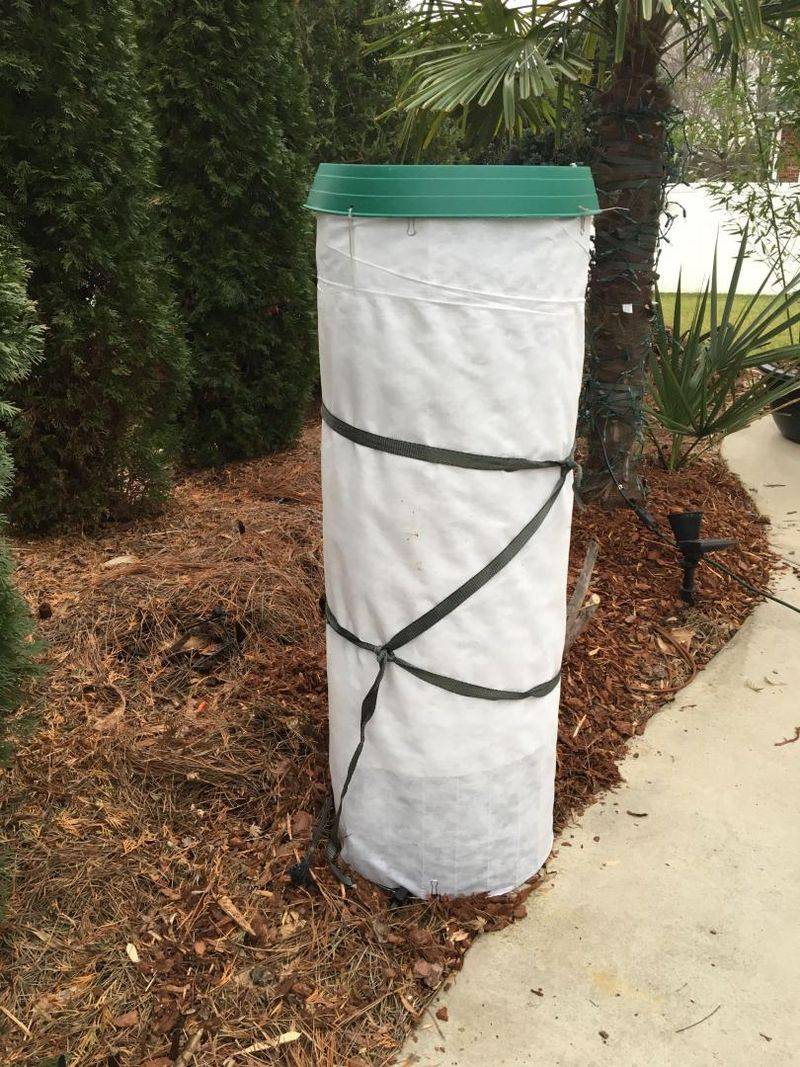
Short palms have one big advantage in winter. You can actually reach them, which makes frost cloth a practical option.
Frost cloth is a lightweight fabric that lets air and some light through while holding in heat rising from the soil.
To work well, the cover should drape all the way to the ground. Anchoring the edges with bricks or stakes traps more warmth around the plant than a cover that only wraps the top.
Old sheets or blankets can work in a pinch for a night or two.
Some gardeners add a heat source under the cover, like old-style incandescent string lights. If you try this, use outdoor-rated lights and keep bulbs from touching the fabric directly.
LED lights give off very little heat, so they offer less benefit.
Frost cloth is not a cure-all, and it works best for brief cold snaps rather than long stretches of bitter weather. A covered palm can still take damage during an unusually severe freeze.
Pull the cover off once the cold passes so the palm gets sunlight and fresh air.
Across much of central and north Georgia, keeping a roll of frost cloth in the garage before winter arrives can save a scramble when the forecast suddenly drops.
5. Copper Fungicide May Help When Freeze Damage Threatens The Bud
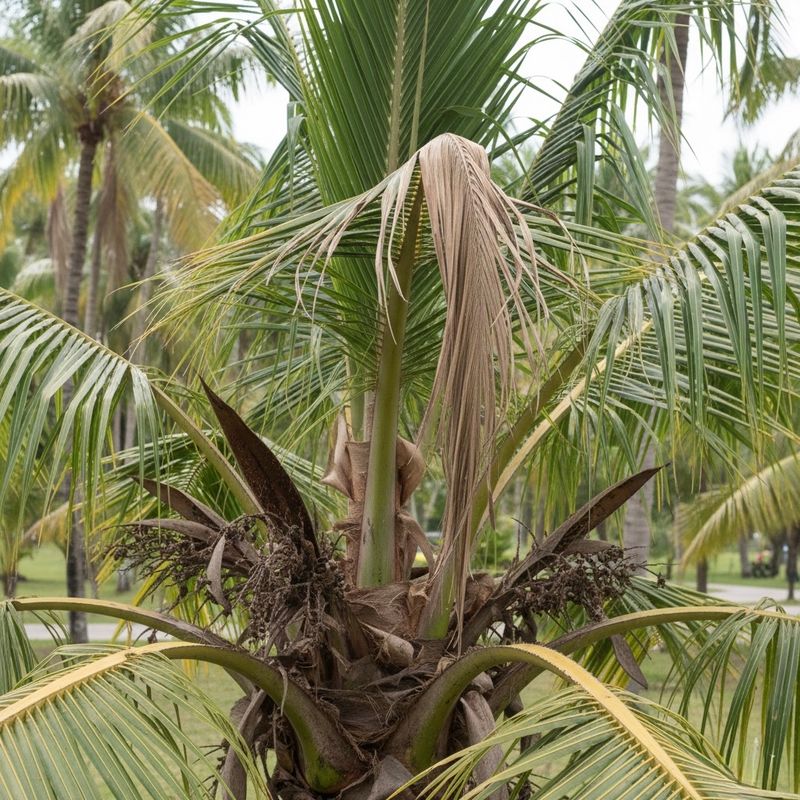
Cold damage is only part of the problem. Once tissue in the crown is injured, fungi and bacteria may move in and cause rot.
University Extension services often mention copper-based fungicides as one option after a freeze.
Spraying or drenching the crown with a copper product may help protect damaged tissue from infection. It does not repair cold injury, and it cannot save a bud that is already too far gone.
Timing matters, since the goal is to treat soon after a damaging freeze while tissue is still vulnerable. Some gardeners repeat the treatment, but always follow the label for rates and intervals.
Wear gloves and eye protection whenever you handle any fungicide.
Not every palm needs this step. If your palm only lost a few older fronds and the spear looks firm, treatment may be unnecessary, so look closely before reaching for a sprayer.
Smaller palms are much easier to treat than tall ones, simply because you can reach the crown.
If you are unsure, your county Extension office in Georgia can help you decide whether treatment makes sense. Their staff can also point you toward products labeled for use on palms.
6. Brown Fronds Should Stay Put Until Spring Growth Appears
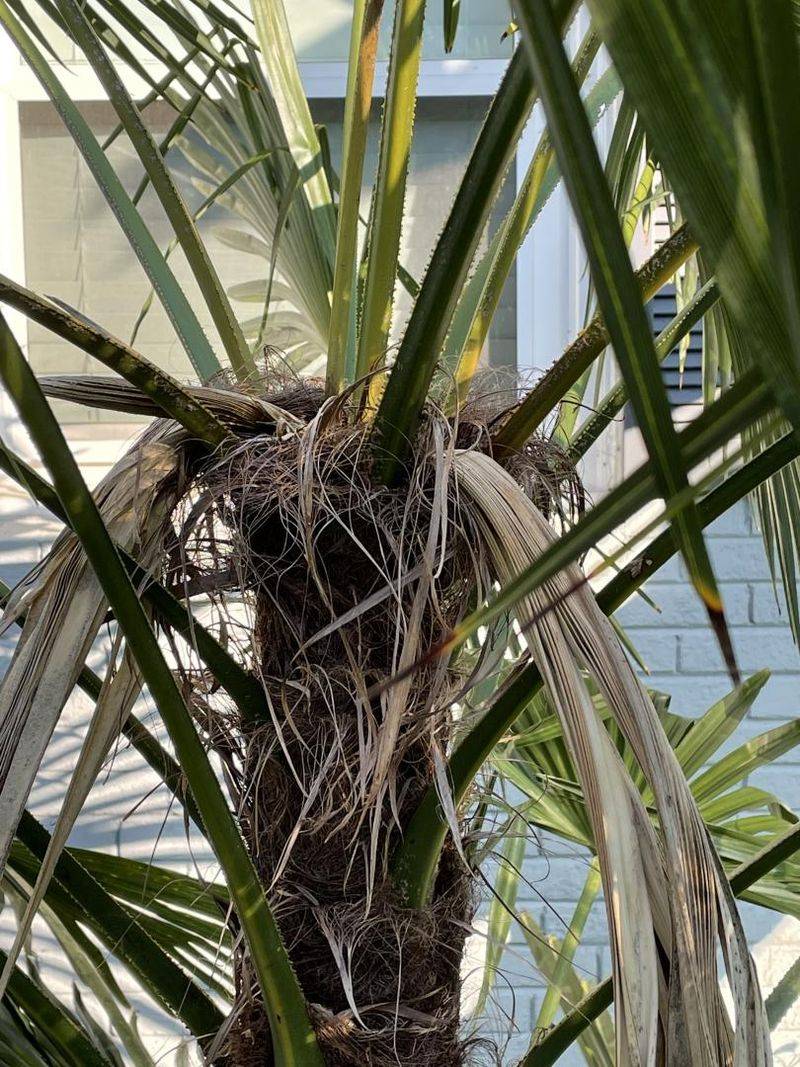
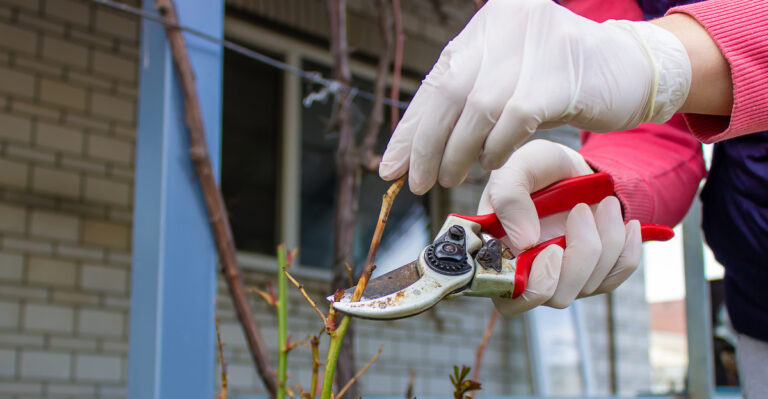
Ugly fronds tempt almost everyone to grab the pruning saw. Waiting is usually the smarter move, even if the palm looks rough for a while.
Damaged leaves can still offer the bud some shelter from later cold snaps that winter may bring.
Fronds that are only partly brown may also still contain green tissue that helps feed the palm. Cutting them too soon removes some of that energy right when the tree needs to recover.
Spring tells you what you need to know.
Once warm weather settles in and new fronds start pushing out of the center, you can see which leaves are truly spent. At that point, trimming fully brown fronds is reasonable and makes the palm look tidier.
Avoid cutting green fronds just for appearance, since heavy pruning can weaken a palm over time.
Recovery speed varies a lot depending on the species and how bad the injury was. Some palms bounce back in a few months, while others take a full growing season or longer to look normal again.
In Georgia, new growth often appears sometime in late spring as temperatures warm, though timing shifts from year to year. Patience gives your palm the best chance to show whether it made it through.
7. Needle Palms And Windmill Palms Handle Cold Far Better Than Queen Palms
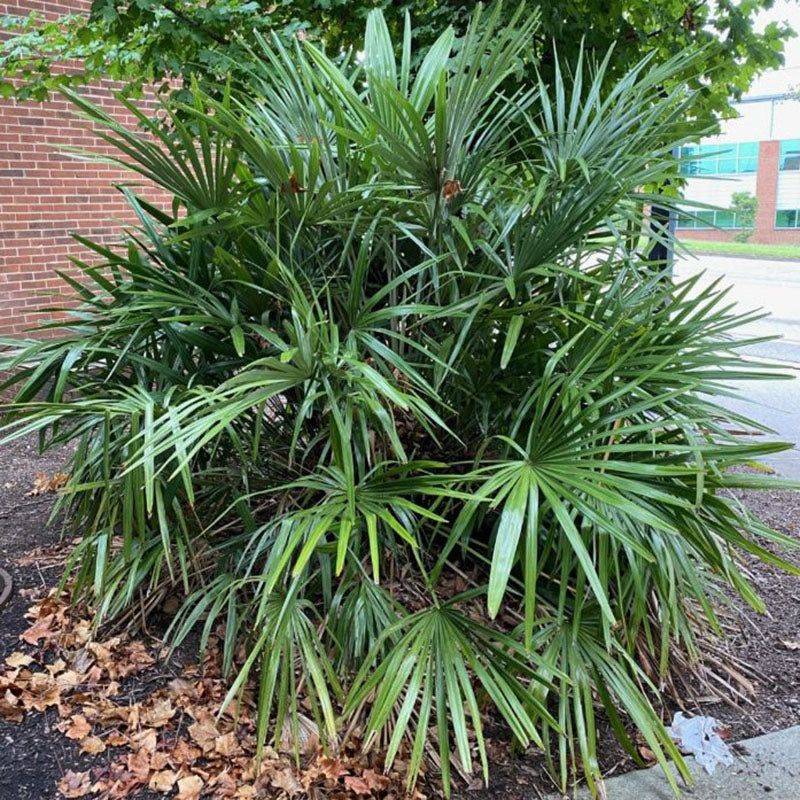
Picking the right palm may beat any winter wrap or cover. Some species simply handle cold much better than others.
Needle palm is native to the Southeast and is often listed among the most cold-hardy palms in the world.
Its clumping habit and sharp needles at the base make it a sturdy choice for shady or wooded spots. It grows slowly, but it rarely needs fussing in winter.
Windmill palm is another tough option that many gardeners plant well inland. Its slender trunk and fan-shaped leaves fit smaller yards, and it often shrugs off cold that would brown other palms.
Strong winds can shred its leaves, so a sheltered spot helps.
Queen palms are a different story.
They look tropical and grow fast, but they are sensitive to frost and often suffer serious damage in hard freezes. Even along the Georgia coast, queen palms can struggle during a colder than normal winter.
Native cabbage palm and dwarf palmetto are also worth considering for many landscapes.
Hardiness can still vary with plant age, health, and local conditions, so a young palm may need extra care at first. Choosing tougher species saves you work and worry each winter.