15 Arizona Desert Perennials That Multiply Every Winter Without Any Help
Most plants in a Phoenix or Tucson yard look tired by the end of summer, but a handful quietly start making copies of themselves once the cool weather arrives. Winter rains and mild days give these tough natives the perfect window to drop seeds, send out pups, and spread new stems.
That means more blooms, more pollinators, and more ground covered, all without extra water or a trip to the nursery. Here are 15 desert perennials that do the hard work for you every single winter.
1. Brittlebush
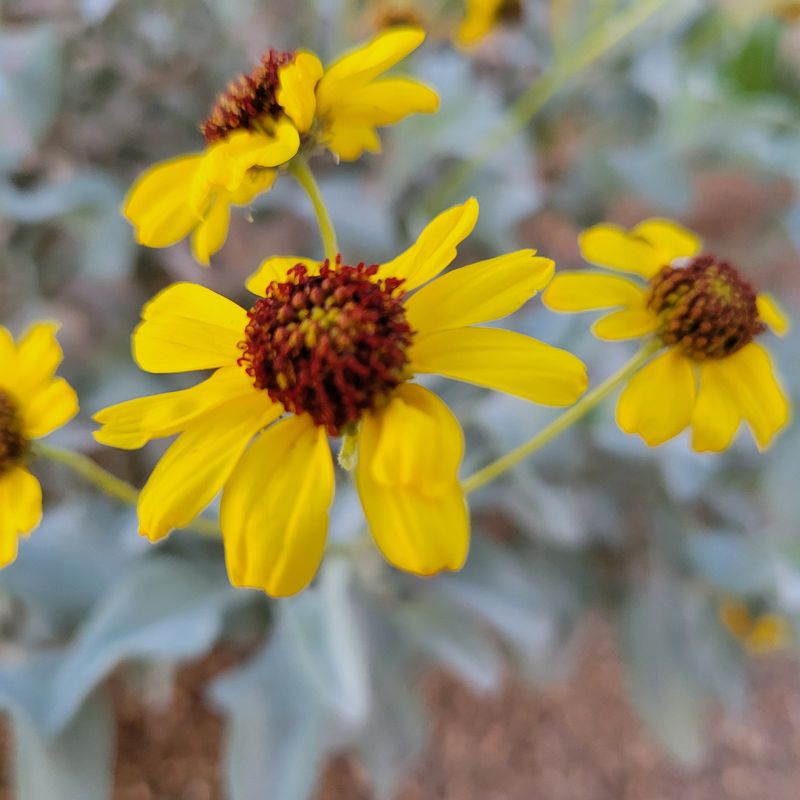
Drive through the Tucson foothills in February and you will see hillsides turned gold almost overnight. Brittlebush is the plant behind that show, and it pulls off the trick in home yards too.
Its fuzzy, silver leaves reflect harsh sunlight, which helps it shrug off summer heat that would scorch softer shrubs. Once winter rains arrive, the plant pushes out tall stems topped with cheerful yellow daisies.
Those flowers set loads of seed, and many of them sprout on their own in bare, gravelly spots nearby.
Birds such as finches and sparrows like to pick through the seed heads, and native bees crowd the blooms on warm afternoons. You get a busy, living yard without lifting a hose once the plants are established.
In many low-desert neighborhoods, brittlebush survives on rainfall alone.
Plant a few in fall, give them occasional water the first year, and then mostly leave them be. Trim spent flower stalks in late spring if you want a tidier look, but leave some seed heads if you want more seedlings next year.
A quick tip: the stems ooze a fragrant resin that early desert peoples once used as a glue and even as incense. Pretty handy for a roadside shrub.
2. Desert Globemallow
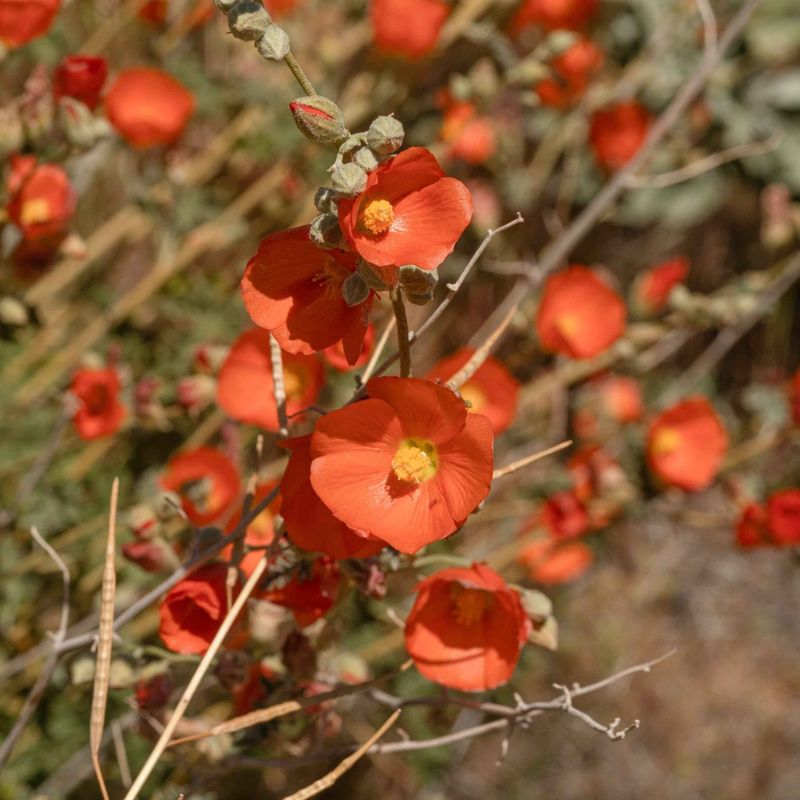
Picture a cup of apricot sherbet sitting on a gray-green stem. That is about the best way to describe a globemallow flower, and one healthy plant can carry hundreds of them.
Sphaeralcea ambigua is native across the Sonoran Desert, so it already knows how to handle caliche soil and 110-degree Julys. Cool-season rains wake it up, and by late winter it is flowering hard.
After the petals fade, small seed capsules split open and scatter seeds that sprout readily in disturbed gravel.
Here is why homeowners keep it around. Globemallow feeds a crowd of native bees, including tiny specialist bees that rely on mallows for pollen.
Hummingbirds stop by as well, and quail often shelter underneath the loose, airy branches.
Care is refreshingly simple. Water deeply once or twice a month during the first summer, then let nature take over.
Cut the plant back by about half in late spring to keep it from getting leggy.
One small warning: the leaves have tiny star-shaped hairs that can irritate sensitive skin, so wear gloves when pruning. Beyond that, expect a steady supply of free volunteers popping up along walkways each winter, ready to transplant wherever you want more color.
3. Parry’s Penstemon
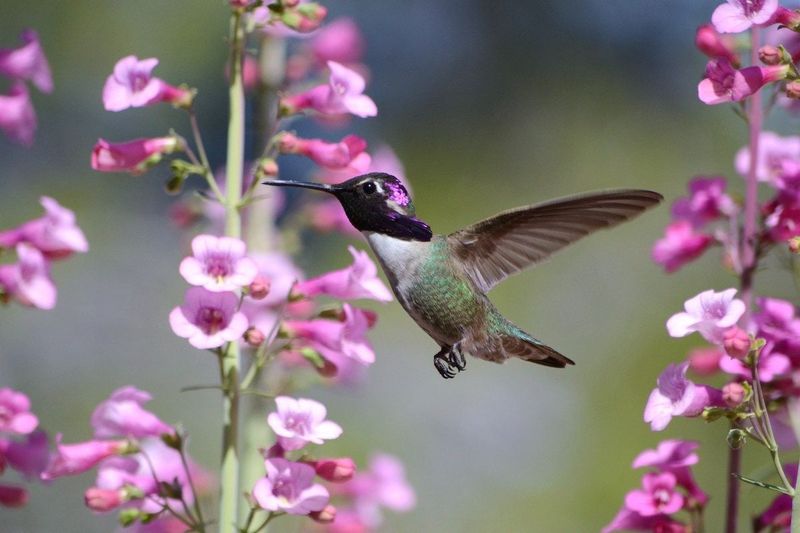
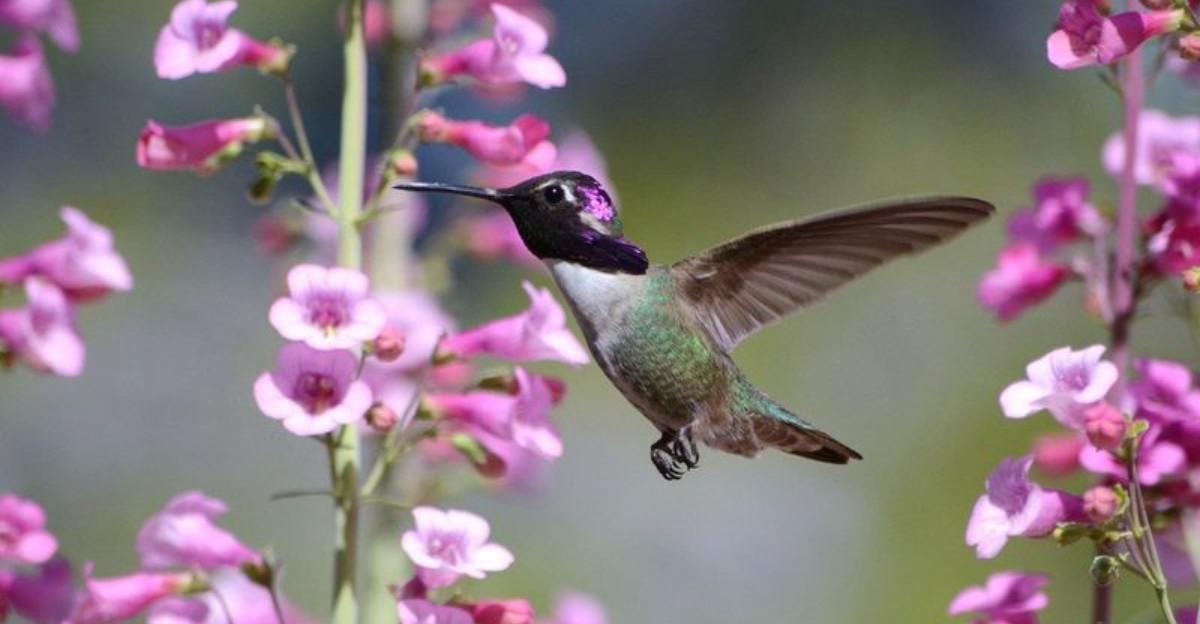
Hummingbirds seem to have a calendar marked for Parry’s penstemon. The moment those rosy pink spikes open in late winter, the tiny birds show up and start defending them like treasure.
Your Arizona Garden Changes Every Week. Your Plan Should Too.
Gardening in Arizona changes quickly throughout the season. Every Friday you’ll receive a simple weekly plan showing exactly what to plant, prune, fertilize, harvest, and protect so you never miss the right timing.
Native to southern Arizona, this perennial spends summer as a low rosette of smooth, blue-green leaves. Winter moisture triggers tall flower stalks that can reach three or four feet.
Each spike holds dozens of tubular blooms built perfectly for a hummingbird beak.
After flowering, the stalks dry out and release thousands of fine seeds. Leave them standing for a few weeks, and you will likely find a carpet of baby penstemons next fall.
Many gardeners simply shake the dry stalks over bare ground to help things along.
Plants are fairly short-lived, often lasting three to five years, but that hardly matters when they replace themselves so reliably. Give them full sun and fast-draining soil, and avoid rich compost or heavy watering, which can cause root rot.
Fall is the best time to sow seed or set out transplants in Phoenix and Tucson. Mix Parry’s with firecracker penstemon for a longer bloom season.
Together, they turn a plain corner into a hummingbird refueling station that grows bigger every year.
4. Angelita Daisy
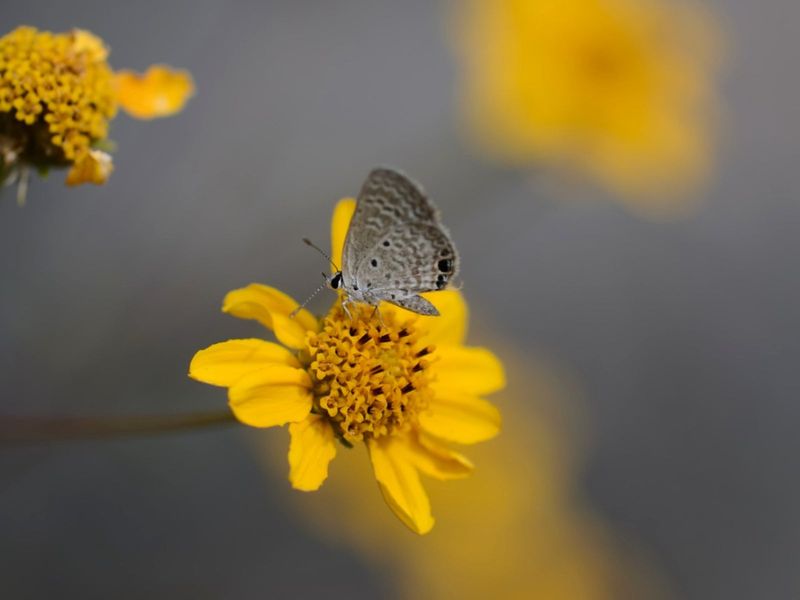
Some plants shout. Angelita daisy just keeps smiling, putting out little yellow flowers nearly every month of the year, with a big flush in late winter and spring.
Hymenoxys acaulis forms a neat, grassy mound only about a foot tall. That compact size makes it a favorite for edging walkways, filling gaps between boulders, and softening the hard lines of a patio.
It takes full sun and reflected heat from walls without complaint.
Over time, it spreads in two ways. The clump slowly widens, and seeds drop into nearby cracks and gravel where fresh plants appear.
You will not get an aggressive takeover, just a gentle filling-in that looks natural.
Small butterflies and native bees visit the blooms constantly. Because the plant hugs the ground and stays tidy, it also leaves fewer hiding spots than dense, leafy groundcovers, which may make the edge of your patio a little less inviting to scorpions looking for cover.
Water every week or two in summer and much less in winter. Shear off old flower stems once or twice a year for a fresh look.
Did you know? The name Angelita means little angel in Spanish, a fitting label for such an easygoing yard helper.
5. Chuparosa
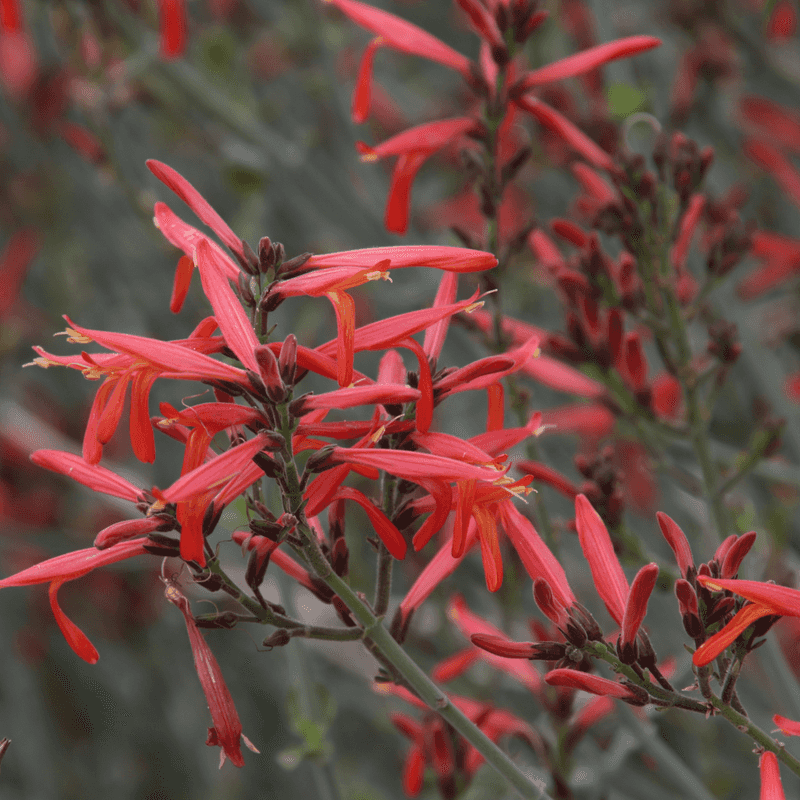
Chuparosa translates roughly to hummingbird sucker, and anyone who has planted one understands the name within a week. In the depths of winter, when few other plants flower, this shrub lights up with scarlet tubes and draws hummingbirds like a magnet.
Justicia californica grows in desert washes across southern Arizona. Its leaves are small and often drop in drought, leaving green stems that handle photosynthesis on their own.
That clever adaptation lets it survive long dry stretches with barely a sip.
Where does the multiplying come in? Arching stems that touch the soil can root where they land, and seeds sprout in moist pockets after winter rains.
A single plant often turns into a small thicket within a few seasons.
Those dense, leafy stems give nesting cover to birds like verdins and gnatcatchers. Butterflies and moths feed on the nectar too, and the flowers are even edible, with a mild cucumber taste.
Plant chuparosa in fall so roots settle before summer. Place it where it can sprawl, maybe along a wall or dry creek bed.
Occasional deep watering keeps it greener, but it can get by on very little once established.
6. Agave
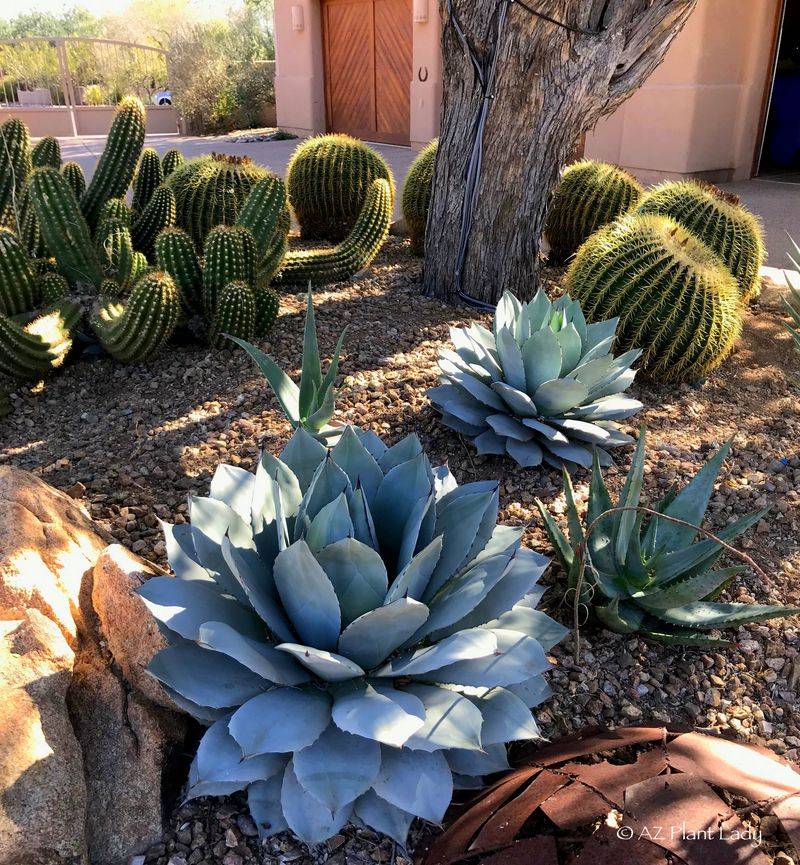
Ask any Arizona gardener about agaves, and you might hear the same half-joking complaint: they never stop making babies. That habit is exactly why they belong on this list.
Many agave species send out underground runners that pop up as pups around the mother plant. Cool, damp winters seem to encourage a fresh round of them.
Some kinds also produce bulbils, tiny plantlets that form right on the flower stalk and drop to the ground ready to grow.
These rosettes laugh at heat, poor soil, and months without rain. Once a mature agave flowers, it finishes its life, but by then it has usually left behind a whole family to carry on.
The towering bloom stalks are a feast for bats, orioles, and hummingbirds. Nectar-feeding bats in particular have a long partnership with agaves, and bats that visit your yard may also snack on night-flying insects like mosquitoes.
Choose a spot away from walkways, since the tips are sharp. Parry’s agave, Queen Victoria, and octopus agave all handle low-desert conditions well.
Dig and share extra pups each winter, or let them fill a slope for a bold, almost zero-water landscape.
7. Aloe
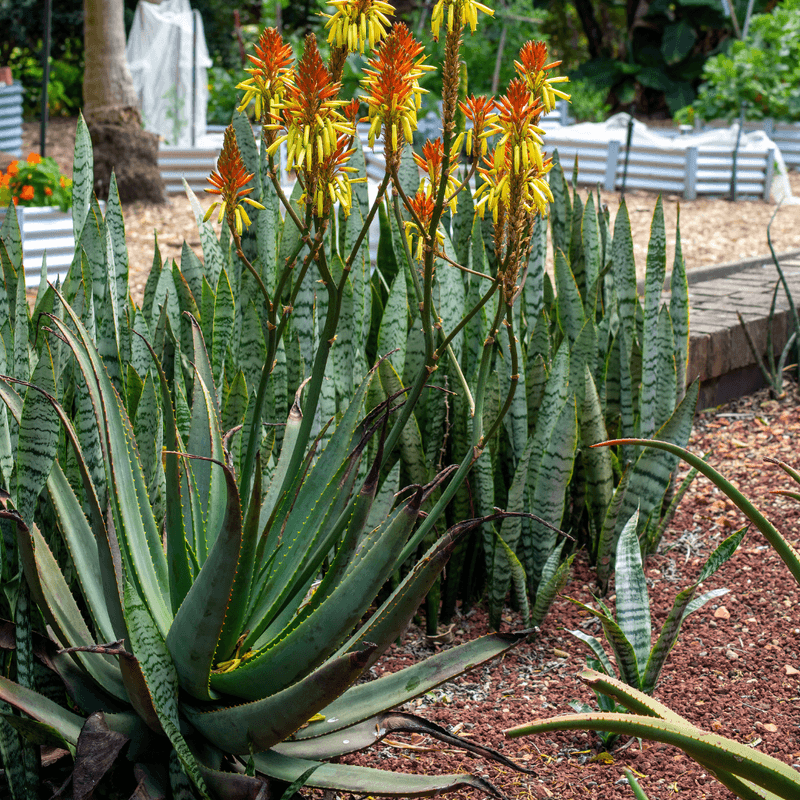
January in Phoenix can feel a little flat, until the aloes erupt. Tall candelabras of orange, red, and yellow flowers rise above chunky rosettes, turning ordinary yards into hummingbird hangouts.
Aloes come from Africa rather than Arizona, yet many species thrive in low-desert yards with almost no effort. Aloe vera, coral aloe, and Aloe ferox are all dependable choices.
Most of them form tight clumps by producing offsets around their base, and winter is when that clustering really picks up.
Each year, a single rosette can become three, then six, then a sprawling colony. Pull a pup, let the cut end dry for a few days, and tuck it into gravelly soil.
It will root with little fuss.
The winter bloom timing is a big deal for wildlife. Resident Anna’s hummingbirds depend on cold-season nectar, and aloes provide it when little else is flowering.
A few care notes help. Give plants some afternoon shade in the hottest spots, since intense summer sun can turn leaves reddish.
Protect young pups from hard frost with a cloth on the coldest nights. Otherwise, aloes are the definition of a plant you can mostly ignore.
8. Prickly Pear Cactus
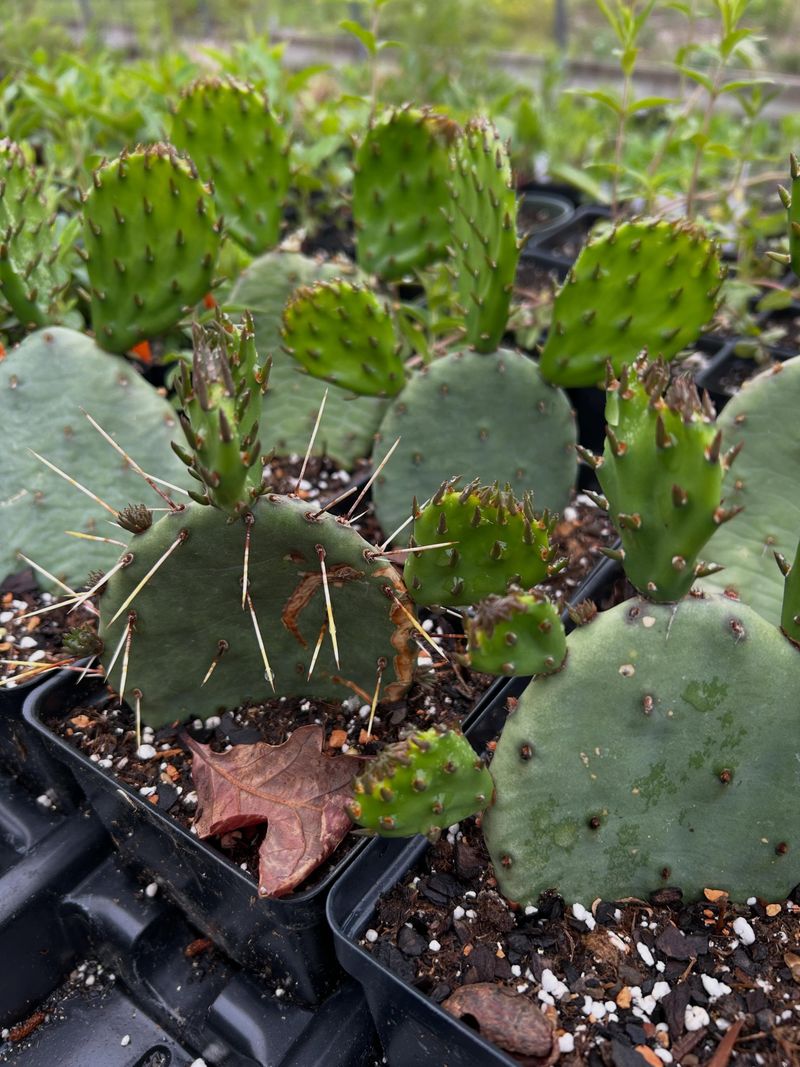
Drop a single prickly pear pad on the ground and walk away. Come back in a few months, and it has likely grown roots and started a new plant.
Few desert perennials are this determined.
Opuntia species spread mainly through pads that break off and root wherever they land. Birds and critters also scatter the seeds after eating the sweet, purple fruit.
Over time, a lone plant can become a thick colony without you doing a thing.
That colony works hard for local wildlife. Cactus wrens and thrashers nest among the spiny pads, while bees crowd the spring flowers.
Javelina and many birds snack on the fruit in late summer.
Prickly pear also makes a living fence. A row along a property line can discourage foot traffic and give ground-feeding birds a safe retreat.
Some roadrunners hunt near these thickets, and roadrunners are known to eat scorpions and lizards.
Plant pads in late spring or early fall, setting them upright in dry soil. Skip watering for a couple of weeks until roots form.
Varieties like Santa Rita add purple tones, while Engelmann’s is a classic native choice for Sonoran yards.
9. Dalea
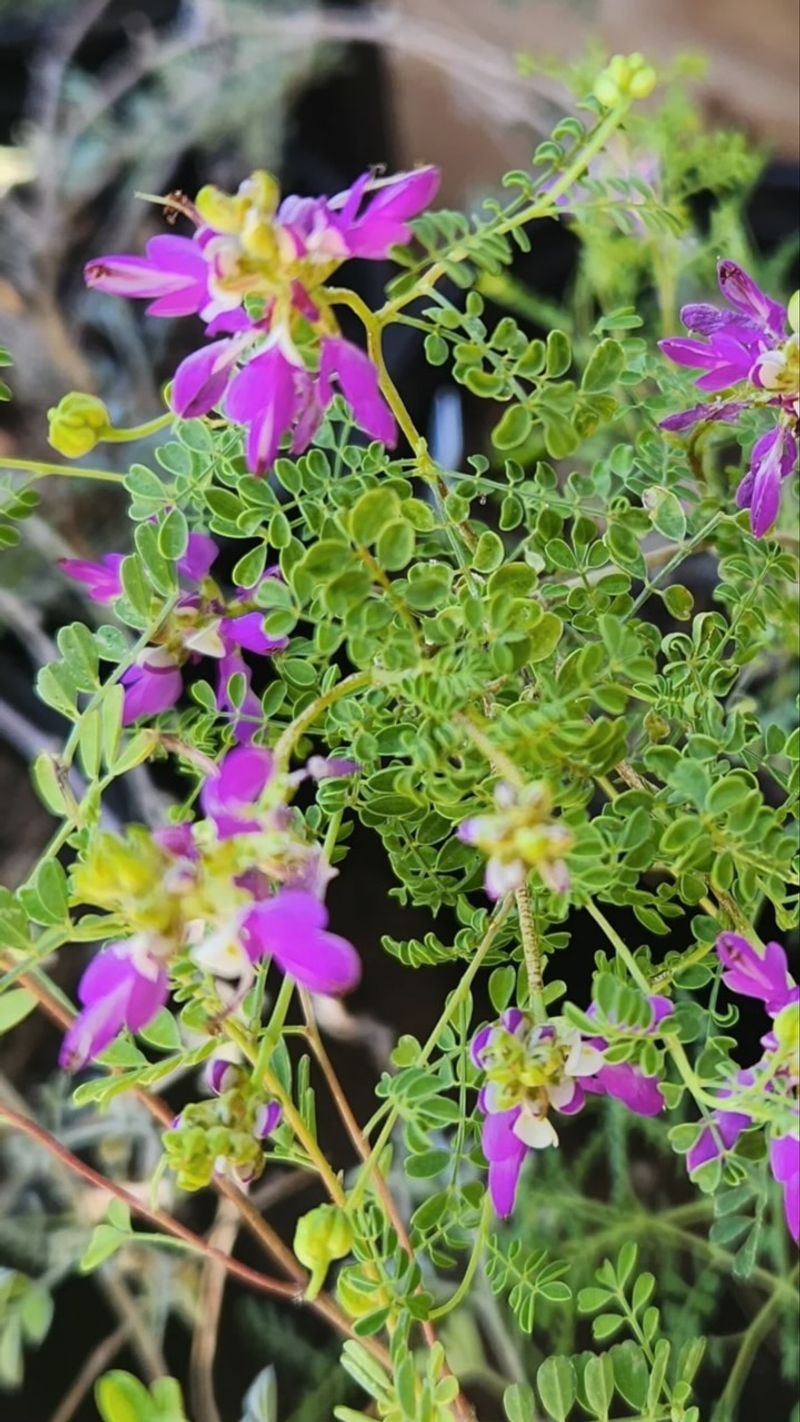
If you have ever brushed past a soft, feathery groundcover sprinkled with purple flowers in a Phoenix median, there is a good chance you met a dalea.
This group includes several Southwest natives, from trailing indigo bush to black dalea and the shrubby feather dalea. They share delicate, finely divided leaves and pea-like flowers in shades of purple, blue, and rose.
Many bloom from winter into spring, right when yards need color most.
Daleas belong to the pea family, which means their roots team up with soil bacteria to add nitrogen. That quirky talent helps them grow in poor, rocky ground where other plants struggle.
Some species reseed freely, and trailing types root along their stems as they spread.
The payoff for wildlife is solid. Bees and butterflies work the flowers, and quail, doves, and finches pick at the seeds later in the season.
A patch of dalea can turn a bare slope into a small feeding ground.
Water deeply every couple of weeks during the first summer, then back off. Avoid heavy pruning, since daleas look best with their natural, loose shape.
Trailing indigo bush is especially handy for controlling erosion on sloped lots.
10. Society Garlic
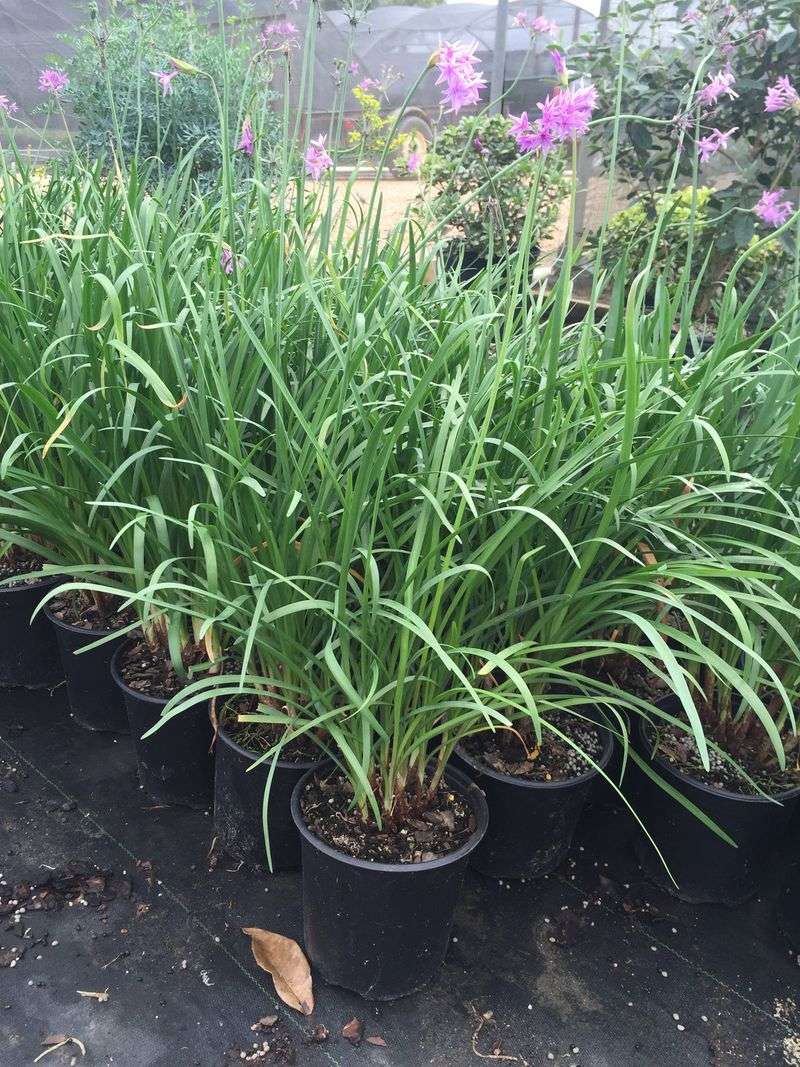
Walk past a patch of society garlic on a warm day and you will catch a faint, garlicky smell. That scent is part of its charm, and it may also be part of its usefulness.
Tulbaghia violacea is a South African perennial that grows from small bulbs and fleshy roots. Clumps expand steadily each year as new bulbs form underground, and winter’s cooler weather lets the plant build energy for its next spread.
Before long, a single pot fills an entire border.
Lavender star-shaped flowers bob on tall stems for much of the year, drawing small bees and butterflies. The strong-smelling leaves are often avoided by rabbits, and many gardeners find the scent may help discourage mosquitoes from lingering near planted areas.
Results vary, but it rarely hurts to try.
Society garlic likes a bit of afternoon shade in the low desert and appreciates weekly water during summer. It is not a native, so pair it with desert plants rather than using it everywhere.
To share, dig up a clump in fall, split it into pieces, and replant. Fun bonus: the leaves are edible and can be snipped into salads like chives, though the flavor is punchy.
11. Trailing Rosemary
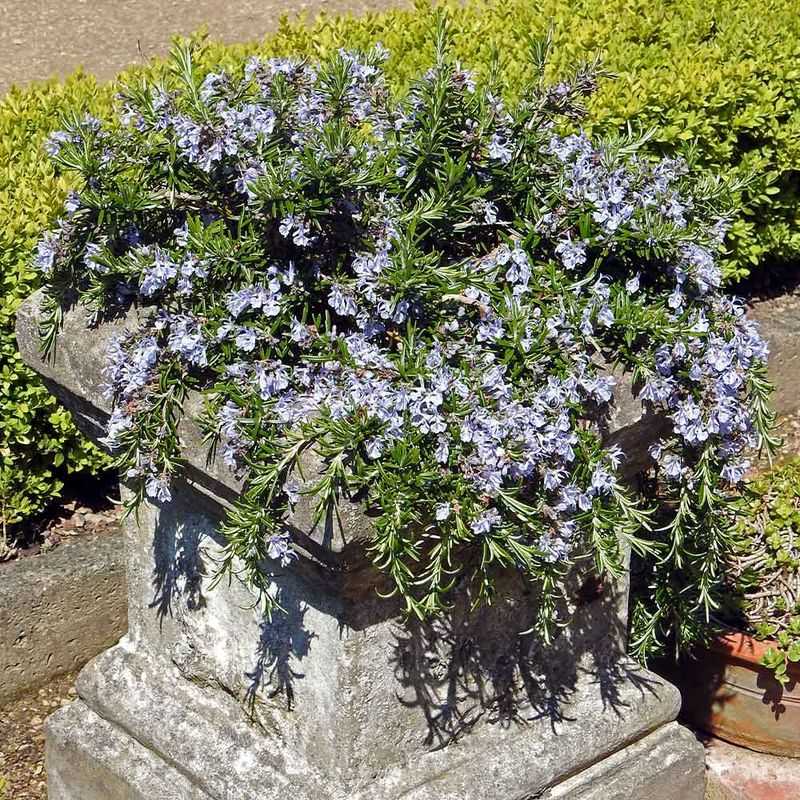
Few things beat snipping fresh rosemary for Sunday dinner straight from a plant that grew itself. Trailing rosemary offers that simple joy while covering bare ground with fragrant green.
This Mediterranean herb handles Arizona’s alkaline soil and summer heat surprisingly well. The low, spreading form cascades over walls and banks, and its stems often root where they touch damp soil.
Winter is prime time for that layering, since cooler temperatures and occasional rain keep the ground moist.
Tiny blue flowers appear from late fall through spring, feeding honeybees and native bees when food is scarce. The resin-rich leaves carry a strong scent that many insects seem to avoid, so a patch near a seating area may help make it less inviting to mosquitoes.
Care is easy. Plant in full sun with excellent drainage, and water deeply every week or two in summer, much less in winter.
Overwatering is the fastest way to trouble, so resist the urge to baby it.
Want more plants? Pin a low stem to the soil with a rock, wait a few weeks, and cut the rooted piece free.
You now have a new rosemary to tuck somewhere else.
12. Feathery Senna
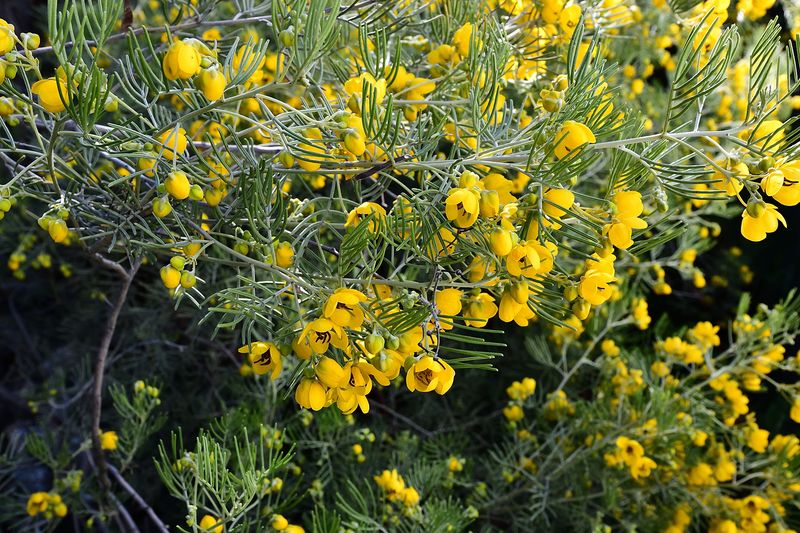
Right around the time holiday lights come down, feathery senna starts its own light show. Clusters of buttery yellow flowers cover the silvery foliage from late winter into spring.
Native to Australia, Senna artemisioides has adapted beautifully to Phoenix and Tucson yards. Its needle-like, gray leaves lose very little water, letting the shrub stay full and handsome through brutal summers.
It handles winter cold down into the mid-20s without much fuss.
After blooming, the plant forms flat seed pods that dry and split open. Seeds land nearby, and seedlings sprout readily in the gravel under and around the shrub.
Some gardeners pull extras, while others let them fill out a natural hedge.
Bees visit the flowers constantly, keeping the yard buzzing even in cooler months. The dense, rounded shape also gives small birds a sheltered perch away from hawks.
Grow it in full sun with fast drainage. Water every two to three weeks once established, and prune lightly right after flowering to prevent it from turning woody.
Removing pods before they open can limit reseeding if you want fewer volunteers. For a low hedge that asks almost nothing in return, it is tough to beat.
13. Germander Sage
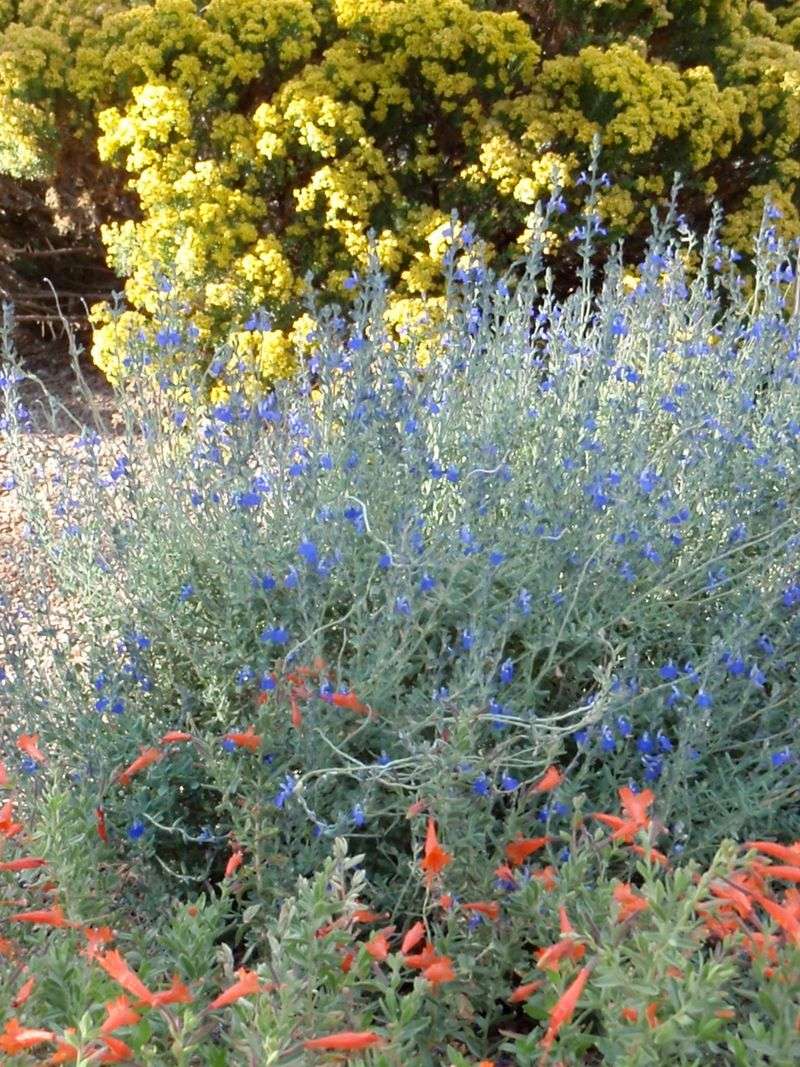
Blue is a rare color in desert gardens, which makes germander sage feel like a little gift. Its vivid, true-blue flowers pop against silvery leaves in a way few other plants can match.
Salvia chamaedryoides hails from the Chihuahuan Desert, so it is used to hot sun, rocky soil, and long dry spells. It stays low, usually under two feet, and spreads by underground runners.
Through the cool season, those runners quietly creep outward, and new shoots appear a short distance from the parent clump.
Hummingbirds love the flowers, which show up mainly in spring and fall with scattered blooms in between. Bees and butterflies visit often too.
The fuzzy, aromatic leaves are usually ignored by rabbits, a big plus for suburban yards.
Plant it where it can roam, such as between boulders or along a dry wash. It looks especially nice under larger shrubs like feathery senna or near agaves.
Give it deep water every week or two in summer and less during winter. Shear it back lightly after bloom to encourage fresh growth.
To share, slice off a rooted runner with a trowel and replant it in fall for a quick start.
14. Hartweg’s Sundrops
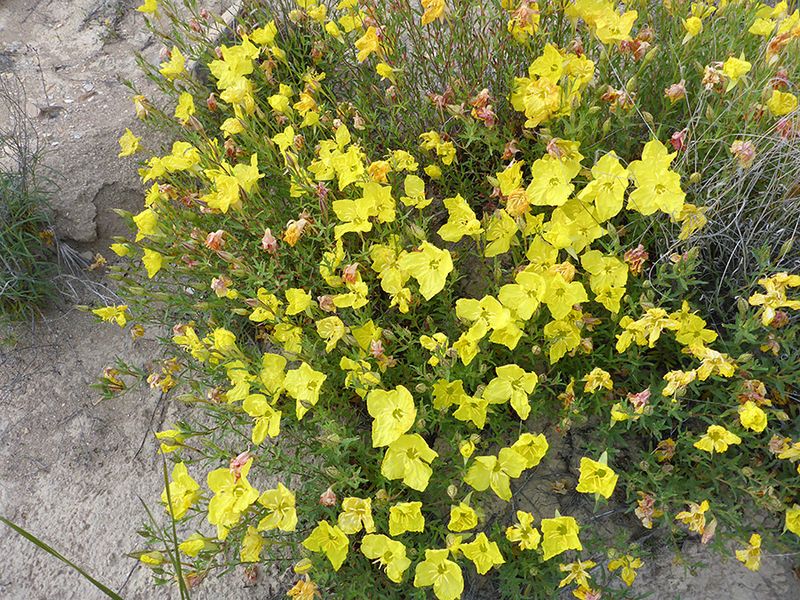
Sundrops have a funny habit. Their big, lemon-yellow flowers often open late in the afternoon, just when most of us step outside after a hot day.
Calylophus hartwegii is native to Arizona and nearby states. It forms a low, spreading mound of narrow green leaves topped with papery, four-petaled blooms up to two inches wide.
The main flower show runs from spring into fall, but cool winter months are when the plant does its real building.
During winter, roots expand and stems lengthen, setting up a wider patch for the season ahead. Seeds from the previous year also sprout after winter rains, filling in bare soil around the parent plant.
Evening-opening flowers attract moths and other night pollinators, adding a different kind of wildlife to your yard. Native bees visit in the morning before the petals fade.
A patch of sundrops can support a surprising variety of visitors.
Plant in full sun and well-drained soil, and water deeply every week or so in summer. Cut stems back in late winter to encourage bushy new growth.
It works nicely spilling over retaining walls, and it pairs well with blue germander sage for bright, cheerful contrast.
15. Arizona Milkweed
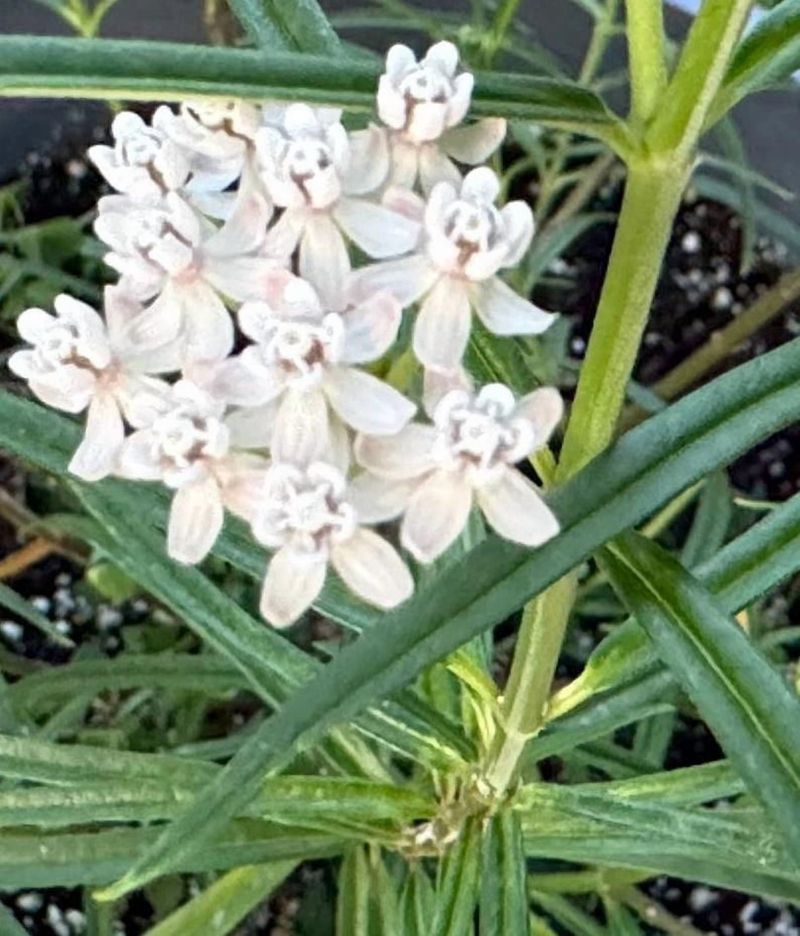
Want monarch butterflies stopping by your backyard? Arizona milkweed may be the single best plant to make it happen.
Asclepias angustifolia is a slender native with narrow leaves and clusters of small white to pale pink flowers. Monarchs and queen butterflies lay their eggs on milkweed, and the caterpillars feed only on these plants.
Without milkweed, those butterflies simply cannot raise the next generation.
After blooming, the plant forms slim pods filled with silky seeds. When the pods split, the fluffy seeds float away on the breeze and land in nearby soil.
Many sprout during the cool, moist months, so a small patch tends to grow year after year.
Bees, wasps, and hummingbirds visit the nectar too, turning the plant into a busy hub. Seeing striped caterpillars munch the leaves is part of the fun, so resist the urge to spray them.
Plant in fall in a spot with morning sun and a little afternoon shade. Water weekly in summer, and let the plant go partly dormant in cold snaps.
Skip tropical milkweed, which can confuse monarch migration timing. Arizona milkweed keeps things natural and gives local butterflies a reliable home base.