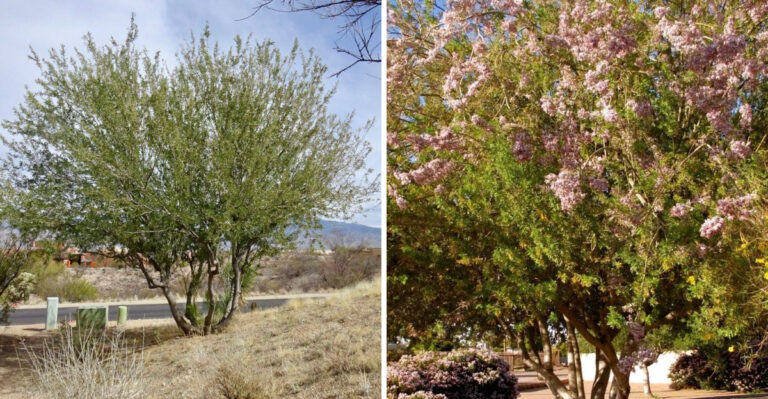
The Native Arizona Tree Homeowners Are Planting Instead Of Fast-Fading Bradford Pear
Bradford pear trees have been a popular landscaping choice for decades, but their reputation is starting to crack along with their branches. In low-desert Arizona, where heat, drought, and monsoon winds push trees to their limits, a tree with weak branch structure is a real liability.
Desert willow (Chilopsis linearis) is a native Arizona alternative worth considering for homeowners who want seasonal flowers, wildlife activity, and lower water use. It is not a perfect swap for every yard, but its regional fit for Phoenix and Tucson landscapes is hard to argue with.
Why Bradford Pears Become a Structural Liability
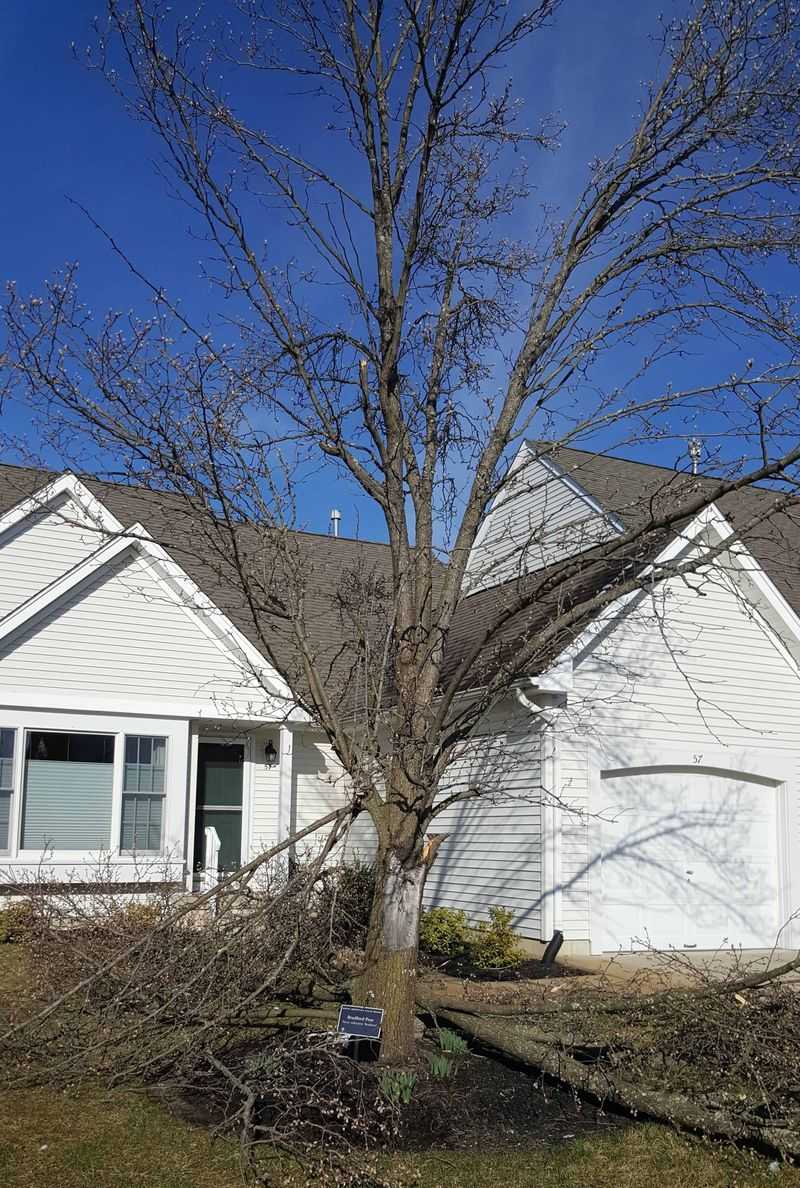
Bradford pear is not a species on its own. It is a cultivar of Callery pear (Pyrus calleryana), and that distinction matters in Arizona because the tree’s problems are baked into its branch architecture from the start.
Callery pear cultivars develop notoriously narrow crotch angles, which means branches attach to the trunk at steep, acute angles rather than wide, stable ones. Over time, bark becomes trapped inside those joints, a condition called included bark, which prevents the wood from fusing properly and creates a weak union that can fail under wind, rain, or simply the accumulated weight of maturing branches.
In Arizona’s low desert, monsoon season adds an extra layer of risk. Sudden high winds and heavy rain arrive during summer months when Bradford pears are in full leaf and carrying maximum weight.
The often-repeated figure of 15 to 20 years is better understood as a window when serious structural failures tend to become more common, not a hard expiration date stamped on every Arizona tree. Some individual trees survive beyond that range, and some fail earlier, particularly in exposed Arizona sites with monsoon exposure.
The point is that the risk compounds with age rather than arriving on a predictable schedule.
Beyond structure, Callery pear has an invasive track record in many parts of the United States. When different cultivars or wild seedlings cross-pollinate, they can produce viable offspring that spread and form dense, thorny thickets.
That documented problem is strongest in parts of the eastern and central United States, and homeowners in low-desert Arizona should not assume an equivalent level of ecological invasion has been established locally. Still, the structural liability alone gives Arizona homeowners reason to think carefully before planting one.
Why Desert Willow Fits the Low Desert
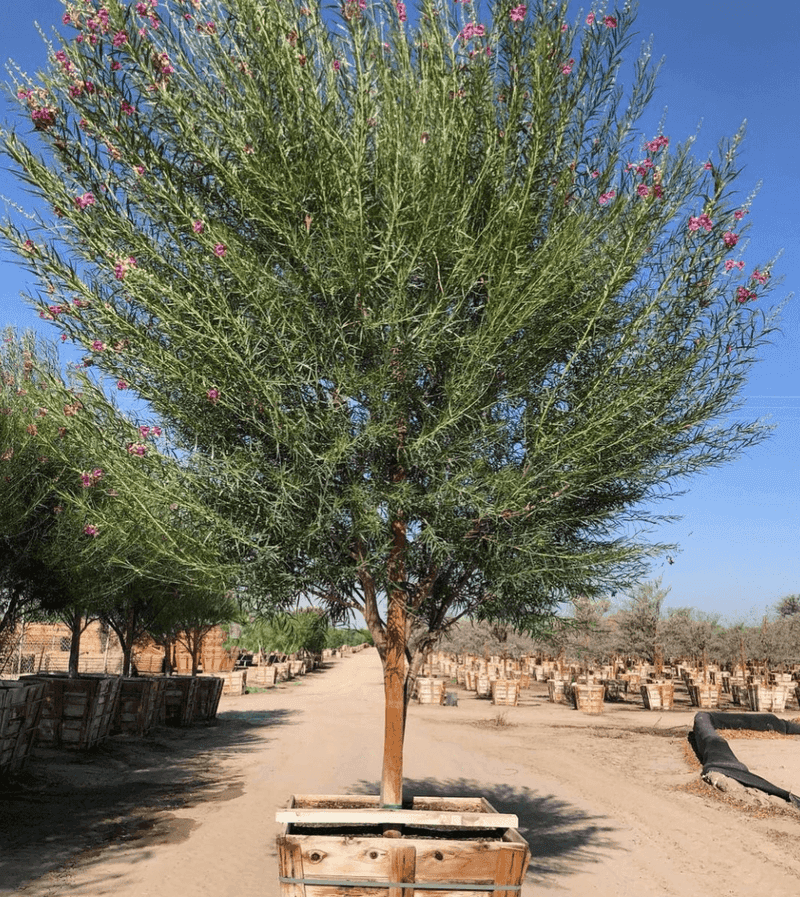
Desert willow (Chilopsis linearis) earns its name from the landscape it actually comes from. It is native to Arizona, the broader Southwest, and northern Mexico, growing naturally in dry washes, floodplain terraces, and desert scrub, exactly the kind of environment that low-desert Arizona homeowners are working with in their own backyards.
That native origin is not just a label. It means the tree evolved alongside the heat, alkaline soils, and irregular rainfall that define Phoenix and Tucson conditions.
Comparing desert willow to Bradford pear in Arizona requires some care about what is actually being claimed. Desert willow offers a clearly better regional fit for homeowners who want a flowering, low-water tree suited to Phoenix or Tucson conditions.
Your Arizona Garden Changes Every Week. Your Plan Should Too.
Gardening in Arizona changes quickly throughout the season. Every Friday you’ll receive a simple weekly plan showing exactly what to plant, prune, fertilize, harvest, and protect so you never miss the right timing.
Bradford pear was bred for temperate climates with more moderate heat and reliable rainfall, and its structural weaknesses make it a poor long-term bet in monsoon country. What the available evidence does not establish is a proven lifespan advantage for desert willow.
One tree database describes it as fairly short-lived, and no direct Arizona-specific longevity comparison between the two species has been located.
The honest framing is this: desert willow is a strong candidate for a specific use case in low-desert Arizona, a flowering, wildlife-friendly, lower-water tree that fits the region’s climate and soils. That regional suitability is its real advantage over Bradford pear, not a guarantee of outlasting every tree in a neighboring yard.
Its Arizona Flowers Support Wildlife
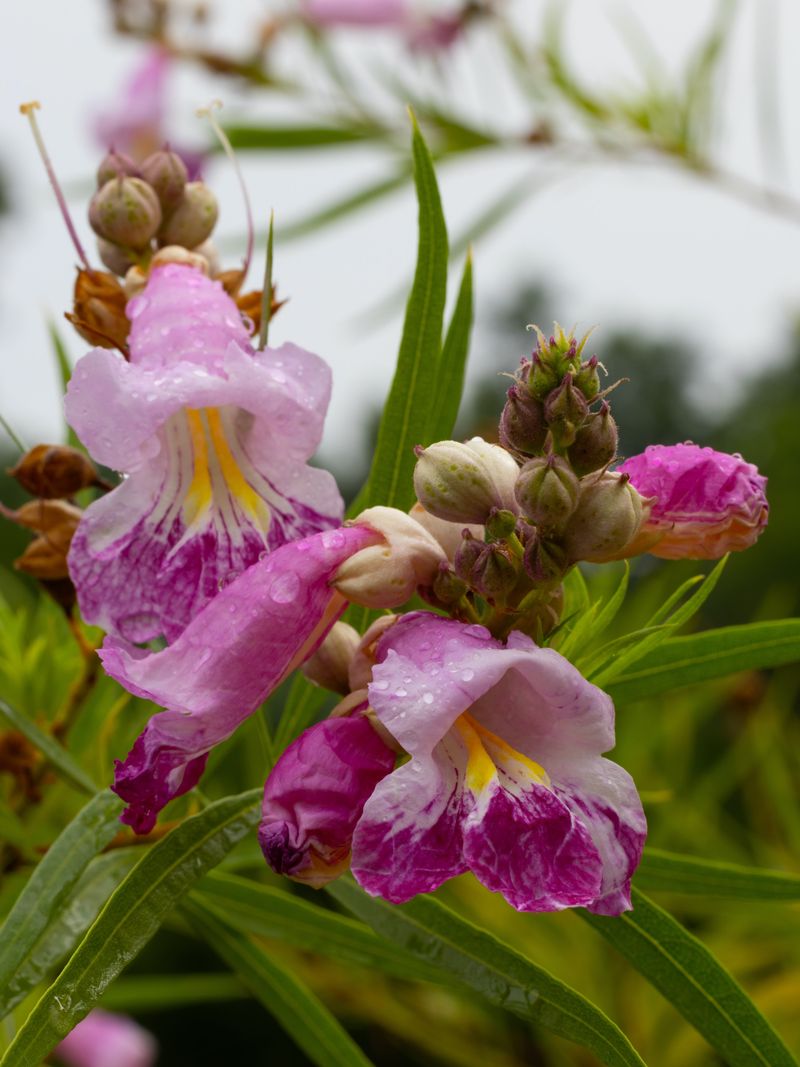
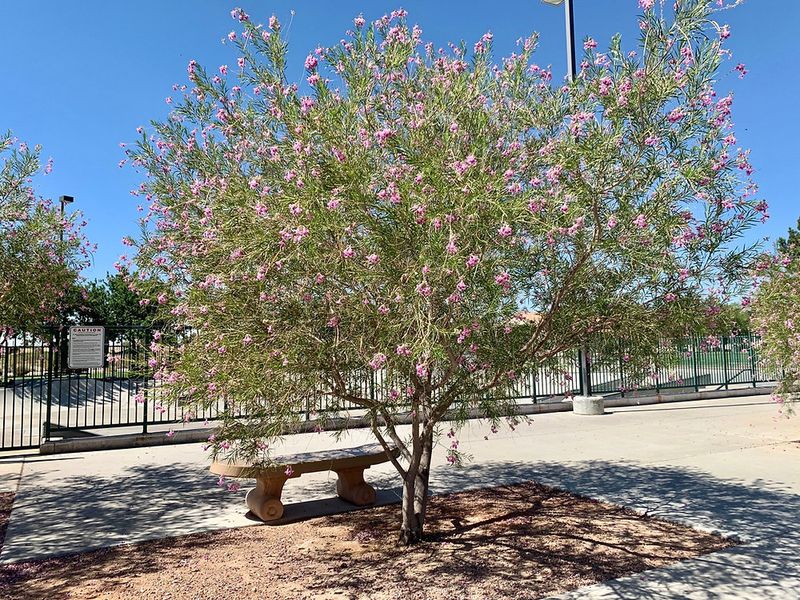
One of the most practical reasons to plant desert willow in an Arizona yard is what happens when it blooms. The flowers are trumpet-shaped and come in white, pink, purple, and lavender shades depending on the cultivar.
In Arizona’s low desert, flowering can begin in late spring and continue into summer or even fall, particularly when the tree receives occasional deep watering during the hottest months. That extended bloom window sets it apart from many ornamental trees that flower briefly and then go quiet for the rest of the year.
Hummingbirds are among the most consistent visitors to desert willow in Arizona. The tubular flower shape is well-matched to hummingbird feeding, and in Phoenix and Tucson yards, a blooming desert willow can draw Anna’s hummingbirds and other species during their active season.
Birds may also use desert willow for cover and consume its seeds, which adds habitat value beyond the bloom period. Arizona yards that include native flowering trees tend to support more layered wildlife activity than those planted with non-native ornamentals, though the actual species and frequency of visits depend on the broader landscape, surrounding vegetation, and local conditions.
None of these wildlife associations translate into guaranteed pest control. Attracting birds and pollinators does not directly deter scorpions, mosquitoes, or other pests in any way that reliable sources have documented.
The wildlife value is real and meaningful on its own terms without overstating what a single tree can accomplish in a yard.
Plan for Its Open Form and Seasonal Litter
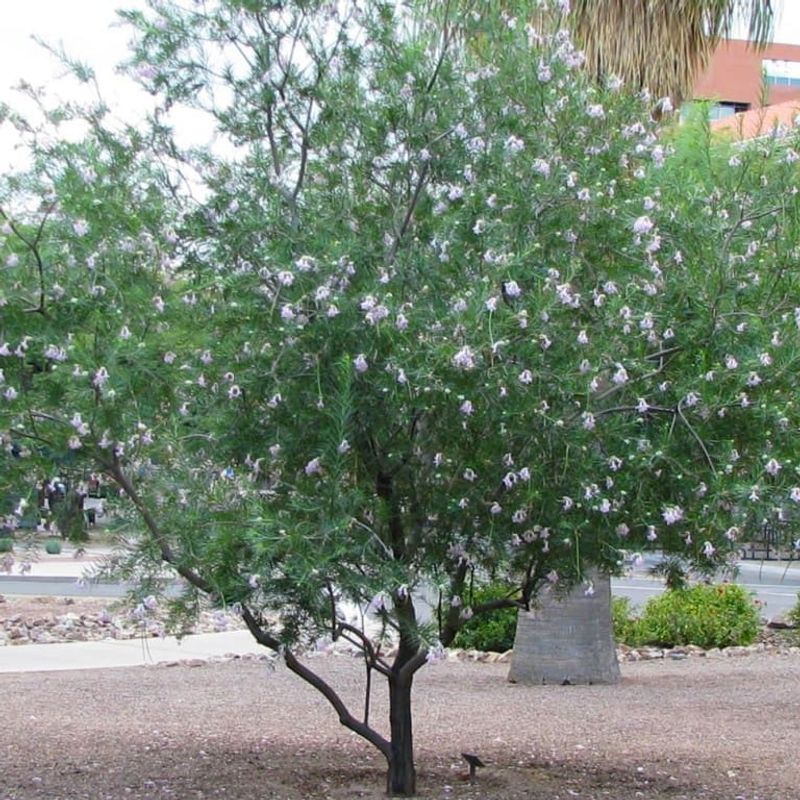
Before buying a desert willow for an Arizona yard, it helps to know what the tree actually looks like at maturity, because it does not fit every design expectation. A typical landscape specimen reaches roughly 15 to 30 feet tall, with spread varying by cultivar, irrigation level, and how much pruning the tree receives.
The City of Mesa lists a mature size of approximately 25 feet tall by 25 feet wide for desert willow in its neighborhood shade tree program, which gives Arizona homeowners a useful planning reference, though individual trees can fall well outside that range depending on conditions.
The growth habit is naturally multi-trunked or shrubby rather than the single upright form many homeowners picture when they think of a shade tree. Desert willow can be trained toward a single-trunk silhouette with consistent formative pruning, but basal suckers and competing shoots tend to keep coming back.
The canopy provides filtered or light shade rather than the dense overhead coverage of a broad-canopied mesquite or large oak. In Arizona’s intense summer sun, that lighter canopy still offers meaningful relief, and it allows understory plants to grow beneath it, which can be an advantage for layered plantings.
Homeowners who need heavy shade over a large patio or west-facing wall may find desert willow falls short of that goal.
Seasonal litter is a real consideration in Arizona yards. Desert willow is deciduous, so leaves drop in fall and winter.
Flowers fall throughout the bloom period, and the long, slender seed capsules the tree produces can accumulate on the ground. Some cultivars, such as ‘AZT’ (sold as Bubba), are marketed as producing fewer seeds, which can reduce cleanup.
Not all desert willows are seedless, so if reduced litter is a priority, ask specifically about cultivar characteristics before purchasing.
Use the Cooler Arizona Planting Window
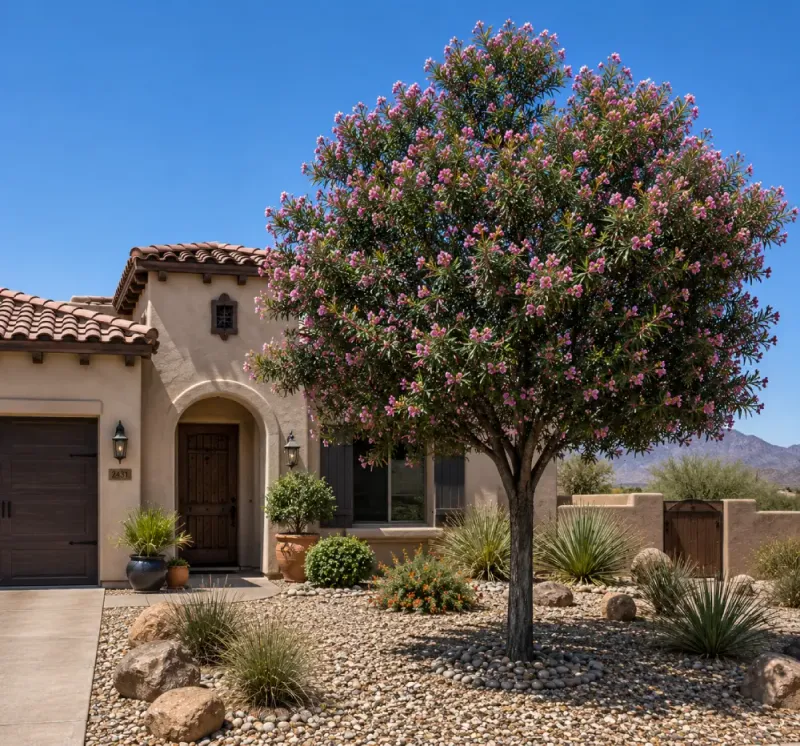
Timing a tree planting in Arizona is not the same as timing one in Ohio or Georgia. The low desert has its own rhythm, and September through November is the sweet spot for getting a desert willow in the ground.
Cooler air temperatures during fall give roots a chance to push outward and anchor before summer heat arrives. A tree planted in October has months of relatively mild weather to establish before it faces its first Phoenix or Tucson summer, which makes a measurable difference in how well it handles that stress.
Planting at other times of year is possible with attentive irrigation and aftercare, but summer planting in particular demands more water, more monitoring, and more risk. Spring planting can work if done early enough to allow some establishment before temperatures climb above 100 degrees Fahrenheit, which can happen by May in the Phoenix metro area.
Site selection matters as much as timing in Arizona. Desert willow needs full sun and well-drained soil.
Poor drainage or compacted caliche layers can create root problems even in a drought-adapted native. Before digging, check for buried utilities, overhead power lines, and proximity to foundations or structures.
At a mature spread of up to 25 feet or more, a desert willow planted too close to a wall, fence, or utility line will eventually require difficult pruning or cause damage.
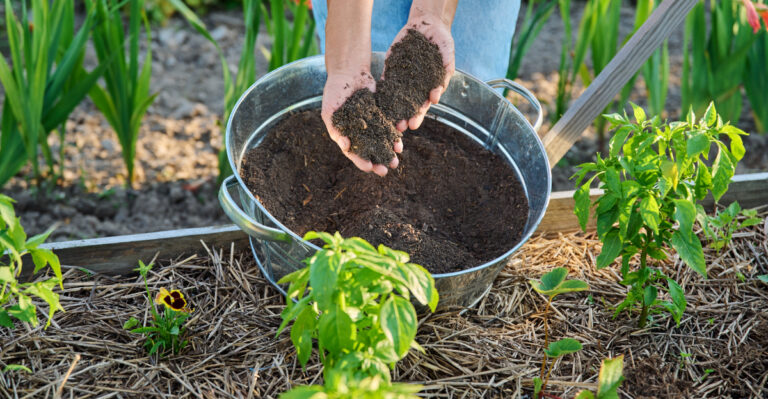
That broad soil loosening encourages roots to spread laterally, which is how desert-adapted trees build stability and access water in Arizona’s typically hard, compacted soils. Planting too deep is a common mistake that can stress or kill an otherwise healthy tree by burying the root flare and cutting off oxygen to the root zone.
Give the tree the right start in Arizona, and it will do most of the work from there.
Water It Deeply While Roots Establish
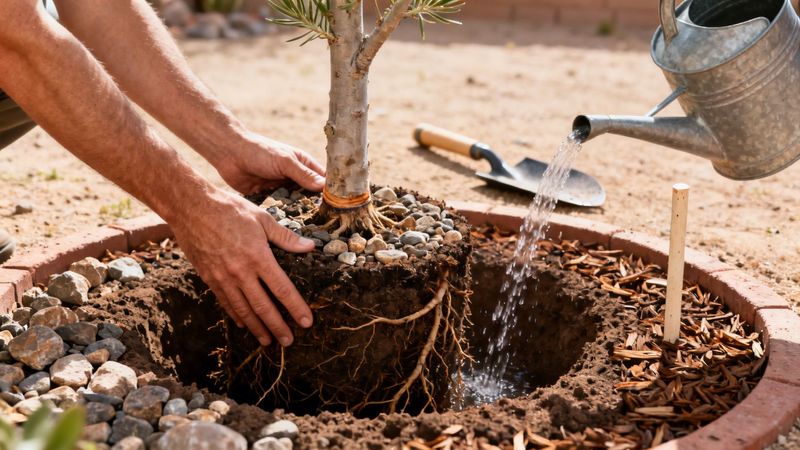
Drought tolerance is one of desert willow’s most appealing traits for Arizona homeowners, but that tolerance kicks in after the tree has had time to build a root system, not from the day it goes in the ground. A newly planted desert willow in a Phoenix or Tucson yard needs regular supplemental irrigation while it is getting established.
Skipping that water during the first year or two because the tree is labeled drought tolerant is one of the most common reasons young native trees struggle or die in Arizona landscapes.
The establishment period varies by species, season, soil, sun exposure, and local climate. Arizona Cooperative Extension guidance for Sierra Vista recommends planning for roughly three years of establishment watering for trees, though that figure is a variable planning estimate rather than a fixed rule for every Phoenix or Tucson yard.
A tree planted in well-drained soil with good fall timing may establish faster, while one planted in summer or in compacted soil may need more consistent support.
Deep, infrequent watering that wets the full root zone and then allows the soil to dry appropriately between cycles is more effective than frequent shallow irrigation.
A 3 to 4 inch layer of organic mulch spread over the root zone helps slow evaporation in Arizona’s intense heat, but mulch should be kept several inches away from the trunk to reduce rot risk and discourage pests. Chronic overwatering is a real concern with desert willow.
Poorly drained or waterlogged soil can damage roots and undermine the tree’s long-term health, even in a species that naturally grows near desert washes. Once established, supplemental summer watering can improve canopy density and extend the bloom period, but the goal is deep and occasional rather than frequent and shallow.
Choose It for Regional Fit, Not a Lifespan Promise
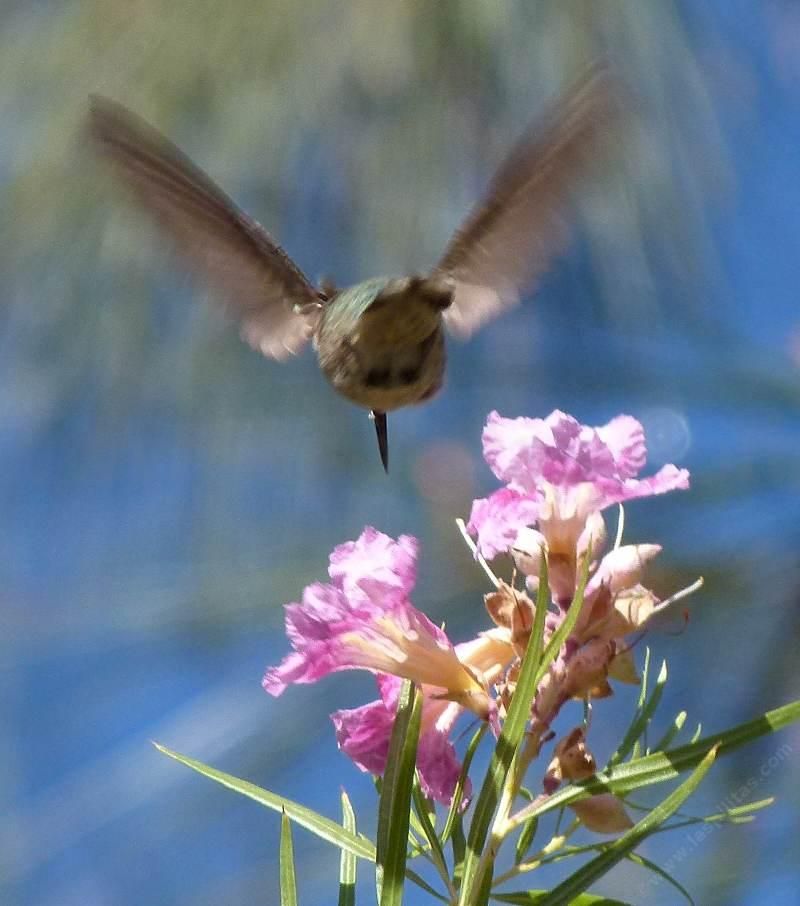
Desert willow earns its place in a low-desert Arizona yard on the strength of what it actually delivers: native adaptation to the region’s heat and soils, trumpet-shaped flowers that attract hummingbirds and pollinators through a long Arizona bloom season, lower water demand after establishment, and a growth habit that fits naturally into xeriscape and habitat-focused landscapes. Those are concrete, region-specific advantages for Phoenix and Tucson homeowners who want a flowering canopy tree that works with the desert rather than against it.
The trade-offs are equally real and worth naming before purchase. Desert willow provides filtered shade rather than dense coverage, which may not satisfy every Arizona homeowner’s cooling goals.
Its irregular, multi-trunked form requires ongoing pruning and sucker management. Seasonal litter from leaves, flowers, and seed capsules is part of the deal.
Its advantage over Bradford pear in Arizona is regional suitability and a fundamentally different structural profile, not a proven lifespan superiority. Bradford pear’s narrow branch angles and included bark create compounding failure risk in Arizona’s monsoon conditions.
Desert willow, by contrast, grows the way it evolved to grow in this climate. No data documents a homeowner trend of replacing Bradford pear with desert willow across Arizona, and the article’s headline premise should be understood as a practical recommendation rather than a recorded movement.
For the Arizona homeowner who values native adaptation, seasonal wildlife activity, and lower irrigation costs, desert willow is a well-supported choice. The best trees for any Arizona yard are the ones matched honestly to the site, the climate, and the homeowner’s actual expectations.