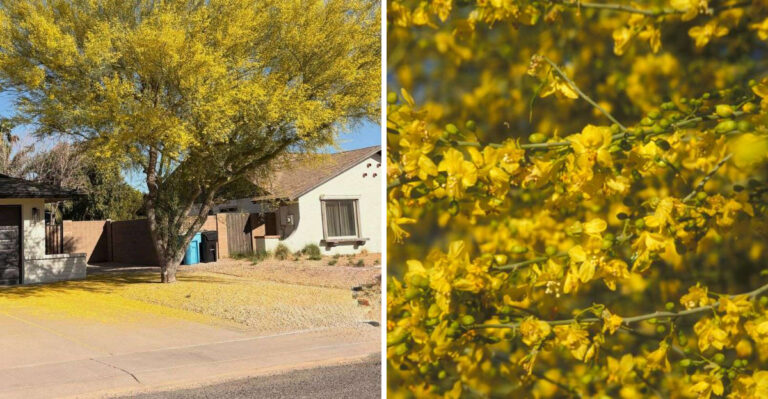
8 Desert Trees That Stay Small but Give Huge Shade in Arizona
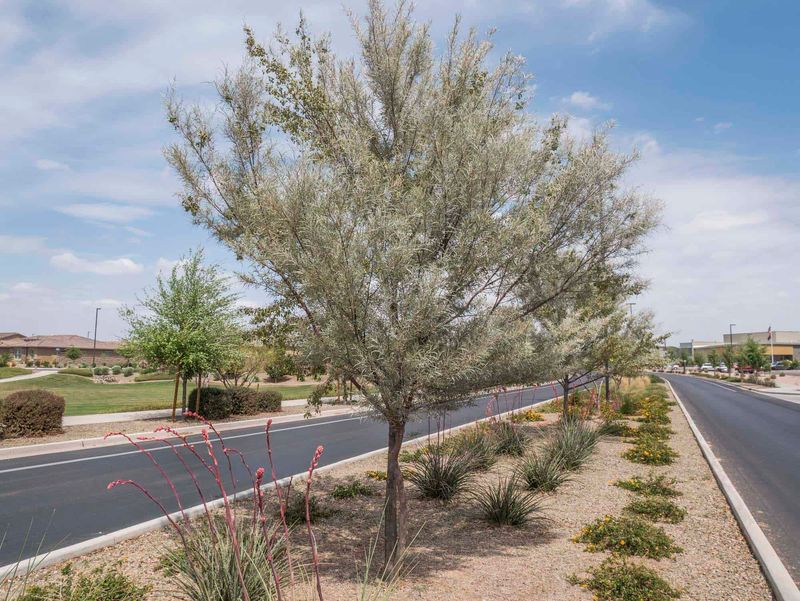
One desert tree in Arizona is so dense that its wood sinks in water like a stone. Young saguaros often sprout beneath its branches, using that shade as a living nursery for years.
I love how a modest tree can drop the temperature under its canopy by several noticeable degrees. You might notice birds, bees, and lizards gathering in those cool pockets during the hottest afternoons.
Personally, I believe a backyard tree should earn its keep with shade, wildlife, and very little water. Arizona yards are often too small for giant shade trees, so compact natives make a lot of sense.
You’re in for a surprise with how much shade these modest trees cast once they settle in. October is a fine planting window, since cooler soil helps roots grow before next summer arrives. Which one belongs in your yard?
1. Desert Willow
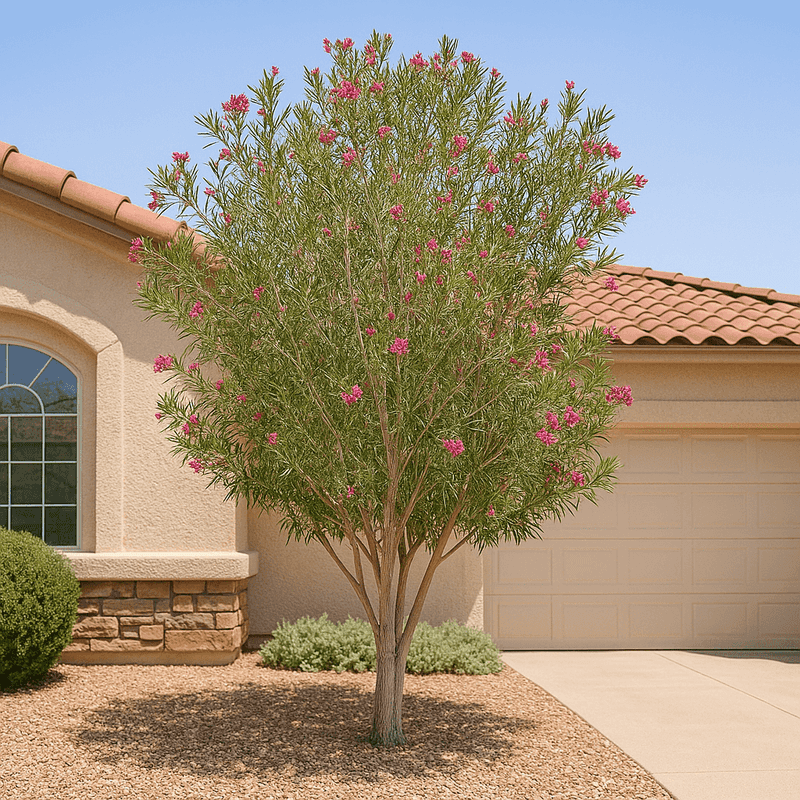
Hummingbirds treat a blooming desert willow like a roadside diner, zipping in for nectar from dawn until dusk. Despite the name, it is not a true willow but a relative of catalpa trees.
Its trumpet-shaped flowers come in white, pink, rose, or purple shades from late spring into fall. I love how the fragrance drifts across a patio on warm evenings when the air finally calms down.
Most trees reach 15 to 25 feet tall and wide, often with several graceful trunks and shaggy bark. The narrow leaves cast light, filtered shade that keeps patios cooler without making them feel gloomy.
You need to give it full sun and soil that drains well, including sandy ground or even caliche. Once established, let the soil dry between deep soakings, since extra water often causes weak, leggy growth.
October is a smart time to plant, because warm soil and cooler air help new roots settle. Long seed pods ripen this time of year, and you can trim them off if you dislike the look.
2. Gregg’s Ash
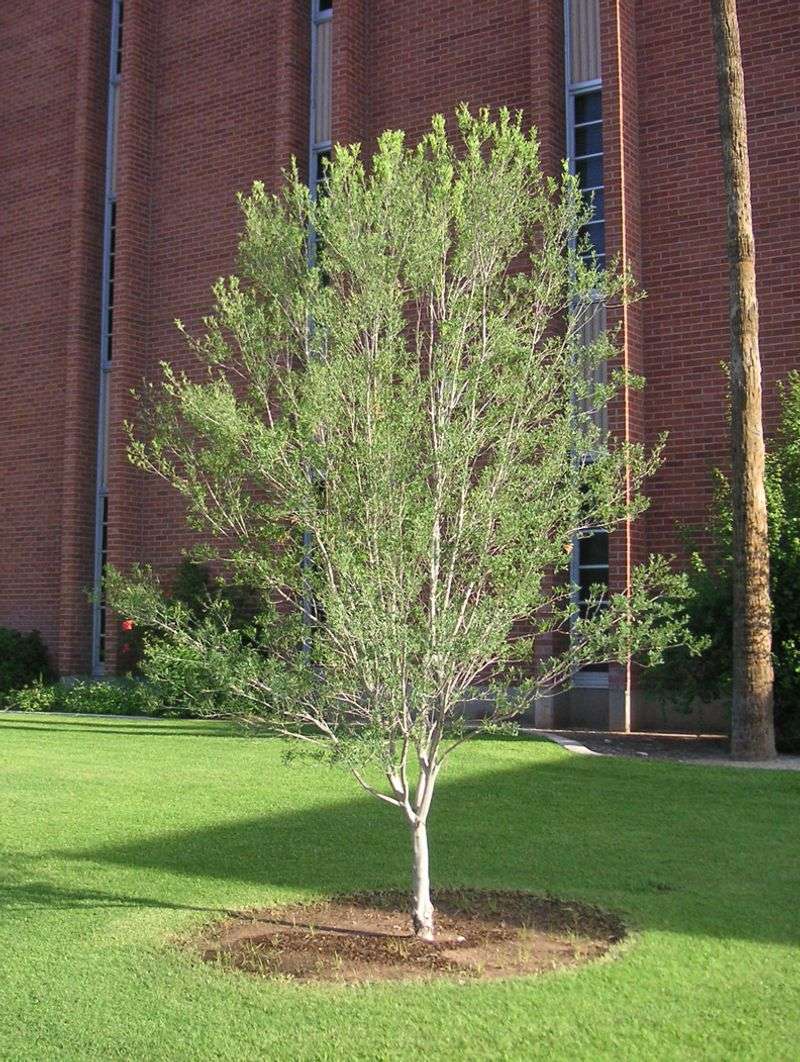
Finding a desert tree with a dark green, dense canopy feels like spotting a cool lake on a scorching road. Gregg’s ash, also called littleleaf ash, delivers that leafy look while sipping surprisingly modest amounts of water.
It usually grows 15 to 20 feet tall and 10 to 15 feet wide, which fits tidy suburban yards nicely. The tiny leaves create a rounded, semi-evergreen crown that casts steady shade over a bench or window.
I have to admit the flowers are easy to miss, since they are tiny clusters appearing from winter into spring. Bees still find them, and small winged seeds follow later, drifting down without much fuss around the yard.
You can grow it in full sun or partial shade, and it handles alkaline, rocky soil common across desert neighborhoods. Deep watering once or twice monthly works after establishment, though more frequent drinks help it grow faster early on.
Gentle pruning shapes it into a handsome multi-trunk tree that looks polished beside a courtyard. Fall planting gives roots several mild months to spread before the first hard summer heat returns next year.
3. Desert Olive
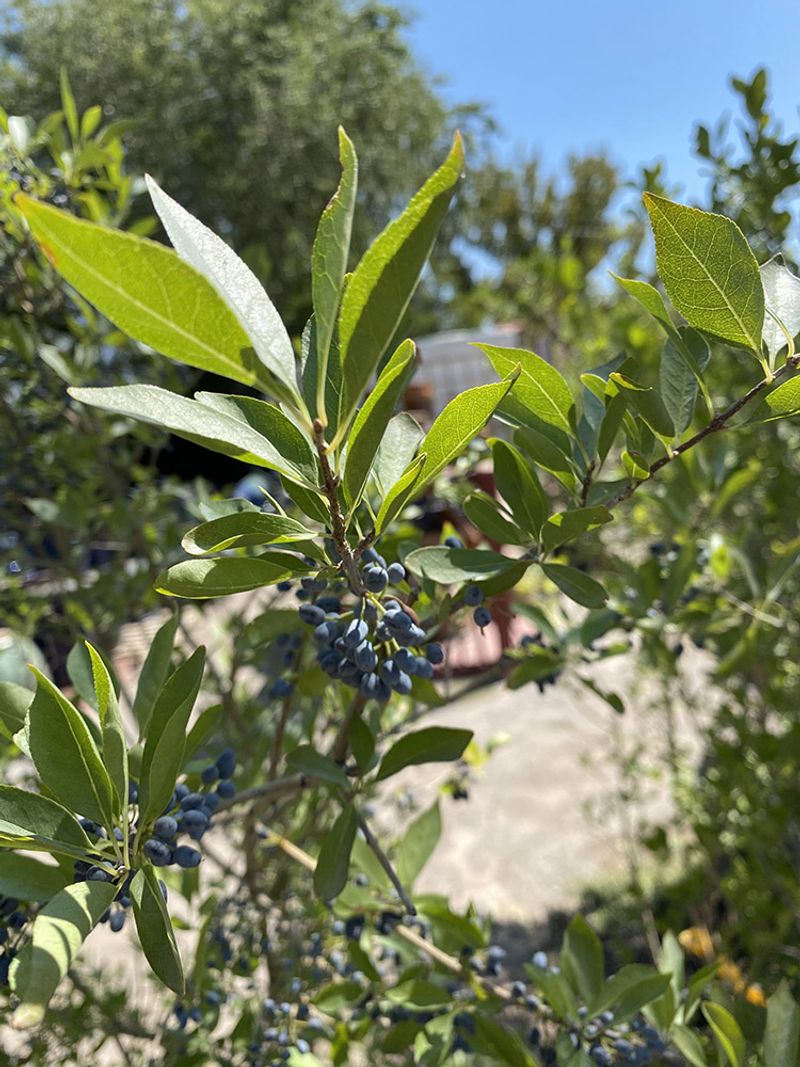
Birds treat the female desert olive like a snack bar, stripping its bluish-black berries from late summer into fall. Also called Texas privet or elbowbush, this native earns a spot for its wildlife value alone.
Look closely at the branches and you will notice a quirky zigzag pattern that gives the plant real character. It usually stays between 6 and 15 feet tall, making it the most compact tree on this list.
Small fragrant flowers appear on bare stems in late winter, bringing early bees and butterflies into the garden. Personally, I enjoy that early buzz when most of the yard still looks sleepy and brown after winter.
The fine-textured canopy offers dappled shade that suits narrow side yards, small courtyards, or a spot beside a window. It tolerates rocky, sandy, or limy soil, and established plants need only occasional deep watering during dry spells.
Plant a few together if you want berries, since only female plants produce fruit for hungry birds. Fall planting works well here, and the berries ripening now make female plants easy to identify at nurseries.
4. Desert Museum Palo Verde
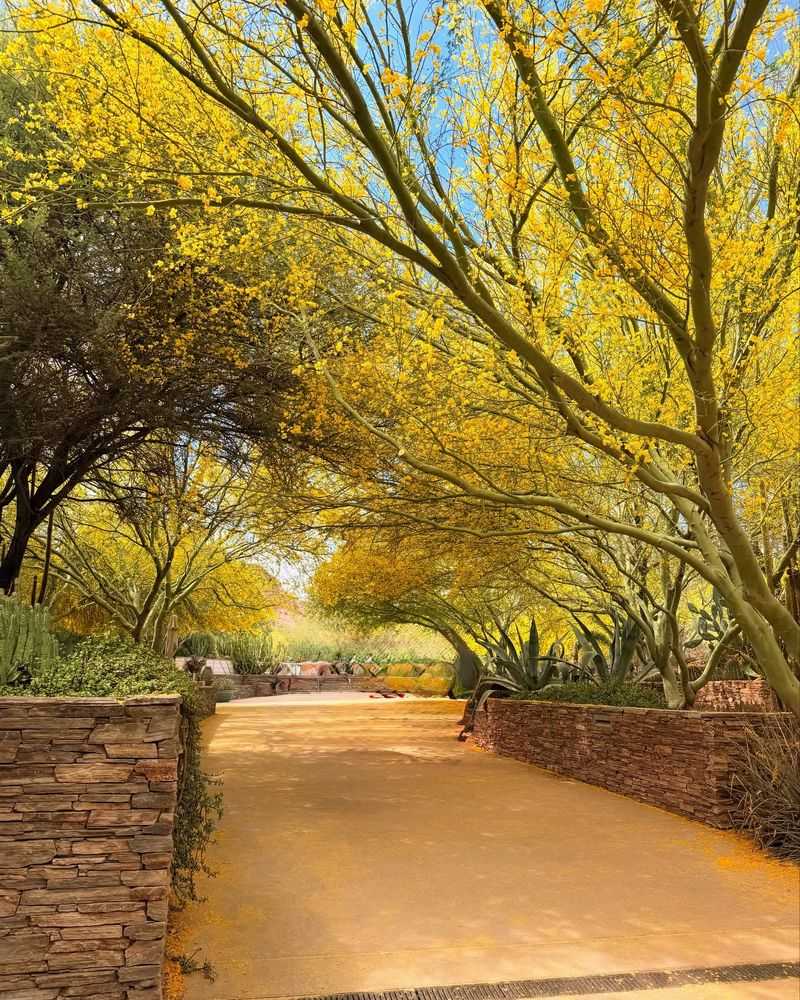
Green bark that actually photosynthesizes makes this tree look painted, and it stays striking even without a single leaf. Bred at the Arizona-Sonora Desert Museum, this thornless hybrid has become a favorite across Phoenix and Tucson yards.
Each spring, from March through May, the canopy erupts in large yellow flowers that seem to glow at sunset. Insects swarm the nectar, and scattered blooms often continue into summer after the main show winds down.
What surprises me most is how little mess it makes compared with native palo verdes and their piles of pods. You still get fast growth, reaching 20 to 30 feet, with lacy shade that keeps understory plants happy.
Full sun and fast-draining sandy or rocky soil suit it best, and young trees need regular watering while establishing. Afterward, water needs drop to low levels, though deep summer soaks help keep the canopy full and healthy.
Thin the crown carefully so summer monsoon winds pass through rather than snapping heavy limbs off the trunk. Watch for palo verde root borer, which tends to target stressed trees, so steady care reduces that risk considerably.
5. Desert Ironwood
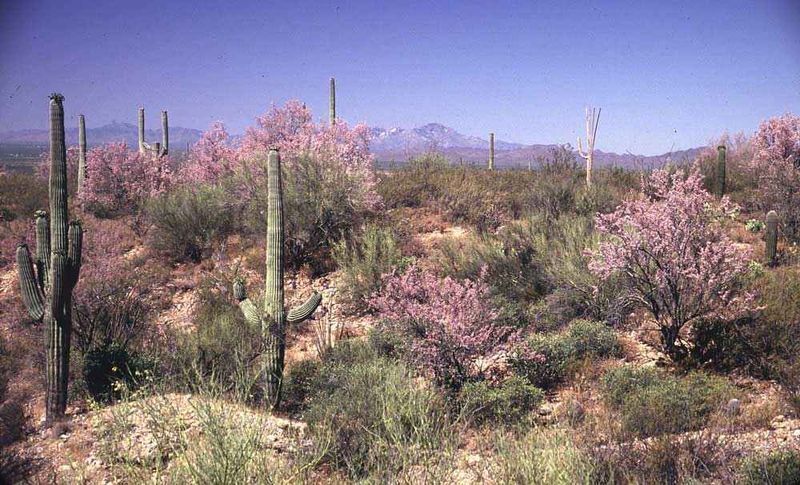
Saguaros often begin life tucked beneath an ironwood, sheltered from frost and harsh sun for decades. That nurse tree role makes desert ironwood a keystone species across the Sonoran Desert, supporting hundreds of plants and animals.
The wood is so dense that it sinks in water, which explains the Spanish name palo fierro. Growth is slow, yet the tree lives for centuries and can eventually reach 20 to 35 feet across.
In late spring, lavender to pale pink pea-like flowers cover the canopy, especially after mild winters and good rains. I can’t imagine a lovelier sight than bees humming through those blooms on a warm May morning.
Thorny branches mean you should plant it well away from walkways, play areas, and pool decks where people brush past. Full sun and sharp drainage suit it best, and established trees need little or no extra water.
Shade under an ironwood runs deep, creating a noticeably cooler pocket for patios and tender plants nearby. Protect young trees from hard frost this winter, and buy nursery-grown stock, since wild ironwood is protected in the state.
6. Sweet Acacia
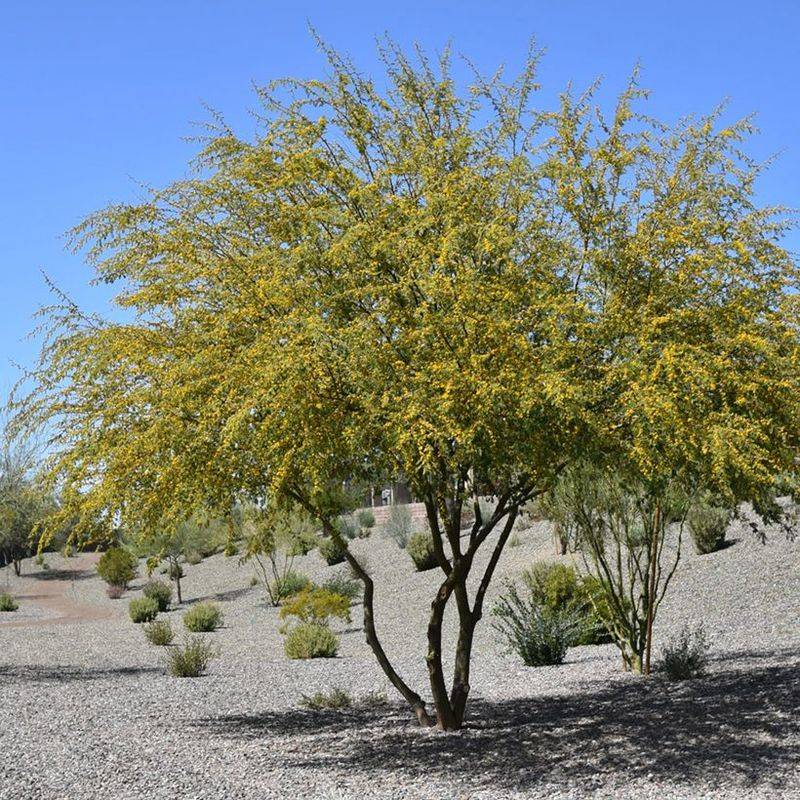
Walk past a sweet acacia in late winter and the perfume might stop you right on the sidewalk. Those fuzzy golden puffballs smell so lovely that the flowers have long been used in the perfume trade.
Blooming peaks in late winter and early spring, with extra flushes appearing after new growth during warmer months. Bees adore the fragrant clusters, and birds later pick seeds from the glossy pods that hang on branches.
Feathery leaves create soft, filtered shade, while the tree typically reaches 15 to 25 feet tall and wide. I like how the umbrella shape fits nicely over a seating area once the lower limbs are lifted carefully.
You need to respect the sharp thorns, so keep this tree away from paths, gates, and children’s play spaces. A hedge of sweet acacia can also discourage wandering visitors and stray animals from cutting across your property line.
It handles nearly any well-drained soil and needs little supplemental water once roots spread through the ground. Hard freezes can damage it, so colder high-desert gardens should choose a sheltered spot facing south before winter arrives.
7. Mulga
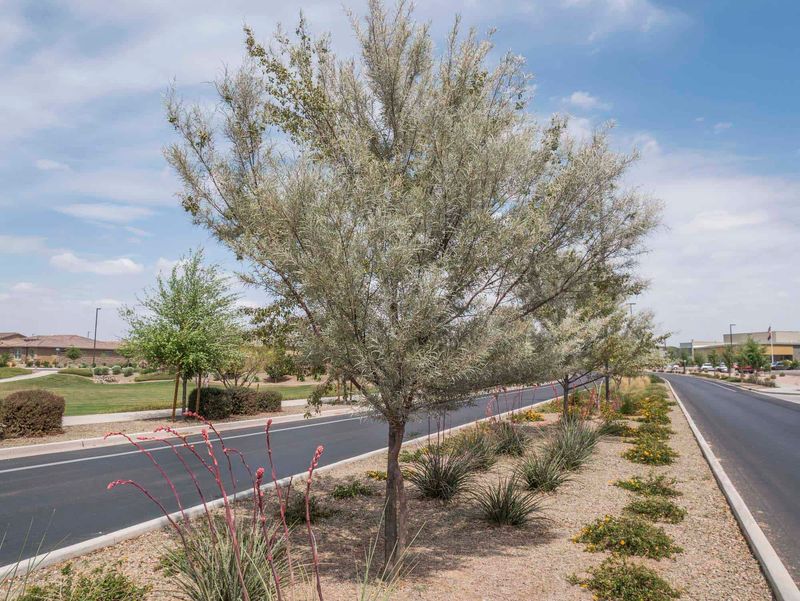
Australia sent us a desert tree that seems built for blazing west walls and baking parking strips. Mulga handles reflected heat beautifully, which makes it a lifesaver for those tough spots where most trees quickly struggle.
Silvery gray foliage gives the tree a soft, shimmering look that pairs nicely with agaves and boulders. Those narrow blades are actually flattened leaf stalks called phyllodes, doing the job ordinary leaves would normally handle.
Bright yellow flower spikes shaped like little rods appear mostly in spring, with occasional blooms during summer as well. Small flat brown pods follow, and I find the cleanup much lighter than with many other desert trees.
Expect slow to moderate growth, eventually reaching 20 to 30 feet tall with an upright spread near 15 feet. That narrow habit makes mulga handy for side yards, where it casts useful shade without crowding the house.
Plant it in full sun with sandy or loamy soil that drains quickly after storms. Established trees need very little supplemental water, especially through winter, and they handle cold down to roughly 15 degrees Fahrenheit.
8. Kidneywood
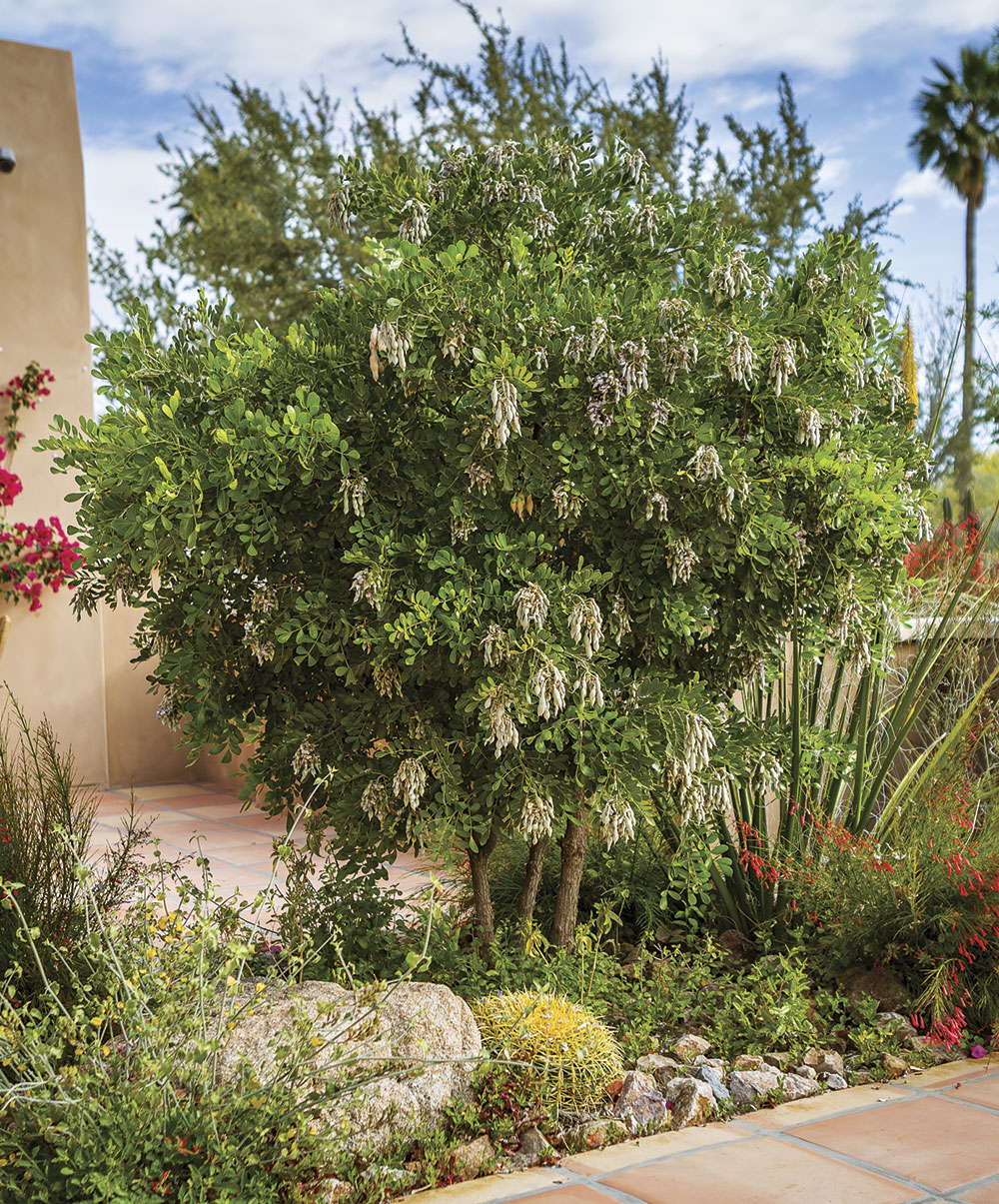
Crush a kidneywood leaf between your fingers and a sweet, citrusy scent rises right away. Its white flower spikes smell faintly of vanilla, so this native perfumes the yard from two directions at once.
Native to southeastern Arizona, kidneywood often blooms from late spring into fall, with flushes following summer rains. Butterflies, bees, and hummingbirds visit constantly, and you might notice birds perching or nesting in the slender branches too.
Here is a fun bit of history: wood chips soaked in water turn the liquid a glowing blue color. People traditionally used that tea for kidney and bladder complaints, which explains the unusual common name.
Thornless branches make it friendly near patios, and the lacy canopy cools a wall or seating area nicely. Most plants reach 10 to 20 feet tall with a narrow spread, ideal for cozy yards with limited room.
Full sun or partial shade works, along with sandy, loamy, or alkaline soil that drains well. Wrap young trunks this fall if rabbits roam nearby, since they often chew the tender bark during cooler months.