9 Oleander Alternatives Arizona Homeowners Are Planting Along the Back Wall

Oleander has lined Arizona back walls for decades, but more homeowners are pulling it out and trying something better. It drinks a lot of water, it can be toxic to pets and kids, and leaf scorch disease has wiped out long rows of it across the Valley.
The good news is that plenty of native and desert-adapted plants can fill that same wall with green, shade, and blooms. Even better, many of them bring in birds, bats, and pollinators that make your yard work harder for you.
1. Arizona Rosewood

Picture a hedge that looks like oleander from across the yard but sips water like a cactus. Arizona Rosewood pulls off that trick, and it grows wild in the mountains of central and southern Arizona, so it already knows how to handle our weather.
Plants can reach 10 to 15 feet tall with stiff, dark green leaves that stay put all year. In late spring, clusters of creamy white flowers cover the tips, followed by rusty seed heads that many people leave on for texture.
Small native birds like verdins and finches tend to tuck into the thick branches for cover and nesting.
Growth is on the slow side, which is the main trade-off. Buy the largest size your budget allows, and plant in October or November so roots settle in before the brutal months arrive.
Once established, a deep soak every two to four weeks in summer is usually plenty. Skip the heavy shearing, because a lightly shaped, natural form looks better and blooms more.
Fun detail: the common name comes from the reddish wood, not from any connection to actual roses. For a tall, tidy privacy screen with almost no fuss, few native shrubs beat it.
2. Desert Willow

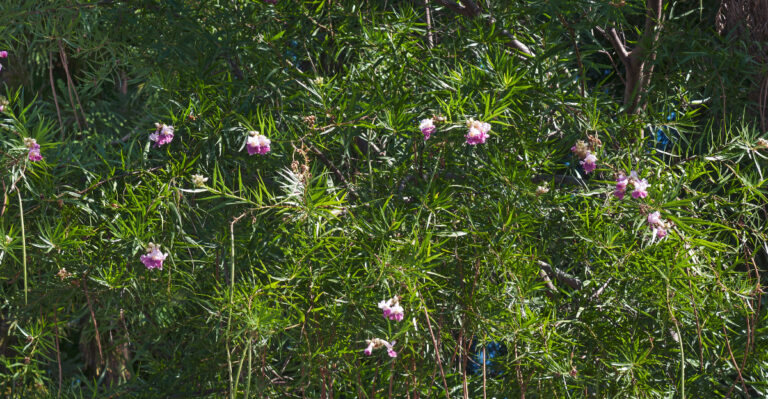
Hummingbirds seem to have Desert Willow on speed dial. From May through fall, its orchid-like trumpet flowers in pink, lavender, burgundy, or white pull in hummers, native bees, and orioles all summer long.
Unlike a shrub screen, Desert Willow is a small tree, usually 15 to 25 feet tall. Planted every 10 to 15 feet along a back wall, it lifts the green line above the block and casts light, filtered shade that can cool the yard and patio nearby.
The narrow leaves let breezes through, so it never feels heavy or dark.
Deep roots help it shrug off drought, and it drops its leaves in winter, which lets low winter sun warm the house. Clean-up is mostly fallen flowers and some long, skinny seed pods.
Seedless varieties like Bubba or Timeless Beauty cut down on that mess.
Water deeply but not often, about every two weeks in summer once settled. Too much water creates floppy growth, so a little tough love works best.
Plant in fall or early spring, give it full sun, and you will likely see blooms by the second season. It brings real shade and real wildlife in one package.
3. Velvet Mesquite

When it is 112 degrees and the back wall is radiating heat like an oven, nothing feels better than a big patch of mesquite shade. Velvet Mesquite is a true Sonoran native, and it can grow around 30 feet tall with an even wider spread.
Your Arizona Garden Changes Every Week. Your Plan Should Too.
Gardening in Arizona changes quickly throughout the season. Every Friday you’ll receive a simple weekly plan showing exactly what to plant, prune, fertilize, harvest, and protect so you never miss the right timing.
That broad canopy is the main reason to choose it. Shade over a block wall can cut down on reflected heat, which may help nearby plants and even rooms on that side of the house stay a bit cooler.
Fuzzy, pale yellow flower spikes in spring are buzzing with bees.
Later come the bean pods, a favorite food for quail, doves, and other wildlife. People have used mesquite pods for flour for centuries, and many local cooks still grind them today.
Give it space, at least 10 to 15 feet from the wall and well away from pools. Deep, slow watering builds strong roots and lowers the chance of the tree tipping in monsoon winds.
Prune lightly in summer to thin the canopy so wind can pass through. Once established, it needs very little extra water.
If you want one plant that turns a scorching yard into a livable one, this is it.
4. Desert Hackberry

Some plants are pretty. Desert Hackberry is useful, and wildlife lovers adore it for that reason.
The shrub forms a dense, thorny tangle about 10 feet tall, sometimes more with steady watering. Those zigzag branches make it a natural barrier along a back wall, and they offer birds a safe place to hide from hawks and cats.
Small orange berries ripen in fall and get gobbled up by thrashers, cardinals, and quail.
Here is the bonus. A healthy hackberry hedge tends to draw insects and lizards, and that buffet can attract roadrunners.
These speedy birds eat lizards, bugs, and even scorpions, so a habitat that welcomes them may help keep scorpion numbers in check. Results vary from yard to yard, but it is a nice side benefit.
Hackberry is tough as old boots. It handles full sun, poor caliche soil, and long dry spells, though it holds more leaves with an occasional deep drink in summer.
Keep it away from walkways, since the thorns are no joke. Plant in fall, water regularly the first year, then back off.
You get a living fence that feeds birds and works on pest patrol at the same time.
5. Texas Sage

Folks around Phoenix like to joke that Texas Sage can predict the weather. After a monsoon storm, the silvery shrubs often burst into purple or pink flowers almost overnight, which is why some people call it barometer bush.
Though it hails from Texas and northern Mexico, it is perfectly at home here. It handles temperatures over 110 degrees, full afternoon sun, and reflected heat off block walls without complaint.
The soft gray or green leaves stay on year-round, giving you a steady screen.
Varieties range from compact 4-foot types to tall selections like Heavenly Cloud that can reach 8 feet. For a back wall, choose a taller form and plant them about 6 feet apart so they can grow together.
Bees and butterflies flock to the flowers, especially after summer rains. The biggest mistake people make is shearing it into tight boxes or balls, which cuts off blooms.
Let it grow loose and natural, and trim only lightly in spring if needed.
Overwatering is the other trap. Once established, a deep soak every few weeks in summer is plenty.
It is one of the easiest swaps you can make for oleander.
6. Chuparosa

Chuparosa means hummingbird in Spanish, and the name could not be more honest. Plant one near a window and you may find yourself watching tiny birds zip in and out all winter.
Native to the Sonoran Desert, this shrub grows about 3 to 5 feet tall and wide with bright green stems that stay colorful even when leaves drop in heat. Red tubular flowers show up mostly from late fall through spring, right when hummingbirds need food the most.
Some plants bloom on and off almost all year.
Since it stays shorter, Chuparosa works best as a middle layer in front of taller screening plants. Pair it with Arizona Rosewood or Desert Hackberry behind it and you get a layered hedge that looks fuller and feeds more wildlife.
Care is simple. It loves full sun and well-drained soil, and it needs only occasional deep watering once established.
Hard frost may nip the tips in colder spots, but it usually bounces back quickly in spring.
Fun fact: the flowers are edible and taste a bit like cucumber, so a few make a pretty garnish. It is a cheerful, low-water way to bring color and constant bird traffic.
7. Hopbush

Need privacy fast? Hopbush is the shrub many Arizona landscapers grab first when a client wants the back wall hidden without planting another oleander.
It grows quickly into an upright evergreen screen about 10 to 12 feet tall, with narrow leaves that make a soft, full look. The green form is classic, while the purple variety adds deep burgundy color that stands out nicely against tan block walls.
Mixing both creates a hedge with real personality.
The name comes from the papery, winged seed capsules, which look a bit like hops used in brewing. They turn shades of pink and tan and add interest in spring.
Hopbush uses little water once established and handles heat, wind, and poor soil well. Space plants about 5 to 6 feet apart for a solid screen.
Because it grows upright rather than wide, it fits narrow side yards and tight strips along the wall better than many shrubs.
A few tips help it stay happy. Avoid soggy ground, since too much water can cause root problems.
Give it a light trim in spring to keep it dense from top to bottom. For quick, budget-friendly screening, it is hard to find a better choice.
8. Agave

Most backyard plants are busy during the day. Agaves save their best show for after dark, when nectar-feeding bats come to visit.
Species like Palmer’s agave and Desert agave send up towering flower stalks after years of growth. Those blooms provide nectar and pollen for lesser long-nosed bats, important pollinators in the Sonoran Desert.
Bats in general eat huge numbers of night-flying insects too, so a bat-friendly yard may mean fewer mosquitoes buzzing around the patio on summer evenings.
Agaves will not block a whole wall by themselves, but they make bold, sculptural anchors between taller shrubs. A few big rosettes spaced along the wall break up a long row of green and give the eye somewhere to land.
They are about as low-maintenance as plants get. Plant in well-drained soil, water occasionally in the hottest months, and mostly leave them alone.
Keep sharp-tipped kinds away from paths and play areas.
Fun fact: many agaves are called century plants, though they usually flower after 10 to 25 years, not 100. After blooming, the main plant fades but often leaves pups behind.
Those babies can be replanted to keep the wall looking full.
9. Deer Grass

Every great back wall planting needs a ground floor, and Deer Grass fills that role beautifully. Fountain-like clumps reach about 3 to 4 feet tall and wide, with slender flower spikes that catch the evening light.
Tuck it at the base of taller shrubs and trees to soften the hard line where wall meets gravel. The fine texture contrasts well with chunky agaves and leafy hopbush, making the whole bed feel more natural.
Wildlife likes it too. Dense grass clumps give lizards, small birds, and helpful insects shelter, and in moist pockets near a drip line they can offer resting spots for fireflies and other night insects.
Arizona does have a few native firefly species, though sightings are rare and depend on local water and habitat.
This native grass handles full sun, clay, sandy soil, and heat with very little water once rooted. Cut it back in late winter to clear old blades and spark fresh green growth.
Avoid trimming in summer when new growth needs protection.
Plant several in a row for rhythm, spacing them about 4 feet apart. Fall planting gives roots time to settle.
It is a simple, inexpensive finishing touch that ties the whole wall together.