9 Florida Patio Plants That Look Expensive But Cost Under $20
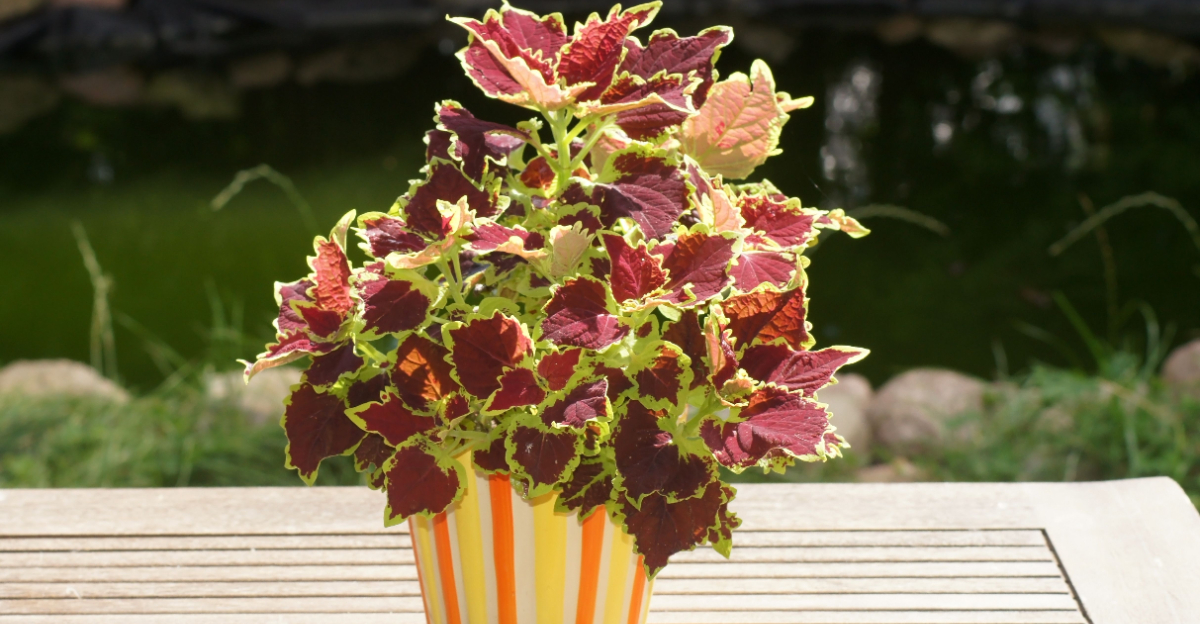
A patio that looks well put together has less to do with budget and everything to do with plant selection. The right container plant in the right spot can make a simple concrete slab look like something out of a design magazine.
The wrong one, regardless of price, just sits there taking up space. Florida patios have a serious advantage that most homeowners underestimate.
The climate that makes outdoor living possible almost year-round also means plants stay full, colorful, and lush through seasons that would shut a northern patio down completely.
That continuous growing energy makes even modest plants look like a serious investment.
The secret Florida gardeners who nail the expensive look all share? They stopped chasing price tags and started chasing the right varieties.
Some of the most visually striking patio plants available at local nurseries and garden centers across the state land well under twenty dollars a pot. Your patio doesn’t need a big budget.
It needs smarter choices.
1. Coleus Gives A Designer Look For A Small Pot Price
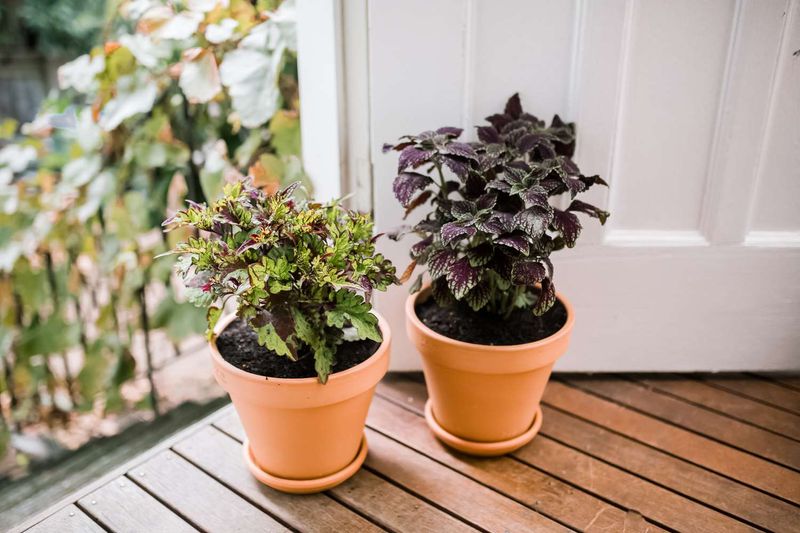
Few plants deliver as much visual drama per dollar as coleus. A single quart pot tucked into a mixed container or placed solo in a clean ceramic pot can make a patio look intentionally styled almost immediately.
The leaf colors range from deep burgundy and lime green to hot pink, copper, cream, and chocolate brown, giving you the kind of layered color that usually looks much more expensive than it is.
Coleus is especially useful on Florida patios because it does not need a flower show to look impressive. The foliage does the work.
Place it where it gets bright shade, filtered light, or gentle morning sun, especially during the hottest months. Too much harsh afternoon sun can bleach the color or scorch the leaves, while too little light can make some varieties look dull and stretched.
Containers also need a little attention because coleus has soft, thirsty foliage. Keep the soil evenly moist but not soggy, and check pots more often when they sit near concrete, pavers, or reflected heat.
In North Florida, treat coleus as warm-season color and protect it from cold. Farther south, good airflow and a break from the strongest sun will help it stay full and fresh longer.
For the most polished look, keep the container simple and let the foliage be the main event. Some plants sold under the coleus name may be irritating or toxic to pets if chewed, so place pots away from curious dogs and cats.
2. Croton Makes A Patio Feel Tropical Without The Splurge
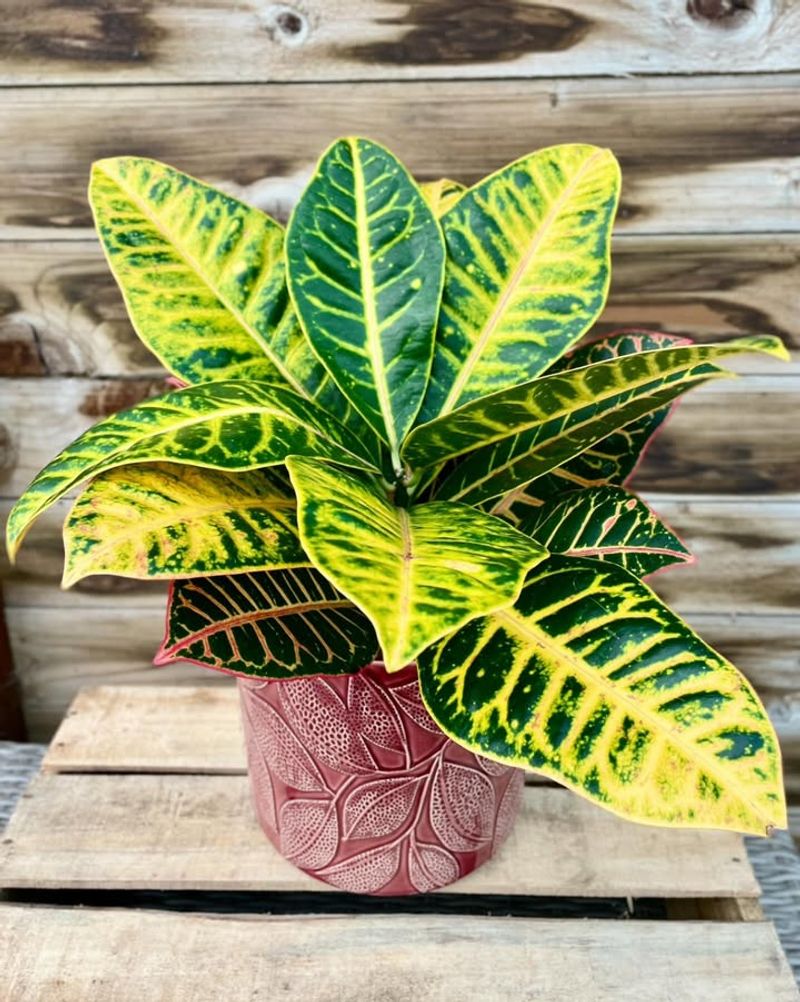
Croton has the kind of glossy, high-contrast foliage that makes people assume you spent more than you did. The leaves look painted in red, orange, yellow, bronze, and green, and even a small nursery pot can bring a strong tropical mood to a plain patio corner.
The trick is to use it like a statement piece, not filler. Put one croton in a simple container near a doorway, chair, or sunny wall, and it can do the work of a much larger arrangement.
Your Florida Garden Changes Every Week. Your Plan Should Too.
Gardening in Florida changes quickly throughout the season. Every Friday you’ll receive a simple weekly plan showing exactly what to plant, prune, fertilize, harvest, and protect so you never miss the right timing.
It gives color, height, and polish without needing flowers.
The only real catch is that croton hates being shocked. Cold snaps, sudden moves, dry container soil, and harsh wind can all lead to leaf drop.
South Florida patios are usually the easiest fit, while gardeners in Central and North Florida should keep croton in a pot that can be moved under cover when temperatures dip.
Give it bright light, steady moisture, and a protected spot where the leaves will not get whipped around by wind.
3. Pentas Bring Boutique Color On A Budget
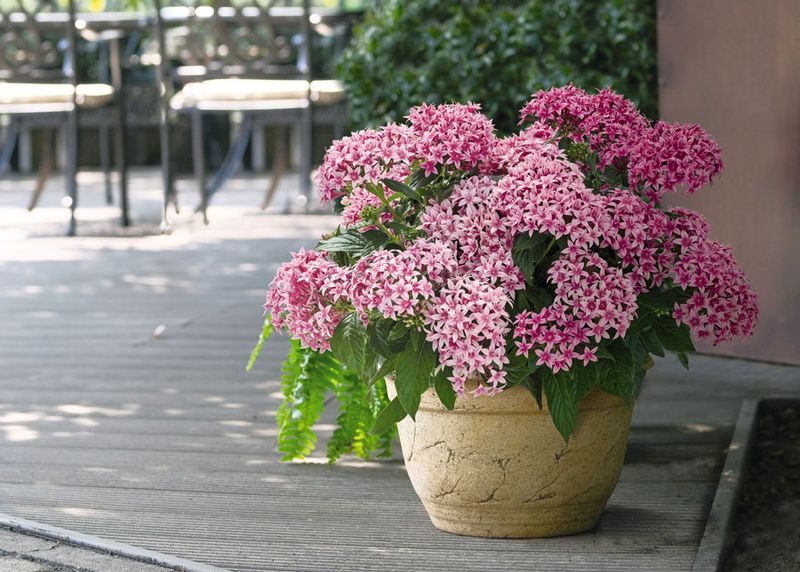
Pentas are one of those plants that make a Florida patio feel alive, not just decorated. The flower clusters are small up close, but from a few steps back they read as bright, cheerful blocks of color in red, pink, lavender, white, or coral.
Set one pot near a chair, walkway, or patio edge and it quickly starts pulling in butterflies, which gives the whole space more movement than a plain foliage plant can.
They also fit Florida’s heat better than a lot of delicate-looking flowers. Pentas show up often in butterfly gardens and sunny landscapes across the state because they can keep blooming when many softer patio plants start to fade.
In a container, they bring that same garden-center color to a small space without needing a complicated arrangement.
The key is sun and drainage. Pentas like a bright patio, but they do not want to sit in soggy potting mix after a summer downpour.
A container with drainage holes matters more than a fancy pot, especially during Florida’s rainy season. If the plant starts stretching or looking tired, a light trim can help it fill back in and keep the flowers coming.
Pentas look best when they are not treated like filler. Choose one color, give the plant enough room to mound naturally, and let the butterfly traffic do the rest.
A single red, pink, or white pot beside a chair can feel more pulled together than a crowded container stuffed with too many small plants.
4. Caladium Turns A Shady Patio Into A Painted Corner
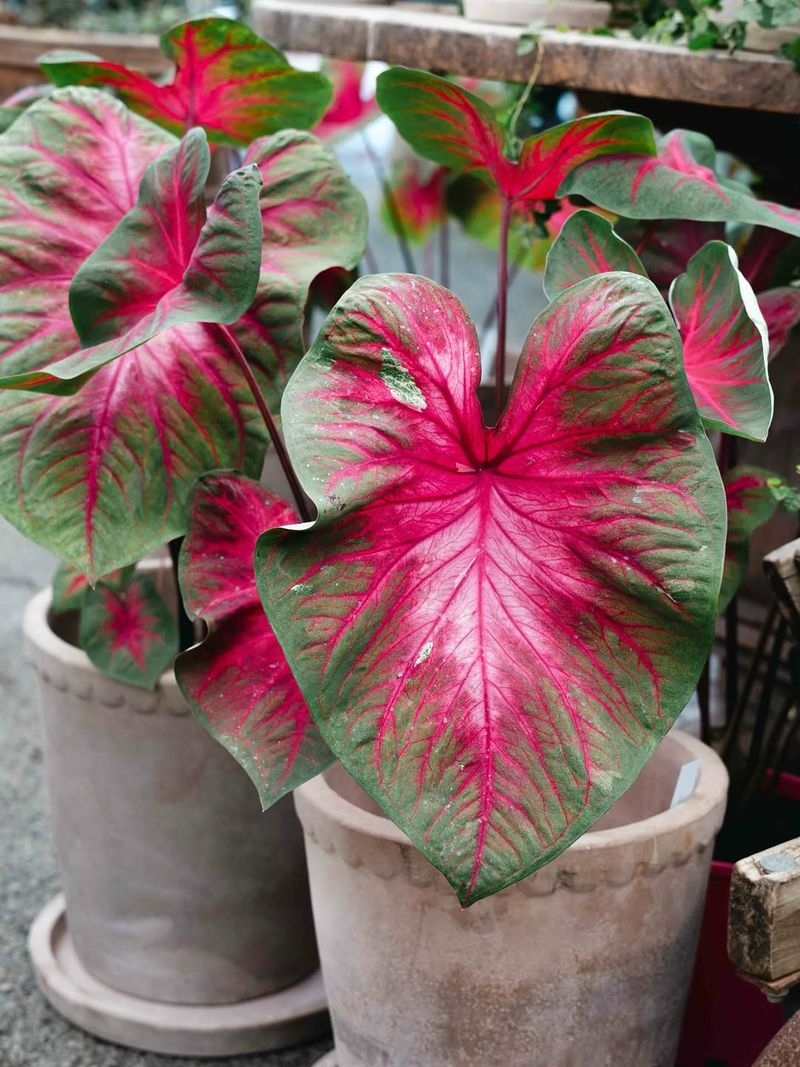
A shady Florida patio corner does not have to feel like the unused part of the garden. Caladiums are built for the spots where flowering plants usually disappoint, bringing oversized, heart-shaped leaves marked in pink, red, white, and green.
In the right light, the pale varieties can almost glow under a covered porch or beside a shaded entry.
They are especially useful because they give you color without asking for full sun. That matters on Florida patios, where afternoon light can be brutal and container soil heats up fast.
A caladium pot tucked under a roofline, near a north-facing wall, or in bright filtered shade can look lush without fighting the conditions.
The leaves are the whole show, so placement matters. Strong wind can tear them, and direct afternoon sun can scorch them quickly.
In North Florida, treat caladiums as warm-season color and expect them to fade when cooler weather returns. In warmer parts of the state, they may last longer, but the pot still needs drainage during rainy stretches because soggy soil can ruin the tubers.
Caladiums work best when they are allowed to be simple. One full pot in a dim corner can do more than a crowded mix of struggling flowers.
5. Persian Shield Adds Metallic Color Without A Big Price Tag
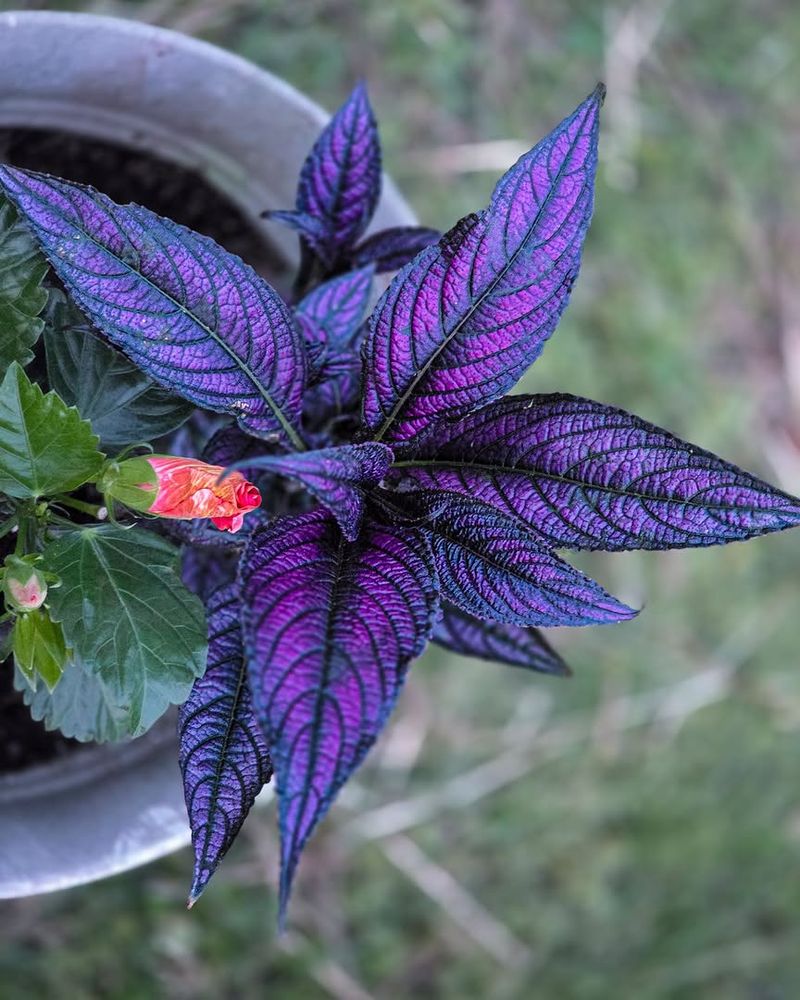
Persian shield has the kind of color that makes people stop and ask what it is. The leaves are not just purple; they flash silver, charcoal, and violet depending on how the light hits them.
On a Florida patio full of ordinary green pots, one Persian shield can make the whole corner feel more deliberate.
It works best when you treat it like a foliage accent rather than a background plant. Give it a simple container, some breathing room, and a spot where the leaves can catch bright filtered light.
Too much harsh afternoon sun can dull or stress the foliage, but too little light can make the plant stretch and lose that rich metallic look.
Florida heat is not usually the problem. The bigger challenge is keeping the pot from swinging between too wet and too dry.
Persian shield likes steady moisture and good drainage, especially when summer rain and hot pavement are both part of the setup. In North Florida, cold weather can knock it back, so it is best enjoyed as warm-season color or kept in a movable pot.
Because the leaves are the entire reason to grow it, skip windy corners where the foliage gets roughed up. Set it near darker planters, pale walls, or simple patio furniture and let the shimmer do the work.
6. Portulaca Spills Over Pots Like A Mini Flower Display
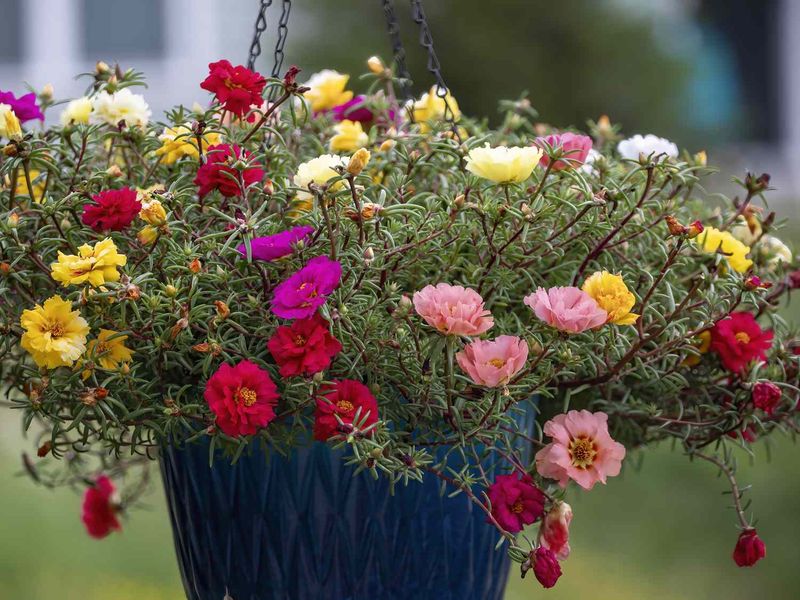
Portulaca is the little plant that acts like it has something to prove. It stays low, spills over the edge of a pot, and covers itself in jewel-toned blooms that open wide in the sun.
Pink, orange, red, yellow, white, and coral flowers can turn even a plain container into a bright patio accent within a short stretch of warm weather.
This is a good Florida plant because it does not panic in heat. Portulaca likes the kind of sunny, exposed patio spot where softer flowers often wilt by lunch.
The tradeoff is that it wants sharp drainage. A soggy container, especially during the rainy season, can make this tough little plant collapse faster than neglect ever would.
Use it near the rim of a pot, in a shallow bowl, or anywhere the stems can trail naturally instead of being buried in the middle of a crowded arrangement.
It pairs well with clean terracotta, concrete, or simple ceramic containers because the flowers already bring plenty of color.
In North Florida, treat portulaca as warm-season color. Farther south, the bigger challenge is usually too much rain rather than too much heat, so drainage holes and a fast-draining potting mix matter.
7. Angelonia Adds Upright Color That Looks Professionally Planted
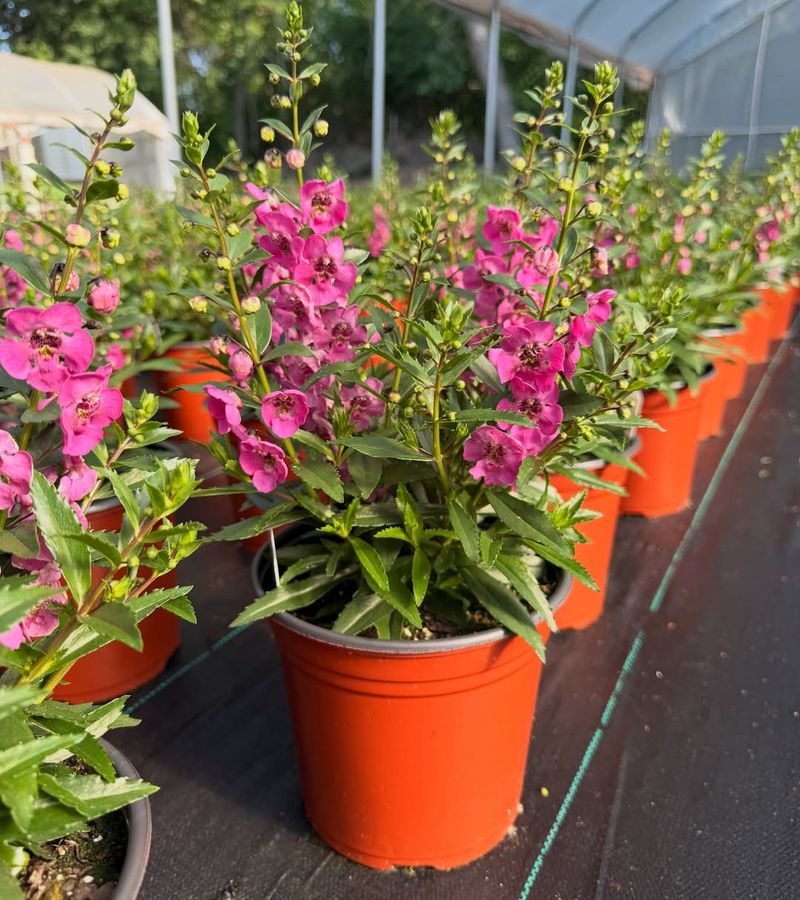
Angelonia has a way of making a container look planned instead of thrown together. The flower spikes stand upright in shades of purple, pink, white, and soft bicolor, giving a pot the kind of height and structure that small bedding plants often lack.
It is not a huge plant, but it brings a finished shape to the arrangement.
That vertical habit is what makes angelonia so useful on Florida patios. It can sit behind trailing plants, rise out of a mixed container, or stand on its own in a narrow pot where a rounder flower would look flat.
The blooms have a clean, airy look, so the container feels polished without getting heavy.
Angelonia also earns its spot because it handles heat better than many flowers that look this refined. Give it sun, drainage, and regular water while it settles in, and it can keep looking fresh through stretches of Florida summer.
Crowded pots and soggy soil are bigger problems than heat, especially during humid or rainy periods.
If the plant starts to look thin or tired, a light trim can help it push new growth and bloom again. Use angelonia where a patio needs a little height: beside a seating area, in the center of a mixed pot, or along a sunny walkway where those upright spikes can actually be seen.
8. Dwarf Ixora Brings Resort Style To Sunny Patio Pots
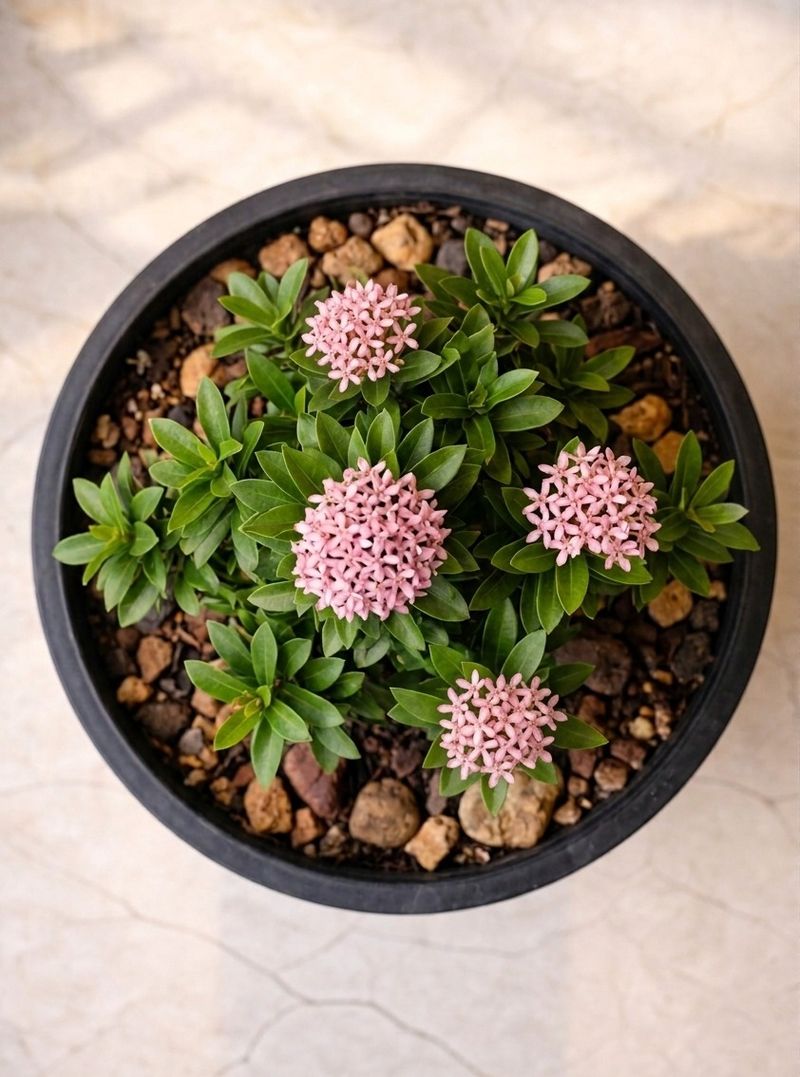
Dwarf ixora brings that polished hotel-entry look without needing a giant planter or a landscape crew. The leaves are glossy, the plant stays naturally compact, and the flower clusters show up in bold shades of red, orange, pink, yellow, or coral.
Even a small starter plant can make a sunny patio corner feel more finished.
It works especially well as a container anchor. Place one near a front door, beside a patio chair, or at the edge of a seating area, and it gives the space a little tropical structure without taking over.
The shape is tidy enough to look intentional, but the flowers keep it from feeling stiff.
The catch is cold. Ixora is much happier in warm, protected conditions, which is why it feels most at home in South Florida.
In Central Florida, it can still work well in a pot if you are ready to move or cover it during cold snaps. In North Florida, treat it more like a movable patio plant than something you expect to leave exposed all winter.
Give dwarf ixora bright light, steady moisture, and a container that drains well. It will look better sheltered from hard wind and the harshest reflected heat, especially on patios surrounded by concrete or pavers.
A simple pot is usually enough; the glossy foliage and clustered blooms already bring the resort feel.
9. Bromeliads Make A Porch Look Collected Instead Of Cheap
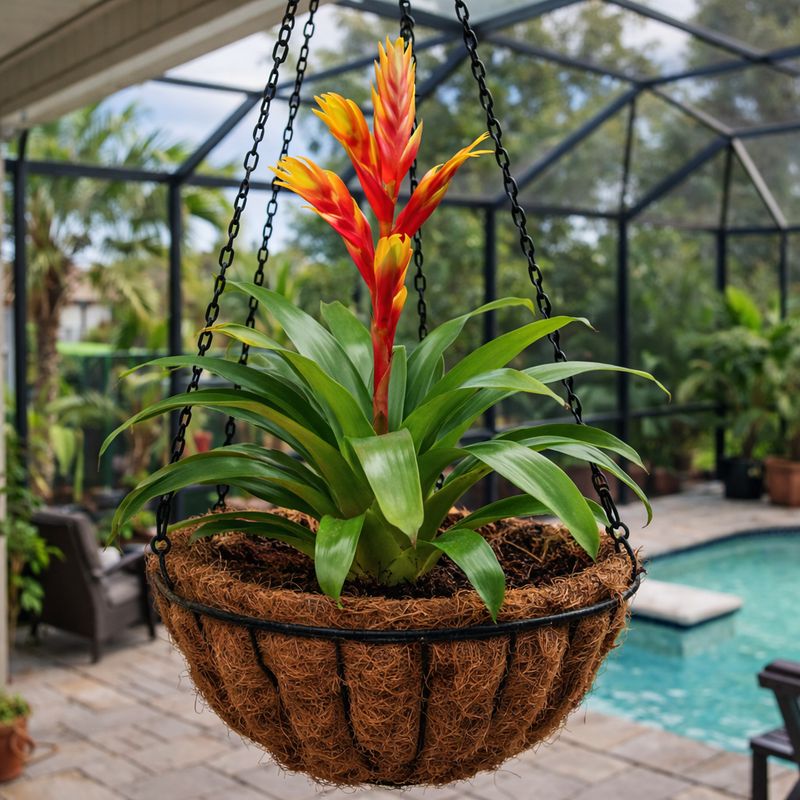
Bromeliads make a porch look collected in a way most small patio plants cannot. Their rosette shapes, striped leaves, colorful centers, and sculptural forms feel more like living decor than ordinary container plants.
Even a few inexpensive young plants arranged on a shelf, table, or shaded corner can make the space feel intentional.
They are especially good for Florida patios because many popular bromeliads enjoy the kind of filtered light found under porches, lanais, and tree cover. You do need to match the variety to the spot, though.
Some can handle brighter light, while others scorch if they sit in direct afternoon sun.
In cooler parts of Florida, keep bromeliads in movable pots so they can be protected during cold snaps. In warmer areas, the bigger task is usually managing light, airflow, and water.
The pot should drain well, and the plant should never sit in standing water for long.
One very Florida-specific detail matters: bromeliad cups can hold water, and that water can become a mosquito breeding spot. Flush or refresh the cups regularly during warm, humid weather so the plants stay decorative without creating a backyard nuisance.