Small Native Trees That Belong In East Texas Front Yards
East Texas has its own identity when it comes to landscape and climate, and the front yard trees that work well in drier parts of the state do not always translate here.
The higher humidity, heavier rainfall, and richer soils of East Texas create a distinct growing environment that deserves its own set of solutions.
Native small trees that are actually from this region bring an authenticity and staying power that imported ornamentals rarely match.
They are already calibrated for East Texas weather patterns, from the wet winters to the humid summers, and they establish faster and demand less because they belong here.
Several of them put on a remarkable show in spring, offer dense summer canopy, and transition beautifully into fall.
If your East Texas front yard needs a tree that fits the scale of the space and actually suits the land it is growing in, the native options in this region are well worth knowing.
1. Eastern Redbud
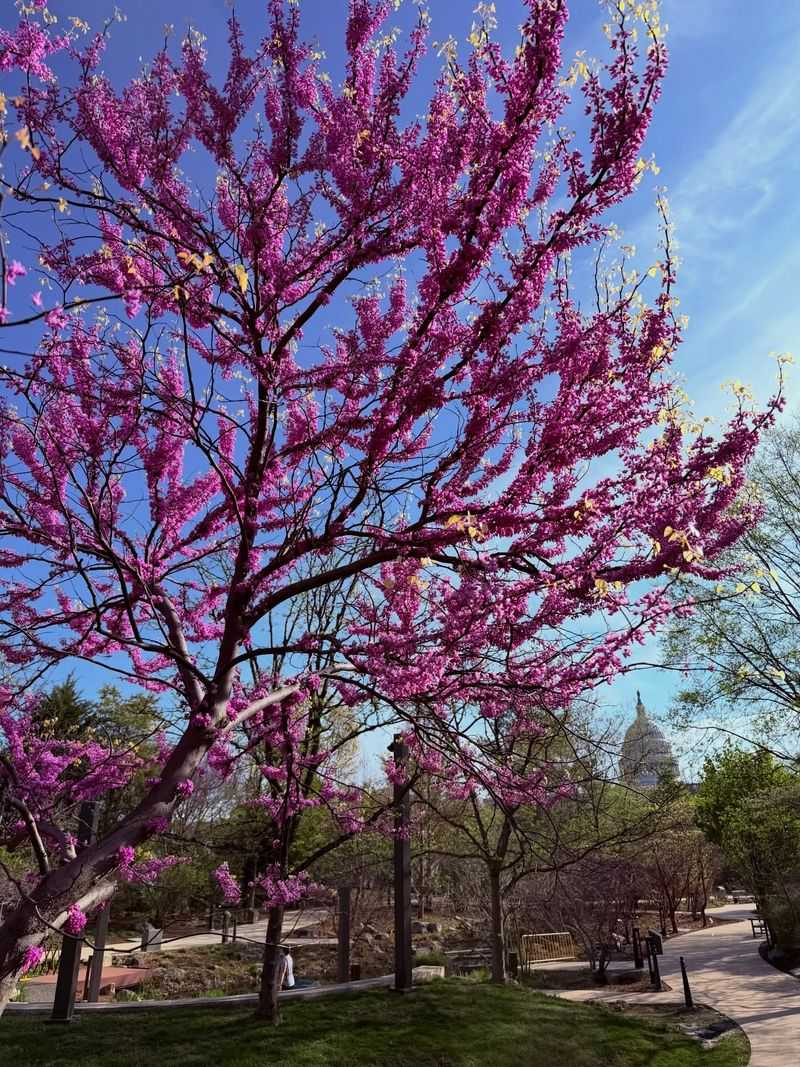
Few trees put on a spring show quite like the Eastern Redbud. Before a single leaf appears, the branches explode with clusters of vivid pink-purple flowers that cover every inch of the tree.
It is one of the most eye-catching sights in any East Texas neighborhood during late February and March.
Eastern Redbud grows naturally in East Texas woodlands, which means it already knows how to handle the heat, humidity, and occasional drought the region throws at it.
It typically reaches 20 to 30 feet tall at maturity, but many specimens stay smaller, especially in open front yards with full sun.
The heart-shaped leaves that follow the blooms are a deep, attractive green all summer long.
Planting one near a walkway or driveway creates a stunning focal point that neighbors will notice every spring. Redbuds do best in well-drained soil and can handle both full sun and partial shade.
They are not picky, which makes them a great choice for homeowners who want beauty without a lot of fuss.
Birds love the seeds that form after flowering, and bees are huge fans of the early blooms when few other flowers are available. A young Redbud can start blooming within just two or three years after planting.
That means you will not have to wait long before your front yard starts looking incredible every spring season.
If you want one tree that delivers maximum seasonal drama in a small package, the Eastern Redbud is a top pick for East Texas front yards of almost any size.
2. American Holly
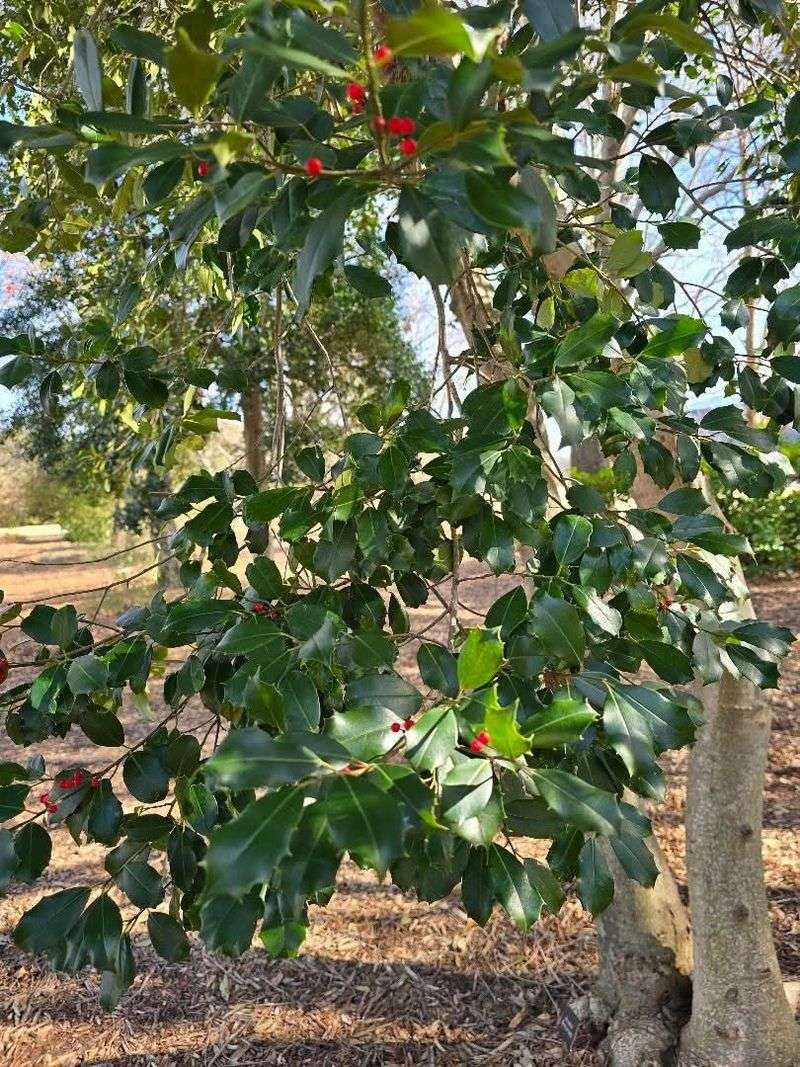
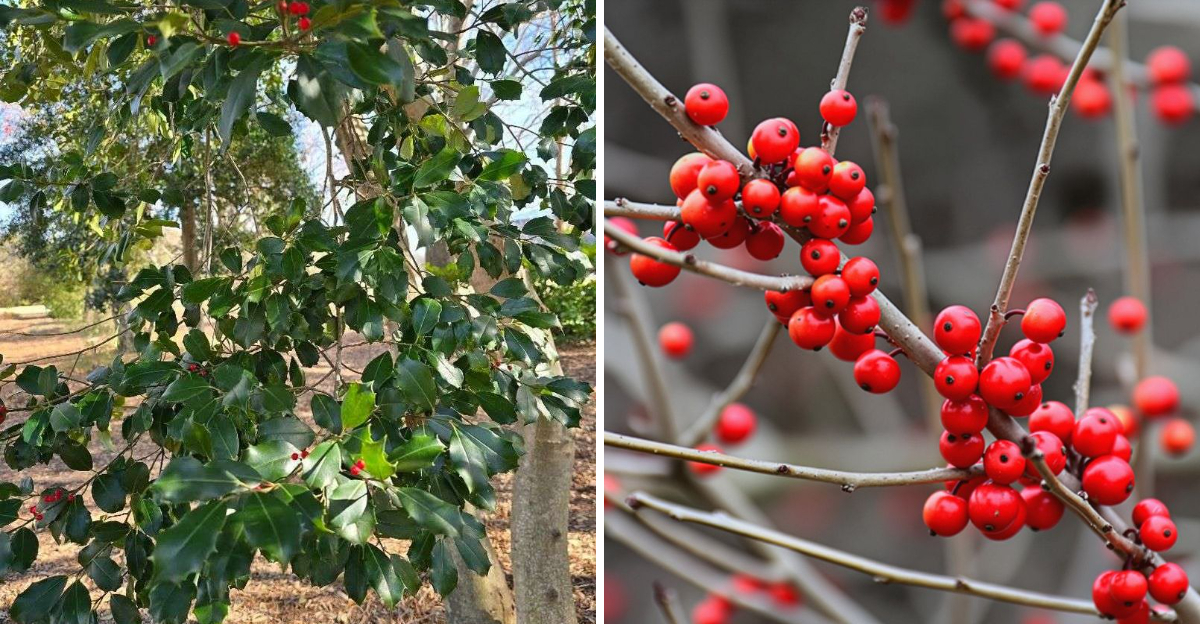
Walk through any East Texas pine forest and you will likely spot American Holly growing quietly in the understory. This native evergreen is one of the most dependable small trees you can plant in a front yard.
It stays green all year long, giving your home a polished, landscaped look even in the middle of winter when other trees are bare.
American Holly grows slowly but steadily, eventually reaching 15 to 30 feet depending on conditions. Its dark, glossy leaves have a sharp, wavy edge that gives the tree a bold, classic appearance.
Your Texas Garden Changes Every Week. Your Plan Should Too.
Gardening in Texas changes quickly throughout the season. Every Friday you’ll receive a simple weekly plan showing exactly what to plant, prune, fertilize, harvest, and protect so you never miss the right timing.
In winter, female trees produce clusters of bright red berries that practically glow against the green foliage. Those berries are a favorite food source for cedar waxwings, mockingbirds, and other winter birds.
You do need at least one male tree nearby to get berry production on the female. Many nurseries sell both, and some even sell them as a matched pair.
Planting them together near the front of your home creates a stunning, wildlife-friendly display that lasts all season long.
American Holly tolerates a range of soil conditions, including the acidic, sandy soils that are common in East Texas. It also handles both full sun and partial shade without complaint.
Once established, it is a very low-maintenance tree that rarely needs pruning or extra watering.
Fun fact: American Holly is the state tree of Delaware, but it thrives just as beautifully in East Texas. For year-round color, wildlife value, and classic curb appeal, this native evergreen is genuinely hard to beat in any front yard setting.
3. Possumhaw Holly
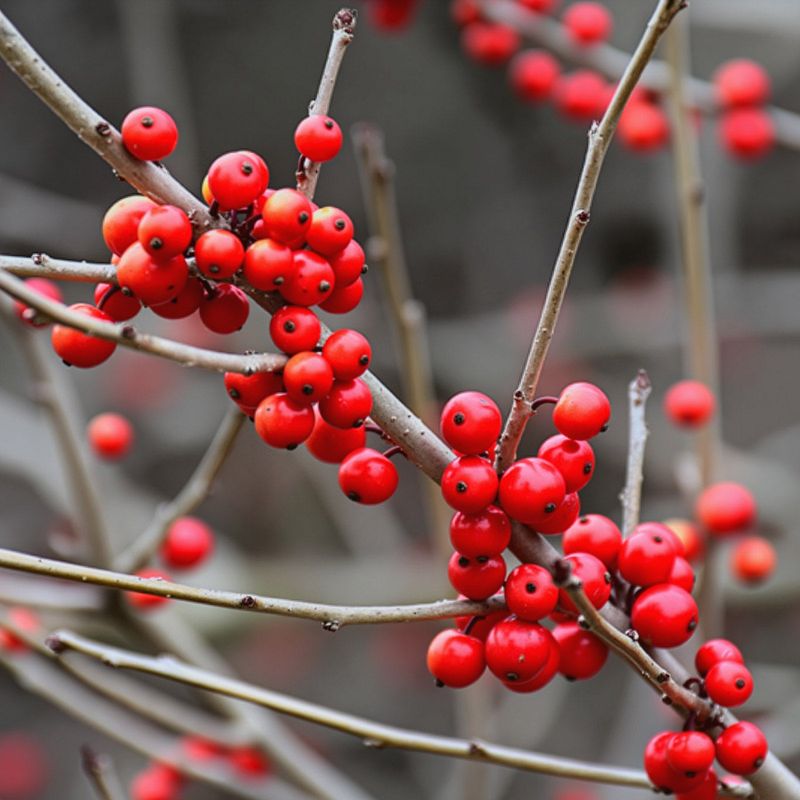
Imagine stepping outside on a cold January morning and seeing a small tree absolutely loaded with bright red and orange berries.
That is exactly what Possumhaw Holly delivers every winter, and it is genuinely one of the most striking native plants you can grow in East Texas.
Unlike American Holly, Possumhaw is deciduous, meaning it drops its leaves in fall and shows off those colorful berries with nothing in the way.
Possumhaw Holly stays relatively compact, usually topping out between 7 and 15 feet tall. That size makes it a natural fit for smaller front yards or tight spaces near entryways and mailboxes.
The berry clusters cling to the branches for months, providing a long-lasting winter display that most ornamental plants simply cannot match.
Wildlife absolutely go wild for Possumhaw berries. Bluebirds, robins, cedar waxwings, and even wild turkeys will visit the tree throughout the cold months.
Planting one near a window gives you a built-in bird-watching spot right from your living room. It is one of those plants that gives back to nature while looking beautiful at the same time.
This holly thrives in moist, slightly acidic soils, which are very common across East Texas. It also handles occasional flooding and wet conditions better than most small trees.
Full sun brings the heaviest berry production, but Possumhaw also grows well in partial shade.
Nurseries across the region carry several named varieties, including ‘Warren’s Red’ and ‘Council Fire,’ both known for exceptionally heavy berry loads. For a front yard with serious winter wow factor, Possumhaw Holly is a standout native choice.
4. Mexican Plum
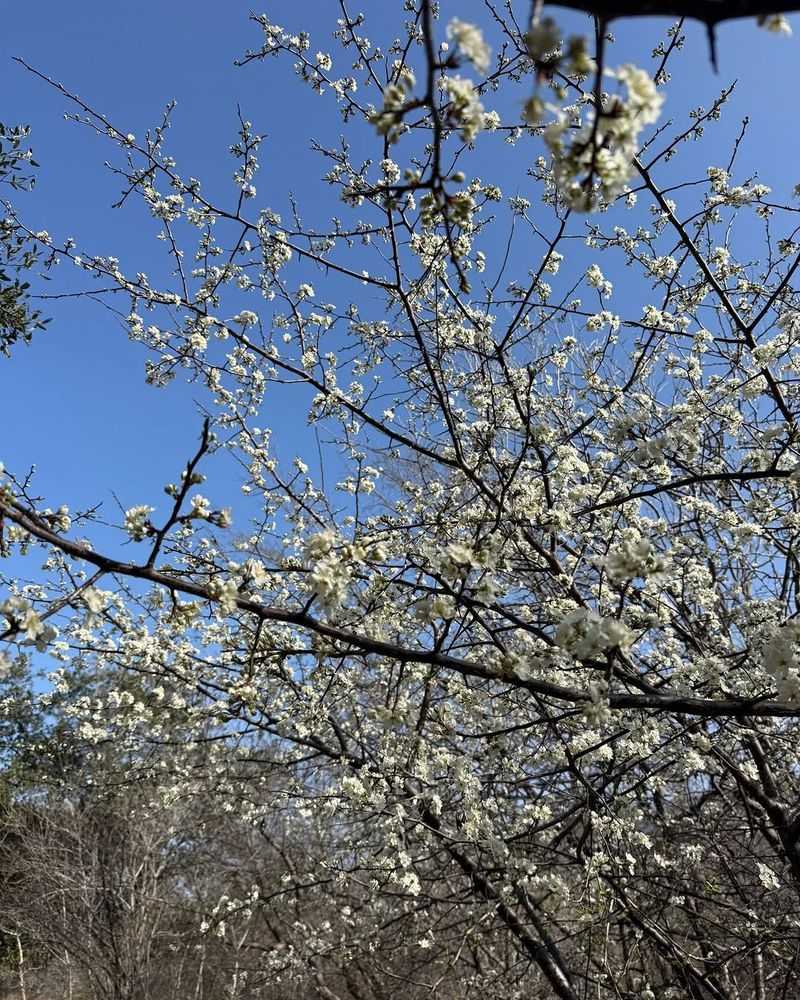
There is something almost old-fashioned and charming about a Mexican Plum in full bloom. Every spring, this small native tree bursts into clouds of fragrant white flowers before the leaves even open.
The sweet scent drifts through the yard on warm March mornings and draws in early pollinators that are hungry after a long winter. It is the kind of tree that makes you stop and actually enjoy your front yard.
Mexican Plum is native throughout much of Texas, including the sandy soils and red clay of East Texas. It usually grows between 15 and 25 feet tall, with a rounded crown that provides light, dappled shade.
One of its most underrated features is the bark, which peels away in thin layers to reveal a mix of gray, brown, and reddish tones underneath. That textured bark looks beautiful year-round, even when the tree is not in bloom.
In late summer, the tree produces small plums that ripen to a deep purple color. Wildlife love them, and the fruits are actually edible for people too, though they are quite tart on their own.
Many folks use them for homemade jelly, which is a fun and rewarding way to connect with your landscape.
Mexican Plum handles drought well once established and grows in a wide range of soil types. It does best in full sun, where it flowers most heavily and develops its best shape.
Pruning is rarely needed, which makes it a low-effort, high-reward addition to any front yard.
For fragrance, wildlife value, and four-season interest, Mexican Plum earns a well-deserved spot in East Texas front yard landscaping.
5. Flowering Dogwood
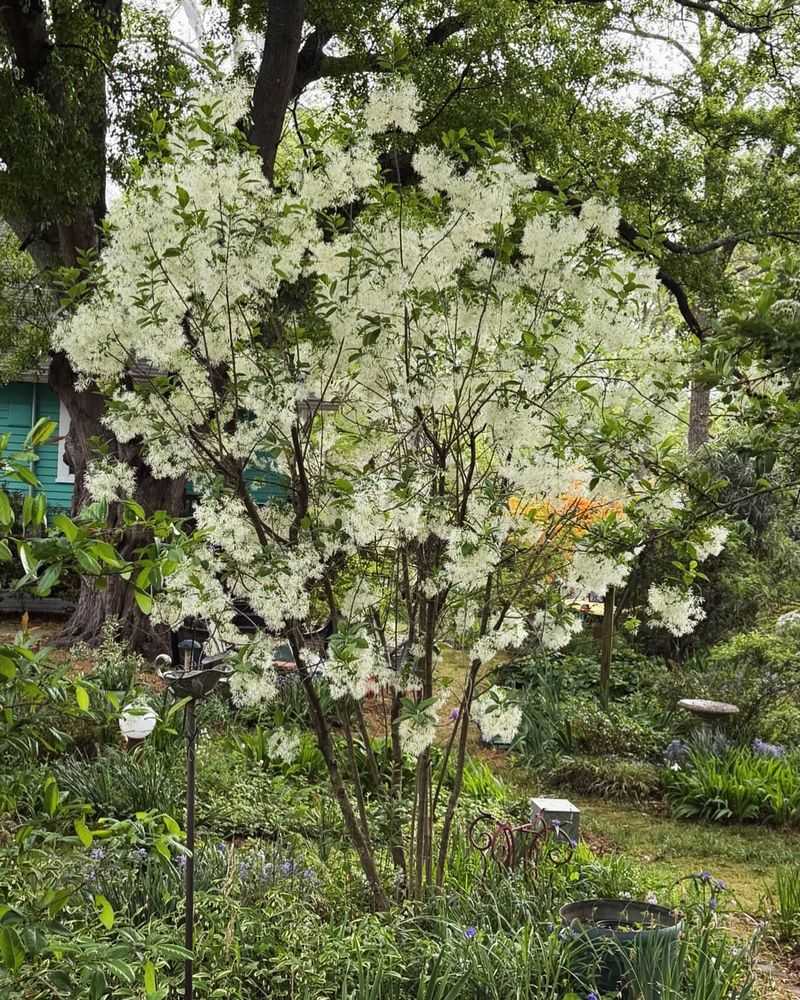
Flowering Dogwood is practically a symbol of the Southern woodland, and East Texas is right in its natural home range.
This tree does not just bloom; it puts on a full-scale spring performance with large, four-petaled white flowers that can cover every branch by mid-March.
The horizontal, layered branching pattern gives it a sculptural look that stands out even when it is not in flower.
In East Texas, Dogwoods do best with some afternoon shade, especially during the hottest summer months. Planting one on the east or north side of the house, or under the light canopy of larger trees, mimics the woodland conditions it naturally prefers.
Once settled in the right spot, a Flowering Dogwood can be surprisingly tough and long-lived.
Fall is another season where this tree really earns its place in the yard. The leaves turn a rich red and burgundy, and clusters of shiny red berries appear at the branch tips.
Those berries are a critical food source for migrating birds in autumn, including thrushes, vireos, and warblers passing through East Texas on their way south.
Dogwoods typically stay between 15 and 25 feet tall, making them a manageable size for most front yards. They grow slowly, which means they rarely need aggressive pruning to stay in shape.
Their naturally graceful form does most of the work for you. Did you know Flowering Dogwood wood is incredibly hard and dense? Historically it was used to make tool handles and weaving shuttles.
Today, its greatest value is the beauty it brings to any yard lucky enough to have one growing in it.
6. Parsley Hawthorn
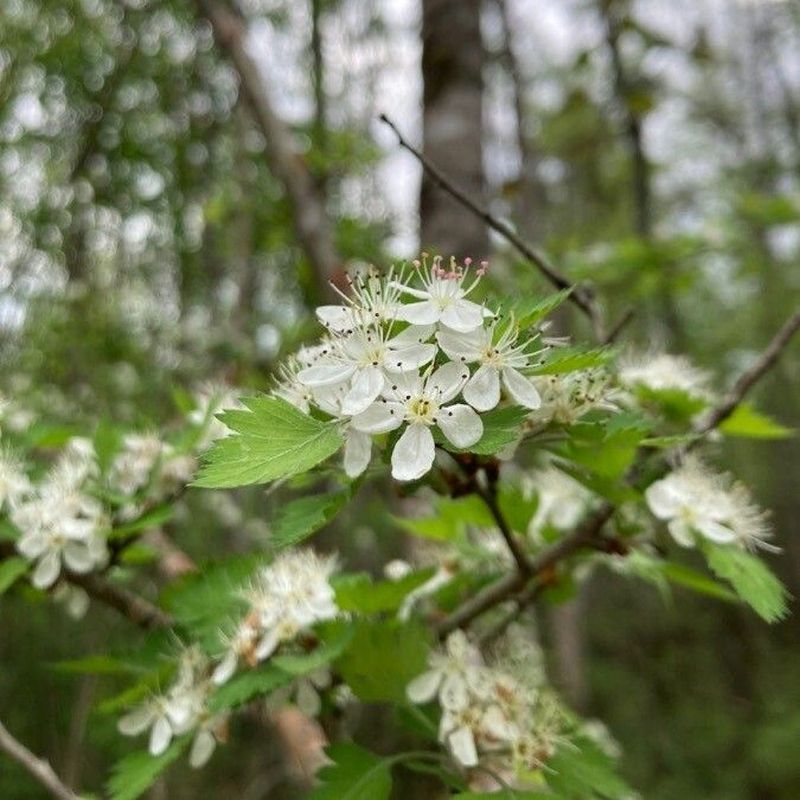
Not every tree gets the spotlight it deserves, and Parsley Hawthorn is a perfect example. This tough little native tree flies under the radar in most nurseries, but it is one of the most ecologically valuable small trees you can plant in an East Texas front yard.
It handles poor soils, heat, and humidity without missing a beat, and it rewards patient gardeners with something beautiful in every season.
Parsley Hawthorn gets its name from its deeply lobed leaves, which look remarkably similar to flat-leaf parsley. The leaves are bright green and stay attractive all summer.
In spring, the tree produces clusters of small white flowers that attract native bees, butterflies, and other beneficial insects. The blooms are not as flashy as a Redbud or Dogwood, but they have a quiet, delicate beauty that up-close observers really appreciate.
By fall, clusters of small red berries ripen on the branches and persist well into winter. Those berries are a magnet for wildlife, especially cedar waxwings, mockingbirds, and other fruit-eating birds.
The dense branching also provides excellent nesting cover for songbirds year-round, making this tree a true wildlife hub in the front yard.
Parsley Hawthorn stays compact, usually between 15 and 25 feet tall, and it naturally develops a rounded, multi-stemmed form that looks great without much shaping.
It tolerates wet soils and shade better than most hawthorns, which makes it flexible for different yard conditions across East Texas.
For homeowners who want to support local wildlife while growing something genuinely interesting and native, Parsley Hawthorn is an honest, rewarding choice that deserves far more attention than it typically gets.