These Are The 7 Best Small Palms For Pool Areas In Florida
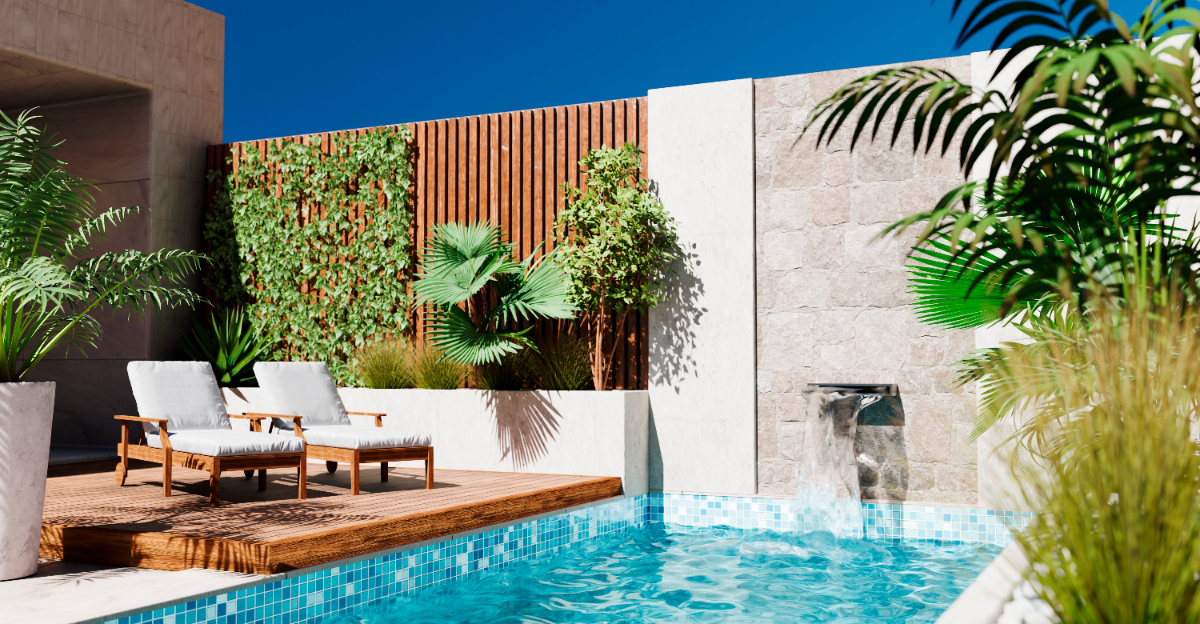
If you have ever spent a Saturday morning fishing fallen fronds and sticky berries out of your pool filter, you already know that not every palm belongs near the water.
Florida homeowners love the tropical look that palms bring to a backyard, but the wrong choice can mean constant cleanup, root damage to pool decking, or even safety hazards for barefoot guests.
The good news is that several small palms are genuinely well-suited for poolside life, staying compact, staying clean, and looking gorgeous year-round in Florida’s heat and humidity.
Whether you have a screened lanai, an open patio, or a tight corner that needs some life, this guide covers the seven best small palms that earn their spot near any Florida pool.
1. Use Christmas Palm For A Clean And Compact Accent
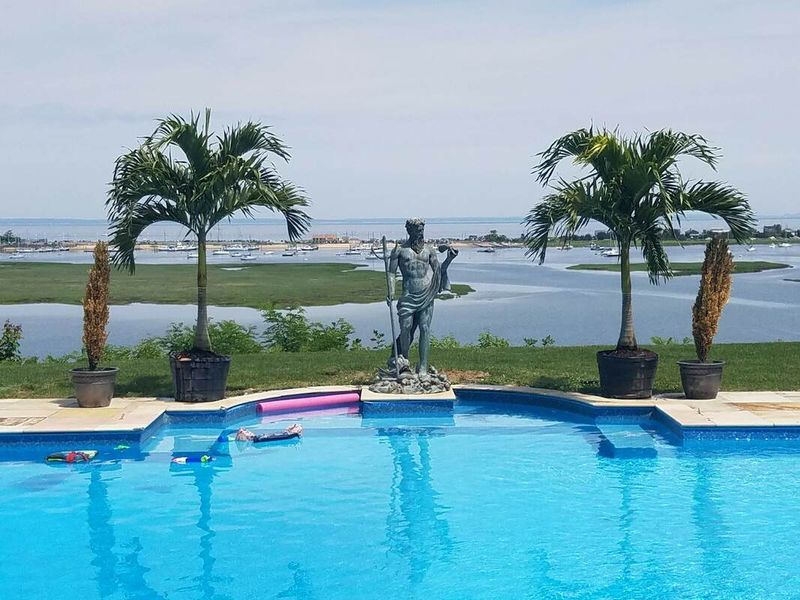
Picture a palm that practically takes care of itself while making your pool area look like a five-star resort. That is exactly what the Christmas Palm, known botanically as Adonidia merrillii, delivers for Florida homeowners.
It is one of the most popular poolside palms in the state, and for very good reason.
Growing to about 15 to 25 feet tall, the Christmas Palm stays slim and upright, with a clean, ringed trunk and a tidy crown of arching feather-shaped fronds. What makes it especially appealing near pools is its self-cleaning habit.
Old fronds drop on their own without leaving behind ragged stubs, so you spend far less time with pruning shears.
The University of Florida IFAS Extension notes that Adonidia merrillii is widely used in South and Central Florida landscapes because of its manageable size and ornamental appeal. It produces clusters of bright red fruit in winter, which is how it earned its festive name.
Those berries do drop, so planting it at least four to six feet from the pool edge is a smart move to keep fruit out of the water.
In terms of Florida conditions, this palm thrives in full sun and well-drained soil. It handles heat and humidity without complaint, though it is best suited for South and Central Florida since it is sensitive to hard freezes.
For North Florida gardeners, a sheltered microclimate near a screened enclosure can help protect it.
One honest drawback is that it is not salt-tolerant enough for beachfront properties, but for most inland and suburban Florida pools, it is a clean, compact, and visually striking choice that rarely disappoints.
2. Try Cat Palm For A Lush Low Growing Screen
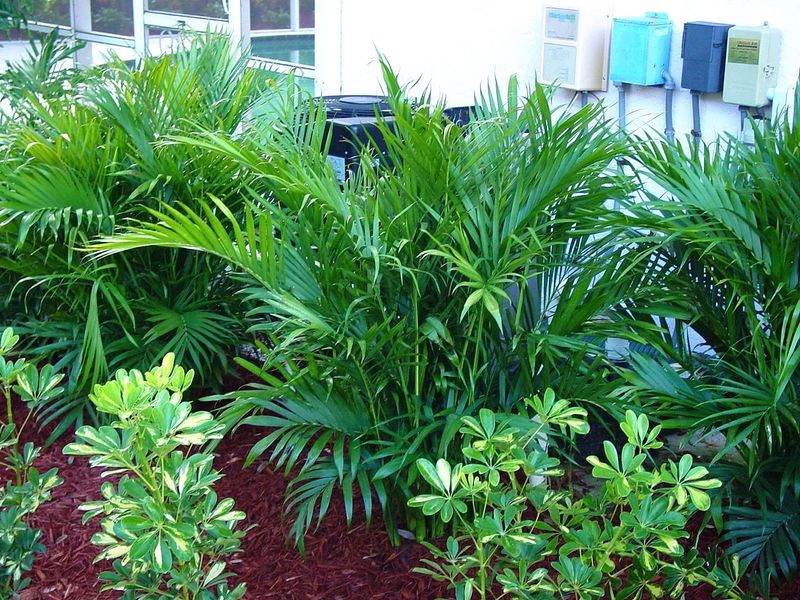
Some poolside spaces do not need a towering accent tree. Sometimes what a backyard really calls for is a dense, low-growing wall of tropical green that blocks the neighbor’s view and makes the whole area feel like a private retreat.
Cat Palm, or Chamaedorea cataractarum, does exactly that job beautifully.
Unlike most palms, Cat Palm grows in a clumping habit with no visible above-ground trunk. Its stems emerge directly from the soil, and the plant spreads outward in a bushy, fountain-like form.
Mature plants typically reach six to eight feet tall and can spread just as wide, making them excellent for filling in gaps along pool fences or creating a natural privacy screen without taking up too much vertical space.
Your Florida Garden Changes Every Week. Your Plan Should Too.
Gardening in Florida changes quickly throughout the season. Every Friday you’ll receive a simple weekly plan showing exactly what to plant, prune, fertilize, harvest, and protect so you never miss the right timing.
The fronds are soft, feathery, and deep green, with no sharp edges or spines to worry about around barefoot guests. That makes Cat Palm a genuinely family-friendly option for poolside planting.
It tolerates partial shade well, which is a real advantage if part of your pool area sits under a pergola or a screened enclosure that filters direct sunlight.
Florida’s heat and humidity suit this palm well, though it prefers consistent moisture and does best in soil that drains well but does not dry out completely. During dry spells, supplemental watering helps keep the fronds looking their best.
Occasional yellowing of older fronds is normal and simply requires light cleanup.
One minor consideration is that Cat Palm can be sensitive to cold snaps, so in North Florida it benefits from a protected location near a wall or structure.
For Central and South Florida pools, though, it is a reliable, lush, and low-maintenance screening palm that earns its place every single season.
3. Grow Dwarf Palmetto For A Native Poolside Option
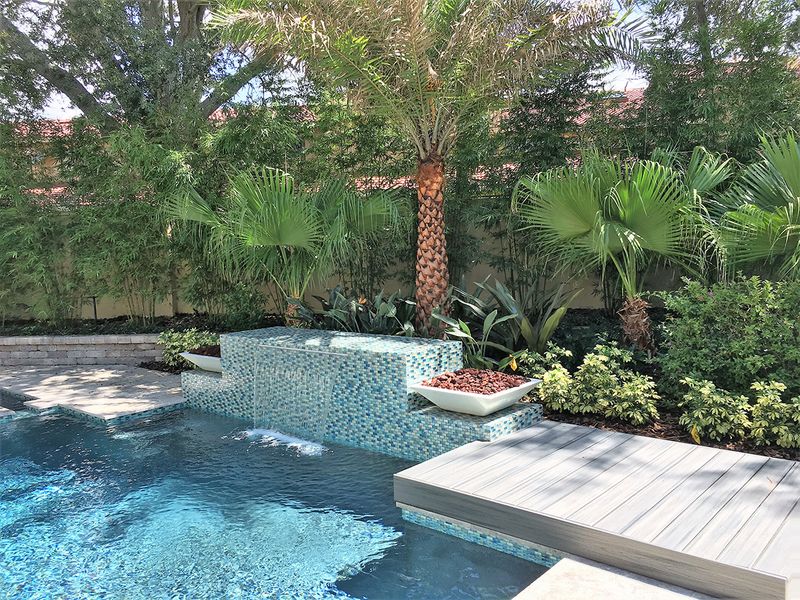
For gardeners who want a palm that truly belongs in Florida’s natural landscape, the Dwarf Palmetto is a standout choice.
Sabal minor is native to the southeastern United States, including Florida, which means it is already adapted to the state’s unpredictable weather, variable soils, and intense summer heat without needing much help from you.
Growing typically between two and six feet tall, the Dwarf Palmetto stays low to the ground and produces large, fan-shaped fronds that radiate outward in a full, rounded silhouette.
It rarely develops a visible above-ground trunk, which gives it a grounded, naturalistic look that blends beautifully with Florida-friendly landscaping around pool areas.
One of its strongest selling points for pool owners is its well-behaved root system. Unlike some palms that can heave decking or crack pool surrounds over time, the Dwarf Palmetto’s roots are non-invasive and stay manageable.
That makes it a smart long-term investment for anyone who wants to avoid costly repairs down the road.
University of Florida IFAS Extension recognizes Sabal minor as a durable, low-maintenance native that tolerates both wet and dry soil conditions. It handles full sun and partial shade equally well, giving you flexibility in where you position it around the pool.
It is also impressively cold-hardy, surviving temperatures well below freezing, making it one of the few palms suitable for North Florida pool areas without winter protection.
Frond drop is minimal and manageable, though occasional trimming of older leaves keeps the plant looking neat.
If you want a plant that supports native wildlife, provides year-round structure, and asks very little in return, the Dwarf Palmetto is one of the most honest and reliable choices on this entire list.
4. Choose European Fan Palm For A Tidy Structured Shape
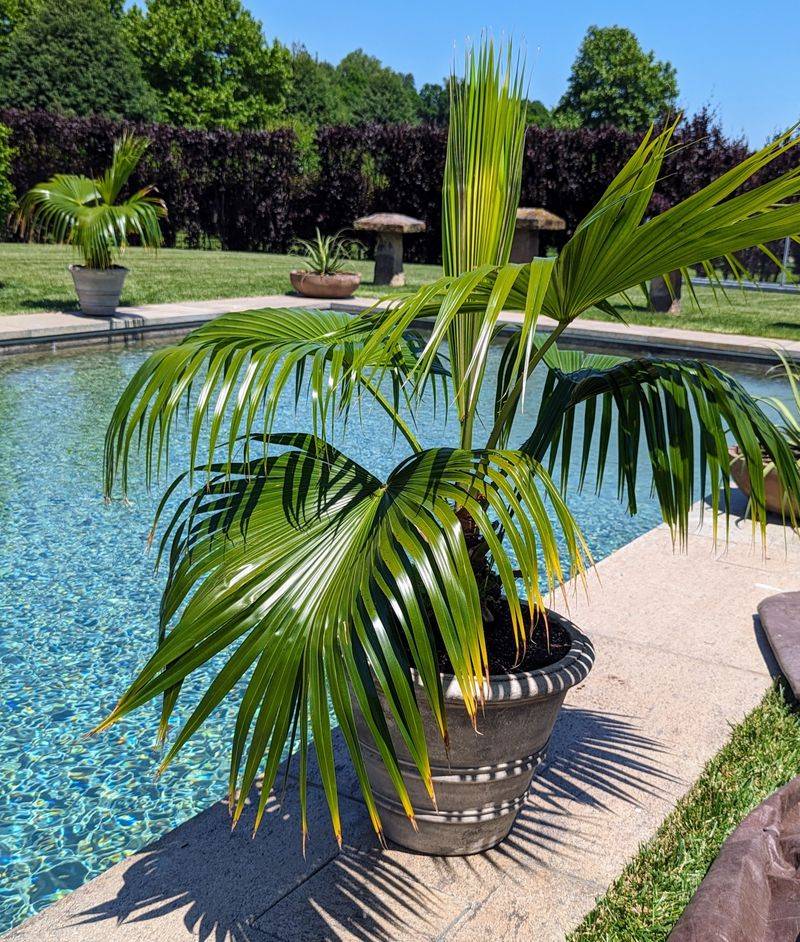
There is something satisfying about a palm that looks sculpted without any effort on your part.
The European Fan Palm, or Chamaerops humilis, brings that kind of naturally architectural quality to a poolside landscape, and it does it while staying compact and manageable for decades.
This palm is one of the slowest-growing options available, which is actually a huge advantage near pools. Slow growth means you are not constantly dealing with an outgrowing plant that crowds your decking or shades areas you want to keep sunny.
Mature plants typically reach six to fifteen feet tall over many years, often forming a multi-trunked clump with attractive silvery-green fan-shaped fronds.
The structured, almost formal shape of Chamaerops humilis pairs well with modern pool designs, Mediterranean-style homes, and clean-lined outdoor spaces.
It holds its shape naturally without heavy pruning, and the fronds do not shed excessively, keeping debris around the pool to a minimum.
That low-litter quality is something pool owners genuinely appreciate over the long term.
One important placement tip: the European Fan Palm does have fibrous, somewhat spiny leaf bases near the trunk.
Planting it slightly away from pool walkways, at least three to four feet back from high-traffic areas, keeps it looking elegant without creating any foot-traffic hazards.
It is not the spikiest palm on the market, but a little thoughtful spacing goes a long way.
Florida’s heat suits it well, and it handles drought conditions once established, making it forgiving during dry stretches. It also tolerates mild salt spray better than many small palms.
For a pool planting that looks intentional, stays tidy, and grows at a pace you can easily manage, the European Fan Palm is a polished and practical pick.
5. Add Bottle Palm For A Unique Sculptural Touch
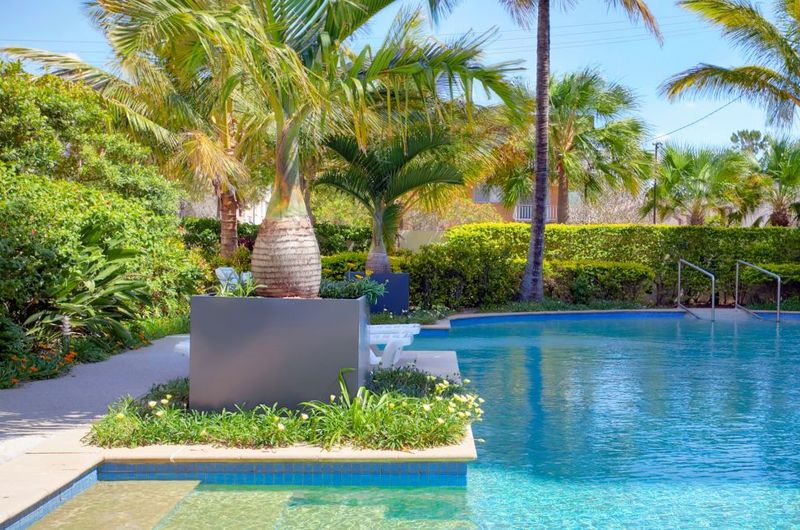
Every pool area deserves at least one plant that makes guests stop and say, “What is that?”
The Bottle Palm, Hyophorbe lagenicaulis, is that plant. Its swollen, bottle-shaped trunk is one of the most distinctive silhouettes in the entire palm family, and it turns a simple poolside corner into a genuine focal point.
Native to the island of Round Island near Mauritius, the Bottle Palm is actually considered critically endangered in the wild, which makes growing one in your Florida yard feel a little special.
In cultivation, it typically reaches ten to twelve feet tall at maturity, staying compact enough for most residential pool areas.
The trunk is widest at the base when the palm is young and gradually narrows as it ages, giving it that iconic bottle shape that sets it apart.
From a pool-owner’s perspective, the Bottle Palm is a low-litter choice. It carries only a small number of arching feather fronds at any given time, and old fronds detach cleanly.
There is minimal fruit or seed drop to worry about, which means less debris landing in your pool water. Planting it four to six feet from the pool edge gives it room to show off its form without creating cleanup headaches.
Hyophorbe lagenicaulis loves full sun and well-drained soil, both of which are easy to provide in most Florida settings.
It is heat-tolerant and handles humidity with no trouble, but it is cold-sensitive and best suited for South Florida or protected microclimates in Central Florida.
A hard freeze can damage or destroy it, so North Florida gardeners should look elsewhere.
For a unique, sculptural, and conversation-starting accent near your pool, few palms come close to the visual payoff that the Bottle Palm delivers with so little maintenance required.
6. Plant Parlor Palm For Small Shaded Pool Areas
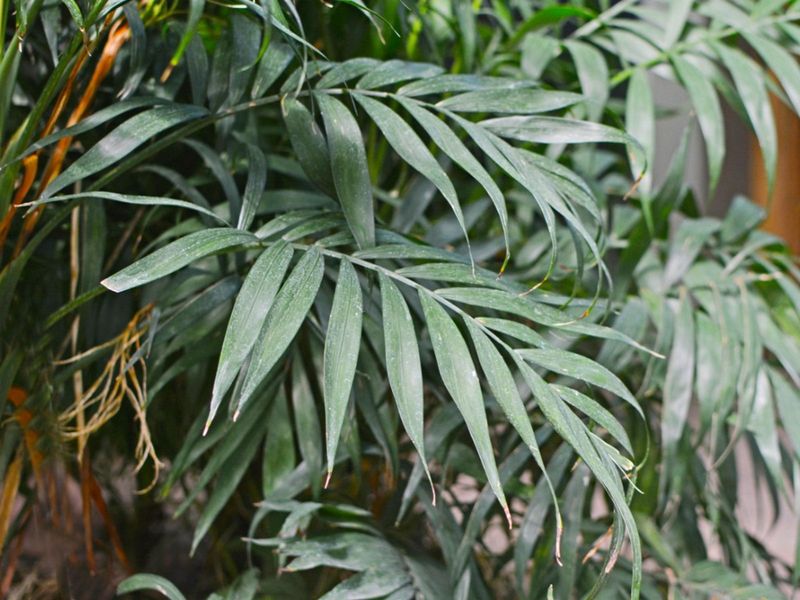
Not every pool area is bathed in full Florida sunshine. Screened enclosures, covered lanais, and pools tucked under mature tree canopies all create shaded zones where most palms simply refuse to thrive.
That is where the Parlor Palm, Chamaedorea elegans, quietly becomes one of the most valuable plants you can choose.
Originally from the rainforest understory of southern Mexico and Guatemala, the Parlor Palm evolved to grow in low-light conditions, and it brings that same adaptability to shaded pool areas in Florida.
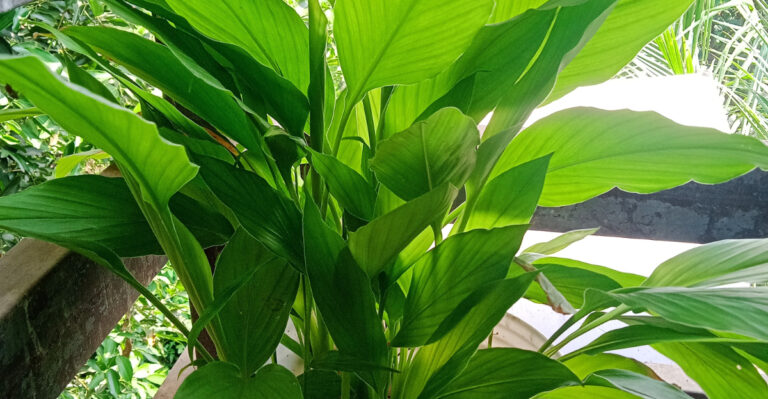
It grows as a slender, upright clump of cane-like stems topped with graceful, feathery fronds.
At maturity it typically reaches six to eight feet tall, staying narrow enough to fit in corners and tight spaces without crowding the surrounding area.
The fronds are soft, non-spiny, and visually elegant, creating a light tropical texture without any of the maintenance drama. Frond drop is minimal, and the plant rarely produces significant debris, which is exactly what you want near pool water.
The Parlor Palm also does well in container plantings, giving you the flexibility to move it around a covered patio depending on the season or your design preferences.
In Florida’s humidity, Chamaedorea elegans generally performs well, though it prefers well-drained soil and consistent moisture.
Overwatering in heavy soils can lead to root problems, so raised beds or amended planting areas work better in spots with poor drainage.
It is not particularly cold-hardy, so outdoor use is best suited for Central and South Florida.
If your poolside space has a shaded corner that feels empty and uninviting, the Parlor Palm fills it with effortless tropical charm. It is low-key, low-maintenance, and genuinely well-suited for the conditions that other palms on this list simply cannot handle.
7. Use Needle Palm For A Cold Hardy Low Maintenance Choice
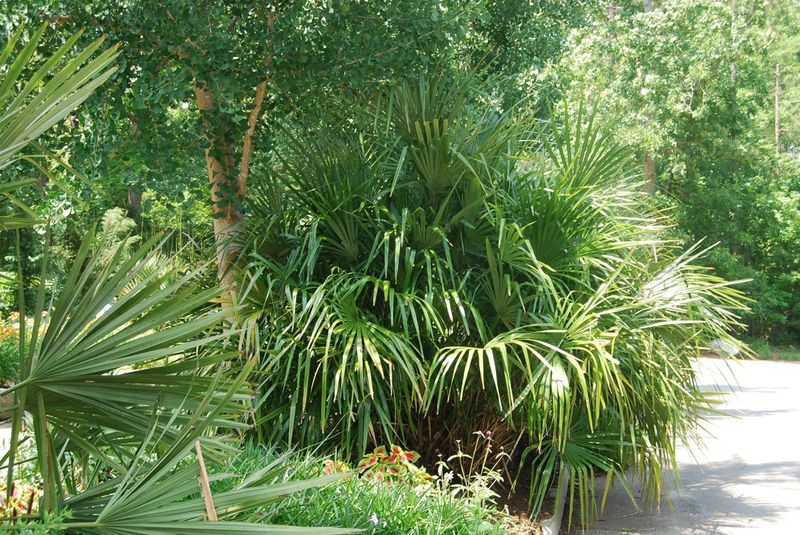
Florida gardeners in the northern part of the state often feel left out when palm recommendations come around, since so many species cannot survive a hard freeze. The Needle Palm, Rhapidophyllum hystrix, breaks that pattern entirely.
It is widely recognized as the most cold-hardy palm in the world, surviving temperatures as low as zero degrees Fahrenheit, which makes it a genuinely exciting option for North, Central, and South Florida pool areas alike.
Native to the coastal plains and wetlands of the southeastern United States, including Florida, the Needle Palm grows as a low, clumping shrub typically reaching three to six feet tall with a spread of four to eight feet.
Its dark green fan-shaped fronds are dense and full, giving it a lush, tropical appearance that holds up beautifully through Florida’s hot summers and occasional cold snaps without missing a beat.
From a pool-maintenance standpoint, the Needle Palm is a solid performer. It does not produce heavy fruit drop, and its compact form stays contained without aggressive spreading.
Planting it in a well-drained spot with some room to spread laterally keeps it looking its best. It handles full sun and partial shade, giving you flexibility in placement around the pool.
Here is the one honest caution that every gardener needs to hear before planting it: the Needle Palm has long, sharp needle-like spines at the base of its trunk. Those spines are no joke around barefoot pool guests.
Placement is everything with this palm. Keep it at least three to four feet back from walkways, pool steps, and high-traffic zones.
In a border planting or a landscape bed with some buffer space, it is completely safe and extraordinarily beautiful.
For durability, native character, and year-round performance across all of Florida, the Needle Palm earns its spot on this list without any hesitation.