Before You Plant Florida Bougainvillea Know These Things About Thorns And Placement
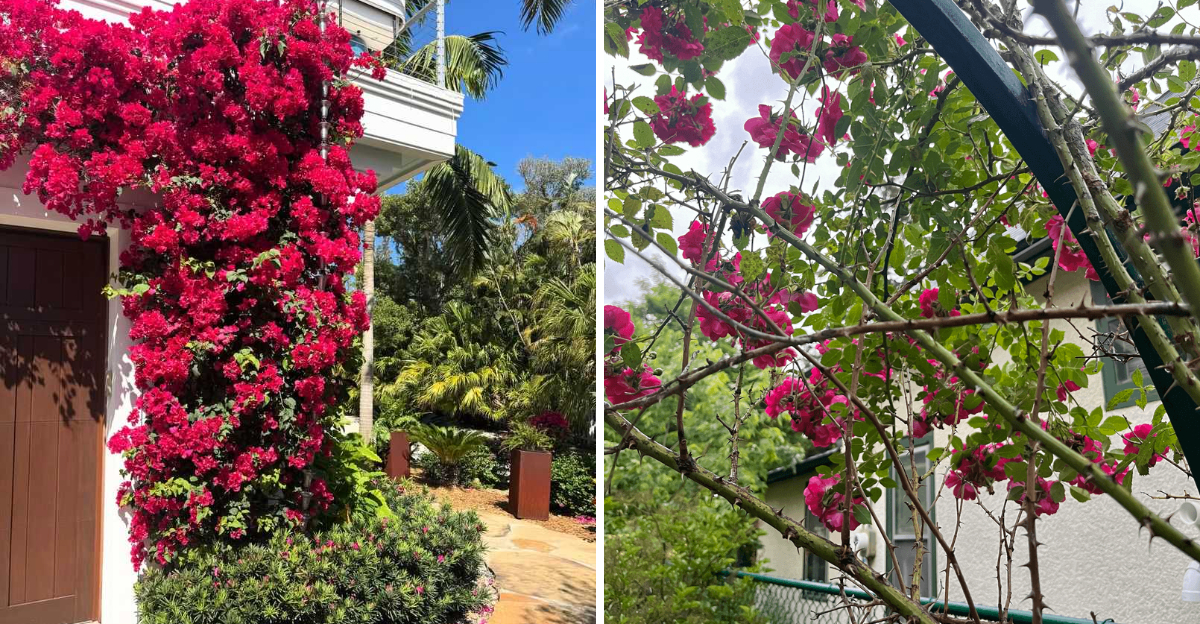
Few landscape plants command attention quite like bougainvillea.
The bright, papery bracts in pink, red, orange, and purple are bold, the heat tolerance is impressive, and those fast growing stems cover fences, walls, and trellises with the kind of color that makes a Florida yard look genuinely spectacular.
It is easy to see why so many gardeners want one. The thing is, bougainvillea comes with a catch, and it is a sharp one.
Those vigorous stems are covered in thorns that can make the wrong planting location a real problem, especially near walkways, entry areas, patios, or gates where people pass by regularly.
Understanding how this plant grows and how its thorns affect the spaces around it is honestly one of the most important steps you can take before putting one in the ground.
1. Choose A Spot Away From Walkways
Narrow walkways and busy sidewalks are not the best neighbors for a plant armed with sharp, curved thorns.
Bougainvillea stems can arch outward as the plant matures, and in Florida’s warm growing conditions, that spread can happen faster than many homeowners expect.
When stems reach into a path, anyone walking by risks getting scratched, snagged, or poked, which gets old quickly.
Placing bougainvillea at least a few feet back from any high-traffic path gives the plant room to grow without turning every trip across the yard into an obstacle course.
Pool edges and narrow side yards are especially tricky spots, since people move through those areas often and sometimes carry towels, bags, or gardening tools that catch on thorny stems.
Planning for the mature spread of the plant before you ever put it in the ground saves a lot of frustration later. A bougainvillea that looks small at planting can eventually produce long, reaching stems that extend well beyond where you originally imagined.
Mapping out its likely footprint on a sunny Florida afternoon, before digging the hole, is one of the simplest ways to avoid a placement you will later regret.
Giving it a fence line, a back wall, or an open garden bed away from foot traffic tends to work out much better in the long run.
2. Keep Thorny Stems Away From Entry Areas
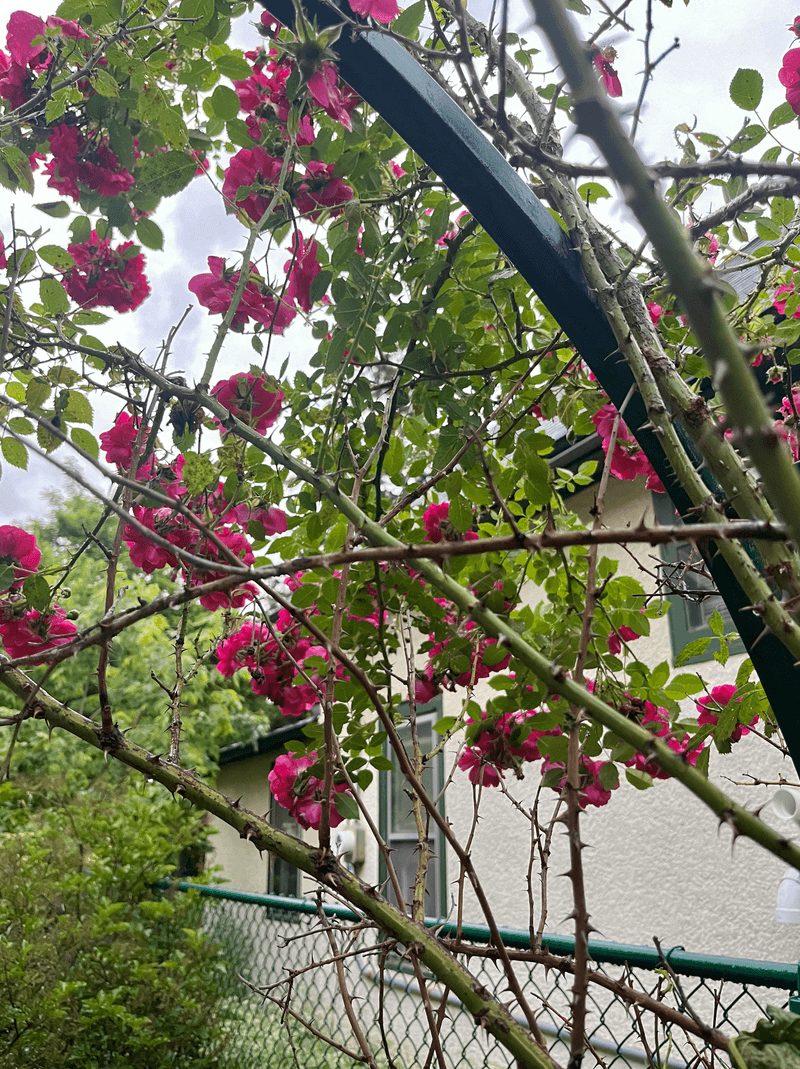
Front doors, gates, mailboxes, and outdoor seating areas all have one thing in common: people reach, lean, and pass through them multiple times a day.
Putting a thorny bougainvillea too close to any of those spots creates a situation where scratches and snags become a regular part of daily life.
Guests reaching for a doorbell or a delivery person heading up a path should not have to dodge sharp stems just to get to your door.
Thoughtful placement near entries can actually reduce how much pruning you need to do down the road. When bougainvillea is positioned a comfortable distance from doors and gates from the start, you are not constantly trimming it back to keep pathways clear.
That saves time, reduces the risk of getting scratched during maintenance, and lets the plant grow more naturally without constant intervention.
Your Florida Garden Changes Every Week. Your Plan Should Too.
Gardening in Florida changes quickly throughout the season. Every Friday you’ll receive a simple weekly plan showing exactly what to plant, prune, fertilize, harvest, and protect so you never miss the right timing.
In Florida, where outdoor living spaces are used year-round, entry areas often double as gathering spots, and thorny plants near those zones can limit how comfortable and accessible those spaces feel.
A bougainvillea trained along a fence or wall on the far side of a garden bed, rather than right next to a gate latch or a porch step, gives you all the color and drama of the plant without the daily hazard.
A little extra planning at planting time pays off every single day after that.
3. Give It Room To Grow And Spread
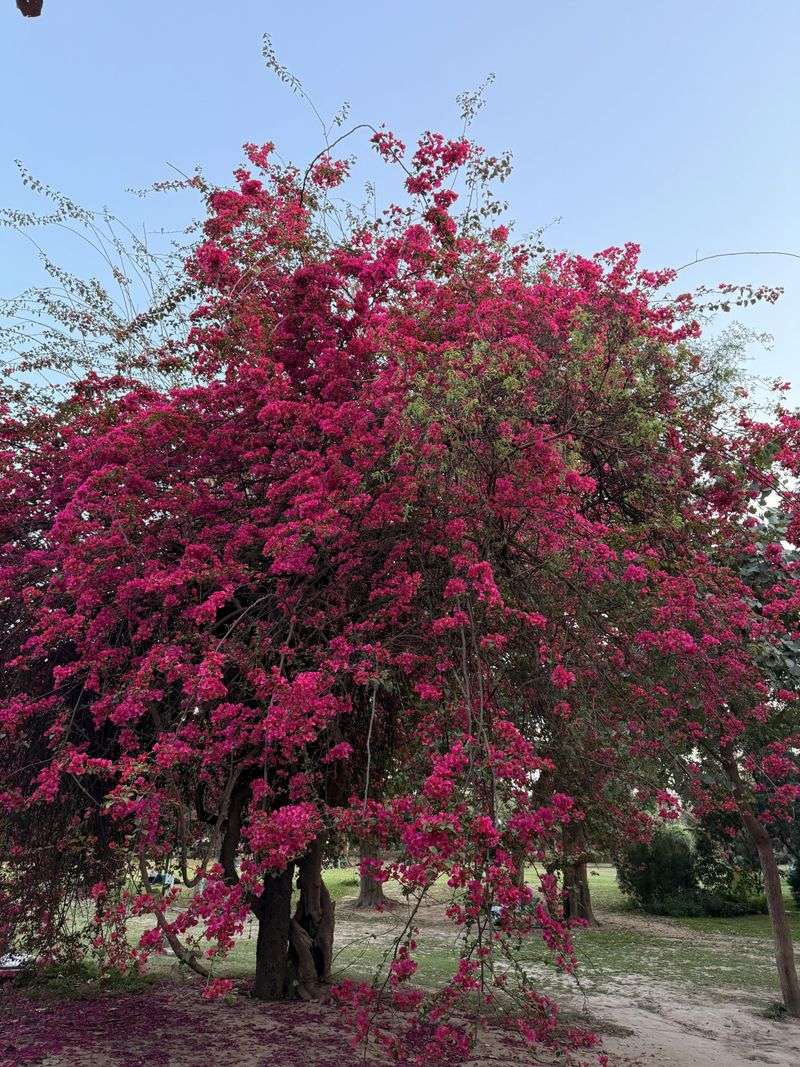
One of the most common mistakes Florida homeowners make with bougainvillea is underestimating how much space it eventually needs.
At the nursery, it looks manageable in a small container, but given Florida’s warm temperatures and long growing season, a well-placed bougainvillea can produce surprisingly long stems over time.
Without enough horizontal and vertical room, those stems have nowhere to go except into nearby plants, structures, or spaces you did not plan for.
Mature bougainvillea can spread quite wide depending on the cultivar, the support structure, and how much it is trained and pruned. Some varieties stay more compact, while others can cover a large fence section or sprawl across a significant wall area.
Knowing the general size range of the specific cultivar you are planting helps you choose a spot that fits its natural growth habit rather than fighting against it.
Access for maintenance is another part of planning that often gets overlooked.
You will eventually need to prune, train, or inspect the plant, and doing that work is much easier when you can reach all sides of it without climbing over other plants or squeezing into tight corners.
In Florida landscapes, where growth can be vigorous through much of the year, leaving enough open space around bougainvillea from the beginning makes every future gardening task a little more manageable and a lot less scratchy.
4. Use A Trellis Or Support In The Right Place
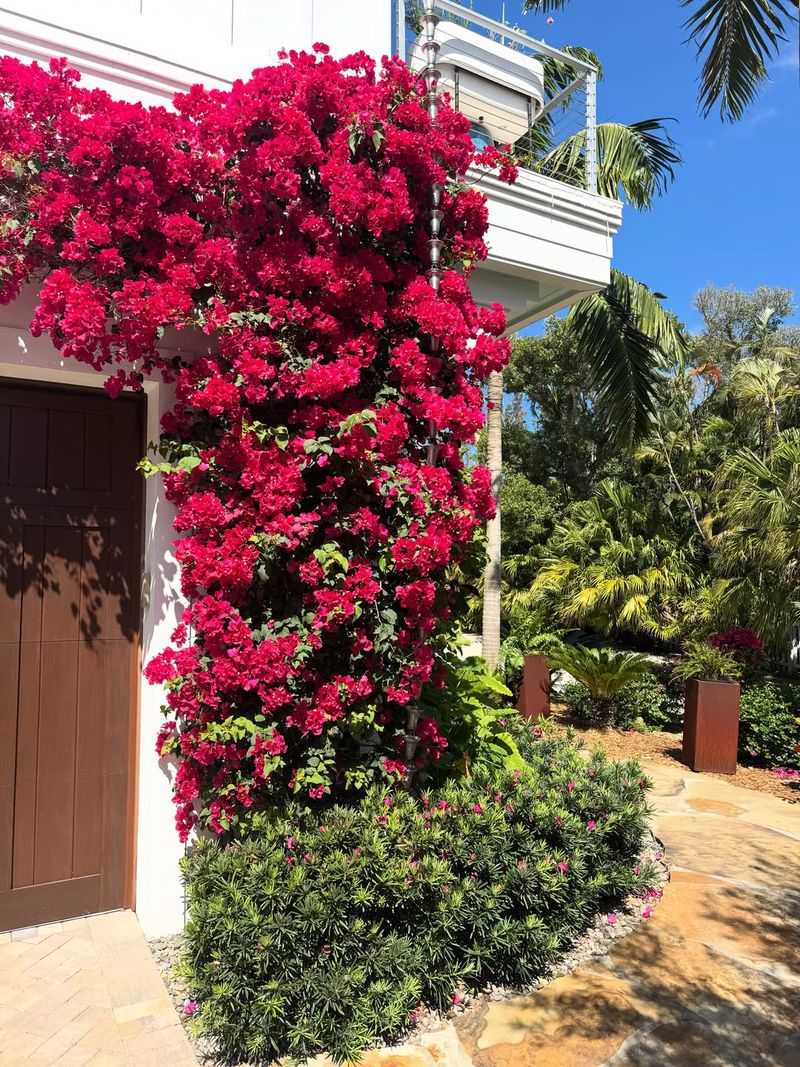
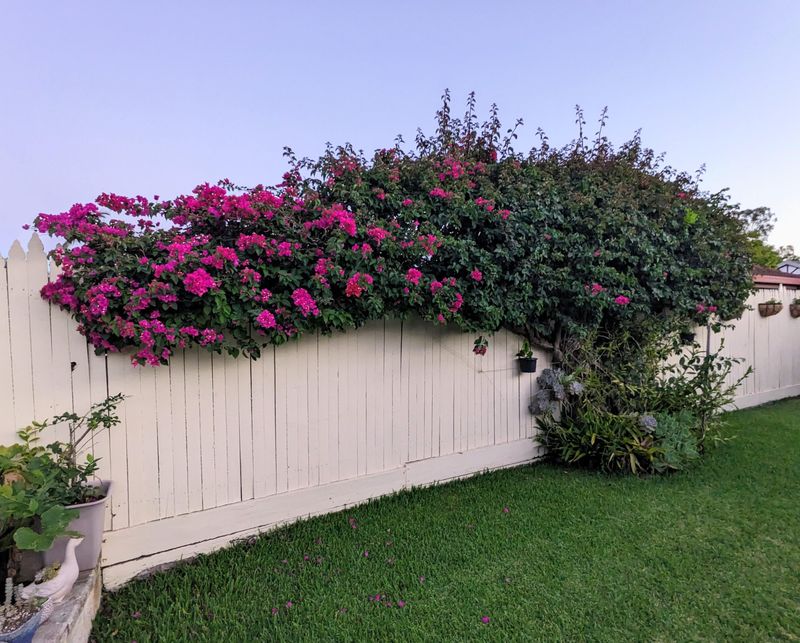
Training bougainvillea on a trellis, arbor, fence, or wall is one of the most popular ways to display it in Florida landscapes. Unlike some climbing vines, bougainvillea does not attach itself naturally with tendrils or aerial roots.
It uses its thorns to hook onto nearby surfaces and structures, which means it needs a gardener to guide and secure its stems as it grows. Choosing the right support structure is just as important as choosing the right location.
A sturdy support matters because mature bougainvillea stems can become heavy and woody over time. A lightweight or flimsy trellis that looks fine when the plant is young may struggle once the plant fills in.
Solid wood, metal, or masonry structures tend to hold up better for long-term training in Florida’s outdoor conditions, where heat, humidity, and occasional storms put extra stress on garden structures.
Placement of the support also affects how easy or difficult future pruning will be. A trellis pressed flat against a wall with no clearance behind it makes it very hard to reach stems that grow backward or downward.
Positioning the support where you have access from at least one open side makes training sessions much safer and more manageable.
Thorny stems and tight spaces are not a good combination, so a little extra clearance around the support structure goes a long way toward keeping maintenance tasks reasonable and scratch-free.
5. Pick A Full Sun Location For Better Blooming
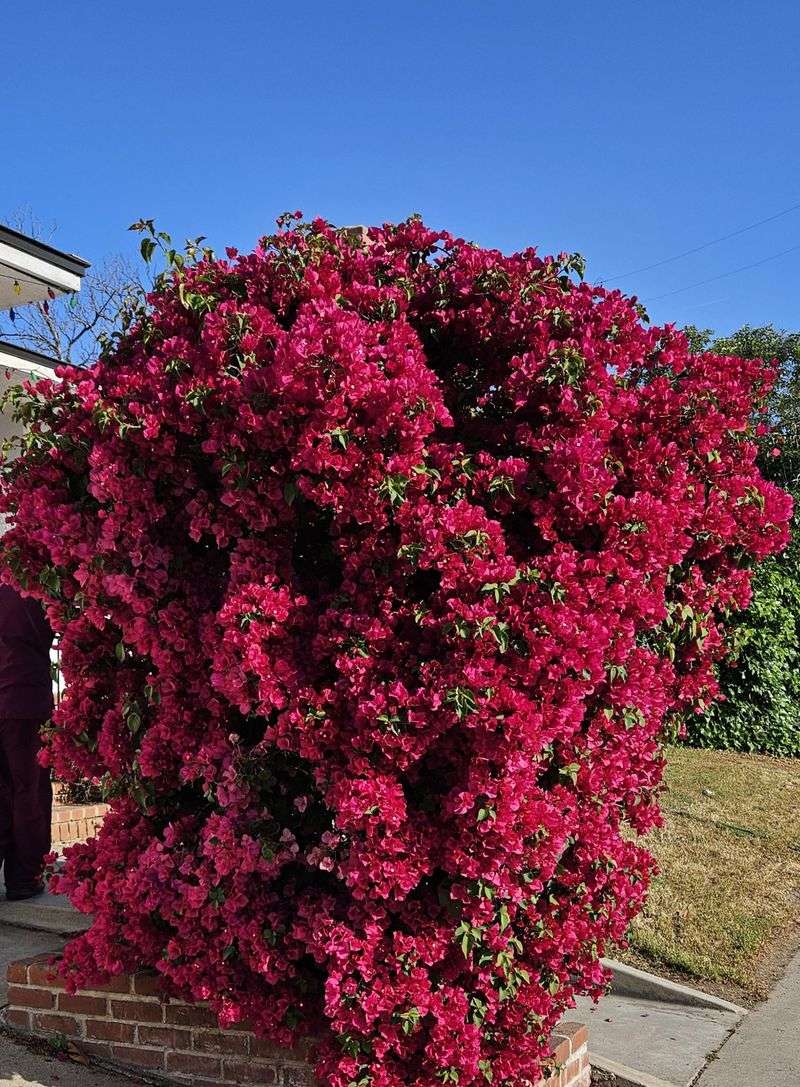
Sunny patios, open south-facing walls, and bright garden beds along driveways are the kinds of spots where bougainvillea tends to show off its best color in Florida.
This plant has a strong preference for direct light, and locations that receive shade for a significant part of the day may produce noticeably less bloom than those that get strong, unfiltered sun for most of it.
That does not mean a partially shaded plant will never bloom, but the display is often less impressive.
Florida’s intense summer sun is actually well-suited to bougainvillea’s needs.
The same heat and light that can stress other ornamental plants tends to encourage bougainvillea to push out its colorful bracts, especially when combined with the slightly dry soil conditions it prefers.
Spots under large tree canopies, on north-facing walls, or in areas shaded by buildings or fences for most of the day are generally not ideal choices for this plant.
Evaluating a planting site at different times of the day before you plant can save you from a disappointing result. What looks like a sunny spot in the morning might be in deep shade by early afternoon, especially near structures or large trees.
Walking the yard and noting which areas get steady, direct sun from late morning through the afternoon gives you the clearest picture of where bougainvillea is most likely to reward you with strong, consistent color throughout the Florida growing season.
6. Avoid Spots Hit By Overactive Sprinklers
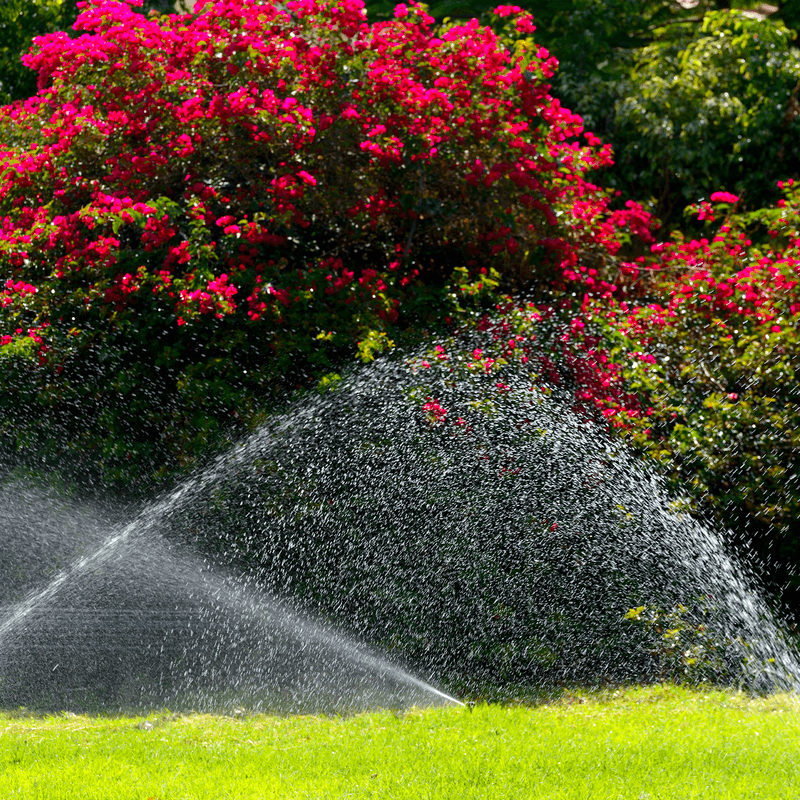
Florida’s rainy season brings plenty of natural moisture, and many neighborhoods also run irrigation systems to keep lawns and landscapes looking fresh.
For bougainvillea, though, too much water at the root zone can lead to problems, especially once the plant is established.
Soggy or consistently wet soil is not something this plant handles well, and sites that receive regular sprinkler overspray can create those kinds of conditions without the homeowner even realizing it.
Before choosing a planting spot, it is worth observing how the irrigation system runs and where spray heads reach. A location that looks dry and sunny during the day might actually receive a heavy soaking several times a week from nearby sprinkler heads.
Over time, that extra moisture can keep the soil wetter than bougainvillea prefers, potentially affecting root health and overall plant vigor.
Florida’s sandy soils do drain more freely than heavier clay soils found in other regions, which helps somewhat.
But even in sandy landscapes, a sprinkler zone that runs frequently can keep the top layers of soil moist enough to cause issues for a plant that generally does better with drier intervals between watering.
Established bougainvillea in Florida typically relies more on natural rainfall than supplemental irrigation.
Therefore, placing it in a zone that gets frequent sprinkler coverage often works against the plant’s preference for moderate, well-drained conditions rather than supporting it.
7. Wear Heavy Gloves When Pruning Or Training
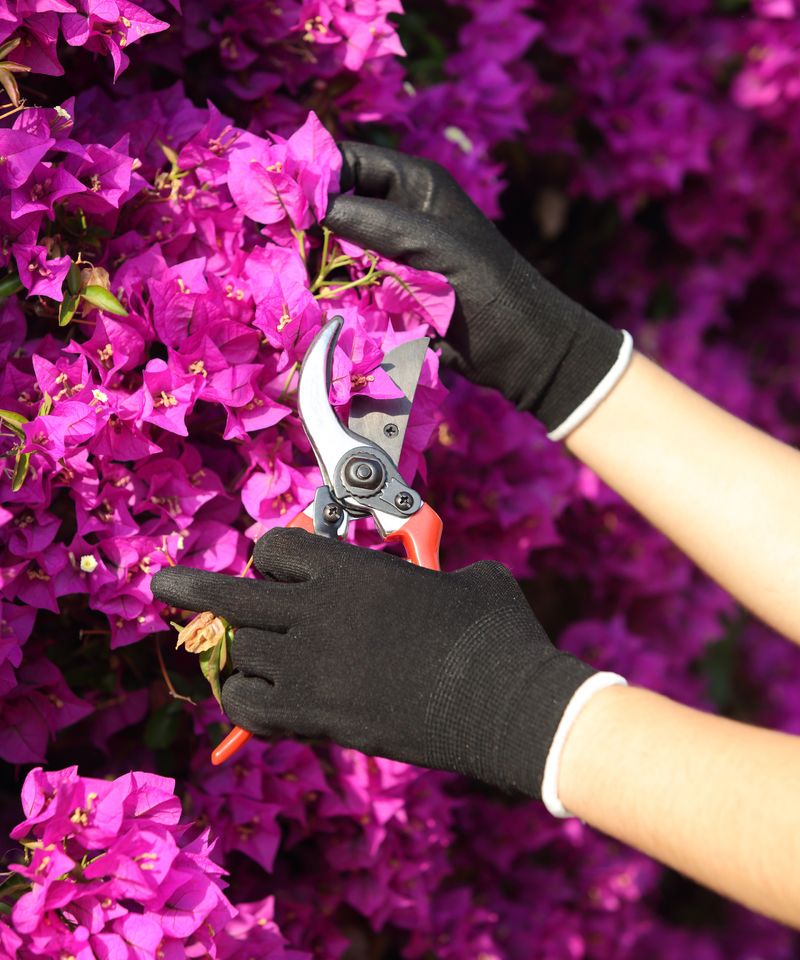
Anyone who has reached into a bougainvillea without proper protection knows exactly why this advice matters. The thorns on many bougainvillea cultivars are sharp, stiff, and curved in a way that makes them especially good at catching skin and fabric.
A quick grab at a wayward stem without gloves can leave a nasty scratch or a puncture that stings for a good while afterward.
Heavy leather gloves or thick puncture-resistant garden gloves offer much better protection than thin fabric gloves during pruning or training sessions.
Long sleeves are also a smart choice, since stems can brush against bare arms even when you are trying to be careful.
In Florida, where bougainvillea can stay actively growing through much of the year, pruning and training sessions are not rare events, so building the habit of gearing up properly before you start makes the whole process much safer.
Having the right tools on hand also helps reduce how much direct contact you have with thorny stems. Long-handled pruners, bypass loppers for thicker woody growth, and sturdy plant ties for training all let you work with a bit more distance and control.
Trying to rush through a pruning session without the right gloves or tools usually ends with at least one unpleasant encounter with a thorn.
Taking an extra minute to put on proper protection before you start is a small step that makes a noticeable difference every time you work around this plant.
8. Prune Carefully To Manage Errant Branches
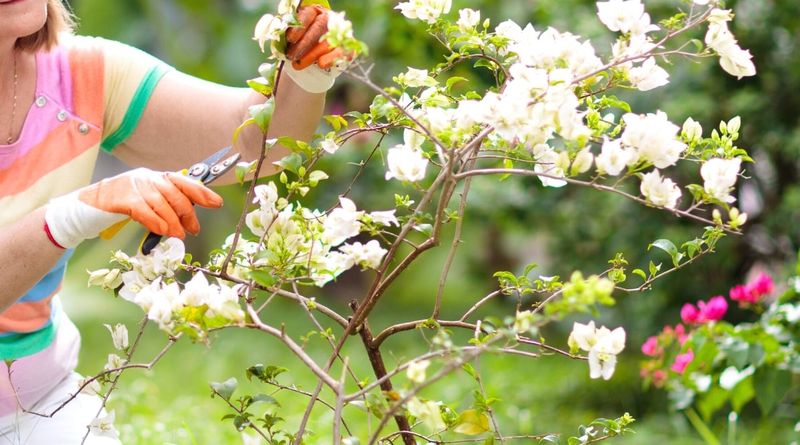
Long, arching bougainvillea stems that reach into pathways, drape over fences into neighboring yards, or push through other plants in the garden bed are a common situation in Florida landscapes.
Careful pruning can bring those errant branches back in line and help shape the plant over time.
The key word there is careful, because removing too much growth too aggressively can reduce the plant’s ability to produce flowers, at least for the next bloom cycle.
Bougainvillea tends to bloom on new growth that develops after a period of stress or after stems have had time to mature.
Heavy pruning that removes a large portion of the plant at once can set back the flowering timeline by pushing the plant into a long regrowth phase before it blooms again.
Light to moderate pruning, focused on removing stems that are causing problems or shaping the overall form, tends to work better than aggressive cutbacks in most home landscape situations.
After a strong bloom cycle is often a reasonable time to do more significant shaping, since the plant has already put on its color show for that period.
In Florida, where warm weather keeps bougainvillea growing through much of the year, staying on top of occasional light pruning is easier than waiting until stems have grown so long and tangled that a major cutback becomes the only option.
Consistent, thoughtful pruning keeps the plant looking its best without sacrificing too much of the next flowering display.