The Only Pink Perennials Worth Planting In Texas Hot Weather
How many pink perennials have you planted in a Texas summer only to watch them fade, wilt, or give up entirely before August even arrives?
Pink is one of the hardest colors to hold in a Texas garden through peak heat, partly because so many of the plants that produce it were bred for cooler climates where the conditions are nothing like what Texas delivers from June through September.
The pink perennials that actually work here are a much shorter list than what fills the average nursery display, and knowing the difference before you plant saves a season of disappointment.
These are not plants that merely survive Texas heat with enough extra watering and attention.
They are perennials that bloom confidently through the worst of it, holding their color and their structure when everything around them is struggling. If pink is a color you want in your Texas garden through summer, this is the list worth starting from.
1. Pink Autumn Sage (Salvia Greggii)
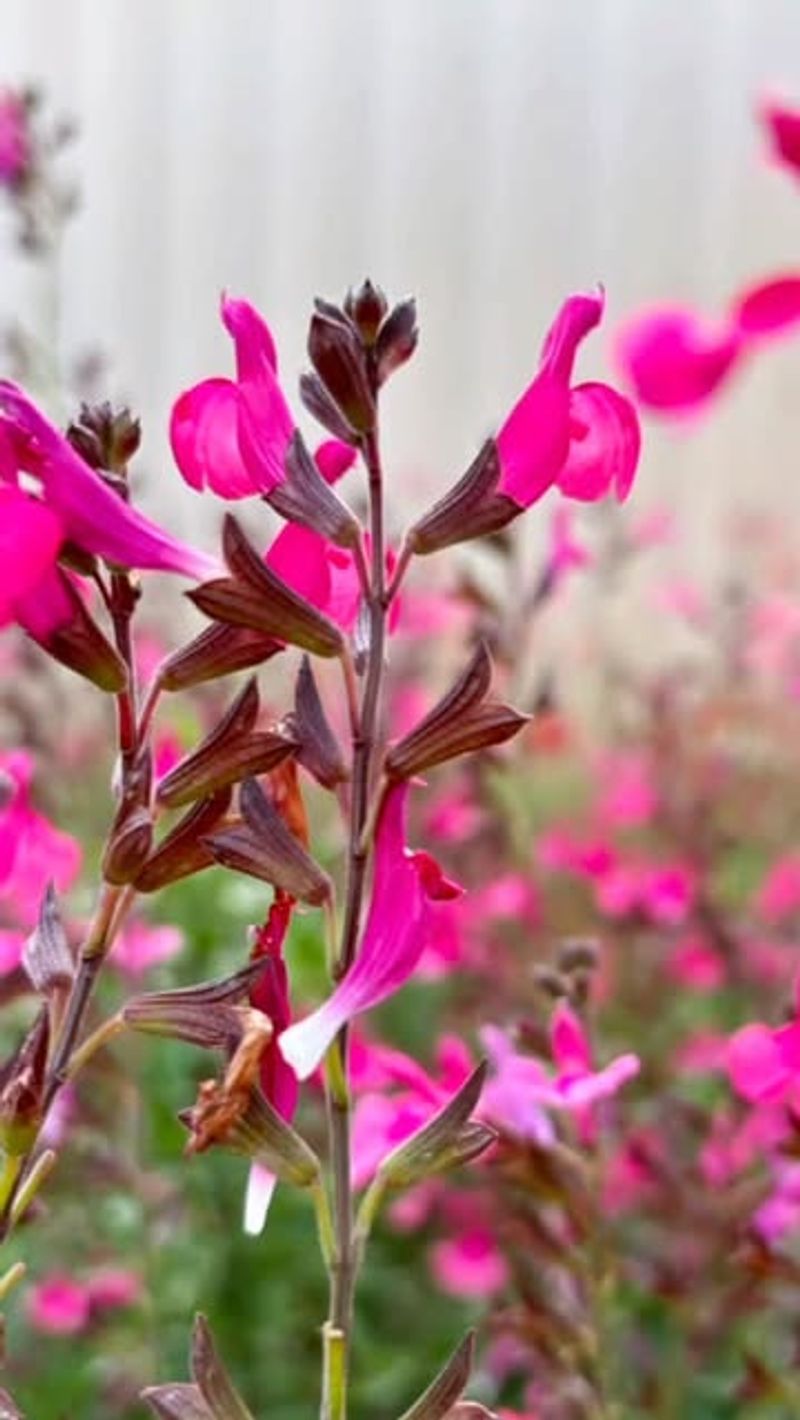
Ask any experienced Texas gardener which plant they trust most in the summer heat, and Pink Autumn Sage will likely come up in the first few seconds.
This tough little salvia has earned its reputation the hard way, blooming through scorching July afternoons and dry August stretches without missing a beat.
It is one of those rare plants that actually seems to enjoy the heat rather than suffer through it.
Salvia greggii is native to the Chihuahuan Desert, which stretches across parts of Texas and Mexico. That origin story tells you everything.
A plant that evolved in desert conditions knows how to handle dry soil, blazing sun, and long periods without rain. In your garden, that means less watering, less babying, and more blooms.
Plant it in full sun and well-drained soil, and it will reward you generously. The flowers are a vivid, cheerful pink that hummingbirds absolutely love. You will notice hummingbirds hovering around the blooms from spring all the way through fall.
That makes Pink Autumn Sage a double win: you get stunning color and free wildlife entertainment in your backyard. Deadheading spent flowers encourages even more blooming throughout the season.
This plant grows to about two feet tall and wide, making it great for borders, rock gardens, or mass plantings. It is also deer-resistant, which is a huge bonus in many parts of Texas.
Once established, Pink Autumn Sage needs very little attention. It is the kind of plant that makes gardening feel easy and rewarding.
2. Texas Rock Rose (Pavonia Lasiopetala)
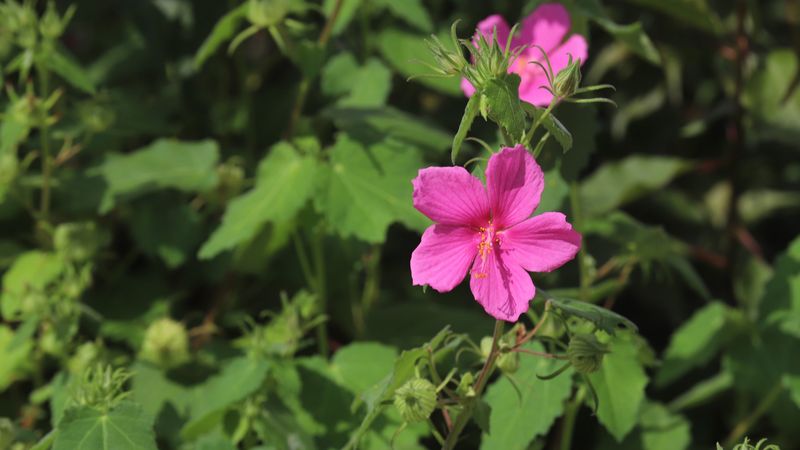
There is something quietly magical about a plant that blooms all summer long without asking for much in return. Texas Rock Rose is exactly that kind of plant.
Its soft pink flowers look like tiny hibiscus blooms, and they keep opening day after day even when the soil is dry and the sun is relentless. Gardeners across central and south Texas have relied on this shrubby perennial for decades.
Pavonia lasiopetala is native to Texas and northern Mexico, so it was practically born for this climate. It grows naturally along rocky hillsides and dry creek beds, which explains why it handles poor, fast-draining soil so well.
Your Texas Garden Changes Every Week. Your Plan Should Too.
Gardening in Texas changes quickly throughout the season. Every Friday you’ll receive a simple weekly plan showing exactly what to plant, prune, fertilize, harvest, and protect so you never miss the right timing.
If your yard has rocky or sandy soil that other plants struggle in, Texas Rock Rose will feel right at home. It actually prefers those conditions over rich, heavy soil.
The plant grows into a rounded shrub about three to four feet tall. Its leaves are soft and slightly fuzzy, giving it a pleasant texture in the garden even when it is not in bloom.
But it is almost always in bloom during warm months, producing a steady stream of pink flowers from late spring through the first cool snap of fall.
Butterflies and bees are drawn to the flowers, making this plant a great choice for pollinator gardens. It spreads gradually over time and can fill in a dry, sunny bed beautifully.
Cut it back in late winter to encourage fresh, vigorous growth when spring arrives. Texas Rock Rose is a true garden workhorse that never stops giving.
3. Pink Penstemon
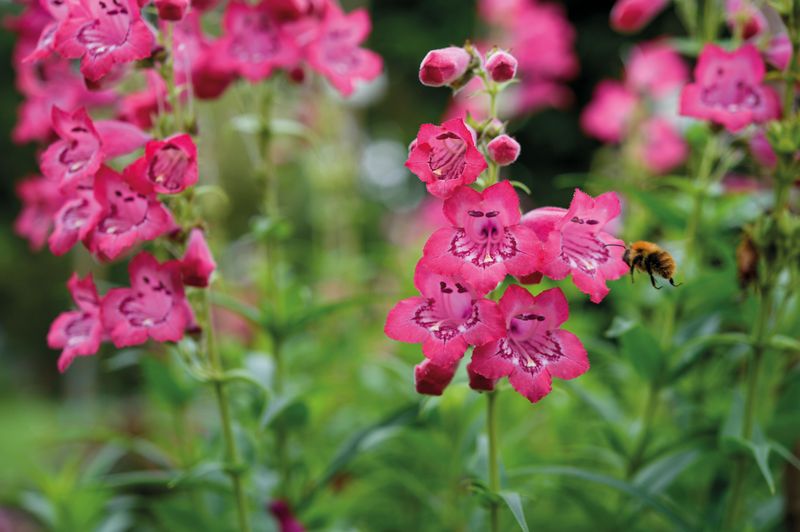
Few plants in a Texas garden create as much drama and movement as Pink Penstemon. Those tall, upright spikes of rosy blooms shoot up in spring and early summer like little fireworks, drawing hummingbirds in from seemingly out of nowhere.
Watching a hummingbird work its way up a Penstemon spike is one of those small garden moments that makes all the effort worthwhile.
Penstemon cobaea and other native penstemon species are well adapted to Texas conditions. They prefer full sun to light shade and do best in well-drained soil.
One of the biggest mistakes gardeners make with Penstemon is overwatering. These plants are built for dry conditions, and soggy roots will cause problems fast. Plant them in a raised bed or a slope where water drains away quickly, and they will thrive.
Pink Penstemon blooms heavily in spring and can rebloom in fall if given a light trim after the first flush of flowers fades. The tubular flowers are perfectly shaped for hummingbird beaks, which is why these birds find the plant so irresistible.
Beyond hummingbirds, native bees also visit the blooms regularly, making Penstemon a valuable plant for supporting local wildlife.
The plants grow about two to three feet tall and work well in mixed borders or wildflower-style plantings. They pair beautifully with native grasses and other drought-tolerant perennials.
Once established, Pink Penstemon is remarkably self-sufficient. It is a bold, cheerful addition to any Texas garden that wants to celebrate native beauty without a lot of fuss.
4. Pink Zinnias
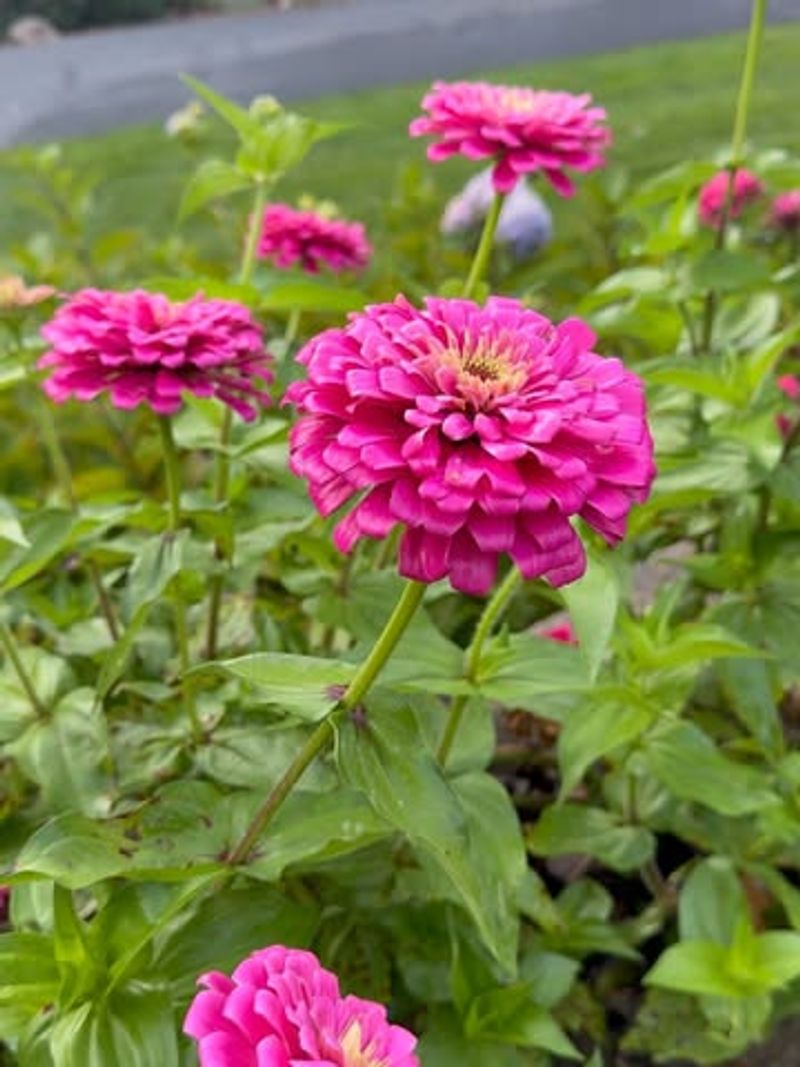
Zinnias are technically annuals, but in Texas they behave so well through the long growing season that they deserve a spot on any list of reliable warm-weather bloomers.
Once you plant Pink Zinnias in a sunny bed, they bloom nonstop from late spring all the way until the first frost arrives.
That is a solid six to seven months of cheerful pink color, which is hard to beat with almost any other plant.
What makes zinnias special is their love of heat. While many plants slow down and look stressed in July and August, zinnias hit their stride.
The hotter it gets, the more they seem to bloom. They are also extremely drought-tolerant once established, needing only occasional watering during the driest stretches. Direct sun all day long is exactly what they want.
Growing Pink Zinnias from seed is simple and satisfying. Scatter seeds directly in a garden bed after the last frost, cover lightly with soil, water gently, and watch them sprout within a week.
Thinning the seedlings to about a foot apart gives each plant room to grow full and bushy. Deadheading spent blooms regularly keeps the plant producing new flowers at a fast pace.
Zinnias attract butterflies like magnets. A bed of pink zinnias on a warm afternoon will often be covered in swallowtails, monarchs, and painted ladies.
They also make excellent cut flowers for indoor arrangements. For Texas gardeners who want maximum color with minimum effort, Pink Zinnias are a no-brainer choice every single year.
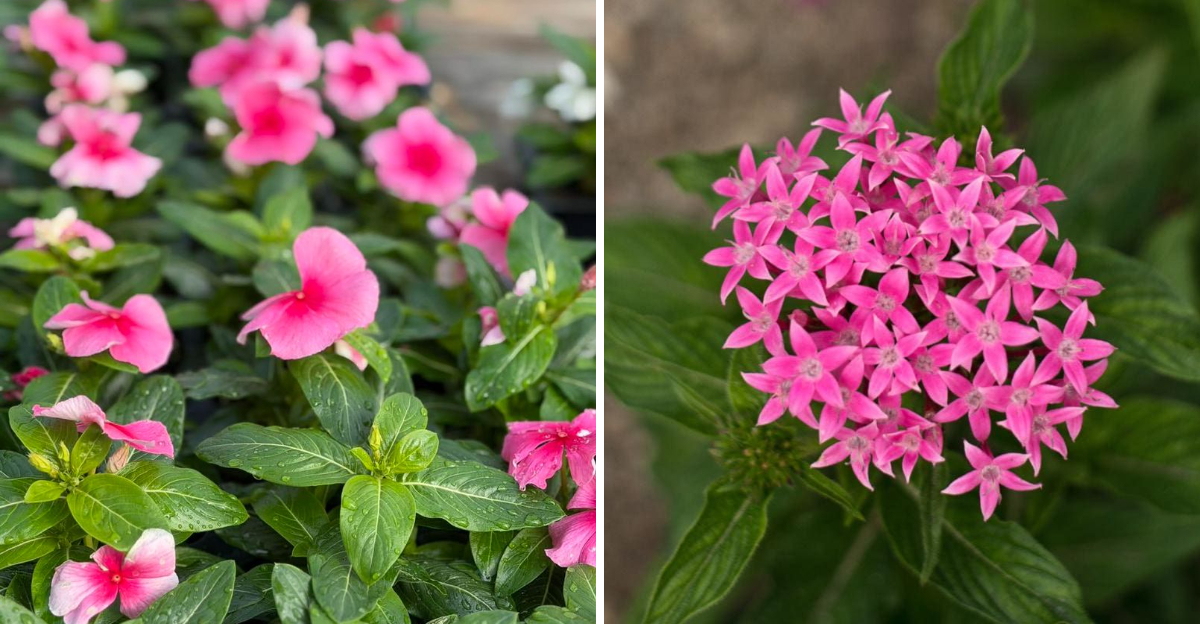
5. Pink Pentas (Pentas Lanceolata)
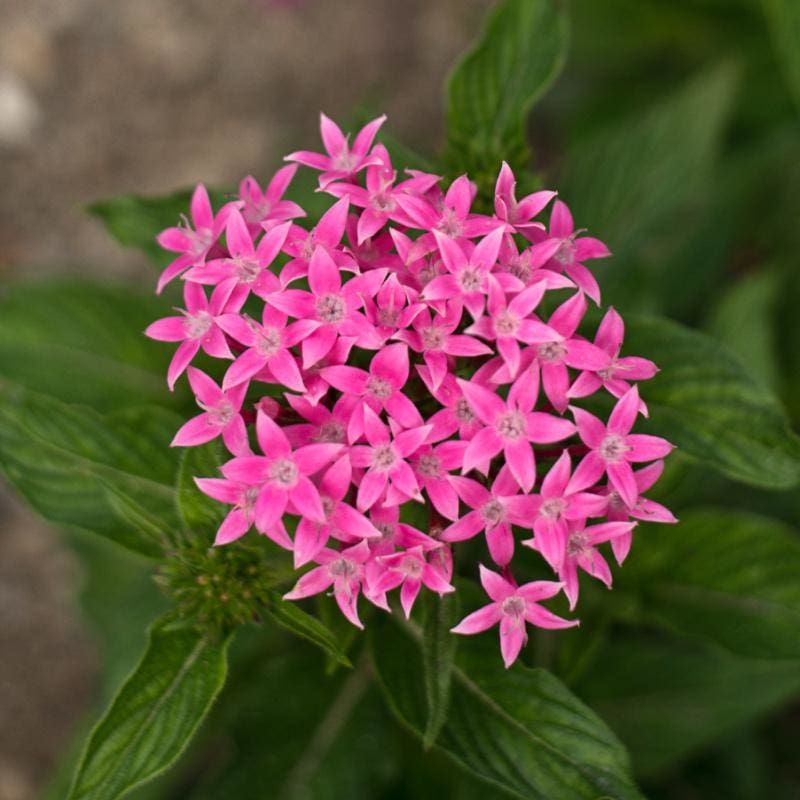
Walk through any garden center in Houston or San Antonio during summer, and you will almost certainly spot Pink Pentas front and center.
Nurseries stock them heavily because they know what Texas gardeners need: a plant that handles both brutal heat and sticky humidity without flinching.
Pentas lanceolata delivers on that promise every single season, producing clusters of star-shaped pink flowers from spring well into fall.
Originally from tropical East Africa, Pentas evolved in warm, humid conditions very similar to the Texas Gulf Coast. That tropical background makes it uniquely suited to parts of Texas where humidity is just as much of a challenge as the heat.
Many plants that tolerate dry heat still struggle when the air gets thick and muggy, but Pentas handles both without any trouble at all.
The flowers are small but produced in large, rounded clusters that create a bold splash of color. Butterflies are absolutely obsessed with Pentas blooms, and hummingbirds visit them regularly too.
Planting a row of Pink Pentas along a walkway or patio creates a lively, colorful border that buzzes with life all season long. They grow about two feet tall and work well in containers as well as garden beds.
Pentas prefers full sun but tolerates partial shade better than many heat-loving plants. Water them regularly when first getting established, then ease back once roots are settled in.
A light feeding with a balanced fertilizer in midsummer gives them a boost for the second half of the season. Pink Pentas is one of the most dependable choices a Texas gardener can make.
6. Pink Vinca (Periwinkle)
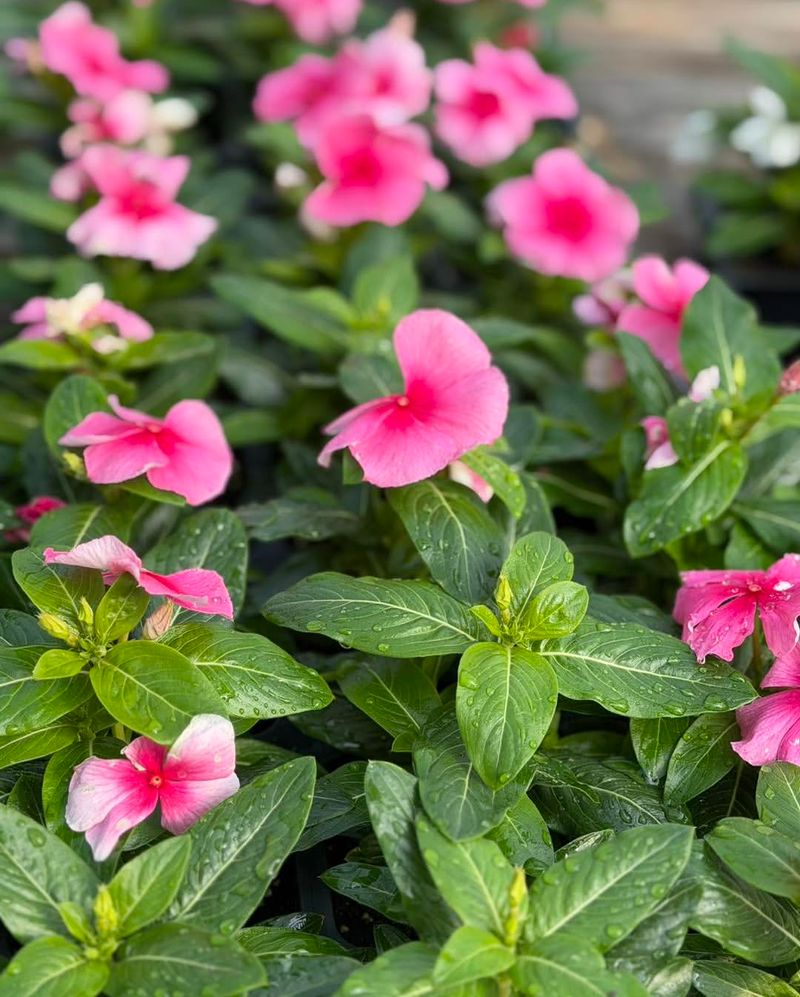
If you have ever driven through a Texas neighborhood in July and noticed a front yard absolutely packed with cheerful pink blooms despite the scorching heat, there is a good chance you were looking at Pink Vinca.
Also called Catharanthus roseus or Madagascar Periwinkle, this plant has a legendary reputation for handling summer heat that would flatten most other flowering plants in the garden.
Vinca is not shy about its love of hot weather. It actually blooms more freely as temperatures climb, which makes it the opposite of most flowering plants that slow down in midsummer.
The blooms are round and flat, a clean and bright pink that stands out beautifully against the glossy dark green leaves. There is a cheerful simplicity to the flowers that makes the whole plant feel fresh and inviting even on the hottest days.
Plant Pink Vinca in full sun for the best flowering results. It tolerates poor soil reasonably well but performs better with a bit of organic matter mixed in at planting time.
Water it deeply but infrequently, letting the soil dry out somewhat between waterings. Overwatering is the most common mistake people make with Vinca, and it leads to root rot quickly.
These plants grow about one to two feet tall and spread nicely to fill in gaps in a garden bed. They work beautifully as ground cover or as edging plants along pathways.
No deadheading is required since the plant drops spent flowers on its own and keeps producing new ones steadily. Pink Vinca is simply one of the easiest and most rewarding plants a Texas gardener can grow.
7. Pink Evening Primrose (Oenothera Speciosa)
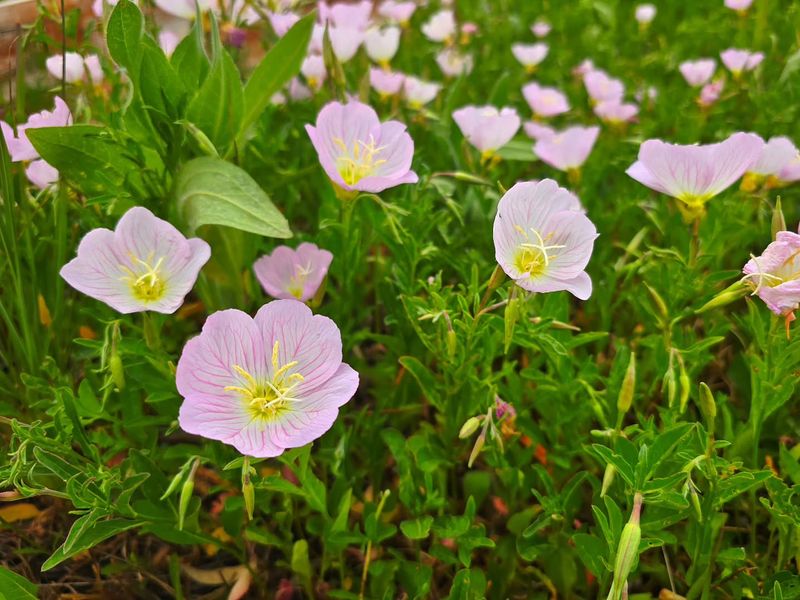
Picture a field of soft pink flowers swaying in a Texas breeze on a warm spring morning. That dreamy scene is exactly what Pink Evening Primrose creates when it gets comfortable in your garden.
Oenothera speciosa is a native Texas wildflower with a carefree, spreading habit that fills sunny beds and roadsides with cup-shaped pink blooms that practically glow in morning light.
Despite its name suggesting evening blooms, this species actually opens its flowers during the day, especially in the morning. The petals are a soft, papery pink with delicate veining, and each flower is about two inches across.
They close in the heat of the afternoon and reopen the next morning, giving the garden a fresh, renewed look every day. The blooming season runs from spring through early summer, with some scattered flowers continuing through fall.
One of the best things about Pink Evening Primrose is its toughness. It thrives in full sun and handles drought like a champion.
Once established, it rarely needs supplemental watering even during the driest Texas summers. It spreads by underground runners, so give it space or plant it where spreading is welcome, like a wildflower meadow or a large open bed.
This plant is low-growing, reaching only about one foot tall, which makes it ideal as a ground cover or front-of-border plant. It naturalizes beautifully along fence lines and slopes.
Pollinators love the open-faced flowers, and the plant requires almost zero maintenance once settled in. For a natural, effortless look packed with pink color, Pink Evening Primrose is an absolute Texas garden treasure.