Native Georgia Shrubs That Bloom Like Hydrangeas In Summer Without The Watering And Wilting
A lot of gardeners have had the same conversation at some point. Someone spots a shrub covered in flowers and immediately asks what it is.
The answer is often a hydrangea, followed by a second question about how much work it takes to keep looking that way through summer.
That second answer is usually less exciting.
Large blooms are easy to appreciate. Constant watering during hot weather is not.
By the time summer settles in, many people find themselves checking the garden every evening and hoping their favorite flowering shrubs still look as good as they did a few days earlier.
In Georgia, that routine becomes familiar very quickly once temperatures start climbing. Yet some gardens seem to stay full of color without the same level of attention.
The reason is not always better luck or more time spent outside. Sometimes it comes down to choosing plants that were already prepared for the conditions long before they were planted.
1. Oakleaf Hydrangea Forms Large Flower Clusters In Summer
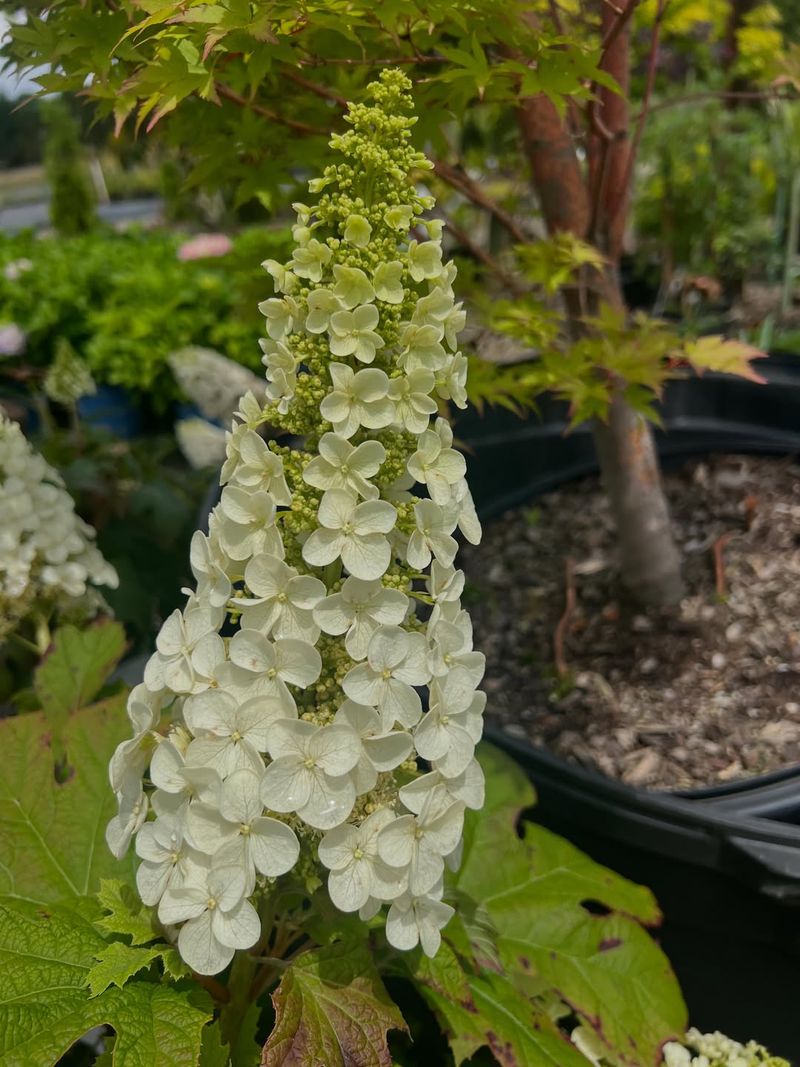
Oakleaf Hydrangea might actually be the plant that makes you forget about the imported varieties entirely. Native to the Southeast, it produces massive cone-shaped flower clusters that can stretch up to a foot long.
Those blooms open creamy white in early summer and slowly fade to parchment pink as the season moves along.
Unlike common hydrangeas, Oakleaf handles dry spells without drama. Established plants have deep root systems that find moisture even when the surface soil bakes hard.
You do not need to hover over this shrub with a hose every evening.
Shade is where it really shines. Plant it under tall pines or along a north-facing fence and it will reward you with blooms year after year.
It also offers striking fall color and peeling cinnamon-colored bark for winter interest.
Mature plants can reach six to eight feet tall and wide, so give it room. Pruning right after bloom keeps the shape tidy without cutting off next year’s flower buds.
Oakleaf sets its buds on old wood, so fall pruning will cost you next summer’s display.
Birds and pollinators visit the flowers regularly. The large leaves break down quickly in compost piles.
Oakleaf Hydrangea is genuinely one of the most underused native shrubs available, and once established, it asks for almost nothing in return.
2. Buttonbush Blooms Through The Warmest Months
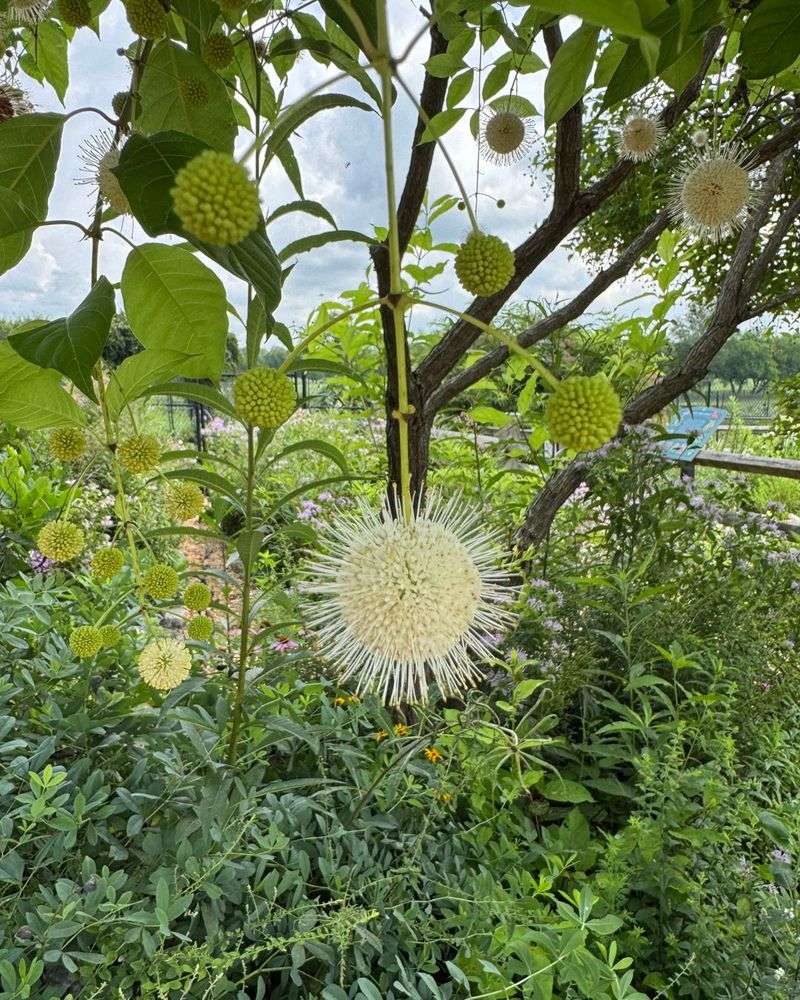
Round, spiky white flower balls cover Buttonbush from midsummer straight through the hottest weeks of the year. No other native shrub quite matches that unusual globe-shaped bloom.
Up close, each flower head looks like a tiny white pincushion packed with small tubular florets.
Pollinators go absolutely wild for it. Bees, butterflies, and hummingbirds all visit Buttonbush in heavy rotation when it is in bloom.
If you want to support local wildlife, few shrubs pull that kind of traffic.
Wet spots that drown other plants are where Buttonbush actually thrives. Low areas near ponds, drainage ditches, and rain gardens suit it perfectly.
It can even grow with its roots sitting in shallow standing water during wet seasons.
Your Georgia Garden Changes Every Week. Your Plan Should Too.
Gardening in Georgia changes quickly throughout the season. Every Friday you’ll receive a simple weekly plan showing exactly what to plant, prune, fertilize, harvest, and protect so you never miss the right timing.
In drier garden beds, some supplemental watering during the first year helps it settle in. After that, established plants handle summer heat without much trouble.
Growth stays manageable at roughly six to twelve feet depending on conditions.
Fall brings small round reddish fruit clusters that waterfowl and songbirds eat through winter. The branching structure stays interesting even without leaves.
Buttonbush is one of those plants that pulls double duty, looking good in summer while quietly feeding wildlife through the cold months. If your yard has a soggy corner you have never known what to do with, this shrub solves that problem beautifully.
3. Sweet Pepperbush Fills Gardens With Fragrant Flowers
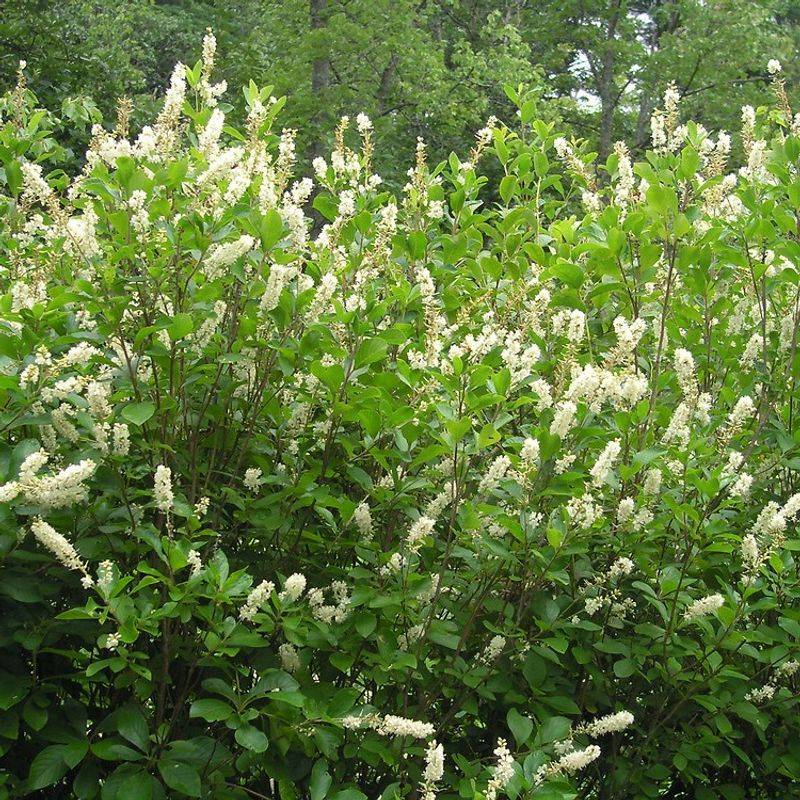
Few native shrubs smell as good as Sweet Pepperbush in full bloom. White flower spikes rise above glossy green leaves in mid to late summer, releasing a strong, sweet fragrance that carries across the yard on warm evenings.
Gardeners who plant it near a patio rarely regret that decision.
It blooms during a window when most other shrubs have already finished for the season. That late-summer timing makes it especially valuable for pollinators running short on nectar sources.
Bees flock to the flowers in remarkable numbers.
Moist, acidic soil suits Sweet Pepperbush best. It grows naturally along stream banks and in woodland edges where the ground stays reliably damp.
In average garden soil, a thick layer of mulch around the base helps retain enough moisture to keep it happy.
Partial shade works well, though it will bloom in full sun if moisture is consistent. Plants typically reach four to eight feet tall.
Spreads slowly by root suckers, which can be divided and replanted or simply removed to keep the clump tidy.
Fall foliage turns a warm golden yellow before dropping. Dried seed capsules cling to the stems through winter and add subtle texture to the bare garden.
Sweet Pepperbush is a genuinely hard-working shrub that earns its space with fragrance, late blooms, and low overall care needs once it settles into the right spot.
4. Sweetshrub Continues Flowering During Hot Weather
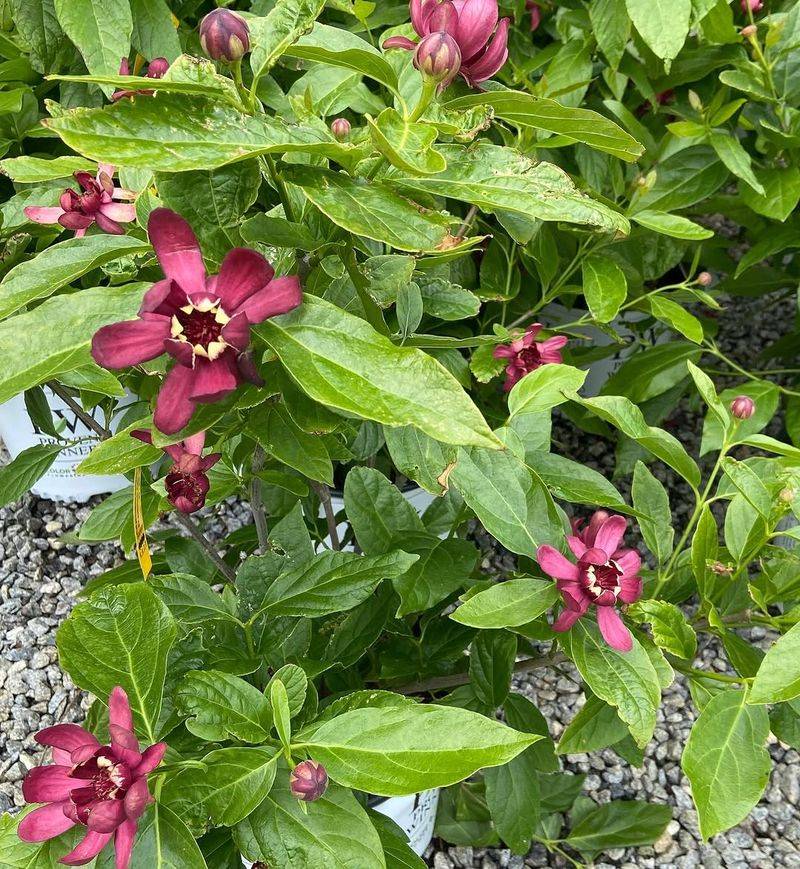
Sweetshrub has been growing in Southern gardens for centuries, and there is a good reason it never fell out of favor. Unusual burgundy-red flowers with thick, strap-like petals appear in late spring and keep coming sporadically through the hottest weeks of summer.
No other native shrub produces a bloom quite like it.
Crush a leaf or scratch the bark and you get a spicy, fruity scent that is genuinely hard to describe. Some people compare it to strawberries, others to banana candy.
Either way, it is distinctive and pleasant rather than sharp.
Woodland edges and dappled shade suit Sweetshrub well. It grows naturally under tall hardwoods where roots stay cool and moist.
Average garden soil works fine as long as it does not stay waterlogged or bone dry for extended stretches.
Plants grow six to nine feet tall and wide over time. Pruning immediately after the main flush of bloom keeps the shape manageable without cutting off the secondary flowers that appear later.
Old stems can be cut back hard to renew crowded clumps.
Wildlife value is modest compared to some natives, but the dense branching provides good nesting cover for small birds. Sweetshrub spreads slowly by root sprouts and forms a loose colony over many years.
It is reliable, low-maintenance, and brings a bit of old-fashioned Southern character to any garden bed. Truly a shrub with personality.
5. American Elderberry Develops Showy Flower Clusters
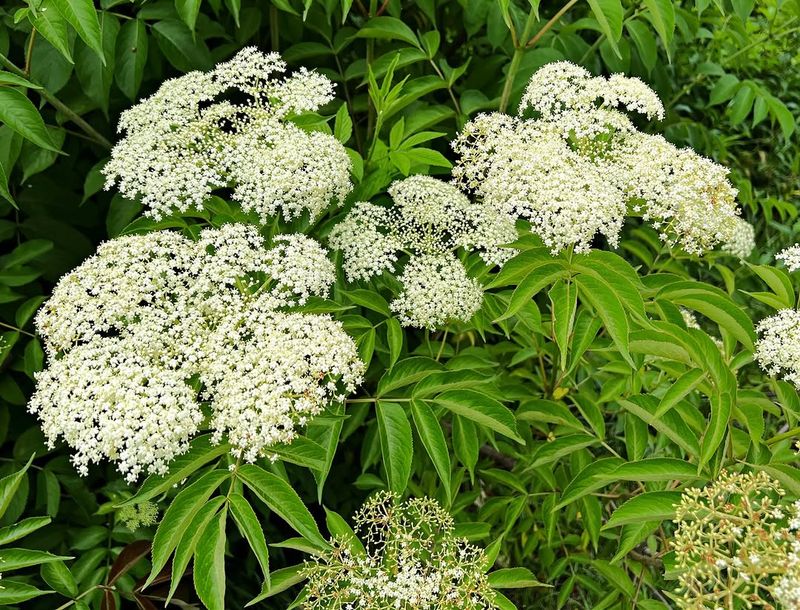
Flat-topped clusters of creamy white flowers cover American Elderberry in early summer and the effect is genuinely impressive. Each flower head can span nearly a foot across, made up of hundreds of tiny individual blooms packed tightly together.
From a distance, the shrub looks like it is draped in lace.
Pollinators respond immediately. Beetles, bees, flies, and butterflies all visit the flowers in large numbers.
Few native shrubs attract that wide a range of beneficial insects during a single bloom period.
Growth is fast and vigorous. Elderberry can put on four to six feet of new growth in a single season under good conditions.
It works well as a quick privacy screen, a naturalized hedge, or a back-of-border specimen where its size does not crowd smaller plants.
Full sun produces the heaviest bloom and the most fruit. Average to moist soil keeps it growing strongly.
Drought tolerance improves significantly after the first year, though extended dry spells during bloom time can shorten the flower display.
By late summer, the flower clusters turn into drooping bunches of dark purple-black berries. Birds consume them quickly, and the berries are also edible for people when properly prepared.
American Elderberry earns its space twice over by first delivering a spectacular flower show and then providing a generous food source. It is one of the most productive native shrubs available for both wildlife and the garden as a whole.
6. Virginia Sweetspire Adds Early Summer Flower Spikes
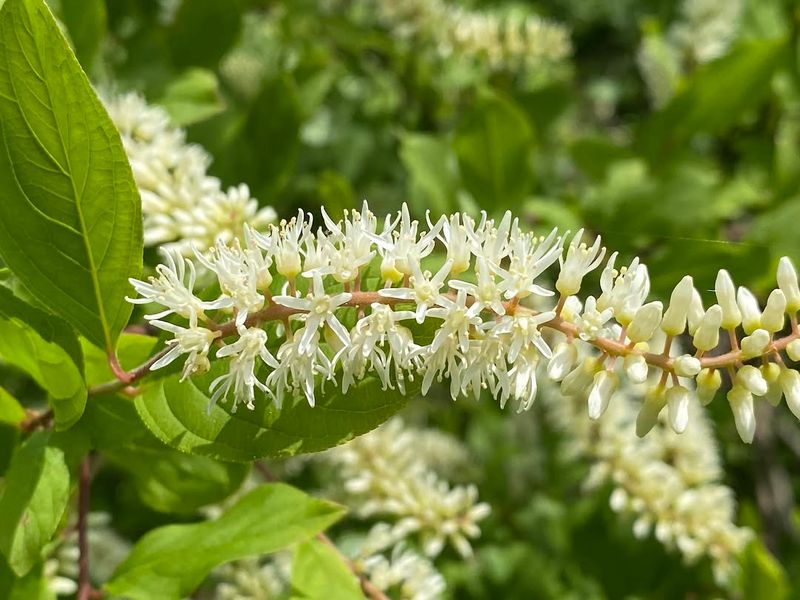
Arching white flower spikes drape gracefully from the branch tips of Virginia Sweetspire right as summer gets going. Each spike curves slightly downward and carries dozens of small, fragrant white flowers.
The overall effect is delicate and a little wild at the same time.
Bees and butterflies work the flowers steadily during the bloom period. Sweetspire is not flashy in the way that large-flowered shrubs are, but it delivers consistent pollinator traffic.
That kind of steady support matters more than one big showy week.
Adaptability is one of its strongest qualities. Virginia Sweetspire grows well in wet soil, average soil, full shade, partial shade, and even fairly sunny spots.
Very few native shrubs cover that range without complaint.
Plants spread by root suckers and gradually form a loose colony. Removing unwanted suckers keeps the spread in check.
In naturalized areas or rain gardens, letting it spread freely creates a dense, weed-suppressing groundcover that requires almost no attention.
Fall color is outstanding for a shrub this size. Leaves turn deep red, burgundy, and orange before dropping, often holding color longer than most other shrubs in the yard.
Winter structure is modest but tidy. Virginia Sweetspire stays between three and five feet tall in most garden conditions.
It fits neatly under taller trees, along shaded walkways, or tucked into corners where other plants refuse to cooperate. Reliable and genuinely easy to grow.
7. St. John’s Wort Covers Stems With Bright Yellow Blooms
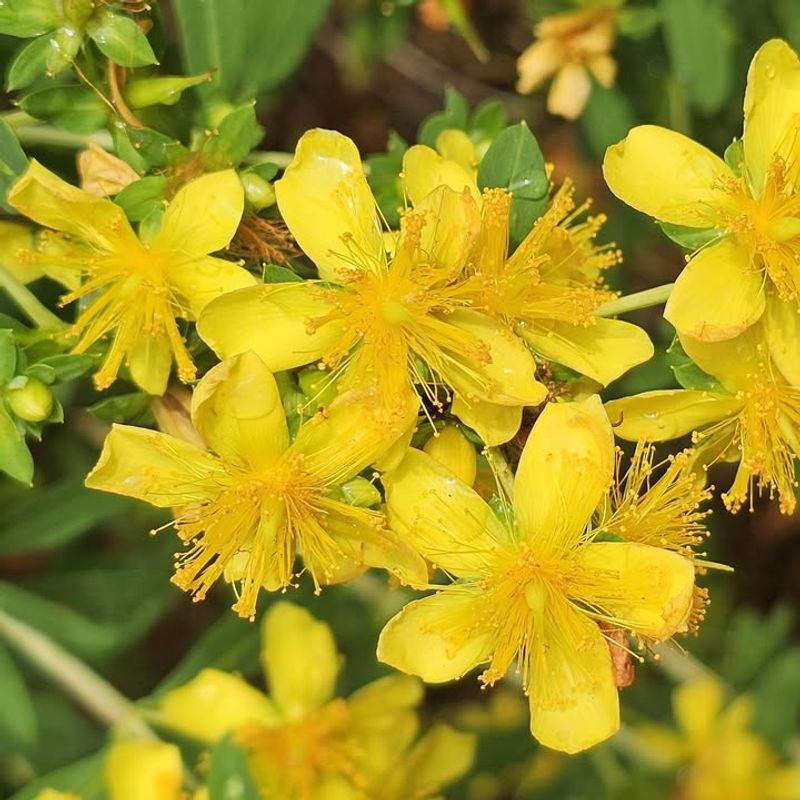
Bright golden-yellow flowers cover St. John’s Wort so densely in summer that the green foliage almost disappears behind the bloom. Each flower carries five rounded petals and a burst of prominent yellow stamens at the center.
Against a blue summer sky, the color is genuinely striking.
Native varieties handle full sun and dry, well-drained soil without flinching. Rocky slopes, sandy edges, and sunny borders where other shrubs struggle are exactly where St. John’s Wort performs best.
It was built for those conditions.
Bloom time stretches through June and July, overlapping with some of the hottest and driest weeks of summer. Established plants rarely need supplemental water once they root in.
Overwatering or heavy clay soil causes more problems than neglect ever will.
Mature height varies by species, but most native forms stay between two and four feet tall. Compact, mounded growth makes it easy to fit into mixed borders, foundation plantings, or naturalized areas without crowding neighbors.
Pollinators visit the flowers frequently, especially native bees collecting pollen. Butterflies use it as well.
After bloom, small seed capsules develop and provide modest food value for birds through late summer. Pruning back by about one-third in early spring keeps plants dense and prevents the legginess that older stems develop over time.
St. John’s Wort rewards low-maintenance gardeners who simply plant it in the right spot and step back. Straightforward and dependable.
8. New Jersey Tea Bears Rounded Clusters Of White Flowers
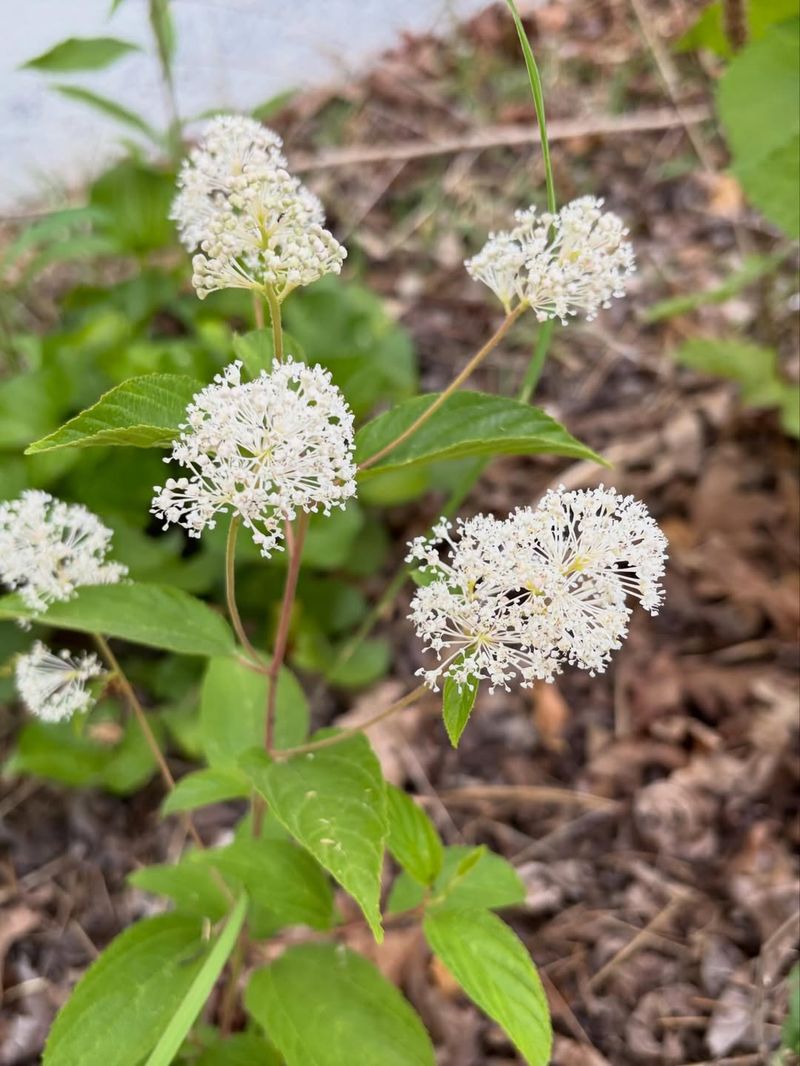
Small rounded clusters of bright white flowers cover New Jersey Tea during early summer and the display lasts longer than most people expect. Each cluster is made up of dozens of tiny individual flowers packed into a tight dome shape.
Against the dark green leaves, the white blooms are crisp and clean-looking.
Dry, well-drained soil is where this shrub truly thrives. Sandy slopes, rocky outcroppings, and sunny borders that dry out between rain events are ideal conditions.
Wet feet will cause problems faster than drought ever will.
Deep taproots help New Jersey Tea survive extended dry stretches without visible stress. Once established, it is one of the most drought-tolerant native shrubs available for sunny gardens in the Southeast.
That deep root system also fixes nitrogen in the soil, which benefits neighboring plants over time.
Plants stay relatively compact at two to four feet tall and wide. Tidy growth and a neat mounded shape make it easy to use in formal borders or naturalized meadow plantings without much management.
Light pruning after bloom encourages denser branching.
Pollinators, especially native bees and small butterflies, visit the flowers in large numbers. Historically, dried leaves were brewed as a tea substitute during the American Revolution, which is how the plant got its common name.
New Jersey Tea is genuinely underused in Southern gardens despite being well-suited to the climate, the soil, and the summer heat that challenges so many other ornamentals.