Why Florida Palm Fronds Turn Yellow And What The Color Is Telling You
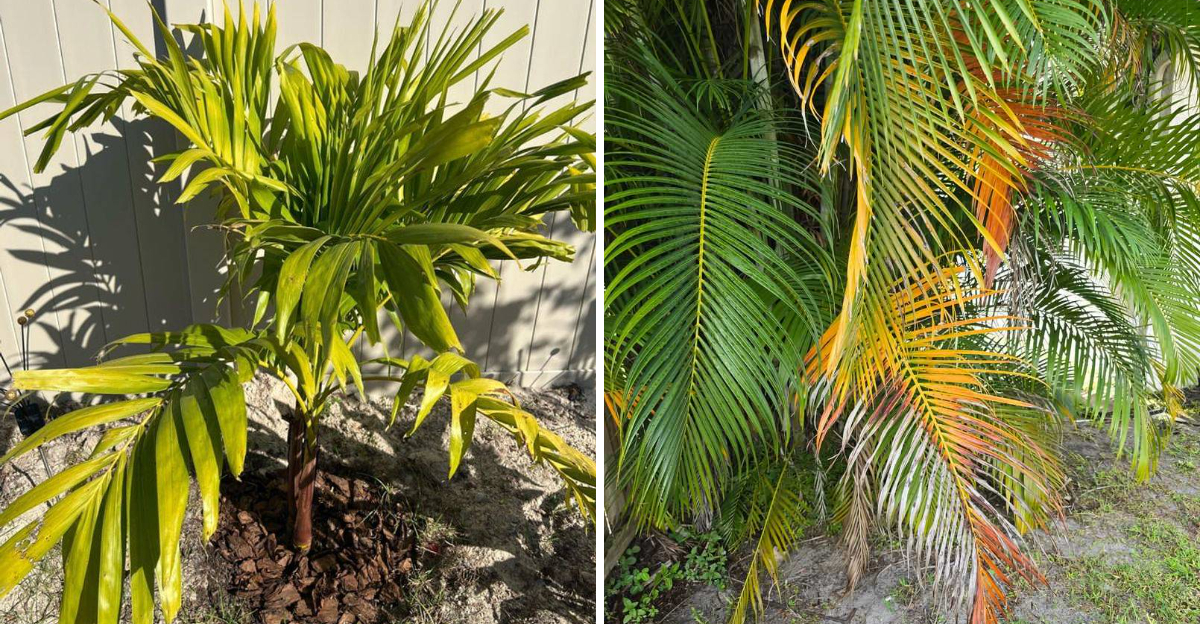
Yellow fronds on a Florida palm are not a random event. Each yellow frond is sending a specific message about what is happening inside the tree.
The location of the yellowing, which fronds are affected, where on those fronds the color appears, and whether the top or the bottom of the canopy is involved all point toward different causes with different fixes.
Many Florida homeowners see yellow fronds and reach for fertilizer. Sometimes that is exactly right.
Sometimes it makes the problem considerably worse. The difference between those two outcomes comes down to reading the tree correctly before doing anything.
Florida palms face a specific set of pressures. Sandy soil that loses nutrients with every rain. A rainy season that can waterlog roots for weeks.
A dry season that stresses shallow root systems. Soil chemistry that locks up nutrients even when they are present in adequate amounts.
The palm is not randomly struggling. It is telling you something precise. These clues are worth knowing before the next fertilizer bag gets opened.
1. Read Older Yellow Fronds First
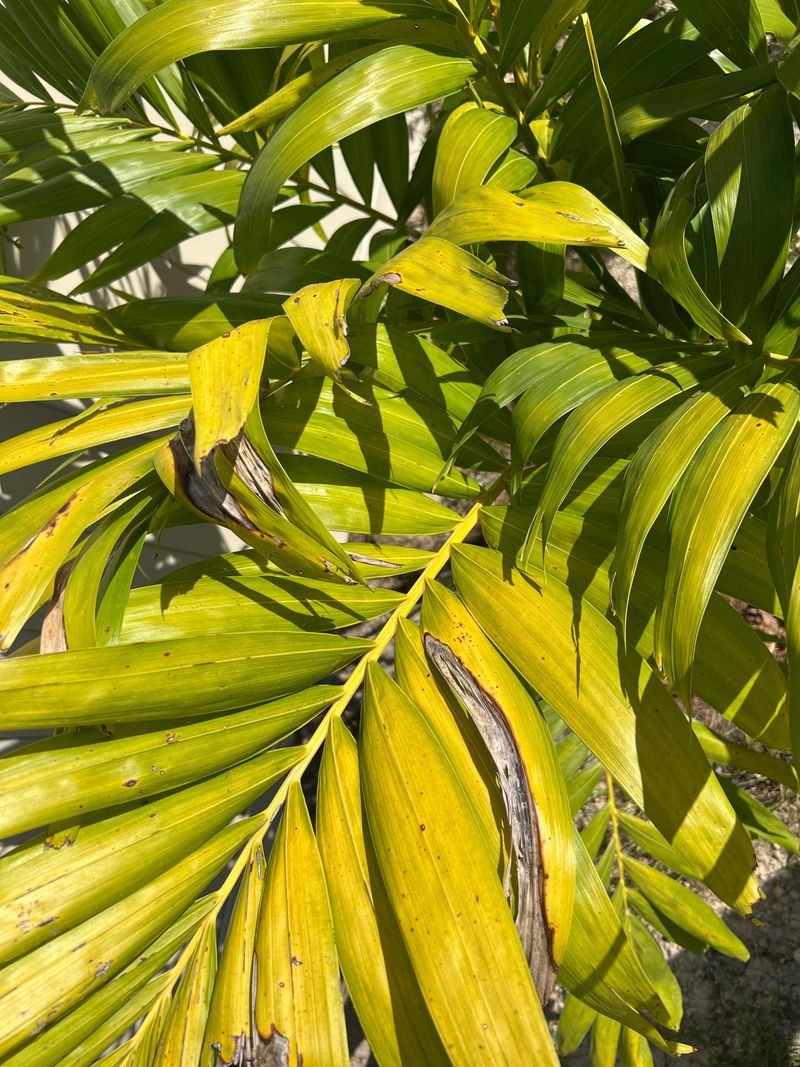
Before assuming anything about a yellow frond, check where it sits on the tree. That single observation narrows the possibilities considerably and points toward the right response before any product gets applied.
Older fronds sit at the bottom of the canopy. They are the lowest leaves and have been on the tree the longest.
When those lower fronds start yellowing while the top of the canopy stays green and healthy, the palm is almost always communicating a mobile nutrient issue. Potassium and magnesium are the primary candidates.
Palms are efficient about survival. When certain nutrients run low, the tree pulls what it can from its oldest leaves and moves those resources upward to support new growth.
The older fronds get left behind, slowly fading from green to yellow as nutrients drain out. This process is called nutrient translocation and it is completely normal biology rather than random decline.
The newer fronds at the crown tell a different story. When yellowing appears at the top of the canopy on the newest growth while lower fronds stay green, an immobile nutrient like iron is typically involved.
That pattern flips the whole diagnosis.
Reading location before anything else saves time, money, and the frustration of applying the wrong treatment to a problem that was clearly labeled the whole time.
The palm has been filing detailed reports about its situation from the beginning. The location of the yellow fronds is just the subject line.
2. Suspect Potassium Deficiency On Older Growth
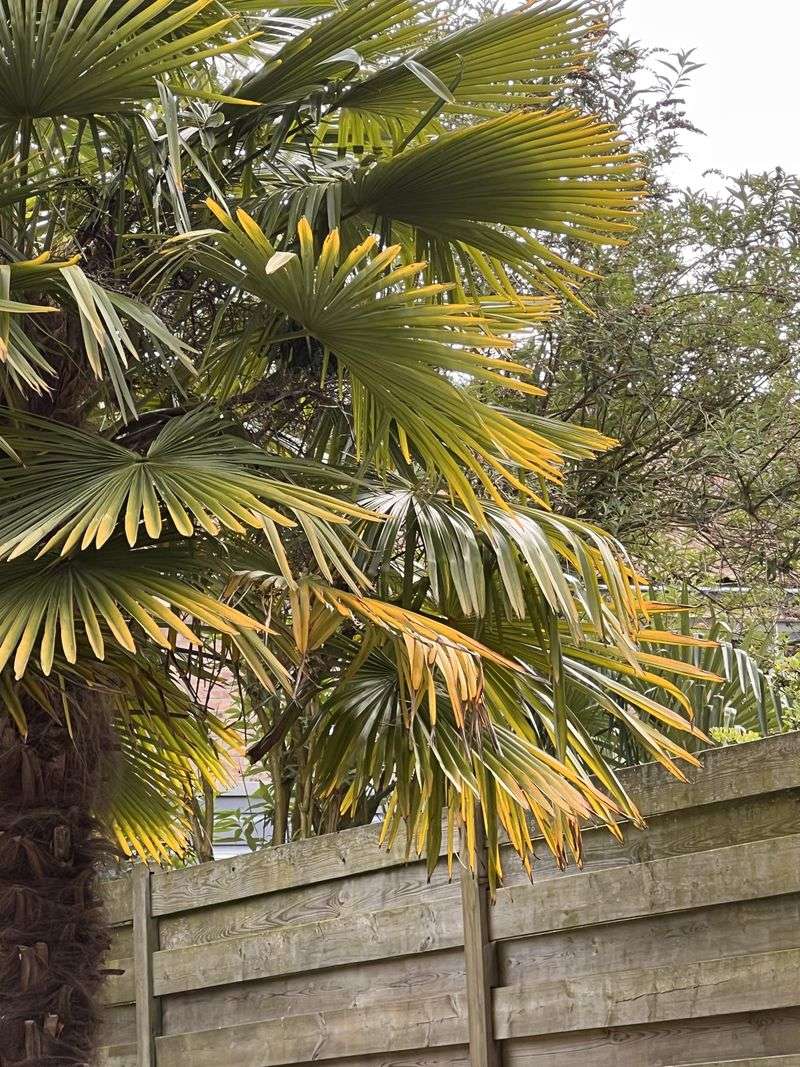
Yellowing that begins at the tips and outer edges of older fronds and then slowly works its way inward is one of the most recognizable patterns in Florida palm care.
Potassium deficiency produces this specific progression, and in Florida’s sandy, fast-draining soils, it is remarkably common.
The state’s soil structure works against palms on this particular nutrient. Potassium leaches out with every heavy rain and every irrigation cycle.
Residential palms are especially vulnerable because they depend entirely on what the homeowner provides. Florida’s rainy season delivers a lot of water through the root zone, taking potassium along with it each time.
Your Florida Garden Changes Every Week. Your Plan Should Too.
Gardening in Florida changes quickly throughout the season. Every Friday you’ll receive a simple weekly plan showing exactly what to plant, prune, fertilize, harvest, and protect so you never miss the right timing.
Potassium deficiency is considered the most widespread nutritional disorder affecting Florida palms, and the yellowing often comes with orange-tinted or translucent spotting on older fronds that gives the leaves a scorched appearance.
The mistake many Florida homeowners make is reaching for standard lawn fertilizer. Most lawn fertilizers carry high nitrogen but very little potassium, which worsens the imbalance rather than correcting it.
Palms need a slow-release fertilizer specifically formulated for palm trees with a high potassium ratio.
Recovery takes patience. The older fronds that are already showing symptoms will not recover their green color.
They are already in the process of being abandoned by the tree. The goal is feeding new fronds correctly so future growth comes in healthy.
Removing yellowing fronds before they are fully brown is a mistake the palm notices. It is still pulling usable potassium from those leaves until the last moment.
3. Watch Magnesium Deficiency Bands
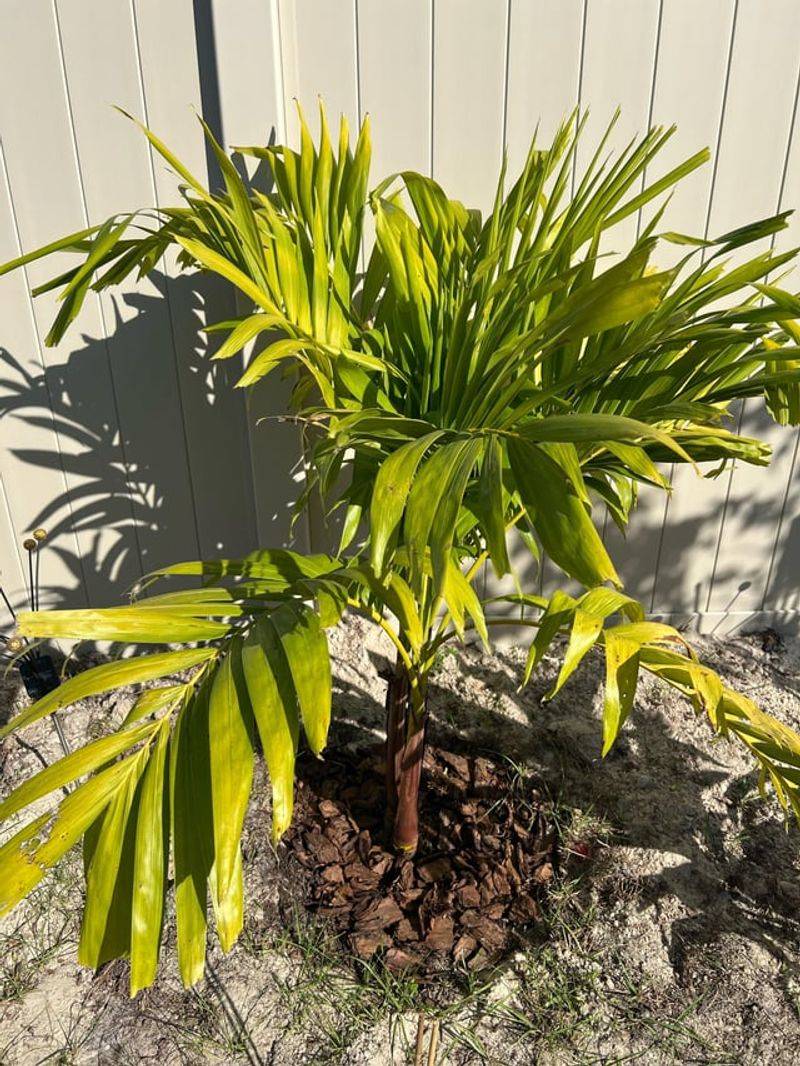
Magnesium deficiency has a specific visual signature that sets it apart from every other nutrient problem a Florida palm can develop.
The outer edges of older fronds turn bright yellow while the center of each leaf stays distinctly green.
That two-toned stripe pattern running along the length of the frond is sometimes called a Christmas tree effect because of how the contrasting colors divide the leaf.
Florida soils are naturally low in magnesium, and the situation worsens in areas with high rainfall or heavy irrigation.
Magnesium also competes with calcium and potassium for uptake in the soil. When those nutrients are out of balance, the palm can struggle to absorb magnesium even when it is technically present in the soil.
Sandy soils flush everything out quickly, keeping palms in a persistent deficit.
Like potassium, magnesium is a mobile nutrient. The palm moves it from older leaves toward newer growth, so the banded yellowing always appears on the lower fronds first.
New fronds at the crown look fine while the base of the canopy gradually loses its color.
Treatment typically involves a palm fertilizer that includes supplemental magnesium listed on the label. Dolomitic lime can help in acidic soils.
Foliar sprays of magnesium sulfate offer a quicker short-term improvement while the soil treatment works through the root system.
New frond growth will show the improvement first. The fronds already showing the banded pattern are not coming back, but they are at least providing a clear and correctly labeled diagnosis before they go.
4. Check Nitrogen When The Canopy Fades
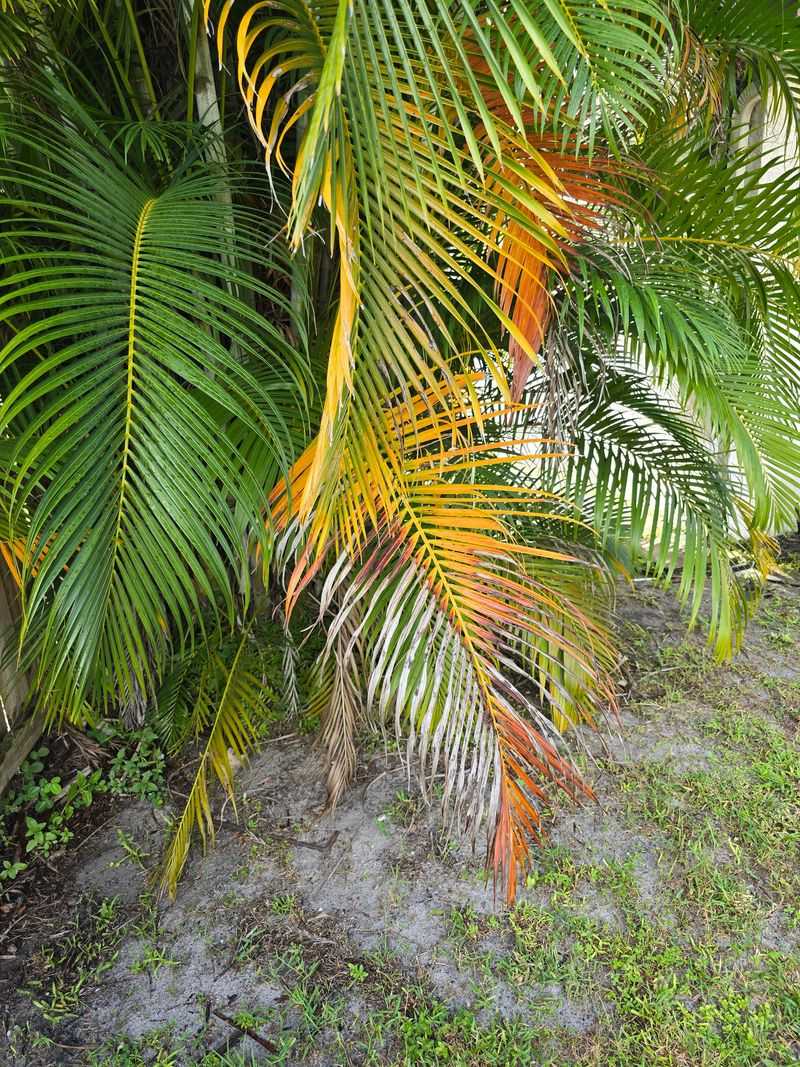
A palm that looks faded and pale across the entire canopy, not just the older fronds, is communicating something different from the bottom-up patterns of potassium and magnesium deficiency.
That overall washed-out appearance from the crown to the base is typically nitrogen deficiency making itself visible across every frond at once.
Nitrogen drives the deep green color that healthy palm fronds carry. When nitrogen runs low, the whole tree starts to look tired and pale rather than showing distinct patterns in specific areas.
The canopy loses its vibrancy gradually rather than showing defined yellow zones.
Nitrogen does not persist in Florida soil for long. The hot, humid climate accelerates breakdown by soil microbes, and the state’s sandy soils allow nitrogen to wash through the root zone before palms can fully absorb it.
Palms that have not been fertilized in a year or more are the most common candidates for this kind of whole-canopy fading.
Nitrogen deficiency is typically the most straightforward to address. A proper slow-release palm fertilizer with adequate nitrogen can improve a faded canopy noticeably within the first few months of new growth following treatment.
Timing matters in Florida. Fertilizing three to four times per year during the growing season, from spring through early fall, keeps nitrogen levels steady.
Fertilizing in winter when growth slows provides little benefit and wastes the application.
Fast-release nitrogen products create a quick flush but do not sustain the palm. Slow-release formulas are what keep the canopy consistently green rather than cycling between pale and briefly vibrant.
5. Notice Iron Issues On New Fronds
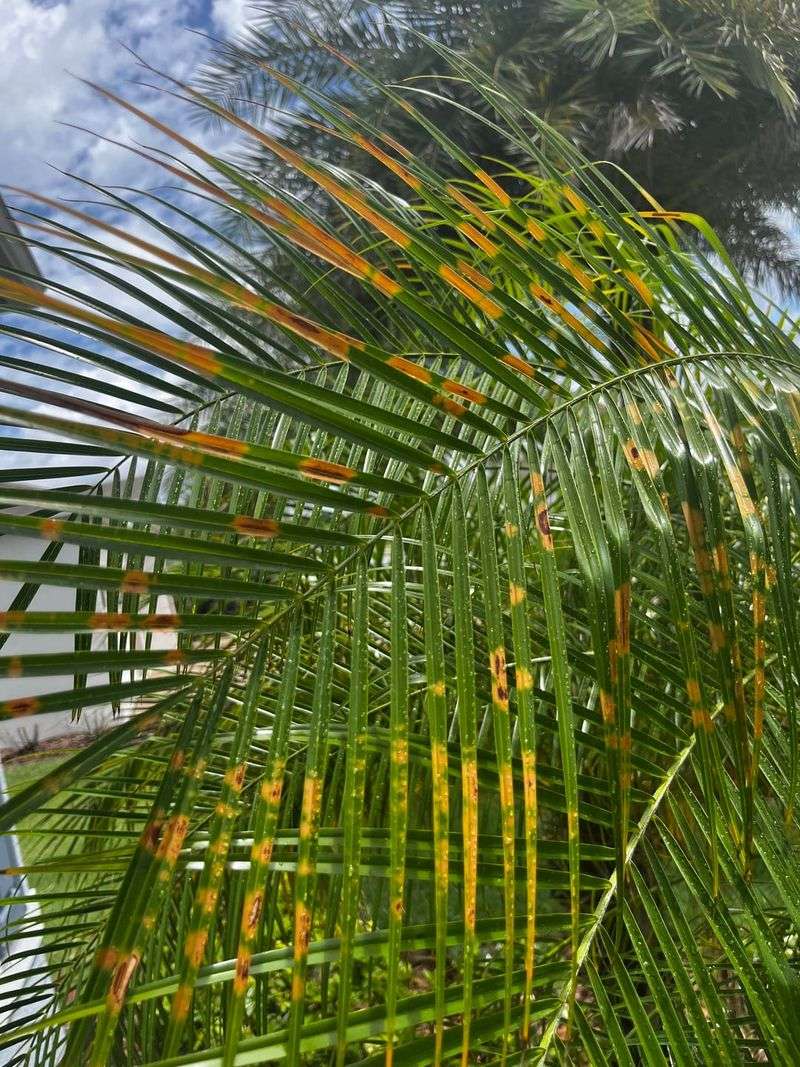
Most nutrient problems in Florida palms show up on the oldest fronds at the bottom of the canopy. Iron deficiency breaks that pattern entirely.
When iron is the issue, the newest fronds emerging at the very top of the palm are the ones that come in pale yellow or nearly white while older fronds lower on the tree stay green.
That top-down reversal is the diagnostic signal that changes the entire approach.
Iron is an immobile nutrient. Unlike potassium and magnesium, iron cannot travel through the palm from older tissue to support new growth.
Each new frond must pull iron directly from the soil as it develops. When soil conditions make iron unavailable, new growth suffers immediately and visibly while the rest of the tree looks fine for a while longer.
In Florida, iron deficiency is frequently not about low iron levels in the soil at all. It is about soil pH. When soil pH climbs too high, iron becomes chemically locked and roots cannot absorb it even when plenty is present.
Waterlogged or overwatered soils also reduce iron availability by cutting off the oxygen that roots need to absorb nutrients efficiently.
Addressing iron deficiency starts with a soil test to identify pH. If pH is elevated, acidifying the soil with sulfur helps unlock iron over time.
Chelated iron products applied to the soil or as a foliar spray offer faster improvement while the longer-term soil correction takes effect.
Treating the symptom without addressing the underlying pH or drainage problem produces temporary results. The next new frond will come in pale again and confirm the point.
6. Look For Water Stress After Dry Weeks
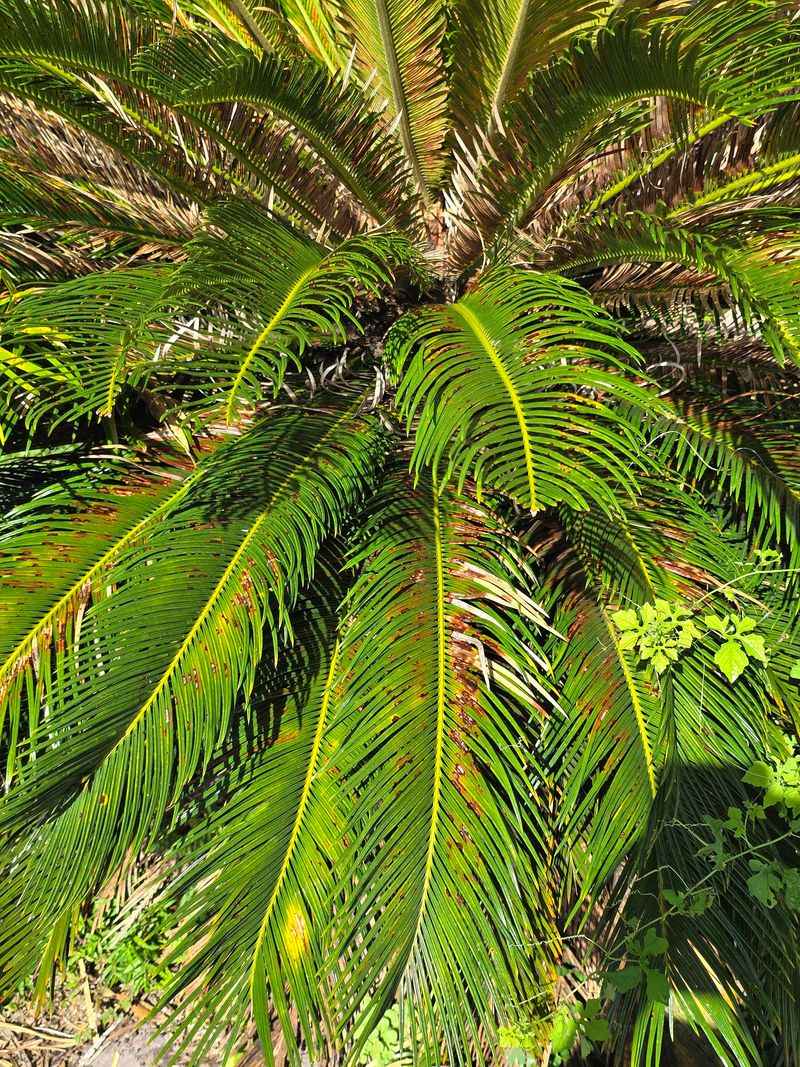
After several dry weeks without significant rain or irrigation, take a close look at the entire canopy.
Water stress produces yellowing that can look convincingly similar to nutrient deficiency, which sends many Florida homeowners reaching for fertilizer when the tree actually needs water.
Applying fertilizer to a water-stressed palm does not help and can create additional stress on an already compromised root system.
When a palm does not receive adequate water, it begins conserving resources. Photosynthesis slows, nutrient uptake drops, and fronds begin to yellow as the tree pulls back from outer leaves to protect the growing bud at the center.
The yellowing from water stress tends to appear more uniformly across fronds rather than showing the distinct tip patterns of potassium deficiency or the banding of magnesium deficiency.
Young and recently transplanted palms are most vulnerable because their root systems have not fully established.
A newly planted palm needs consistent, deep watering through at least the first year regardless of rainfall. Established palms are more resilient but can still struggle during extended dry periods in Florida’s fast-draining sandy soils.
Deep, infrequent watering produces better results than frequent shallow sessions.
Watering two to three times per week during dry stretches, soaking the root zone thoroughly each time, builds the moisture reserves that help palms function properly.
Adding a ring of mulch around the base of the tree slows moisture loss between waterings and keeps the root zone cooler during Florida’s hottest months.
A palm that gets consistent water rarely develops the uniform fading that sends homeowners to the fertilizer aisle in confusion.
7. Inspect Drainage Around The Root Zone
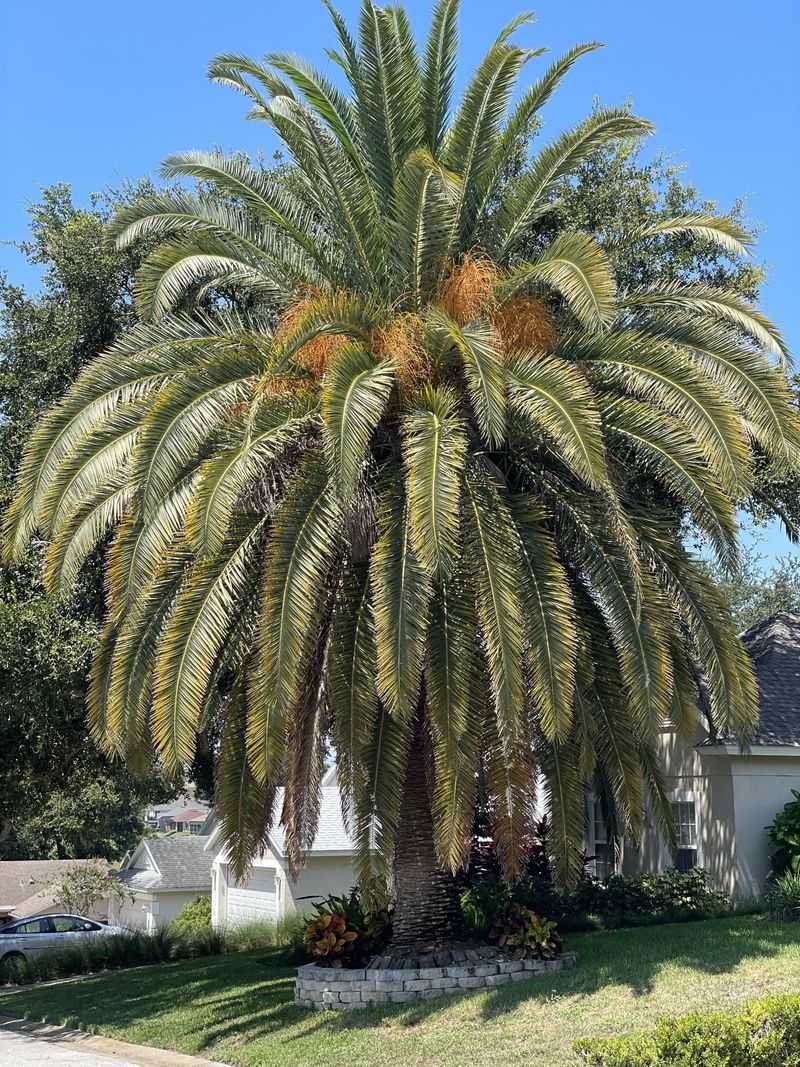
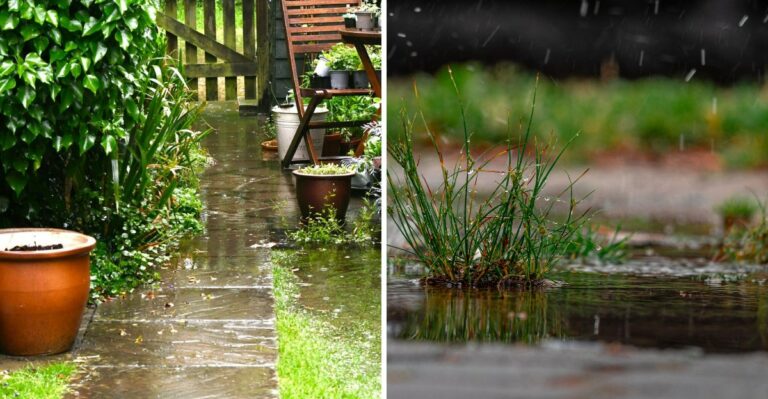
Too much water causes just as many problems as too little, and in Florida’s rainy season that specific challenge arrives reliably every year.
Palm roots sitting in waterlogged soil cannot breathe, and when roots cannot breathe, the whole tree starts showing yellow fronds and stunted growth that looks remarkably similar to nutrient deficiency.
Saturated soil cuts off oxygen to the root system. Roots need oxygen to absorb water and nutrients effectively.
When the root zone stays soggy for extended periods, roots begin breaking down, nutrient uptake collapses, and the palm shows deficiency symptoms even when the soil contains adequate nutrition.
The palm looks like it is starving when it is actually suffocating.
Root rot caused by fungal pathogens including Phytophthora can establish in poorly drained, waterlogged conditions.
Once root rot takes hold, it spreads quickly and becomes significantly harder to reverse. Catching drainage problems early gives the palm a much better chance of recovery before the root system is extensively compromised.
Walking around the palm after a heavy rainstorm and observing how long water lingers around the base is the most direct diagnostic step available. Soil that feels spongy or stays muddy several days after a storm needs attention.
Improving the grade of the soil around the tree so water flows away from the root zone addresses the most common cause.
Adding organic matter improves soil structure over time. A French drain can redirect excess water away from the planting area in persistently problematic locations.
The solution the palm needs after a waterlogged week is drainage improvement, not another round of fertilizer applied to roots that currently have no way to use it.