These Are The Native Florida Privacy Shrubs To Grow Instead Of Clumping Bamboo
Clumping bamboo is not the villain of the Florida garden. It does what it promises well enough, and plenty of yards use it without any drama.
But a lot of gardeners shopping for privacy end up with running bamboo by mistake, and that is a completely different situation with a much harder ending. Even when clumping bamboo behaves, natives offer something it simply cannot.
Wildlife value, ecological fit, seasonal interest, and a growth habit that works with this landscape rather than alongside it. The native options for privacy in Florida have quietly gotten better as more nurseries stock them seriously.
Dense, tall, evergreen choices that screen effectively and pull double duty for birds, pollinators, and soil health at the same time. Bamboo solves one problem.
The right Florida native shrub solves several at once, and your yard ends up better for the trade.
1. Florida Privet Builds A Native Screen For Coastal Yards
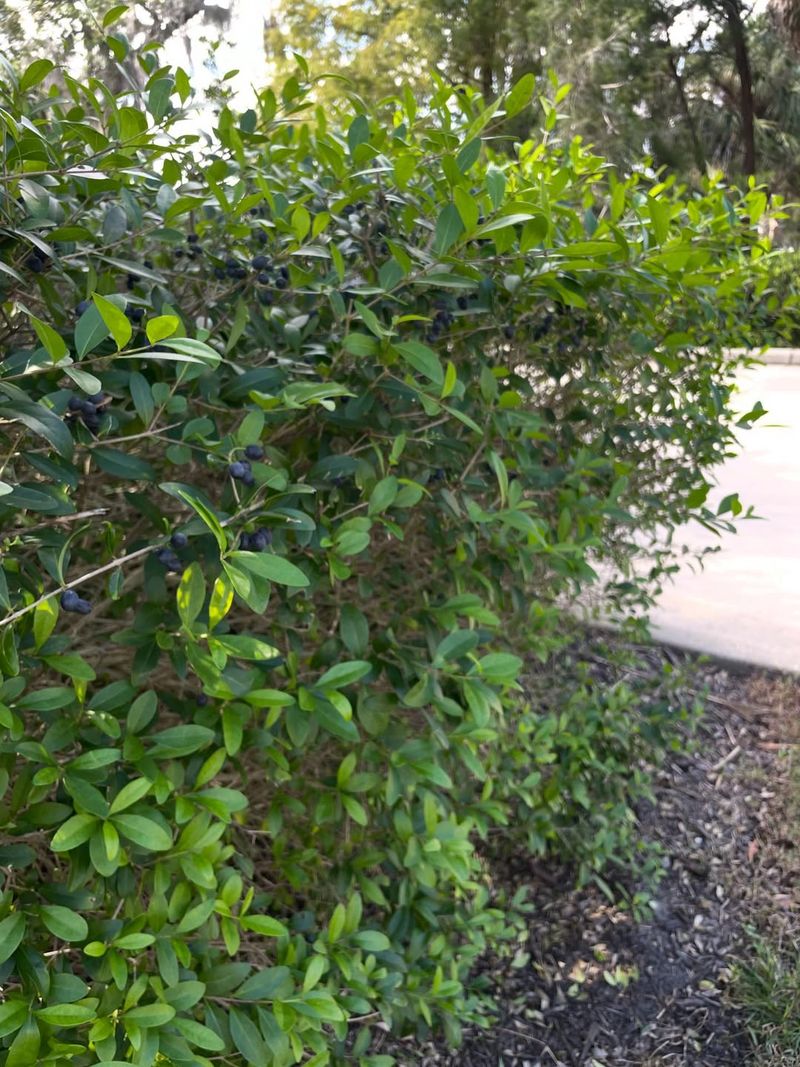
A side yard with a salt breeze and shifting light can be one of the hardest spots to screen well. Florida privet, known botanically as Forestiera segregata, is a native shrub or small tree that handles those conditions with quiet toughness.
Its dense, twiggy branching builds a layered screen that feels nothing like a bamboo wall, and that is exactly the point.
Unlike many invasive non-native privets sold at garden centers, this species is genuinely native to coastal hammocks and scrub edges in warm regions of the state.
Birds eat the small dark fruits, and the branching structure offers nesting cover that bamboo simply cannot match.
It can reach eight to fifteen feet tall, so spacing and pruning matter.
Used in a mixed hedge with other native shrubs, Florida privet adds evergreen density without taking over. Planted in a single-species row, it needs regular shaping to stay tidy.
It tolerates some salt spray and poor soils, but it performs best with reasonable drainage and room to branch naturally. Do not confuse it with Chinese privet or other non-native privet species, which are aggressive spreaders.
Florida privet stays where you plant it, but it still needs a plan. Give it the right site, prune it once or twice a year, and it builds a reliable, bird-friendly native screen that earns its place.
2. Inkberry Keeps Damp Privacy Plantings Neat And Evergreen
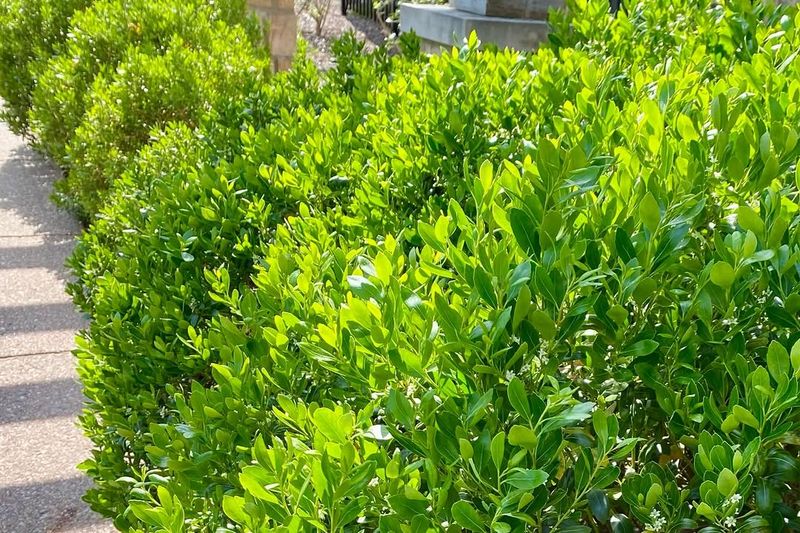
A damp property edge that stays soggy after summer rains can feel impossible to screen. Inkberry, Ilex glabra, is one of the few native evergreen shrubs that actually thrives in those wet, acidic conditions rather than just tolerating them.
Its small, glossy leaves stay on through winter, and the dark berries that follow its small white flowers bring in songbirds from fall through early spring.
Compared to clumping bamboo, inkberry is shorter and more refined. Most selections top out between five and eight feet, making it a better fit for lower privacy layers or mixed screens where you want structure without bulk.
It spreads slowly by root suckers, so give it room and expect a gradually widening clump over time. That spreading habit is modest, but it is worth planning for.
Your Florida Garden Changes Every Week. Your Plan Should Too.
Gardening in Florida changes quickly throughout the season. Every Friday you’ll receive a simple weekly plan showing exactly what to plant, prune, fertilize, harvest, and protect so you never miss the right timing.
Inkberry does not belong in a dry, sandy spot. Poor drainage or alkaline soil will stress it and cause thinning at the base.
It performs best in moist, acidic, partly shaded to full-sun sites in northern and central regions, and in some wetter southern areas too. Pruning helps keep the base dense.
Without it, older plants can get leggy over time. Used correctly in the right wet or damp site, inkberry builds a tidy, wildlife-friendly evergreen layer that holds its character through every season.
3. Rusty Lyonia Adds Woodland Privacy With Quiet Structure
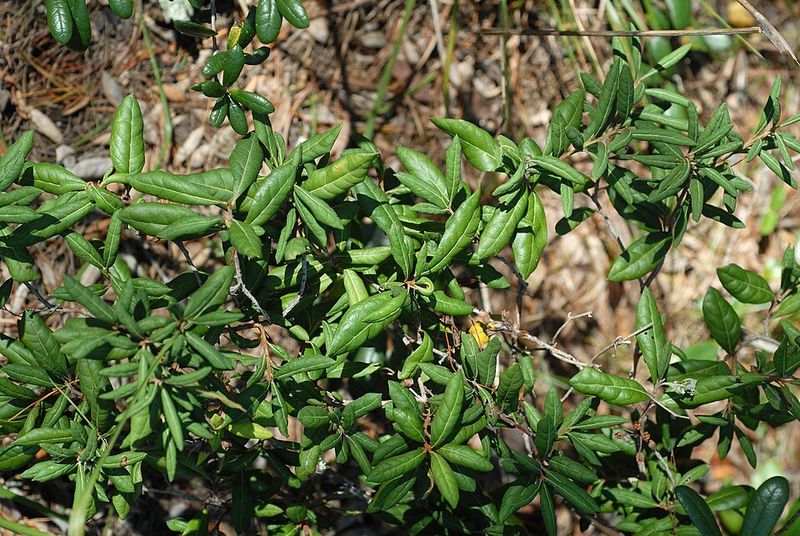
Sandy, acidic woodland edges in this state often go unscreened because most privacy shrubs prefer richer soil. Rusty lyonia, Lyonia ferruginea, is built for exactly those lean conditions.
The rusty orange color on the undersides of its leaves gives the plant a warm, textured look that no bamboo can replicate. When a breeze moves through, the leaves flip and show that copper tone, adding quiet movement to a naturalistic screen.
This native shrub grows in scrub, flatwoods, and dry hammock habitats, primarily in northern and central regions.
It is evergreen or semi-evergreen depending on conditions, and it carries small, urn-shaped white flowers that attract native bees and other pollinators.
Mature height varies but can reach six to fifteen feet in the right site, so spacing matters when planning a property-edge planting.
Rusty lyonia is not a shrub to clip into a formal hedge. Its natural, open branching is part of its appeal, and hard shearing disrupts that character.
It suits naturalistic screens, mixed woodland hedges, and dry-site property edges where a refined but unfussy look fits the landscape. Avoid planting it in poorly drained or alkaline soil.
It needs well-drained, acidic, sandy conditions to perform well. Given the right site and reasonable room, it adds genuine woodland structure that feels rooted in this state’s natural character.
4. Cocoplum Gives Warm Coastal Yards Dense Native Cover
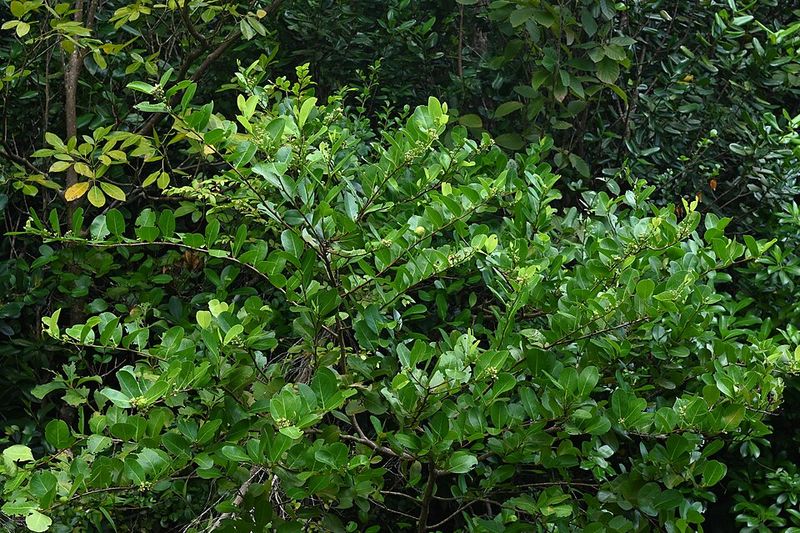
Few native shrubs pack as much glossy, tropical-feeling density into a coastal hedge as cocoplum. Chrysobalanus icaco is a warm-region native that earns its place in southern landscapes.
It has thick, round leaves, a naturally mounding form, and small edible fruits that turn from white to deep purple as they ripen. Birds eat those fruits readily, and the dense canopy offers cover that adds real wildlife value to a privacy planting.
Cocoplum handles salt air, sandy coastal soil, and the intense heat of southern regions better than most native shrubs.
It can be pruned into a formal hedge or left to grow in its natural rounded form, reaching six to fifteen feet depending on the variety and conditions.
The red-tip form is widely used in warm-region landscapes and tends to be more compact. Both forms respond well to shaping.
Cold sensitivity is the main limitation. Cocoplum is not suited to northern or central inland yards where hard freezes occur.
Even in central regions, a cold winter can set it back significantly. Match it to its range, give it well-drained soil, and plan for its mature width when spacing plants along a fence or property line.
Pruning two or three times a year keeps it dense and manageable. For gardeners in the right warm coastal zone, it builds one of the most reliable native screens available in this state.
5. Wild Olive Screens Sunny Yards With Fragrant Native Blooms
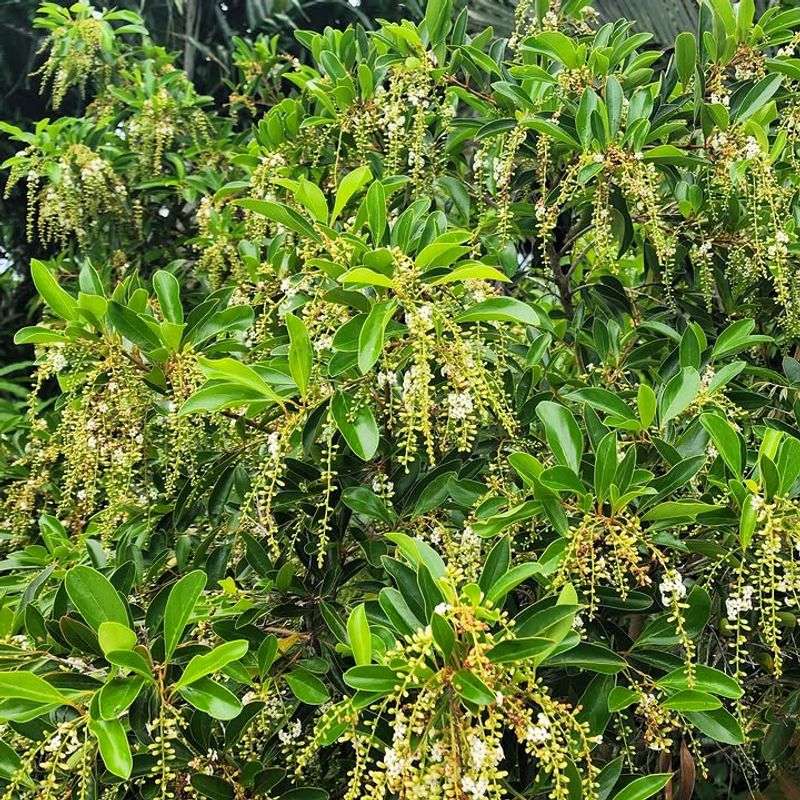
Not many native screening shrubs stop you in your tracks with fragrance, but wild olive does. Cartrema americana, formerly placed in the genus Osmanthus, produces small clusters of creamy white flowers.
They have a sweet, noticeable scent that drifts across a sunny yard in late fall and winter. That flowering season is a genuine bonus in a screen planting, arriving when most other plants have gone quiet.
Wild olive is a native shrub or small tree found in hammocks, scrub edges, and coastal uplands in northern and central regions primarily.
It has dark, leathery, evergreen leaves that hold their color through the year and give a refined, polished look to a mixed hedge or property-edge screen.
Mature height typically ranges from eight to twenty feet, so plan spacing accordingly and allow room for the plant to develop its natural form.
Pollinators, including native bees, visit the flowers during that winter bloom period. Small dark fruits follow and are eaten by birds, adding another layer of wildlife value.
Wild olive grows best in well-drained soil with full sun to part shade. It is more cold-tolerant than cocoplum or red stopper, making it a better fit for northern and central inland yards.
Pruning once or twice a year helps control height and density. Used in a mixed native screen, it adds fragrance, structure, and year-round foliage that feels genuinely rooted in this landscape.
6. Red Stopper Gives Warm Privacy Plantings Glossy Native Cover
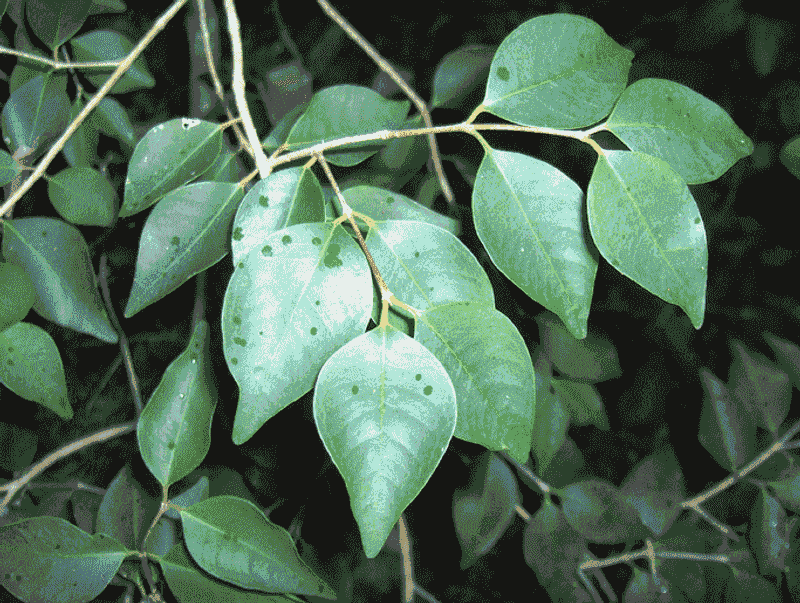
There is something quietly elegant about red stopper in a warm-region privacy planting. Eugenia rhombea is a native shrub with small, glossy, deep green leaves that catch light beautifully in partly shaded spots.
The foliage alone gives a refined, layered look to a mixed hedge. The small fruits that ripen from red to dark purple also bring in mockingbirds, thrushes, and other fruit-eating birds reliably.
Red stopper is native to coastal hammocks and tropical hardwood hammocks in the southern part of the state.
It grows as a large shrub or small tree, typically reaching eight to fifteen feet, and it suits sites with some shade to part sun rather than full harsh exposure.
That tolerance for lower light makes it useful in spots where a fence or larger tree casts partial shade over a property edge.
Cold hardiness is the key limitation. Red stopper is not suited to northern or central regions where freezes are common.
Even a moderate frost can damage the foliage and slow growth. Match it to its natural warm-region range and give it well-drained, slightly acidic soil with good organic matter.
Pruning helps shape it into a denser screen, but it also grows naturally into a graceful small tree if left alone. For gardeners in the right southern zone, it fills a shaded or partly shaded privacy gap with genuine native character and bird-friendly fruit.
7. Darling Plum Creates Thorny Cover For Warm Native Screens
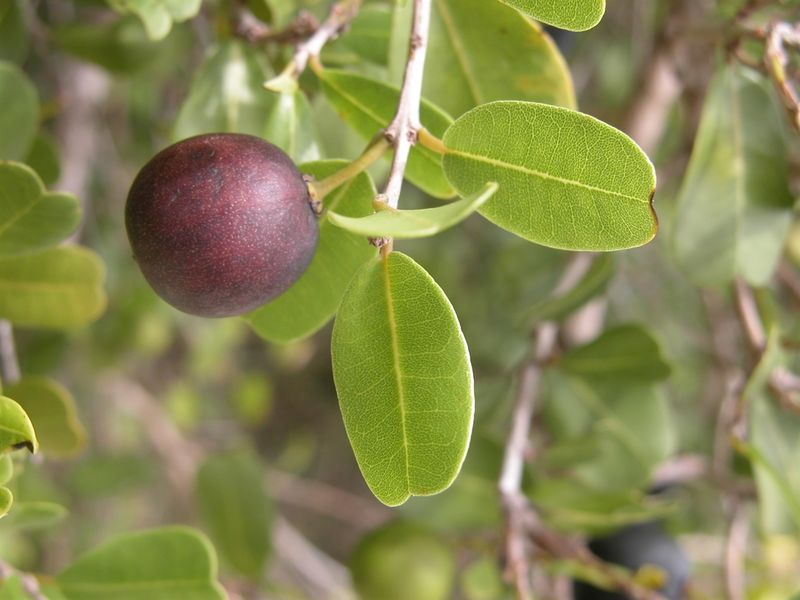
A property edge that needs a serious boundary, not just a visual screen, is where darling plum earns its reputation. Reynosia septentrionalis is a native shrub with dense branching, small leathery leaves, and sharp thorns that make it genuinely difficult to push through.
That physical deterrent is a real feature in the right situation. The dark purple fruits that follow inconspicuous flowers are eaten by birds, adding wildlife value to its toughness.
Darling plum is native to tropical hammocks and coastal thickets in the southernmost regions of the state. It is slow-growing, evergreen, and tolerant of dry, rocky, or sandy soils where other shrubs struggle.
Mature height typically stays in the six to fifteen foot range, making it manageable as a property-edge screen or informal barrier hedge with occasional pruning.
The thorns are the defining limitation. Darling plum should never be planted near narrow walkways, children’s play areas, tight patios, or high-traffic entries where people brush against plants regularly.
It belongs on open property lines, back boundaries, or naturalistic edges where its thorny structure is an advantage rather than a hazard. Cold sensitivity also restricts its range to warm southern areas.
Do not try to grow it in northern or central regions where freezes occur. Given the right warm site and enough space, it builds a tough, bird-friendly, barrier-style native screen that clumping bamboo simply cannot replicate.
8. Marlberry Screens Warm Shady Yards With Glossy Native Foliage
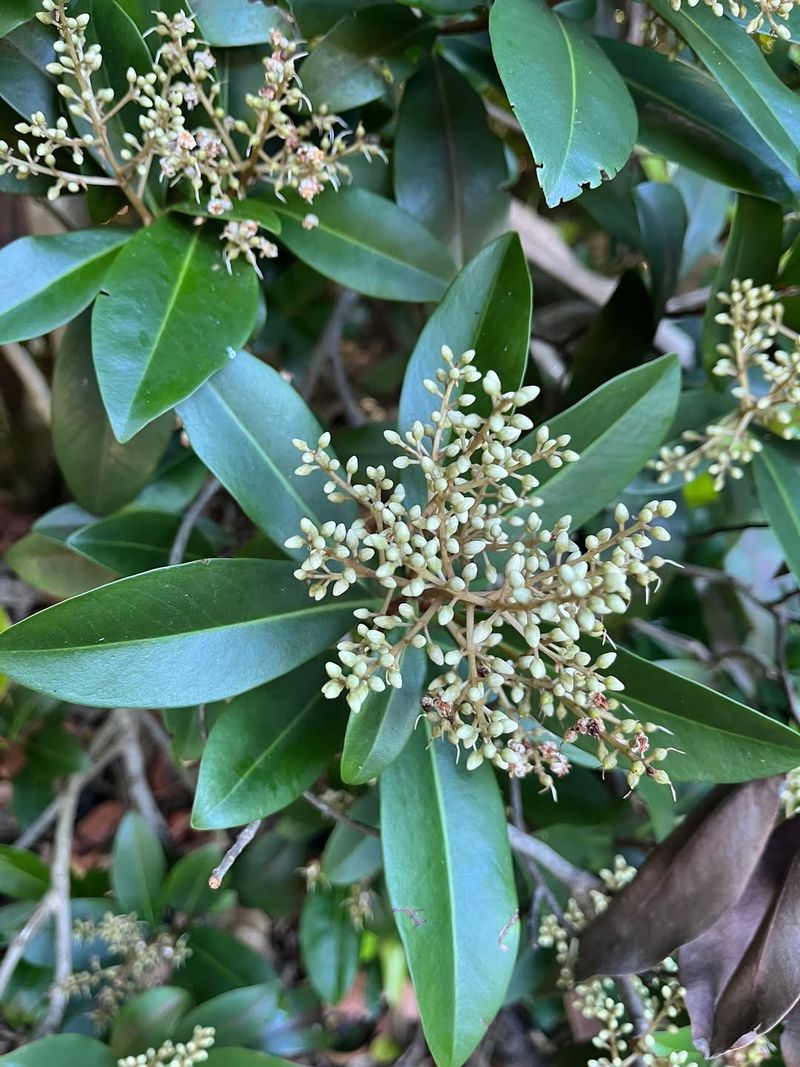
Shady side yards and understory edges in warm regions often get overlooked when planning a privacy screen. Marlberry, Ardisia escallonioides, is a native shrub or small tree that was practically made for those spots.
Its large, glossy, deep green leaves give it a lush, layered presence in filtered light. The rounded clusters of small white flowers carry a light fragrance that adds a sensory layer to a shaded screen planting.
After flowering, marlberry produces small dark fruits that ripen over several months and attract mockingbirds, catbirds, and other fruit-eating birds in good numbers.
That fruit production, combined with its dense foliage, makes it one of the more wildlife-friendly options for warm-region understory screens.
It grows as a large shrub or small tree, typically reaching eight to fifteen feet, and it suits partly shaded to shaded sites with well-drained, slightly acidic soil.
Marlberry is native to tropical and coastal hammocks in southern regions and is not suited to northern or central yards where hard freezes occur. It needs warmth, reasonable moisture during establishment, and shelter from full harsh sun and cold wind.
It is not a clipped formal hedge plant. Its natural layered branching looks best when shaped lightly rather than sheared hard.
Used in a mixed understory screen or along a shaded property edge, marlberry adds genuine warm-region character. It also brings bird value and glossy native foliage that holds its beauty through every season.