Fire Ant Mounds Keep Showing Up Across Missouri For Reasons You Have Not Considered Yet
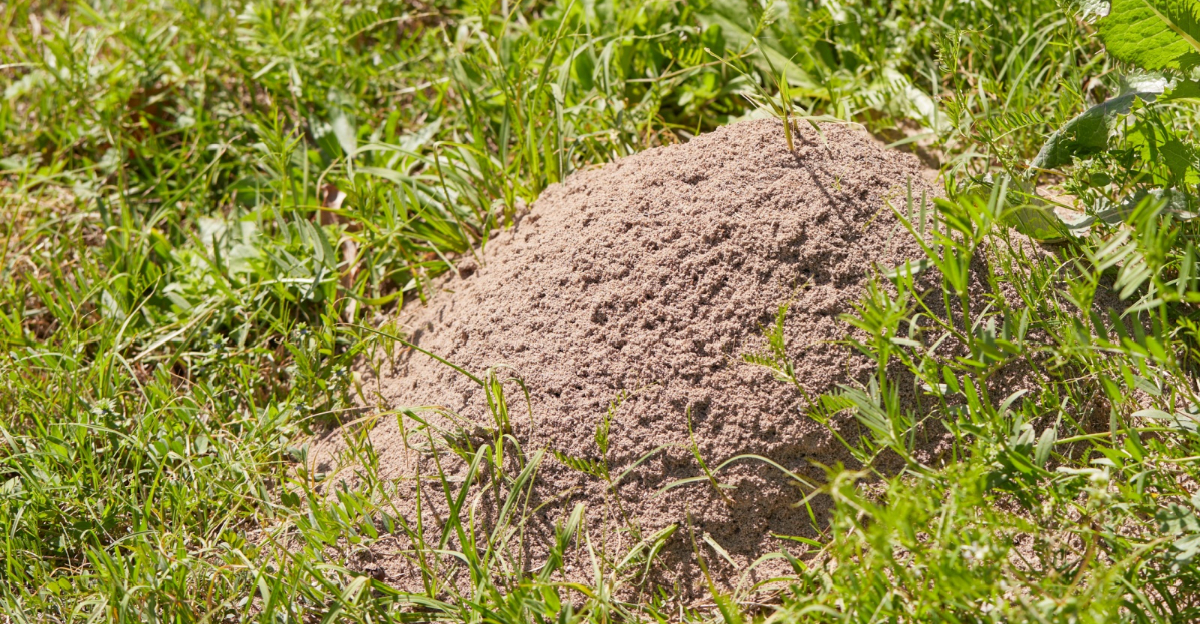
You already know that sinking feeling. Treat the mound, claim the win, walk away satisfied. Then Missouri pushes back hard. Weeks pass, and that same patch of yard quietly reappears.
Fire ant colonies operating underground in Missouri are far more organized than most homeowners ever realize. Satellites of the main colony scatter silently before treatment even hits.
Scouts begin relocating the queen within hours, not days. Your product reaches what it touches, but deeper roots of the infestation hold on below the surface.
Depth matters far more than surface contact. Chemical barriers fade long before colonies do. Soil temperature, moisture, and tunneling depth all work against you.
Understanding the biology driving this stubborn cycle puts real, lasting control back in your hands. What happens beneath your yard right now will shock you into action.
1. Heavy Rain Floods Tunnels, Forcing Colonies To Relocate

After a big rainstorm, your yard might look peaceful. But underground, fire ant colonies are scrambling to relocate.
Heavy rain floods the tunnels fire ants build beneath your lawn. When water rushes in, the whole colony responds rapidly and begins relocating.
Workers grab eggs, larvae, and the queen. They carry everything upward and outward to drier ground.
That new mound near your patio may have appeared overnight as rain pushed the colony toward drier ground.
Fire ant mounds keep coming back in Missouri yards partly because our spring storms are relentless.
Missouri gets serious rainfall between April and June. That constant moisture cycle keeps colonies on the move all season long.
Each time a colony relocates, it picks the highest, driest spot it can find. Raised garden beds, sidewalk edges, and sunny slopes become prime real estate.
The tricky part is that the colony does not disappear after flooding. It just shows up somewhere new in your yard, often within a short distance of the original spot, sometimes as close as ten to twenty feet.
To reduce relocations, improve your yard drainage wherever possible. Fill low spots, regrade problem areas, and consider French drains near garden beds.
Fewer floods mean fewer emergency moves. Fewer moves mean fewer surprise mounds popping up after every storm.
Controlling moisture is not just good for your grass. It is one of the most underrated tools against recurring fire ant problems in the Midwest.
2. Warm Summers Accelerate Egg-Laying And Colony Growth
Missouri summers hit hard and fast. By June, daytime temperatures regularly push past ninety degrees, and fire ants thrive in that heat.
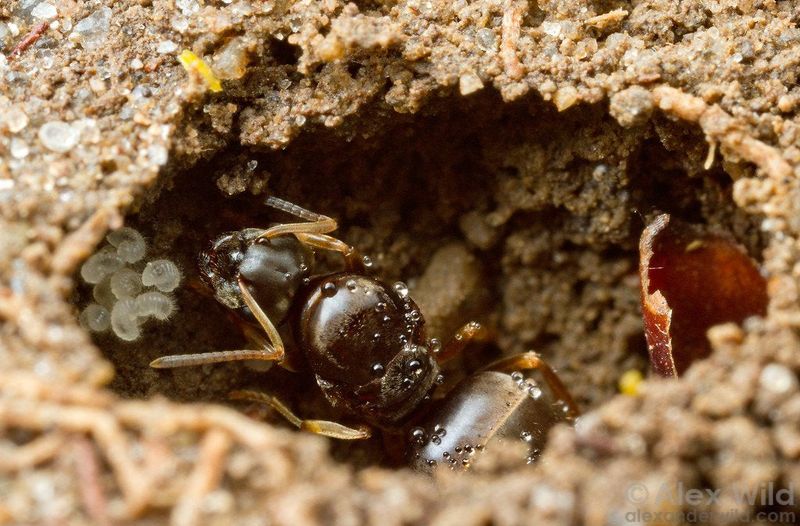
A fire ant queen can lay up to fifteen hundred eggs every single day. When summer temperatures rise, her egg-laying rate accelerates dramatically.
More eggs mean more workers hatching within weeks. A colony that had tens of thousands of workers in May can grow substantially larger by August as egg-laying accelerates through the summer.
That rapid growth is why fire ant mounds keep coming back in Missouri yards during summer. You treat one mound, but the colony was already producing enough new ants to rebuild fast.
Your Missouri Garden Changes Every Week. Your Plan Should Too.
Gardening in Missouri changes quickly throughout the season. Every Friday you’ll receive a simple weekly plan showing exactly what to plant, prune, fertilize, harvest, and protect so you never miss the right timing.
Warm soil also speeds up larval development. Warmer soil temperatures meaningfully shorten the development time from egg to worker, allowing the colony to replenish its numbers faster in summer than in spring.
Faster development means the colony replaces lost workers almost instantly. Treating a mound without reaching the queen means the colony replaces lost workers faster than surface products can reduce them.
The queen is the engine behind all of this growth. She stays deep underground, safe from most surface treatments, while her workers handle everything above.
Targeting the queen is the only way to truly stop a colony. Products that workers carry back to the queen as food are far more effective than surface sprays.
Timing matters too. Treat mounds in early morning or evening when ants are active near the surface. That is when bait products get picked up and carried underground most efficiently.
3. Budding Splits One Colony Into Several Nearby Ones
You might think one mound means one problem. Budding proves that assumption significantly wrong.
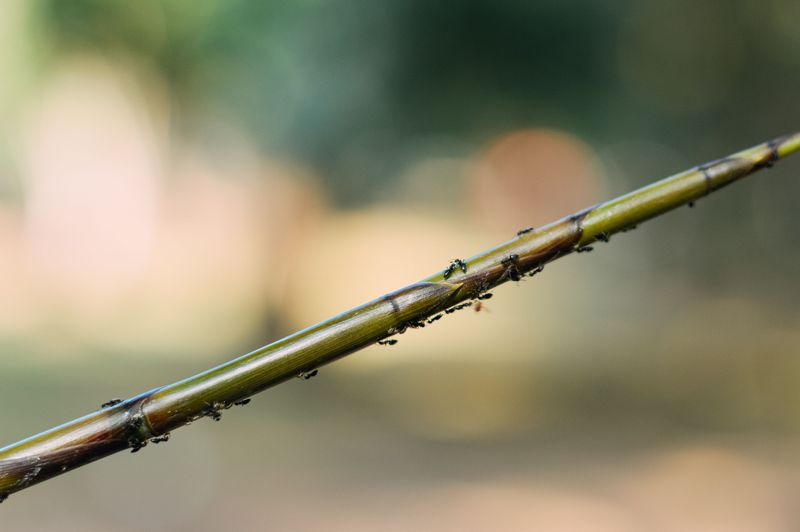
Budding happens when a colony gets too large or feels threatened. A group of workers, along with one or more queens, simply breaks off and moves to a new location.
That original mound is still active. Now you also have one or two fresh mounds starting up nearby.
This process is a huge reason fire ant mounds keep coming back in Missouri yards. One colony quietly becomes three without any obvious warning signs.
Budding often happens after a partial treatment. If you reduce enough workers to stress the colony but not enough to stop it, budding kicks in as a survival response.
The colony divides and continues functioning across two locations, leaving you with more active mounds than you started with.
New budded colonies are small and hard to spot at first. Their mounds may only be a few inches wide, easy to miss during a routine yard check.
By the time those mounds are obvious, the colonies inside are already well established. Early detection requires walking your yard slowly and looking for subtle soil disturbances.
Treating the entire yard rather than individual mounds helps prevent budding. Broadcast bait treatments cover the whole lawn, reaching colonies before they have a chance to split.
Patience is key with budding situations. It may take several weeks of consistent treatment before a multi-colony yard gets fully under control.
4. Poor Drainage Keeps Soil Wet, Triggering Repeated Surfacing
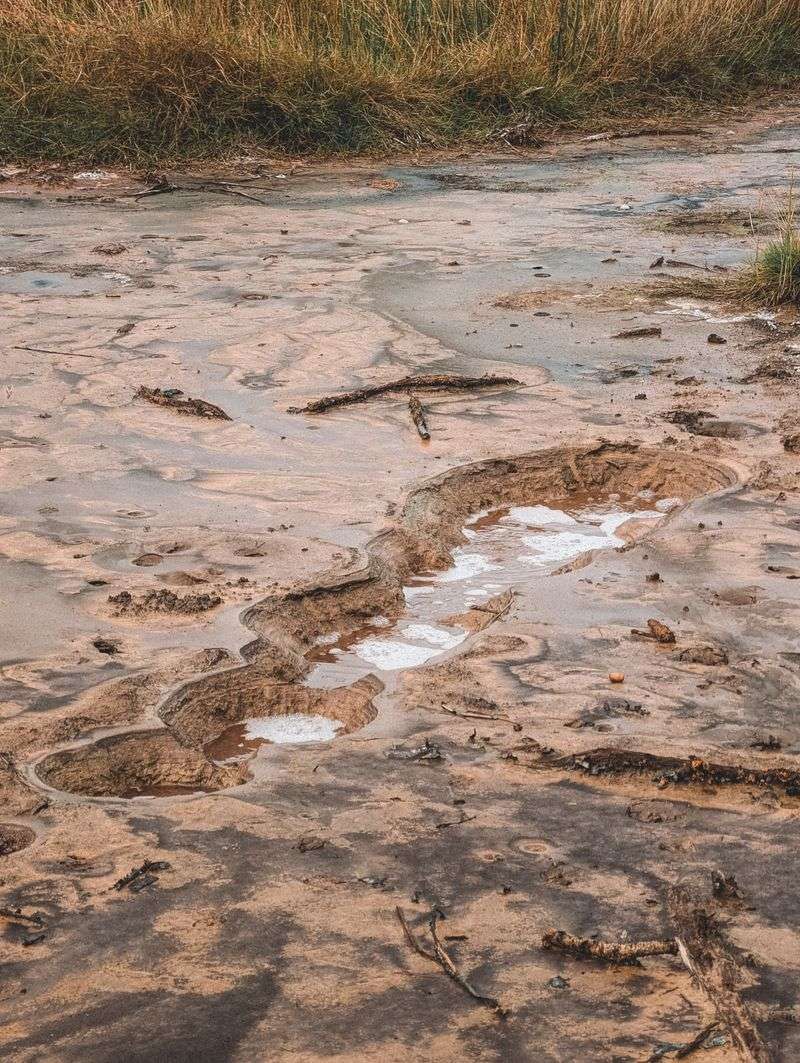
Soggy yards are a reliable trigger for fire ant movement. Every time the soil gets saturated, ants surface and rebuild somewhere drier.
Poor drainage is one of the most overlooked reasons fire ant mounds keep coming back in Missouri yards. Homeowners treat the mounds but never fix the wet soil that keeps triggering movement.
When water pools in low areas of your lawn, underground tunnels flood quickly. Ants read this as a crisis and relocate to any elevated or firm ground nearby.
Common drainage culprits include compacted soil, buried clay layers, and downspouts that empty directly onto the lawn. Each one creates a cycle of flooding and ant surfacing that repeats all season.
Fixing drainage does not have to be a massive project. Start by redirecting downspouts away from garden beds and low lawn areas.
Aerating your lawn helps water absorb into the soil rather than pool on top. Aeration breaks up compaction and gives rainwater somewhere to go.
Adding organic matter to dense soil also improves drainage over time. Compost worked into garden beds can make a noticeable difference within one growing season.
For serious drainage problems, a French drain or dry creek bed may be worth the investment. Redirecting water flow changes the entire moisture profile of your yard.
Ants are incredibly sensitive to soil moisture levels. A yard that drains well simply gives them fewer reasons to pack up and find a new home after every rain.
5. Spot-Treating Only Visible Mounds Leaves Hidden Colonies Untouched

Treating the mound you can see feels satisfying. The problem is that fire ant colonies are mostly invisible.
For every obvious mound in your yard, there may be two or three hidden satellite colonies nearby. These smaller groups have not built visible structures yet, but they are very much active underground.
Spot-treating is the number one reason fire ant mounds keep coming back in Missouri yards. Homeowners eliminate what they can see and move on too soon.
Hidden colonies continue expanding unchecked after a spot treatment. Within a few weeks, they build new mounds that are easy to mistake for a fresh infestation starting from scratch.
Broadcast bait treatments are far more effective for whole-yard control. Granular baits spread across the entire lawn reach colonies that have not surfaced yet.
Worker ants forage across a wide area, sometimes fifty feet or more from their mound. They pick up bait granules and carry them back underground to feed the colony.
When the bait reaches the queen, the colony collapses from within. No queen means no new eggs and no colony recovery.
Apply broadcast baits in late afternoon when workers are actively foraging. Avoid applying before rain, since moisture breaks down the bait before ants can collect it.
Follow up with individual mound treatments for any active hills you can see. Combining both methods covers the yard at every level, above and below the surface.
Consistency over several weeks beats a single heavy treatment every time. Persistent effort is what finally ends the cycle.
6. New Queens Fly During Humid Weather And Establish Fresh Nests
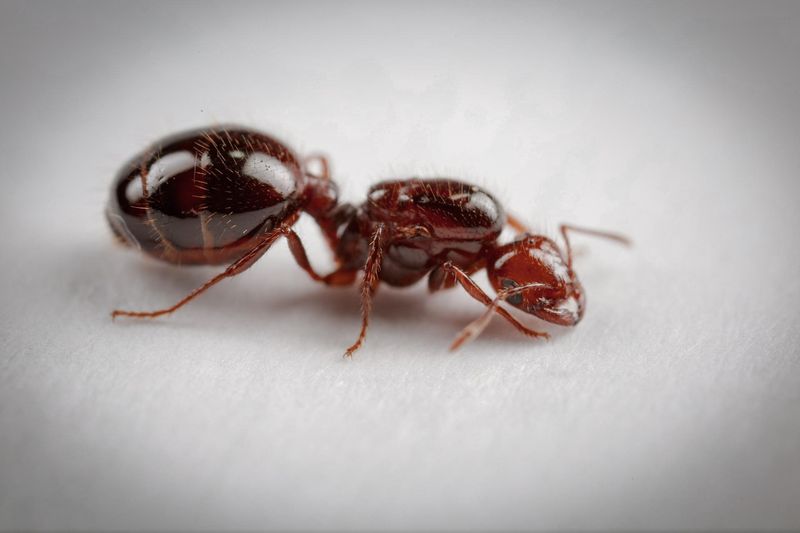
On warm, humid days after rain, something significant happens above your yard. Winged fire ant queens take flight by the thousands.
This event is called a nuptial flight, and it happens several times each year in Missouri. Young queens mate while airborne, then land and shed their wings to start brand new colonies.
One successful queen landing in your yard can start a fresh infestation from scratch. This is a big reason fire ant mounds keep coming back in Missouri yards even after thorough treatments.
Queens can fly surprisingly far from their origin colony. A neighbor’s untreated yard half a mile away can send new queens directly into your lawn.
Nuptial flights typically happen in late spring and early fall. Watch for them on days that are warm, muggy, and follow recent rainfall.
Newly landed queens are vulnerable before they establish their first workers. Broadcast bait applications during flight season can intercept queens before they get settled.
Once a queen has even a small group of workers, the colony becomes much harder to stop. Early intervention during the founding stage is far more effective than treating an established mound.
Keeping your yard treated consistently during peak flight seasons reduces successful new colony starts. Think of it as closing the door before uninvited guests walk in.
You cannot control where queens fly from. But you can make your yard an inhospitable environment for new colonies by maintaining an active baiting program throughout the season.
7. Unsettling Mounds Scatters Ants, Spreading The Infestation Further

Kicking a fire ant mound might feel satisfying in the moment. But that single action can scatter workers across your yard, seeding activity in several new spots at once.
When a mound gets agitated suddenly, ants scatter in every direction carrying eggs and larvae. Workers instinctively grab the queen and move her to safety as fast as possible.
If enough workers survive with enough brood, they can begin relocating within hours, with a new mound taking shape over the following day or two. Unsettling mounds without treatment is one of the fastest ways to spread an infestation.
This scattering behavior is a major reason fire ant mounds keep coming back in Missouri yards. One accidental disruption during yard work can multiply your problem significantly.
Common triggers include mowing over mounds, digging near them, or running a lawn edger through one. Even heavy foot traffic near a mound can set off a partial scatter response.
Always treat a mound before interfering with it physically. Apply a liquid drench or granular bait and wait at least twenty-four hours before any nearby yard work.
When using a mound drench, pour the solution slowly around the outer edge first. Working inward traps ants rather than sending them running outward.
Speed matters too. Ants respond to vibration and heat within seconds. Moving slowly and deliberately near mounds reduces the scatter response that spreads activity further.
Protective footwear is essential when working near any mound. A single agitated colony can send hundreds of ants onto your shoes before you even notice.
8. Pheromone Trails Guide Ants Back To Recolonize The Same Spots
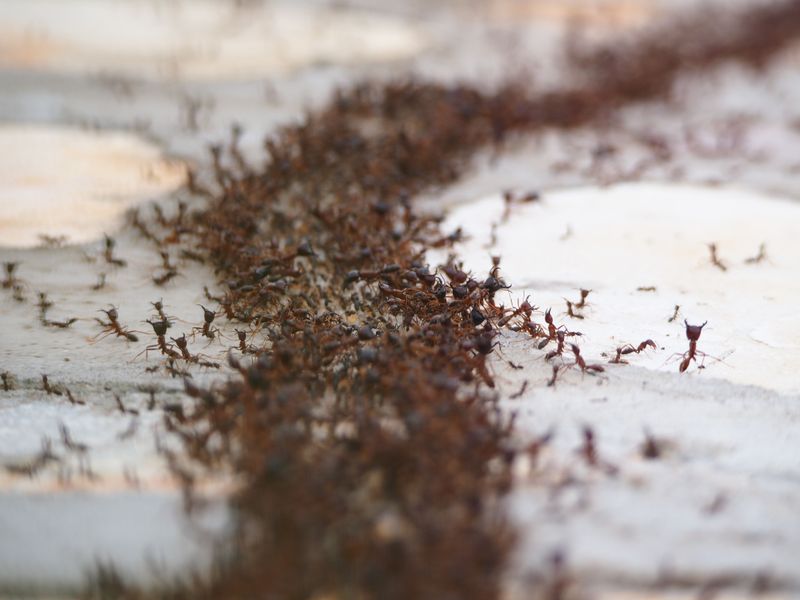
Fire ants have a chemical memory your yard cannot erase with a garden hose. Pheromone trails are invisible pathways that guide ants back to familiar territory.
When a colony abandons a spot due to treatment or flooding, workers leave chemical markers behind. Those markers persist in the soil long after the original mound is gone.
Returning ants or new colonies follow those scent trails directly back to the same location. This is why fire ant mounds keep coming back in Missouri yards in the exact same spots repeatedly.
Pheromones serve several functions in ant communication. They mark food sources, signal danger, and identify established foraging routes that the whole colony relies on.
Even after a successful treatment, the chemical signals remain. Scout ants from nearby satellite colonies or newly arrived queens may detect these residual signals and move toward the same area.
Breaking the pheromone cycle requires more than surface treatment. You need to eliminate all colony members, including the queen, to stop the chemical trail from being reinforced.
Some homeowners find that treated areas become reinfested within days. That rapid return is almost always pheromone-driven rather than a sign that treatment failed completely.
Consistent broadcast baiting over multiple weeks disrupts the foraging network. When fewer workers are active, fewer pheromone trails get refreshed and reinforced.
Persistence is the only real answer to pheromone-guided recolonization. Stay consistent with your treatment plan, and the chemical signals will eventually fade without new ants to renew them.