8 Best Ohio Natives To Plant Before Monarchs Move Through In July
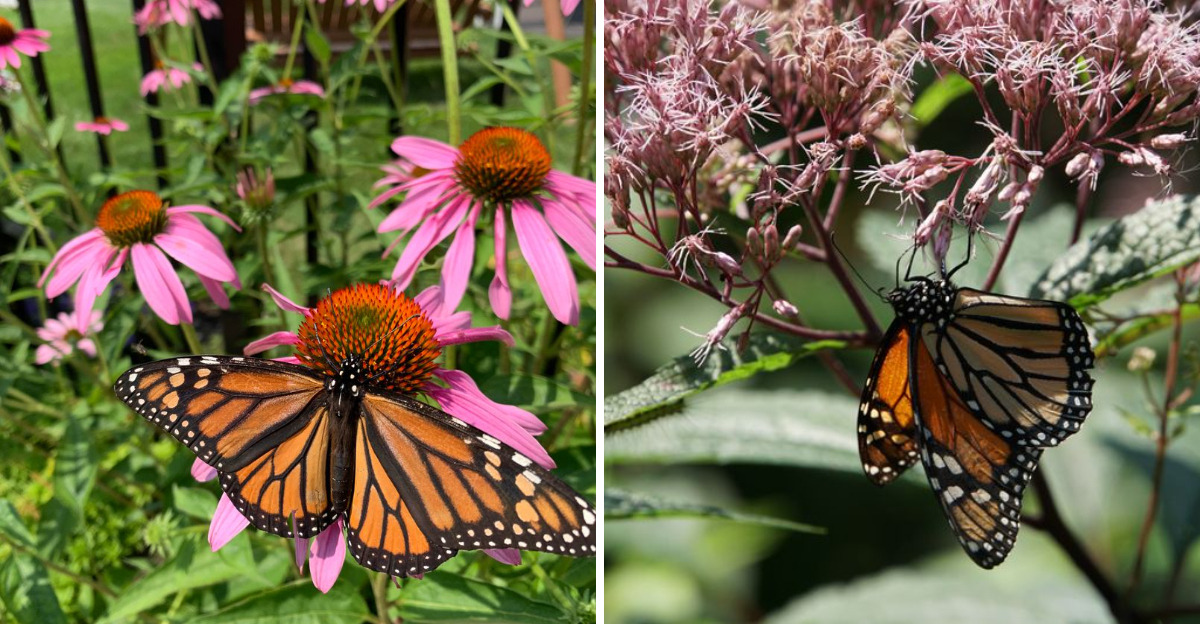
Every July, something magical happens across Ohio.
Monarch butterflies lift off from their summer homes and begin drifting south, pausing to fuel up on nectar wherever they can find it.
The question worth asking right now is a simple one: will your garden be ready for them when they arrive?
Plant the right Ohio natives before July and you can turn your yard into a monarch pit stop that buzzes, glows, and pulses with life all season long.
These eight plants are deeply rooted in Ohio soil, beloved by pollinators, and timed perfectly to support monarchs before and during their summer movement south.
Some feed caterpillars. Some pour out nectar like a garden buffet. Some bloom so late they catch the very last travelers of the season.
You might already know a few of these, but the full list holds a surprise or two that even experienced Ohio gardeners sometimes overlook.
Get your gloves on, grab a shovel, and get ready to grow something worth stopping for.
1. Common Milkweed Hosts The Next Generation
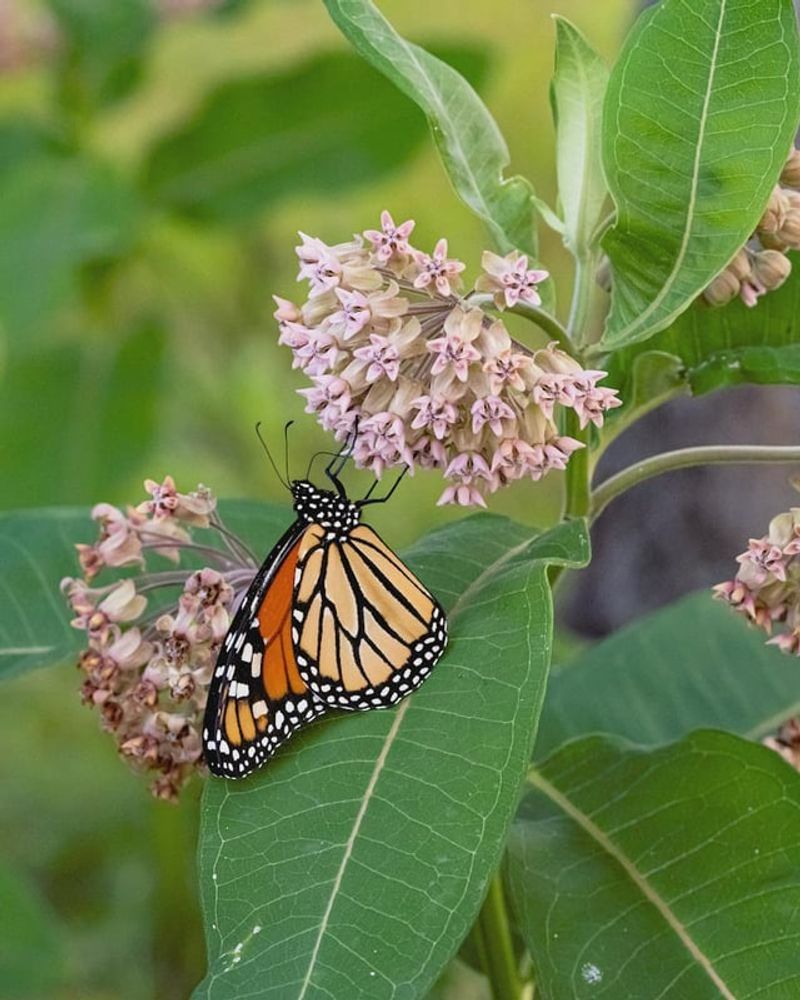
Before a monarch can flutter, it has to be a caterpillar first. Common milkweed is the single most important plant for making that happen in Ohio.
Monarch females seek it out to lay their eggs, and the caterpillars that hatch have no other food source. No milkweed means no caterpillars, and no caterpillars means no butterflies.
This plant is a sun lover.
Plant it in a spot that gets at least six hours of direct light each day. It handles average to dry soil without complaint and does not need fertilizer or fuss.
The pink, globe-shaped flower clusters bloom in late June and into July, landing perfectly in line with monarch movement through Ohio.
One thing to plan for upfront: common milkweed spreads.
It sends out underground rhizomes that pop up new shoots every season. You can contain it with edging or simply let it colonize a wilder section of your yard. A naturalized patch of five to ten plants gives monarchs a real breeding station, not just a snack stop.
Place it along a fence line, in a rain garden edge, or in a sunny corner where it can stretch.
It also attracts bees, beetles, and other native insects, making it one of the hardest-working plants in any Ohio garden. Common milkweed does not just earn its keep, it practically pays rent.
2. Swamp Milkweed Fits Moist Garden Spots
Not every yard is bone dry, and not every plant wants it that way.
If you have a low spot that stays soggy after rain, a rain garden, or a bed near a downspout, swamp milkweed was practically made for you.
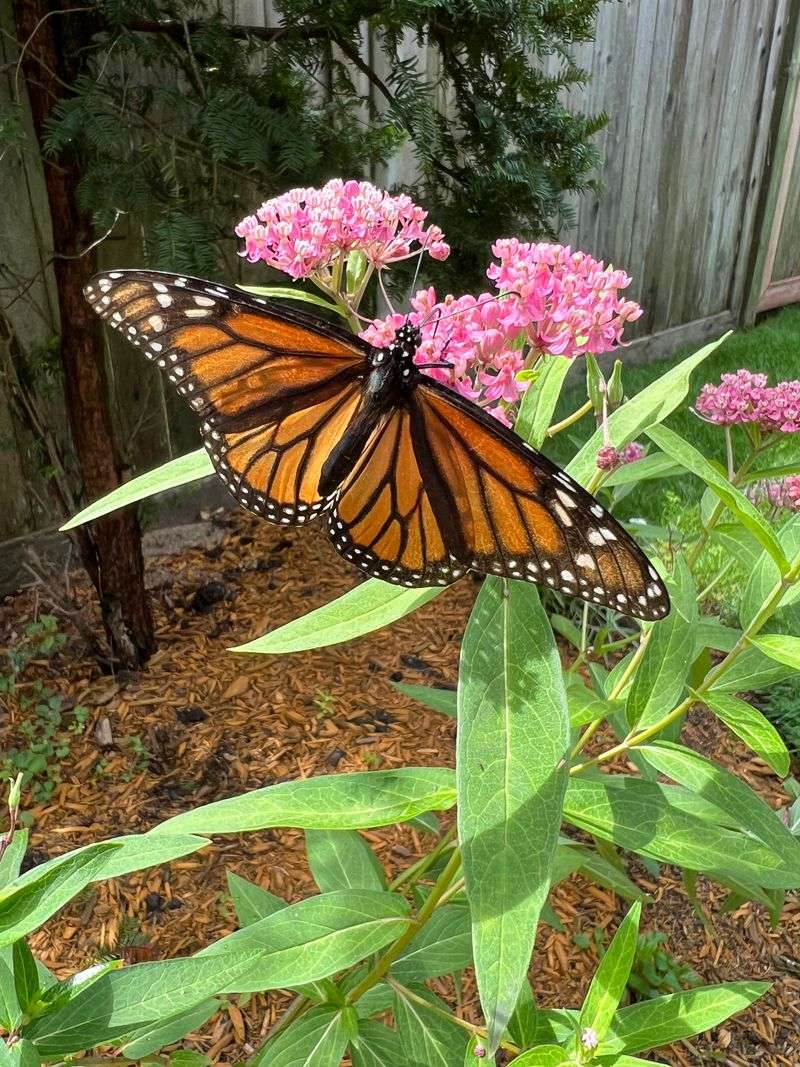
Asclepias incarnata thrives in moist to wet soil conditions that would stress most other plants, and it is a monarch host plant just like its common cousin.
The blooms are a deeper, richer pink than common milkweed, and they cluster at the top of upright stems that can reach four to five feet tall.
They open in July, right when monarchs are moving through Ohio, making the timing almost too perfect. Swamp milkweed is also a well-mannered garden citizen. Unlike common milkweed, it stays in a clump and does not spread aggressively through rhizomes.
Your Ohio Garden Changes Every Week. Your Plan Should Too.
Gardening in Ohio changes quickly throughout the season. Every Friday you’ll receive a simple weekly plan showing exactly what to plant, prune, fertilize, harvest, and protect so you never miss the right timing.
You can tuck it beside ornamental grasses, near a pond edge, or in any consistently moist bed.
It pairs beautifully with Joe Pye weed and New England aster for a late-season native planting that carries color from July into October. Butterflies, bees, and even hummingbirds make regular visits once the flowers open.
This plant is proof that a wet problem spot can become a wildlife hotspot.
It stands up straight, blooms reliably, and never needs staking. Swamp milkweed rises to the occasion even when its roots are underwater, which is more than most plants can say.
3. Butterfly Weed Loves Dry Sunny Beds
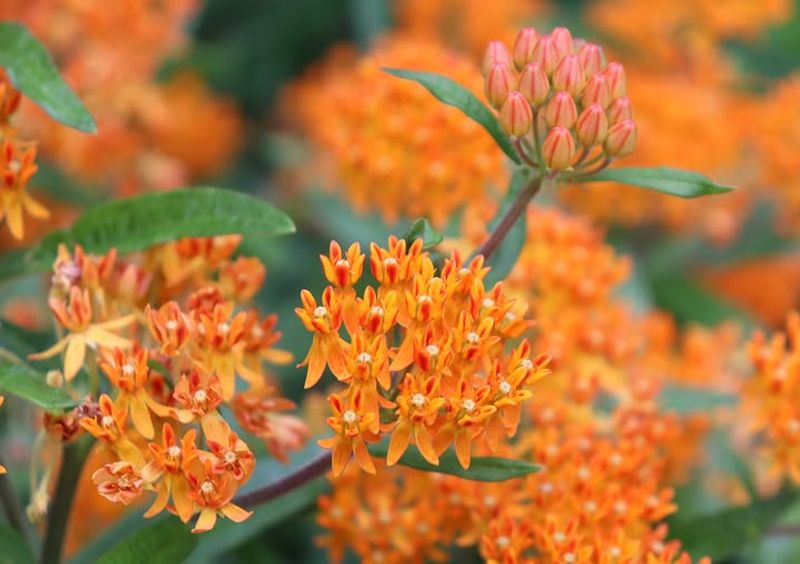
Fiery orange flowers in the middle of summer heat are butterfly weed doing exactly what it does best.
Asclepias tuberosa is the showiest of Ohio’s native milkweeds, and it earns every bit of attention it gets. The blooms are a deep, saturated orange that practically glows in afternoon sun, and they open right in the heart of monarch season.
This plant was built for tough spots.
It thrives in dry, well-drained soil and full sun, making it a top pick for raised beds, rocky slopes, sandy patches, or any area where other plants struggle.
The secret to its drought tolerance is a deep taproot that anchors it firmly and pulls moisture from far below the surface.
Because of that taproot, butterfly weed does not transplant well once established, so choose your spot carefully from the start.
Monarchs use it as a host plant, though females tend to prefer common milkweed for egg-laying. Still, the nectar is rich and plentiful, and adults visit it constantly.
Bumblebees and swallowtails pile on too, turning the plant into a buzzing social scene on warm July afternoons.
Give it excellent drainage and do not overwater. It actually performs worse in rich, moist soil, so skip the compost amendments in this bed.
Butterfly weed thrives on neglect in a way that very few plants can pull off, and once established, it comes back reliably for many years with almost zero effort from you.
4. Wild Bergamot Fuels Midseason Visits
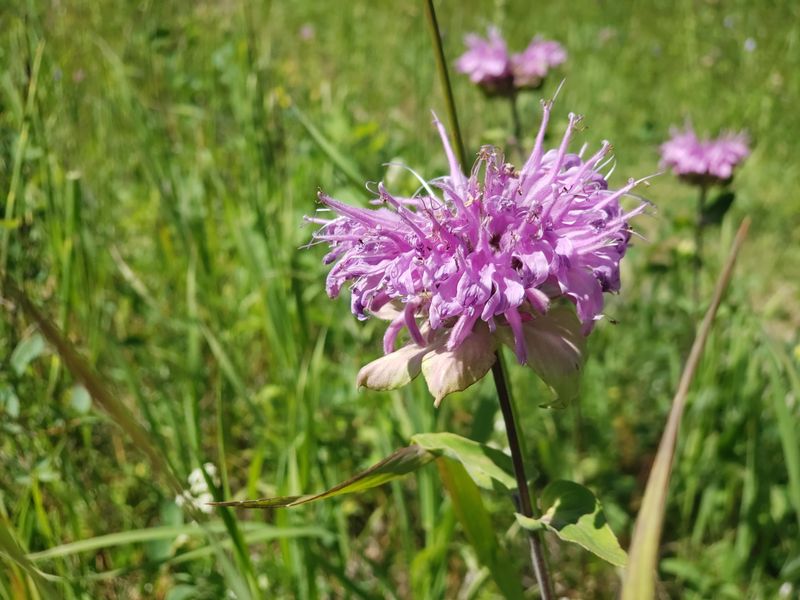
July in Ohio belongs to wild bergamot.
Monarda fistulosa bursts into bloom right at the height of summer, covering its stems with ragged, lavender-purple flower heads that are absolutely packed with nectar.
Monarchs passing through find it irresistible, and so does nearly every other pollinator in the region. Bumblebees, native bees, hummingbird moths, and swallowtails all compete for a spot on the blooms.
Wild bergamot grows in full sun and handles average to dry Ohio soils with ease.
It reaches two to four feet tall and spreads steadily through rhizomes, forming attractive colonies over time.
The minty, oregano-like fragrance is a bonus that comes through every time you brush past it. Plant it in drifts of three or more for the strongest visual and pollinator impact.
This plant is a true midseason workhorse.
While some natives are winding down by July, wild bergamot is just hitting its stride. It fills the gap between early spring bloomers and the late-season asters, giving pollinators a reliable nectar source exactly when monarchs need fuel for their journey south.
Wild bergamot is also resistant to deer and tolerates some drought once established.
It may develop powdery mildew late in the season, but that does not affect the blooms or the wildlife value. Cut it back after bloom to encourage a second flush of growth and fresh foliage.
5. Purple Coneflower Keeps Nectar Open
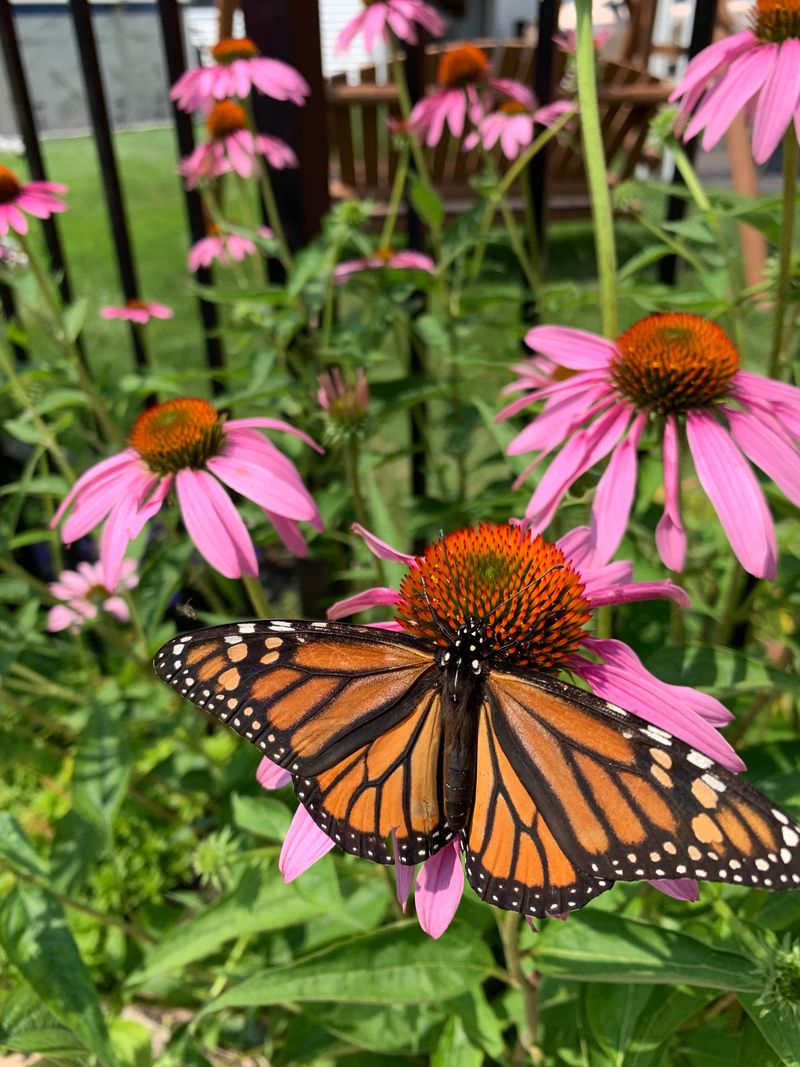
Few plants deliver as consistently as purple coneflower.
Echinacea purpurea starts blooming in June and keeps going well into August, giving monarchs and other pollinators a long, dependable nectar window.
The flowers are large, cheerful, and easy to spot from a distance, which is exactly how butterflies find them in the first place.
Each flower has a domed, spiky orange center cone surrounded by rosy-purple petals that sweep slightly downward.
Monarchs land on that center cone and feed in full view, making this one of the most satisfying plants to watch in a summer garden. The blooms hold up well in heat and do not need deadheading to keep producing.
In fact, leaving the seed heads standing after bloom feeds goldfinches and other birds through fall and winter.
Purple coneflower grows in full sun to light shade and adapts to a wide range of Ohio soils.
It is drought-tolerant once established and spreads slowly by seed and division. A single plant becomes a small colony over several years without ever becoming invasive. Space plants about eighteen inches apart for good air circulation.
It pairs well with wild bergamot, blazing star, and black-eyed Susan for a classic Ohio native border.
It requires almost no intervention once it finds its footing, and it rewards that hands-off approach with seasons of color and wildlife activity. Echinacea is a real cone-noisseur of low-maintenance gardening.
6. Dense Blazing Star Draws Strong Traffic
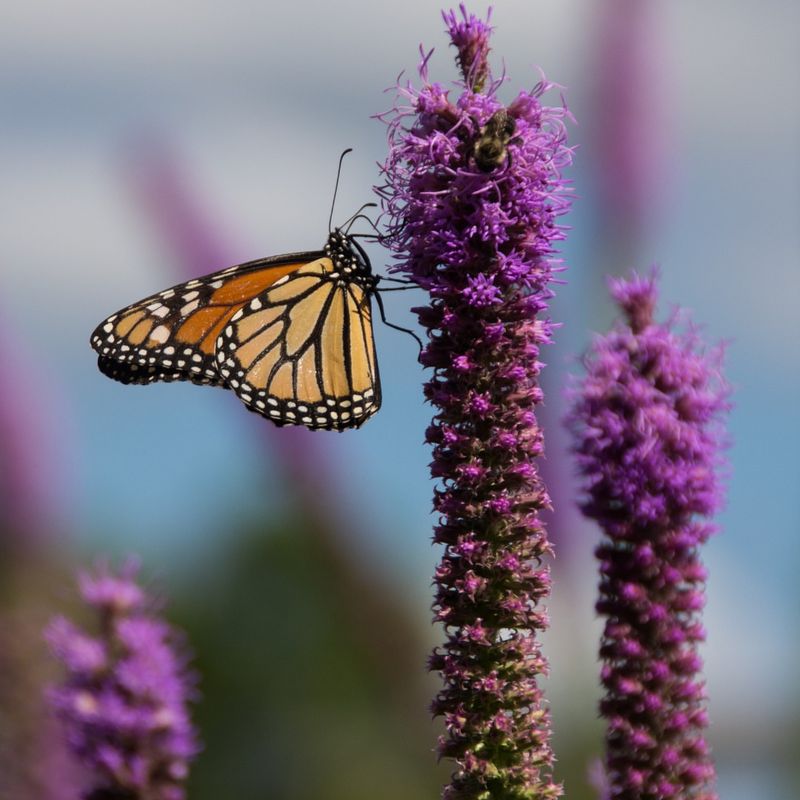
Tall, vertical, and electric purple, dense blazing star is the plant that stops monarchs mid-flight.
Liatris spicata sends up striking flower spikes that can reach three to five feet tall, and the blooms open from the top down, which is the opposite of most flowering plants.
That unusual blooming pattern extends the nectar window across several weeks in July and August.
Monarchs are strongly attracted to blazing star. Research from Monarch Watch and the Xerces Society highlights Liatris species as some of the most visited nectar plants during the monarch fall migration.
When you plant a cluster of blazing star, you are essentially hanging out a welcome sign that monarchs can see from a distance. Bumblebees and swallowtails crowd in alongside them.
Dense blazing star grows from a corm and prefers full sun with well-drained to average soil.
It handles Ohio summers without complaint and does not need staking despite its height. Plant corms about three inches deep in spring, or install potted plants now for blooms this season.
Space them twelve to fifteen inches apart and plant in groups of five or more for maximum visual and pollinator impact.
This plant looks stunning in mass plantings, mixed borders, or as a vertical accent behind lower-growing natives.
Once established, it comes back reliably each year with zero fuss, making it one of the most rewarding plants in any Ohio butterfly garden. Blazing star really does know how to make an entrance.
7. Joe Pye Weed Feeds Big Butterflies
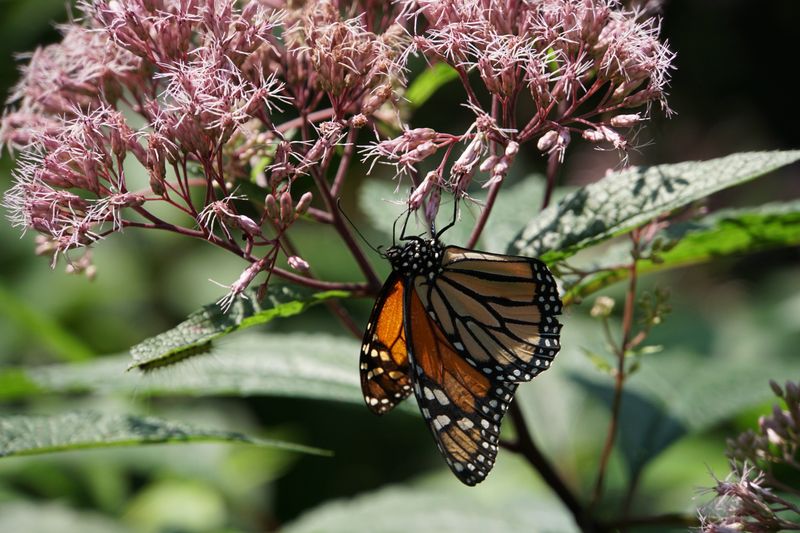
Some plants are subtle. Joe Pye weed is not one of them.
Eutrochium purpureum rises to six, eight, even ten feet tall, and its massive domed flower clusters in dusty mauve-pink are visible from across the yard.
Large butterflies, especially monarchs and giant swallowtails, gravitate toward it because the blooms are wide, flat, and easy to land on.
Joe Pye weed blooms from mid-July into September, which gives it exceptional value for monarchs moving through Ohio on their southward journey.
The nectar is abundant and the plant produces a steady supply of fresh blooms as older ones fade. It thrives in moist to average soil and tolerates part shade, making it more flexible than many other tall natives.
Plant it at the back of a border, along a fence, beside a pond, or in a naturalized area where its height becomes an asset rather than a problem.
It pairs naturally with swamp milkweed, New England aster, and ironweed for a dramatic late-season native planting. The stems are sturdy and do not need staking even in wind.
Joe Pye weed also supports native bees, beetles, and beneficial wasps in large numbers.
Cut plants back by half in early June to reduce final height if needed, a technique called the Chelsea chop. Wildlife value this high rarely comes with such minimal maintenance requirements.
8. New England Aster Extends The Season
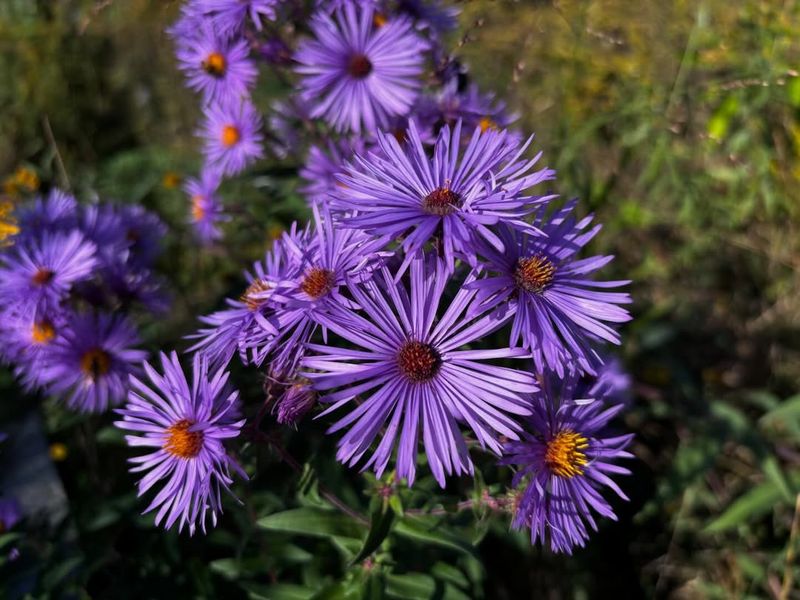
After the summer rush fades, New England aster steps in and keeps the monarch buffet open.
Symphyotrichum novae-angliae blooms from September into October, catching the last wave of monarchs as they push south through Ohio toward their overwintering grounds in Mexico.
For a butterfly running low on fuel at the end of a long journey, a patch of asters in full bloom is nothing short of a well-timed miracle.
The flowers are a vivid violet-purple with bright yellow centers, and they cover the plant so densely that the foliage nearly disappears beneath them.
New England aster grows three to six feet tall in full sun and moist to average soil. It spreads steadily through self-seeding and root division, so you can split established clumps every few years to share with neighbors or expand your own planting.
Plant it now so it has time to root in before fall.
It may not bloom heavily in its first season, but by year two it will reward your patience with a spectacular show. Pair it with Joe Pye weed and blazing star for a border that carries wildlife value from July all the way through October.
New England aster also supports migrating bees that need late-season nectar before winter.
It is a true season extender in every sense, and no Ohio monarch garden is truly complete without at least a small patch of it anchoring the fall end of the season.