What To Do With Your Florida Plumeria In July Before The Blooms Stop
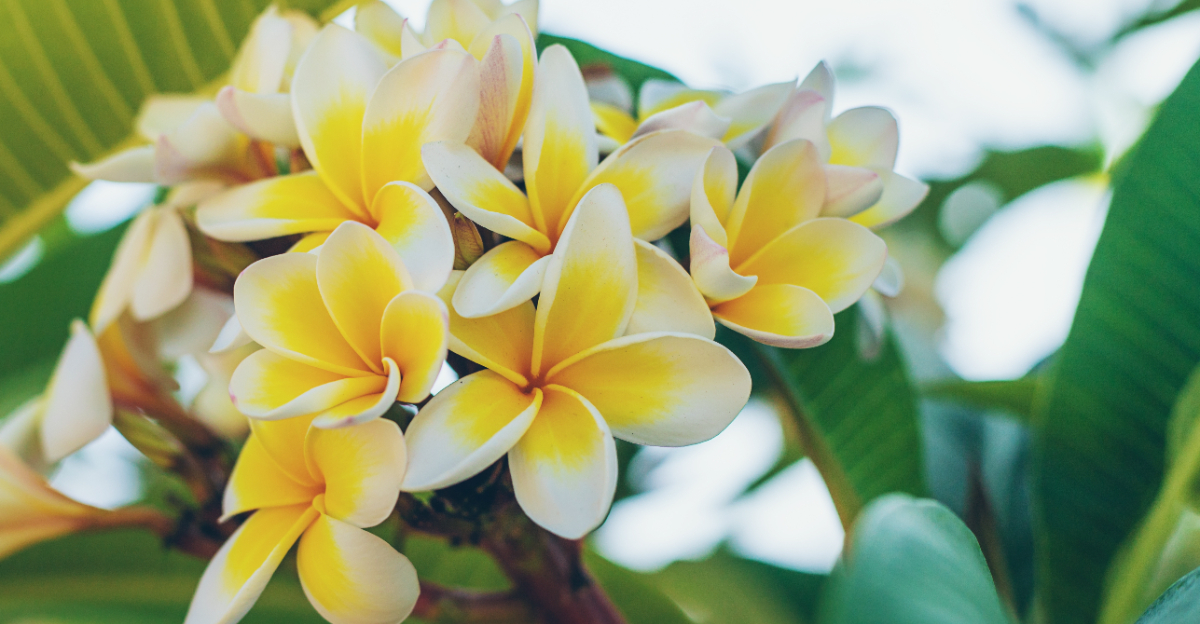
Plumeria in full July bloom is one of the better sights a Florida yard offers. That fragrance, that color, that unapologetic tropical energy.
Most homeowners look at it and assume the plant has everything figured out. It does not.
Not in July. This is the month plumeria needs something specific, and most Florida gardeners miss the window entirely because nothing about a blooming plant signals urgency.
The blooms keep coming, everything looks fine, and then August arrives with noticeably less of both. By the time the thinning is obvious, the window has closed.
July is when plumeria makes decisions about how long it keeps performing. A gardener who knows how to influence those decisions gets a completely different second half of summer than one who stepped back and waited.
What needs doing right now is straightforward. The timing is the whole thing.
1. Give It Full Sun Without Extra Stress
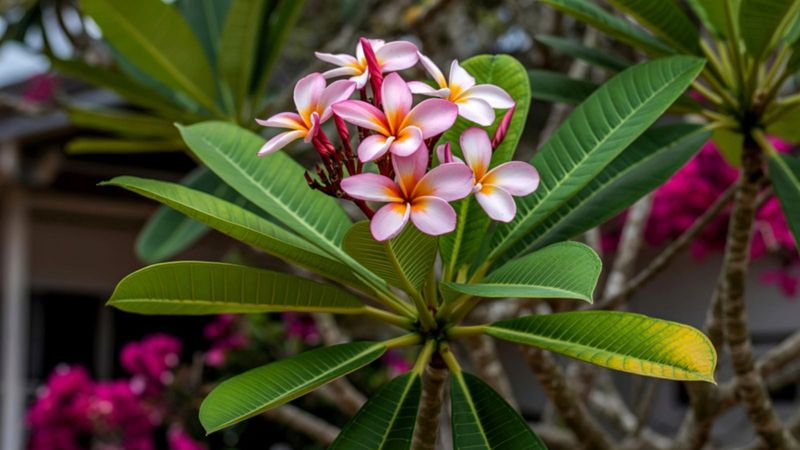
Picture your plumeria soaking up a long, bright July morning on the south side of your yard. That kind of full sun is exactly what this plant loves, and it is one of the biggest reasons it blooms so well in warm climates.
Plumeria generally performs best with at least six to eight hours of direct sunlight each day. Less light almost always means fewer flowers.
July heat can feel brutal, but plumeria handles warmth well when everything else is in balance. The real stress often comes from other factors, like soggy roots, reflected heat off concrete walls, or sudden moves from a shady corner to blazing afternoon sun.
Containers near dark pavement or south-facing walls can get extra hot, which may cause leaves to look dull or droopy even when watering is fine.
If your plant needs more light, shift it gradually over a week or two rather than moving it all at once. Sudden exposure to harsh sun can scorch tender leaves and new growth tips.
In-ground plants are easier since they stay put, but watch for nearby trees or structures casting afternoon shade that creeps in as summer progresses.
Protecting steady sun exposure right now is one of the simplest ways to support blooms before the season winds down.
2. Water Deeply Then Let Soil Drain
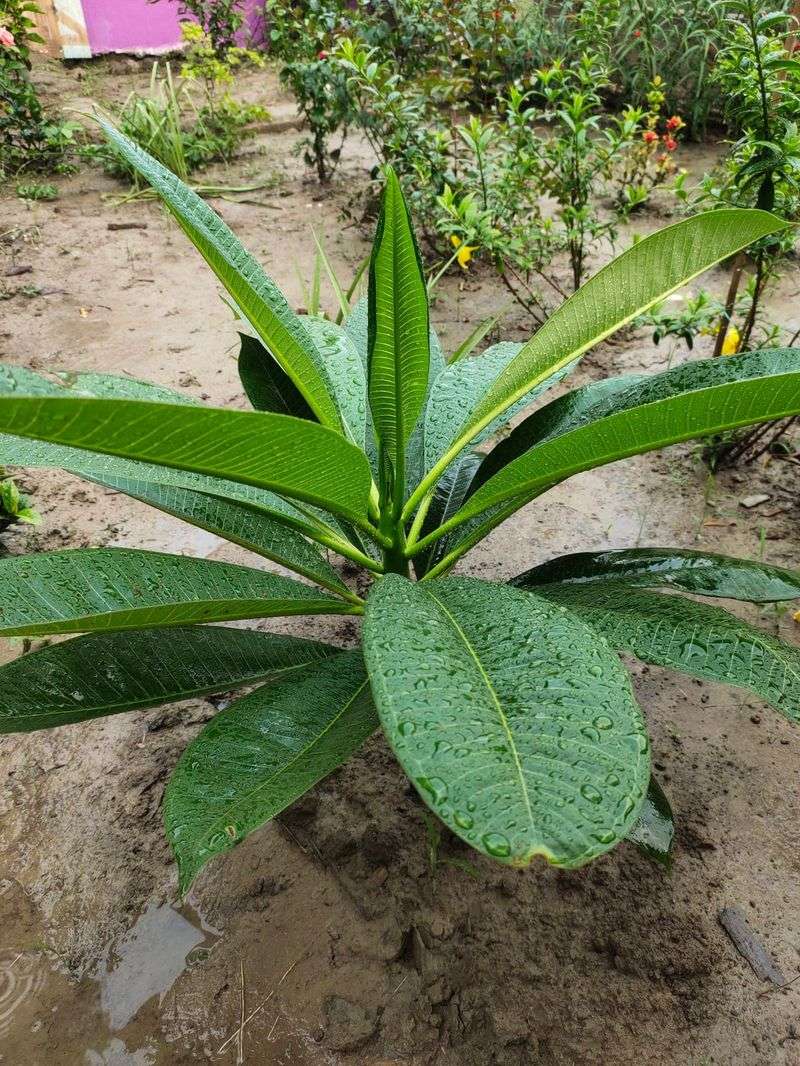
One of the most common mistakes plumeria owners make in summer is watering a little bit every single day. Light, frequent watering keeps only the top inch of soil moist, which encourages shallow roots and can lead to problems during dry spells.
Deep watering once or twice a week, depending on conditions, encourages roots to grow downward and stay healthier overall.
After watering, the soil needs to drain completely before the next round. Plumeria roots need both moisture and air to function well.
Soggy soil cuts off oxygen to the roots, which weakens the plant even when plenty of water is available. Sandy soils common in many parts of this state drain quickly, so those plants may need water sooner than plants in denser soil mixes.
Container plants dry out faster than in-ground plants, especially during hot July afternoons with low humidity between storms. Before reaching for the hose, press a finger two inches into the soil.
Your Florida Garden Changes Every Week. Your Plan Should Too.
Gardening in Florida changes quickly throughout the season. Every Friday you’ll receive a simple weekly plan showing exactly what to plant, prune, fertilize, harvest, and protect so you never miss the right timing.
If it still feels moist, wait another day. After a heavy summer rainstorm, check your pots to make sure water is draining freely through the holes at the bottom.
Saucers that collect standing water under containers are a quiet problem worth fixing right away. Good drainage is just as important as watering correctly.
3. Feed Lightly During Active Growth
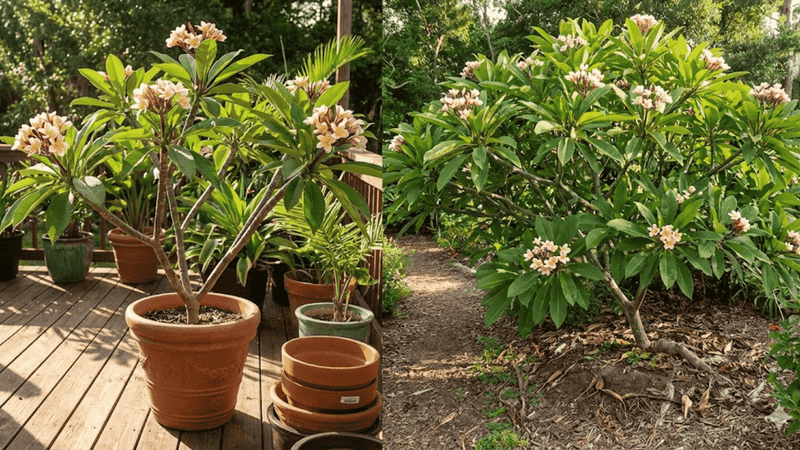
Feeding plumeria during the growing season can support healthy leaves and steady flowering, but more fertilizer does not equal more blooms.
Heavy feeding, especially with high-nitrogen products, pushes the plant to grow lots of leafy green growth instead of flowers.
That trade-off is not worth it in July when you want the plant focused on its current bloom cycle.
A fertilizer with a higher middle number, the phosphorus value, is often suggested for flowering plants. Products labeled for blooming tropicals or with a balanced ratio can work well when applied according to the label directions.
The label is not just a suggestion. Following it carefully helps you avoid burning roots or throwing off the plant’s nutrient balance at a sensitive time.
Feeding should always be paired with proper watering and good drainage. Applying fertilizer to dry soil or waterlogged roots can cause more harm than help.
A light application every four to six weeks during active growth is a reasonable starting point for most plumeria in warm climates. Skip feeding if the plant looks stressed, if roots seem waterlogged, or if a major storm just passed through.
Steady, moderate feeding supports the plant without pushing it into overdrive. Patience and consistency matter far more than aggressive fertilizer schedules this time of year.
4. Skip Hard Pruning While Buds Form
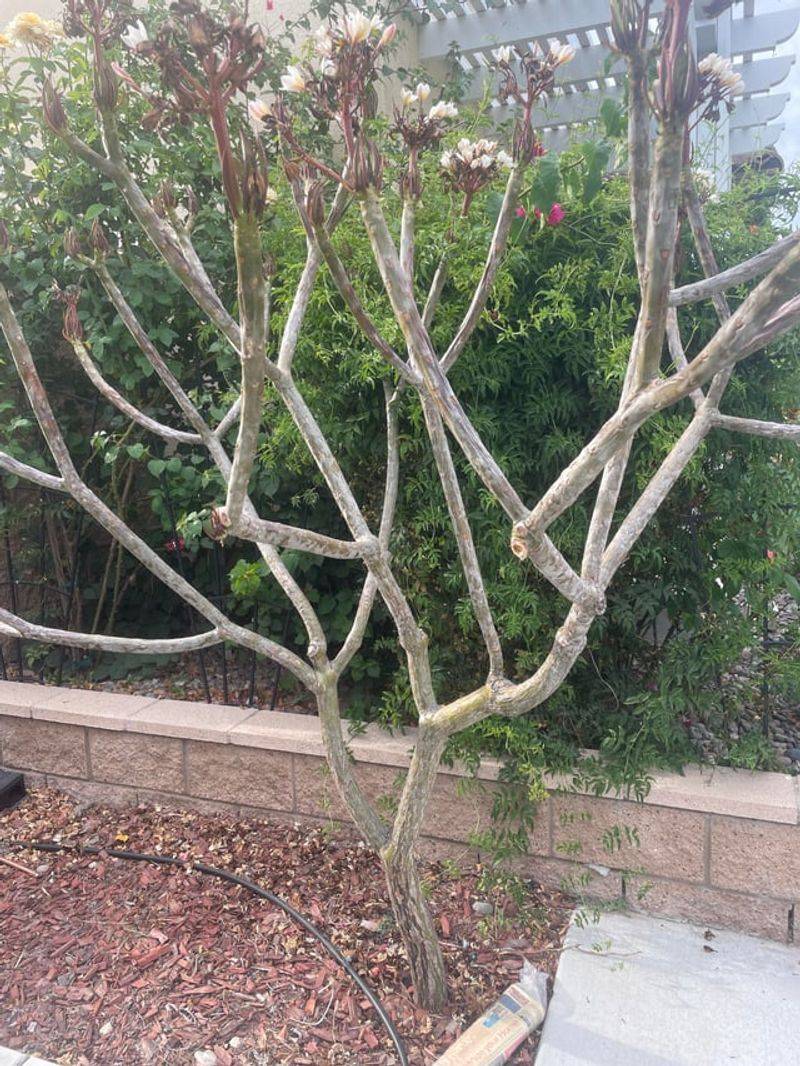
July is not the month to grab your pruning shears and start shaping your plumeria. Flower clusters on plumeria grow from the tips of branches, which means cutting those tips off removes the very spots where blooms are forming or will soon appear.
Hard pruning right now is one of the fastest ways to reduce your flower count for the rest of the season.
That said, light cleanup is a different story. If a branch is clearly broken, damaged by wind, or showing signs of disease, removing it carefully with clean tools makes sense.
The goal is to protect the overall health of the plant without sacrificing productive growth. Sterilizing your cutting tool before use helps prevent spreading any pathogens from one cut to another.
Resist the urge to shape the plant for looks while it is actively blooming or building buds. That kind of aesthetic pruning is better saved for late fall or early winter when the plant has slowed down and dropped its leaves.
Right now, every healthy branch tip is a potential flower cluster, and protecting those tips is one of the easiest things you can do to keep blooms coming. If a branch looks healthy and is pointing in an odd direction, leave it alone until the season ends.
Your patience will show in the flowers.
5. Watch Containers Before They Dry Out
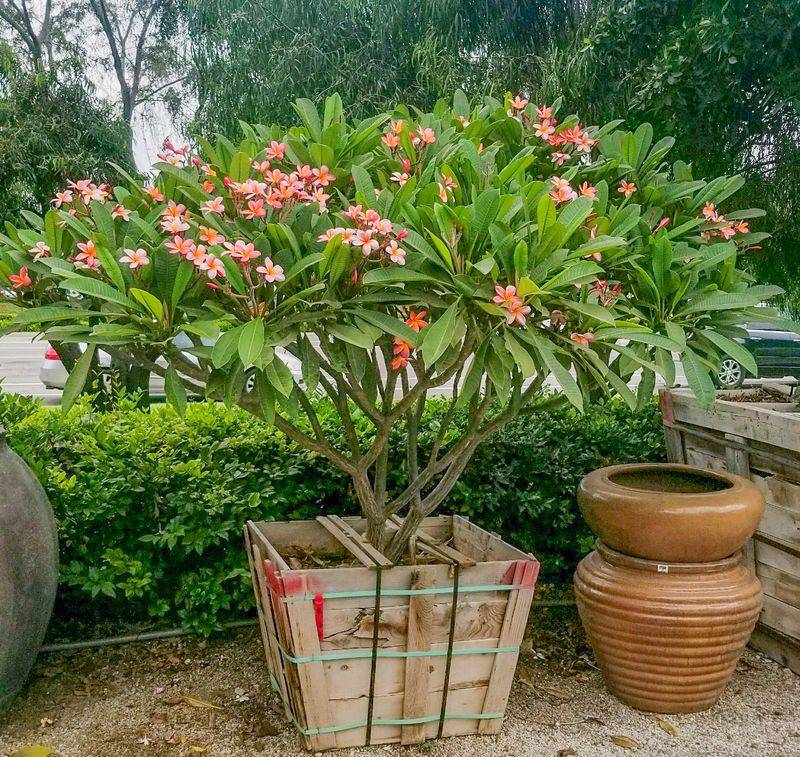
Container-grown plumeria has a trickier July than in-ground plants simply because pots heat up fast and dry out faster.
A small or dark-colored pot sitting on a concrete patio in direct afternoon sun can reach temperatures that stress roots even when the plant looks fine from the outside.
Checking your containers more often during hot stretches is a smart habit to build this month.
Rather than watering on a fixed schedule, use physical cues to guide you. Lift the pot.
A lightweight pot usually means the soil is dry. Press two fingers about two inches into the potting mix.
Dry and crumbly means it is time to water. Moist and cool means you can wait.
Watching the leaves also helps since slight drooping in the late afternoon can signal mild drought stress, though some afternoon droop in intense heat is normal.
Drainage holes are non-negotiable for container plumeria. Without them, water sits at the bottom of the pot and creates the same soggy root conditions that cause problems in poorly drained ground soil.
If your pot sits in a saucer, empty that saucer after each watering session. Pot size matters too.
A pot that is too small dries out extremely fast, while one that is too large can hold moisture longer than the roots need. Matching pot size to plant size helps keep moisture levels more consistent.
6. Check Leaves For Rust And Pests
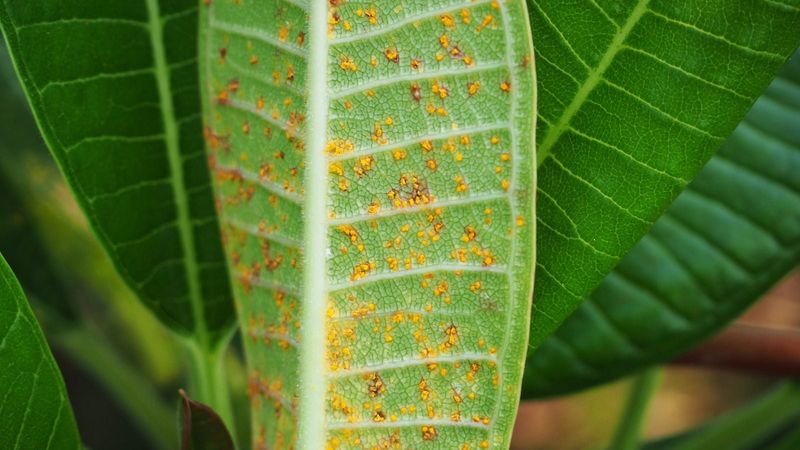
July humidity creates conditions where leaf problems can sneak up quickly. Plumeria rust, caused by the fungus Coleosporium plumeriae, is one of the most common issues seen on plumeria in warm, humid regions.
It shows up as powdery orange or yellow spots on the undersides of leaves. Heavily infected leaves may drop early, which weakens the plant over time without directly stopping blooms right away.
Removing and bagging affected leaves before they drop can help slow the spread of rust spores. Avoid composting infected material.
If treatment is needed, consult UF/IFAS resources or your local county extension office for current, approved options. Do not reach for random sprays or homemade mixtures without confirming they are safe and effective for this specific issue.
Beyond rust, keep an eye out for mites, scale insects, whiteflies, and mealybugs. Check the undersides of leaves, new stem growth, and the joints where leaves meet branches.
Sticky residue on leaves or nearby surfaces can be a sign of pest activity. Catching problems early makes management much easier and less disruptive to a blooming plant.
Not every yellow leaf or small spot is a crisis. Some natural leaf aging is normal in summer.
Focus on patterns, widespread discoloration, or visible insects before deciding any treatment is needed.
7. Keep Roots Warm But Not Soggy
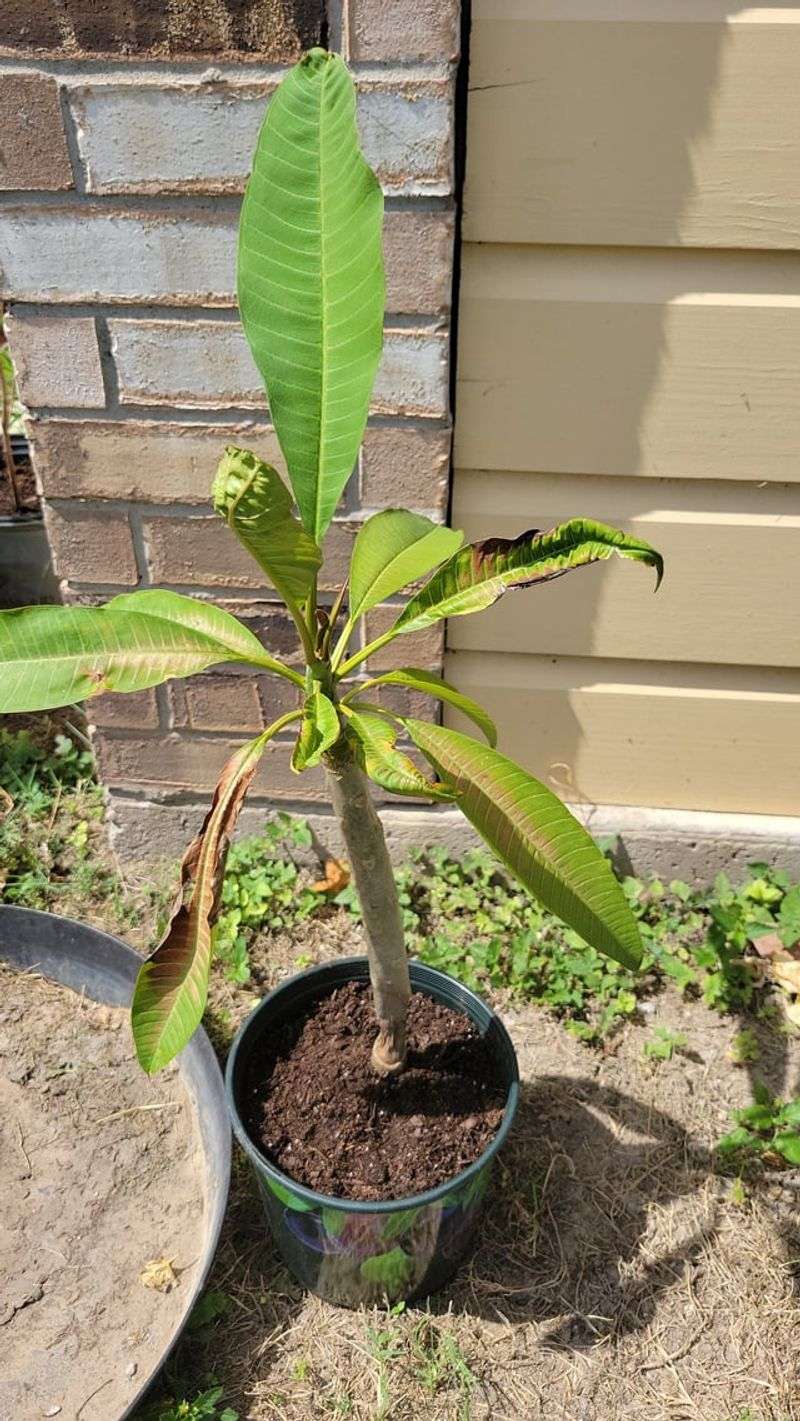
Healthy roots are the quiet engine behind every beautiful plumeria bloom. The plant thrives in warm soil, which is one reason it does so well in this state during summer.
Warm roots that stay wet are a recipe for root rot. That condition weakens the plant from the ground up and shows itself in drooping leaves, soft stems, or a sudden stop in flowering.
Well-drained soil is the foundation of good root health. Sandy soils found across many parts of the Sunshine State are naturally fast-draining, which plumeria appreciates.
In areas with heavier clay or compacted soil, amending the planting area or using raised beds can improve drainage significantly. For container plants, use a coarse potting mix designed for cacti or succulents, or blend in perlite to improve aeration.
Avoid piling mulch directly against the base of the stem. Mulch is helpful for conserving soil moisture and moderating temperature around roots, but it should be kept a few inches away from the trunk.
Blocked drainage holes in containers are another silent root problem worth checking monthly. Standing water in a saucer, compacted soil around the base, and heavy clay all work against root health in similar ways.
Strong roots in warm, airy, well-drained soil give the plant the foundation it needs to keep pushing blooms through the rest of the season.
8. Protect Late Blooms With Steady Care
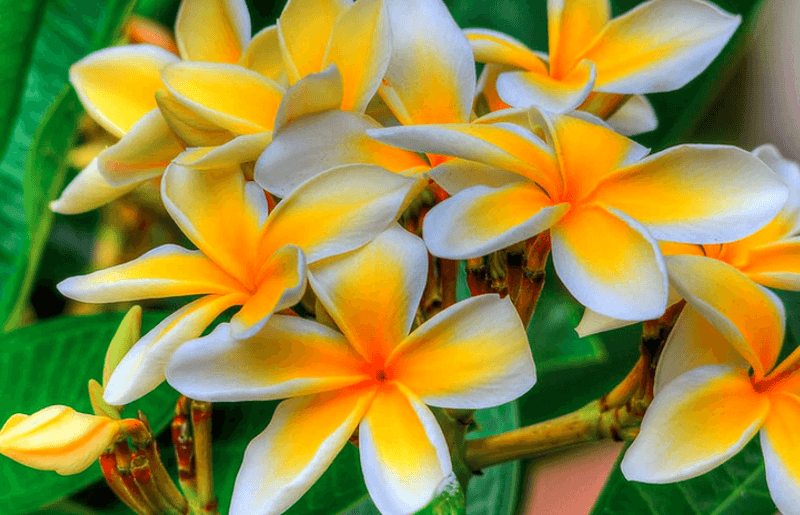
Keeping plumeria blooming deep into summer and beyond is less about dramatic fixes and more about staying consistent with the basics.
Steady light, careful watering, occasional light feeding, and regular pest checks create the kind of stable environment where blooms keep forming.
Sudden changes, whether in location, watering schedule, or feeding routine, can stress the plant and slow flowering even when conditions seem good.
Bloom duration varies quite a bit depending on the species, cultivar, overall plant health, and what the weather decides to do. Some varieties bloom heavily for a few weeks at a time, then take a short rest before pushing out another flush.
Others hold blooms longer. Observing your specific plant week by week teaches you its natural rhythm, which makes it easier to respond when something seems off.
After a heavy storm, check the plant for broken tips, waterlogged soil, and any pest activity that wet conditions may have encouraged. Adjust watering to reflect how much rain actually fell.
Avoid the temptation to rescue a plant that looks temporarily rough after a storm by overwatering or feeding heavily. Most plumeria bounce back quickly when conditions stabilize.
Steady, thoughtful care through July gives your plant the best chance of carrying blooms into late summer. Full sun, good drainage, light feeding, and a watchful eye are the real tools that keep plumeria flowering longer.