Why Michigan Hydrangea Leaves Scorch On One Side First During July Heat
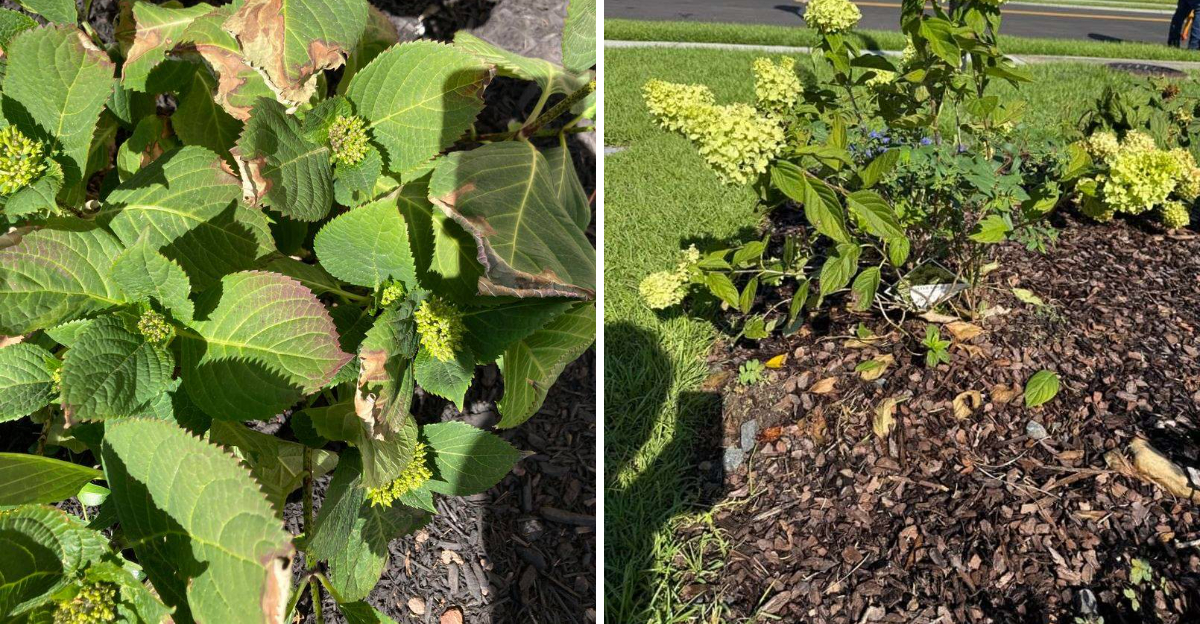
Hydrangea scorch that appears consistently on one side of a plant before the other is delivering more specific information than general heat stress explanations account for.
The direction of damage, whether it tracks the afternoon sun, faces a reflective surface, or follows the side closest to hardscaping, points toward a distinct cause that requires a distinct response.
Michigan’s harsh July sun bakes specific sides of a plant in ways morning light never does. Combine that intense afternoon heat with wind and dry roots, and you get a one-sided stress pattern that looks mysterious until you look closely at your garden’s layout.
The fix almost always becomes obvious once the cause is properly identified.
1. The Sunny Side Gets Hit First
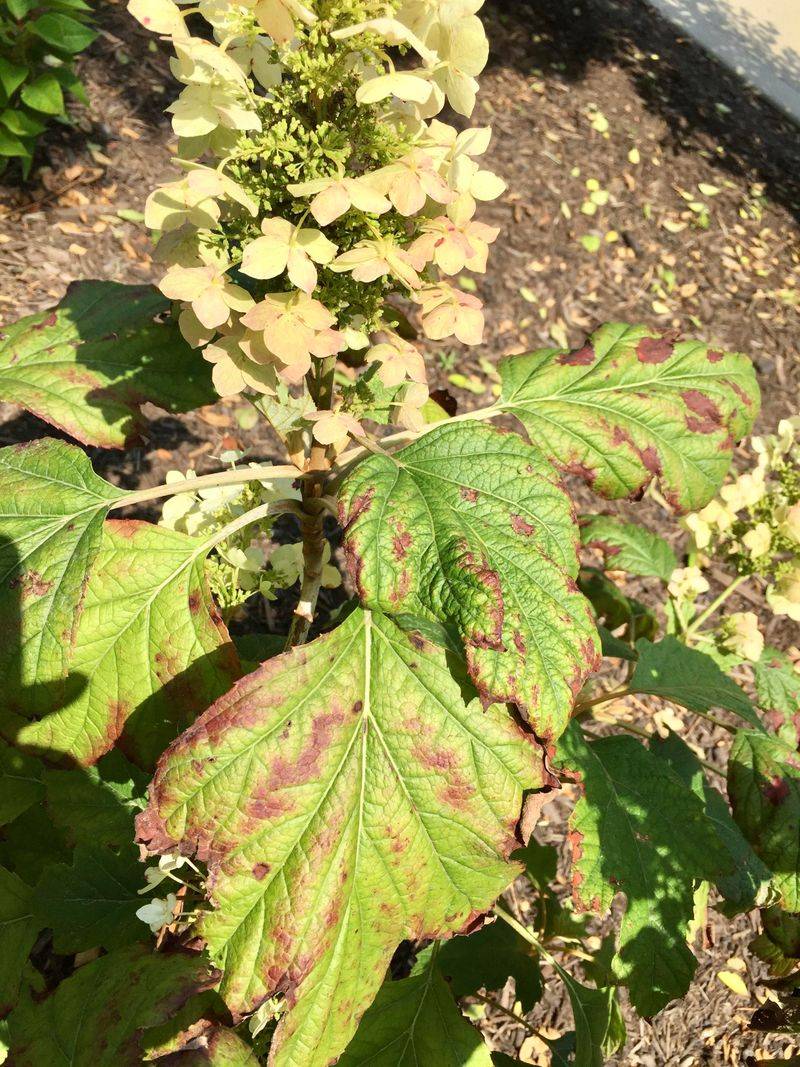
Walk around your hydrangea on a hot July afternoon and you will probably notice something interesting. The side facing west or southwest, where the sun is strongest in the afternoon, looks much worse than the shaded side.
That is not a coincidence at all. Hydrangeas, especially bigleaf and oakleaf varieties, are naturally built for dappled light and partial shade.
Their broad, soft leaves lose water through tiny pores called stomata, and when the sun beats down hard on one side for hours, that side simply cannot hold onto moisture fast enough.
The leaves on the sun-facing side heat up, dry out, and begin to turn brown at the edges while the shaded side stays cool and green.
Michigan July days can reach the upper 80s or even low 90s with dry stretches that make this worse.
The afternoon sun angle is lower and more direct than morning sun, which means it hits leaves at a sharper angle and transfers more heat per square foot. Morning sun is gentler and usually dries off dew without cooking the foliage.
Moving your hydrangea is not always practical, but adding shade cloth on the west side during peak summer heat can make a real difference. Planting taller perennials or placing a garden umbrella nearby for afternoon shade are easy fixes too.
Watering deeply in the early morning gives your plant a full tank of moisture before the heat arrives, helping the exposed side survive those tough afternoon hours much better.
2. Reflected Heat Raises Stress On One Side
Here is something that surprises a lot of gardeners. Your hydrangea might be scorching not just from the sun above, but from heat bouncing off surfaces right next to it.
Walls, driveways, patios, and gravel beds all absorb heat during the day and then radiate it back outward, sometimes for hours after the sun has shifted.
When a hydrangea is planted near white vinyl siding, light-colored brick, concrete pavement, or even a gravel path, one side of that shrub sits in a kind of heat pocket.
The reflected light and warmth on that side can push leaf temperatures several degrees higher than the other side of the same plant.
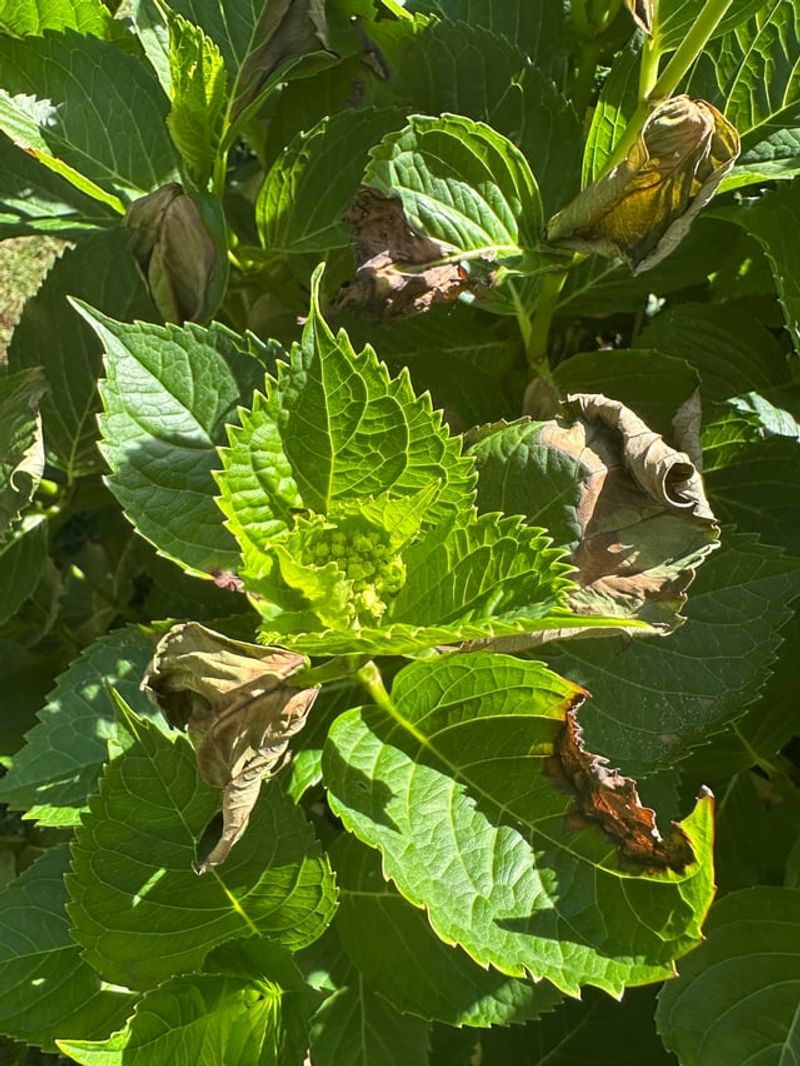
Over a few hot July days, those extra degrees add up fast, and the leaves nearest the reflective surface start showing brown, crispy edges first.
Your Michigan Garden Changes Every Week. Your Plan Should Too.
Gardening in Michigan changes quickly throughout the season. Every Friday you’ll receive a simple weekly plan showing exactly what to plant, prune, fertilize, harvest, and protect so you never miss the right timing.
This is especially common in Michigan suburban yards where homes have south or west-facing walls that bake all afternoon. The wall stores heat, the hydrangea sits right beside it, and the combination is tough on sensitive foliage.
Even stone garden borders or decorative gravel mulch can create a mini heat zone at ground level.
Fixing this does not have to be complicated. Moving the plant to a spot with more breathing room helps most.
If that is not an option, painting a wall a darker color actually absorbs rather than reflects heat, reducing bounce-back.
Adding a layer of organic mulch on the hot side also helps buffer soil temperature and keeps roots cooler when reflected heat is unavoidable.
3. Wind Pulls Moisture From The Exposed Side
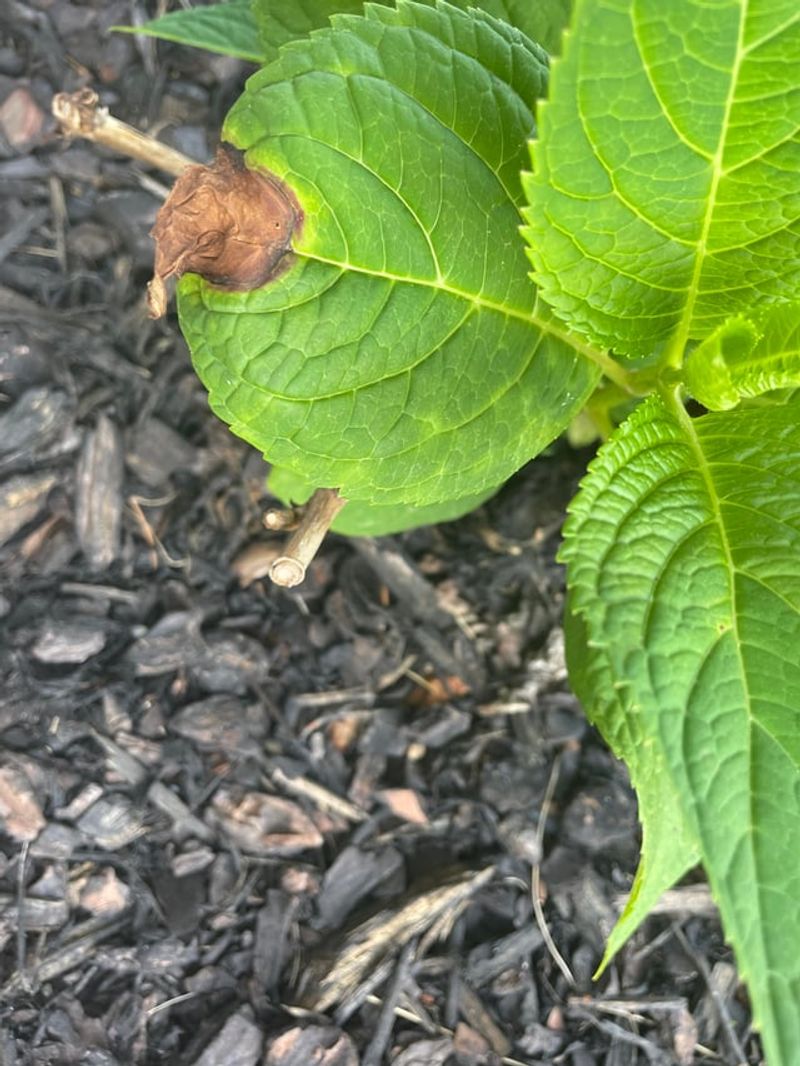
Hot wind is one of the most underrated stressors for garden shrubs. Most people think about sun and heat, but dry July wind can pull moisture right out of hydrangea leaves faster than the roots can replace it.
The result shows up first on whichever side of the plant faces the breeze. Michigan can get some real wind during summer, especially in open yards, near driveways, at the corners of houses, or in spots where gaps between buildings create a tunnel effect.
The side of your hydrangea that faces this moving air loses water through its leaves at a much faster rate than the sheltered side.
On a hot, breezy day, that exposed side can look wilted or scorched by mid-afternoon even if you watered just that morning.
This is called transpiration stress, and it is very real. The plant pulls water up from the roots, but when wind and heat combine, the demand outpaces the supply.
Leaf edges dry out, turn tan or brown, and stay that way even after the wind dies down. The shaded, sheltered side of the same plant often looks perfectly fine, which makes the damage look very one-sided and confusing.
Windbreaks can help a lot here. Planting a row of taller shrubs or ornamental grasses upwind of your hydrangeas creates a natural buffer.
Temporary burlap screens work well during the hottest weeks too. Watering early in the day gives the plant maximum hydration before wind stress peaks in the afternoon, reducing the chance of visible scorch on the exposed side.
4. The Root Zone Is Drier On One Side
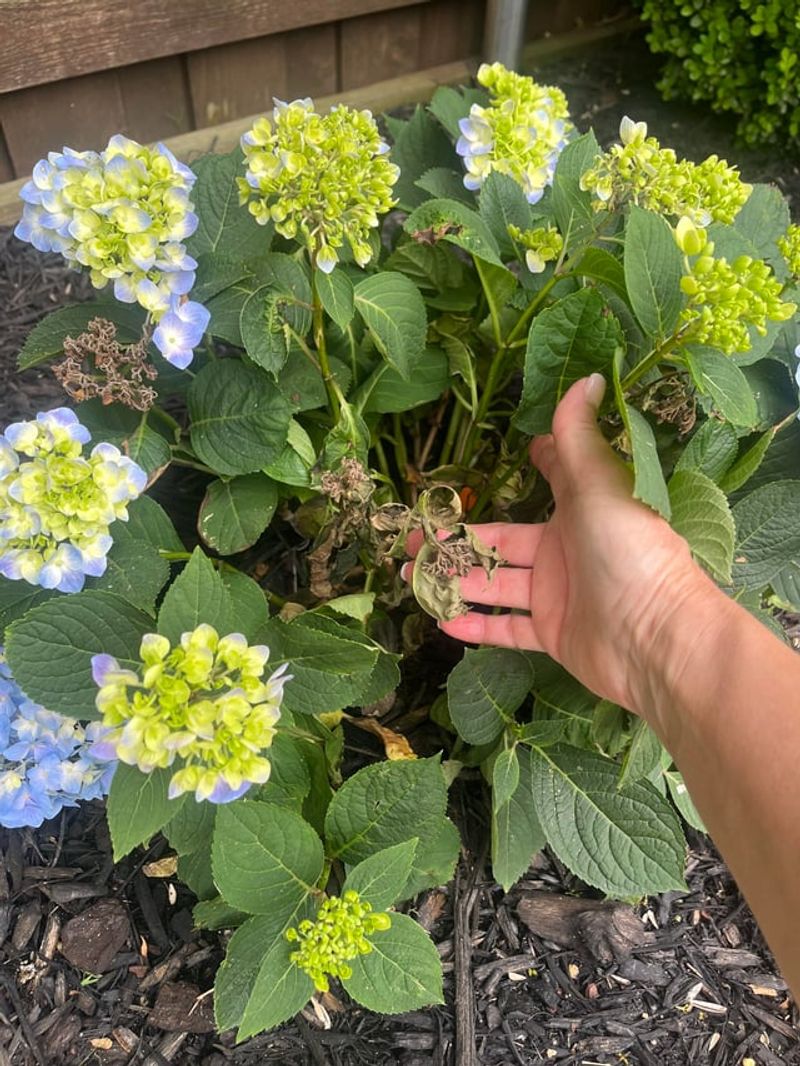
Not all soil around a hydrangea dries out at the same rate. Even if you water your plant regularly, one side of the root zone might stay much drier than the other, and that hidden imbalance shows up in the leaves before you ever think to check the soil.
Several things cause uneven soil moisture. A large tree nearby might have roots extending under your hydrangea, soaking up water before the shrub can use it.
A roof overhang can block rain from reaching one side entirely, leaving that section of soil much drier than the open side. Slopes send water running away before it soaks in.
Sandy soil patches drain faster than clay sections. Even uneven watering habits, like always watering from the same angle, can leave one side consistently thirsty.
The tricky part is that you cannot see this from the surface. The top inch of soil might feel fine or even a little damp, but six inches down on the dry side, the roots are struggling.
Those stressed roots cannot pull enough water to keep the leaves on that side cool and hydrated, so the foliage on the dry side scorches first while the better-watered side looks healthy.
Checking soil moisture correctly means pushing a finger or a moisture meter several inches deep in multiple spots around the entire plant, not just one side. If one area is consistently dry, focus extra watering there.
A soaker hose looped all the way around the base of the plant is one of the best ways to even out moisture across the whole root zone.
5. Lawn Sprinklers Are Missing The Shrub Roots
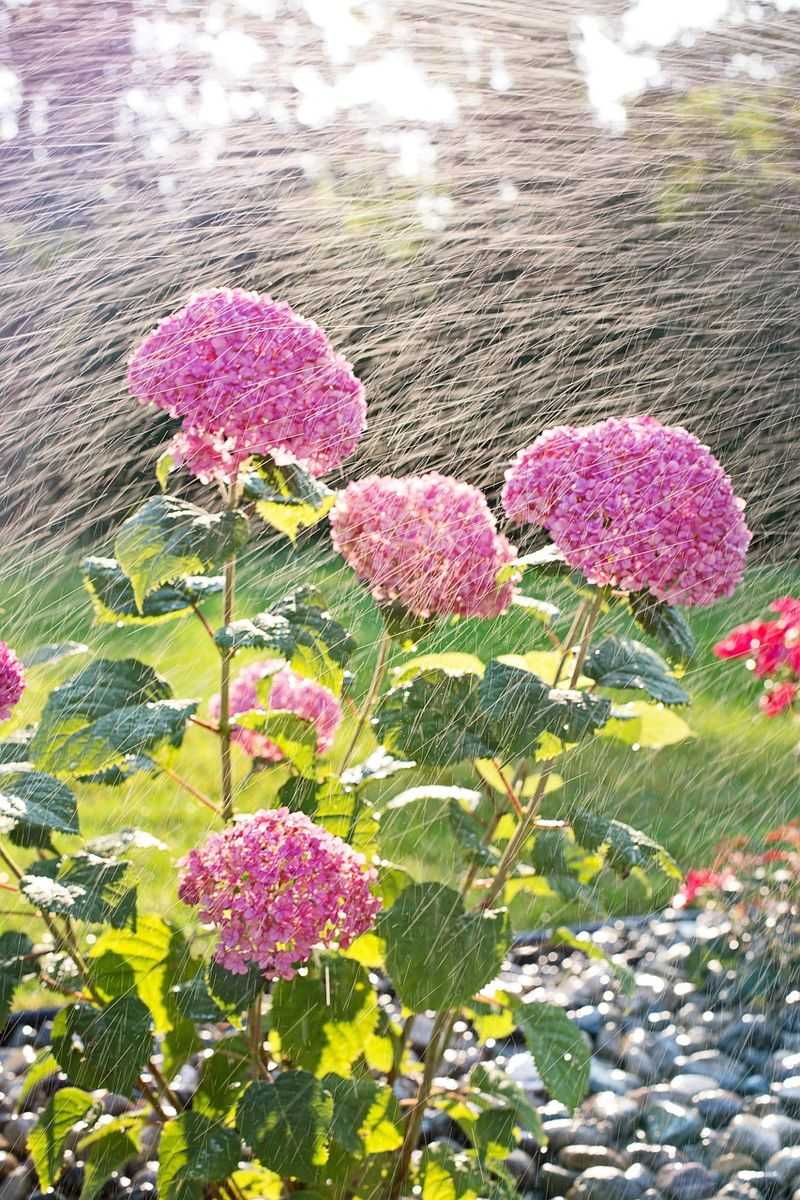
Your lawn might look perfectly green and watered, but your hydrangea is showing brown edges on one side. Sound familiar?
This is more common than most people realize, and the culprit is often the irrigation system itself.
Lawn sprinklers are designed to cover grass, not garden beds. The spray pattern might reach the outer leaves of your hydrangea, wetting the foliage but barely touching the soil beneath the shrub.
Roots need water to soak in slowly and deeply, at least six to eight inches down, to actually benefit the plant.
A quick spray on the leaves might look like watering, but it evaporates fast and does almost nothing for the root system, especially on the side of the plant that is slightly farther from the sprinkler head.
On a hot July day, wet leaves in full sun can even make things worse by creating a brief magnifying effect that intensifies burning on the exposed side.
The side of the shrub closest to the sprinkler might get wetter foliage but still have dry roots, while the far side gets neither. The result is one-sided stress that shows up as scorch, wilting, or browning tips.
Switching to a soaker hose or drip line placed in a circle around the base of the hydrangea solves this problem cleanly. Run it slowly for 30 to 45 minutes to let water soak deep into the root zone.
If you use a regular hose, set it on a trickle and leave it near the base for a good long soak rather than a quick splash, and do it in the early morning for best results.
6. New Roots Cannot Keep Up With July Heat
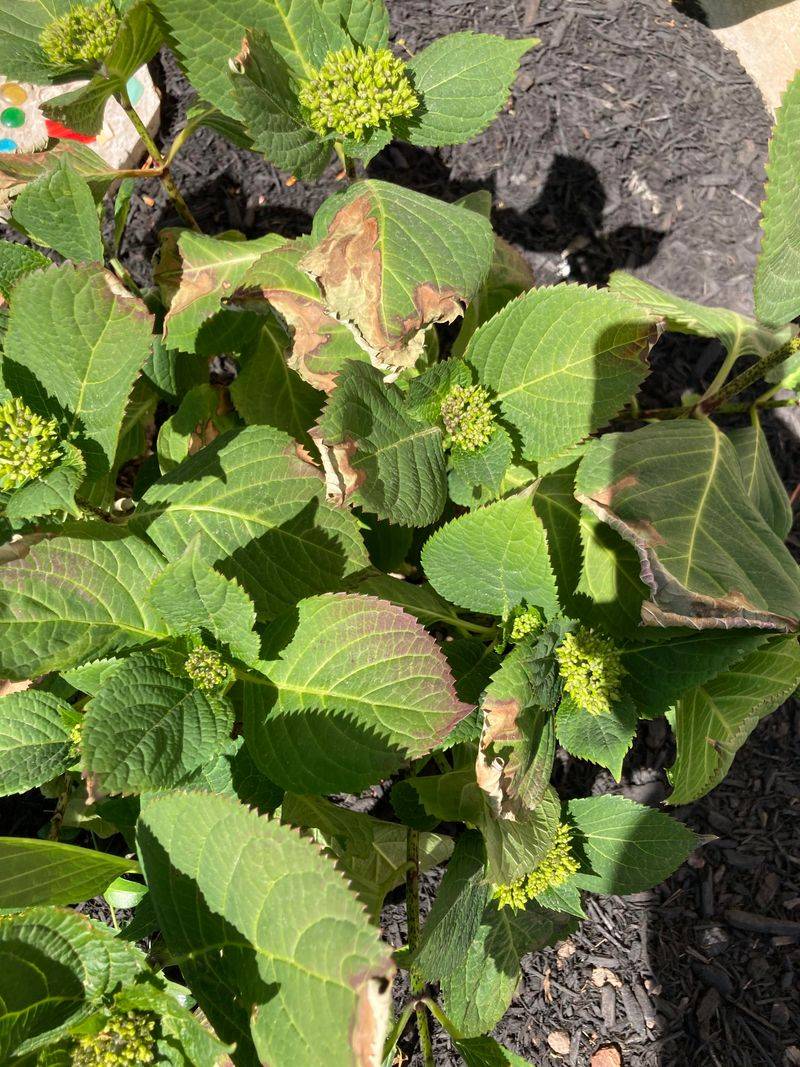
Planting a new hydrangea in spring feels exciting, and most plants look great through May and June. Then July hits with full force, and suddenly that same shrub looks like it is struggling on one side.
For newly planted or recently moved hydrangeas, this is almost expected, and here is why.
Young shrubs have a limited root system. When you plant a hydrangea from a pot or move one from another spot in the yard, its roots have not yet spread out into the surrounding soil.
All the water and nutrients it can access come from a relatively small zone right around the original root ball. During mild weather, that is usually enough.
But July in Michigan can be intense, with high heat, low humidity, and dry stretches that demand much more from a plant.
The side of the shrub that faces the most sun or wind hits its moisture limit first. Those leaves scorch while the shadier side, with lower demand, holds on longer.
It can look like a disease or pest problem, but really it is just physics. The plant is thirsty, and it cannot get water fast enough to every leaf at once when conditions are tough.
New hydrangeas need extra attention through their first full summer. Water them deeply every two to three days during heat waves, focusing on soaking the root ball area thoroughly.
Shade cloth on the hottest side during peak afternoon hours reduces stress dramatically.
Mulching well around the base keeps the small root zone cooler and holds moisture longer, giving young plants a much better chance of getting through their first Michigan summer in great shape.
7. Mulch Is Uneven Around The Plant
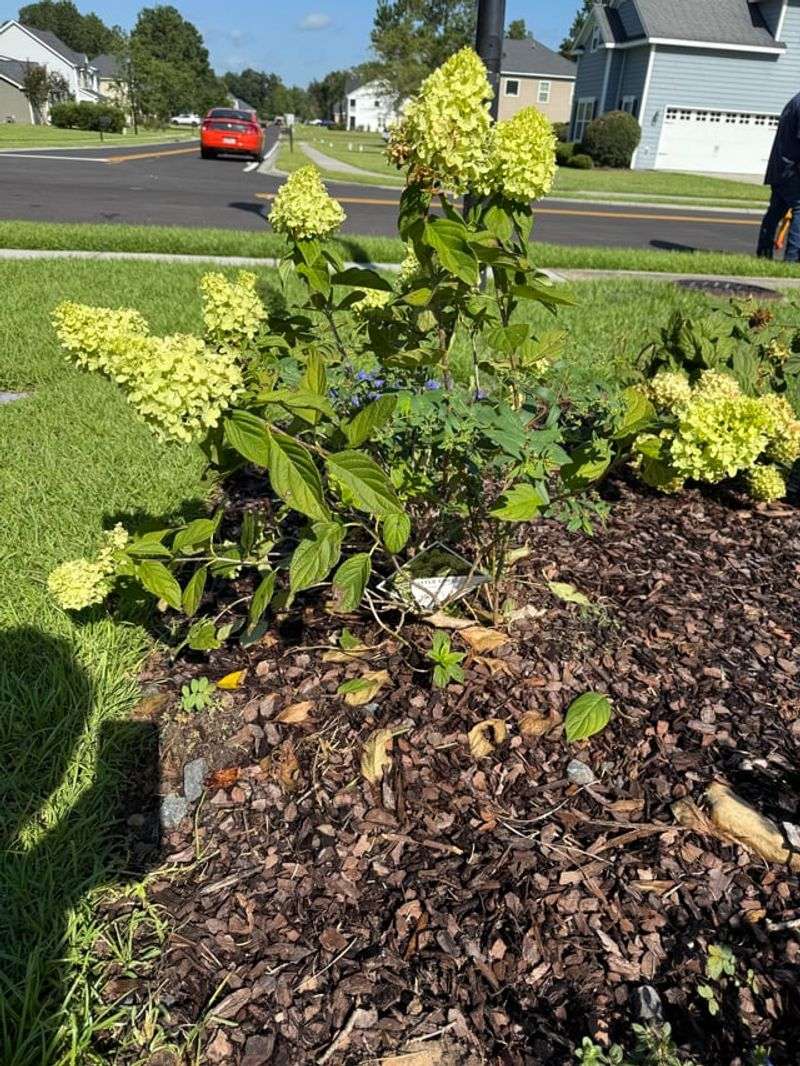
Mulch might seem like a small detail, but it does a surprisingly big job when summer heat kicks in.
When mulch is spread unevenly around a hydrangea, the side with less coverage dries out faster, and the leaves above that dry zone are usually the first ones to show scorch.
A good two to three inch layer of organic mulch, like shredded wood chips, bark, or leaf mold, acts as an insulating blanket over the soil.
It slows water evaporation, keeps soil temperature steadier, and reduces the stress on roots during hot weather.
The side of the plant with proper mulch coverage stays cooler and holds moisture longer. The side with thin or missing mulch bakes in the sun, dries out quickly, and leaves the roots beneath it struggling to keep leaves hydrated.
Gardeners often mulch in spring and forget about it, not realizing that mulch breaks down and thins out over the season. By July, the coverage might be uneven, especially if rain or foot traffic has shifted it around.
Sometimes mulch gets kicked away from one side of the plant near a walkway or garden edge without anyone noticing.
Refreshing mulch in early summer is a simple fix that pays off all season. Spread it evenly in a ring around the entire base of the shrub, keeping it about two to three inches thick all the way around.
One important detail to remember is to keep mulch pulled back an inch or two from the main stems to prevent moisture buildup and stem rot at the base of the plant.
8. The Plant Is In Too Much Afternoon Sun For Its Type
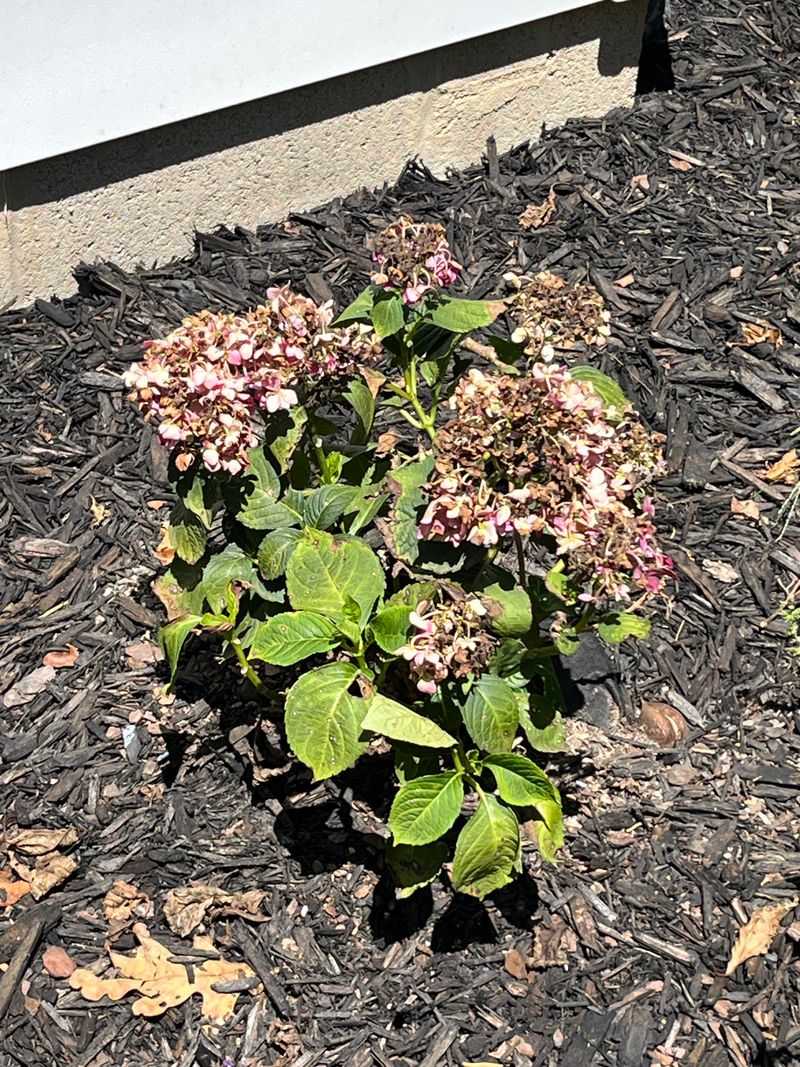
Not every hydrangea is built the same way, and placement matters more than most people think. Some varieties handle sun quite well, while others really need protection from Michigan’s intense July afternoons.
Putting the wrong type in the wrong spot almost guarantees one-sided scorch every summer. Bigleaf hydrangeas, also called mopheads or lacecaps, are some of the most popular and also some of the most sensitive.
They prefer morning sun and afternoon shade, and they will show heat stress fast when planted in a spot that gets direct western sun from noon onward.
Smooth hydrangeas are somewhat tougher but still appreciate some afternoon shelter. Oakleaf hydrangeas fall in between, handling more sun than bigleafs but still preferring filtered light during the hottest hours.
Panicle hydrangeas, often sold as Limelight, Quick Fire, or Pinky Winky, are the real sun champs of the group. They can handle full sun much better than the others, especially when watered consistently.
But even panicle types can show some leaf edge browning on the most exposed side during extreme July heat waves if the soil dries out.
Knowing your hydrangea type is the first step toward choosing the right spot. Morning sun with afternoon shade, ideally from a building, fence, or large tree to the west, works beautifully for sensitive varieties.
If you cannot change where the plant lives, adding shade cloth on the western side from noon to around four in the afternoon during heat waves protects the most vulnerable leaves and keeps your hydrangea looking lush and full all the way through summer.