What Brown Spots On North Carolina Blueberry Leaves Mean After Harvest
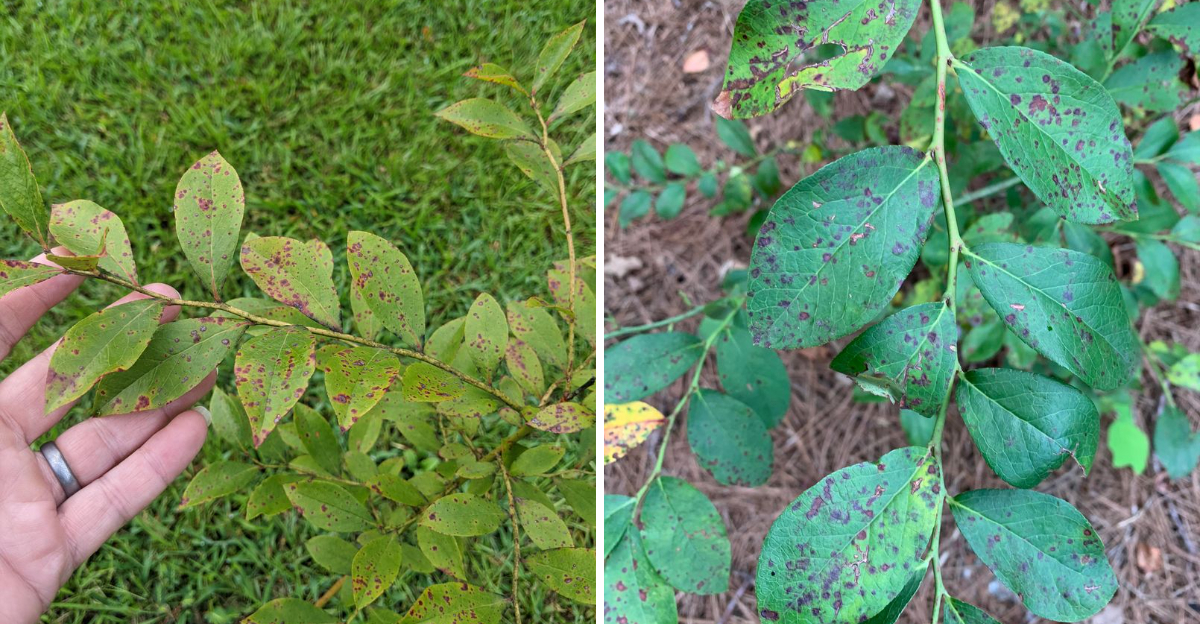
Brown spots showing up on blueberry leaves after harvest feel like a problem that arrived too late in the season to matter. They matter more than that timing suggests.
Post-harvest leaf health in North Carolina blueberries is directly connected to how well the bush stores energy for next year’s crop.
Certain leaf spots indicate problems that will carry over into the next season if not addressed before the plant goes dormant.
The specific pattern of spotting, where on the leaf it starts, whether it follows the veins or spreads in irregular patches, and how quickly it progresses across the canopy all point toward different causes requiring different responses.
Reading those patterns correctly protects next summer’s harvest from problems developing right now.
1. Septoria Leaf Spot May Be Starting
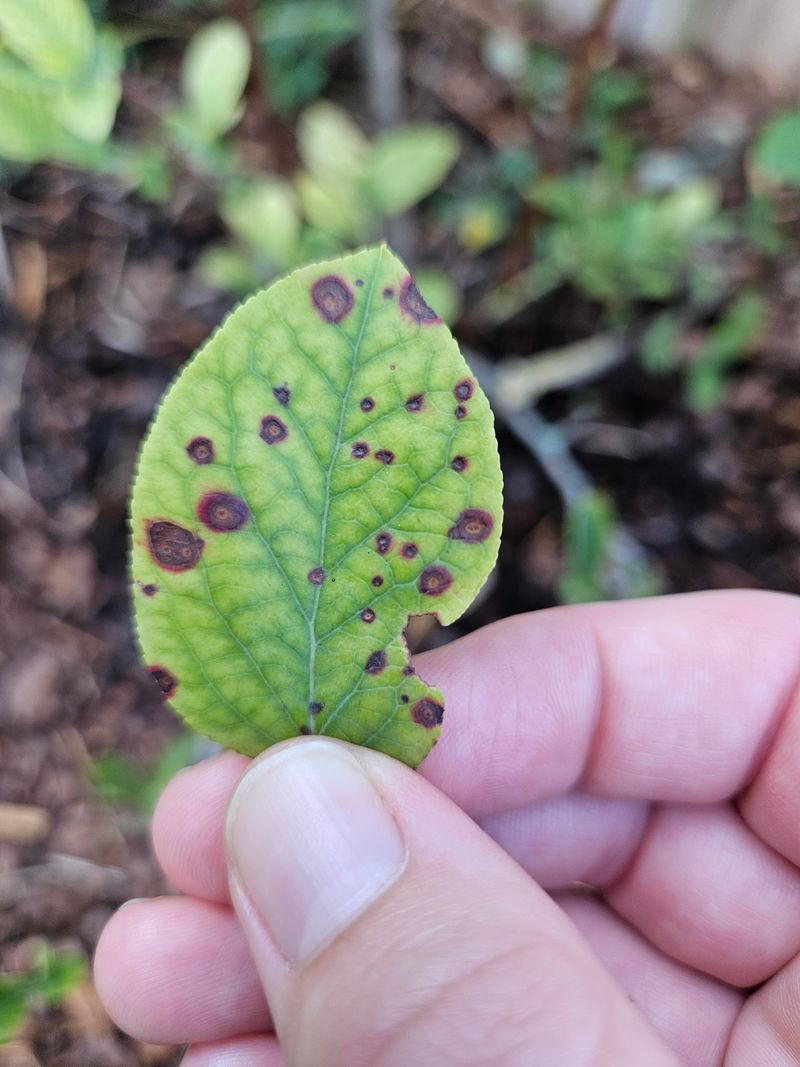
Small spots with pale centers and dark purple borders showing up on your blueberry leaves after harvest are a classic sign of Septoria leaf spot.
NC State University notes that this fungal disease can affect both highbush and rabbiteye blueberries grown across North Carolina, and it tends to pop up more noticeably once the growing season winds down.
One thing to watch for is where the spots appear first. Septoria usually shows up on the lower, older leaves before it works its way higher up the plant.
That pattern alone can help you separate this disease from other causes that tend to spread more randomly across the canopy. You might be thinking, why does it matter after the berries are already picked?
Blueberry plants spend the weeks after harvest building up energy and forming the flower buds that will carry next year’s crop.
When a leaf infection like Septoria moves in during this critical window, it can cut short that recovery process by reducing the healthy leaf area your plant needs to photosynthesize.
Rake up and remove any fallen leaves around your plants to reduce the amount of fungal spores lingering near the soil.
Keeping the area clean makes a real difference because Septoria can overwinter in leaf debris and reinfect plants when spring moisture returns.
If you see the spots spreading across multiple plants, talk to your local cooperative extension office about fungicide options that are registered and recommended for use in North Carolina blueberry plantings.
2. Anthracnose Leaf Spot Can Make Larger Brown Patches
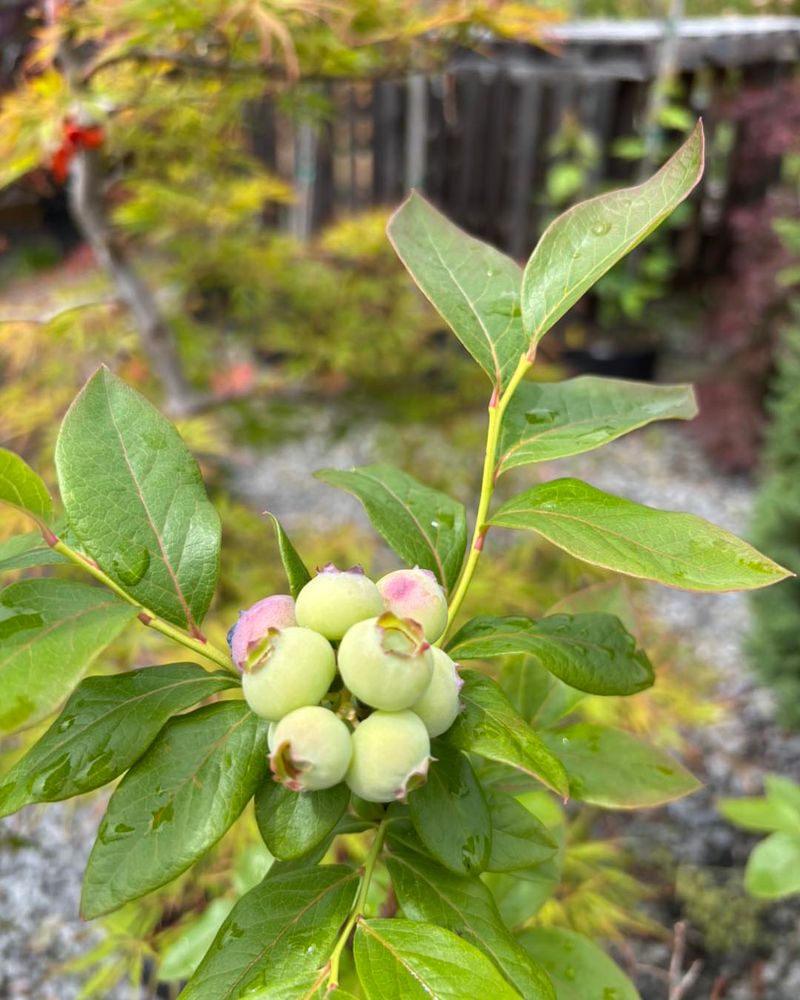
Not every brown area on a blueberry leaf is tiny and round. Anthracnose leaf spot tends to create bigger, more irregular brown to grayish patches, and these patches often develop along the edges or tips of the leaf rather than in the middle.
Seeing that pattern is a useful clue that anthracnose might be the culprit rather than something like Septoria, which produces much smaller spots with distinct borders.
What makes anthracnose a little tricky is that it can show up on the same plant alongside other leaf problems.
You might notice both smaller round spots and larger irregular patches on different leaves of the same bush.
Comparing the size, shape, and placement of each brown mark helps you figure out whether you are dealing with one issue or two separate ones at the same time.
Your North Carolina Garden Changes Every Week. Your Plan Should Too.
Gardening in North Carolina changes quickly throughout the season. Every Friday you’ll receive a simple weekly plan showing exactly what to plant, prune, fertilize, harvest, and protect so you never miss the right timing.
Warm, wet weather during and after harvest creates ideal conditions for anthracnose to spread.
North Carolina summers often bring exactly that combination, so growers in the Piedmont and coastal regions should stay especially alert.
Fungal spores travel easily in splashing rain and overhead irrigation, which means how you water your plants can actually influence how far the disease moves around your garden.
Switch to drip irrigation if possible, and always water at the base of the plant rather than overhead.
Pruning to improve airflow through the canopy also helps because anthracnose struggles to take hold when leaves dry out quickly after rain.
Document what you see with photos so you can show them to an extension agent if the situation does not improve on its own.
3. Double Spot Can Expand Around An Older Spot
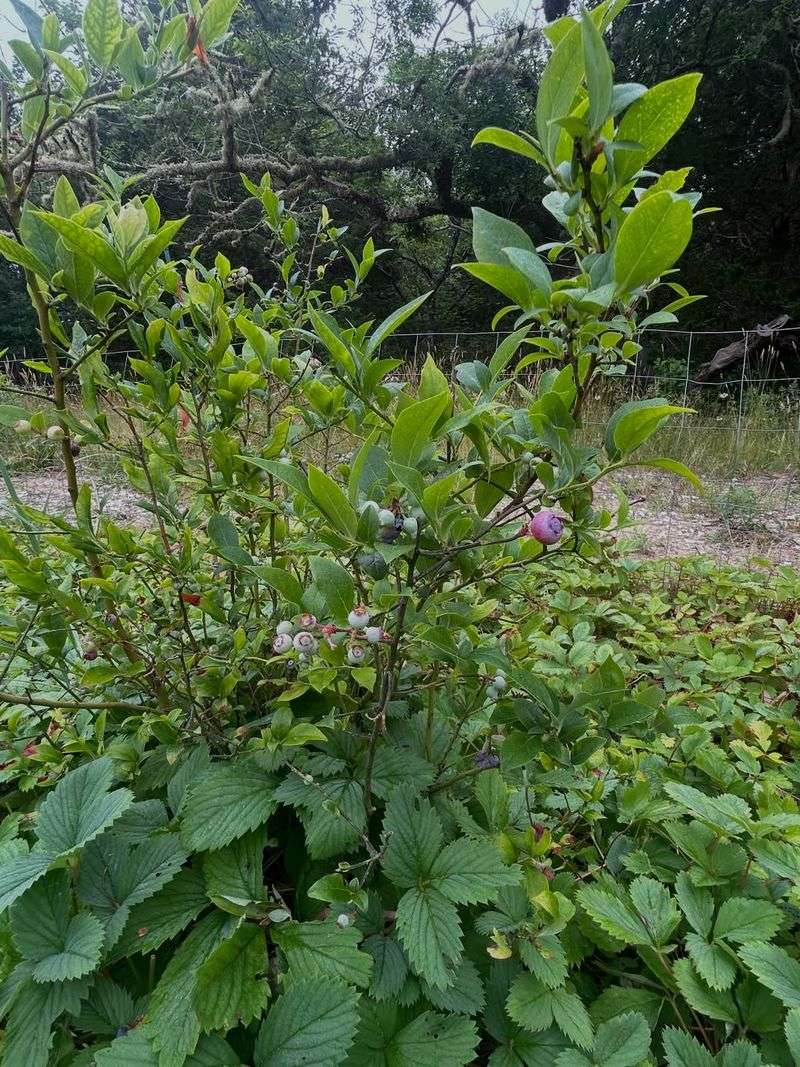
Double spot is one of those blueberry leaf diseases that catches gardeners off guard because it looks like the problem is growing outward from a single older mark.
What actually happens is that a small initial spot forms first, and then a second larger brown ring or zone develops around or beside it as the season progresses into late summer.
The result can look alarming, as if something is rapidly spreading across the leaf surface.
The fungus responsible for double spot, Dothichiza caroliniana, is known to affect blueberries in the southeastern United States, including North Carolina.
It tends to show up more toward the end of the season when plants have been through months of weather stress.
The combination of an older central mark and a newer outer ring is the visual signature that sets double spot apart from simpler single-lesion diseases.
Gardeners sometimes mistake the expanding outer ring for a new and separate infection, which can lead to confusion about how bad the situation really is.
Taking a close look at whether the larger brown area is centered on or near an older spot helps clarify what you are actually seeing.
A magnifying glass or even a phone camera zoomed in close can reveal details that are hard to catch with the naked eye. Good sanitation habits matter here just as they do with other fungal leaf problems.
Removing affected leaves from around the base of the plant reduces the number of spores available to spread to neighboring bushes.
Keeping your plants well-nourished and properly pruned going into fall gives them the best chance of bouncing back strong by spring.
4. Blueberry Rust Often Shows Clues Under The Leaf
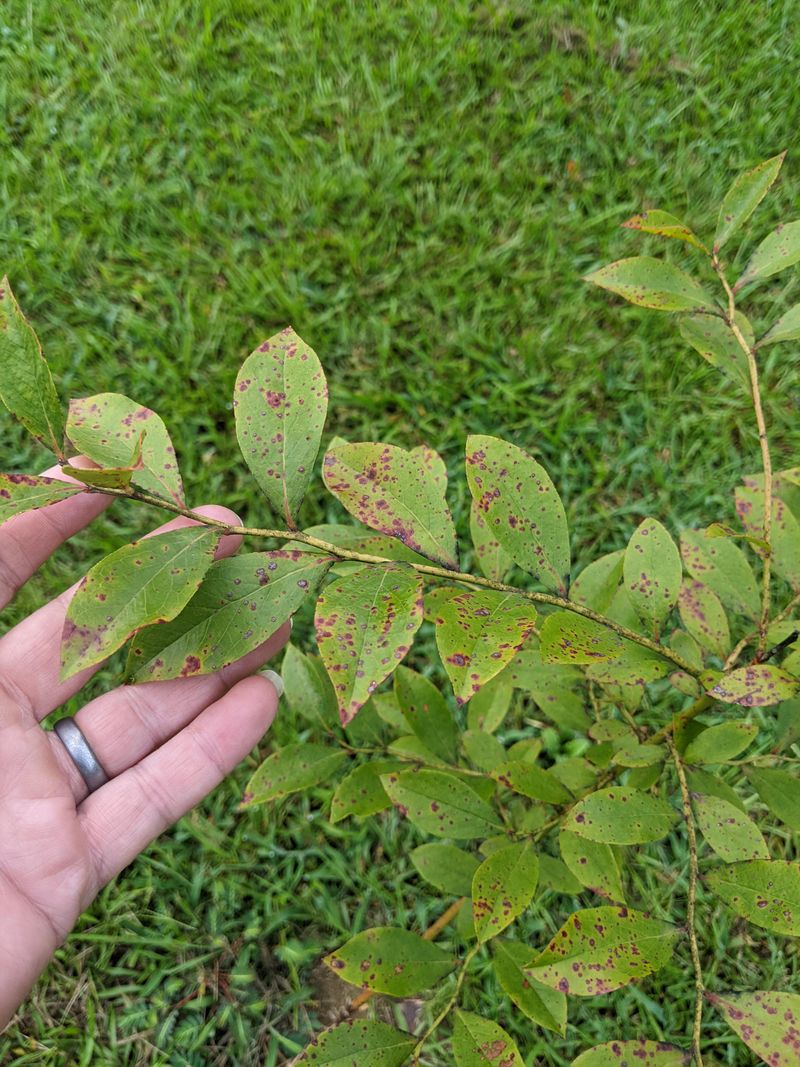
Rust on blueberry leaves can fool you if you only look at the top surface. From above, affected leaves might show faint yellowing or small brownish areas that look similar to several other common problems.
The real giveaway is hiding on the underside, where orange to rusty-brown powdery spore masses called pustules form in clusters that are unmistakable once you know what to look for.
Blueberry rust, caused by the fungus Thekopsora minima, tends to appear on older leaves lower on the plant first.
After harvest, when plants are working to recover and store energy for next year, a rust infection on mature leaves can interfere with that process.
The infected leaves often drop earlier than they should, which shortens the window your plant has for building up its reserves before winter.
Flipping leaves over before you decide what is causing the problem is genuinely one of the most useful habits a blueberry grower can develop.
Many leaf diseases leave distinctive clues on the underside that completely change the diagnosis.
If you see those orange powdery patches on the bottom of the leaf, you can feel confident that rust is involved rather than a bacterial or environmental issue.
Rust spreads through airborne spores, so plants growing in humid, shaded, or poorly ventilated spots are at higher risk.
Thinning out dense growth to improve air circulation can help reduce how quickly the disease spreads through your planting.
Fungicide applications timed during the season can also be effective, so reach out to your local extension office for guidance on what products and timing work best in North Carolina conditions.
5. Powdery Mildew Can Look Pale Brown Or Reddish Later
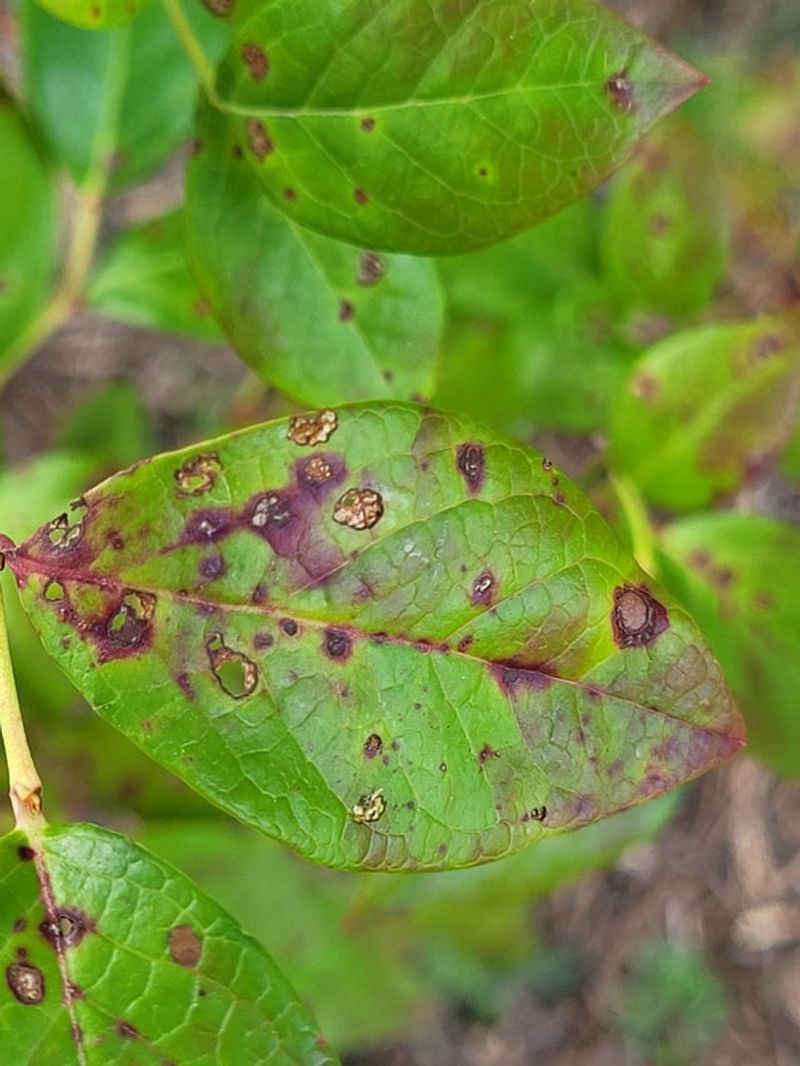
Powdery mildew on blueberries does not always announce itself with the obvious white coating that most gardeners expect.
In the early stages, especially on late-season leaves after harvest, the symptoms can be surprisingly subtle.
Pale, slightly distorted patches may appear first, and only later do those areas shift toward a reddish or brownish color that can easily be mistaken for a different type of leaf problem.
The fungus responsible for blueberry powdery mildew, Microsphaera vaccinii, thrives in warm days paired with cool nights, a pattern that shows up frequently in North Carolina during late summer and early fall.
That temperature swing creates exactly the kind of environment where this pathogen gains a foothold on new and older leaf tissue alike.
Unlike many other fungal diseases, powdery mildew does not actually need wet leaf surfaces to spread, which makes it harder to control through irrigation management alone.
Checking leaves closely under good light is the key to catching this one early.
Look for a faint white or grayish film on the leaf surface, or tiny dark round bodies called chasmothecia that the fungus produces as the season cools.
Those tiny dark specks are a definite confirmation that powdery mildew is present even when the white coating has faded or been washed away by rain.
Keeping plants in locations with good sunlight and airflow reduces how favorable conditions are for this fungus.
Varieties with known resistance to powdery mildew are worth considering if you plan to add new plants to your North Carolina garden.
Your county extension office can point you toward resistant cultivars that perform well in your specific region of the state.
6. Drought Stress Or Fertilizer Burn Can Mimic Leaf Spots
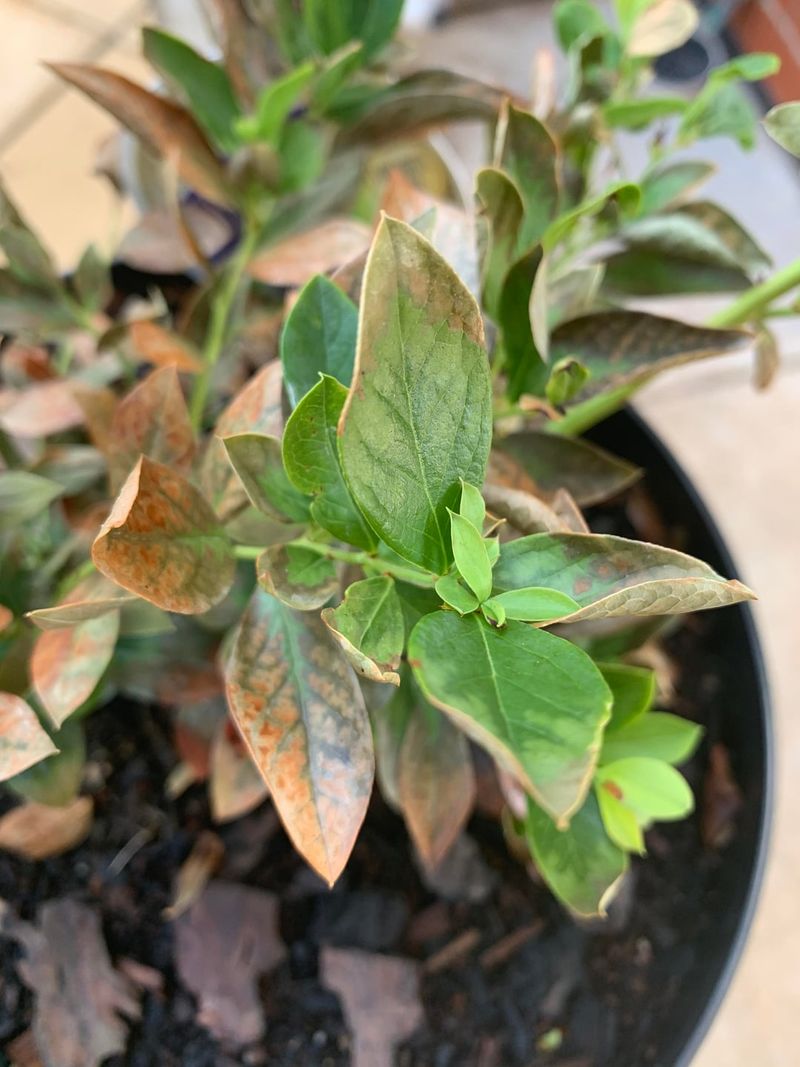
Brown on blueberry leaves does not automatically mean a fungal infection is at work.
NC State University points out that drought stress and fertilizer burn can produce leaf symptoms that look surprisingly similar to disease-related spots, which is why jumping straight to a fungicide treatment without investigating further can be a costly mistake.
The browning from these non-infectious causes tends to show up in a more uniform pattern along the edges and tips of leaves rather than as scattered spots across the surface.
Drought stress is a real concern for North Carolina blueberry growers, especially during the hot stretches that often follow harvest time in July and August.
When plants do not get enough water, the leaf margins are usually the first areas to show the strain because that tissue is farthest from the plant’s water supply.
The browning typically progresses inward from the edge and affects leaves across the whole plant rather than concentrating on lower or older growth.
Fertilizer burn happens when too much fertilizer, especially nitrogen, is applied too close to the roots or too late in the season.
Blueberries are sensitive to over-fertilization, and the salts in synthetic fertilizers can pull moisture away from roots and create the same kind of marginal leaf scorch that drought does.
Always check whether you recently applied fertilizer before assuming the browning has a fungal cause. Soil moisture testing is simple and worth doing regularly during the post-harvest period.
Stick a finger a few inches into the soil near the root zone to check whether the ground is actually dry.
Adjusting your irrigation schedule and holding off on late-season fertilizer applications can clear up these symptoms without any chemical treatment at all.
7. High Soil pH Can Weaken Leaves Before Spots Look Worse
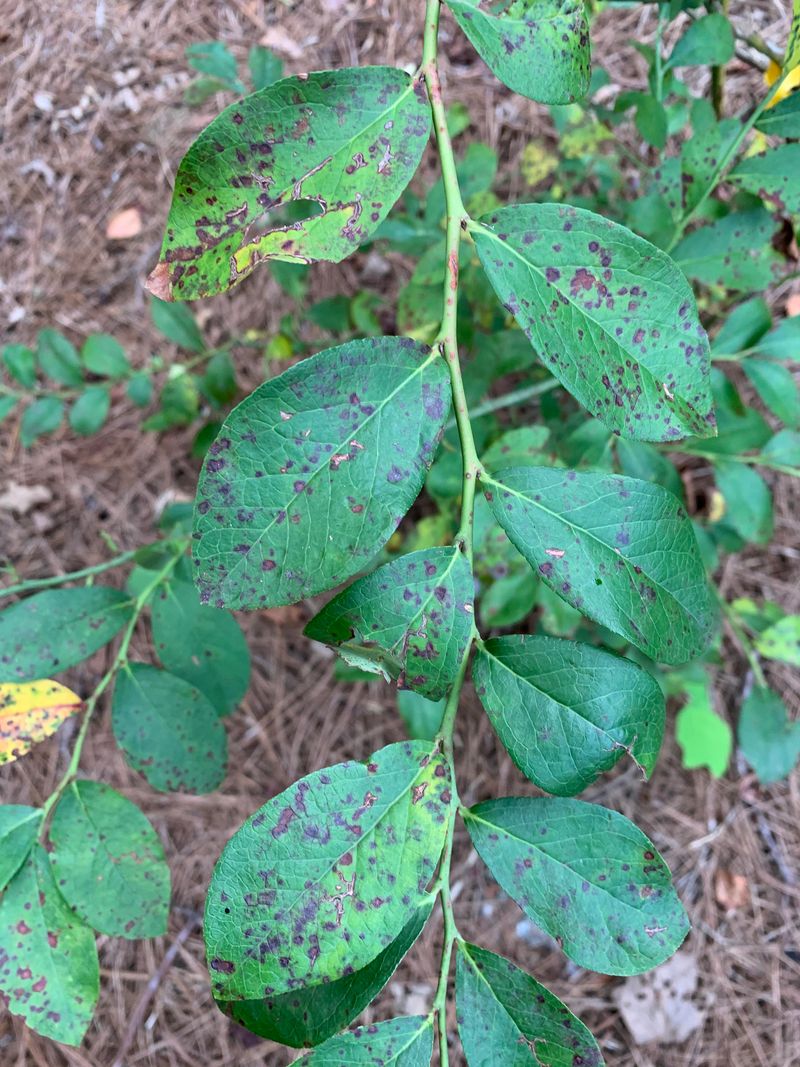
Blueberries are famously particular about their soil. They need a pH between 4.5 and 5.5 to thrive, which is far more acidic than the soil that suits most other garden plants.
When the pH creeps too high, the plant loses its ability to absorb key nutrients like iron and manganese even when those nutrients are technically present in the soil.
The result is interveinal yellowing, where the tissue between the leaf veins turns pale while the veins themselves stay greener.
That yellowing might not look like the brown spots you are trying to identify, but here is the connection: a plant that is already struggling with nutrient deficiency from high pH is a much weaker plant overall.
Weakened leaves have less resistance to fungal infections, which means any of the diseases mentioned earlier in this article can take hold more easily and look more severe than they would on a healthy, well-nourished plant.
Guessing at your soil pH is never a good strategy with blueberries.
A simple soil test through your county cooperative extension office gives you an accurate number and tells you exactly how much amendment you need to bring the pH down.
Sulfur is the most commonly recommended material for acidifying blueberry soil in North Carolina, but the right rate depends on your starting pH and your soil type.
After harvest is actually a smart time to test and amend your soil because any changes you make have months to work before the next growing season begins.
Getting the pH right consistently is one of the single most impactful things you can do for long-term blueberry plant health, leaf quality, and overall productivity year after year.