What North Carolina Homeowners Should Really Do When They See A Fox

A flash of russet fur near the fence line. Amber eyes catching the porch light at dusk.
Many North Carolina homeowners freeze up the moment a fox appears in the yard, somewhere between fascinated and genuinely unsure what to do next.
Foxes are more common across the state than many people realize. From the suburbs of Charlotte to the wooded edges of Asheville, and the response many people default to, either chasing it off immediately or doing nothing at all, is rarely the right one.
Red foxes and gray foxes both live here, sightings are increasing as development pushes into natural habitat, and the gap between a harmless visit and a genuine problem is often just a few small decisions made in the first few minutes.
Most encounters are completely manageable. The tricky part is knowing what actually needs to happen next.
1. Watch From A Safe Distance
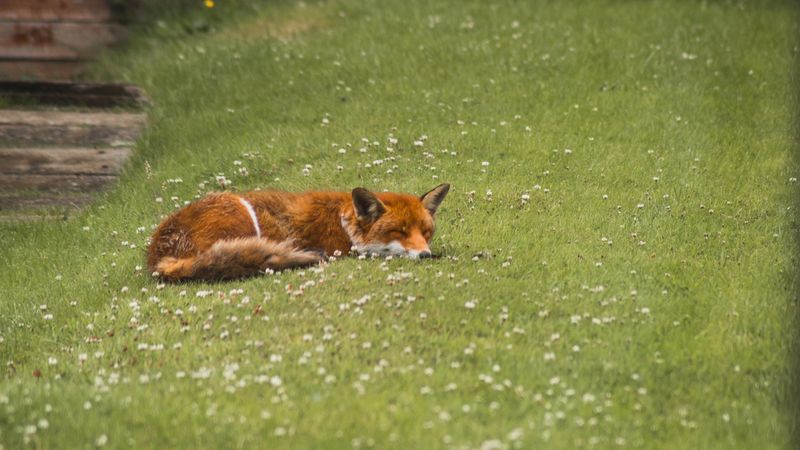
Something about a fox in the yard stops you mid-step. The first instinct is often to move closer for a better look, but the smartest opening move is also the simplest one: stay where you are and observe quietly from where you already stand.
The NC Wildlife Resources Commission recommends keeping at least fifty feet between yourself and any wild fox.
Foxes are naturally cautious animals, and a calm, stationary human is far less threatening than one walking toward them.
Moving closer causes unnecessary stress to the animal and can trigger a defensive response, particularly if the fox has young nearby that are not visible from where you are standing.
Binoculars kept near a back door or window are useful for exactly these moments. A clear view from a distance tells you far more about the animal’s condition and behavior than a close approach would, and it does not disturb the fox in the process.
Resist the urge to get a better photograph by creeping forward. Most smartphones have adequate zoom capability, and a steady photo from the porch is more useful than a blurry close-up taken from three feet away while the fox was already moving.
Watching calmly from a distance also provides genuinely useful information before any decision gets made. Noting the time of day, how the fox is moving, and whether it appears alert and healthy informs every subsequent step.
That brief window of observation costs nothing and frequently makes the difference between an appropriate response and an unnecessary one.
2. Bring Small Pets Indoors
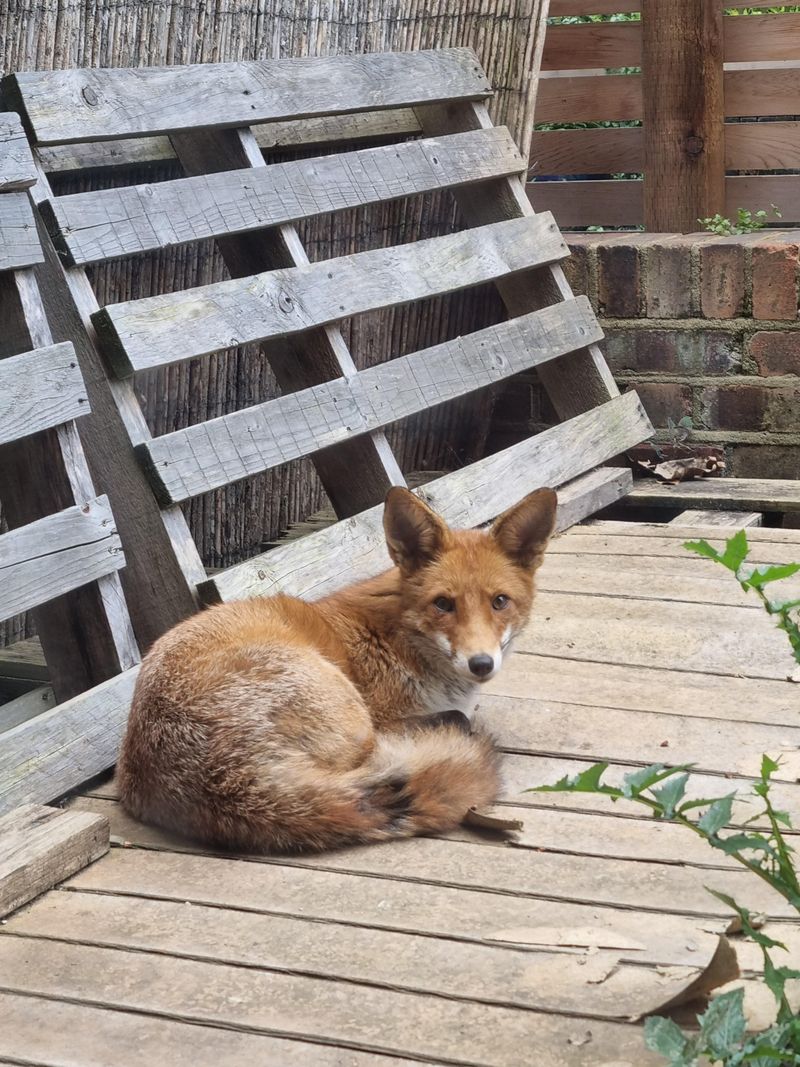
Your small dog almost certainly believes it owns the backyard. A fox that has not been introduced to that particular opinion.
When a fox appears in the yard, small pets need to come inside immediately, without exception or hesitation.
Red foxes typically weigh between eight and fifteen pounds, which puts small dogs, cats, and backyard poultry within a realistic risk range during a direct encounter.
Dawn and dusk are peak fox activity periods across North Carolina, which happen to overlap with the times most people let pets out for a last run before bed or a first one after sunrise.
Your North Carolina Garden Changes Every Week. Your Plan Should Too.
Gardening in North Carolina changes quickly throughout the season. Every Friday you’ll receive a simple weekly plan showing exactly what to plant, prune, fertilize, harvest, and protect so you never miss the right timing.
Cats that roam freely outdoors face particular risk.
A confident outdoor cat can find itself outmatched by a focused fox, especially during denning season in late winter and early spring when adults are more territorial and more actively foraging.
Keeping cats indoors during that period consistently is one of the most effective protective measures available.
Backyard chicken keepers need hardware cloth rather than standard chicken wire on coops and runs.
Foxes are patient, methodical problem-solvers when it comes to finding entry points, and they will return repeatedly until they locate one. Locking poultry in before sundown removes the opportunity entirely.
Bringing pets inside the moment a fox is spotted is not an overreaction.
It is straightforward yard management that takes two minutes and eliminates the most common source of conflict between foxes and homeowners in North Carolina. Once the fox has moved on, everyone goes back outside.
3. Remove Food From The Yard
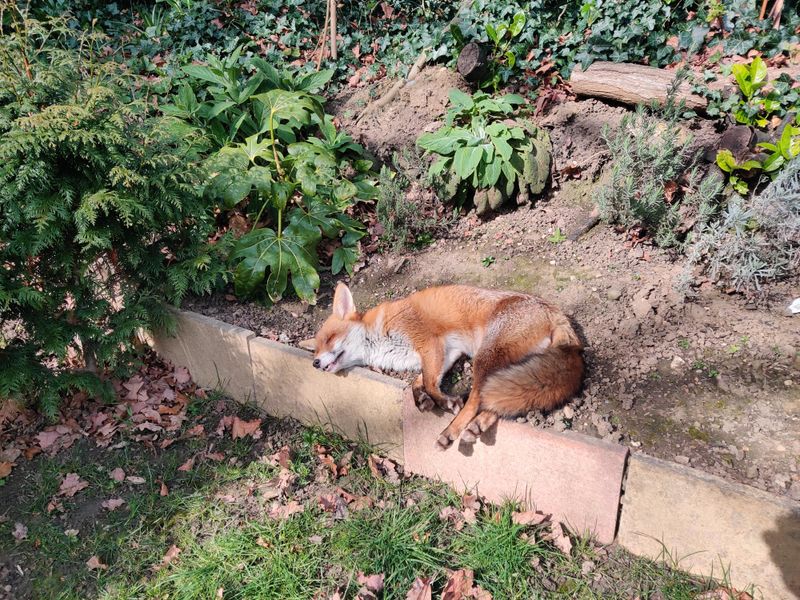
Foxes do not appear in yards by accident.
They follow their noses, and a yard that smells like accessible food is sending a consistent invitation regardless of how unwelcome the visitor might be.
Removing those attractants is the most durable long-term strategy for discouraging repeat visits.
Pet food left outside is the most common culprit. A half-empty bowl of cat food on a porch draws foxes from surprisingly far away.
The fix is immediate and permanent: feed pets indoors or remove bowls the moment the animal finishes eating. Nothing stays out overnight.
Birdseed is a less obvious contributor. Seed falling from feeders accumulates on the ground and attracts mice and squirrels, which then attract foxes looking for an easier meal than seed.
Feeders with catch trays reduce ground accumulation. Temporarily removing feeders during active fox periods is the more direct solution.
Fallen fruit is one of the most consistently overlooked food sources in North Carolina yards. Apple, pear, and fig trees drop fruit that ferments on the ground and becomes highly attractive to foxes through late summer and fall.
Regular pickup removes a significant draw that most homeowners never connect to their wildlife encounters.
Grill residue, outdoor dining scraps, and strong-smelling compost all contribute to the overall scent profile of a yard.
A quick scan after any outdoor meal and prompt cleanup of anything edible removes the buffet that keeps foxes coming back.
Without a reliable food reward, most foxes redirect their search to more productive territory without any direct confrontation required.
4. Secure Trash And Compost Bins

A loose trash lid is a welcome sign for every opportunistic animal within nose range.
Foxes are resourceful scavengers, and an unsecured garbage can or accessible compost pile represents one of the easiest meals they will encounter on any given night. Tightening up waste management is one of the fastest practical fixes available.
Standard flip-top trash cans are easy for foxes to nudge open. Bins with locking lids or bungee-secured closures eliminate that access point entirely.
Heavy-duty rubber straps or carabiner clips keep lids firmly in place between collection days and cost almost nothing to implement. The simplicity of the solution does not reduce its effectiveness.
Compost bins require specific attention. Open compost piles that include meat scraps, cooked food, or dairy products are particularly attractive to foxes and several other wildlife species.
Keeping compost in a sealed, enclosed bin rather than an open pile removes the scent source. Restricting compost to plant-based materials and turning it regularly to reduce odor drift further reduces the draw.
Placement of bins matters in ways most homeowners do not initially consider.
Keeping trash and compost away from fence lines, wooded edges, or areas where fox activity has already been observed reduces nightly visit frequency.
Positioning them closer to the main structure or in a secured side yard makes access less convenient.
A fox that learns your yard provides reliable food will return on a schedule that becomes increasingly difficult to disrupt.
Removing the reward early, before that habit forms, is far easier than changing a pattern that has already been established over weeks or months.
5. Block Access Under Porches
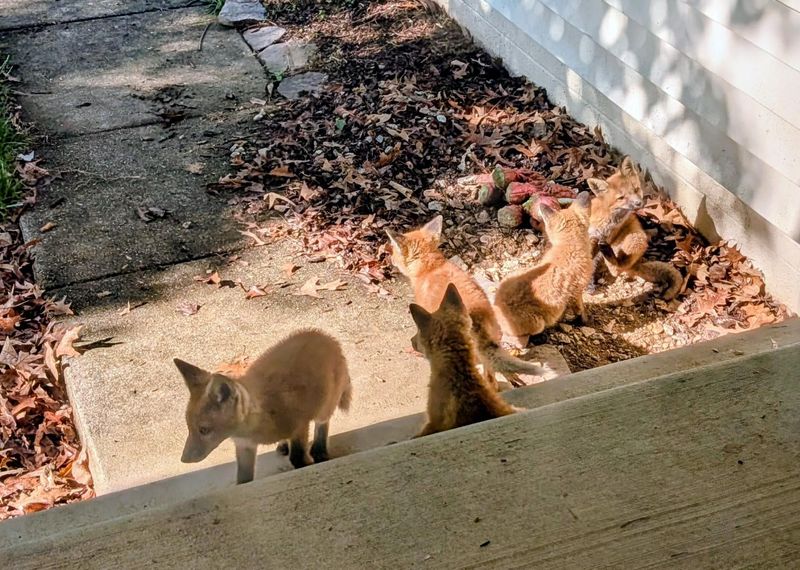
That gap under the back porch looks like unused space. To a pregnant fox searching for a sheltered den site in early spring, it looks like exactly what she has been looking for.
Closing off those openings before denning season removes the option before any animal commits to the space.
Confirming that no animals are already inside before sealing any opening is a non-negotiable first step. Sealing an occupied den traps animals inside and creates a significantly more serious situation than the one it was meant to prevent.
Sprinkling flour or sand near the entrance and checking for fresh tracks each morning for several days establishes whether the space is actively used. Absence of activity over that period makes it safe to proceed with exclusion work.
Hardware cloth with half-inch mesh is the appropriate material for blocking access points. Standard chicken wire is too flexible and can be pushed aside or worked through by a motivated animal.
Burying the hardware cloth six to twelve inches below grade and bending it outward in an L-shape prevents digging underneath the barrier.
A full property scan for additional potential den sites is worth doing at the same time. Spaces under sheds, decks, and crawl spaces beneath additions all offer the same appeal to a fox looking for shelter.
Sealing these areas in late summer or fall, after any young foxes from the season have dispersed on their own, is the timing recommended by North Carolina wildlife resources.
A well-secured foundation is a long-term investment that prevents a recurring annual situation from ever becoming established in the first place.
6. Leave Healthy Foxes Alone
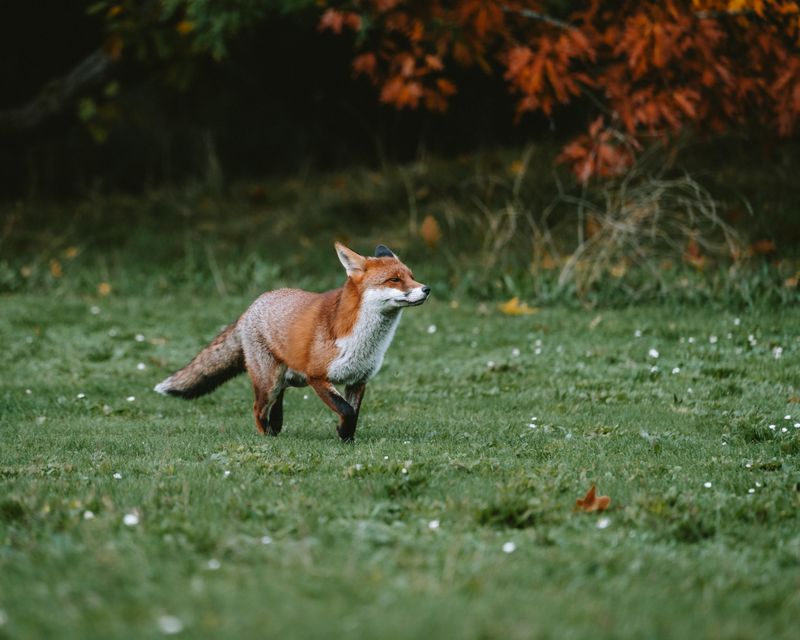
Seeing a fox in the yard during daylight hours is not automatically a sign that something is wrong.
Many North Carolina homeowners respond to a daytime sighting with immediate alarm, assuming illness is the explanation. Most of the time, that assumption is incorrect and leads to unnecessary intervention.
Foxes are most active around dawn and dusk but routinely forage during daylight hours during breeding season and while raising pups in spring.
Adult foxes feeding a litter have significantly higher caloric demands that require extended foraging activity across all hours. Daytime presence alone is not a reliable indicator of any problem.
A healthy fox moves with clear purpose. It trots steadily, holds its tail at a normal angle, scans surroundings with alert eyes, and responds appropriately to sounds and movement.
Stumbling, circling, approaching humans without hesitation, and disorientation are the behaviors worth noting, not the time of day the animal happened to appear.
Hazing is a technique wildlife professionals recommend for encouraging a fox to move along without causing harm.
Making yourself appear larger, clapping hands, raising your voice, or directing a spray of water at the animal teaches it to associate your yard with an unpleasant experience rather than a safe one. Consistent application over several encounters typically produces results.
A healthy fox moving through the yard is often doing useful ecological work by managing local rodent populations.
A measured, calm response that discourages lingering without escalating the encounter is the appropriate default for the vast majority of North Carolina fox sightings.
7. Call Experts For Strange Behavior

Most fox sightings are unremarkable. Occasionally a fox shows up behaving in ways that do not look right, and that is when staying calm and contacting the right people becomes the only appropriate response.
Abnormal behavior includes stumbling or staggering, moving in persistent circles, approaching humans without any hesitation or fear response, appearing disoriented in ways inconsistent with normal animal behavior and unprovoked aggression.
Any of these signs, particularly in combination, warrant a call to a wildlife professional rather than any attempt at personal intervention.
The NC Wildlife Resources Commission is the first contact for these situations. They provide guidance and can connect homeowners with local wildlife officers when the situation requires a physical response.
Animal control departments in many North Carolina counties also handle wildlife calls, particularly those with potential public health dimensions.
Rabies occurs in North Carolina fox populations and any direct contact between a fox and a person or pet should be reported promptly.
The NC Department of Health and Human Services tracks wildlife rabies cases and provides specific guidance for homeowners who may have experienced exposure.
Attempting to corner, capture, or handle an animal showing abnormal behavior is not safe regardless of how the situation presents itself.
Keeping children and pets inside, documenting the location and specific behaviors observed, and allowing trained professionals to handle the response is the complete and correct role for any homeowner in this situation.