Stop Pruning Storm-Damaged Michigan Branches Yourself If You See This
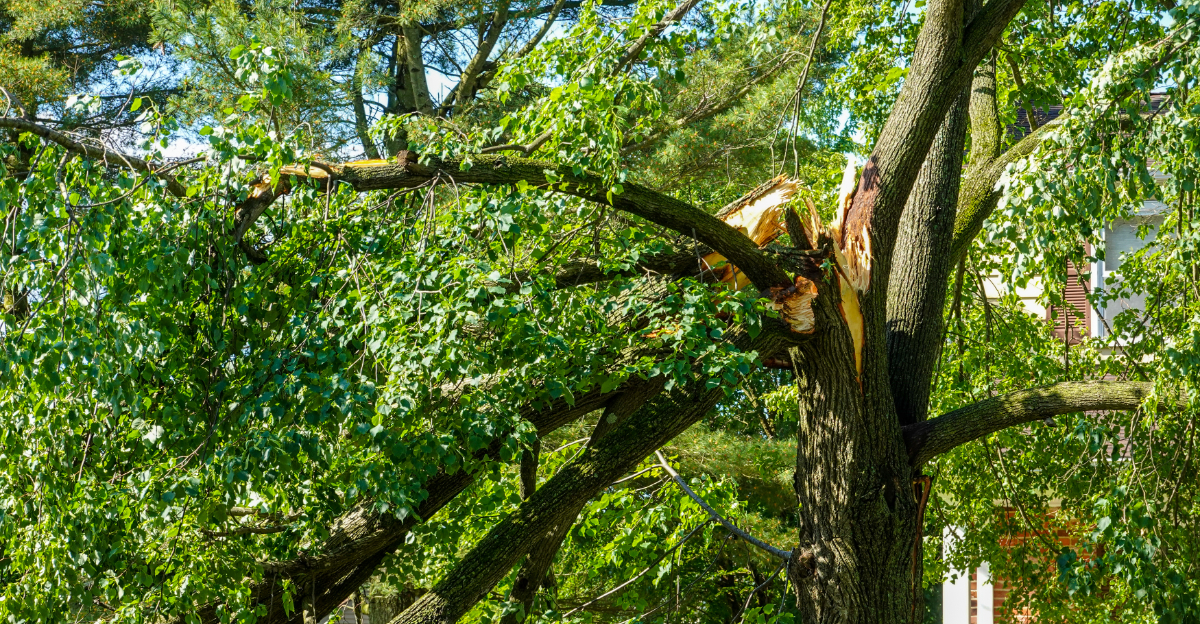
Storm damage to Michigan trees creates an urgent feeling that is completely understandable.
A hanging branch or split limb looks like something that needs to come down immediately, and the instinct to handle it before it causes more problems is reasonable.
There are specific situations, though, where attempting to remove storm-damaged branches without professional equipment and training creates a far more dangerous situation than the damaged branch itself presents.
Certain signs visible from the ground indicate structural conditions that make amateur pruning genuinely hazardous.
Recognizing those signs before picking up a chainsaw or climbing a ladder is the kind of information that prevents the storm damage situation from becoming something significantly worse than a broken branch.
1. Utility Lines Mean Stop Immediately
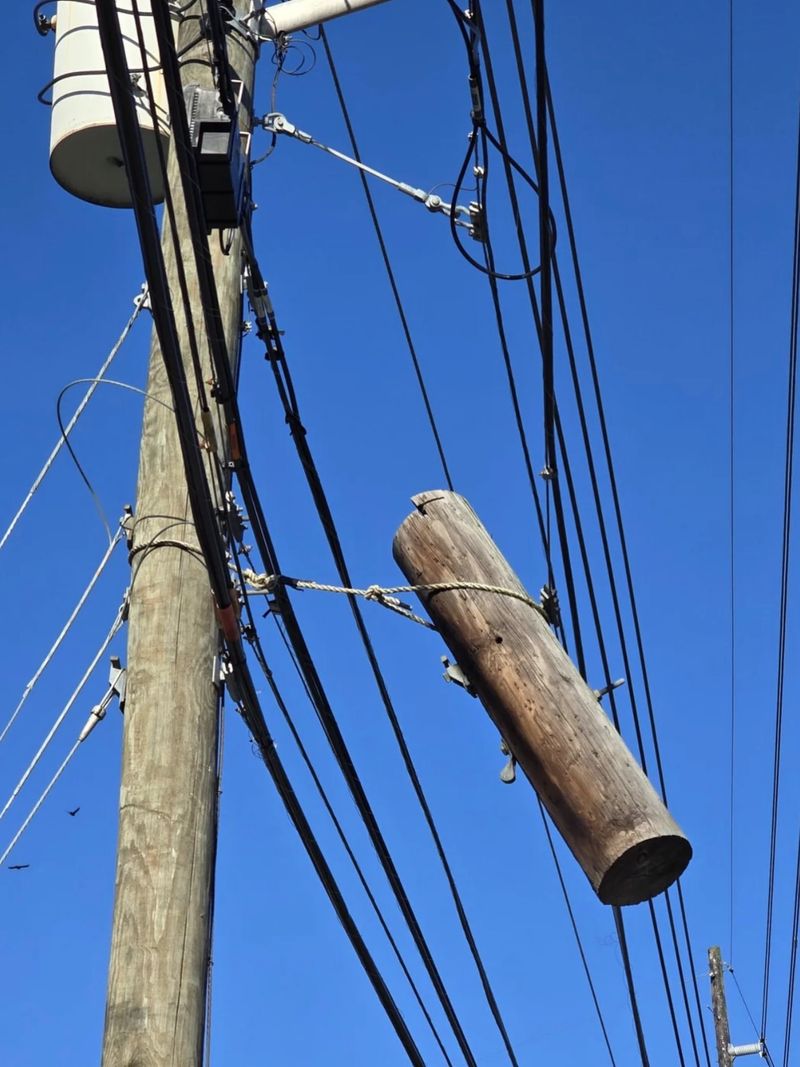
Power lines are not something to take chances with, ever. When a storm pushes a branch onto or near a utility line, that branch becomes part of a very dangerous situation that goes far beyond normal yard cleanup.
Even if the branch looks small or the line looks fine, you have no way of knowing whether that line is energized just by looking at it.
Michigan utility companies like Consumers Energy and DTE Energy both have clear policies about this exact situation. The job of clearing branches from or near power lines belongs to trained utility workers, not homeowners with hand saws.
Those workers have specialized equipment, insulated tools, and safety training that takes years to develop. No YouTube tutorial or weekend warrior instinct replaces that kind of preparation.
Some people assume that if the lights are still on in the house, the line must be safe. That reasoning is dangerously flawed.
A line can still carry electricity even when it appears undamaged. Touching a branch that is in contact with an energized line can send a current through your body faster than you can react.
The ground around a downed or contact line can also carry voltage, which means even standing nearby carries real risk.
If you spot any branch touching, resting on, or hanging above a utility line, put your tools down and walk away from the area. Keep children and pets well back.
Call your utility company first, then consider reaching out to a certified arborist who can coordinate with the utility provider to handle the tree side of the cleanup safely and correctly.
2. A Downed Wire Changes The Whole Cleanup Plan
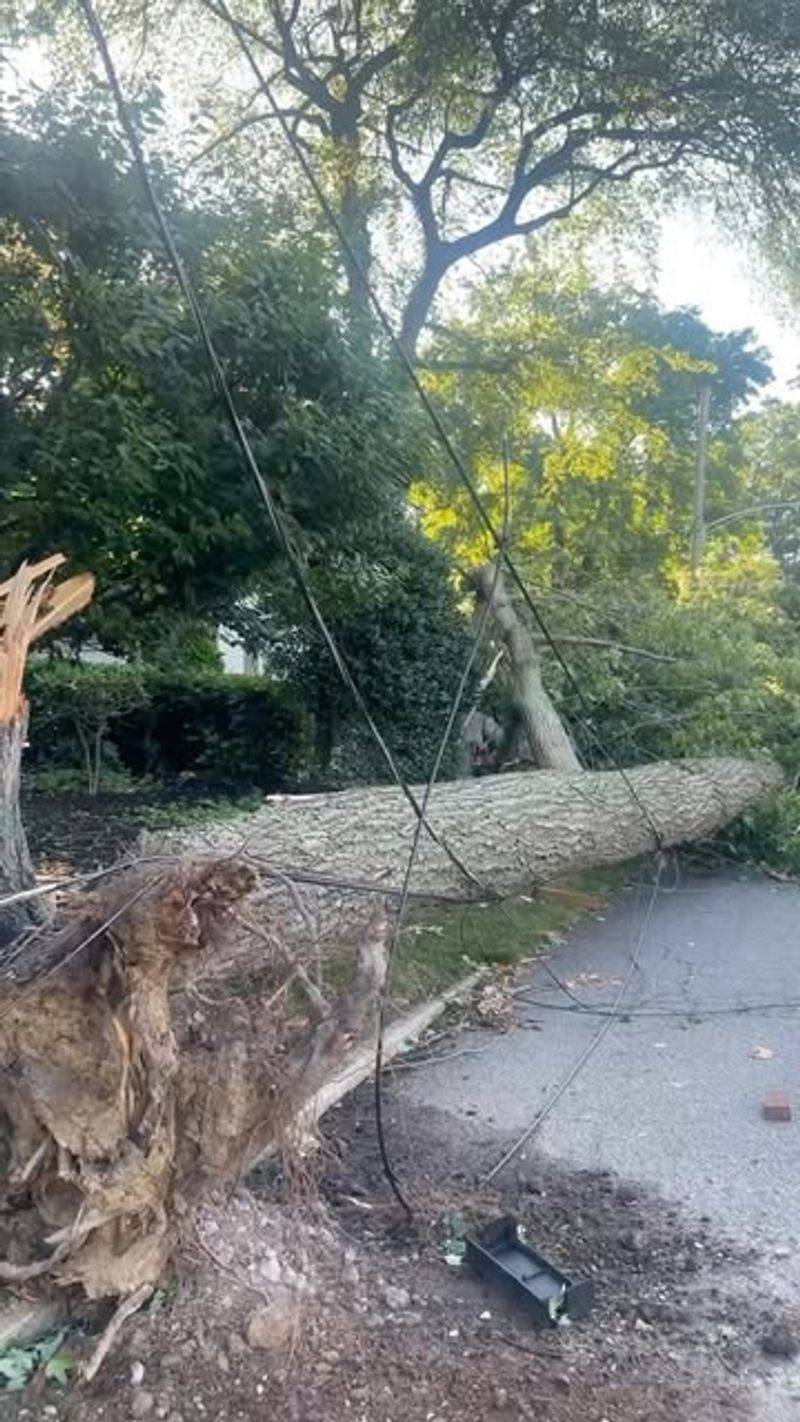
Nothing changes a storm cleanup situation quite like a wire on the ground. The moment you spot a downed wire near branches, fallen limbs, or anywhere in your yard, the entire plan needs to stop.
A wire lying on the ground is not a signal to work faster or grab a longer tool. It is a signal to back away and call for help immediately.
Here is something most people do not realize: the ground itself can carry electrical current when a live wire is nearby. This is called step potential, and it means that even walking toward a downed wire puts you at risk.
Your Michigan Garden Changes Every Week. Your Plan Should Too.
Gardening in Michigan changes quickly throughout the season. Every Friday you’ll receive a simple weekly plan showing exactly what to plant, prune, fertilize, harvest, and protect so you never miss the right timing.
You do not have to touch the wire to be in danger. Wet grass, puddles, and muddy soil after a Michigan storm make this risk even higher because water conducts electricity so efficiently.
Keep everyone out of the area, and that includes well-meaning neighbors who want to help. Pets should be brought inside immediately.
Even a dog running across a yard with a downed wire nearby faces serious risk. Blocking off the area with whatever you have available, a trash can, a lawn chair, anything visible, can help keep others from wandering in before help arrives.
Call 911 first if anyone is near the wire or if there are sparks or fire. Then call your local utility company to report the downed line. They have crews ready to respond to exactly these situations.
Once the utility company confirms the line is safe, a professional arborist can assess and handle the branch and tree damage. Rushing this process helps no one and puts everyone at unnecessary risk.
3. Hanging Branches Overhead Are Not Simple Pruning
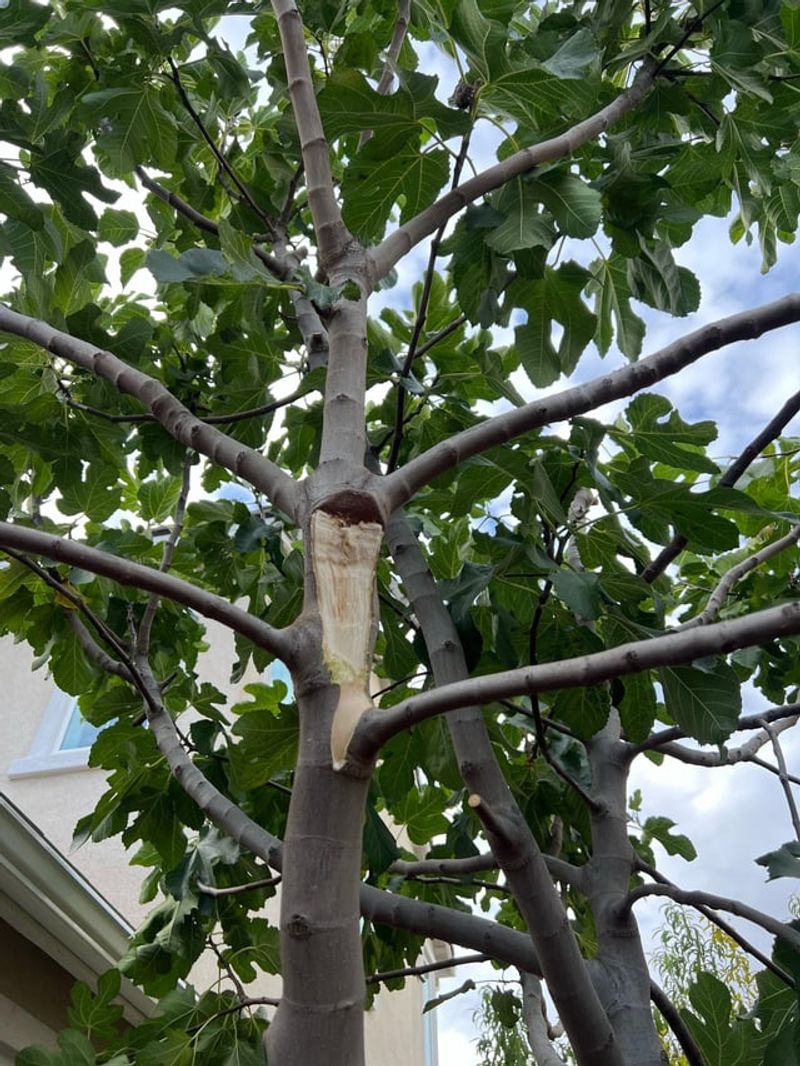
Storm-damaged branches that are still hanging in the tree canopy have a nickname among arborists: widow makers. That name alone should tell you everything you need to know about treating them as a simple pruning project.
A branch that is cracked, split, or wedged up in the canopy is under enormous tension and can drop or swing without warning the moment any part of the tree is disturbed.
When you cut a hanging branch from below, you are not in control of where it falls. The weight, the angle, the tension in the wood, and the other branches around it all determine what happens next.
Professional arborists use ropes, rigging systems, and calculated cutting techniques to manage exactly where a large limb goes when it comes free. That is not guesswork. It is trained, practiced skill.
Size matters a lot here. A small twig that is barely hanging is a very different situation from a branch that is six inches in diameter and suspended twenty feet over your head.
Michigan storms, especially ice storms in winter and severe thunderstorms in summer, are known for creating exactly that kind of heavy, awkward, dangerous overhang. Ice adds enormous weight to branches that already look stressed.
Before you even walk under a hanging branch to get a closer look, stop and assess from a safe distance.
If the branch is large enough that you cannot wrap both hands around it, if it is overhead, or if it is lodged against other branches with pressure built up, step back and call a certified arborist.
The cost of a professional visit is far less than the cost of getting it wrong.
4. Split Trunks Need A Professional Inspection
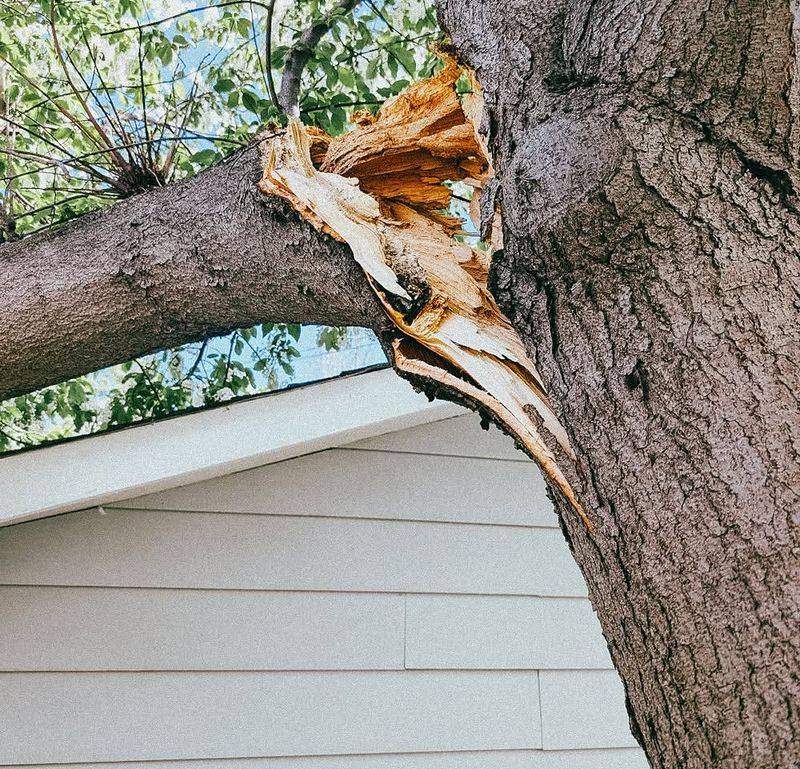
A split trunk is one of the most serious signs that a tree has been pushed beyond what it can handle on its own. When wind or ice forces the trunk to crack, the whole structure of the tree changes.
What was once a solid, upright support system becomes something much less predictable, and that unpredictability is exactly why this is not a job for a homeowner with a pruning saw.
Many people look at a split trunk and think the solution is to remove some of the weight from the top by pruning a few branches. The logic seems reasonable, but it can actually make things worse.
Cutting branches changes where the weight and stress are distributed throughout the tree. Without knowing exactly how the trunk has cracked and how far the split extends, pruning can speed up the failure rather than slow it down.
Michigan sees its share of ice storms every winter, and those storms are especially tough on trees. Ice adds weight fast and distributes it unevenly across branches and trunks.
A trunk that looked perfectly healthy going into a storm can come out of it with a crack running several feet down through the heartwood.
That kind of damage is not visible from the outside, which is another reason why a trained eye matters so much.
A certified arborist can probe the crack, assess how deep it goes, and give you an honest recommendation about whether the tree can be stabilized with cabling or bracing, or whether removal is the safer path.
That assessment protects your property and your family far better than any amount of well-intentioned guesswork ever could.
5. Branches Over Roofs Cars Or Walkways Raise The Risk
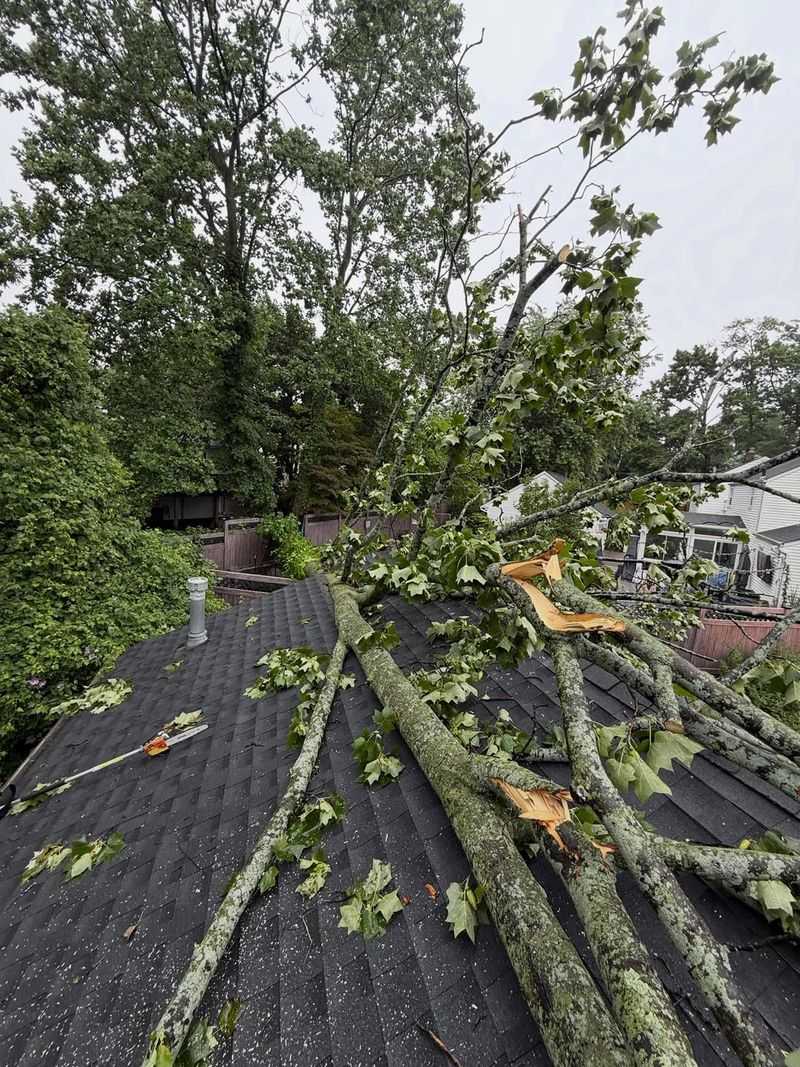
Location changes everything when it comes to storm-damaged branches. A broken limb hanging over an open field is a very different problem from a broken limb hanging directly over your roof, your car, a sidewalk, or a backyard play area.
The moment a branch is positioned above something valuable or somewhere people walk, the margin for error in any cleanup attempt drops to almost nothing.
Think about what happens when a cut goes wrong. A branch that should have fallen straight down can kick sideways, bounce off the trunk, or slide along the roofline before it lands.
Even experienced pruners sometimes misjudge the direction a limb will travel when it separates.
For a homeowner on the ground with a pole saw and no rigging, controlling where a heavy branch lands is nearly impossible once the cut is made.
Roofs are especially vulnerable. Shingles, gutters, skylights, and chimney flashing can all be damaged by even a mid-sized branch dropping from a height.
A car sitting in the driveway under a damaged limb can be dented, cracked, or worse in seconds.
And a walkway or driveway is somewhere people pass through constantly, including kids, guests, and delivery drivers who have no idea the branch above them is unstable.
The smart move is to keep people and vehicles away from the area under any questionable branch and bring in a professional who can rig the limb before cutting. Certified arborists use rope systems to control exactly where a branch goes as it comes down.
That level of control is what protects your property and everyone nearby from an outcome that could have been completely avoided.
6. Leaning Trees Should Not Be Rushed
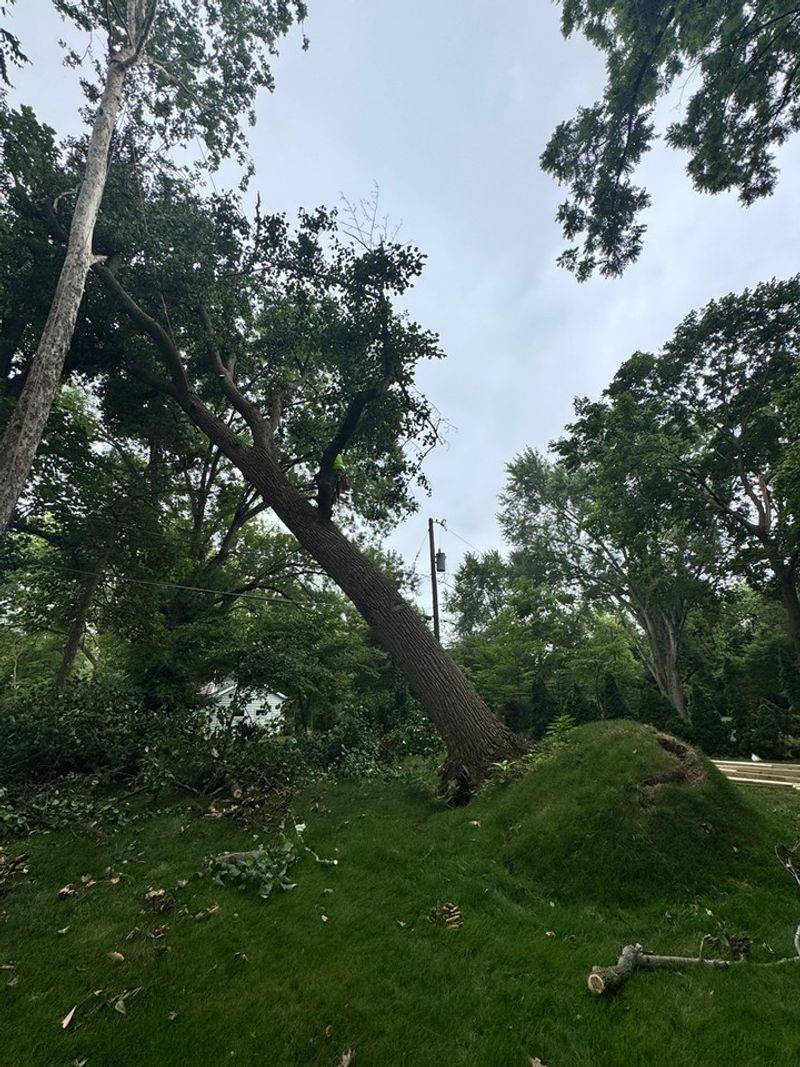
A tree that was standing straight yesterday and is leaning today is telling you something important.
That lean almost always means the root system or the soil around it has been compromised, and a compromised root system means the whole tree is less stable than it looks.
Rushing in to prune the top branches to lighten the load sounds logical, but it can actually disturb the tree enough to trigger a full fall.
Exposed roots are one of the clearest warning signs. When you can see roots that were previously underground, or when the soil near the base of the tree looks lifted, cracked, or heaved, the anchor holding that tree upright has been partially released.
The tree is essentially being held in place by whatever roots are still intact and by the tension in the wood itself. Any additional movement, including the vibration from a chainsaw or the shifting weight from cut branches, can upset that balance.
Michigan’s clay-heavy soils in many parts of the Lower Peninsula can actually make this worse. Clay holds water, and after a heavy storm, saturated clay provides much less grip for tree roots than dry soil does.
A tree that might have survived a storm in dry conditions can end up leaning badly after a rain-soaked windstorm because the soil simply gave way.
Keep your distance from any leaning tree until a qualified arborist has assessed the situation. A good arborist will look at the root plate, check the lean angle, and evaluate the surrounding soil before recommending anything.
Sometimes trees can be stabilized with cables or ground anchors. Other times, full removal is the only responsible answer, and only a professional can tell you which path is right.
7. Chainsaws And Ladders Make Storm Cleanup More Complicated
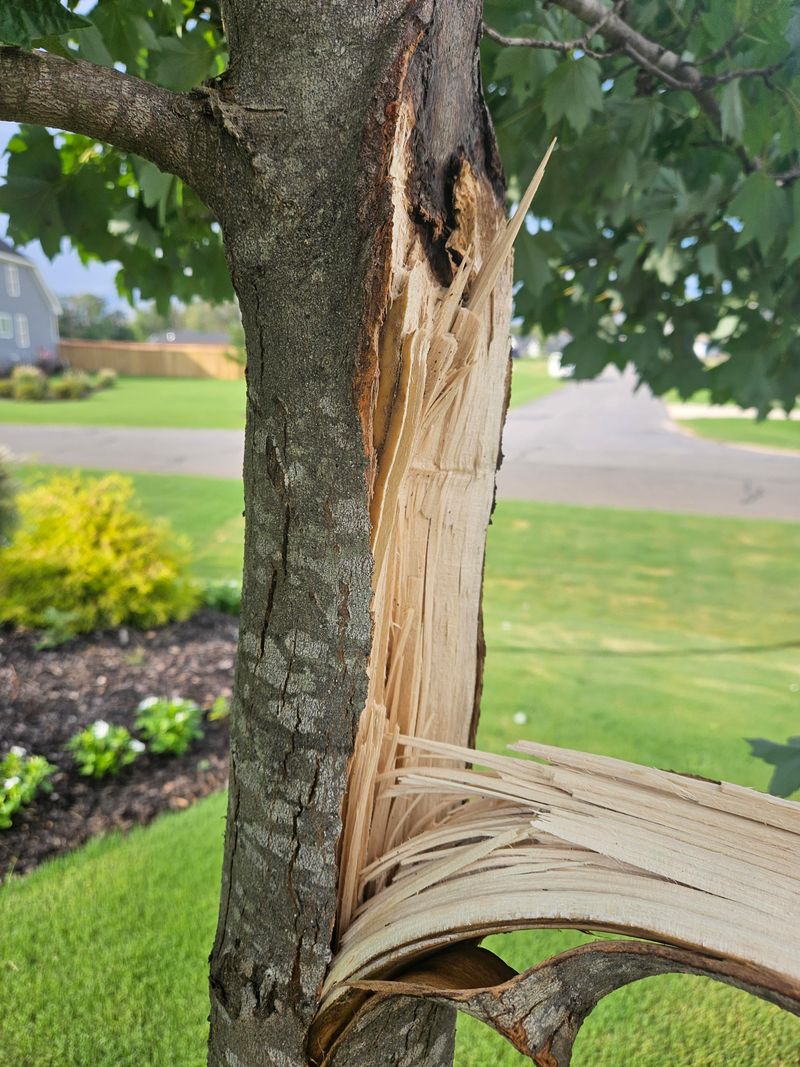
Grab a chainsaw and a ladder after a storm, and you have just created two separate risks that are now working against each other at the same time. Chainsaws require two hands, full balance, and a stable surface.
Ladders require focus, secure footing, and a clear head. Combining both while also managing a heavy, unpredictable storm-damaged branch is exactly the kind of situation where things go wrong fast.
Chainsaws are particularly demanding tools. They kick back without warning when the tip of the bar contacts wood unexpectedly, and kickback happens in a fraction of a second.
On the ground with good footing, an experienced operator can manage that risk. On a ladder, leaning out to reach a branch at an awkward angle, the same kickback can send the saw in a direction that is impossible to recover from safely.
This is not a skill gap that practice alone can close quickly enough to matter in a post-storm cleanup situation.
Michigan storm cleanup also tends to happen under pressure. Neighbors are watching, there is debris everywhere, and the urge to just get it done is strong.
That pressure leads people to take shortcuts they would never take on a calm weekend afternoon.
Rushing through a chainsaw job on a ladder after a storm is a combination that professional tree crews specifically train to avoid, even with years of experience behind them.
If your cleanup involves a chainsaw, a ladder, climbing into the tree, or managing any limb that is too large to lift comfortably with one hand, stop and call a certified arborist.
These professionals carry the right equipment, the right insurance, and the right training to handle exactly what a Michigan storm leaves behind. Your safety is always worth that call.