This Mowing Mistake Is Making It Harder To Get Rid Of Crabgrass In Ohio (And 7 Tips To Correct It)
Crabgrass in Ohio lawns has an accomplice, and most homeowners have been helping it without realizing it. The mowing habits that feel like responsible lawn care create exactly the conditions crabgrass needs.
They help it establish, spread, and outcompete the turf grass that was supposed to be there instead. This is not about mowing frequency.
It is about one specific mistake. It changes the light, the soil temperature, and the competitive balance between turf grass and crabgrass in ways that tip the season firmly in the wrong direction.
Lawn care products, overseeding, and pre-emergent applications all work better in a lawn where this mistake is not happening. They work against themselves in one where it is.
Several corrections make a real difference. One matters more than all the others combined.
Ohio lawns that have been losing the crabgrass battle for years tend to be making this mistake every single time they mow.
1. Stop Scalping The Lawn In July Heat
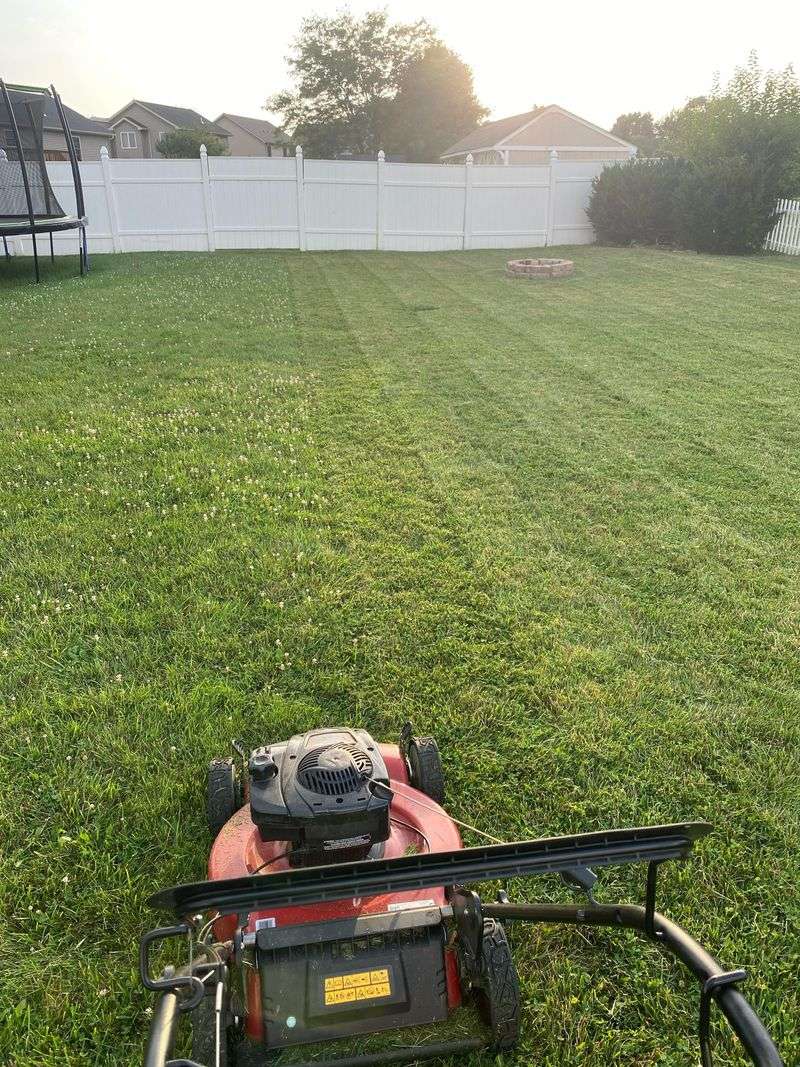
A shaved-down lawn on a hot July afternoon might look neat at first glance, but what is happening below the surface tells a different story.
Scalping, which means cutting cool-season grass far shorter than it prefers, can weaken the turf’s root system and leave the soil wide open to sunlight.
Crabgrass is a warm-season annual that thrives in exactly those conditions: bright, hot soil with little competition overhead.
OSU Extension turf guidance notes that cool-season grasses such as tall fescue and Kentucky bluegrass are under significant stress during Ohio’s summer heat.
Cutting them too short during that period reduces their ability to photosynthesize, weakens their roots, and thins the canopy.
A thinner canopy means more light reaches the soil, giving crabgrass seedlings a better chance to germinate or spread.
Check your mower deck before every summer mow. Avoid the lowest setting, especially between June and August.
Many homeowners drop the deck hoping to go longer between mows, but that trade-off often costs the lawn more than it saves. Scalping also creates stress that can slow turf recovery during drought.
Crabgrass pressure depends on many factors, including bare soil, compaction, a heavy seed bank, and missed spring pre-emergent applications. Scalping alone does not cause crabgrass, but it can make conditions noticeably more favorable for it to take hold.
2. Raise The Mower To Shade Crabgrass Seedlings
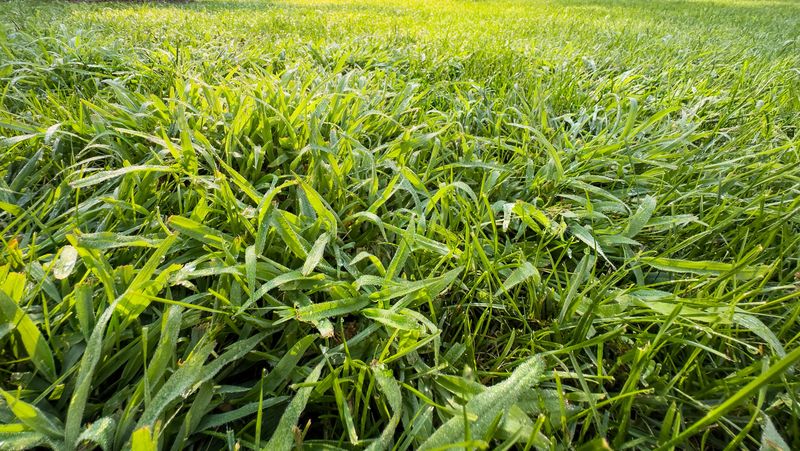
Taller grass does something simple but powerful: it shades the ground. Crabgrass seedlings need warmth and light to germinate successfully.
When the turf canopy is dense and tall enough to block sunlight from reaching the soil surface, those seedlings have a harder time getting started. Raising the mower deck is one of the most straightforward corrective steps available to any homeowner.
Turfgrass extension guidance generally recommends mowing cool-season grasses at heights in the range of three to four inches during summer stress periods. Tall fescue, which is common across Ohio, is often best maintained at the higher end of its recommended range during hot weather.
If your mower has been set low all season, raise the deck gradually over a few mowing sessions rather than jumping to a tall height all at once. A sudden large increase can also stress turf that has adapted to being cut short.
Your Ohio Garden Changes Every Week. Your Plan Should Too.
Gardening in Ohio changes quickly throughout the season. Every Friday you’ll receive a simple weekly plan showing exactly what to plant, prune, fertilize, harvest, and protect so you never miss the right timing.
Raising the height alone will not eliminate established crabgrass. But a denser, taller lawn competes more effectively by reducing the light and space that new seedlings need.
Pair this adjustment with proper watering, fall overseeding of thin areas, and spring pre-emergent treatment when needed for a more complete approach. Think of mowing height as one layer of a broader strategy, not a standalone fix.
A lawn that shades its own soil is already working harder against crabgrass than a scalped one ever could.
3. Cut Often Enough To Avoid Shock
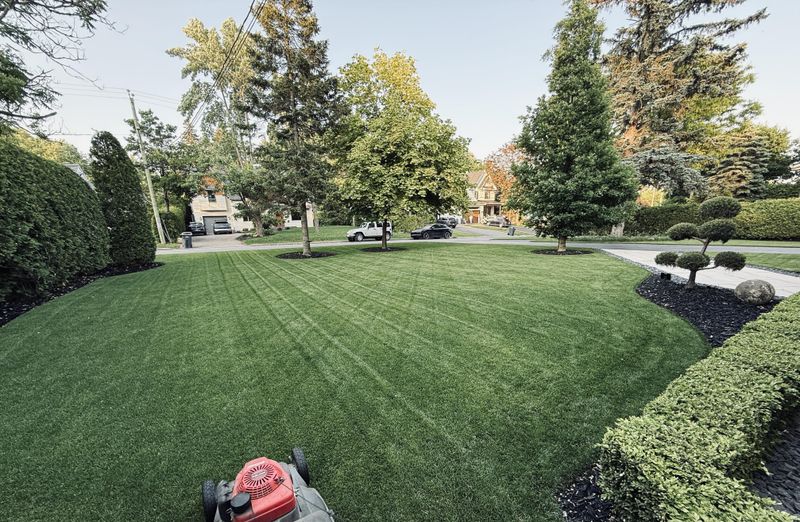
Waiting two or three weeks between mowing sessions and then cutting everything down at once puts a serious shock on any lawn. Grass blades are not just decoration; they are the plant’s main tool for capturing sunlight and producing energy.
Remove too much at once and the plant redirects energy away from root development to try to rebuild its canopy quickly. That recovery period leaves turf weaker and thinner, which is exactly the kind of opening crabgrass can exploit.
Mowing guidance widely supports what is commonly called the one-third rule: never remove more than one-third of the grass blade in a single mowing session.
If your lawn is growing fast after a rainy stretch, you may need to mow more than once a week to stay within that range.
During slow summer growth, you can mow less frequently without dropping the deck to compensate. The goal is to match mowing frequency to actual grass growth, not to a fixed calendar schedule.
Hot, dry spells in the Buckeye State can slow turf growth significantly. During those periods, the lawn may need less frequent mowing, but the height should stay consistent.
Avoid the temptation to cut extra short before a vacation or busy week. That kind of shortcut can set the lawn back more than the skipped mowing would have.
Frequent, light mowing generally keeps turf healthier and better able to compete with opportunistic weeds like crabgrass throughout the season.
4. Leave Enough Blade To Feed The Roots
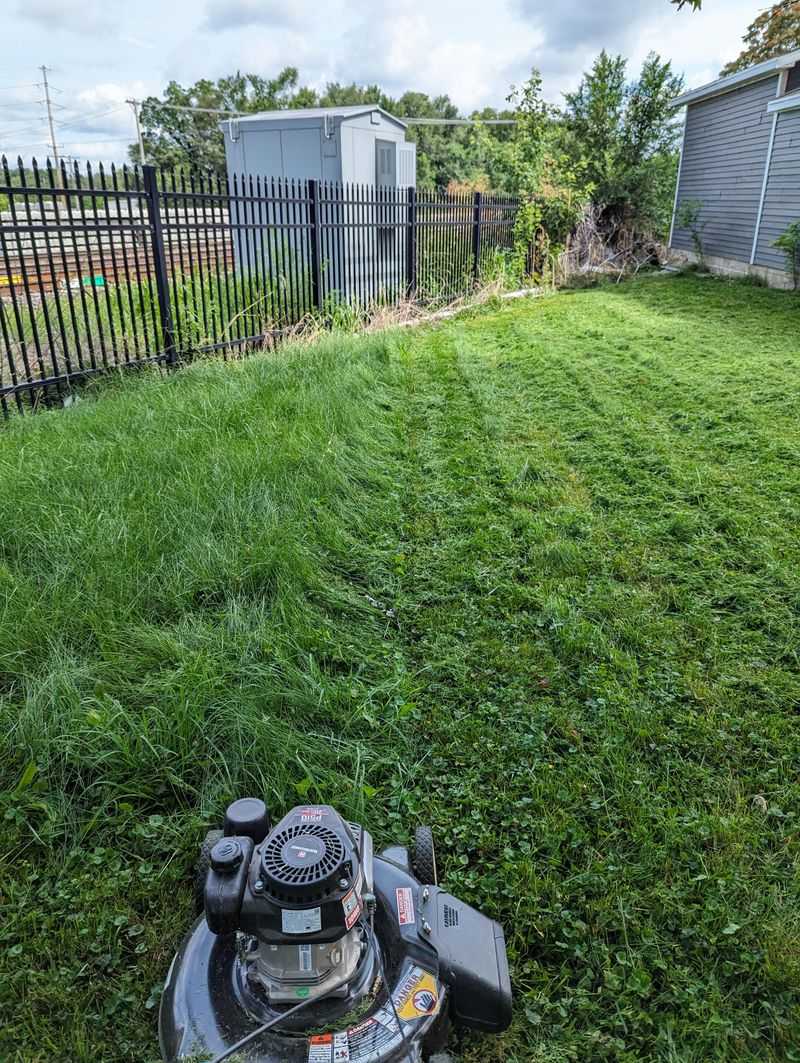
Every green blade of grass is a tiny solar panel. It captures sunlight and converts it into the energy the plant uses to grow, develop roots, and stay dense.
When mowing removes too much of that blade repeatedly, the plant cannot produce enough energy to maintain a strong root system.
Shallow, weakened roots make turf far more vulnerable during Ohio’s hot, dry summers, and thin turf gives crabgrass more room to move in.
University extension weed guidance explains that turf density is one of the most important factors in suppressing annual weeds like crabgrass. A lawn with a thick canopy and healthy roots simply leaves less open soil for weed seeds to reach.
Protecting enough green leaf blade during summer is a practical way to keep that density working in your favor.
Short, repeated cuts during heat stress can chip away at that advantage over several weeks without the homeowner noticing until bare spots appear.
A good visual check is easy: after mowing, look down at the lawn. You should still see mostly green, not brown soil or pale stubble.
If the mowed surface looks more tan than green, the deck is probably set too low. Stronger turf competes better with crabgrass not because it smothers seeds chemically.
It works because it physically occupies the space, shades the soil, and uses water and nutrients before weeds can access them. Keeping enough blade on the plant is a foundational step in that competition.
5. Mow Dry Grass So Cuts Stay Cleaner
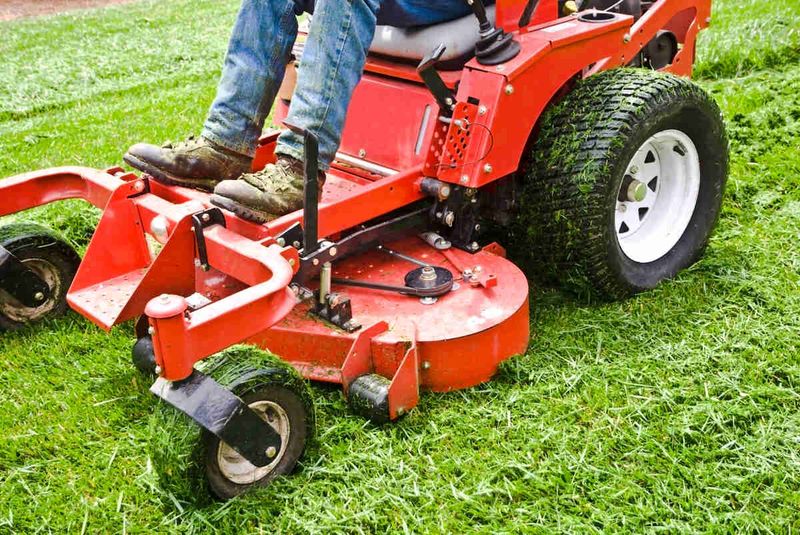
Wet grass has a habit of making everything more difficult. Blades clump together, fold over, and resist the mower rather than standing upright for a clean cut.
The result is often an uneven trim that tears some blades while leaving others barely touched. Wet soil also compresses easily under mower wheels, which can worsen compaction in areas that are already struggling to drain properly.
Mowing guidance recommends waiting until dew or recent rain has dried before running the mower when possible. Dry grass stands more upright, feeds through the mower deck more evenly, and produces cleaner cuts that heal faster.
This matters more during summer stress periods when turf is already working hard to recover from heat. A cleaner cut means less surface area for moisture loss and less entry point for disease or stress.
Heavy clumps of wet clippings left on the lawn can smother the turf beneath them if not spread or removed. Smothered patches weaken and thin out, creating exactly the kind of bare, open soil that crabgrass favors.
Wet mowing does not directly cause crabgrass every time. But the combination of torn grass, compacted soil, and smothered patches can make the lawn harder to defend.
Letting the lawn dry before mowing is a simple habit that costs nothing and protects turf that is already under pressure from summer heat and weed competition.
6. Bag Clippings Where Crabgrass Has Gone To Seed
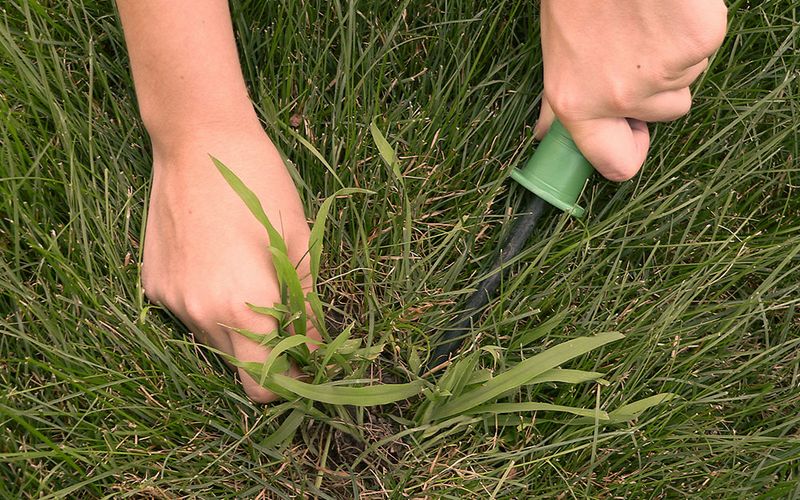
Under normal conditions, returning grass clippings to the lawn is a smart, low-effort way to recycle nutrients back into the soil. Small, dry clippings break down quickly and can reduce the need for supplemental fertilizer.
But not all clippings are equal, and crabgrass seed heads deserve a closer look before you decide to mulch them back in.
Crabgrass is a prolific seed producer. A single plant can produce thousands of seeds that remain viable in the soil for years.
Weed management guidance describes this accumulated seed bank as one of the main reasons crabgrass keeps returning even after good seasonal control.
Mowing over mature crabgrass seed heads and spreading those clippings across the lawn may scatter viable seeds into areas that were previously clean.
The practical advice here is straightforward. When crabgrass patches in your lawn have reached the seed-head stage, consider bagging or carefully removing those clippings rather than mulching them back.
Move from cleaner areas of the lawn toward crabgrass-heavy sections when possible, rather than the reverse.
Bagging is not a complete solution and will not remove every seed already in the soil, but it can help reduce how many new seeds are spread during mowing.
Pair this habit with a plan for fall overseeding to fill in the thin spots those crabgrass patches leave behind. Also consider a spring pre-emergent application the following year based on extension guidance and product label directions.
7. Sharpen Blades Before They Tear Stressed Turf
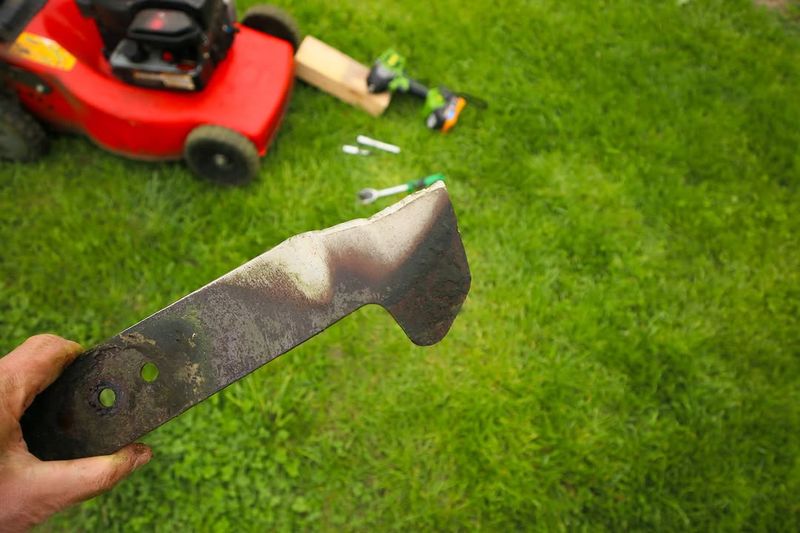
Pull a few grass blades from your lawn after mowing and look at the tips. Clean cuts leave a smooth, even edge that heals quickly.
Dull mower blades leave ragged, frayed, or torn tips that turn brown within a day or two. That browning is not just cosmetic.
It signals that the plant is losing moisture through the damaged tissue and spending energy on repair rather than root development or canopy growth.
Turfgrass guidance recommends checking mower blade condition regularly and sharpening or replacing blades as needed throughout the mowing season. A blade that cuts cleanly at the start of spring can become noticeably dull by midsummer.
That is especially true if the lawn has sandy soil, hits occasional rocks, or is mowed frequently. Many lawn care guides suggest sharpening blades at least once or twice per season, though frequency depends on conditions and use.
Torn grass is more vulnerable to heat stress, drought, and disease. Turf that is already competing with crabgrass does not need the extra burden of healing from poor cuts every week.
Sharp blades will not destroy crabgrass, but they help the surrounding turf stay stronger and recover more quickly from each mow.
A few minutes spent sharpening the blade before the season or partway through can make a real difference in how well the lawn holds up under summer pressure.
Healthy, well-cut grass is simply better positioned to compete.
8. Pair Better Mowing With Fall Lawn Repair
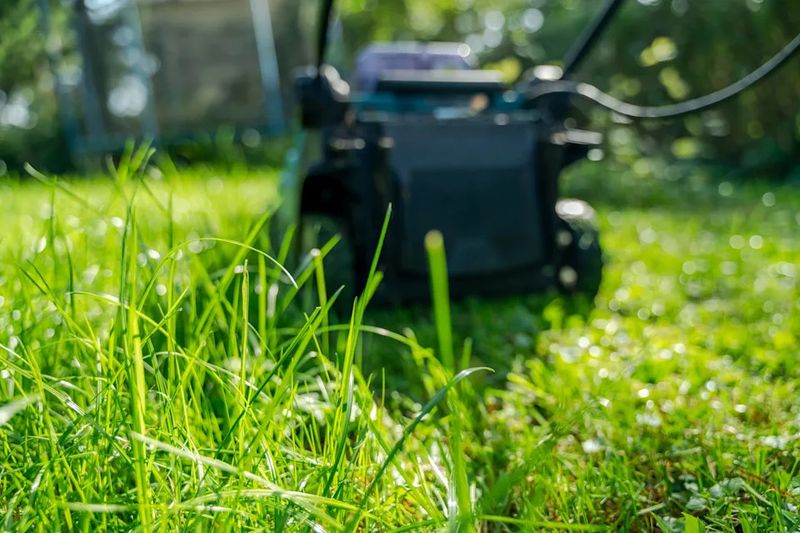
Raising the mower and following better mowing habits can help the lawn compete more effectively right now. But where crabgrass has already withered and left thin or bare spots, the ground is wide open for next year’s problem.
Fall is the most important window for repairing those areas before winter arrives.
Lawn renovation guidance advises that late summer to early fall is generally the best time for overseeding cool-season lawns in Ohio. Soil temperatures are still warm enough to support germination, and air temperatures are cooling down.
There is also less competition from crabgrass, which begins to wither with the first frosts. Preparing the soil surface, improving seed-to-soil contact, and keeping new seed moist during establishment are all key steps.
Compacted areas may benefit from core aeration before seeding to help roots establish more deeply.
After overseeding, plan ahead for spring. A pre-emergent herbicide applied at the right time the following year can help prevent crabgrass seeds from germinating in areas that were just repaired.
Follow extension guidance and product label directions carefully, since timing and rates matter. Keep in mind that some pre-emergent products can interfere with new grass seed, so timing and product selection require attention.
Better mowing is one part of the strategy. Fall repair, spring prevention, proper watering, and soil health complete the picture.
Stop mowing in a way that helps crabgrass win, and start building a lawn that is thick, healthy, and ready to compete on its own terms.