The Native Shrub Some Urban Pennsylvania Streets Are Quietly Planting To Filter Traffic Pollution Naturally
Living near a busy Pennsylvania street comes with a trade off that most urban and suburban homeowners learn to accept.
The convenience of the location balanced against the constant background noise, the exhaust, and the particulate matter that traffic generates every single day.
Most people plant privacy hedges to block the view and call it done. But a growing number of urban Pennsylvania streets are doing something smarter. They’re planting a native shrub that actively filters air pollution.
This isn’t landscaping for aesthetics alone. Research has shown that certain native shrubs with specific leaf structure and density are remarkably effective at capturing particulate matter and absorbing some of the pollutants that vehicle traffic generates.
Planted along a street or property edge, they create a living buffer that does genuine environmental work in addition to looking beautiful.
The shrub gaining quiet momentum on urban Pennsylvania streets checks every box. Native, pollution tolerant, wildlife supporting, and attractive enough to anchor a landscape planting on its own terms.
Here’s what it is and why more Pennsylvania streets should be planting it.
This Tree Forms The Dense Roadside Growth Needed To Catch Traffic Dust
Walk past a thick row of northern bayberry on a city street and you can almost feel the air shift.
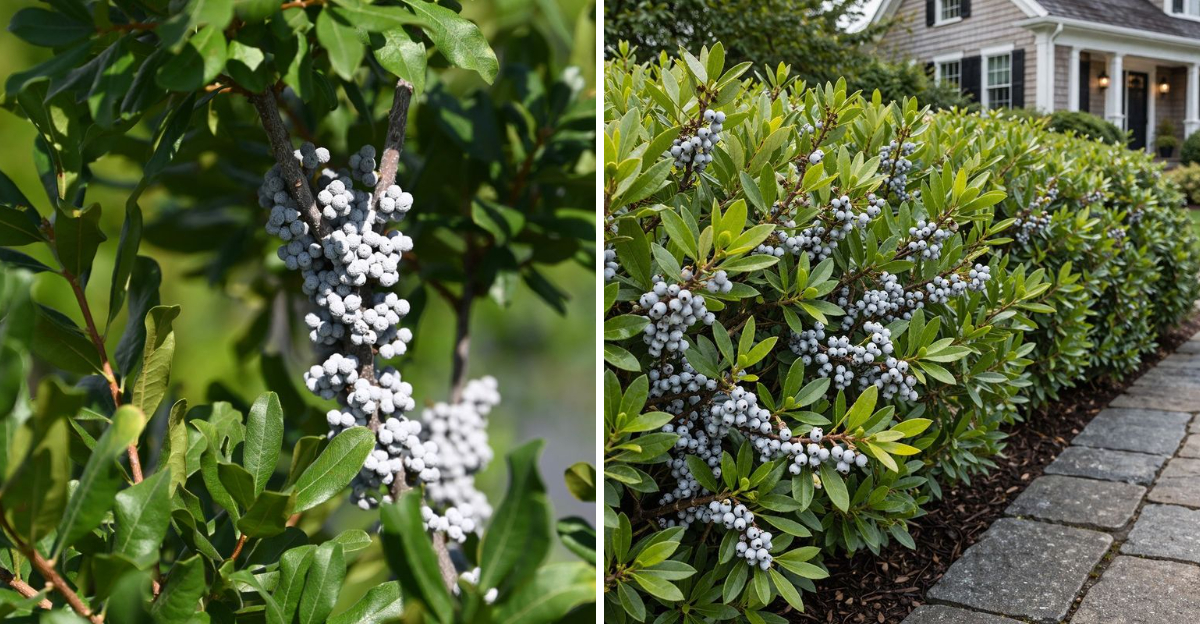
This sturdy native shrub typically grows between 5 and 10 feet tall, and its branches pack together tightly enough to create a real physical wall between traffic lanes and sidewalks. That dense structure is exactly what makes it useful as a roadside planting.
Airborne dust and tiny particles released by vehicles do not simply float away harmlessly. They drift toward homes, bus stops, and playgrounds.
When a closely branched shrub stands in the way, some of those particles land on leaf surfaces and stems instead of continuing their journey through the air. Plants work more like a sticky net than a mechanical air purifier, and bayberry does this job reasonably well.
It is worth being clear about what bayberry can and cannot do. No single row of shrubs will remove all pollution from a busy road.
Exhaust gases like nitrogen dioxide pass right through foliage without being stopped. What bayberry can realistically intercept is a portion of the heavier dust and particulate matter that travels close to ground level.
Think of it as one smart layer in a bigger strategy. City planners in Pennsylvania are pairing bayberry with other native plants, physical barriers, and traffic management tools to build more complete pollution buffers.
Bayberry earns its place in that mix because it is native to the region, grows densely without much fuss, and fills in from near the ground up, leaving fewer gaps for dusty air to sneak through.
Winter Road Salt Does Not Damage It As Easily As Many Common Shrubs

Anyone who has watched a row of ornamental shrubs turn brown and scraggly after a Pennsylvania winter knows the problem. Road salt is brutal on most plants.
It burns roots, scorches leaves, and slowly weakens growth until a once-healthy shrub looks more like a twig collection than a living plant. Northern bayberry handles all of that much better than most commonly planted roadside species.
Your Pennsylvania Garden Changes Every Week. Your Plan Should Too.
Gardening in Pennsylvania changes quickly throughout the season. Every Friday you’ll receive a simple weekly plan showing exactly what to plant, prune, fertilize, harvest, and protect so you never miss the right timing.
Salt tolerance is not just a nice bonus for a street planting. It is practically a requirement in Pennsylvania, where deicing salt gets applied heavily from November through March.
USDA guidance specifically identifies northern bayberry as suitable for roadsides and parking-lot landscapes that receive regular salt exposure.
That official recognition matters when city horticulturalists are choosing plants that need to survive real-world urban conditions year after year.
Beyond salt, bayberry handles other tough roadside challenges without much complaint. Wind exposure, compacted or sandy soil, and periods of drought do not set it back the way they would a more delicate ornamental.
Once established, which typically takes one to two growing seasons, it can largely take care of itself through Pennsylvania winters without requiring protective wrapping or special soil amendments.
For budget-conscious city programs, that toughness translates directly into savings. A plant that survives without constant replacement and expensive soil treatments stretches municipal planting budgets further.
Streets departments can focus their limited resources on expanding plantings rather than constantly replacing ones that could not handle the salt and cold. That practical durability is a big reason bayberry keeps appearing in urban greening plans across the state.
A Continuous Bayberry Hedge Works Better Than One Isolated Plant
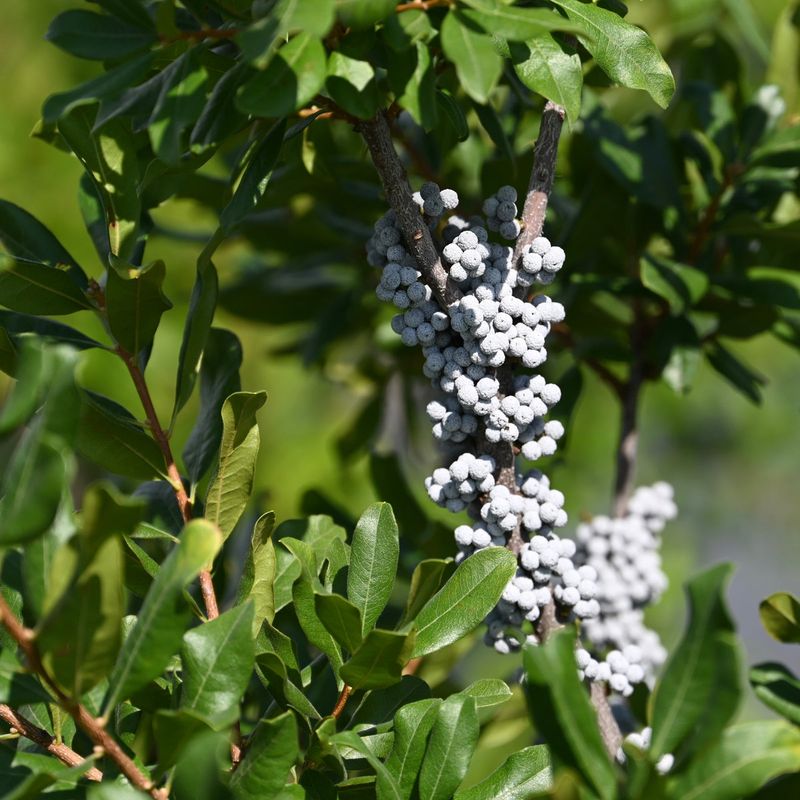
Planting one bayberry shrub in front of a building and calling it a pollution buffer is a little like putting one brick in front of a window and calling it a wall.
A single plant, no matter how healthy and full, simply cannot intercept enough airborne particles to make a meaningful difference for the people standing behind it. The EPA has made this point clearly in guidance about roadside vegetation barriers.
Effective green barriers need to be thick, continuous, and filled in from close to the ground all the way up to a useful height. Gaps in a hedge are not just cosmetic problems.
They are pathways that allow polluted air to funnel through without losing much of its particle load. A hedge with regular gaps can sometimes even accelerate airflow through those openings, making things worse rather than better near the gap locations.
Spacing bayberry plants close enough together so their branches intermingle creates a much more effective barrier than lining them up with generous gaps between each one. Combining several bayberry shrubs with taller native trees behind them builds an even deeper buffer.
The trees catch what gets over the shrubs, and the shrubs fill in the lower zone where vehicle exhaust tends to be most concentrated.
City programs in Pennsylvania that have seen the best results tend to plant bayberry in long stretches along arterial roads rather than in scattered individual spots.
A quarter-mile of continuous hedging does far more community good than twenty isolated plants spread across ten different blocks.
When space allows, going long and continuous is always the smarter approach for real pollution reduction benefits.
Its Spreading Habit Helps Stabilize Difficult Street-Side Soil
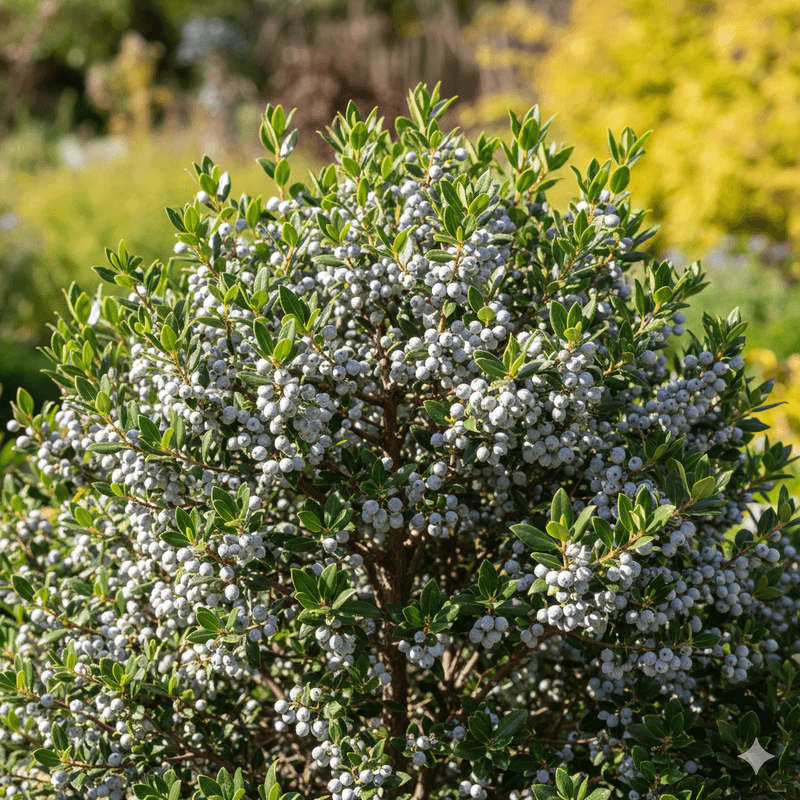
Roadside soil is not exactly garden-quality stuff. It gets compacted by foot traffic, scraped during construction, soaked with runoff carrying oil and salt, and left with little organic matter to support plant growth.
Most ornamental shrubs struggle in these conditions and need constant help to survive. Northern bayberry, on the other hand, seems almost designed for exactly this kind of difficult ground.
One of bayberry’s most useful traits is its ability to spread through underground root growth and form broad, self-sustaining colonies over time. As the colony expands, it covers exposed soil that might otherwise erode during heavy rain events.
That erosion control function is genuinely valuable along sloped roadside banks where bare soil can wash into storm drains and create maintenance headaches for city crews.
Bayberry is also flexible about moisture. It grows in soils that range from relatively dry and sandy to seasonally moist and poorly drained.
That adaptability makes it useful across many different street corridor conditions within a single city, without needing to match specific plants to specific micro-conditions the way more demanding species require.
One planning note worth keeping in mind: bayberry needs room to spread. Forcing it into a narrow planting strip between a curb and a fence, and then constantly cutting it back to fit, defeats much of its natural usefulness and stresses the plants unnecessarily.
Giving it a strip at least four to six feet wide allows the colony to fill in naturally, stabilize soil properly, and grow into the dense form that makes it effective both as an erosion control tool and as a roadside pollution buffer.
Waxy Berries Add Wildlife Value To A Functional Pollution Buffer
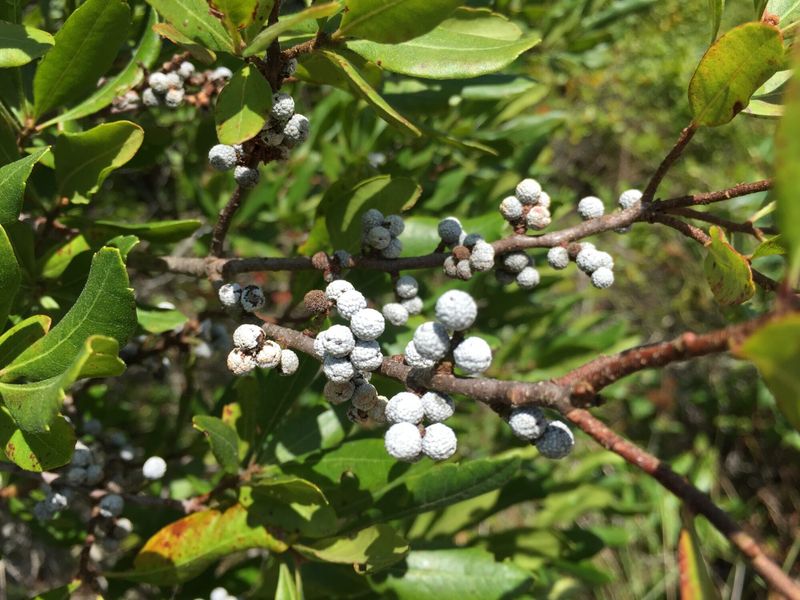
Not every plant that earns a spot in a city pollution buffer also feeds wildlife through the winter. Northern bayberry does both, and that double function makes it stand out among roadside planting candidates.
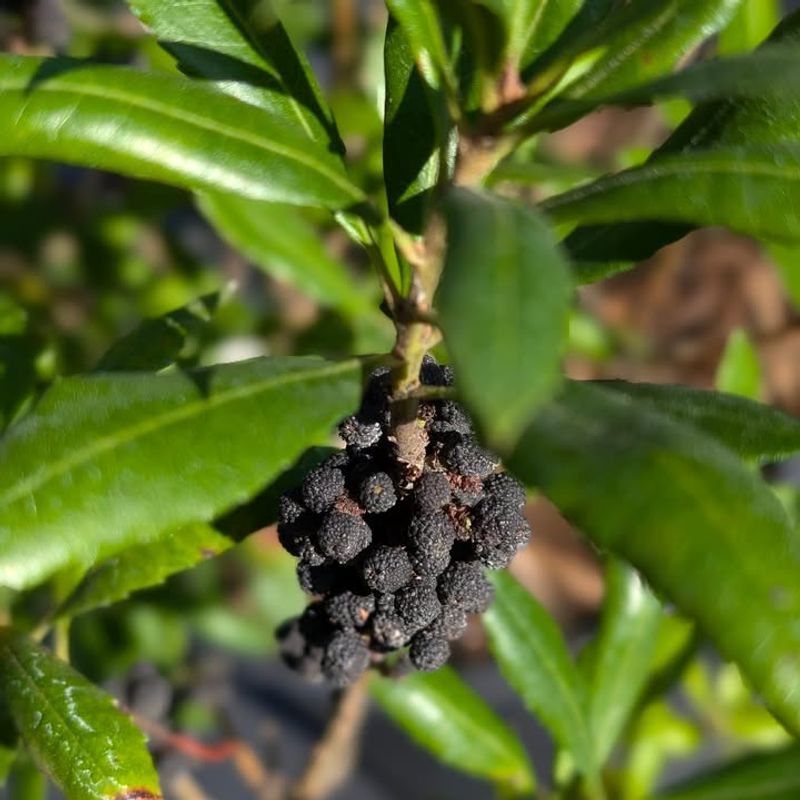
Female bayberry plants produce clusters of small, pale gray berries coated in a waxy layer that helps them persist on branches long after other food sources have disappeared from the urban landscape.
Several bird species rely on those berries during cold months when insects are gone and most fruits have already been eaten or rotted.
Yellow-rumped warblers are perhaps the most well-known bayberry fans, but other species including tree swallows and eastern bluebirds also seek out the berries during migration and winter.
Planting bayberry along Pennsylvania city streets quietly adds a feeding station for birds navigating an otherwise food-poor urban environment.
One practical detail to know: bayberry plants are either male or female, not both. Only female plants produce berries, but female plants need a male plant growing somewhere nearby to pollinate them.
City planting programs should include at least one male plant for every few female plants to ensure reliable berry production across a planting stretch.
Beyond berries, the dense branching structure of bayberry provides cover and roosting spots for birds seeking shelter from wind and predators.
A well-established bayberry hedge along a busy road serves as a mini-habitat corridor in the middle of a city, connecting green patches and supporting bird movement through urban areas.
That ecological bonus comes without any extra cost or maintenance effort, which makes it an easy argument for choosing bayberry over less wildlife-friendly alternatives.
Bayberry Cannot Eliminate Exhaust And Poor Placement Can Limit Its Benefits
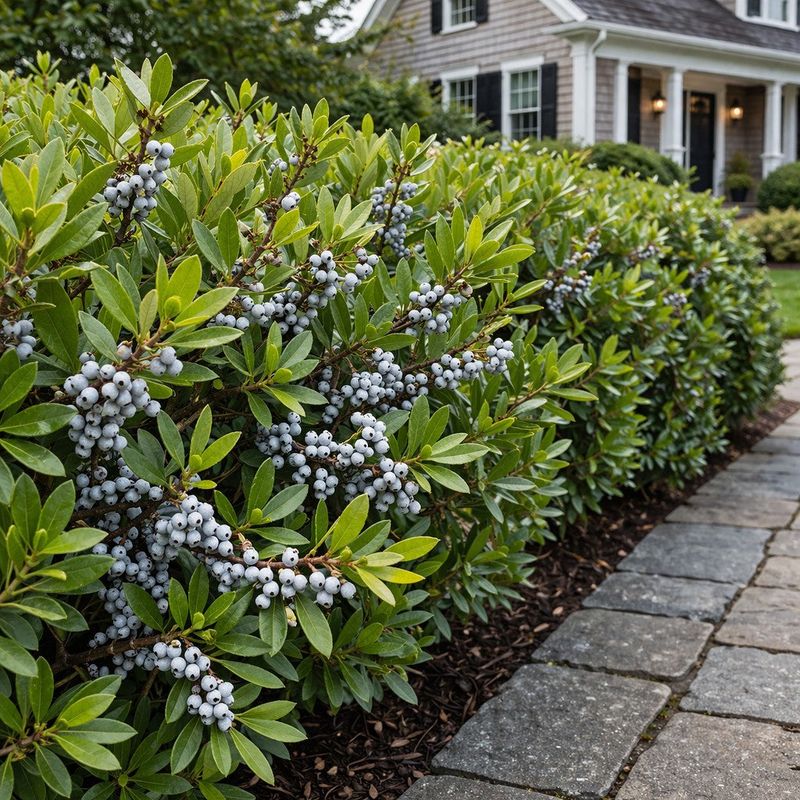
Honesty matters when talking about what plants can actually do for air quality. Northern bayberry is genuinely useful as part of a roadside buffer strategy, but it cannot remove exhaust gases from the air.
Carbon monoxide, nitrogen dioxide, and other chemical pollutants released by vehicle engines pass straight through foliage without being captured. Expecting a row of shrubs to handle those gases the way a catalytic converter handles engine exhaust sets up unrealistic goals.
Effectiveness also depends heavily on how and where bayberry gets planted. A hedge that is too short, too sparse, or positioned too far from the road loses much of its particle-intercepting ability.
Wind direction plays a big role too. If prevailing winds carry exhaust away from a hedge rather than through it, the planting provides little protection regardless of how healthy the plants look.
Road geometry matters as well, since deeply enclosed street canyons with tall buildings on both sides can trap air in ways that even a perfect hedge cannot fix.
Dense vegetation planted in very narrow, enclosed urban corridors can sometimes reduce natural ventilation and allow pollutants to accumulate rather than disperse.
Urban designers in Pennsylvania are working to balance the benefits of green buffers against the need for adequate airflow in tightly built street environments.
Getting that balance right requires site-specific planning rather than a one-size-fits-all approach.
Physical maintenance also matters more than many people expect. Bayberry branches can droop outward toward roads and sidewalks as plants mature and fill in.
Selective pruning keeps the hedge functional without destroying its density. Setting plants back far enough from the sidewalk edge from the start saves a lot of corrective pruning work later on.