The Right Ways To Prune Florida Sage For Steady Flowering
Florida sage that blooms in steady waves through the season and Florida sage that flowers once and goes quiet for weeks are often the same plant managed two different ways.
The difference almost always comes down to pruning, specifically how it gets done and when during the season it happens.
Most gardeners either prune too hard, too infrequently, or at the wrong point in the bloom cycle. Each mistake produces a different result, but all of them share the same outcome.
A plant that had more blooming capacity than it ever got to show. Sage responds to pruning faster than most Florida plants.
Get it right and the feedback is visible within days. A flush of new growth, buds forming, the plant shifting back into bloom mode with a speed that makes the effort feel immediately worthwhile.
The right approach is specific. So is the timing that makes it work.
1. Know Which Sage You Are Pruning
A plant label half-buried in the soil can save you from a pruning mistake that takes weeks to fix. The common name “Florida sage” gets used loosely, and it can refer to several different plants depending on who is talking.
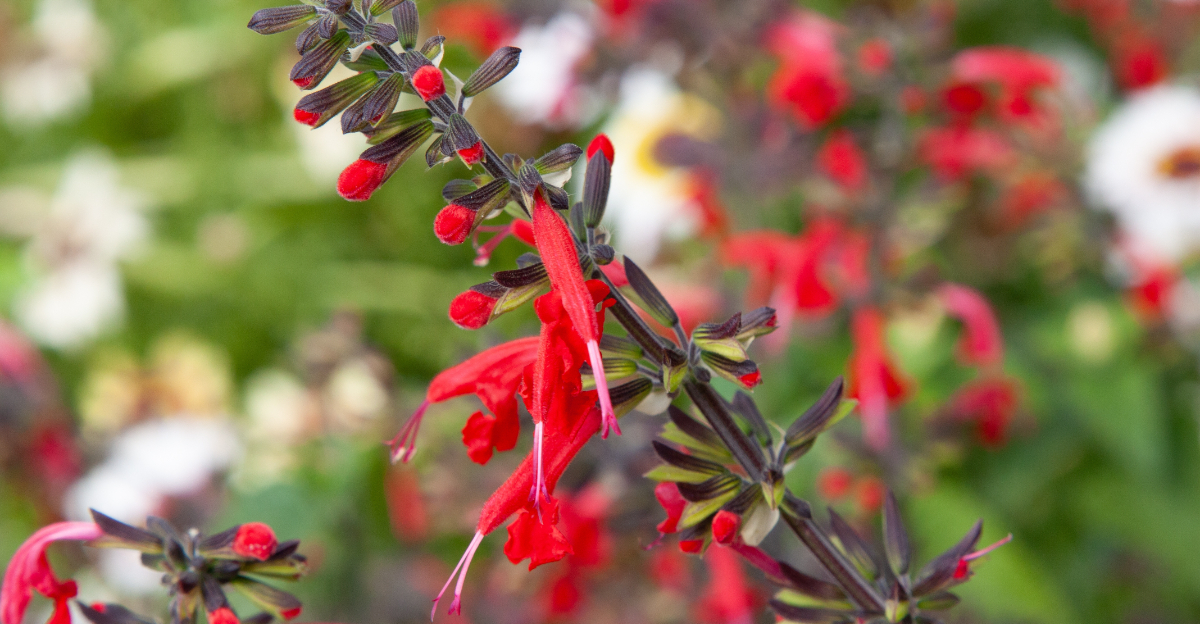
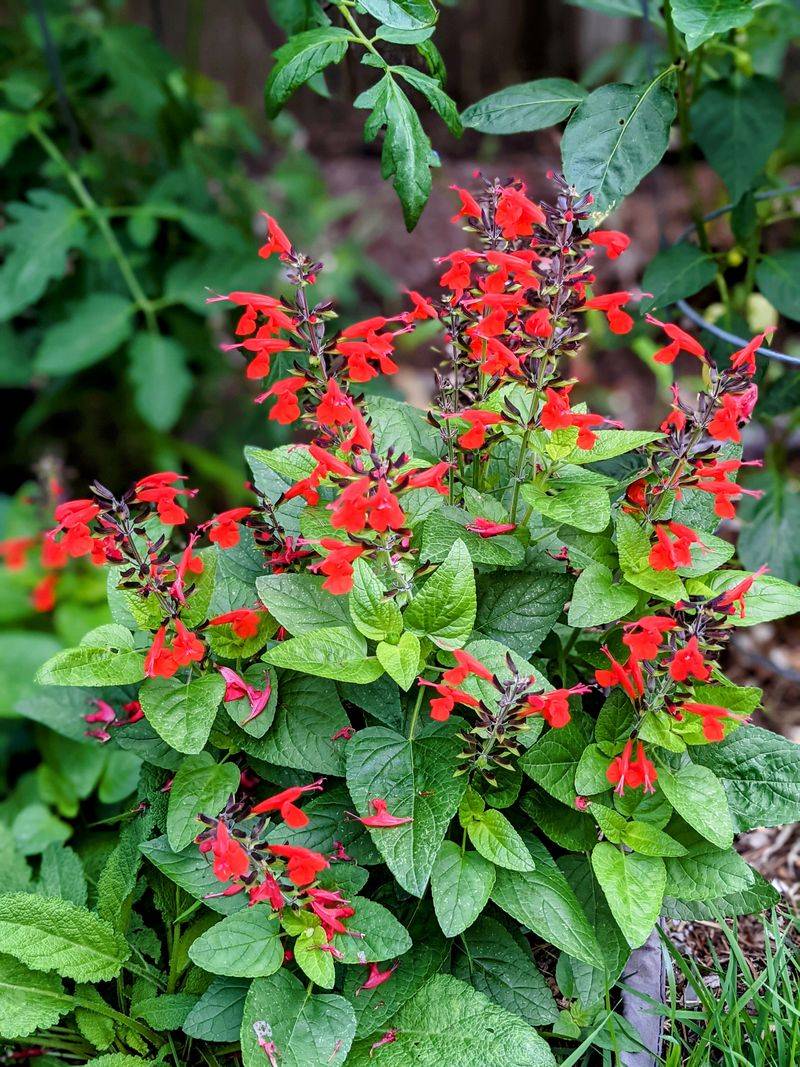
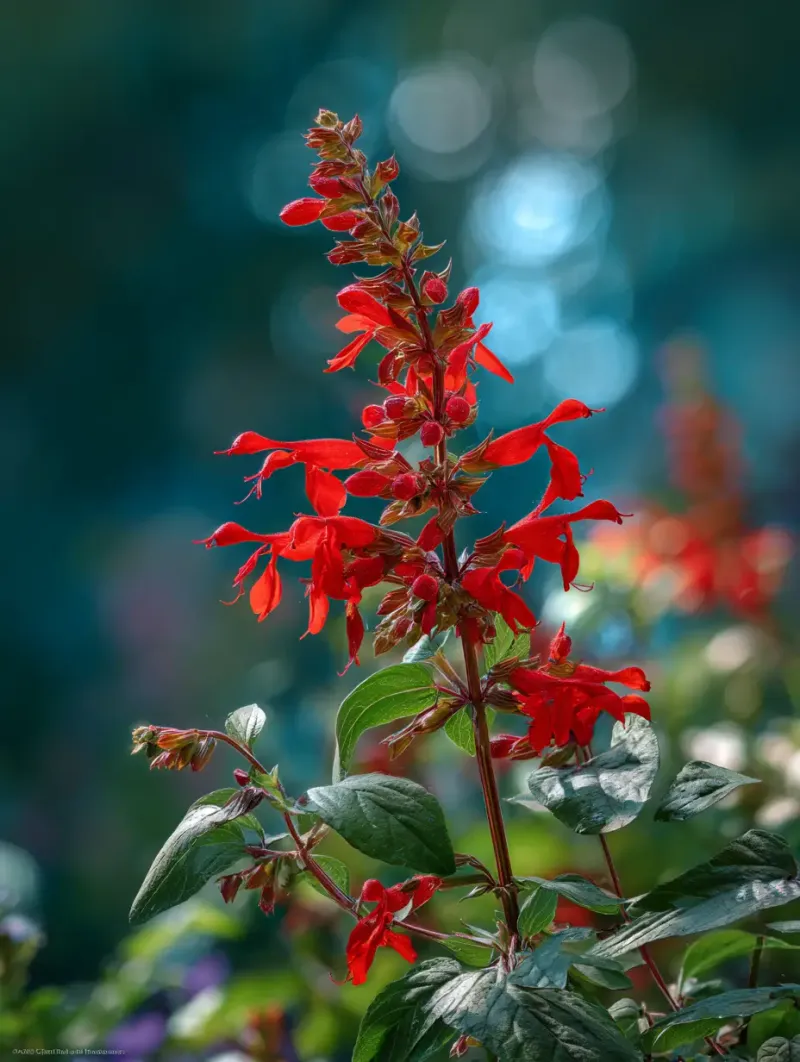
The featured plant here is tropical sage, also called scarlet sage, and its botanical name is Salvia coccinea.
It grows as a short-lived perennial or self-seeding annual across warm-weather regions of this state, and it produces tall flower spikes in red, pink, coral, or white.
Other plants share the sage name but behave very differently. Lyreleaf sage, Salvia lyrata, is a low-growing native with a rosette habit.
Clary sage is a cool-season plant from Europe. Autumn sage, Salvia greggii, is a woody shrub from Texas and Mexico with its own pruning needs.
Treating all of these the same way can cause problems.
Salvia coccinea is herbaceous and fast-growing. It responds well to light pruning of spent flower spikes but does not need heavy shaping like a woody shrub.
Before cutting, check the plant label or look up the botanical name through a county extension office. You can also ask a knowledgeable local nursery staff member.
Knowing exactly what you are growing is the first and most important step toward keeping it flowering steadily all season long.
2. Snip Spent Flower Spikes Before Seed Takes Over
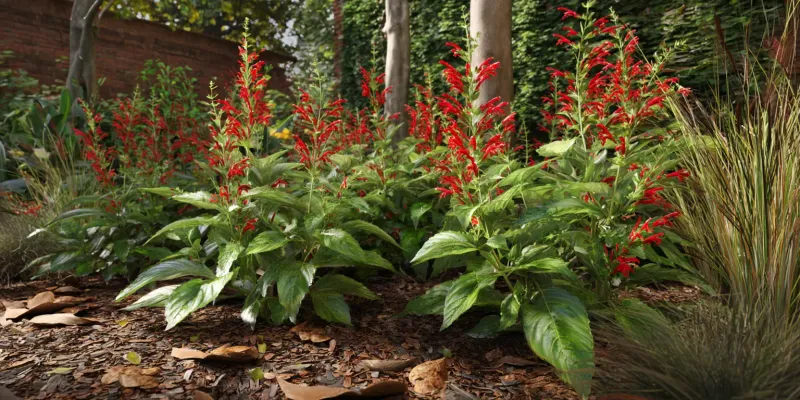
Once those vivid red or pink blooms have faded and the spike is mostly brown with no fresh color left, it is ready to come off. Leaving spent spikes on the plant too long allows seed to mature and signals the plant to slow down flower production.
Snipping them off cleanly and promptly can help repeat-flowering plants stay in a productive cycle instead of shifting all their energy into seed.
The right move is to cut the spent spike at its base, just above the first set of healthy leaves or a visible side shoot. Avoid yanking the spike off by hand, which can tear the stem and leave a ragged wound.
A small pair of sharp pruning snips or bypass pruners works best. Wipe the blades with a clean cloth between plants to avoid spreading any potential issues from one stem to another.
Your Florida Garden Changes Every Week. Your Plan Should Too.
Gardening in Florida changes quickly throughout the season. Every Friday you’ll receive a simple weekly plan showing exactly what to plant, prune, fertilize, harvest, and protect so you never miss the right timing.
Here is the nuance worth keeping in mind: not every spent spike needs to go. If you want tropical sage to reseed in your garden, leave a few spikes on the plant until the seeds are fully ripe.
Salvia coccinea is known to reseed in warm, well-drained spots, and those volunteers can fill gaps or spread into nearby beds. The choice is yours.
Trim most spikes for tidiness and repeat bloom, and leave a small number if you want new seedlings to appear next season.
3. Cut Back To A Healthy Leaf Node
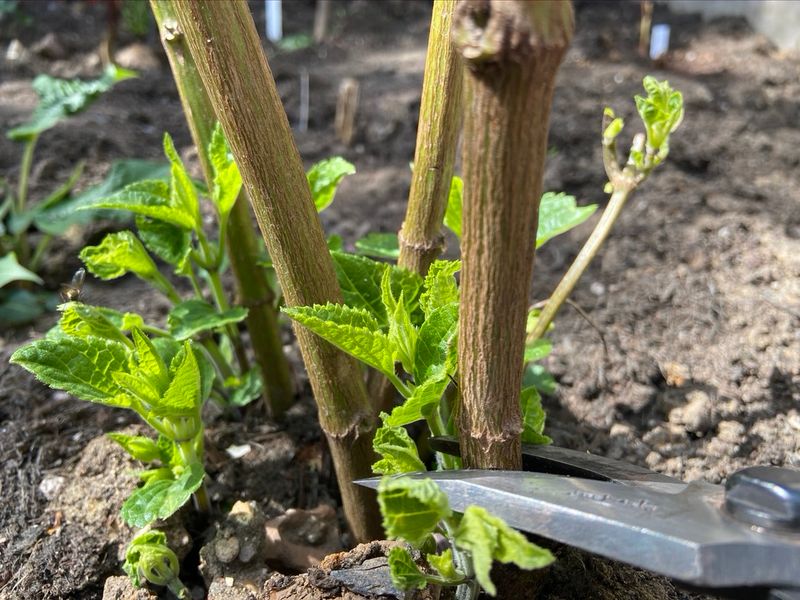
Knowing where to place your cut matters just as much as knowing when to cut. Rather than snipping a stem randomly in the middle of bare space, look for a healthy leaf node, a side shoot, or a branching point just below the faded flower spike.
Cutting just above one of these spots encourages the plant to branch from that point and push out new growth in a natural, tidy direction.
A leaf node is the small bump or joint on the stem where a leaf or pair of leaves attaches. New growth tends to emerge from these spots when the stem above them is removed.
Leaving a long bare stub above a node wastes stem tissue and can look messy. Cutting too close to the node can stress it.
Aim for about a quarter inch above the node for a clean, safe cut.
Not every stem calls for the same approach. Thin, weak, or stressed stems may benefit from being removed entirely rather than cut back to a node.
Damaged or discolored stems should come off cleanly at their origin. Always use sharp, clean pruners or snips, because dull blades crush stems instead of cutting them cleanly.
A crushed cut heals more slowly than a sharp one. Taking a moment to find the right node before each cut gives tropical sage the best chance to branch well and keep producing fresh flower spikes through the warm season.
4. Trim Lightly Instead Of Shearing Hard
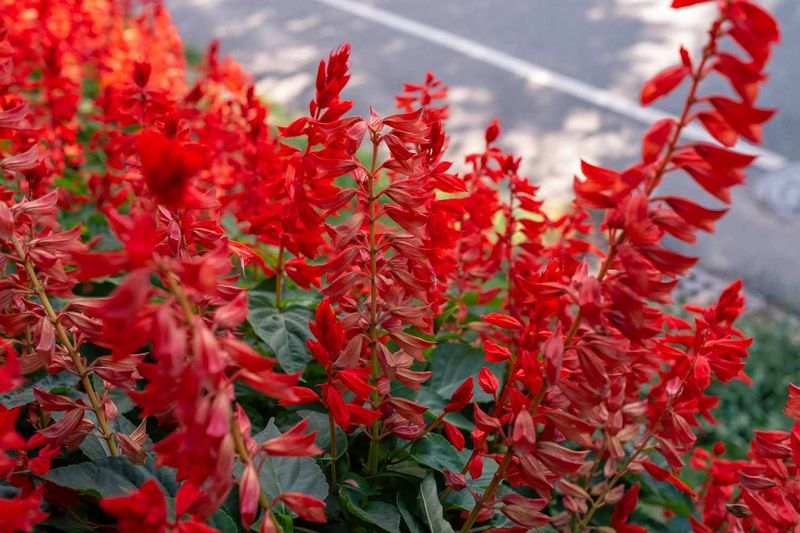
Reaching for the hedge trimmer when a few flower spikes start to look tired is a tempting shortcut, but tropical sage is not a boxwood hedge.
Hard shearing removes too much foliage at once, strips the plant of the leaves it needs for photosynthesis, and can leave it looking rough and bare for several weeks.
During peak summer heat or the rainy season, that kind of stress can slow the plant significantly.
Light, selective trimming is the right approach. Pick up a pair of hand pruners or snips and take one stem at a time.
Step back every few cuts to see how the plant looks overall. The goal is to remove what is faded or crowded without changing the plant’s natural, airy shape.
Tropical sage has a loose, upright growth habit that looks best when it is allowed to stay that way.
Florida gardeners who shear tropical sage hard often notice a long pause in flowering while the plant recovers. New growth has to push out from lower nodes before fresh flower spikes can form, and that process takes time, especially in hot weather.
A light touch throughout the season keeps the plant in a steady state of producing rather than recovering. Think of it less like a haircut and more like trimming a perennial, one faded spike at a time, with attention to what healthy growth remains below each cut.
5. Leave Enough Green Growth For Recovery
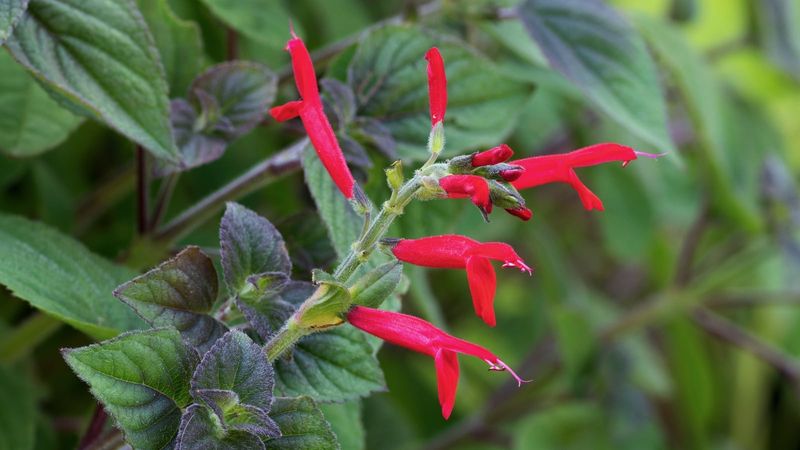
Green leaves are the engine of the plant. Every healthy leaf on a tropical sage stem captures sunlight and turns it into energy.
The plant uses that energy for new flower spikes, pruning recovery, and heat stress. Stripping too much foliage, even if it looks like a cleanup job, can slow the plant down at the worst possible time.
A common mistake is removing older stems just because they look leggy or tired at the base. Older stems still carry leaves that are doing real work.
Unless a stem is clearly weak, damaged, or causing crowding, leave it in place and focus your cuts on the spent flower spikes above healthy foliage. The plant will look tidier without losing the green growth it depends on.
After any pruning session, step back and look at how much foliage remains. A good rule of thumb is to avoid removing more than about one-third of the plant at one time.
That guideline applies loosely here since tropical sage is not formally pruned on a schedule, but the spirit of it holds. Remove faded spikes and weak stems, then stop.
Let the plant keep its healthy leaves, its side shoots, and its branching structure. Recovery happens faster when there is plenty of green growth left behind to support new flower production.
A well-leafed plant stays productive longer through the warm season.
6. Clean Up Crowded Stems For Better Airflow
When stems start crossing, rubbing against each other, or bunching so tightly that you can barely see through the plant, airflow becomes limited. In humid gardens, poor airflow around stems and foliage means moisture lingers longer after rain or irrigation.
That extra moisture on leaves and stems can create conditions that invite problems over time, though thinning alone does not guarantee a pest- or disease-free plant.
Light thinning is the solution. Look for stems that are weak, spindly, or growing inward toward the center of the plant.
Remove those first. Then look for crossing stems that are rubbing against stronger ones and remove the weaker of the two.
The goal is not to dramatically reduce the size of the plant but to open it up slightly so air can move through more freely.
Spacing matters in the garden bed too. Tropical sage planted too close to other large plants or structures can become crowded even after thinning.
If possible, allow at least 18 to 24 inches between plants when placing them initially. When watering, aim at the soil level rather than overhead to reduce how long moisture sits on foliage.
Thinning crowded stems a few times during the growing season keeps the plant looking open and healthy. It also makes it easier to spot new flower spikes forming, check for pests, and snip spent blooms before they go fully to seed and slow the plant down.
7. Time Bigger Cuts Around Heat And Rain
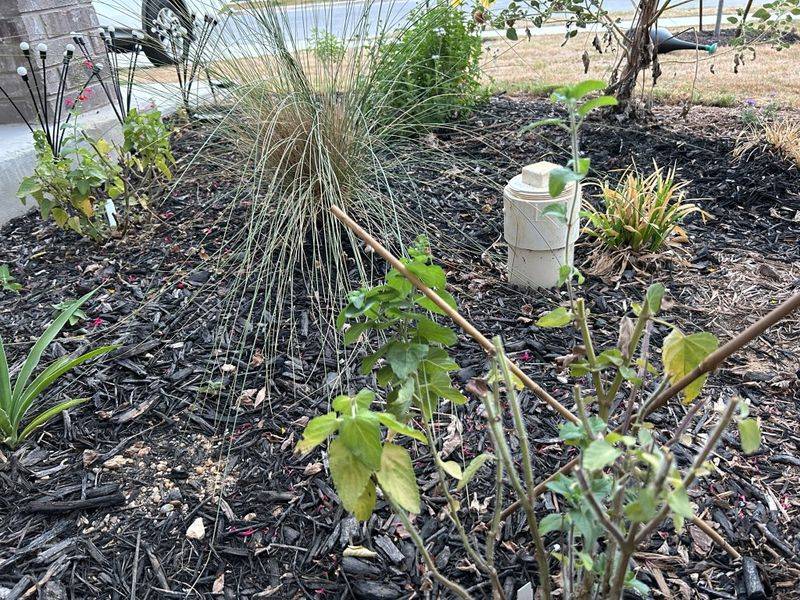
Small snips on spent flower spikes can happen whenever you see them, no matter the season or weather. But larger shaping cuts, removing multiple stems, cutting back older growth, or doing any significant reshaping, deserve more thought about timing.
Cutting a plant back hard when it is already under heat stress, drought stress, or recovering from heavy storm damage can slow it down more than help it.
Warm-weather gardens go through intense stretches of heat and humidity, especially from midsummer through early fall. During those weeks, tropical sage is working hard just to stay hydrated and keep its flower spikes going.
Making large cuts during peak stress periods removes foliage the plant needs for shade and energy. Wait for a milder stretch, a few cooler days after rain, or a calm early morning.
Those conditions give the plant a better chance to heal and recover.
Timing also varies by where you garden in this state. Gardeners in southern Florida regions may find milder pruning windows earlier in the year or later in fall compared to those in central or northern regions.
Pay attention to your specific plant and local conditions rather than following a rigid calendar. Watch for signs of stress such as wilting, yellowing, or poor new growth before making any larger cuts.
Small, steady pruning spread across the season is almost always safer than saving everything up for one big shaping session during the hottest weeks.
8. Let A Few Seeds Drop For New Plants
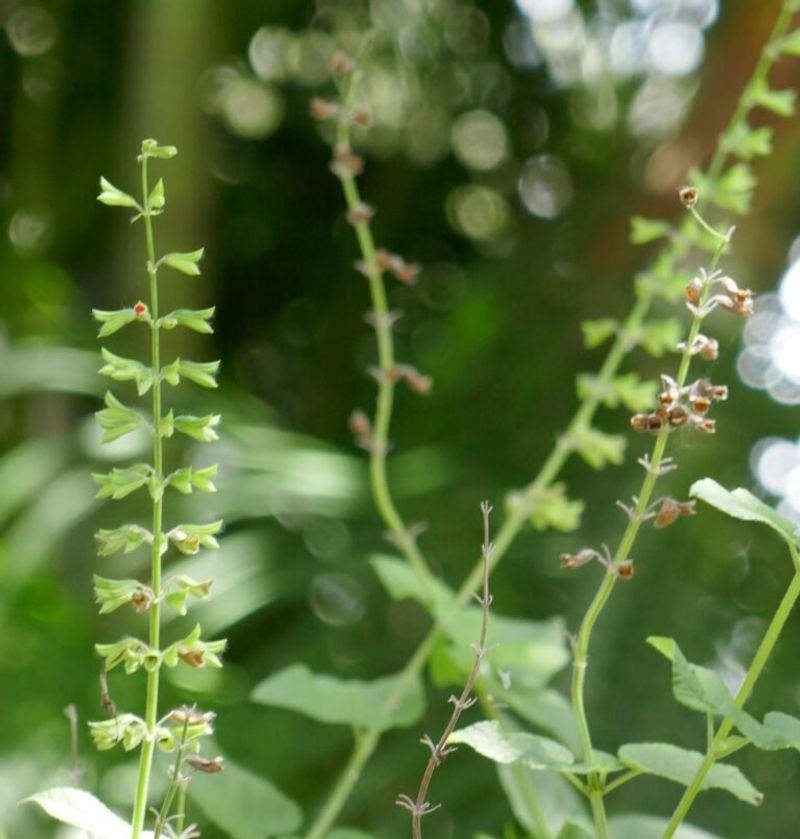
Not every spent flower spike has to come off immediately. Leaving a small number of spikes to fully ripen and drop seed is one of the most rewarding choices a Florida tropical sage gardener can make.
Salvia coccinea is known to reseed in warm, well-drained spots. Volunteer seedlings can pop up nearby the following season and fill gaps with no extra effort or cost.
The balance here is practical. If you trim every spike as soon as it fades, the plant may stay tidier and bloom again faster.
But you also lose the chance for new seedlings. If you leave too many spikes to go to seed, the plant puts more energy into seed production than into fresh flower spikes, and the garden bed can start to look untidy.
A reasonable middle ground is to trim most spent spikes for continued bloom and leave a handful near the base or back of the plant to mature and drop seed naturally.
Volunteer seedlings that appear in unwanted spots are easy to remove when small, and extra plants can be shared with neighbors or moved to a new bed.
Tropical sage attracts hummingbirds, butterflies, and native bees, so having a few extra plants in the garden is rarely a problem.
The real takeaway is simple: prune lightly, snip spent spikes cleanly, leave enough green growth, and use sharp tools. Let a few seeds fall if you want the plant to return season after season.