Check Ohio Boxwoods Before July Ends For This Spreading Problem Most Miss
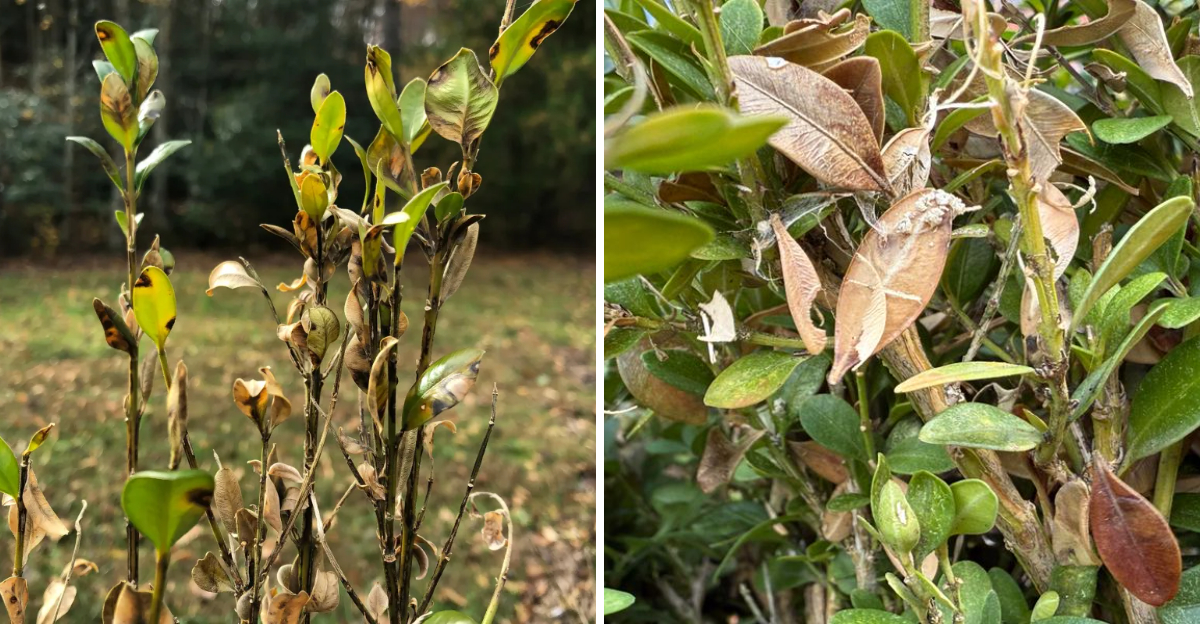
Ohio boxwoods in summer look like they are handling themselves. Dense, green, apparently unchanged from one week to the next.
That consistent appearance is exactly what makes a spreading problem so easy to miss until it has already moved further than anyone realized.
There is something working through Ohio boxwood plantings right now that most homeowners will not catch without knowing what to look for.
By the time it becomes obvious, the options for addressing it have narrowed and surrounding plants are already at risk. July is the month this problem moves fastest.
Warm temperatures and humidity do the work quietly. The dense growth habit that makes boxwoods appealing is the same thing that hides what is happening inside the shrub until it is too late for an easy fix.
A quick check before July ends takes minutes. What it might find is worth knowing before August makes the conversation harder.
1. Check Lower Branches For Sudden Leaf Drop
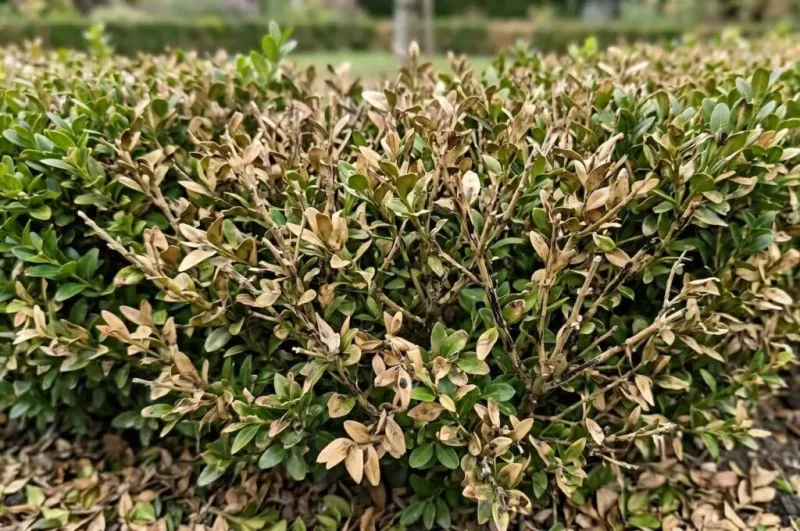
A bare patch deep inside a hedge is easy to overlook from the sidewalk, but it is worth a closer look. Sudden or unusual leaf drop, especially low inside dense boxwood plants, can be one clue that something is wrong.
According to plant disease resources, boxwood blight can cause rapid defoliation. It often starts in the lower, shaded interior where moisture lingers longer.
Gently part the outer branches with your hands and check the inner growth near the soil line. Look for clusters of fallen leaves underneath the shrub.
Healthy boxwoods do shed some older leaves in summer, but large amounts of dropped foliage in a short time deserve attention, especially when other symptoms are present.
Fallen leaves on the soil surface matter too. OSU Extension plant pathology guidance notes that infected leaf litter can harbor fungal structures that continue to spread the disease.
Pick up a few fallen leaves and look for dark spots or lesions before deciding whether to be concerned.
Keep in mind that leaf drop alone does not confirm boxwood blight. Heat stress, drought stress, winter injury, and volutella blight can all cause similar decline.
The pattern of damage, the location of affected leaves, and the presence of other symptoms together paint a more complete picture.
If the drop seems sudden and widespread, document what you see and consider reaching out to a local extension office.
2. Look For Dark Spots On Boxwood Leaves
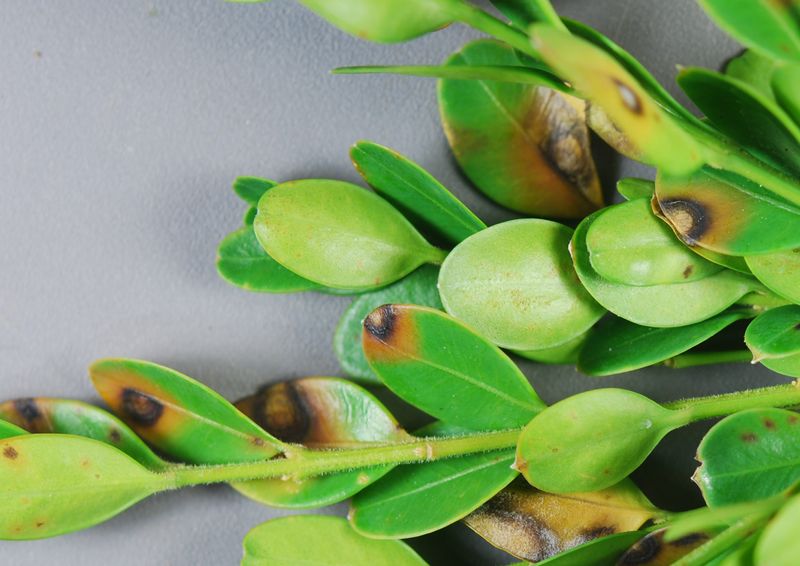
A dark spot on a boxwood leaf after a stretch of humid weather is easy to dismiss as dirt or sun damage. However, when those spots multiply or appear on several plants at once, they deserve a second look.
Ohio university extension sources describe leaf lesions as a common symptom of boxwood blight. They often appear as circular or irregular dark spots, sometimes with a lighter center.
Check both sides of the leaf carefully. Affected foliage may show spots on the upper surface while the underside reveals additional discoloration or early signs of fungal activity.
Comparing leaves from healthy stems against leaves from suspicious areas can help highlight differences that are easy to miss at a glance.
Your Ohio Garden Changes Every Week. Your Plan Should Too.
Gardening in Ohio changes quickly throughout the season. Every Friday you’ll receive a simple weekly plan showing exactly what to plant, prune, fertilize, harvest, and protect so you never miss the right timing.
Before removing any material, photograph the symptoms clearly. A good photo showing the spot pattern, leaf color, and surrounding stems gives an extension specialist or diagnostic lab much more to work with than a description alone.
The OSU Plant and Pest Diagnostic Clinic accepts plant samples and can help confirm whether blight is present or whether another problem is responsible.
Leaf spots on boxwoods can also be caused by other fungal issues, insect feeding, or environmental stress. Spots vary in appearance depending on the cause, so a single spot does not prove anything on its own.
Several matching signs together, combined with expert review, lead to a much more reliable answer than any single symptom could.
3. Inspect Stems For Black Streaks
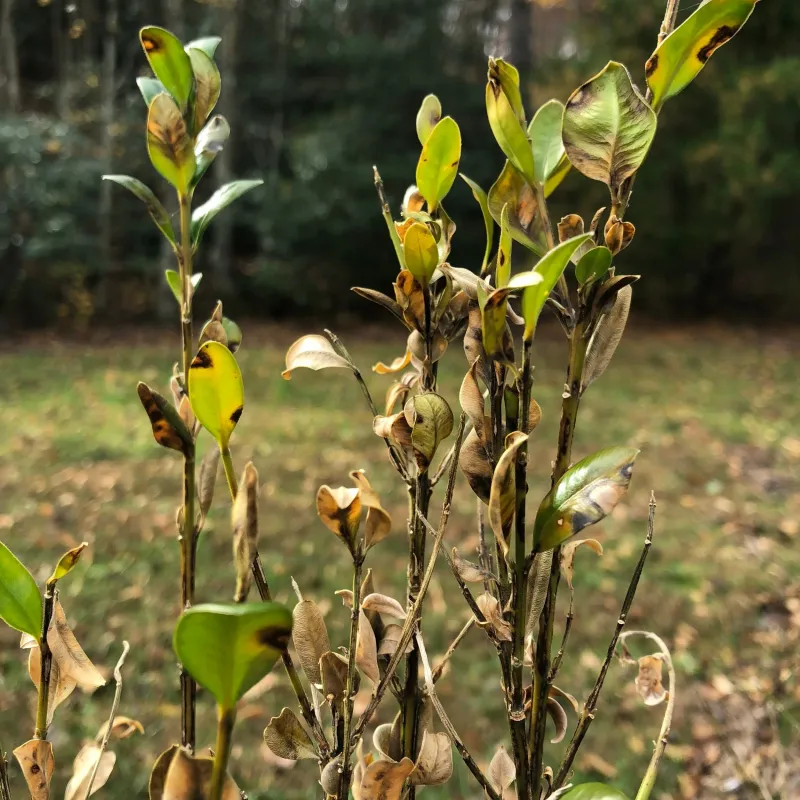
Hidden under the canopy of a dense hedge, small stems can tell a story that leaves alone cannot. Dark or black streaks running along boxwood stems are often listed as a key warning sign of boxwood blight in plant pathology resources.
These streaks tend to appear on the lower stems and inner branches, particularly in areas where leaves have recently dropped.
Walk slowly along the hedge and part the outer growth to expose the interior stems. Focus on branches near defoliated patches and along stems close to the soil.
The streaking may appear as a dark discoloration running lengthwise along a thin branch, sometimes visible even after leaves have fallen away from that section.
The pattern of where streaks appear matters. Boxwood blight typically progresses from the lower canopy upward.
Stems near the ground or inside shaded areas are often the first to show visible discoloration. Horticulture experts in Ohio advise noting whether streaking appears with leaf spots and sudden defoliation.
Multiple symptoms together raise more concern than one sign alone.
Avoid scraping or wounding stems unnecessarily during inspection. Damaging bark can introduce other problems and does not improve your ability to identify what is happening.
If black streaks appear with leaf drop and dark spots on the foliage, document that combination carefully. Bring it to a qualified plant diagnostician or OSU Extension specialist for review.
4. Do Not Brush Through Wet Boxwoods
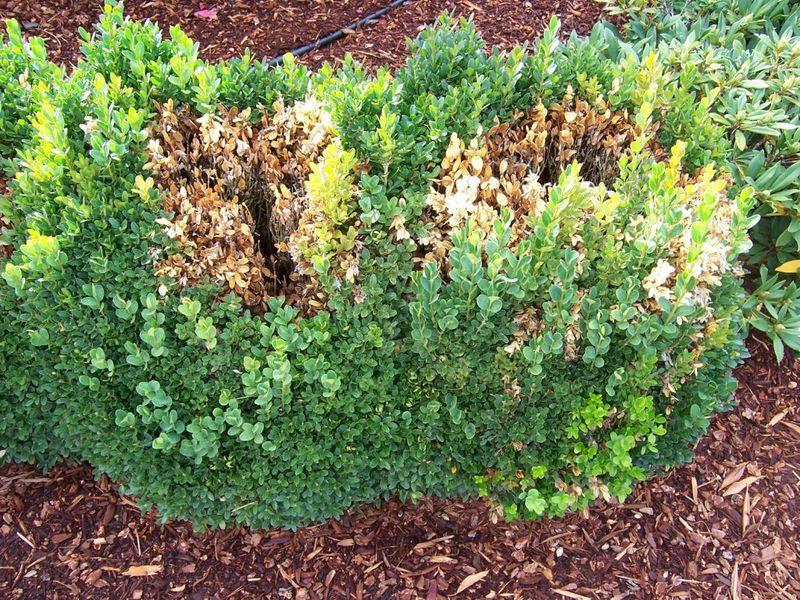
Morning dew on a boxwood hedge looks harmless, but wet foliage creates conditions where disease can move easily from plant to plant.
Working through wet boxwoods, even just brushing past them during a casual inspection, can transfer spores or infected leaf material to healthy sections of the hedge.
OSU Extension plant pathology guidance notes that moisture plays a significant role in how fungal diseases spread through dense plantings.
Rain, irrigation, and overnight humidity can keep boxwood leaves wet well into mid-morning. Waiting until foliage is fully dry before pruning, trimming, or moving between shrubs reduces the chance of accidentally spreading infected material.
This is especially true when working in sections of the hedge that already show suspicious symptoms.
Skipping inspection altogether is not the answer. A careful look at outer stems and visible lower foliage can be done without plunging hands deep into wet growth.
Use a long stick or gloved hand to gently part branches from the outside. Avoid dragging clothing or tools through the plant interior when leaves are still damp.
Humid stretches in late July make this precaution especially relevant in Ohio. Dense hedges dry out slowly, and the shaded interior may stay wet for hours after the sun comes out.
Plan inspection and maintenance tasks for dry afternoons. At least wait until morning dew has cleared.
This simple habit can reduce the risk of moving a problem down the row.
5. Clean Tools Before Moving Down The Hedge
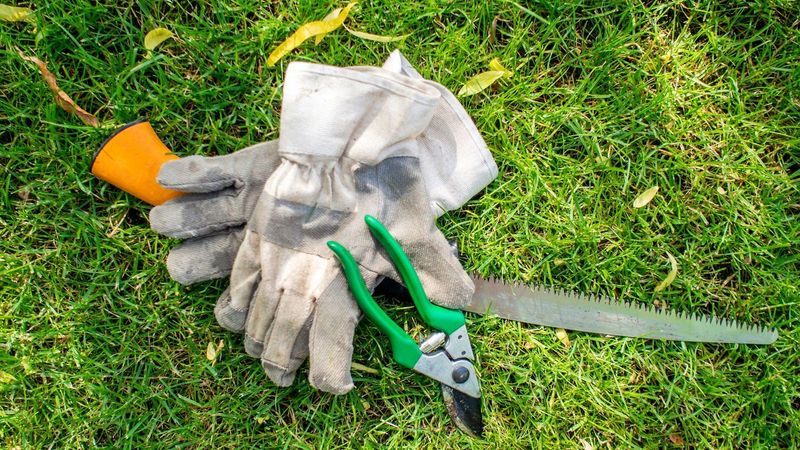
A pair of hedge trimmers moving from one boxwood to the next can carry far more than clippings. Tools, gloves, tarps, and even boots can pick up infected leaf fragments or stem material and deposit them on healthy plants a few feet away.
Plant disease resources consistently list contaminated equipment as a pathway for spreading fungal diseases through ornamental plantings.
Clean tools between plants or between sections of the hedge, especially when working near areas that show suspicious symptoms. Knock off any clinging debris before moving to the next shrub.
Removing visible plant material from blades and handles is a practical first step that costs almost no time.
Disinfecting tools is an additional layer of protection. OSU Extension guidance recommends following product labels carefully when using any disinfectant solution on garden tools.
A commonly referenced approach uses diluted bleach or isopropyl alcohol. Always check current extension recommendations and product labels before choosing a method.
Some solutions can damage tool surfaces or lose effectiveness quickly.
Avoid shearing an entire hedge in one pass when any section shows signs of possible disease. Shearing scatters fine plant material across a wide area, which can move suspect debris to healthy growth nearby.
Working more carefully, section by section, with clean tools between stops, is slower but much safer when the health of the hedge is uncertain. Protecting the healthy sections is just as important as addressing the affected ones.
6. Bag Fallen Leaves Before Spores Spread
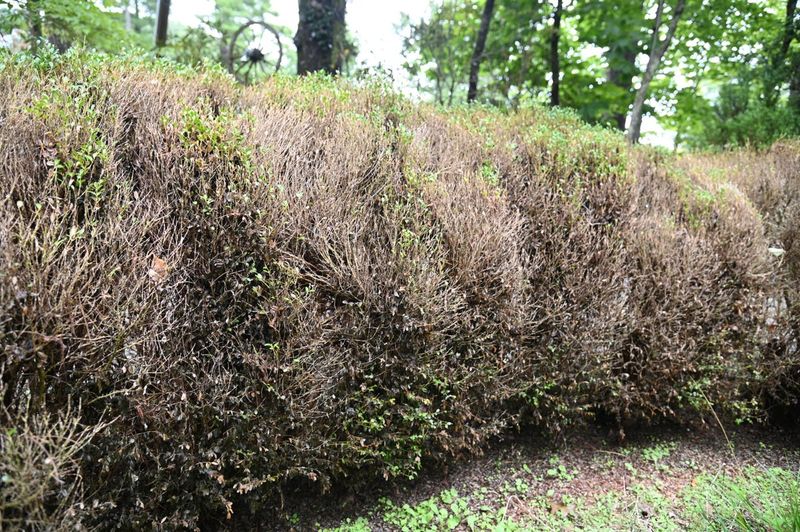
Fallen leaves beneath a boxwood hedge are not just a cosmetic problem. Plant disease resources explain that infected leaf litter can harbor fungal structures.
During wet weather, those structures can release spores and spread disease to nearby healthy plants. Letting suspect debris sit under the shrub through the rest of summer gives the problem more time and more opportunities to move.
Gently collect fallen leaves from beneath suspicious plants, being careful not to shake or scatter the debris as you work. Place material directly into a sealed plastic bag rather than a loose pile.
Moving bags carefully and keeping them away from healthy boxwoods reduces the chance of accidentally spreading anything during cleanup.
Do not put suspect boxwood blight debris into a home compost pile. University extension sources generally advise against composting potentially infected plant material.
Home compost systems may not get hot enough to destroy fungal structures. Bagging the debris for trash disposal is the safer choice until expert guidance says otherwise.
Reducing leaf buildup under the shrub also improves air circulation at the base of the plant, which can help foliage dry more quickly after rain or irrigation.
Cleanup alone will not cure an active infection, but removing infected material from the environment is a reasonable step toward slowing the spread.
Pair cleanup efforts with a careful inspection so you have a clearer picture of how much of the hedge may be affected before deciding on next steps.
7. Confirm Blight Before Blaming Heat Stress
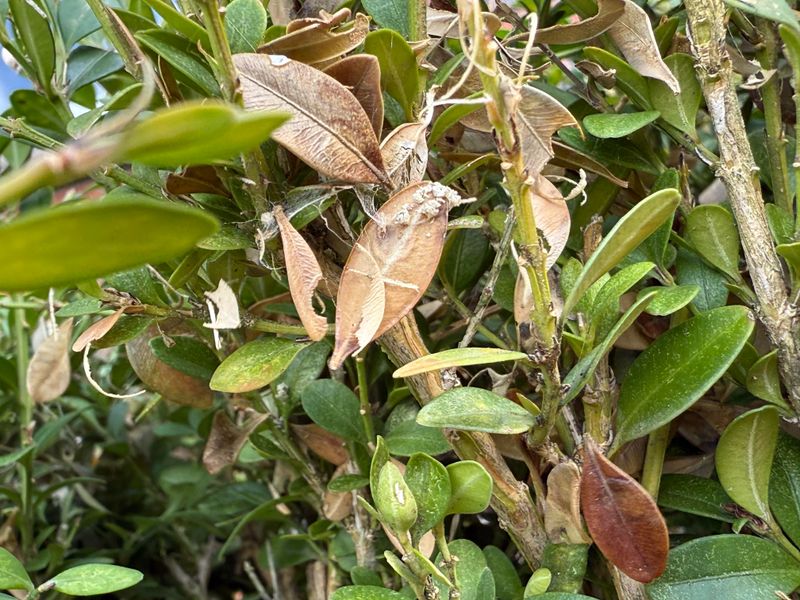
Rough-looking boxwoods in July do not automatically mean blight is the culprit. Several problems can make these shrubs look stressed or declining during the hottest weeks of the year.
Heat stress, drought stress, winter injury, poor drainage, spider mites, leafminer damage, volutella blight, and root problems can all look like boxwood blight.
Paying attention to the pattern of damage helps narrow things down. Heat stress tends to cause general bronzing or bleaching across exposed outer foliage.
Drought stress often shows up as overall decline rather than sudden spotting or defoliation in one section. Winter injury typically appears on the most exposed parts of the plant and shows up earlier in the season, not in late July.
Note recent weather conditions, watering history, and whether nearby boxwoods are showing similar symptoms. If several plants in a row decline the same way, look for dark spots, stem streaks, and sudden leaf drop.
That pattern raises more concern than isolated browning on one shrub.
The OSU Plant and Pest Diagnostic Clinic is a reliable resource for homeowners who are unsure what they are dealing with.
Submitting a plant sample with good photos and background information gives diagnosticians the best chance of identifying the problem accurately.
OSU Extension county offices can also help connect residents with local plant health expertise. Applying fungicide based on guesswork is not recommended and may not address the actual problem.
8. Watch For Box Tree Moth Damage Too
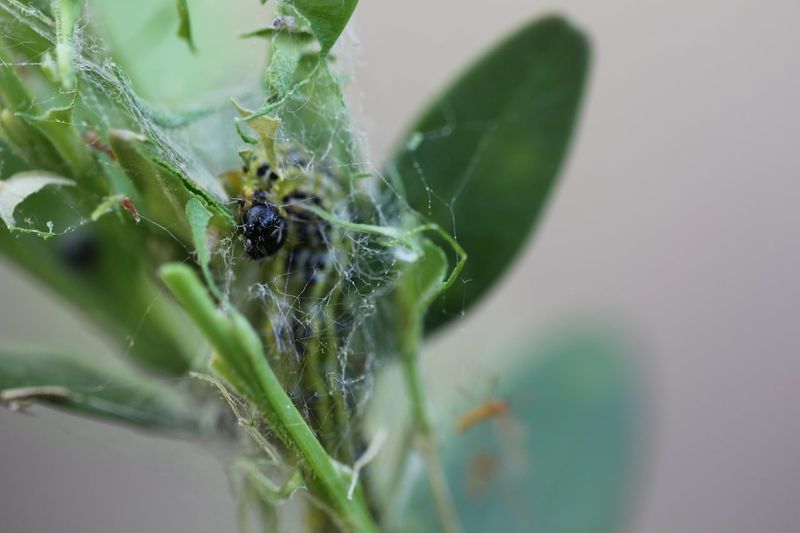
Chewed leaves and silky webbing tucked inside a boxwood are not signs of fungal disease. Box tree moth, caused by the caterpillar Cydalima perspectalis, is a separate and serious threat to boxwoods.
It has been spreading across parts of the northeastern United States. Ohio Department of Agriculture guidance tracks this pest as a regulated concern, and its damage looks nothing like boxwood blight once you know what to compare.
Box tree moth caterpillars feed on boxwood foliage and can cause rapid defoliation. Look for visible caterpillars, silky webbing inside the canopy, chewed leaf edges, and greenish frass near feeding areas.
The damage tends to be mechanical, with leaves stripped or skeletonized rather than spotted or streaked the way blight affects them.
Do not assume webbing and chewing mean blight is not present. Both problems can exist in the same plant.
Keeping the two threats separate in your mind helps you report accurately and seek the right guidance. If you suspect box tree moth, contact the Ohio Department of Agriculture or OSU Extension.
Ask for current reporting and management recommendations because this pest is regulated in the state.
Before July ends, take a slow walk along every boxwood in the yard and look closely enough to tell what you are actually dealing with. Blight, pest damage, and summer stress each call for different responses.
Catching the right problem early and confirming it properly makes every other effort worthwhile. It also keeps the damage from spreading further down the hedge.