The One Native Shrub That Screens A Chain-Link Fence In North Carolina Yards Where Nothing Grows
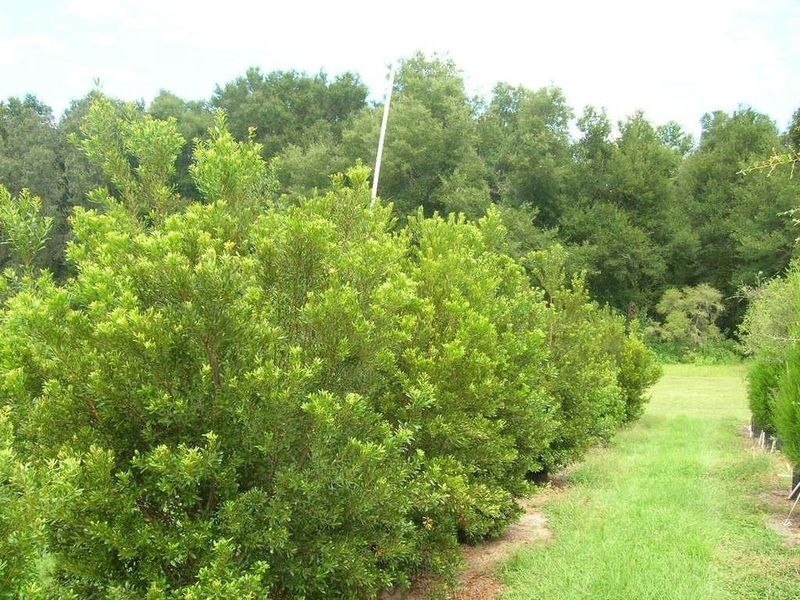
That strip of dirt beside a chain-link fence is one of the most punishing spots in a North Carolina yard. Reflected heat bakes the soil, runoff drains away before roots can use it, and every grass-killing spray job just leaves bare, compacted ground. For homeowners in the eastern Piedmont and Coastal Plain, southern wax myrtle is one of the strongest native options for turning that dead strip into a living screen. It is not a miracle plant, but in the right conditions, it genuinely earns its place.
A Strong Native Option for the Right Fence Strip
Southern wax myrtle, Morella cerifera, has been growing along the fence rows, creek banks, and roadsides of eastern North Carolina long before anyone planted it on purpose. You may also see it tagged at the nursery as Myrica cerifera, the former botanical name still printed on older labels. Both names describe the same tough, adaptable shrub that NC State Extension lists at roughly 20 to 25 feet tall and 8 to 10 feet wide at maturity, with a dense branching habit that can close off a fence line when given room to grow.
The conditions that kill other plants barely slow it down. Full sun to partial shade, poor sandy soil, wet low spots, dry upland ridges, salty coastal air, and the hard-packed urban soil left behind after construction crews drove across your yard, wax myrtle handles all of it once it is established. That last phrase matters and will come up again.
For homeowners in the eastern Piedmont, Sandhills, and Coastal Plain, this is genuinely one of the best native matches for a hot, sunny fence strip. It is not a statewide answer. NC State does not list wax myrtle as a native plant for the western mountains, and in colder parts of its range it behaves as semi-evergreen, dropping leaves after a hard freeze. So the first qualification is regional: if your fence runs through a Raleigh backyard or a yard near Wilmington or Rocky Mount, you are in the right zone.
If you are reading this from Boone or Asheville, keep reading to the last section before you order anything.
Why Wax Myrtle Can Improve a Bare Fence Line
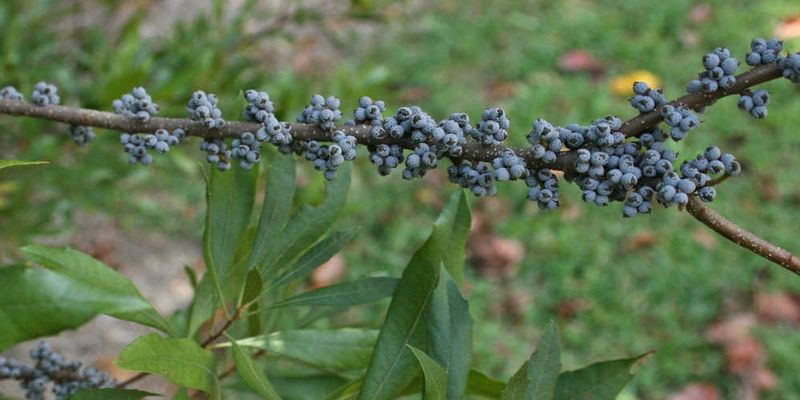
Most homeowners plant along a fence to block the view of a neighbor’s storage shed or a busy road. Wax myrtle does that job, but it brings something a solid privacy panel never will. The branches grow thick enough to give birds a place to roost and nest, and the small, wax-coated fruits that appear on female plants in late summer and fall become a food source that draws specific bird species reliably.
NC State’s plant profile specifically names yellow-rumped warblers and tree swallows as birds able to digest the waxy coating on the fruits. Most songbirds cannot break down that wax, so these species have less competition at the shrub than they would at a berry-laden holly. The NC Department of Agriculture also notes the plant’s value for wildlife in its Arbor Day materials, pointing to wax myrtle’s role as a year-round wildlife resource across the state’s coastal regions.
Your North Carolina Garden Changes Every Week. Your Plan Should Too.
Gardening in North Carolina changes quickly throughout the season. Every Friday you’ll receive a simple weekly plan showing exactly what to plant, prune, fertilize, harvest, and protect so you never miss the right timing.
The flowers, small and inconspicuous in spring, supply nectar for native bees and some butterfly species. That makes the shrub useful across three seasons: spring nectar, summer cover, and fall and winter fruit. But do not plant a single shrub and expect a bird feeding station. Fruit production usually requires both male and female plants, a point covered fully in a later section.
One more thing worth saying plainly: wax myrtle is not a pest-repellent plant. It will not drive away ticks, mosquitoes, or Japanese beetles. What it does is add a functional wildlife layer to a fence line that currently offers nothing, and that is a meaningful upgrade for a Coastal Plain or eastern Piedmont yard.
Repair the Dead Strip Before You Plant
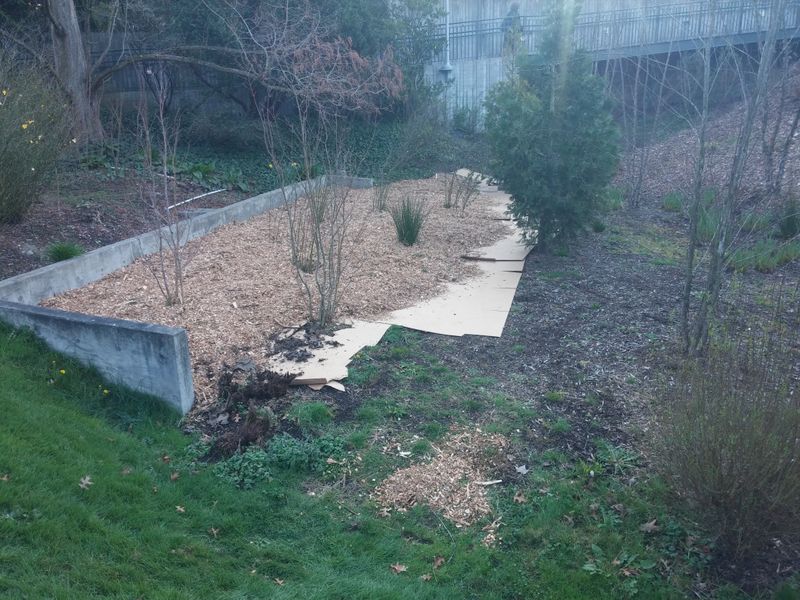
Here is where many plantings fail before they start. A tolerant native shrub can handle difficult conditions once its roots are established and reaching through the soil profile. But a bare fence strip is often not just dry or sunny. It is a place where the soil has been compacted by foot traffic or a contractor’s equipment, where roof or gutter runoff cuts a channel and then vanishes, where old grass roots and perennial weeds are waiting underground, and where a large tree nearby is already pulling water from every cubic inch of soil.
Wax myrtle’s tolerance does not cancel out those stresses when the plant is young and its root system fits inside a nursery pot.
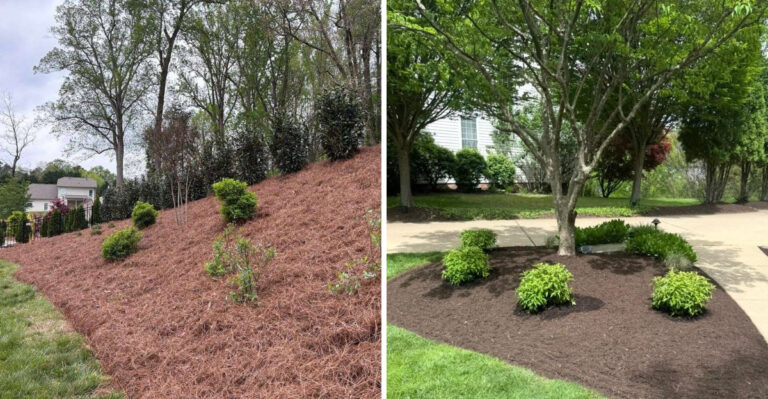
Remove turf and perennial weeds across the full planting area before you dig a single hole. NC State’s Pender County Extension guidance on evergreen screens notes that grass competes hard with shrub roots for water and nutrients, and that competition is especially damaging during establishment. Smother the strip with cardboard and a thick layer of mulch several weeks ahead of planting, or use a non-selective herbicide if your situation calls for it, and wait for the material to break down before you plant.
Compaction is the bigger problem in many Piedmont yards with red clay soil. Loosening only the planting hole creates a bathtub effect where water pools inside the improved pocket and the roots never push outward.
NC State’s native plants handbook recommends improving the broader planting area rather than just the hole, incorporating roughly 1 to 3 inches of compost across the zone where roots will grow. Test your soil first if you have not done so recently.Your county Extension office can send a sample to the NC Department of Agriculture lab for a few dollars, and the results will tell you whether pH or nutrient levels are working against you before you spend money on plants.
Plan Around Mature Width Instead of Chasing Instant Privacy

The temptation is to buy six small plants, push them close together, and hope for a solid wall by July. Many Piedmont homeowners have done exactly that, and what they get instead is a crowded row where airflow drops, disease pressure rises, and the plants spend years fighting each other for root space. NC State’s wax myrtle profile puts mature width at approximately 8 to 10 feet, and the Extension gardener handbook warns specifically against overcrowding plants to create an instant landscape.
Use that mature width as your spacing guide. If you plant centers roughly 8 feet apart, the shrubs will eventually touch and fill in as a screen without strangling each other. Give each plant enough room to breathe while it is young, and it will close the gap faster than a crowded row of stressed plants will.
Set plants roughly 4 to 5 feet back from the fence as a planning estimate based on that mature spread. That distance is not a hard NC State rule, it is a practical calculation: a shrub expected to reach 8 to 10 feet wide needs room on both sides, and keeping it off the fence gives you access to trim from your side and lets air move through. Your final placement depends on how wide your strip actually is, whether you share the fence with a neighbor, and how much pruning you are willing to do long-term.
Before you dig, call 811 to have underground utilities marked. NC State’s landscape design handbook specifically flags utility avoidance as a pre-planting step, and a fence strip is exactly the kind of narrow corridor where buried lines hide. On timing, fall is the preferred planting window for most North Carolina native plants because roots can settle in while heat stress is low. Spring is the next-best option, and NC State’s lawn and landscape guidance supports fall establishment as a general principle for woody plants in this region.
Water and Mulch While Roots Establish
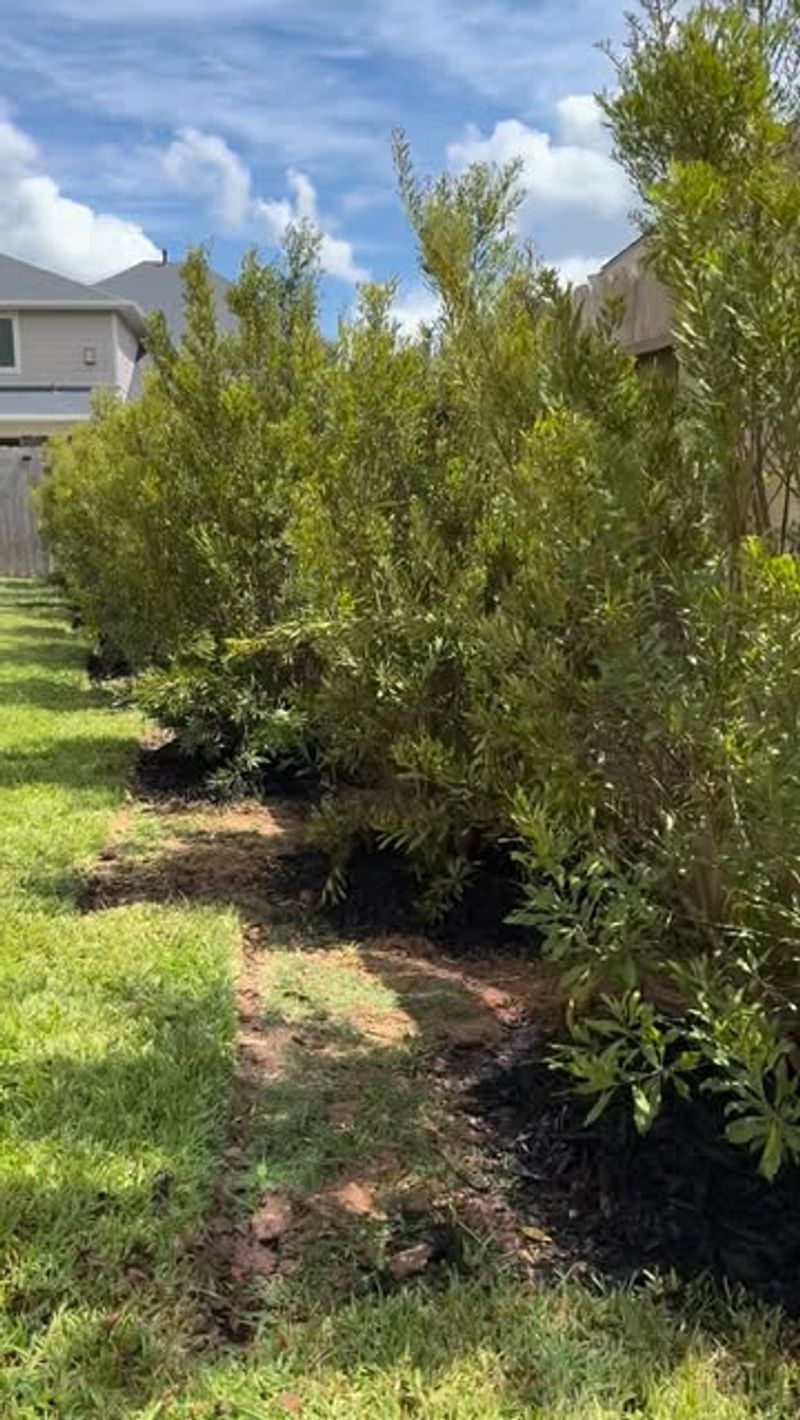
Drought tolerance is a mature plant’s trait, not a planting-day promise. A wax myrtle fresh out of a nursery pot has a root system the size of a basketball, and it is being asked to survive reflected heat off a metal fence, competition from whatever is left in the soil, and whatever North Carolina’s weather decides to throw at it that week. That gap between what the plant can eventually handle and what it can handle right now is where most failed plantings happen.
Water deeply right after planting, soaking the root zone thoroughly rather than sprinkling the surface. NC State’s woody ornamentals handbook recommends consistent moisture during the first several weeks or until roots establish, with the exact schedule depending on your soil type, drainage, plant size, weather, and whether competing roots are nearby. Sandy Coastal Plain soil dries out faster than Piedmont clay, so a plant in Pender County may need water every two to three days in July, while one in Wake County clay may need it less often but still needs it regularly.
Apply 2 to 3 inches of mulch across the planting area after watering, and keep that mulch at least 6 inches away from the stems. NC State’s pre-planting guidance confirms that mulch conserves soil moisture, moderates temperature swings, and suppresses the weeds you just worked to eliminate. Pine straw works well in eastern North Carolina and breaks down slowly enough to stay in place through a summer storm. Mulching right up against the stem traps moisture against the bark and invites rot, so pull it back and leave a clear ring around each plant.
Plan for Berries Instead of Assuming One Shrub Will Feed Birds
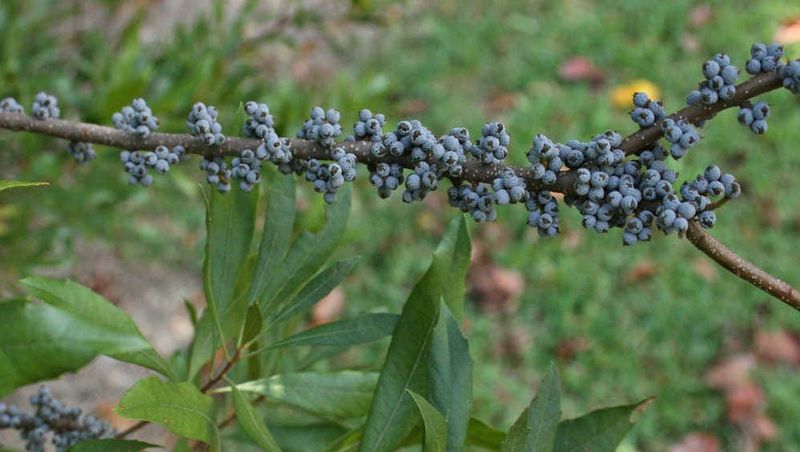
Buying one unlabeled wax myrtle and expecting a berry-covered wildlife magnet by fall is a setup for disappointment. Wax myrtle is dioecious, meaning male and female flowers grow on separate plants. The female plant produces the fruit, but only when a male plant is nearby to supply pollen. NC State’s plant profile makes this clear, and it is the kind of detail that gets lost between the nursery bench and the checkout line.
Ask your nursery whether the plants on the bench are sexed as male or female, or whether they were grown from seed. Seed-grown plants are a mix, and you will not know what you have until the plant matures and either fruits or does not. If you want reliable berries, buy at least one confirmed female and one confirmed male, or buy several seed-grown plants and plan on some percentage being productive. Some nurseries sell named cultivars that are female, which takes the guesswork out.
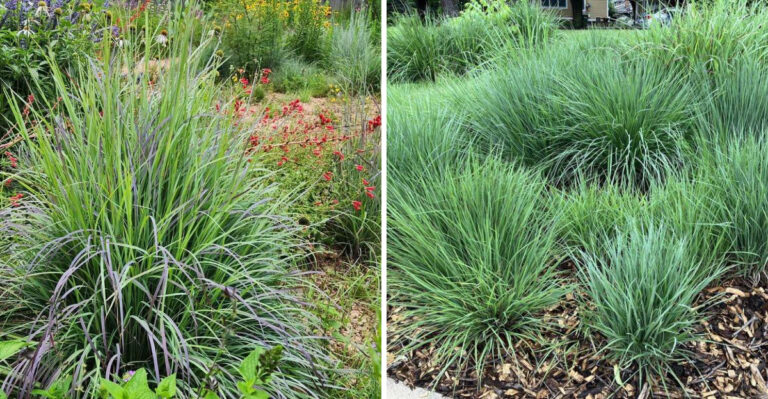
Even with the right plant combination, a mixed planting will support more wildlife than a single-species row. NC State’s landscaping for wildlife guide recommends layering plants that provide nectar, seeds, fruit, and larval food across different seasons. Wax myrtle can be the tall screening layer at the back. In front of it, you might tuck in native grasses, inkberry, or beautyberry for a second layer of fruit and cover at a lower height.
That combination turns a bare fence strip into a genuine wildlife corridor, which is a very different thing from a row of shrubs that happens to be native.
Prune Lightly, Control Suckers, and Respect Fire Risk
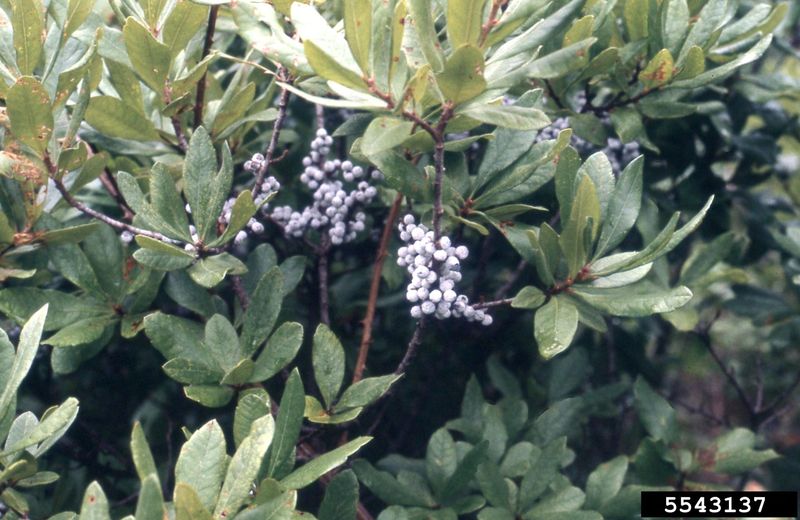
Shearing wax myrtle into a tight, flat-sided hedge is the most common maintenance mistake people make with this plant. It looks tidy for about six weeks, and then the clipped ends push dense, twiggy regrowth that blocks light to the interior branches and gradually hollows the shrub from the inside out. NC State’s wax myrtle profile notes that the following season’s fruit develops on old growth, meaning what gardeners call old wood. Heavy shearing removes that wood, and the birds that depend on the berries lose their food source for at least a season.
Light selective pruning is the better approach. Remove crossing branches, trim back any limb that is pushing into the fence or crowding a neighbor, and thin the interior occasionally to let light and air reach the center. Do this in late winter before new growth starts, and you will keep the shape manageable without sacrificing the fruiting wood. Extension pruning guidance supports this timing for most landscape shrubs in North Carolina.
Suckers are the other maintenance reality. Wax myrtle spreads by sending up new shoots from its roots, and in a favorable site it can gradually colonize well beyond the original planting. University of Florida Extension notes that this suckering habit makes it useful as a naturalized buffer but problematic in a narrow bed near paving or a property line. Pull or cut suckers while they are young and the roots are shallow.
Waiting until they are knee-high means digging.
The fire risk is real and not widely discussed in planting guides. NC State’s fire-resistant landscaping guidance rates wax myrtle as highly flammable because its aromatic leaves, stems, and branches contain flammable compounds. Do not plant it immediately beside your house, against a wood deck, near a grill, or within a fire pit’s zone. A fence strip that runs along the side yard well away from structures is a reasonable location.
A strip that runs directly behind the deck is not.
Know When Another Native Option Fits Better
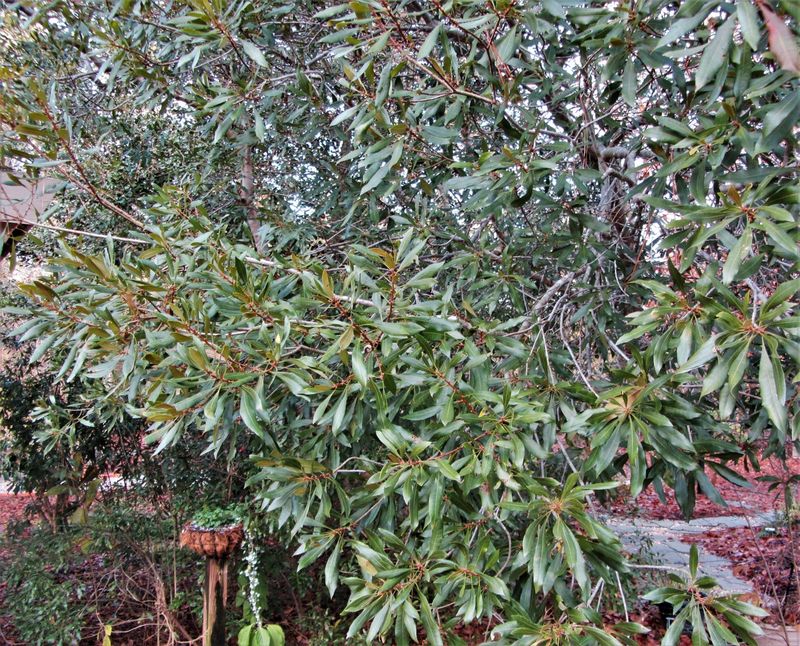
Wax myrtle is the right answer for a specific scenario: a sunny, open fence strip in the eastern Piedmont, Sandhills, or Coastal Plain, where the soil is poor or sandy, the exposure is full sun to partial shade, and the available width allows for an 8- to 10-foot-wide plant. Change any of those variables significantly, and a different native may serve you better.
Cold is the first limit. NC State describes wax myrtle as semi-evergreen in the northern parts of its range, meaning a hard freeze in January can temporarily strip the leaves and open the screen right when you want it most. In most of the eastern Piedmont and coastal areas, the plant rebounds quickly. But if your yard sits in a cold pocket or you are in a transitional zone, plan for the possibility of a bare period after a severe winter.
Mountain homeowners should not rely on wax myrtle at all. NC State’s native plants handbook does not list it as a mountain native, and planting it in Buncombe or Watauga County puts it outside its native range and into colder winters than it reliably tolerates. Check with your county Extension office or use NC State’s Plant Toolbox to find locally native evergreen or semi-evergreen alternatives suited to mountain conditions.
For Coastal Plain homeowners who want a different option, yaupon holly, Ilex vomitoria, is an evergreen, drought-tolerant, bird-friendly native that NC State lists as native to the Coastal Plain. It is not a statewide substitute, and it is not suitable for every site, but it is a credible second choice in that region. Winterberry, Ilex verticillata, is native across North Carolina including the mountains, but it is deciduous, so it will not give you a year-round screen.
The strongest fence planting is rarely a single species anyway. NC State’s wildlife landscaping guide recommends combining plants that provide different types of food and cover across the seasons. Use wax myrtle as the tall screening backbone, add yaupon or inkberry at medium height for a second fruiting layer, and let native grasses or low wildflowers anchor the front edge. That layered strip will feed more birds, support more insects, and hold up better through a dry summer or a surprise November cold snap than any single-species row ever will.