Why Fall Fox Sightings Near Your North Carolina Yard Mean Something Specific About What You’ve Built
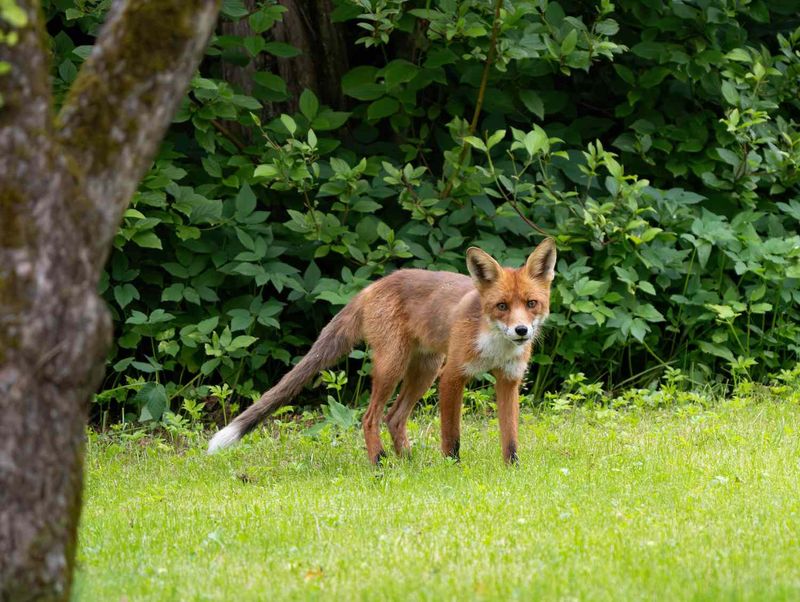
You are pulling the last of the garden stakes out of the ground when something russet and low-slung trots along the tree line at the edge of your yard. A fox at dusk in North Carolina is not exactly rare, but it stops you cold. Most people wonder right away whether they did something to attract it, whether it lives under the deck, or whether it is even safe to let the dog out. The honest answer is that the sighting is a clue with several possible explanations, and sorting through them takes about ten minutes of looking at your own property.
A Fall Sighting Offers Clues, Not a Diagnosis
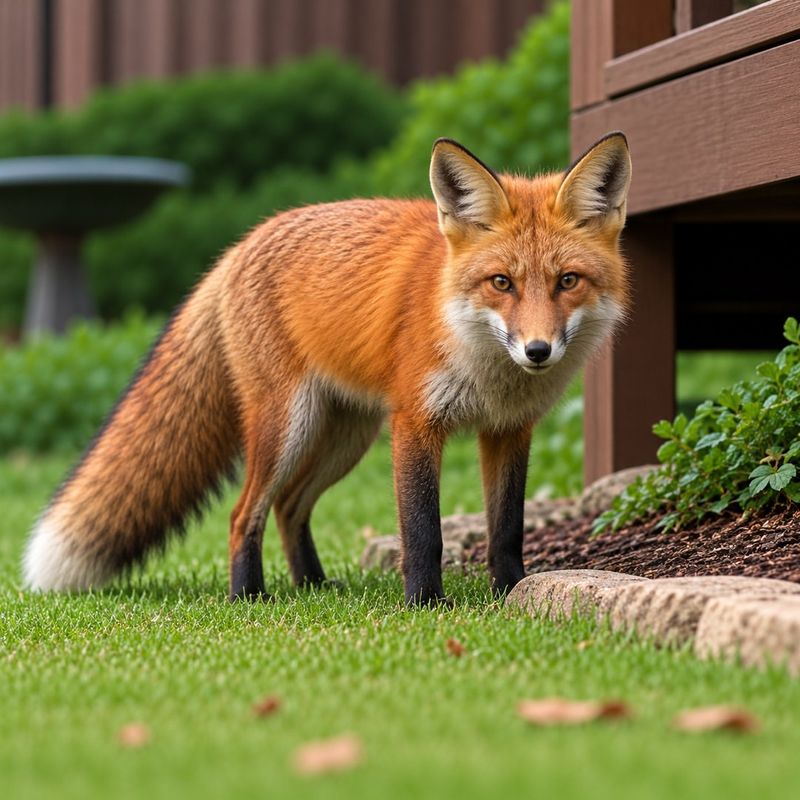
Spotting a fox near your yard feels like the yard is trying to tell you something, and it might be. But one animal crossing your lawn at dusk cannot tell you exactly which feature drew it there. Foxes move through neighborhoods when a property offers some useful combination of food, prey, cover, resting space, or a safe path between wooded patches, and any one of those reasons is enough.
A study of 58 residential yards in Raleigh found red and gray foxes among the wild mammals documented using suburban properties. That Raleigh residential-yard research noted features such as feeders, gardens, compost, chicken coops, brush piles, and water sources across the yards it surveyed. Seeing those features associated with wildlife use is useful context, but the study cannot tell you which resource mattered to the particular fox that crossed your grass last Tuesday.
The animal may not have been responding to your yard at all in the way you might picture. Foxes travel through connected landscapes, using neighboring lots, creek corridors, and brushy edges as much as any single yard. Your property might be a food stop, a travel corridor, a resting spot, or simply the most convenient gap in a fence line between two wooded areas.
What the sighting does not mean is also worth saying plainly. One trotting fox does not prove the yard is unusually healthy, does not confirm the animal lives on your property, and does not establish that it came specifically for one plant or one pile of birdseed. North Carolina has both red foxes and gray foxes, and the gray fox is the state’s only native fox species, present across the state and comfortable in wooded suburban settings. Treat the sighting as a prompt to look around your yard with fresh eyes, not as a verdict.
Why Autumn Puts Foxes on the Move
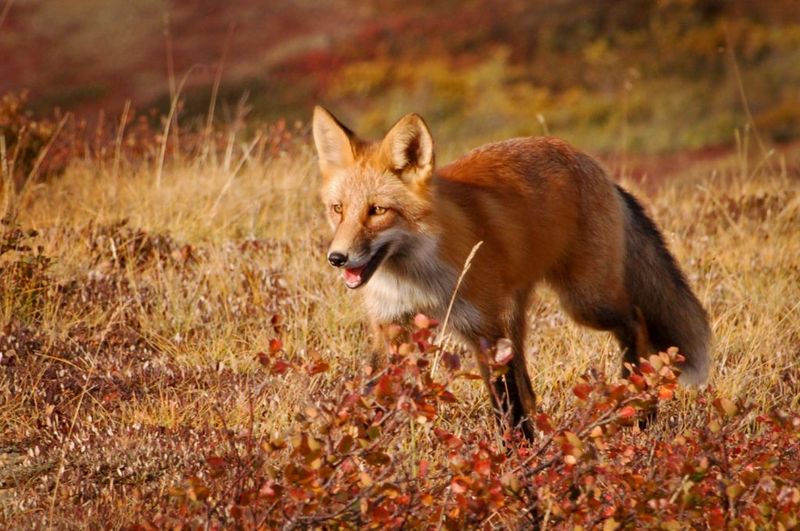
Fall brings a particular kind of fox traffic through North Carolina neighborhoods, and your yard may not have changed at all to earn a visit. The season itself is the explanation.
Young red foxes typically begin dispersing from their family ranges around mid-September or early October. Research on identifying dispersal events in red foxes describes autumn as a major period for this exploratory movement, when juveniles strike out on their own to find territory, shelter, and food outside the area where they were raised. A fox you have never seen before may simply be passing through your block the same way a teenager passes through a new neighborhood, looking for a place to land.
Your North Carolina Garden Changes Every Week. Your Plan Should Too.
Gardening in North Carolina changes quickly throughout the season. Every Friday you’ll receive a simple weekly plan showing exactly what to plant, prune, fertilize, harvest, and protect so you never miss the right timing.
The U.S. Forest Service species review for red foxes also documents that fox diets shift with the seasons, with insects and wild fruit becoming more important in summer and fall in some habitats. That dietary flexibility means a fall fox may be hunting beetles in your leaf litter or eating dropped persimmons rather than targeting your bird feeder or your chicken coop.
Territory searching and exploratory travel add to the autumn movement. A young fox covering new ground will cross many yards in a single night, and most of those yards will never see the animal again. So if you spotted a fox once near the Coastal Plain tree line or moving through a Piedmont neighborhood at dusk, the most likely explanation is dispersal, not a permanent resident you have unknowingly fed all summer. That distinction matters before you start pulling up garden features or calling anyone for help.
Four Places to Inspect in the Yard

Once you know a fox has been nearby, a quick property walk tells you more than any wildlife guide can. You are not looking for proof of what attracted the specific animal. You are looking for conditions worth adjusting, both for your own peace of mind and to avoid unintentionally turning a one-time visit into a regular stop.
Start beneath your bird feeders. Spilled seed piles up fast, especially under tube feeders, and that seed draws mice and voles. A fox hunting rodents in your yard is doing exactly what foxes do, and the feeder is the engine running that system. NC Wildlife guidance on animal encounters specifically identifies bird feeders and the rodents they attract as reasons foxes may use residential areas.
Raking spilled seed every few days is a simple first step.
Next, walk around any fruit trees on the property. Fallen apples, persimmons, grapes, and muscadines are legitimate fox food, and a tree dropping fruit in October is essentially setting a buffet at ground level. Pick up what you can every couple of days during peak drop season.
Then check the areas near pet bowls, outdoor grills, compost bins, and trash cans. Food residue left in any of these spots overnight is a reliable draw for all kinds of wildlife, foxes included. Secure lids, bring bowls inside after feeding, and clean grill grates regularly.
Finally, get low and look under your deck, porch, shed, and any crawl space access points. These sheltered spots are exactly the kind of resting or denning cover a fox finds useful, particularly in cooler fall weather. Gaps wider than about 4 inches are large enough for a fox to investigate. Noting what you find now puts you ahead of the problem before winter sets in.
Red Foxes and Gray Foxes Use Landscapes Differently
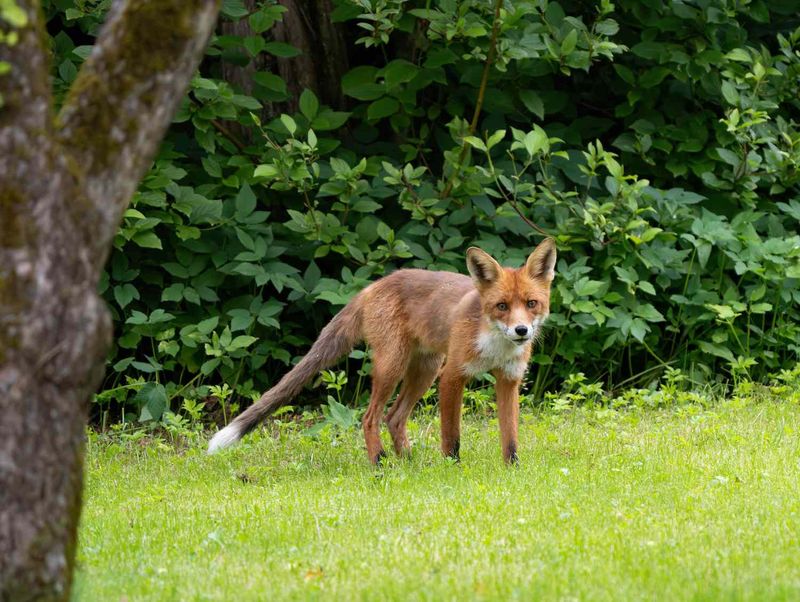
Before you draw any conclusions about why a fox showed up, it helps to know which fox you actually saw. North Carolina has two species, and they behave differently enough that the distinction genuinely changes how you read the visit.
The gray fox is the state’s only native fox. According to NC Wildlife, gray foxes are common statewide and eat a broad mix of small mammals, birds, rabbits, wild fruit, and agricultural crops. They tend to favor wooded or brushy habitat, and they have a notable ability shared by almost no other member of the dog family: they can climb trees. A gray fox near a wooded backyard in the Piedmont or the mountains is entirely at home in that setting.
Red foxes are also found statewide in North Carolina and are often associated with more open or edge habitats, though their diets and habitat use overlap considerably with gray foxes. The two species can look similar in dim light, and color alone is not always reliable for identification since gray foxes can show reddish tones on their flanks. A clear photograph or a look at the tail tip, black on a gray fox and white on a red fox, is the most practical way to tell them apart.
Research from Brighton, England on how connected residential garden patches influence urban fox ranging offers useful context for thinking about how yard resources and cover can matter to foxes at a landscape scale. That UK garden study on urban fox ranging should not be read as a direct behavioral measurement of every North Carolina fox, since habitat, density, and species differ. Still, the core idea that connected patches of food and cover can shape where foxes travel is reasonable to keep in mind when you look at your own property and its neighbors.
Dusk Is Ordinary; Abnormal Behavior Warrants Caution
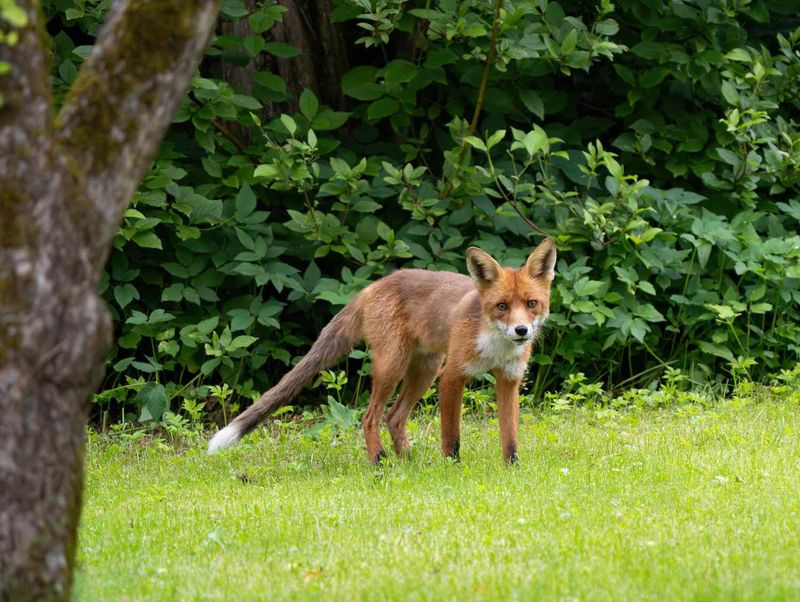
A fox moving through your yard at dusk is doing what foxes do. They are primarily nocturnal animals, and the low-light hours around sunrise and sunset are their natural active window. Seeing one at 7 p.m. on an October evening is not a reason to call anyone.
NC Wildlife guidance on animal encounters states directly that daytime sightings are not necessarily a sign of disease. A fox out at noon is worth a second look, but even that alone is not a diagnosis. Young dispersing animals explore at odd hours, and a hungry fox will hunt whenever prey is active.
What does warrant real attention is behavior, not timing. Watch for unprovoked aggression toward people or pets, stumbling or staggering movement, obvious lack of coordination, paralysis in any limb, foaming at the mouth, or unusual tameness where an animal approaches people without any hesitation. Any of those signs together or separately are reasons to keep everyone inside, call your county animal control, and contact your local NC Wildlife regional office.
NC Wildlife’s red fox profile notes that foxes are mammals capable of carrying rabies, which is why behavioral signals matter more than schedule. A healthy fox that trots past your patio furniture and disappears into the neighbor’s hedge is not an emergency. An animal dragging its back legs across your driveway at noon is.
If a fox bites or scratches a person or a pet, act immediately. Wash the wound thoroughly with soap and water for at least 15 minutes, then seek prompt medical or public-health advice about rabies exposure. CDC rabies prevention guidance recommends keeping distance from all wildlife and preventing pets from any contact with wild animals as the baseline precaution. Observe from inside or from a comfortable distance, and let the fox move on at its own pace.
Remove Rewards and Protect Small Pets
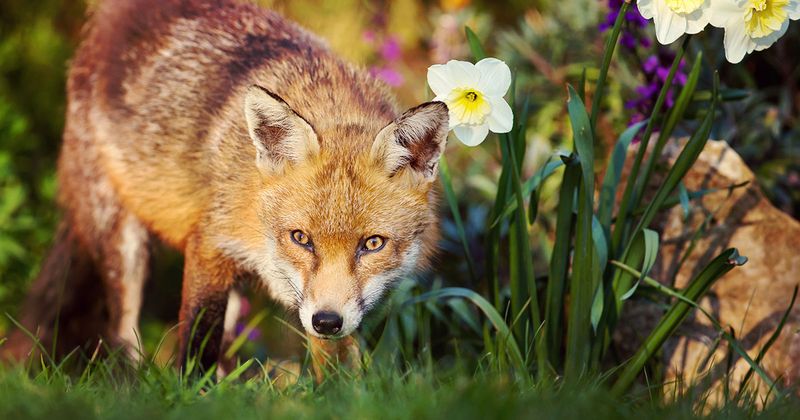
Watching a fox trot through the yard is genuinely interesting, right up until you remember the cat is still outside or the bantam chickens are in an unsecured run. Curiosity is fine. Complacency with small animals nearby is not.
The most reliable thing you can do after a fox sighting is reduce the reasons for a return visit. Feed pets indoors whenever possible. If outdoor feeding is part of your routine, pick up the bowl and any remaining food before dark. NC Wildlife’s animal encounter guidance specifically names pet food, fallen fruit, food waste, bird feeders, garbage, and the rodents that feeders attract as resources that bring foxes into residential areas.
Removing those conditions addresses the actual situation rather than just the symptom.
Secure trash cans with locking lids, clean grill grates after every cookout, and turn your compost pile in a closed bin rather than an open heap. Pick up dropped fruit from apple or persimmon trees every few days during fall. Rake spilled birdseed from beneath feeders, or move feeders temporarily if fox visits become frequent.
NC Wildlife’s wildlife problem FAQ recommends close supervision outdoors for toy-breed dogs and suggests a fence of at least 6 feet with a barrier against digging underneath for reliable separation. Cats and small pets should not be left outside unattended during the dawn and dusk windows when foxes are most active.
Deterrents like motion-activated sprinklers, bright lights, predator scents, or a battery-powered radio near a den entry can sometimes discourage a fox from settling in. Rutgers Extension’s red fox ecology resource notes there are no documented scientific studies proving wolf urine or similar scent products reliably keep foxes away. Treat any deterrent as one layer in a broader approach, not a guaranteed fix, and pair it with actual food-source removal for the best chance of results.
Handle Dens Without Trapping or Relocation
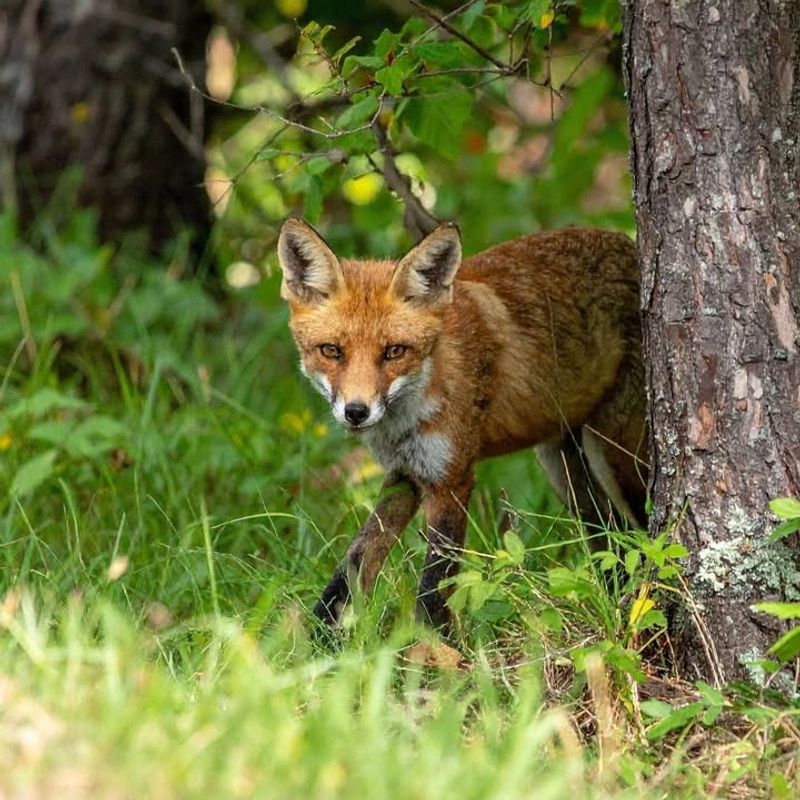
Finding a fox den under your shed or deck changes the conversation from casual observation to active management. The good news is that the most effective first steps cost nothing and carry no legal risk. The bad news is that the most intuitive response, grabbing a trap or sealing the hole, can cause real harm if done at the wrong time.
Before you do anything structural, find out whether adults or young are actively using the space. A den with pups inside is a different situation than an empty burrow a fox checked out once. NC Wildlife’s coexist-with-foxes guidance lists humane pressure options designed to encourage a fox to relocate on its own: position a bright work light aimed at the den opening, place a loud radio near the entrance, or set a motion-activated sprinkler to activate when the animal approaches. These methods work best when the fox has a clear, unobstructed path to leave.
Never corner the animal or block its exit.
Yelling, banging pots and pans, or running a hose near the entrance are also reasonable short-term tools to make a den site feel less comfortable. NC Wildlife spring encounter guidance recommends these noise-based approaches as a first line before any exclusion work begins.
Do not seal the opening until you are confident no animals remain inside. Sealing an active den can trap young foxes, which creates a worse problem than the one you started with.
On the legal side, NC Wildlife’s wildlife problem FAQ states that relocating foxes is illegal in North Carolina. Trapping and moving a fox to another property or public land is not a permitted solution, and amateur trapping or poisoning carries its own risks and legal exposure. For persistent exclusion work or property damage, contact a properly licensed Wildlife Control Agent who knows state rules and can handle the situation without putting you or the animal at further risk. A fox crossing your yard is a prompt to look around and make sensible adjustments, not a reason to panic or reach for a trap.
Most of the time, a few changes to what the yard offers is all it takes to move the story along.