Texas Porch Plants That Support Natural Enemies Of Leaf-Footed Bugs Near The House
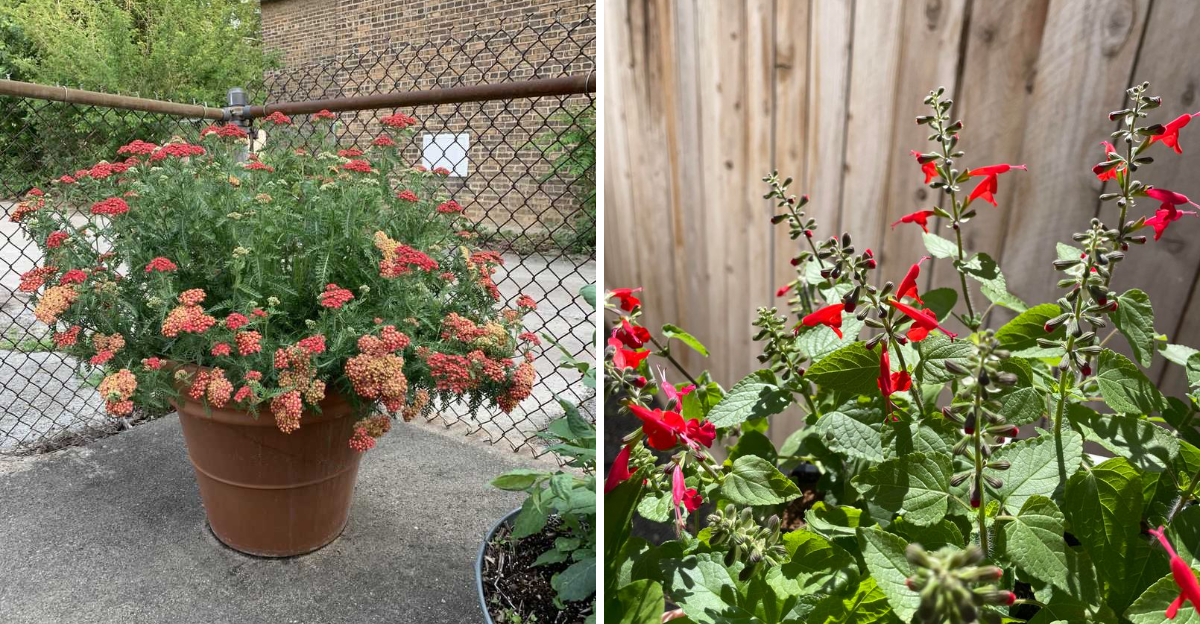
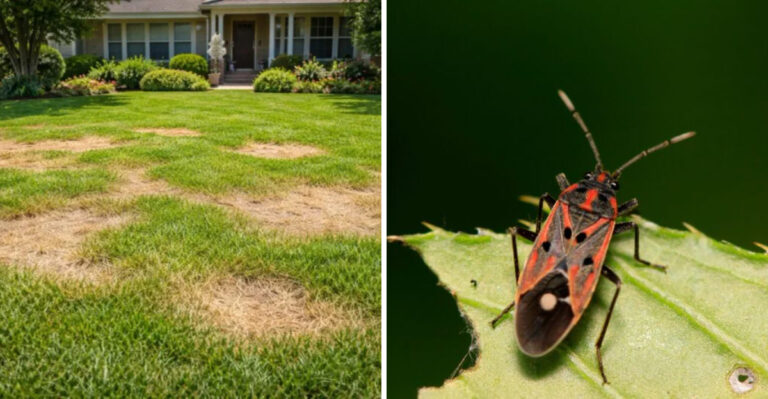
Leaf-footed bugs have no sense of boundaries.
They show up near tomatoes, pomegranates, citrus, peppers, beans, and porch pots like they paid rent.
One day the garden looks calm. The next, those long-legged pests are perched on stems with their weird little leaf-shaped back legs, acting far too comfortable.
Sprays are not the only move. A smarter porch can help support the insects that hunt, parasitize, or compete around pest pressure.
Tiny wasps, lacewings, hoverflies, beetles, and other beneficial insects need food too, and many rely on small, open flowers for nectar and pollen.
No porch plant creates a magic wall around your tomatoes. Leaf-footed bugs still need scouting, egg removal, and cleanup.
But a few well-placed blooms can make the area less pest-friendly and more predator-friendly over time.
So which plants belong near the house when you want more helpful insect traffic and fewer stubborn garden guests?
Start with flowers small enough for tiny allies to actually use.
1. Let Dill Flower For Tiny Wasp Allies
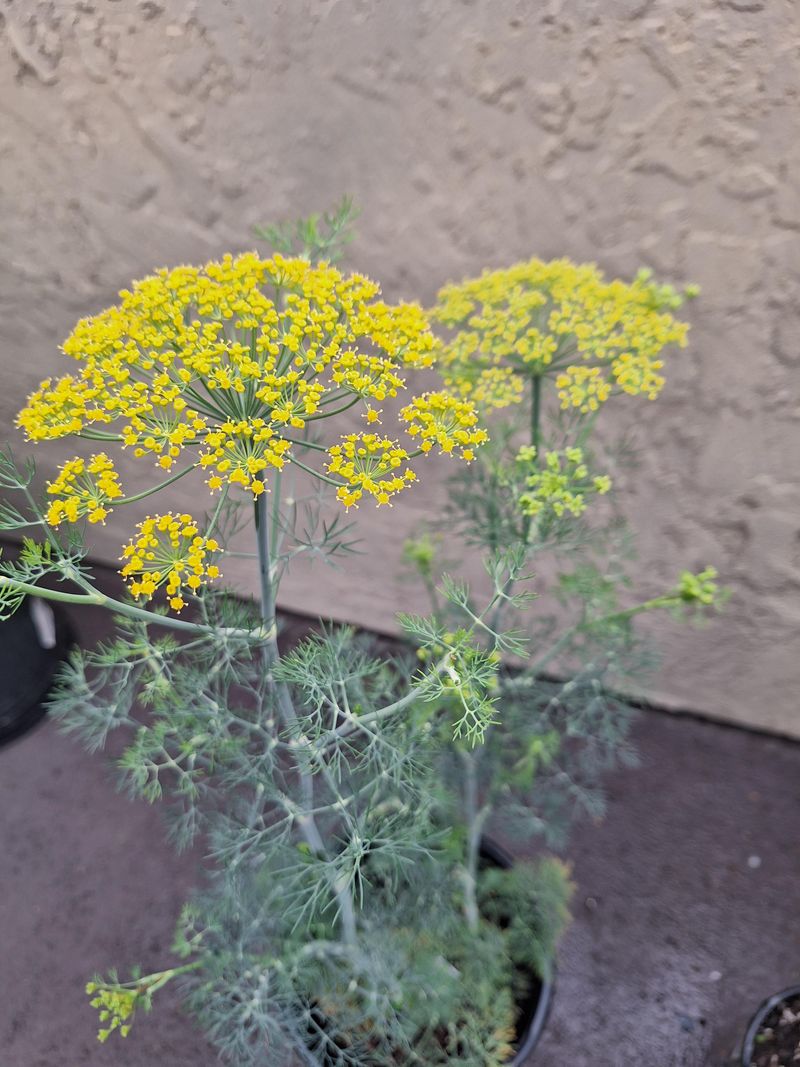
Dill does its best work after the kitchen gets impatient.
Most gardeners cut it young for leaves, then feel annoyed when the plant bolts. Near a Texas porch, that flowering stage can be the useful part.
Dill sends up flat, umbrella-shaped flower clusters called umbels, and those tiny blooms are easy for small beneficial insects to access.
That matters because many parasitoid wasps are tiny. They do not need big, showy flowers. They need shallow nectar sources that fit their size.
Let a few dill plants bloom near the porch instead of harvesting every stem. The flowers can help feed the small wasps and other beneficial insects that patrol nearby plantings.
Dill performs best during the cooler stretch of the Texas growing year. Fall, winter in mild areas, and early spring usually suit it better than brutal summer heat.
Once temperatures rise, dill often bolts quickly, which is not a failure if flowers are the goal.
Use a pot at least 12 inches deep. Dill grows a taproot and dislikes cramped, shallow containers. A deep pot also helps the plant hold moisture more evenly.
Place it in full sun during cool weather. In hot spells, shift the container where it gets morning sun and some afternoon protection.
Avoid spraying broad-spectrum insecticides anywhere near flowering dill. That defeats the whole point by harming the tiny allies you are trying to feed.
Let a few seed heads mature. New dill may return when the weather cools again, giving your porch a repeat supply of helpful flowers with almost no effort.
2. Grow Cilantro Past The Harvest Stage
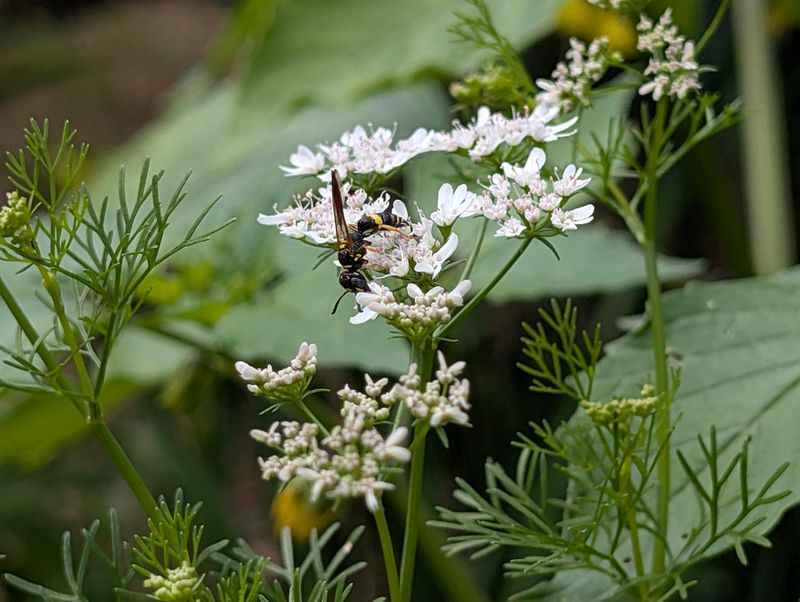
Bolted cilantro is not a tragedy.
It is a tiny beneficial-insect café. Once cilantro stretches upward and forms small white flowers, it becomes much more useful to the porch ecosystem than it looks.
Those delicate blooms can attract lacewing adults, hoverflies, minute pirate bugs, and small parasitoid wasps.
For gardeners fighting leaf-footed bugs, that extra insect activity matters. The goal is not to repel pests with cilantro scent. The goal is to make the porch area more supportive for natural enemies that may also search nearby garden plants.
Your Texas Garden Changes Every Week. Your Plan Should Too.
Gardening in Texas changes quickly throughout the season. Every Friday you’ll receive a simple weekly plan showing exactly what to plant, prune, fertilize, harvest, and protect so you never miss the right timing.
Texas timing is the trick. Cilantro prefers cool weather and often bolts when temperatures climb. Instead of fighting that habit, use it. Plant a few pots in fall, then another round in late winter or early spring.
Let some plants stay for leaves and let others flower. A staggered setup gives you harvest and habitat from the same herb.
A 10-inch pot works for a small cluster, though a wider container gives roots more room and keeps the planting steadier in wind. Use a well-draining mix and keep moisture consistent.
Do not let the container sit in water. Cilantro likes moisture, but soggy roots make the plant decline faster.
Set flowering pots near fruiting plants you scout often, but not where they block walkways or the porch door. Helpful insects do not need the plant directly touching your tomatoes to use the blooms.
Keep checking for leaf-footed bug eggs on stems and leaf undersides. Cilantro helps support the team, but you are still the coach with the clipboard.
3. Add Yarrow For Long Lasting Nectar
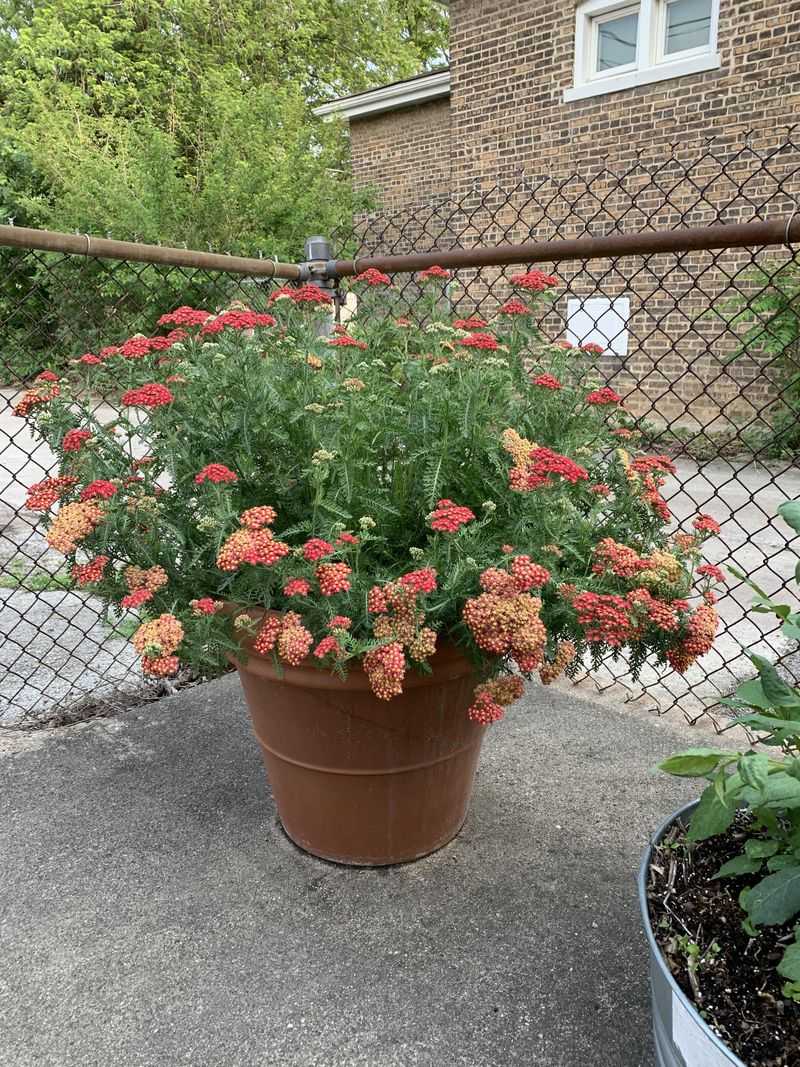
Yarrow is small-insect infrastructure with flowers attached.
Its flat-topped clusters offer many tiny blooms at once, and that shape makes nectar easy to reach. Hoverflies, lacewings, small beetles, and parasitoid wasps can all use flowers like this without having to wrestle through deep petals.
That is exactly the type of porch planting that can help support natural enemies near leaf-footed bug trouble spots.
Yarrow likes full sun and well-drained soil. In Texas containers, drainage is not optional. A pot with poor drainage can turn one heavy rain into a root problem, especially in humid areas.
Use a container with holes and a gritty, fast-draining mix. In clay-heavy beds, raise the planting area or mix in materials that improve drainage.
Once established, yarrow can handle dry spells with more grace than many porch plants. New transplants still need steady watering until roots settle.
Airflow helps too. In humid parts of Texas, cramped foliage may invite mildew. Give each plant space instead of packing it into a crowded mixed pot.
Cut spent flower clusters to encourage fresh blooms, but leave a few if you like a softer, wilder look.
Yarrow can spread in ground beds through rhizomes. That is less of a concern in containers, where the pot keeps its ambitions contained.
Choose varieties suited to your region when possible. Texas is huge, and a plant that behaves beautifully in the Panhandle may sulk on a humid Gulf Coast porch.
Yarrow gives beneficial insects a long nectar window, which keeps the porch busy in the best possible way.
4. Edge Containers With Sweet Alyssum
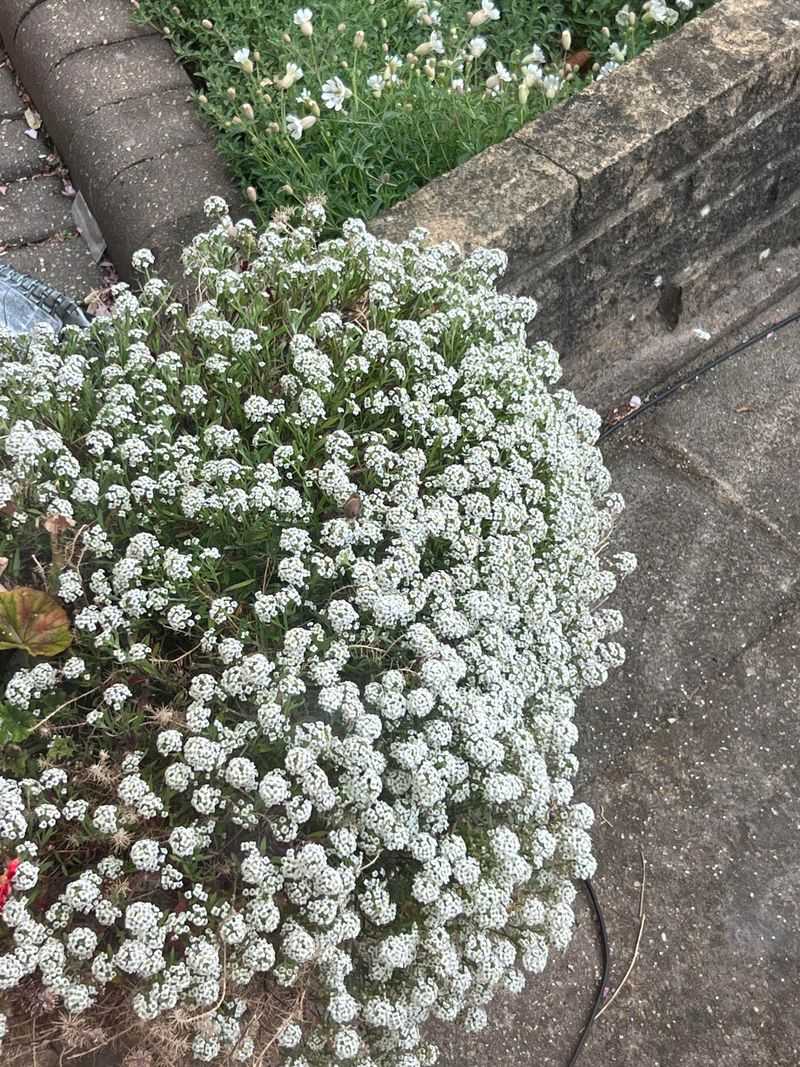
Sweet alyssum is the low little flower that does more than look cute.
It spills around container edges, fills bare soil, and produces clusters of tiny blooms that small beneficial insects can actually use. Those flowers sit low and open, which makes them handy for hoverflies, small wasps, and other tiny porch visitors.
Use it as an edging plant around taller herbs, peppers, or ornamentals. It softens the container while adding nectar without blocking light or airflow.
This plant shines during the cool season in much of Texas. Fall and late winter plantings often look lush and cheerful. Once real heat arrives, sweet alyssum may slow down, fade, or stop blooming.
That is not a flaw. That is a seasonal assignment.
Treat it like a cool-weather porch helper, not a plant that must prove itself through August at all costs.
Keep the soil lightly moist. Alyssum can wilt quickly in small containers, but it does not appreciate soggy roots. A shallow-rooted plant in a hot pot needs steady attention without drowning.
Shear it back by about one-third when it gets straggly during mild weather. Fresh growth and more blooms often follow.
Let a few plants set seed before heat finishes them. Seedlings may appear when cooler weather returns, which makes the porch feel like it planned ahead.
Sweet alyssum will not stop leaf-footed bugs from landing on nearby plants. It can, however, keep small nectar-feeding beneficials around the containers where you want more insect balance.
Cute, yes. Also useful. Finally, a porch plant with range.
5. Plant Cosmos For Open Accessible Blooms
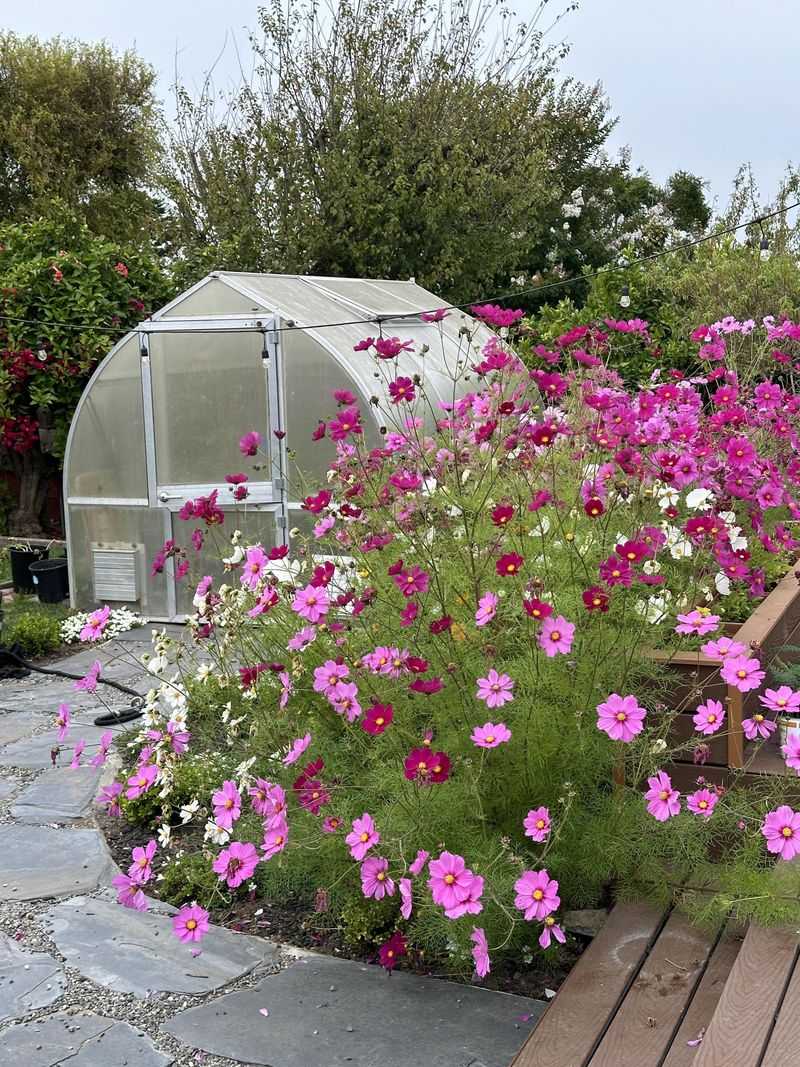
Cosmos brings the porch height, color, and insect traffic.
The open, daisy-like flowers make nectar and pollen easy to reach, which is useful for lacewings, hoverflies, tiny wasps, and other beneficial insects.
A flower does not need to be complicated to be valuable. Sometimes the simple ones do the most hosting.
Cosmos also suits gardeners who do not want fussy porch drama. It handles sun, lean soil, and a bit of neglect once established.
Do not overfeed it. Rich soil and too much nitrogen can push tall leafy growth at the expense of flowers. Near a porch, that can create lanky stems that lean into paths and flop during wind.
Choose compact or dwarf varieties for containers. Standard cosmos can get tall enough to need staking, especially on exposed porches or breezy patios.
Give each plant room. Crowded cosmos stretches, tangles, and blooms less. Space helps light reach the stems and keeps airflow moving around the pot.
Direct sow after frost risk passes, or use transplants for faster color. Stagger plantings a couple of weeks apart if you want a longer bloom window.
Deadhead spent flowers to keep the plant producing. Leave a few seed heads late in the season if you want volunteers later.
During extreme Texas heat, cosmos may slow down. Keep watering deep but not constant, and avoid letting containers bake dry for days.
Cosmos does not act like a leaf-footed bug shield. It acts like a porch invitation for helpful insects. That is the better, more realistic job.
6. Use Native Salvias For Predator Habitat
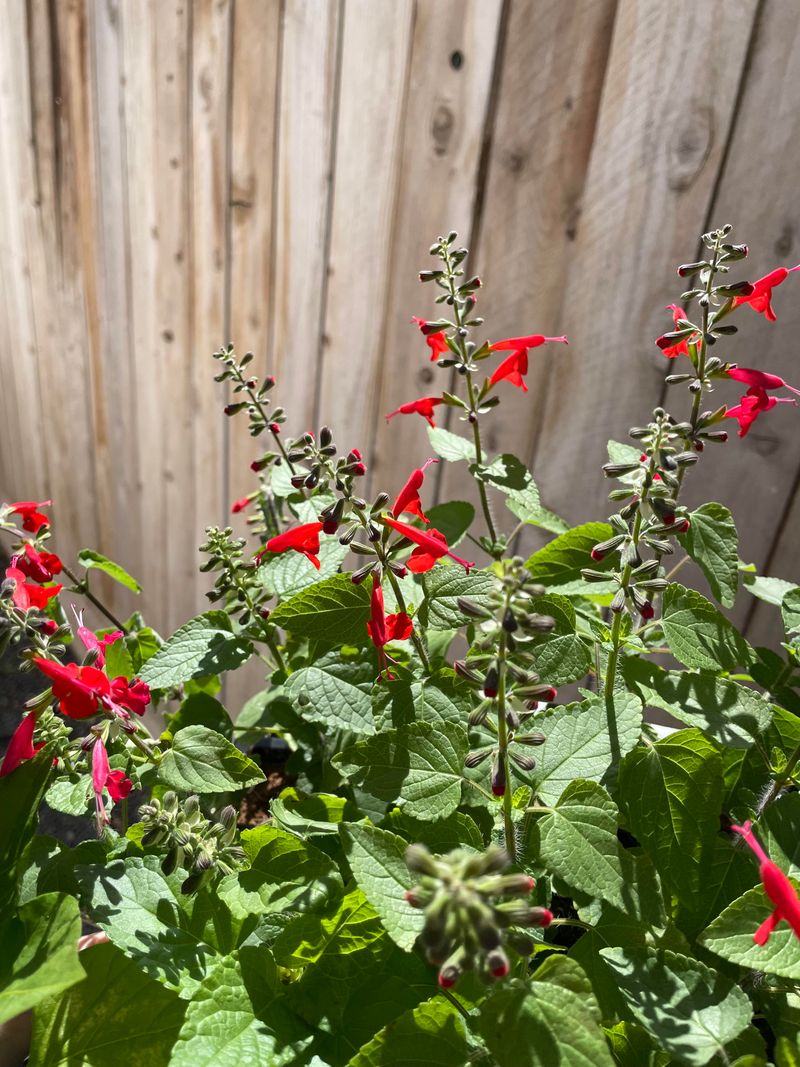
Native salvias make a Texas porch feel alive.
The flowers bring bees, hummingbirds, and plenty of insect movement. That activity helps create a more diverse porch ecosystem, which can support predators and parasitoids that also interact with pest populations nearby.
Salvias do not repel leaf-footed bugs. That claim gets passed around too casually. Their value is habitat, not force field.
Pick species suited to your part of Texas. Scarlet sage, also called Salvia coccinea, can perform well in many regions, including more humid areas. Mealy blue sage, Salvia farinacea, is another widely used option that can handle heat with good drainage.
Local conditions matter. A salvia that thrives in Central Texas sun may behave differently in the Gulf Coast humidity or West Texas wind.
Use a well-draining potting mix in containers. Salvias dislike sitting in wet soil, especially when heat and humidity stack up.
Water deeply, then let the top of the mix begin to dry before watering again. Once established, many salvias handle short dry spells better than overwatering.
Cut plants back by about one-third after a heavy bloom flush. That keeps growth bushier and encourages another round of flowers.
Place the pot where insects can reach it easily but people can still pass by without brushing through stems. A porch edge, sunny step, or nearby raised bed can work well.
Keep scouting nearby fruiting plants. Look for leaf-footed bug egg masses on stems and leaf undersides, then remove them early.
Salvia brings motion, color, and habitat. That is a strong porch job.
7. Let Parsley Flower Near The Porch
Second-year parsley is worth keeping.
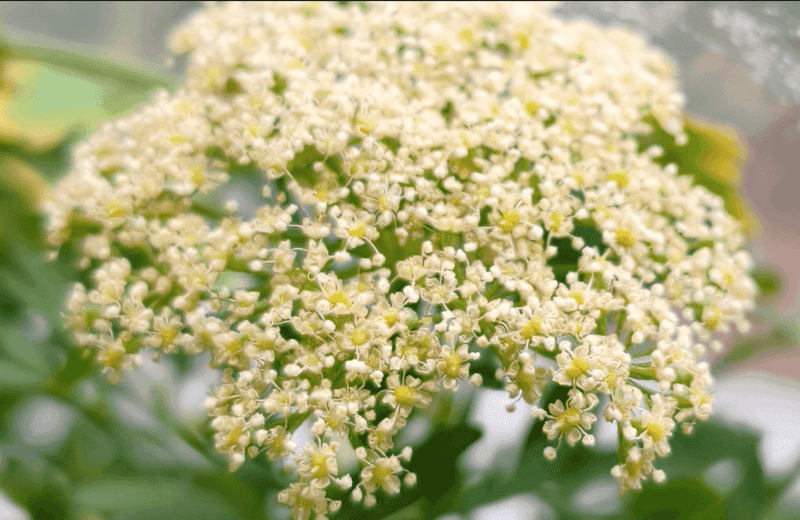
Most gardeners treat parsley like a leaf crop and pull it when it gets tall and awkward. But in its second season, parsley sends up flowering stalks with small umbels that can feed tiny beneficial insects near the porch.
Those flowers are especially useful because they are shallow and accessible. Small parasitoid wasps and other beneficials can use them more easily than deep, tubular flowers.
Let one or two parsley plants stay in a pot after the first harvest season. They may overwinter in many Texas regions, especially with protection during hard freezes.
When growth resumes, the plant will shift toward flowering. It may look less tidy than first-year parsley, so place it where height is welcome but access stays clear.
A back corner of the porch, a sunny step edge, or a container near fruiting plants can work well.
Parsley also supports black swallowtail caterpillars. Their green, yellow, and black striped bodies can surprise gardeners who expected only leaves. Leave them in place when possible. They are part of the habitat value.
Water parsley consistently, but do not keep the container soggy. A deep pot helps roots stay cooler and steadier during warm spells.
Keep flowering parsley far from pesticide drift. Broad-spectrum sprays can harm the same small insects the flowers attract.
Cut down spent stalks after seed matures if the plant looks tired.
Parsley in bloom may not look like the neat herb bunch from the grocery store. That is fine. On a porch built for beneficial insects, a little wildness has a purpose.