Why Chimney Swifts Swirling Over Your North Carolina Yard At Dusk In Late Summer Say Something About It
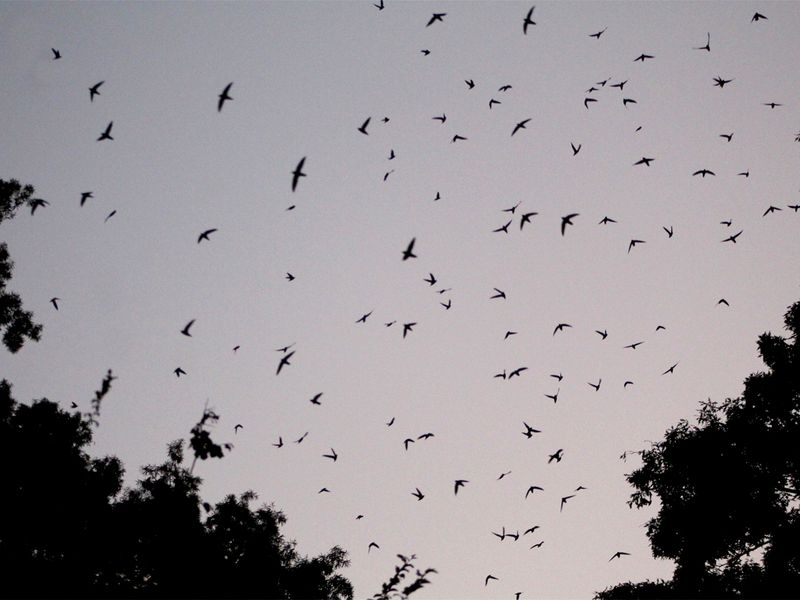
Step outside on a late August evening in North Carolina and you might catch something that stops you mid-sip: a loose, swirling cloud of small birds tracing wide circles above the rooftops, chattering in thin, high calls as the sky goes orange. Those are chimney swifts, and the sight is one of the genuinely wild moments that still happens right over suburban driveways and backyard patios. Understanding what they are doing up there says something real about the landscape around your home, though maybe not exactly what you would guess. Pull up a chair, because the answer is more interesting than a simple yard report card.
The Dusk Swirl Signals A Seasonal Departure
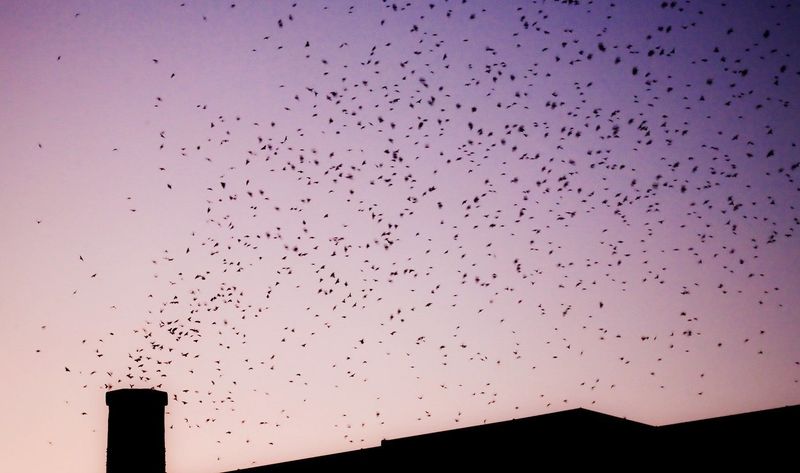
Sometime between early August and mid-October, the sky above many North Carolina neighborhoods does something that looks almost choreographed. Small, cigar-shaped birds with swept-back wings begin looping in wide circles overhead, chattering constantly, the flock growing tighter and tighter as the light fades. That swirling formation is not random. According to the U.S.
Fish and Wildlife Service, chimney swifts spend the warmer months in North America and then travel all the way to South America for the winter, making the late-summer gathering over your yard a preview of a journey measured in thousands of miles.
The broad regional window for this movement runs from August through October across the Southeast, though the USFWS migration timing table notes that the visible peak can shift based on weather patterns, latitude, local breeding success, and the condition of nearby roost structures. A cold front pushing through the Piedmont can nudge a flock to move sooner. A warm, insect-rich week on the Coastal Plain can hold birds in place a little longer. The calendar gives you a ballpark, not a guarantee.
What you are watching at dusk may not be a farewell flight that particular evening. Birds seen wheeling overhead could still be actively feeding before settling into a nearby roost, and they may repeat the same routine for several nights before actually departing. Audubon North Carolina describes hundreds or even thousands of swifts gathering at roosts across the state during fall migration, so the spectacle can build over days before the birds finally push south. Enjoy it while it lasts, because once they leave, the sky feels noticeably quieter.
What Are The Swifts Doing Up There?
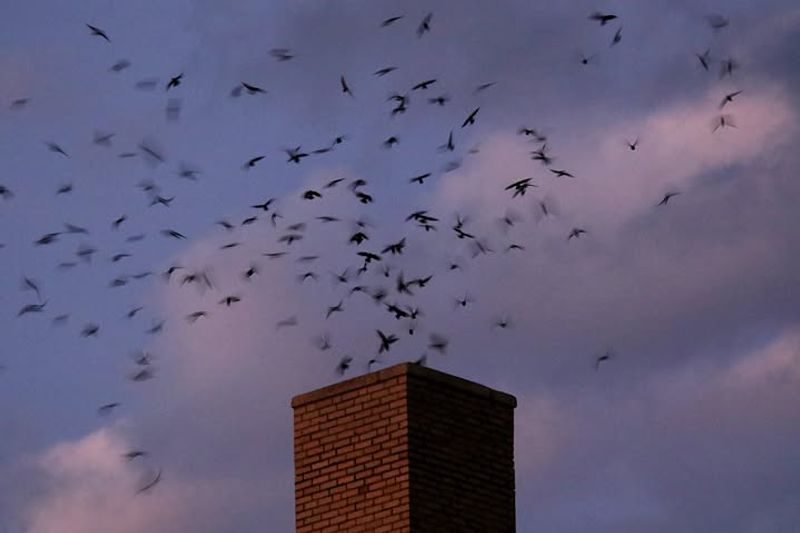
Not every bird in that evening flock is doing the same thing, and separating the possibilities helps you read the scene more accurately. Some birds are feeding, snatching flying insects right out of the air as they wheel around. Others may be part of a larger staging group, adults and recently fledged young that have left their individual nesting sites and joined a collective before the long trip south. And some may be preparing to funnel down into a communal roost, which is the tornado-like spiral that Cornell Lab of Ornithology reports can involve as many as 10,000 birds dropping into a single structure at dusk.
Here is where it gets interesting. Your yard may sit directly beneath a feeding route without containing a nest anywhere nearby. After young birds fledge, swifts from multiple chimneys can consolidate at one larger staging roost, so the flock overhead might be commuting from several different neighborhoods. The Fish and Wildlife Service notes that swifts spend nearly their entire lives airborne except when nesting or roosting, clinging to vertical surfaces inside chimneys or tree cavities with specialized claws and stiff tail spines.
Your North Carolina Garden Changes Every Week. Your Plan Should Too.
Gardening in North Carolina changes quickly throughout the season. Every Friday you’ll receive a simple weekly plan showing exactly what to plant, prune, fertilize, harvest, and protect so you never miss the right timing.
The size of the flock over your yard may have more to do with what is nearby than what is in your garden beds. Research on Illinois municipalities found that the number of uncapped masonry chimneys strongly influenced swift abundance at survey points across those communities. A large school, church, or old industrial building with an open chimney a few blocks away can pull hundreds of birds to your corner of the sky, regardless of what you are growing out back.
Your Yard Joins A Larger Insect Landscape
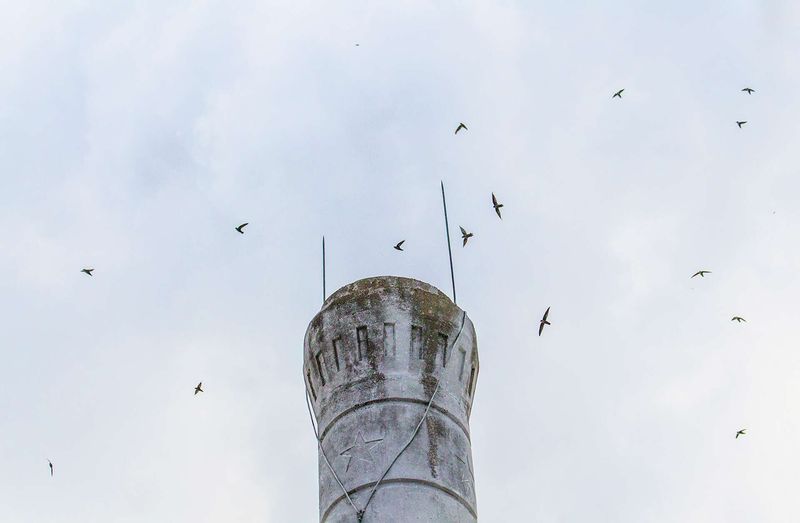
Chimney swifts are built for the air in a way most birds simply are not. They feed, drink, bathe, and even sleep on the wing, catching every meal without ever landing on a branch or a feeder. Their diet is a broad sweep of whatever flying insects are available: flies, beetles, moths, true bugs, ants, wasps, and other airborne arthropods, according to both the Audubon field guide and Cornell Lab. When swifts are working the sky above your neighborhood, it confirms that the broader area is producing enough of those insects to make the foraging worth their while.
The tempting conclusion is that your yard specifically earned those birds. That reading is a little too generous to one property. Cornell Lab reports that swifts feed over residential areas, forests, fields, marshes, and other habitats, often at some distance from nesting sites, and the Fish and Wildlife Service notes they may forage several miles from a roost. The prey in the air above your patio tonight could have hatched from a pond two neighborhoods over, emerged from leaf litter in a nearby woodlot, or drifted in on a breeze from the creek corridor down the road.
So the flock is genuinely good news, just shared news. Your property is one piece of a larger landscape that collectively supports enough flying insects to keep aerial hunters fed through late summer and into fall. That is not a small thing, and it is worth protecting. But treating it as a precise yard-health score misses the point that these birds live and eat at a scale much bigger than any single lot line.
Native Plants Feed The System Indirectly
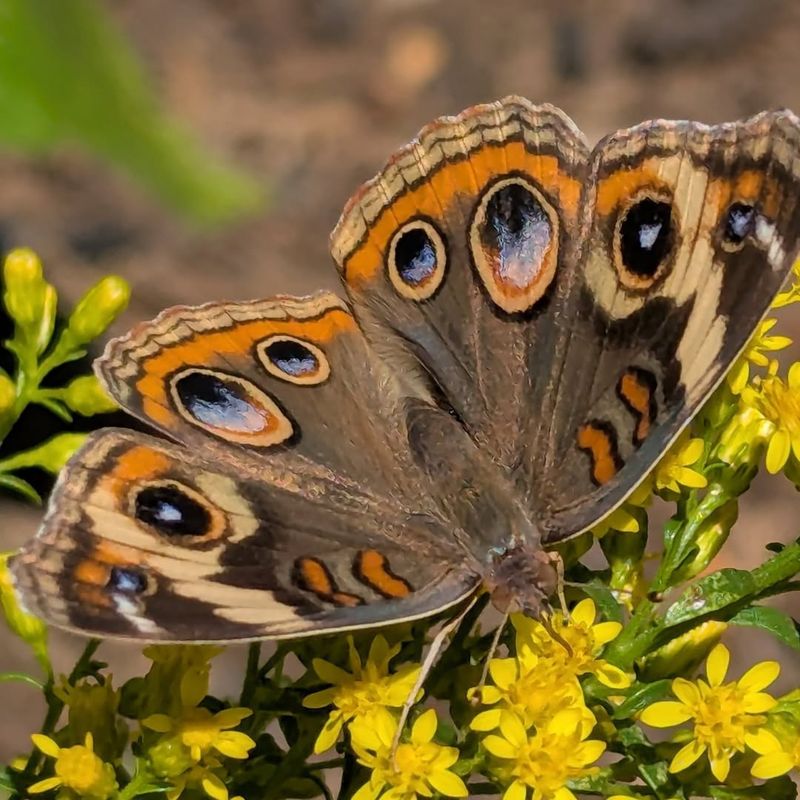
Gardening your way toward a healthier insect community is a real strategy, but the connection between a flower bed and a chimney swift is indirect enough that it is worth tracing carefully. Native plants support native insects during larval and adult stages on or near the plant itself: caterpillars feeding on leaves, beetles working through stems, flies visiting blooms. Those insects are not the same ones swifts are catching 50 feet up in the open air, but they can become part of the broader prey pool as they mature, emerge, and take flight.
The chain looks like this: appropriate native plants support a diverse local insect community, that community contributes to the airborne insect population across the neighborhood, and swifts draw from that larger pool when foraging. NC State Extension’s landscaping-for-wildlife guidance supports the general idea that native plants sustain native insect populations and that those insects support birds and other wildlife. No specific plant is going to lure a chimney swift into your airspace like a magnet, and no source reviewed establishes that kind of direct link.
What actually helps is plant diversity and a willingness to tolerate some imperfection. A few chewed leaves on your ironweed are not a crisis; they are evidence that something is feeding there. NC State Extension’s native plant handbook emphasizes that a small planting is one helpful layer in a functioning food web, not a complete ecosystem on its own. Add layers over time, mix plant types and bloom periods, and let the system build.
The swifts may never notice your goldenrod directly, but the insects that do will matter to something that flies.
Choose Plants For Your North Carolina Site

North Carolina stretches across four distinct ecological regions, and a plant that thrives in a Piedmont backyard with red clay soil can struggle and die in the sandy, fast-draining soil of the Coastal Plain. NC State Extension identifies these regional differences and recommends considering local soil type, moisture availability, topography, and climate before choosing any native plant, rather than treating a statewide list as a universal shopping cart.
With that in mind, several species are worth researching for your specific site. Flowering dogwood (Cornus florida) and eastern redbud (Cercis canadensis) work well across much of the Piedmont and mountain foothills where soils hold some moisture. Butterfly weed (Asclepias tuberosa) and goldenrod (Solidago spp.) tolerate drier, sandier conditions and can perform well in the Sandhills and parts of the Coastal Plain. Cardinal flower (Lobelia cardinalis) prefers consistently moist spots and does well near rain gardens or low areas in any region.
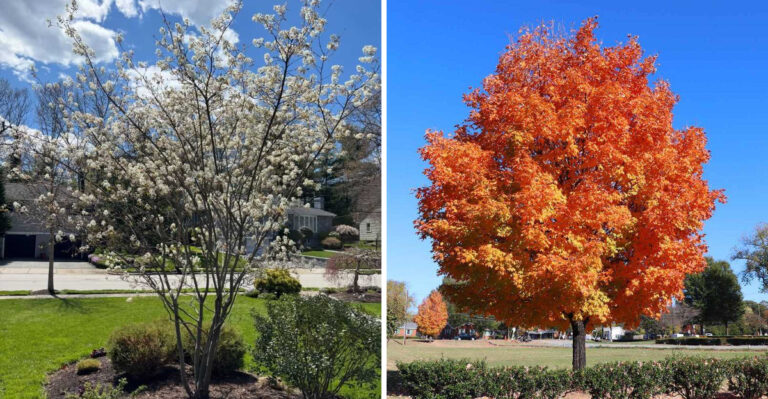
Wax myrtle (Morella cerifera) handles coastal salt spray and wet feet better than most shrubs. Oakleaf hydrangea (Hydrangea quercifolia) and red maple (Acer rubrum) offer good insect habitat value in the mountains and Piedmont, where summer moisture is generally more reliable.
None of these plants should be thought of as a chimney-swift lure. The NC State landscaping guide frames them as contributors to the broader insect community, not as guaranteed attractants for any particular bird. Choose what fits your actual conditions, give plants time to establish, and aim for variety in height, bloom time, and structure. A yard that supports insects across multiple seasons is doing more for the local food web than a yard with one showpiece plant in perfect condition.
Let The Food Web Keep Some Insects
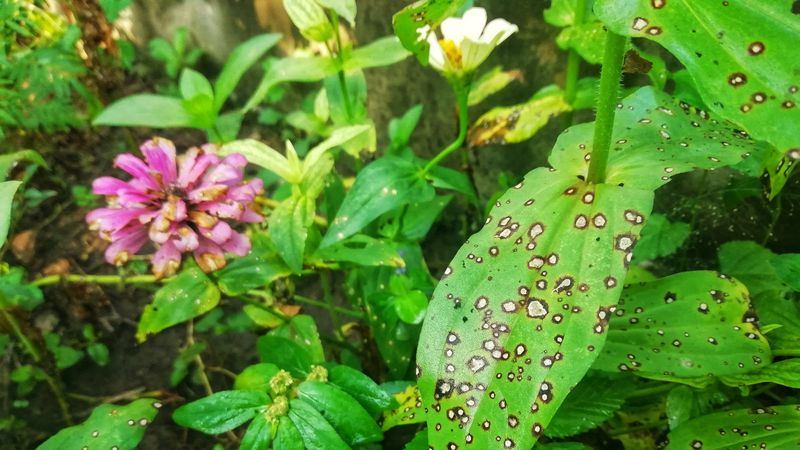
Most North Carolina gardeners have stood in front of a chewed-up plant and felt the urge to reach for a spray bottle. That impulse is understandable, but a yard that supports chimney swifts and other insect-eating wildlife needs to keep some insects alive, and that means learning to tell the difference between damage that threatens a plant and damage that is just cosmetic.
Integrated pest management gives you a practical middle path. NC State Extension’s IPM handbook recommends starting by identifying exactly what pest is present, then monitoring how much damage is actually occurring before deciding whether to act. Cultural controls come first: removing diseased material, adjusting watering, improving air circulation, hand-picking pests when practical. Physical barriers, row covers, and sticky traps come next.
Pesticides enter the picture only when monitoring shows that damage has crossed a threshold worth treating, not as a first reaction to finding a caterpillar.
If treatment becomes necessary, the label is the law and the limit. EPA guidance on reducing pesticide impacts on wildlife recommends treating only the affected area, preventing drift onto untreated plants or water, and using pesticides only when genuinely needed. Outdoor insecticides should not be applied while bees are actively foraging, which generally means avoiding midday hours on flowering plants. But do not assume an evening application is automatically safe either, because moths and other night-active insects matter too, and
EPA pollinator protection tools and NC State’s pollinator conservation information both emphasize following product label directions exactly.A yard that keeps pesticide use targeted and minimal gives the food web room to function, and that functioning food web is what keeps aerial hunters like chimney swifts circling overhead.
Keep Chimneys Safe For Swifts
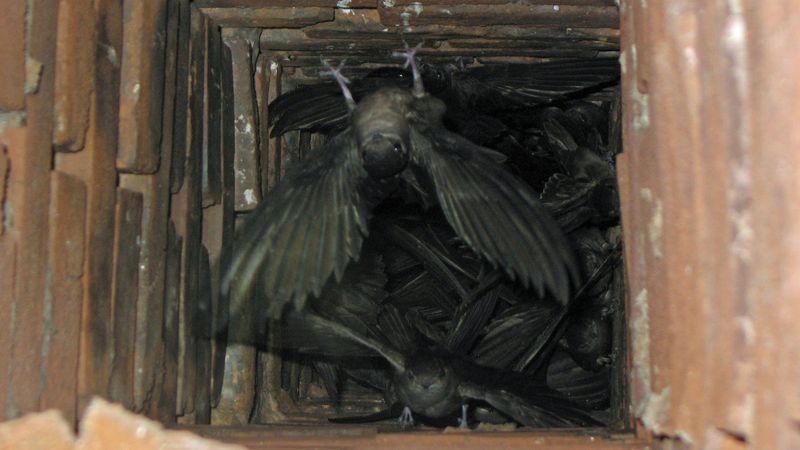
Older masonry chimneys are genuinely valuable habitat, and a surprising number of North Carolina homeowners have a swift roost or nest site within a few houses of where they are standing right now. Before scheduling any chimney work this season, take a few evenings to watch whether birds are entering or exiting. If swifts are using your chimney, any work that disturbs them during the active season can create serious problems.
Chimney swifts, their eggs, and their nests are protected under the Migratory Bird Treaty Act, as the Fish and Wildlife Service explains, which means disturbing an active nest can carry legal consequences, not just ecological ones. Audubon North Carolina’s chimney swift fact sheet recommends keeping suitable chimneys open during the swift season and, if a cap is necessary, scheduling that work in November after the birds have departed and reopening the chimney before they return in spring.
While swifts are present, keep the fireplace damper closed and do not use the fireplace at all until you are certain all birds have left. Do not attempt to light a fire to drive them out, and do not block the flue or attempt to remove a nest yourself. If a bird or nestling falls into the firebox, Cornell Lab’s chimney bird guidance is clear: contact a licensed wildlife rehabilitator or qualified wildlife professional rather than handling the bird on your own. A quick call to your state wildlife agency or a local wildlife rescue organization will connect you with someone who knows exactly what to do.
The chimney that feels like a maintenance headache may be doing real conservation work.
Read The Evening Sky Without Overreading It

Watching a flock of chimney swifts spiral over your yard at dusk is a genuinely promising sign, and you are right to feel good about it. What it tells you is that the broader neighborhood is producing enough flying insects and open airspace to attract birds that are serious, full-time aerial hunters. That matters. But migration timing, roost access, and weather patterns may explain as much about why those birds are overhead as anything you planted or chose not to spray.
The practical actions that follow from this are modest and durable. Observe the flock when it appears, and note whether birds seem to be funneling toward a specific structure nearby. If you have an older masonry chimney, check whether swifts are using it before scheduling any work. Reduce unnecessary pesticide use and lean toward targeted, label-directed treatments when control is genuinely needed.
Add regionally appropriate native plants over time, choosing species suited to your actual soil and moisture conditions rather than chasing a statewide list. Accept that some leaf damage is part of a working food web, not a failure.
One yard cannot fix every pressure on chimney swifts, and Cornell Lab notes that these birds face challenges ranging from nesting-site loss to pesticide exposure to climate shifts. But a yard that holds fewer poisons, grows a few more native plants, and leaves a good chimney alone becomes a less hostile patch in a landscape these birds still choose to cross every year. That is something worth standing outside to watch.