The One Native North Carolina Shrub That Turns A Bare Wooded Edge Into A Songbird Nesting Spot
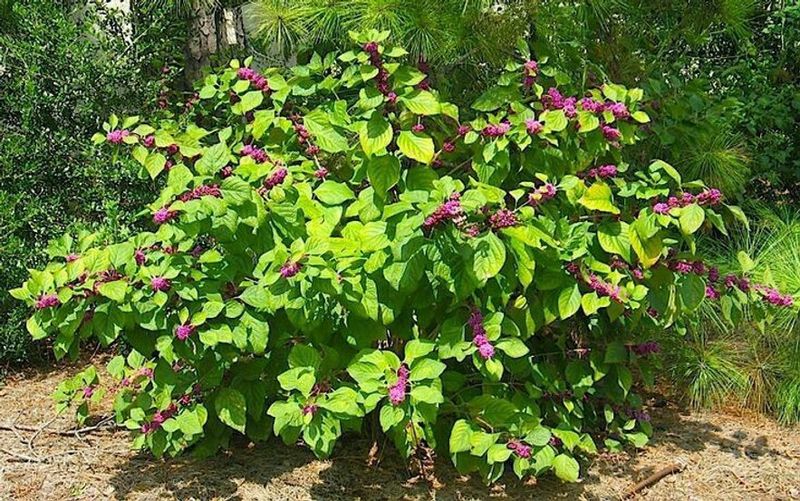
That scrubby strip where your lawn gives up and the trees take over is not wasted space. It is actually the right address for one of North Carolina’s most useful native shrubs, American beautyberry, a plant that grows naturally in exactly that kind of in-between place. Adding it there will not guarantee a nest overnight, but it will give songbirds something that bare ground never can: layered cover, seasonal fruit, and a reason to stick around.
American Beautyberry Adds Value Without Making Guarantees
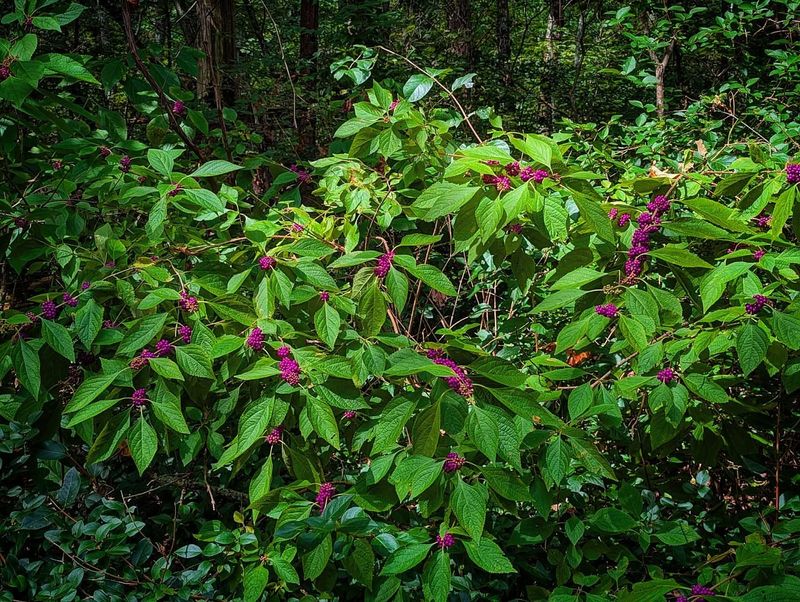
Walk that bare line where your mowed grass meets the tree trunks and you will notice something: there is almost nothing there. No cover, no food, no reason for a bird to linger. American beautyberry, Callicarpa americana, is a native shrub that evolved to fill exactly that kind of gap, and NC State’s plant profile for beautyberry confirms it grows naturally in woodland margins, thickets, meadows, and other open-edge habitats across the state’s mountains, Piedmont, and Coastal Plain.
The plant reaches roughly 3 to 8 feet tall and 3 to 6 feet wide at maturity. Its arching, branching form creates the kind of layered mid-story structure that a bare lawn-to-tree transition almost never has. That shape is not just pretty, it is genuinely useful for birds moving between open ground and tree cover.
What beautyberry adds to a bare edge is real: shrub structure, seasonal fruit, leafy concealment, and habitat complexity that was not there before. What it does not do is guarantee that songbirds will nest in it quickly or that it outperforms every other native shrub in the state. NC State Extension notes that visible wildlife benefits from native plantings may take 3 to 5 years to become obvious, and bird response depends heavily on the surrounding habitat.
Think of beautyberry as a strong starting point rather than a complete solution. It is broadly suited to North Carolina’s USDA Zones 6a through 10b, it is low-maintenance once established, and it belongs in that scrubby edge in a way that a row of ornamental shrubs never quite does. The promise is food, cover, and added structure, and on those terms, it delivers.
Its Branches Offer Cover, Not A Guaranteed Nest
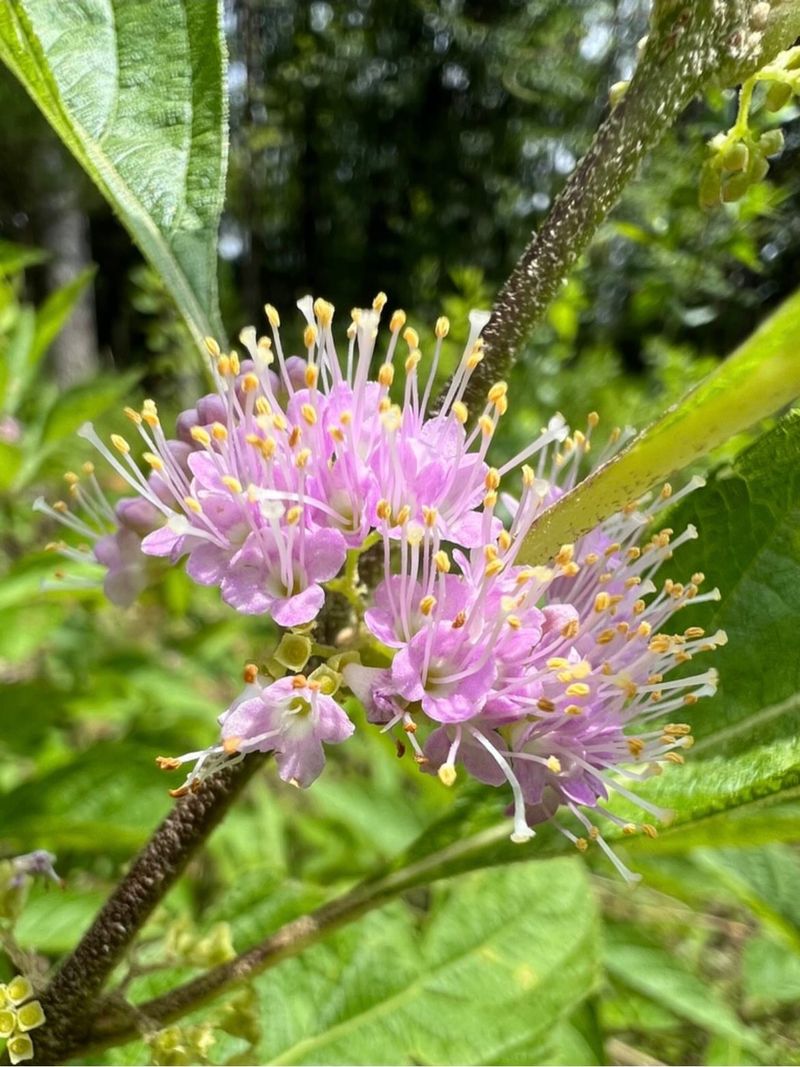
Beautyberry’s arching branches fill in quickly during spring and summer, and by midsummer a mature plant has enough leafy density to give a small bird a real sense of being hidden. That kind of concealment cover matters for species like gray catbirds, Carolina wrens, and brown thrashers, birds that prefer to move through thick tangles rather than cross open ground.
The honest distinction worth making here is between potential habitat and proven nesting preference. Beautyberry’s natural habitat in woodland margins and thickets supports the idea that birds could nest in it, and NC State’s species profile describes that native edge character clearly. But no reliable source establishes that birds consistently choose beautyberry over other shrubs when picking a nest site.
Bird species also use cover in very different ways. Cornell’s All About Birds explains that some species nest in shrubs, while others build on the ground, in tree cavities, in buildings, or in nest boxes. A northern cardinal might tuck a nest into a dense beautyberry, but a Carolina chickadee needs a cavity, and an eastern towhee often stays at ground level beneath the shrub rather than in it.
Your North Carolina Garden Changes Every Week. Your Plan Should Too.
Gardening in North Carolina changes quickly throughout the season. Every Friday you’ll receive a simple weekly plan showing exactly what to plant, prune, fertilize, harvest, and protect so you never miss the right timing.
Adding one beautyberry actually improves the structure of a bare edge, but it does not make that edge automatically safe. The shrub gives birds a reason to move through and linger, and that is a real step forward. Calling it a guaranteed nesting spot, though, would be overselling what one plant can do. Cornell’s nesting guidance reinforces that birds make site choices based on a combination of cover, food, water, and predator pressure, not the presence of any single shrub.
Purple Berries Extend The Edge’s Seasonal Food Supply
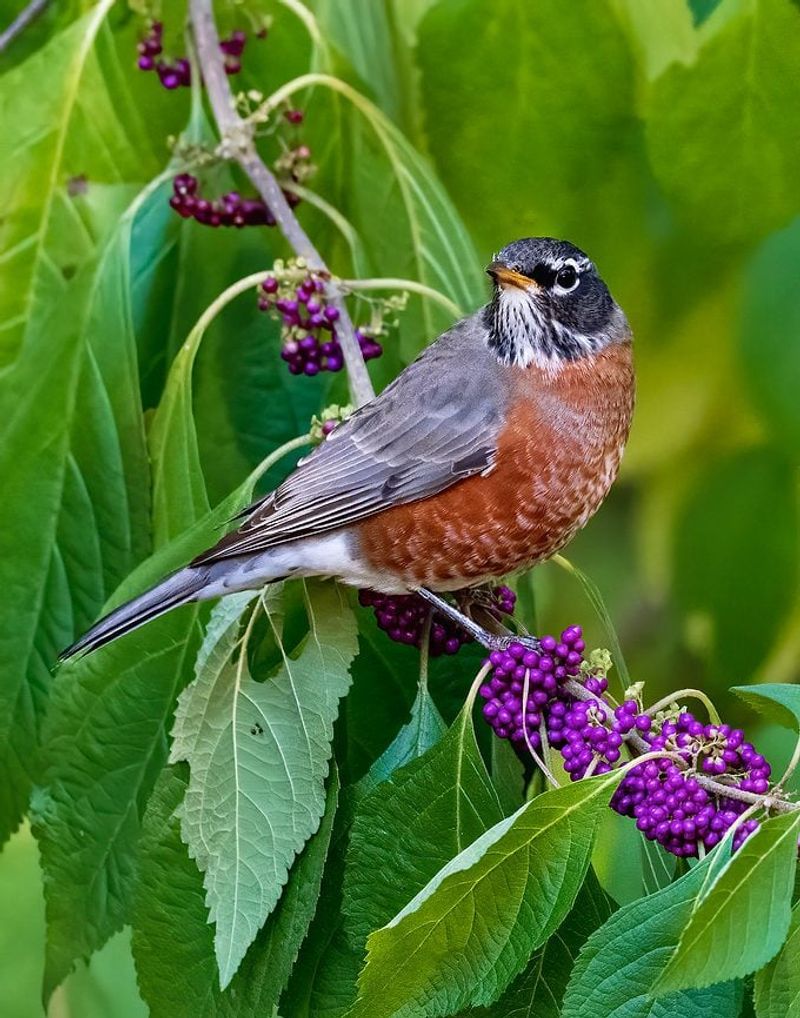
By late August, something changes along a beautyberry hedge. The berries shift from green to a color that does not look quite real, a saturated magenta-purple that runs in tight clusters around every stem. They ripen from August through October and can hang on into early winter if the birds do not find them first.
Several North Carolina songbirds eat those berries. NC State’s beautyberry profile identifies American robins, brown thrashers, purple finches, and eastern towhees as documented users. That is a useful mix of species, some staying year-round, some passing through in fall migration, which means the food value stretches across multiple seasons rather than peaking once and disappearing.
Here is where the picture gets more complicated, though. Berries feed adult birds well, but nestlings are a different story. Many baby songbirds depend almost entirely on caterpillars and other soft-bodied insects during their first weeks of life. NC State’s native plants handbook makes clear that native plants are valuable partly because they support the insects, especially caterpillars, that nestlings need.
Beautyberry berries do not fill that role.
That distinction matters for how you plant. Beautyberry handles the fruit side of the equation, but native grasses, wildflowers, and other woody plants need to be part of the picture if you want to support birds through the full nesting cycle. Think of the berries as a seasonal bonus that extends the edge’s usefulness into fall, not as a substitute for the insect-rich vegetation that makes a site genuinely productive for breeding birds.
Choose Light, Drainage, And Room Before You Plant
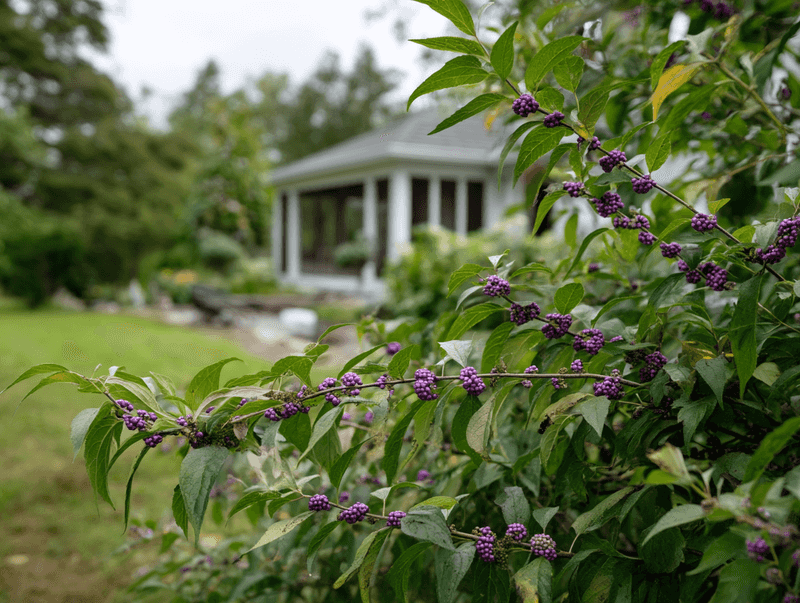
Before you buy a plant, walk your edge on a clear afternoon and just watch where the sun falls. Beautyberry prefers full sun to partial shade, and it genuinely struggles in deep shade beneath a closed forest canopy. A spot that gets a few hours of direct sun and bright indirect light the rest of the day is realistic; a spot that stays dark all day is not a good fit.
Drainage matters just as much as light. NC State’s plant profile confirms beautyberry’s adaptability across the state, but the mountain foothills, Piedmont red clay, dry Sandhills, and wet Coastal Plain sites all behave differently. In clay soils around Raleigh or Charlotte, water can sit after a heavy afternoon storm and rot shallow roots. In sandy eastern Carolina soils, it drains fast and the plant dries out quickly.
Neither situation is fatal, but both require you to pay attention the first season.
Room is the third factor people most often underestimate. A mature beautyberry spreads 3 to 6 feet wide, and it does that with arching stems that lean outward rather than growing straight up. Using that mature spread as your guide, allow enough clearance from sidewalks, fences, and structures so the plant has room to do what it does naturally. Crowding it against a fence or a foundation wall will limit airflow, reduce fruit production, and make the plant harder to manage later.
A small group of several plants will create denser cover than a single specimen and may improve fruit production, since NC State notes that beautyberry can fruit more reliably when multiple plants of the same type grow nearby. Think of the grouping as building a habitat patch rather than placing one accent shrub.
Give New Roots A Full Establishment Season
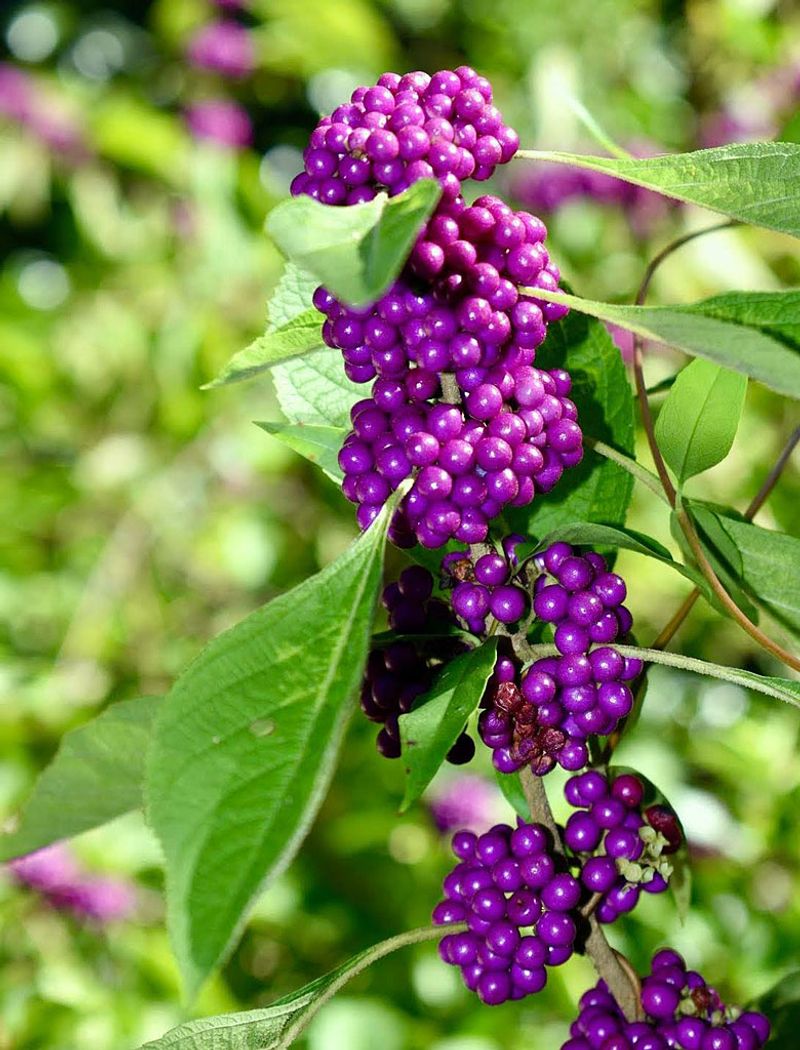
Fall planting is generally the safer choice for native shrubs across North Carolina. Cooler temperatures and more reliable rainfall give roots time to spread before the heat of a Piedmont or Coastal Plain summer arrives. Planting in June or July puts a new shrub under immediate stress, and that stress can set it back by a full growing season.
Watering during establishment is the single most important thing you will do. There is no one-size-fits-all irrigation rate that works from the mountains to the coast, because rainfall, soil drainage, plant size, and summer temperatures all vary too much. The practical rule is to water the root zone deeply whenever the top few inches of soil dry out, and to keep doing that through the first full growing season. NC State Extension’s wildlife landscaping guide reinforces that establishment care is what separates a thriving native planting from a struggling one.
Planting several beautyberries in a loose group rather than a single specimen creates denser cover from the start. NC State’s species profile notes that fruit production may improve when multiple plants grow nearby, though no precise plant count is established. Three plants spaced to allow for their mature spread is a reasonable starting point for most residential edges.
Set realistic expectations for wildlife response. Birds may begin visiting within the first season if food and cover are scarce nearby, but visible nesting activity and regular use often take 3 to 5 years to become obvious as the planting matures and local birds learn the site. Patience is not a flaw in the plan, it is part of it.
Prune Before Birds Need The New Growth
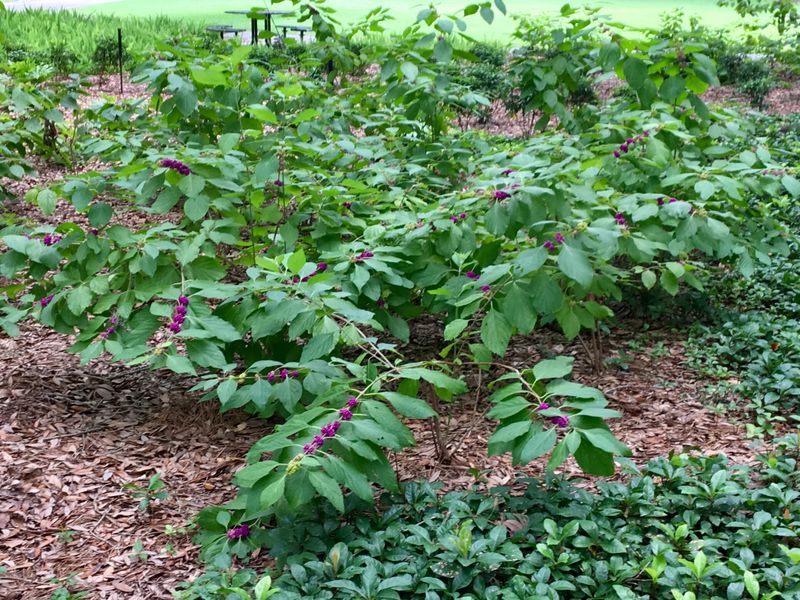
Beautyberry flowers on new growth, which means the timing of your pruning actually determines how much fruit you get that fall. Cut it back in late winter, before new stems emerge, and the plant responds by pushing out vigorous new growth loaded with flower buds. NC State’s beautyberry profile recommends cutting the plant to about 1 foot high if you want a smaller, fuller form, and late winter is the right window for that kind of hard reset.
Once spring arrives and leaves fill in, the calculus changes completely. Pruning during the growing season can strip away flowers before they set fruit, remove leafy cover that birds are already using, or worse, disturb an active nest. NC State’s bird habitat management guide identifies early March through late July as a general nesting season guideline for North Carolina, though that range is not a universal rule and actual nesting activity varies by species and site.
The safest habit is to inspect the shrub before you touch it. Look for a nest cup, listen for alarm calls, and watch whether adult birds are moving in and out of the plant with unusual purpose. If you find an active nest with eggs or young, postpone any nonessential work and leave the nest alone.
Audubon’s guidance on nests in inconvenient places is direct: native bird nests, eggs, and young are protected under the Migratory Bird Treaty Act, and the right move when you find an active nest is to wait. A few weeks of patience costs you nothing and protects a breeding attempt that took the bird considerable effort to start.
Build A Layered Edge Around The Shrub
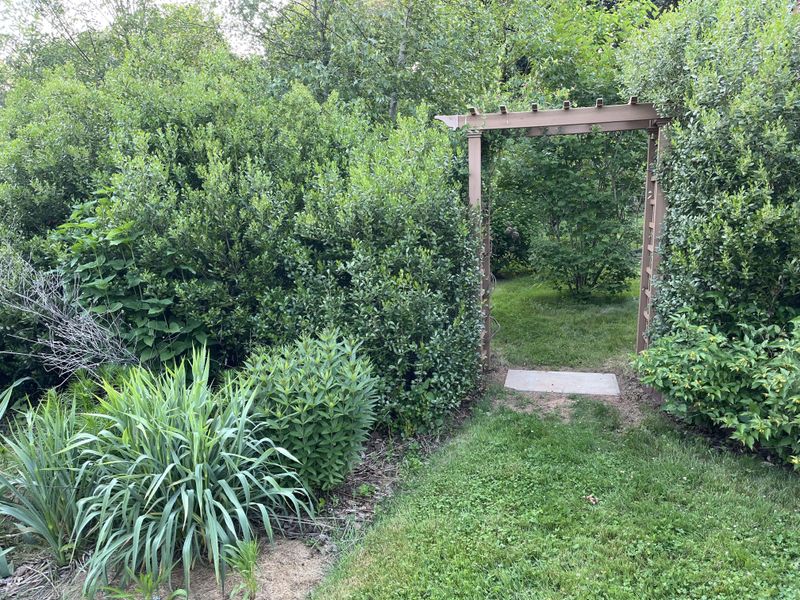
Beautyberry does its best work when it is not the only thing growing along that edge. NC State Extension recommends a diverse, layered planting of native trees, shrubs, vines, grasses, and wildflowers because different bird species feed and nest at different heights. A cardinal nesting in a mid-height shrub, a towhee scratching in the leaf litter below, and a wood thrush foraging in the dappled shade behind it are all using the same strip of ground in completely different ways.
Low-growing native grasses and wildflowers at the front of the edge pull in insects and provide nesting material. Cornell’s All About Birds recommends mixed vegetation at varying heights because no single layer meets every bird’s needs. Behind the beautyberry, taller native shrubs and young trees add the vertical complexity that makes a habitat patch genuinely useful.
Winter shelter is one gap beautyberry cannot fill on its own. The plant is deciduous, so after leaf drop it offers very little protection from cold or predators. NC State’s bird habitat guide specifically recommends evergreen cover for winter shelter, naming yaupon holly, wax myrtle, American holly, and eastern redcedar as useful native options. Mixing one or two of those into the planting closes the seasonal gap that beautyberry leaves open.
Edge effects and nest predation are real concerns that layering helps address but does not eliminate. Research shows that edge habitats can increase nest predation for some species where generalist predators move freely between woods and open areas. USGS research on edge effects and a peer-reviewed meta-analysis in the Wilson Journal of Ornithology both confirm that outcomes vary by species, predator community, habitat structure, and landscape context. A layered planting improves the odds, but no arrangement of shrubs makes a nest completely safe.
Add Water And Remove Avoidable Hazards
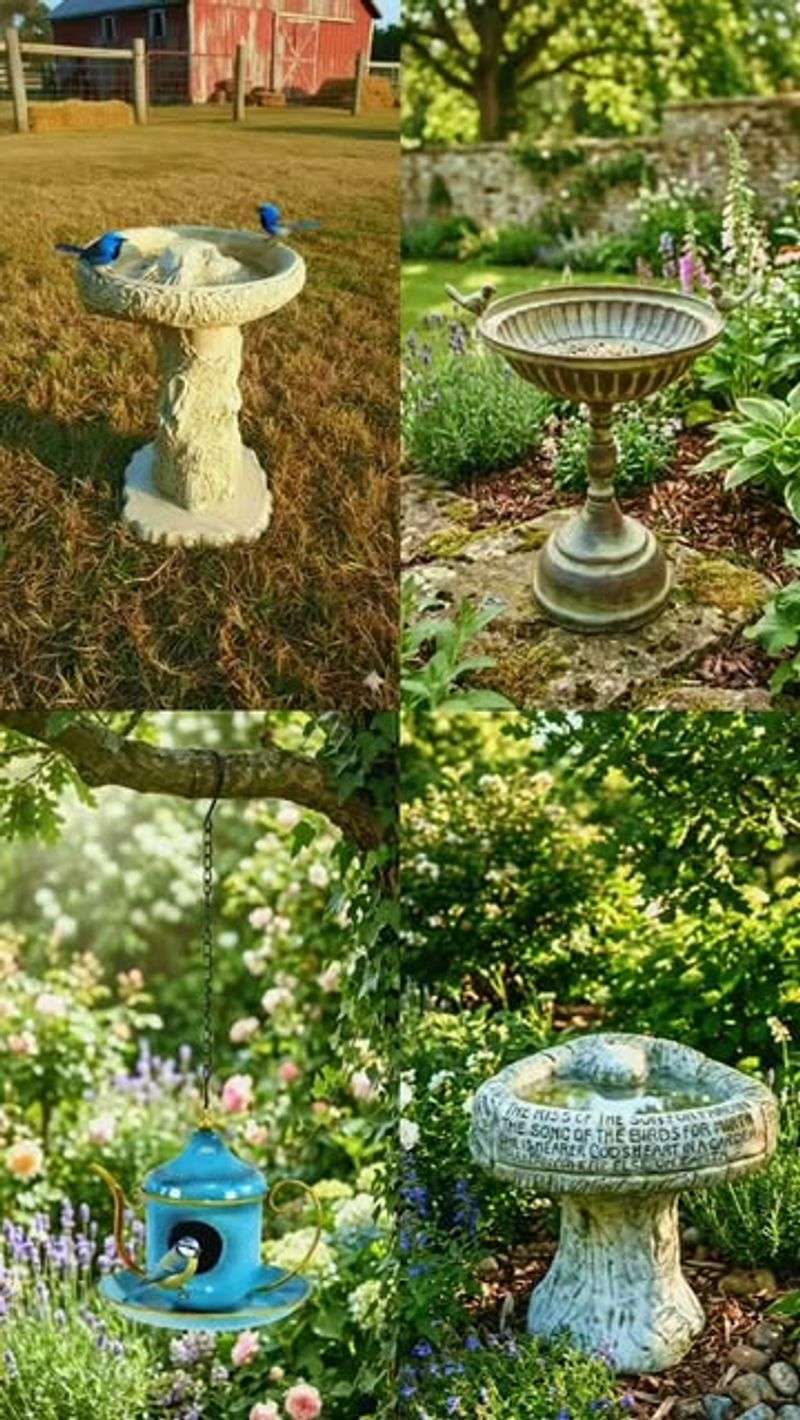
A birdbath placed near the edge planting gives birds something beautyberry cannot provide: reliable water for drinking and bathing. NC State’s bird habitat management guide recommends a basin about 24 to 36 inches in diameter, positioned near cover but not directly inside dense vegetation, and placed roughly 15 feet from a perch or shrubby cover so birds can watch for predators while they drink. Clean the basin weekly and refresh the water, because standing water that sits for days breeds mosquitoes and can carry disease.
Cats are one of the most serious threats to ground-foraging and low-nesting birds, and dense shrubs do not protect birds from a cat that has learned to wait beneath them. Audubon is direct about this: keeping cats indoors is one of the most effective things a homeowner can do for backyard birds. No amount of native planting compensates for a free-roaming cat working the same edge.
Pesticides are the other avoidable hazard. Audubon’s bird-friendly yard guidance explains that insecticides can kill the insects that birds depend on and can contaminate food that nestlings eat. Reducing or eliminating pesticide use in and around the edge planting protects the insect community that makes the whole habitat work. Audubon’s bird safety materials also flag window collisions as a leading cause of bird mortality, worth addressing with window tape or screens if your house sits close to the planting.
Beautyberry is a genuinely useful native shrub for a bare North Carolina wooded edge, and it works best as one patient layer inside a broader plan that includes water, evergreen cover, layered vegetation, and a yard that is as safe as you can make it. The edge you build over the next few years will be more valuable than anything you can plant in a single afternoon.