What Your Florida Soil Needs To Look Like Before Planting A Bald Cypress
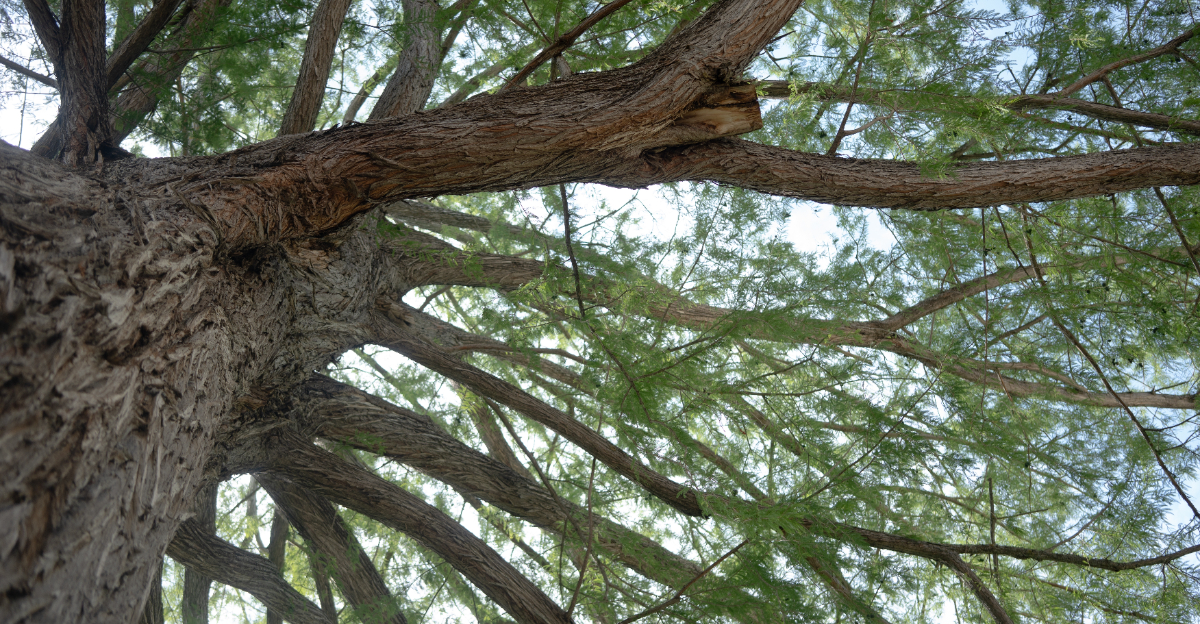
Bald cypress has a reputation for being a water plant. Plant it near a pond, let it stand in a low spot, give it wet feet and it will handle the rest.
That reputation is partially earned and significantly oversimplified in ways that cost Florida homeowners healthy trees every season. Bald cypress is more adaptable than its reputation suggests.
It tolerates wet soil. It also grows in average, well-drained conditions that most Florida yards already have.
The soil requirements that actually matter are different from what most planting guides spend time on. What the soil needs to look like before a bald cypress goes in is specific.
pH, drainage pattern, organic matter, and the absence of certain soil conditions that slow establishment in ways that take years to become obvious.
Getting it right before planting is considerably easier than correcting it after a bald cypress has been in the ground for two seasons.
1. Moist Soil Beats A Backyard Swamp For Faster Growth
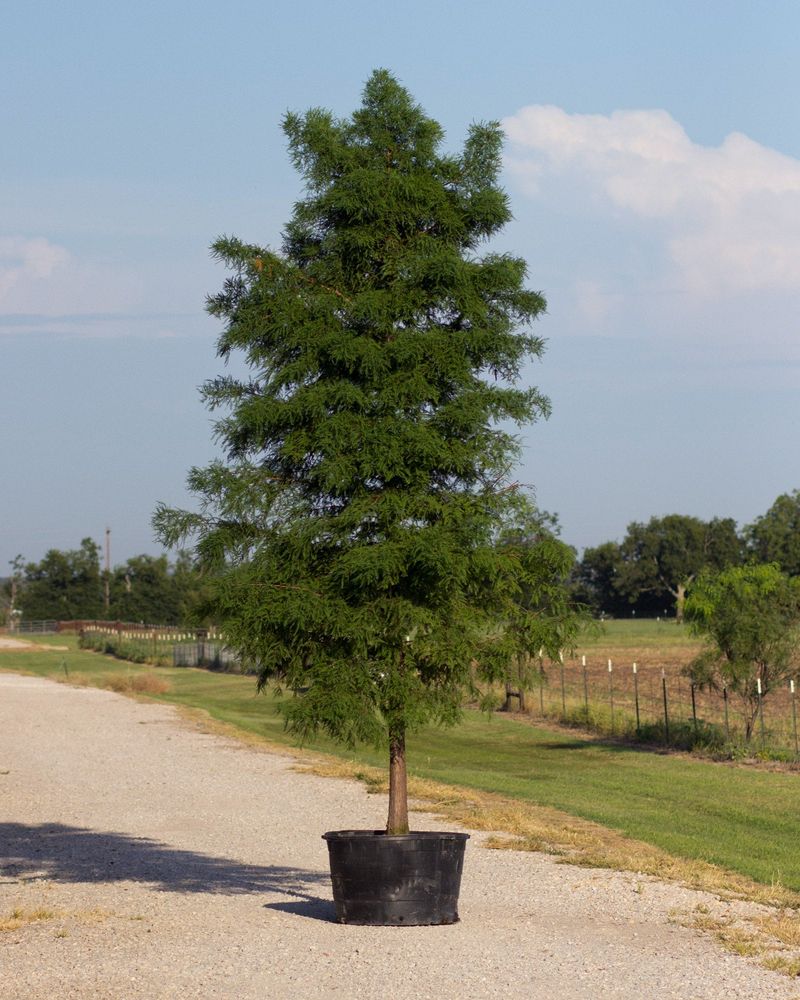
Plenty of Florida gardeners picture a bald cypress standing knee-deep in murky water, but that image tells only part of the story. Research from UF/IFAS shows that moist, well-drained soil often produces faster growth than permanently saturated ground.
Roots need both water and oxygen, and standing water can crowd out the air pockets roots depend on.
A naturally damp yard, one that stays moist after rain but drains within a day or two, is actually a prime spot for this tree. That kind of site gives roots consistent moisture without blocking oxygen flow.
Many homeowners with low-lying lawns already have exactly the right conditions without doing a thing.
You can do a quick check by digging a hole about 12 inches deep and filling it with water. If the water drains within 24 hours, your site likely has the balance this tree prefers.
Slow drainage is not a dealbreaker, but faster drainage with steady moisture is genuinely the sweet spot for strong early growth.
2. Good Drainage Still Matters More Than The Cypress Reputation Suggests
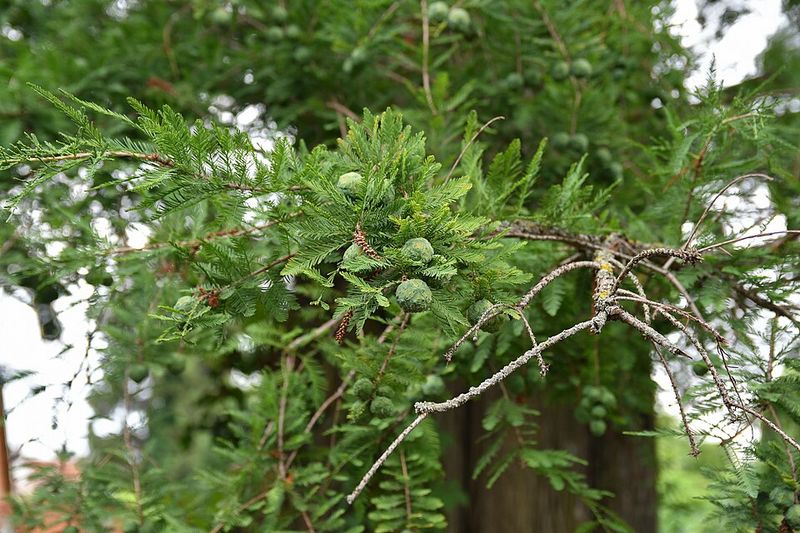
The reputation of bald cypress as a swamp tree is well earned, but it can mislead Florida homeowners into thinking drainage does not matter. Taxodium distichum does tolerate poorly drained and seasonally wet soils remarkably well.
That tolerance, though, is not a sign that every tree needs saturated ground to be healthy.
Seasonal wetness is fine. A yard that floods briefly after a heavy storm and then drains is a good candidate for this tree.
Pond margins, low areas, and ordinary lawn soil all work, as long as roots are not locked in stagnant, airless conditions for months at a time.
Think of drainage as a support system rather than a strict requirement. Trees planted in areas with some drainage tend to establish more quickly than those sitting in water-logged holes.
Before planting, observe your yard during a rainstorm and note where water pools and how long it lingers. Choosing a spot where runoff moves slowly but steadily is a practical way to give your new tree the best start without needing to reshape your entire landscape.
Your Florida Garden Changes Every Week. Your Plan Should Too.
Gardening in Florida changes quickly throughout the season. Every Friday you’ll receive a simple weekly plan showing exactly what to plant, prune, fertilize, harvest, and protect so you never miss the right timing.
3. Acidic Ground Gives The Roots Their Best Starting Point
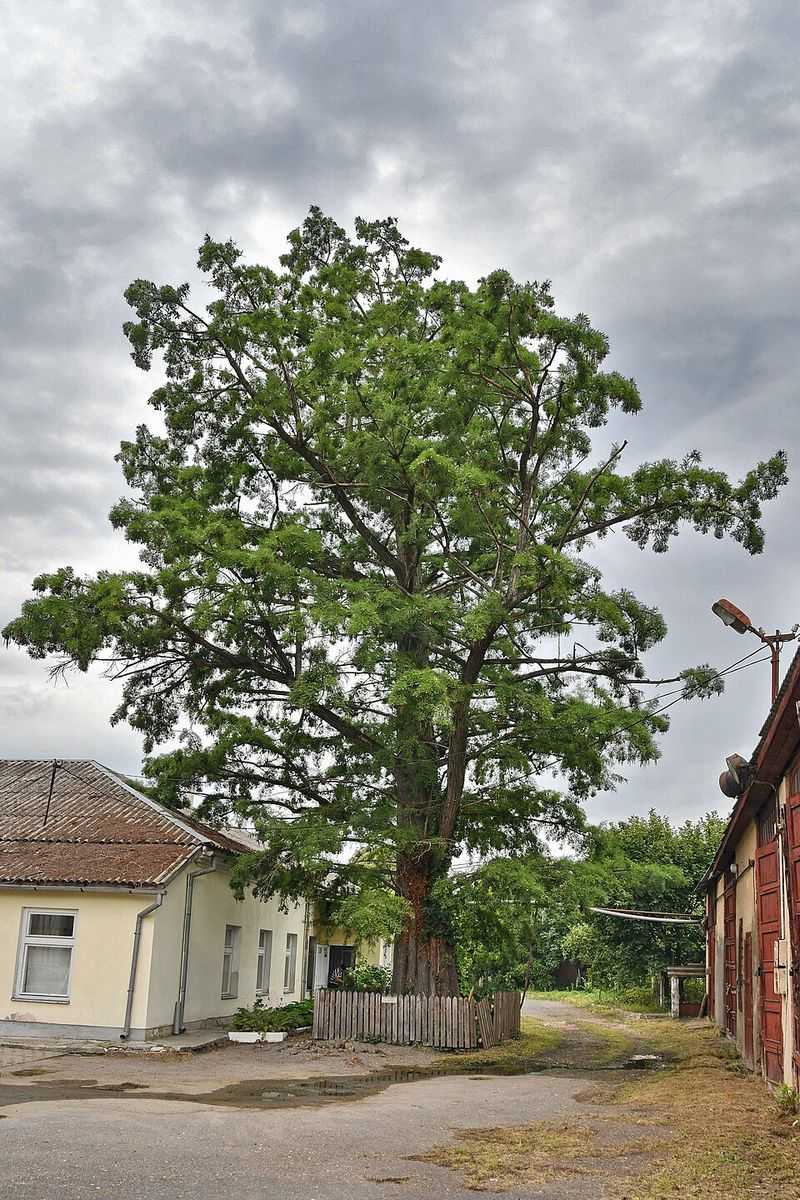
Soil reaction, meaning pH, shapes how easily roots pull nutrients from the ground. Bald cypress grows best in soils that range from moderately acidic to slightly alkaline, roughly pH 5.0 to 7.0 according to UF/IFAS guidance.
That range covers most natural Florida soils, which tend to run on the acidic side.
Acidic ground generally makes nutrients like iron, manganese, and phosphorus more available to roots. When a tree can access those nutrients freely, it puts energy into growth rather than stress responses.
A soil test before planting takes the guesswork out of the equation and gives you a number to work with.
You can pick up an inexpensive test kit at most garden centers, or send a sample to your local UF/IFAS extension office for a more detailed reading. If your pH falls within the preferred range, no amendments are needed before planting.
If it falls outside that range, talk to an extension agent about realistic options before attempting any large-scale soil changes. Starting with accurate data is always better than guessing and treating unnecessarily.
4. A pH Above 7.5 Can Turn Green Needles Yellow
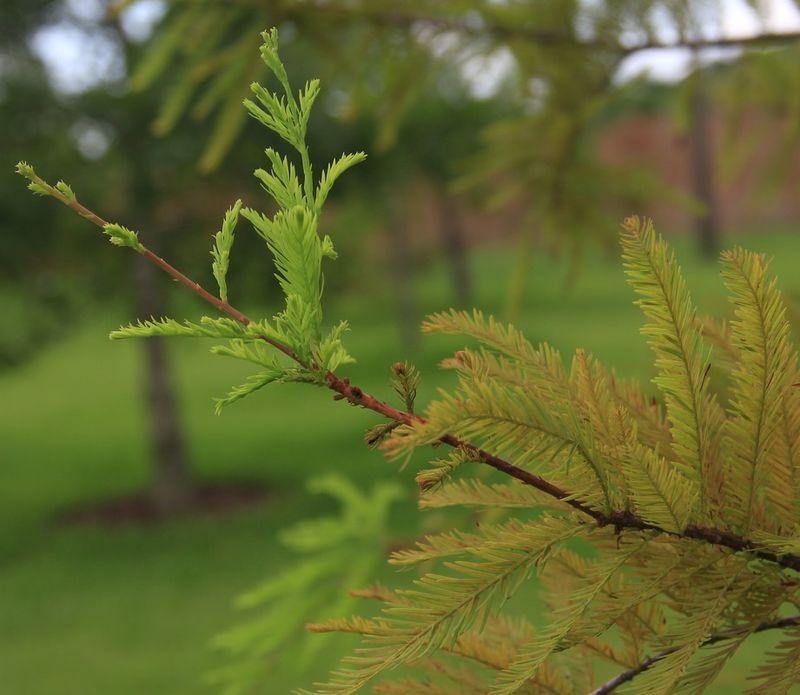
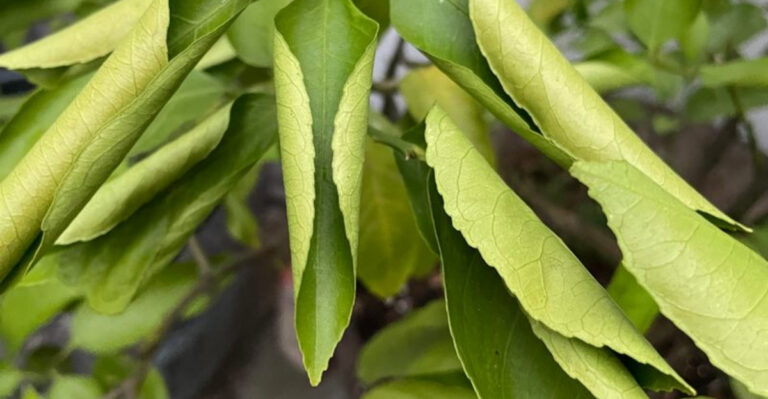
Yellowing needles on a bald cypress catch every homeowner’s attention, and alkaline soil is one possible reason. When pH climbs above 7.5, certain nutrients, especially iron, become chemically locked in the soil and harder for roots to absorb.
That nutrient shortage shows up as yellowing foliage, a condition called chlorosis.
UF/IFAS guidance flags high pH as a real concern for this species, particularly on sites with limestone-heavy parent material or fill soil brought in during construction. Florida coastal properties and areas near concrete structures can also trend alkaline over time.
Knowing your site history helps you anticipate the risk before symptoms appear.
Yellow needles alone cannot confirm alkaline soil. Drought stress, root damage, and other factors produce similar symptoms, so testing is essential before adding iron sulfate or other corrective materials.
Applying amendments without a confirmed pH reading can create new problems rather than fix existing ones. A soil test is inexpensive and takes only a few days to process.
Get the data first, then decide whether treatment makes sense or whether a different planting location would serve the tree better.
5. Heavy Soil Is Fine When Roots Still Get Enough Oxygen
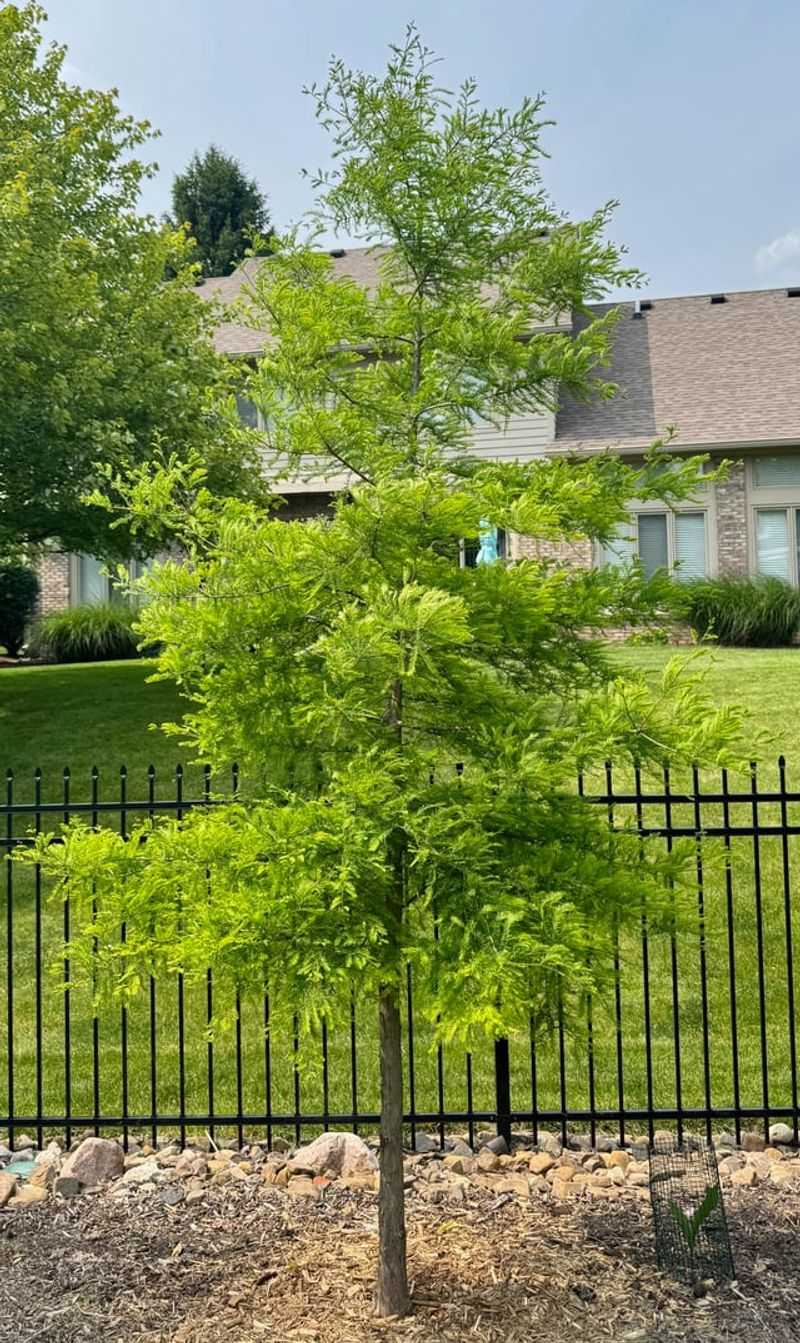
Clay and muck soils have a reputation for being difficult, but bald cypress handles them better than most landscape trees. This species evolved in bottomland forests where heavy, waterlogged soils are the norm.
Its root system is built to function in conditions that would stress or harm less adaptable species.
That said, heavy soil is not identical from one yard to the next. A clay soil that drains slowly but still allows some oxygen movement behaves very differently from compacted subsoil with almost no pore space.
Oxygen reaching the root zone is the key variable, not texture alone.
Planting depth matters more in heavy soils than in sandy ones. Setting the root ball too deep cuts off oxygen and can lead to a slow decline that takes seasons to notice.
The top of the root ball should sit at or very slightly above the surrounding soil grade. Mulching the area out to the drip line helps retain moisture and moderate soil temperature without smothering roots.
Check that mulch is kept a few inches away from the trunk to prevent moisture buildup against the bark.
6. Compacted Ground Is Surprisingly Tolerable But Not Ideal
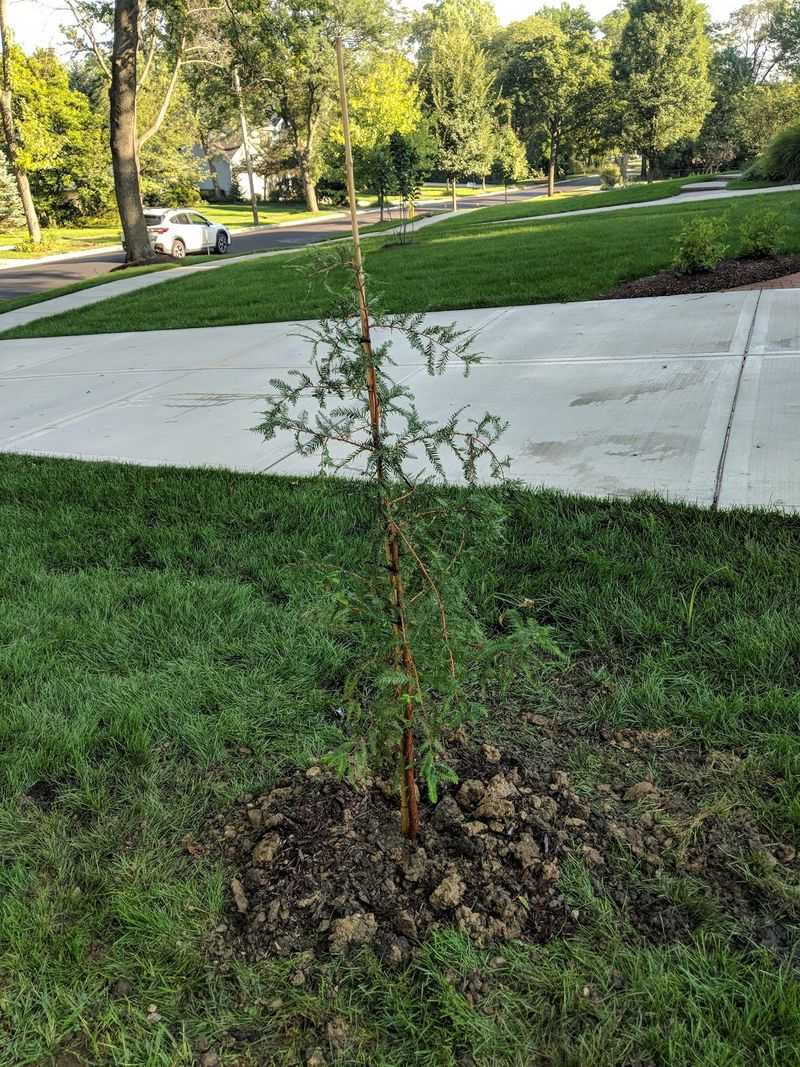
Urban Florida planners have used bald cypress along streets and in parking lot islands for good reason. This tree tolerates compacted soils better than most species, making it a practical choice for developed sites where soil quality is rarely perfect.
Construction traffic, foot traffic, and grading can all compress soil, reducing pore space and limiting root expansion.
Tolerance, though, should not be read as a green light to skip site preparation. A tree planted in highly compacted ground may survive, but it will grow more slowly and may never reach its full potential.
Preserving the largest practical area of uncompacted soil around the planting site gives roots room to spread and access nutrients more efficiently.
Avoid deep tilling around an established tree because surface roots are common in this species and can be damaged easily. Before planting in a compacted area, loosen the top 8 to 12 inches in a wide zone around the planting hole rather than just inside the hole itself.
That broader loosening helps roots move outward into the surrounding soil instead of circling inside a confined space. Giving the root system room to expand is one of the most practical investments you can make at planting time.
7. Standing Water Can Slow A Newly Planted Tree Down
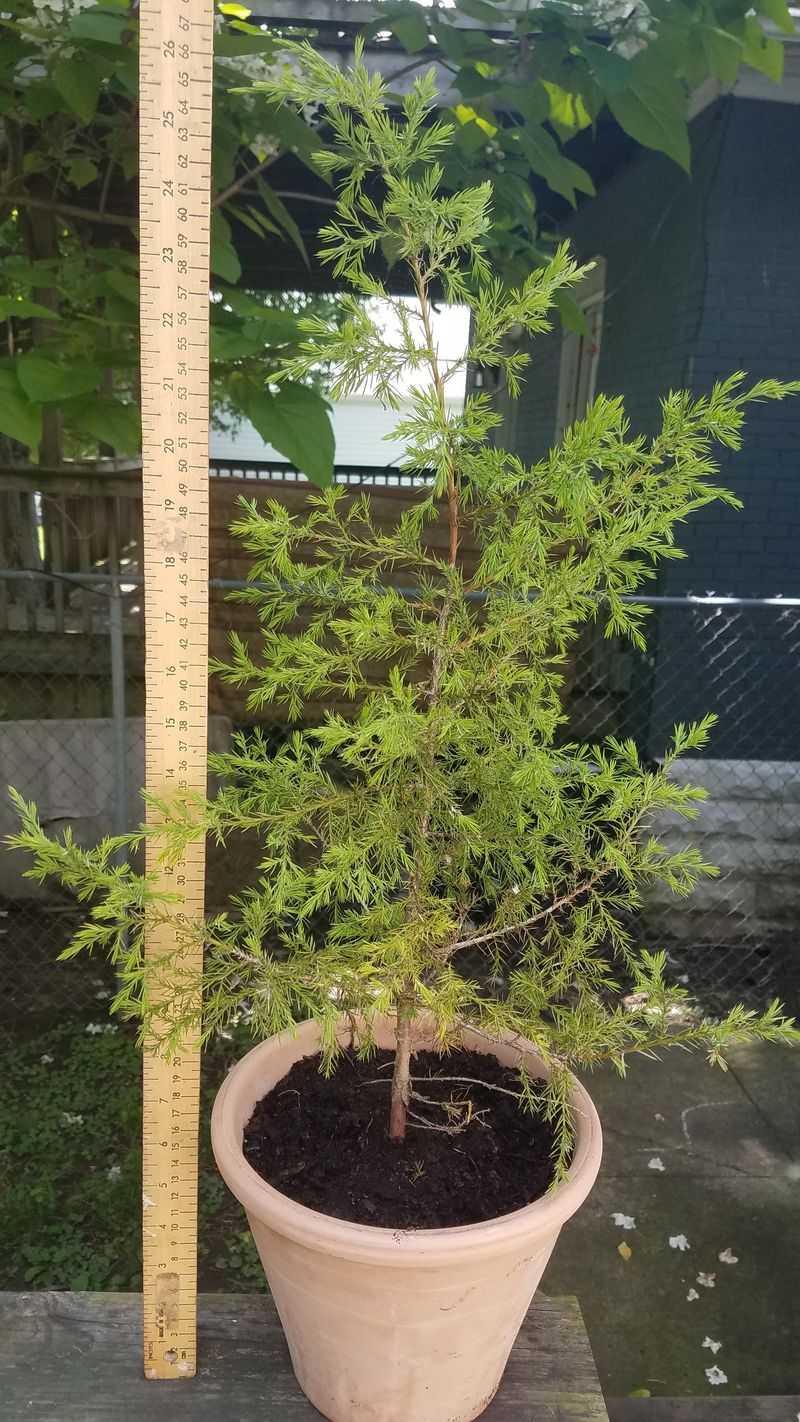
There is an important difference between a mature bald cypress thriving in a wetland and a freshly planted nursery tree sitting in a waterlogged hole. Established trees have root systems that have adapted over years to wet conditions.
A new transplant is still adjusting to its surroundings and has not yet extended roots into the surrounding soil.
A nursery-grown tree arrives with a compact root ball that can stay too wet if water pools around it after planting. That excess moisture around a confined root ball can slow establishment and stress a tree that would eventually handle wet conditions just fine.
Planting depth and soil contact around the root ball both influence how quickly a new tree transitions into its site.
Watch the planting area after the first few rain events to see how water moves. If water pools for more than two days around the base, consider raising the planting area slightly or improving drainage nearby.
Avoid rigid irrigation schedules that do not account for rainfall. Checking soil moisture a few inches below the surface before watering gives you a much better guide than a fixed calendar schedule.
Responsive watering during the first two growing seasons supports steady establishment.
8. Dry Ground Works Better Than Most Gardeners Expect
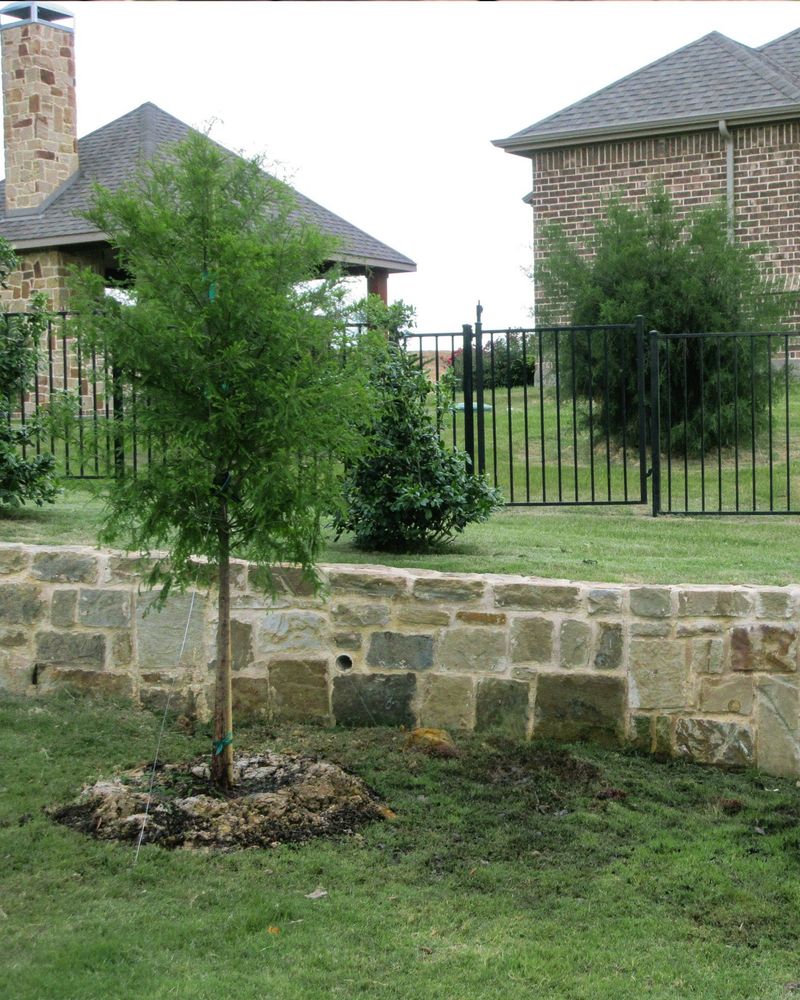
Here is something most people get wrong about bald cypress: once established, it handles dry sites far better than its swamp-tree image suggests.
UF/IFAS notes that this species shows real drought tolerance after it has settled into a site, typically after two or three growing seasons of consistent care.
Ordinary lawns, raised beds, and well-drained sites all support healthy trees over time.
On drier sites, cypress knees, those distinctive woody projections that emerge from roots, tend to be less prominent. That is useful information for homeowners who want the tree’s beauty without the tripping hazard that knees can create in a lawn setting.
Dry conditions do not eliminate knees entirely, but they reduce how aggressively they develop.
A newly planted tree still needs regular moisture during establishment, so do not interpret dry-site tolerance as a reason to skip watering in year one. After establishment, supplemental irrigation becomes much less critical.
The real lesson here is simple: choose a spot with adequate root space and a pH below 7.5, keep the planting area mulched, and skip any attempt to recreate a swamp. This tree is far more flexible than its reputation suggests, and your soil probably already qualifies.