What Those Brown Patches In Your North Carolina Lawn Are Really Telling You This August
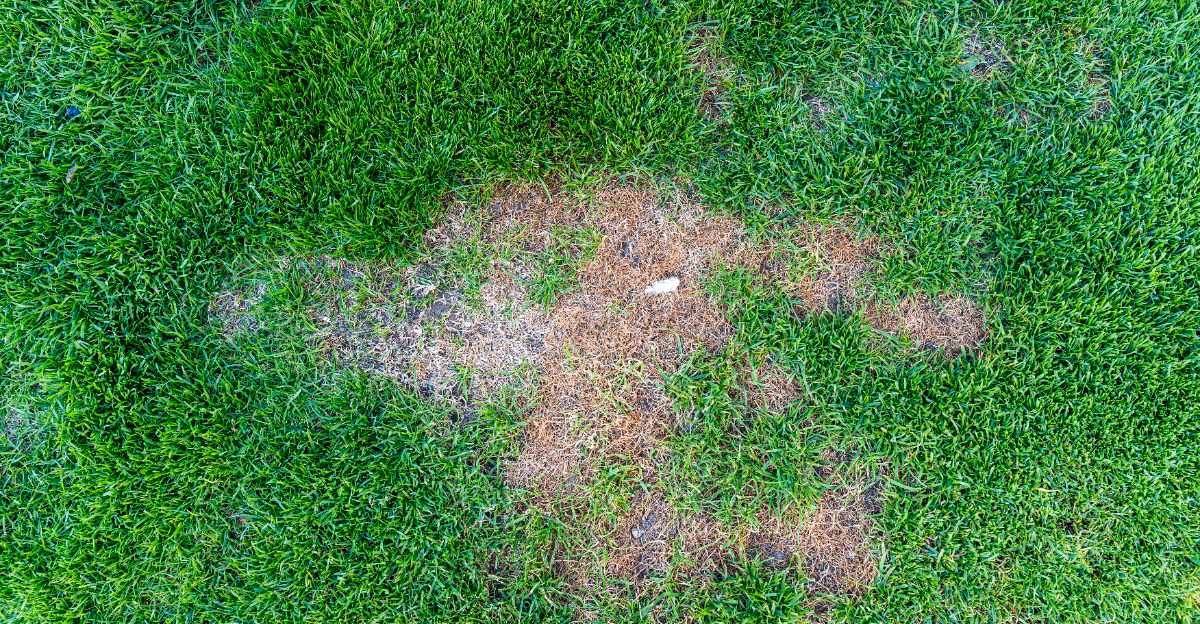
Brown patches spreading across a North Carolina lawn in August often point to drought stress rather than a more serious underlying problem.
Grass naturally slows growth and conserves resources during extended heat, sometimes turning brown as a survival response rather than an actual failure.
Checking whether grass springs back after stepping on it helps distinguish stressed but living grass from areas that may need more attention.
Compacted soil can worsen these patches, since water struggles to reach roots even when watering remains consistent.
Fungal issues can also cause similar browning, often appearing in irregular patterns rather than spreading evenly across the lawn.
Deep, infrequent watering supports stressed grass better than frequent light watering during extended heat.
Aerating compacted areas improves water absorption, helping brown patches recover more quickly once temperatures ease.
Understanding the cause behind these patches helps determine whether patience or more active intervention is truly needed.
1. Hot Wet Weather Can Trigger Brown Patch
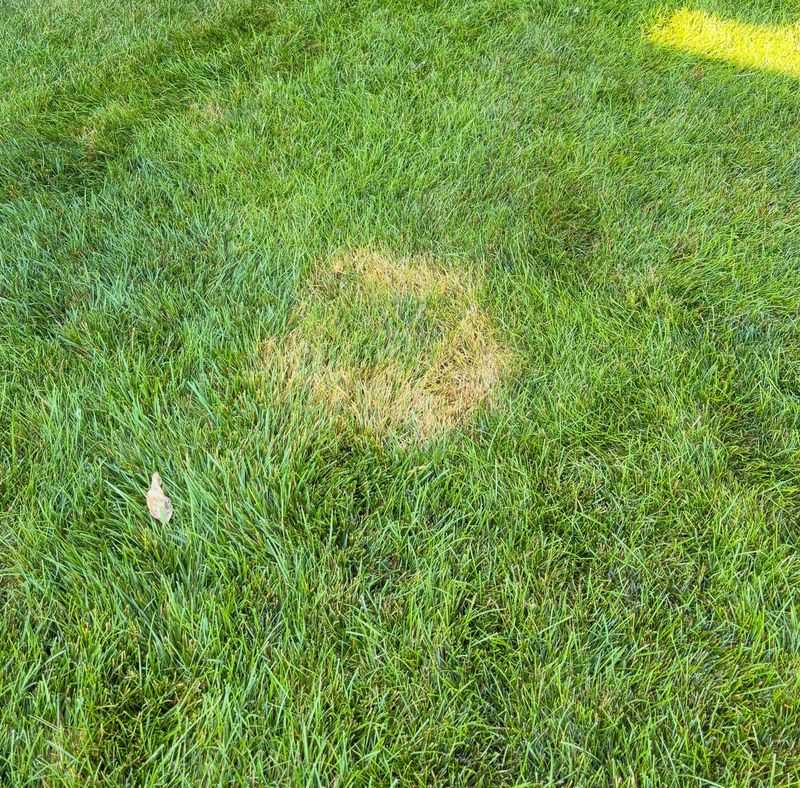
Stepping outside on a hot, sticky August morning in North Carolina and spotting a spreading circle of brown grass can feel like a punch to the gut.
That pattern is one of the most recognizable signs of brown patch disease, a fungal problem caused by the pathogen Rhizoctonia solani.
It thrives when nighttime temperatures stay above 70 degrees Fahrenheit and humidity hangs heavy in the air for days at a time.
Tall fescue is especially vulnerable to this disease. The fungus attacks grass blades near the soil surface, cutting off the plant’s ability to move water and nutrients upward.
Affected areas often appear as circular or irregular patches ranging from a few inches to several feet wide, with a grayish, water-soaked look at first before turning tan or brown.
Watering habits play a big role in making things worse. Lawns that get watered in the evening stay wet through the night, giving the fungus exactly the environment it needs to spread fast.
Switching to early morning watering is one of the smartest moves you can make in summer. It gives grass time to dry before nightfall.
Applying a preventive fungicide labeled for brown patch in late June or early July can help protect tall fescue before symptoms appear.
Once the disease is active, a curative fungicide can slow its spread.
Reducing nitrogen fertilizer during summer also matters, since lush, fast-growing grass tends to be more susceptible to infection during hot, humid stretches.
2. Gray Leaf Spot Can Look Similar
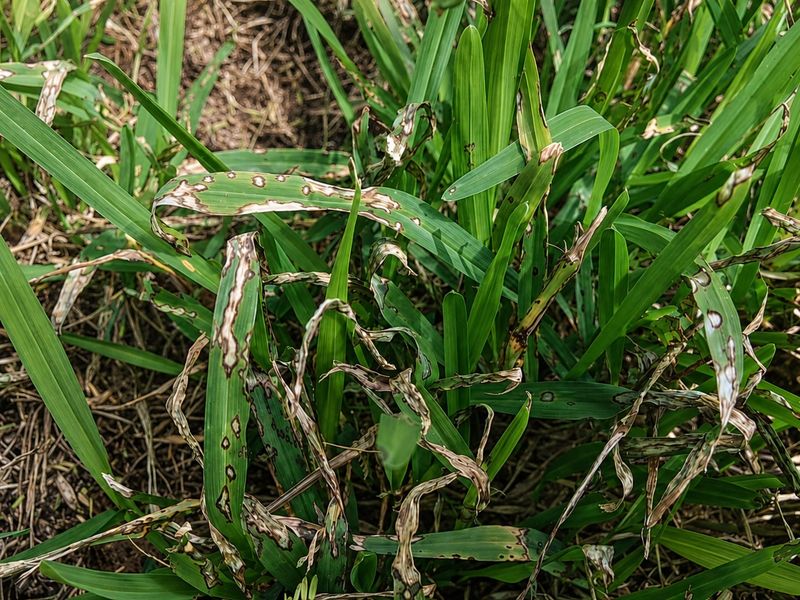
Not every damaged lawn in August is dealing with brown patch. Gray leaf spot is another fungal disease that shows up during hot, humid North Carolina summers, and it can fool even experienced gardeners.
Caused by the fungus Pyricularia grisea, it tends to spread rapidly when temperatures hover between 80 and 90 degrees and moisture stays on grass blades for extended periods.
The early signs of gray leaf spot appear on individual blades rather than in large circular patterns.
You will notice small, water-soaked spots that quickly develop into diamond or oval-shaped lesions with gray or tan centers and dark brown borders.
Your North Carolina Garden Changes Every Week. Your Plan Should Too.
Gardening in North Carolina changes quickly throughout the season. Every Friday you’ll receive a simple weekly plan showing exactly what to plant, prune, fertilize, harvest, and protect so you never miss the right timing.
As the disease progresses, those lesions multiply and merge, causing entire sections of turf to look scorched or severely stressed.
Perennial ryegrass and tall fescue are both common targets in North Carolina home lawns. One key difference between gray leaf spot and brown patch is the speed of expansion.
Gray leaf spot can move across a lawn surprisingly fast during a stretch of humid weather, sometimes making it look like something is burning through the turf from multiple directions at once.
Managing this disease starts with smart watering practices, just like with brown patch. Avoid overhead irrigation late in the day, and keep mowing heights appropriate for your grass type.
Fungicides containing azoxystrobin or pyraclostrobin can help manage gray leaf spot effectively.
Always read labels carefully and rotate between fungicide classes to avoid resistance building up over time in your lawn’s environment.
3. Dry Grass May Simply Be Dormant
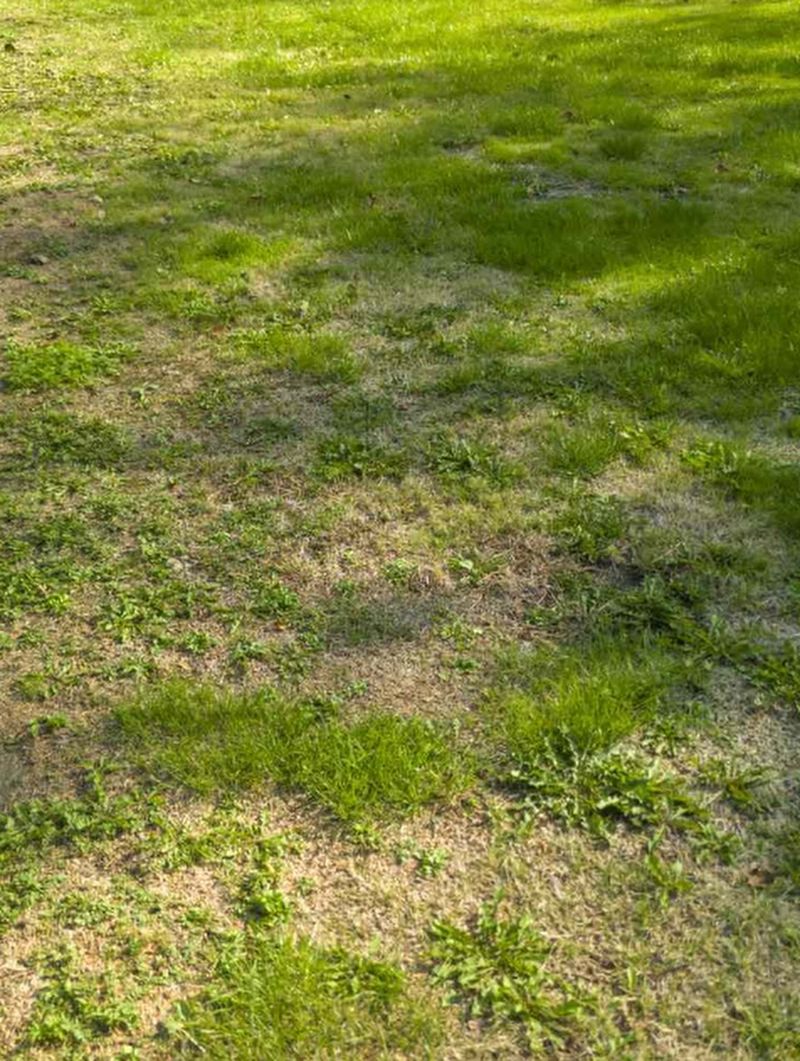
Before you panic about a brown lawn in August, take a breath and consider something important: your grass might just be taking a nap.
Tall fescue, one of the most common lawn grasses in North Carolina’s Piedmont and mountain regions, is a cool-season grass.
When summer heat becomes intense and rainfall drops off, it naturally shifts into a dormant state to protect itself. Drought dormancy looks different from disease.
Instead of circular or irregular patches with distinct borders, a dormant lawn tends to turn brown more uniformly across the whole yard or in areas that dry out fastest, like slopes or spots near pavement.
The grass is conserving energy and moisture rather than actively suffering from an infection or pest problem.
Here is the reassuring part: tall fescue can survive several weeks of drought dormancy and bounce back when cooler temperatures and rainfall return in the fall.
The key is not to stress the lawn further by applying fertilizer or trying to force growth during this period.
A light watering of about one inch per week can help keep the crown of the plant alive without breaking dormancy prematurely.
You can do a simple tug test to check turf health. Grab a handful of brown grass and pull gently.
If the blades come out easily with no resistance, that could indicate a bigger problem. If the grass holds firmly to the soil, the root system is likely intact and the lawn is simply resting.
Fall overseeding is a great way to thicken things up afterward.
4. Too Much Water Can Cause Trouble Too
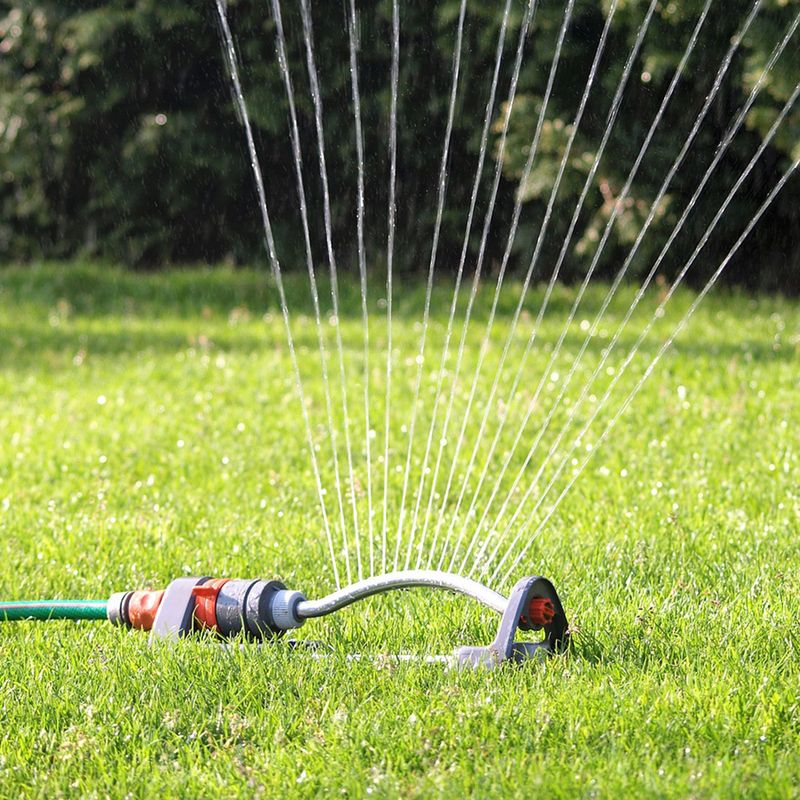
Most people assume that brown grass means thirsty grass, so they reach for the hose or crank up the sprinkler system.
But watering too much can actually create just as many problems as watering too little, especially during North Carolina’s muggy August conditions.
Poor drainage and prolonged leaf wetness set the stage for fungal diseases to take hold and spread across your lawn.
Lawns that sit in low-lying areas or have compacted clay soil are especially prone to holding water longer than they should. When the soil stays saturated for extended periods, grass roots struggle to get oxygen.
Stressed roots become weak, and weak grass is far more susceptible to pathogens like Rhizoctonia solaniPythium and species, which both love waterlogged conditions.
Pythium blight is one disease that spreads aggressively in overwatered, poorly drained lawns during hot summer nights.
It can wipe out large sections of turf in just a few days under the right conditions. You might notice a greasy or water-soaked look to the grass in the early morning before it collapses and turns brown by midday.
Fixing drainage issues may take some effort, but it pays off big in the long run.
Aerating compacted soil, topdressing with compost, and adjusting your irrigation schedule to water deeply but infrequently can make a real difference.
Most lawns only need about one inch of water per week in summer, counting any rainfall. Checking your soil moisture before watering is always a smart first step.
5. Grubs May Be Feeding Below The Surface
Sometimes the real problem with a stressed lawn is happening where you cannot see it.
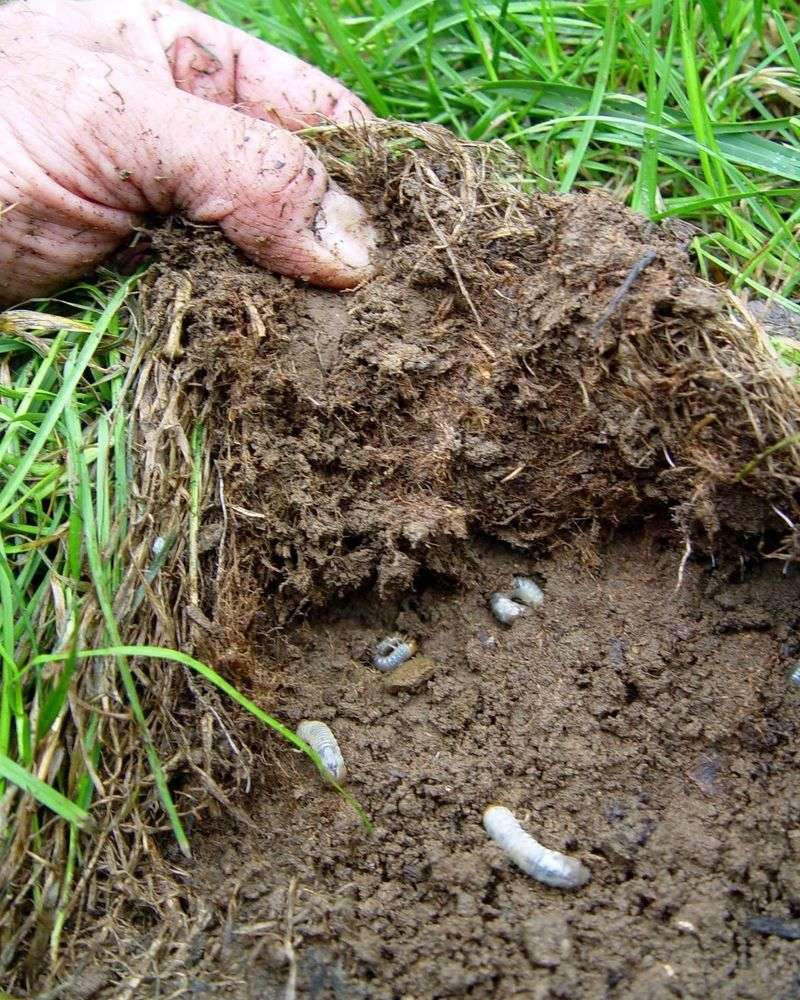
White grubs, the larval stage of beetles like the Japanese beetle and masked chafer, spend their summer months underground feeding on grass roots.
By August, the grubs are large and hungry, and the damage they cause often shows up as yellow or brown patches that seem to appear out of nowhere.
Grub-damaged turf has a very distinct feel. Because the roots are being eaten away from below, the grass loses its anchor in the soil.
You can actually roll back a section of affected turf like a loose carpet, revealing the creamy white, C-shaped larvae curled up just beneath the surface.
That spongy, detached feeling underfoot is a reliable clue that grubs are at work. Late July through August is prime time for grub activity in North Carolina lawns.
The patches they create can look similar to drought stress at first, but a quick check of the soil underneath will reveal the culprits.
Birds, moles, and skunks digging into your lawn are also a telltale sign since they are hunting those grubs as a food source. Treating grubs effectively depends on timing.
Products containing imidacloprid or chlorantraniliprole work best when applied before grubs hatch or while they are still small.
Curative treatments containing trichlorfon can help when grubs are already large and actively feeding.
Always follow label directions carefully and water the product into the soil after application for best results and maximum effectiveness.
6. Fall Armyworms Can Spread Damage Quickly
Few lawn pests move as fast or as aggressively as fall armyworms.
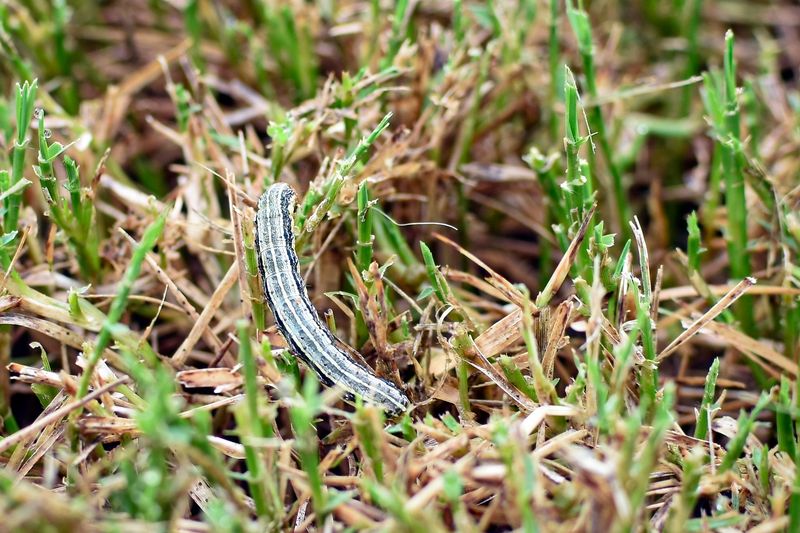
These caterpillars, the larval stage of a moth that migrates northward each year, can descend on a North Carolina lawn in large numbers and strip it of green growth within days.
August and September are peak months for fall armyworm activity across the state, and the damage they leave behind can look dramatic and deeply unsettling.
Fall armyworms feed on grass blades from the tips downward, leaving behind a ragged, chewed appearance before the turf turns completely brown.
The damage often starts at one edge of a lawn and moves in a noticeable front, which is how the pest earned part of its name.
Bermudagrass, ryegrass, and fescue are all on the menu, making most North Carolina lawns fair targets.
Spotting them early is the key to protecting your turf. Check your lawn in the early morning or late evening when the caterpillars are most active.
You might also notice moths flying low over the grass at dusk, which signals that eggs have likely already been laid.
A soapy water drench poured over a small area can flush caterpillars to the surface for a quick count and identification.
Insecticides containing spinosad, bifenthrin, or lambda-cyhalothrin are effective against fall armyworms when applied promptly.
Timing matters a lot here because smaller caterpillars are much easier to manage than large ones.
Healthy, well-maintained turf can recover from armyworm feeding, especially if treatment happens before the damage becomes too severe across wide areas of your yard.
7. Inspect The Grass Before Treating It
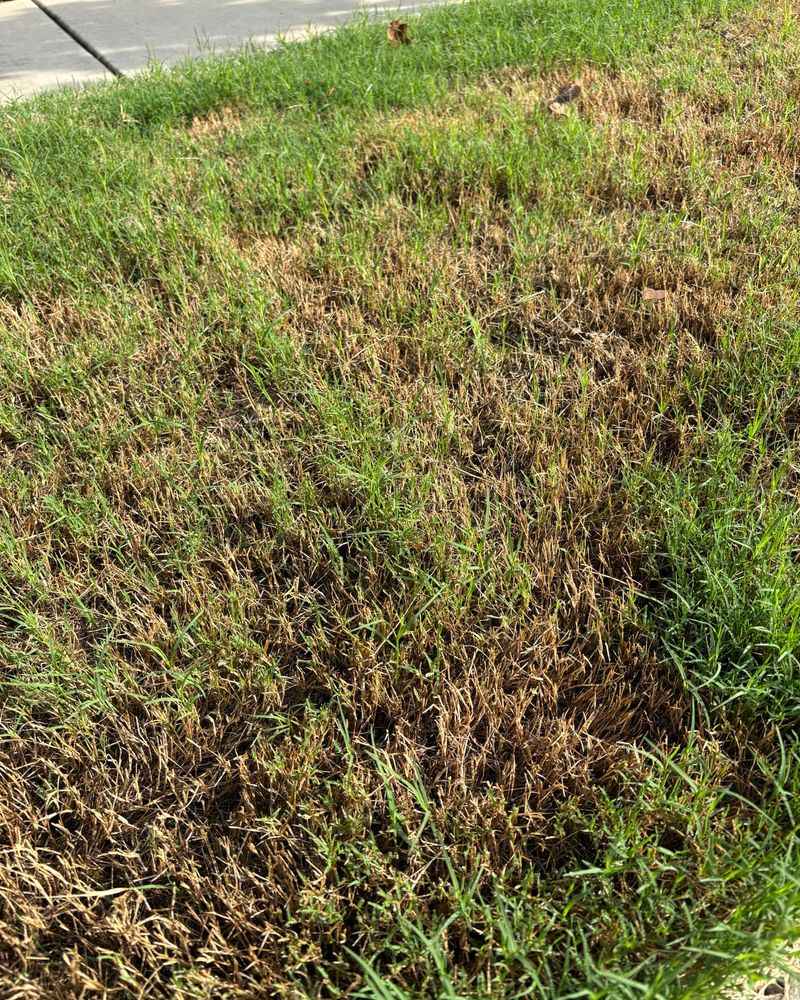
Reaching for a fungicide or insecticide the moment you spot brown patches is a very common reaction, but it can cost you time, money, and results if you have not identified the actual problem first.
Different causes require completely different treatments, and applying the wrong product can sometimes make things worse or simply do nothing at all.
A few minutes of careful inspection can save you a lot of frustration. Start by looking closely at individual grass blades.
Fungal diseases like brown patch and gray leaf spot leave visible lesions, discoloration, or a water-soaked appearance on the blades themselves.
Grub damage shows no such marks on the blades, but the turf will feel loose and spongy underfoot.
Armyworm feeding leaves behind ragged, chewed tips and sometimes visible frass, which is the small dark droppings the caterpillars leave behind as they eat.
Check soil moisture too, because it tells a big part of the story. Push a screwdriver six inches into the soil.
If it slides in easily, your lawn has plenty of moisture. If it meets strong resistance, drought stress could be the culprit behind the browning.
This quick test takes about ten seconds and can point you in the right direction before you spend a dime on any product.
Also look at the pattern of the damage. Circular patches with defined edges often suggest fungal disease.
Uniform browning across the whole lawn leans toward drought dormancy. Irregular patches near the surface with loose turf suggest grubs.
Knowing the pattern is like reading a map that leads you straight to the right solution for your lawn.
8. August Brown Patches Need The Right Diagnosis
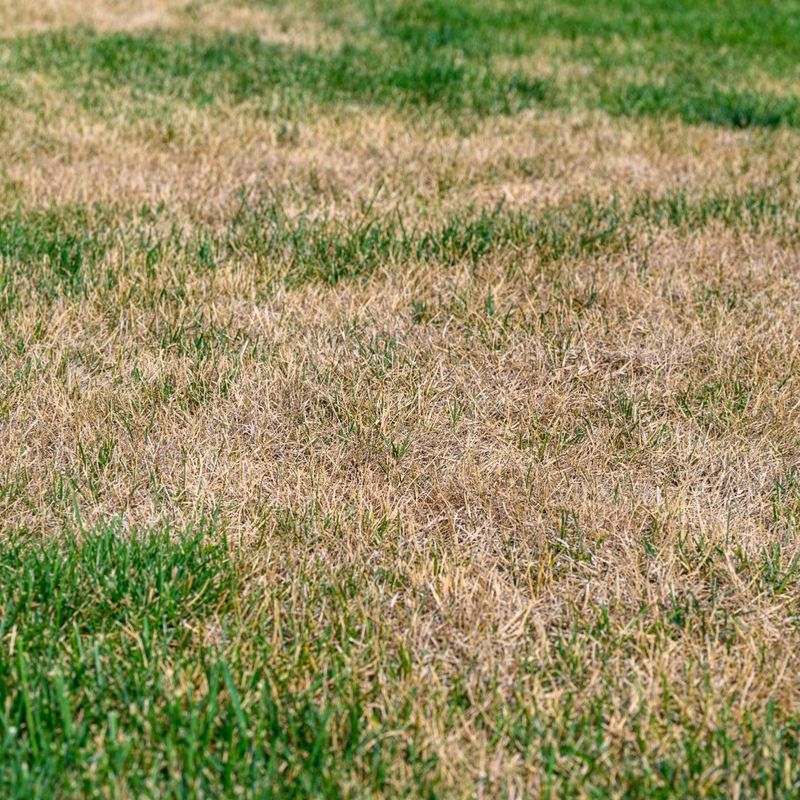
Here is the big takeaway from everything we have covered: brown patches in your August lawn are not all the same, and they definitely do not all have the same fix.
Fungal diseases, drought dormancy, excess moisture, and insect feeding each create their own unique set of symptoms and require their own specific approach.
Treating a drought-stressed lawn with fungicide is a waste of product. Watering a grub-infested lawn more heavily only helps the grubs thrive even more. Getting the diagnosis right is the most valuable step in the entire process.
Take time to observe the shape and pattern of the damage, check the grass blades up close, test the soil moisture, and look for insects both above and below the surface.
If you are unsure, your local North Carolina Cooperative Extension office is an outstanding resource.
They can help you identify problems and recommend proven, regionally appropriate solutions without any guesswork.
Sending a soil sample or a bag of affected grass to your county extension office for analysis is another smart move.
Many common lawn problems in North Carolina are misdiagnosed every summer, leading to repeated treatments that never work because they target the wrong cause.
A correct diagnosis from the start puts you ahead of the problem instead of constantly chasing it. Your lawn is resilient and more capable of recovery than it might look right now.
With the right information and a targeted plan, most August lawn problems in North Carolina can be managed effectively.
Stay observant, act thoughtfully, and your grass will reward you with a strong green comeback once fall arrives and conditions improve across the region.