This Is The Easiest Flowering Shrub Florida Gardeners Aren’t Growing Yet
Florida has no shortage of flowering shrubs worth growing. Somehow one of the easiest, most striking, and most useful ones barely shows up in residential landscapes at all.
Not rare. Not hard to source.
No special soil, no complicated care, and no compromise on what a Florida garden should look like through the year. It just never got its marketing moment.
Never landed on the right list or got pushed hard enough at the nursery level to break into the mainstream conversation about what belongs in a Florida yard. What it does get is results.
Native wildlife finds it fast. The bloom is unlike anything else in the Florida shrub category.
And once established, it handles heat, humidity, and neglect with a composure that makes every high-maintenance flowering shrub nearby look like a poor decision. The easiest flowering shrub Florida yards are not growing yet deserves more than an overlooked spot on a nursery bench.
1. Meet The Florida Anise, Native Shrub Hiding In Plain Sight
Spend enough time at a native plant sale and you will notice a shrub that gets passed over while flashier specimens fly off the tables. Illicium floridanum aka Florida anise has that problem.
Gardeners often walk right by it without realizing what they are leaving behind.
This evergreen shrub is native to the southeastern United States, including parts of the Florida Panhandle. According to the University of Florida IFAS Extension, it grows naturally along streams, ravines, and shaded woodland edges.
Its glossy, lance-shaped leaves stay dark green through the year, giving the plant a clean, structured look even in winter when most of the garden looks bare.
What makes the native shrub genuinely useful is how it fills space in conditions that challenge most ornamentals. It forms a dense, multi-stemmed canopy that can anchor a shady border or soften a fence line without demanding much from the gardener.
Unlike some native shrubs that look scraggly in cultivation, Illicium floridanum tends to hold its shape well in the right setting. Extension sources describe it as a medium to large shrub, so it is worth understanding its full potential before planting.
The evergreen foliage alone earns it a second look. Add the spring flowers and the aromatic leaves, and the case for growing it becomes hard to argue against.
2. Those Maroon Star Blooms Make Spring Look Different
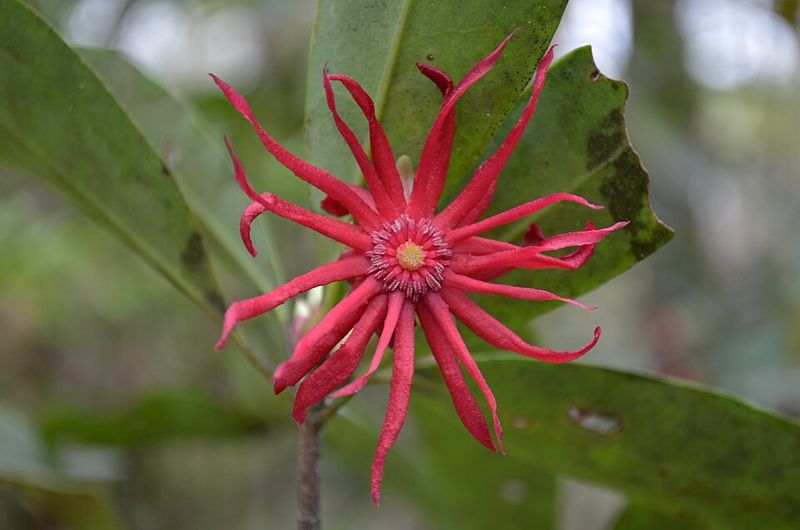
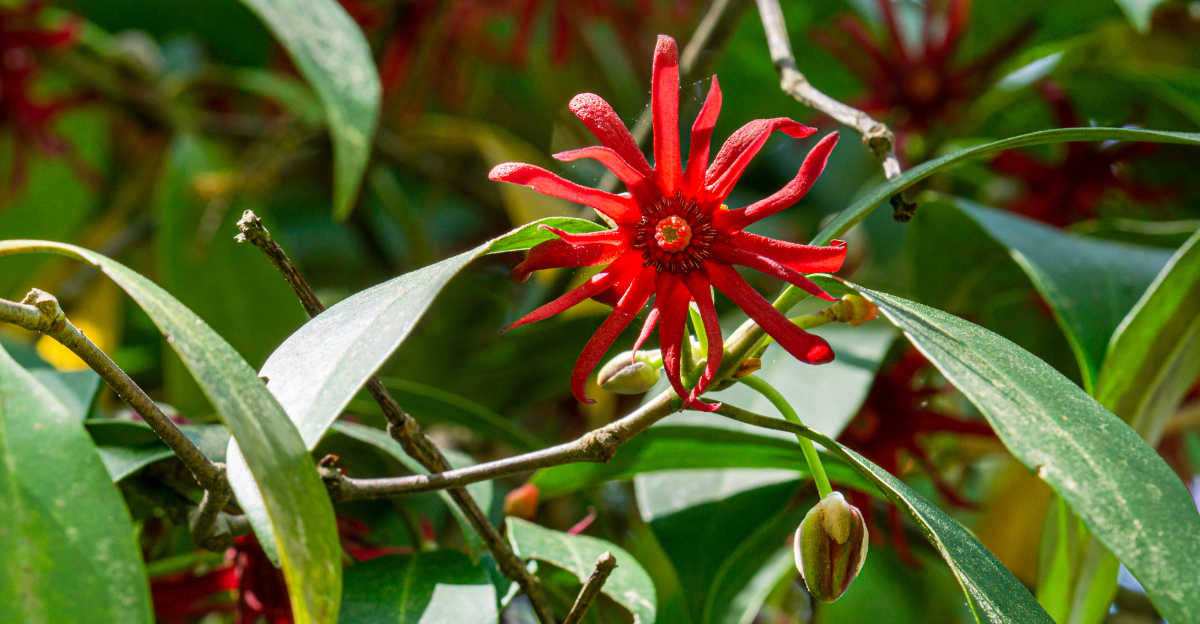
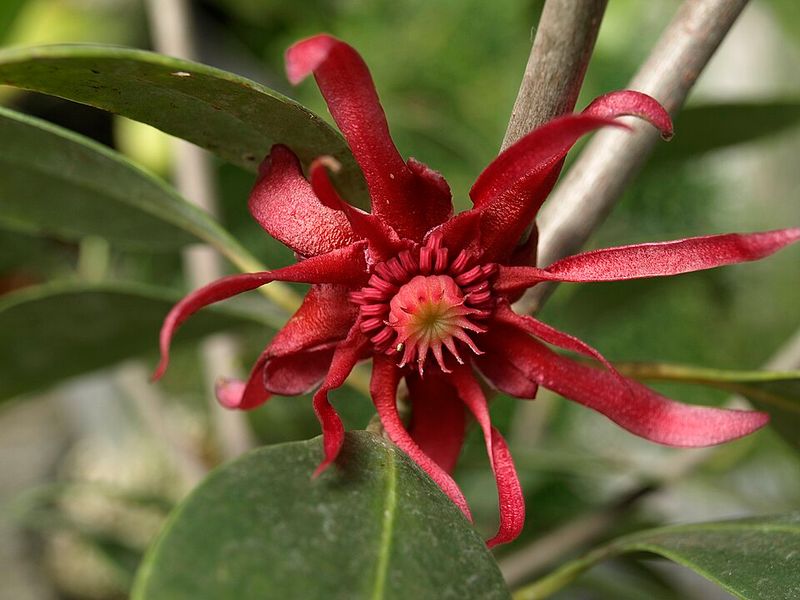
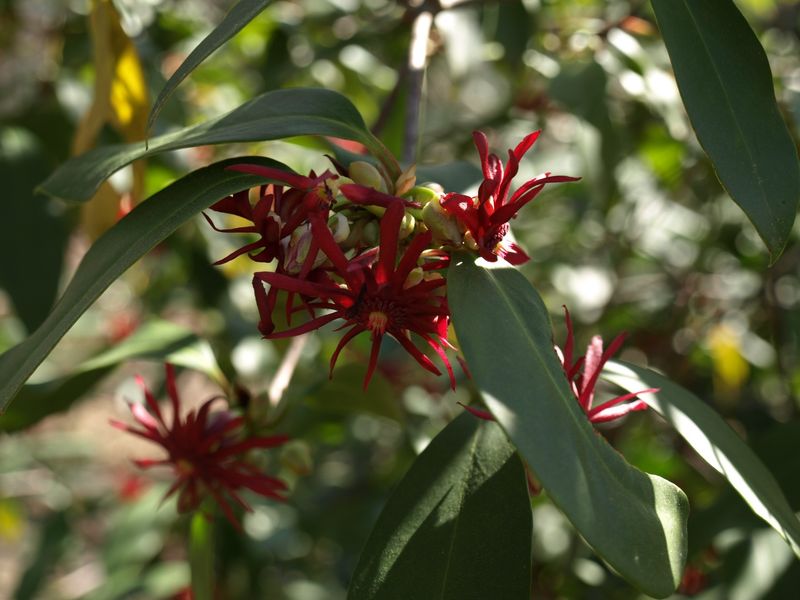
Picture a flower that looks almost too unusual to be real. The blooms of Florida anise are star-shaped, with narrow, strap-like petals arranged in a distinctive radial pattern.
Their color falls somewhere between deep reddish-purple and maroon, which is not a combination you see often in a Southern garden border.
According to NC State Extension, flowering typically occurs in spring, and the blooms emerge against the backdrop of the shrub’s dark, glossy foliage.
That contrast gives the plant a striking appearance during bloom time without relying on the bright pinks and whites that dominate most spring landscapes.
Your Florida Garden Changes Every Week. Your Plan Should Too.
Gardening in Florida changes quickly throughout the season. Every Friday you’ll receive a simple weekly plan showing exactly what to plant, prune, fertilize, harvest, and protect so you never miss the right timing.
The flowers are not large, but their unusual form draws attention from anyone who gets close enough to notice.
Gardeners who appreciate native plants and natural-style plantings tend to find the blooms genuinely interesting rather than merely pretty in a conventional way.
Extension sources do not make broad claims about heavy pollinator traffic or intense fragrance from the flowers themselves. It is better to appreciate the blooms for what they are: structurally unusual, richly colored, and well-suited to woodland-style plantings.
Spring in a shaded garden border looks noticeably different when a few of these maroon stars open up among the greenery.
3. Shady Damp Corners Are Where It Really Earns Its Keep
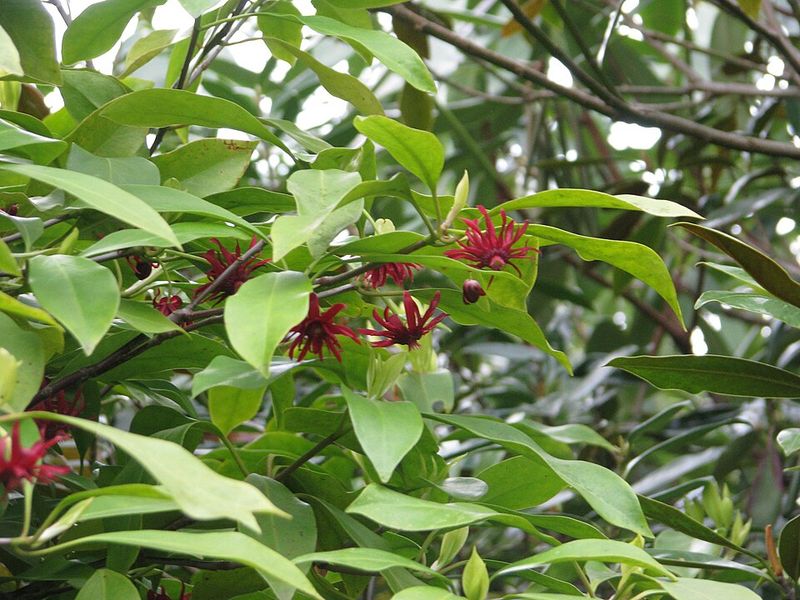
Every yard seems to have that one spot. Maybe it stays wet after rain, sits under a canopy of mature trees, or never gets more than a couple of hours of direct sun.
Most flowering shrubs sulk in those conditions. Illicium floridanum does not.
UF/IFAS Extension guidance describes the native shrub as well-suited to partial shade to full shade, with a preference for moist, organically rich, acidic soils.
Those preferences align naturally with the kind of low, shaded areas that collect moisture and resist drying out between rain events.
Woodland-style settings, rain garden edges, and shaded borders near structures are all reasonable candidates for this plant. Its natural habitat along stream banks and ravines gives you a useful mental image of where it performs well.
That said, there are real limits to consider. Standing water for extended periods is not the same as consistent moisture, and the shrub does not thrive in waterlogged conditions.
Very deep shade with no light reaching the canopy can also reduce density and flowering. Full sun in Florida’s heat is generally too harsh for this plant, especially in the central and southern parts of the state.
Matching the site to the shrub’s actual preferences is what makes the difference between a plant that settles in quickly and one that struggles from the start.
4. Once Established This Shrub Barely Asks For Water
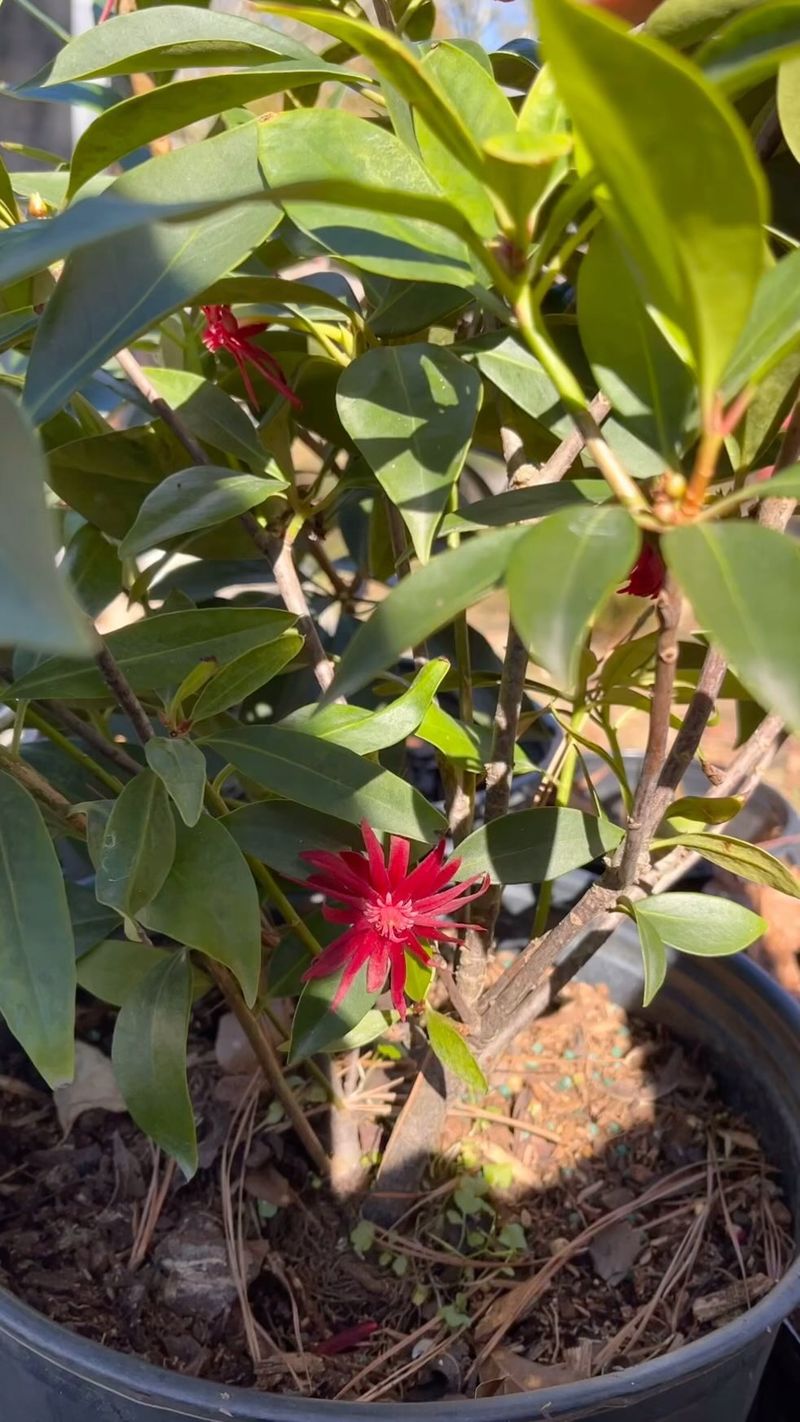
Getting any shrub through its first year in the ground takes more attention than most gardening books admit. Florida anise is no exception.
Newly planted specimens need regular watering to help roots spread into surrounding soil, especially during dry stretches in the first growing season.
UF/IFAS Extension notes that many native shrubs adapted to the Southeast become more tolerant of occasional dry periods once established. Newly planted shrubs are generally more vulnerable during the establishment phase.
The native shrub benefits from mulching around the root zone, which helps retain soil moisture and keeps roots cooler during warm months.
After establishment, supplemental irrigation during extended droughts is still a reasonable precaution, particularly in sandy soils that drain quickly.
Calling any landscape plant completely drought-proof sets up unrealistic expectations, and that is especially true in a state where summer heat can be relentless.
The practical takeaway is straightforward. Water consistently for the first year, mulch well, and the shrub will gradually need less hands-on care.
Gardeners who build that early investment into their planting routine tend to end up with a strong, self-sustaining specimen. Those who plant and forget during the establishment phase are more likely to deal with stress symptoms later.
A little attention early on pays off with a shrub that asks very little from you once it has settled in.
5. Pests And Diseases Rarely Turn Into A Chore
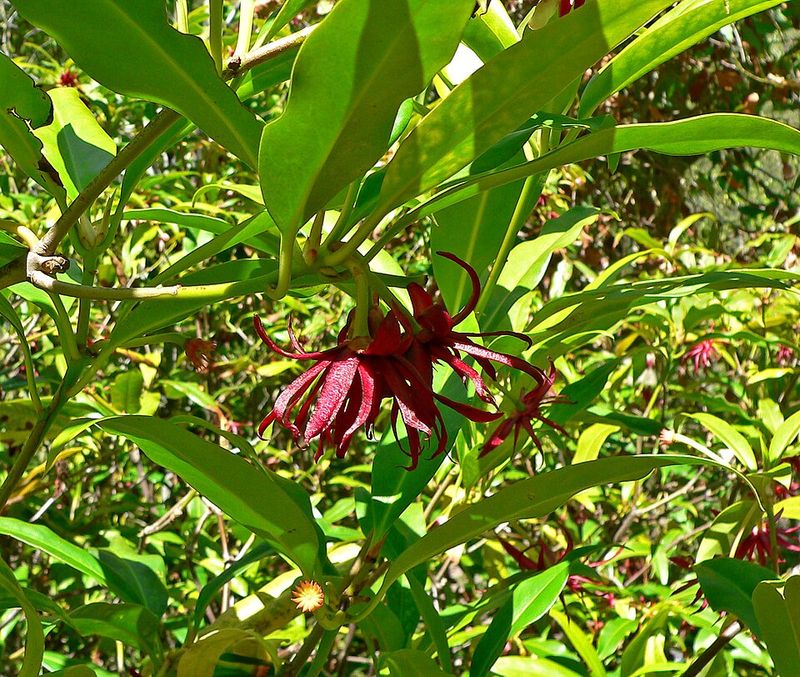
Some ornamental shrubs come with a maintenance schedule that reads more like a pest management plan.
Aphid sprays in spring, fungicide applications in summer, and scale treatments in fall can turn a garden into a full-time job.
The native evergreen shrub tends to sidestep most of that routine.
Extension sources describe Illicium floridanum as having relatively few serious pest or disease problems when grown in appropriate conditions.
That reputation makes it appealing to gardeners who want an attractive shrub without committing to a regular spray program.
Planting in the right site goes a long way toward keeping the shrub healthy. Poor drainage, excessive sun exposure, or overcrowding can create stress conditions that make any plant more vulnerable.
Giving Florida anise the shade, moisture, and soil it prefers reduces the likelihood of those stress-related problems developing.
No plant is completely immune to every issue, and isolated problems can still occur depending on local conditions, weather patterns, or planting mistakes.
The point is not that you will never notice a problem, but that serious recurring pest or disease pressure is not the norm for this shrub when it is sited correctly.
For gardeners who are tired of babysitting high-maintenance ornamentals, that track record is a genuinely compelling reason to give this native a spot in the landscape.
6. Give It Room Because Easy Does Not Mean Small
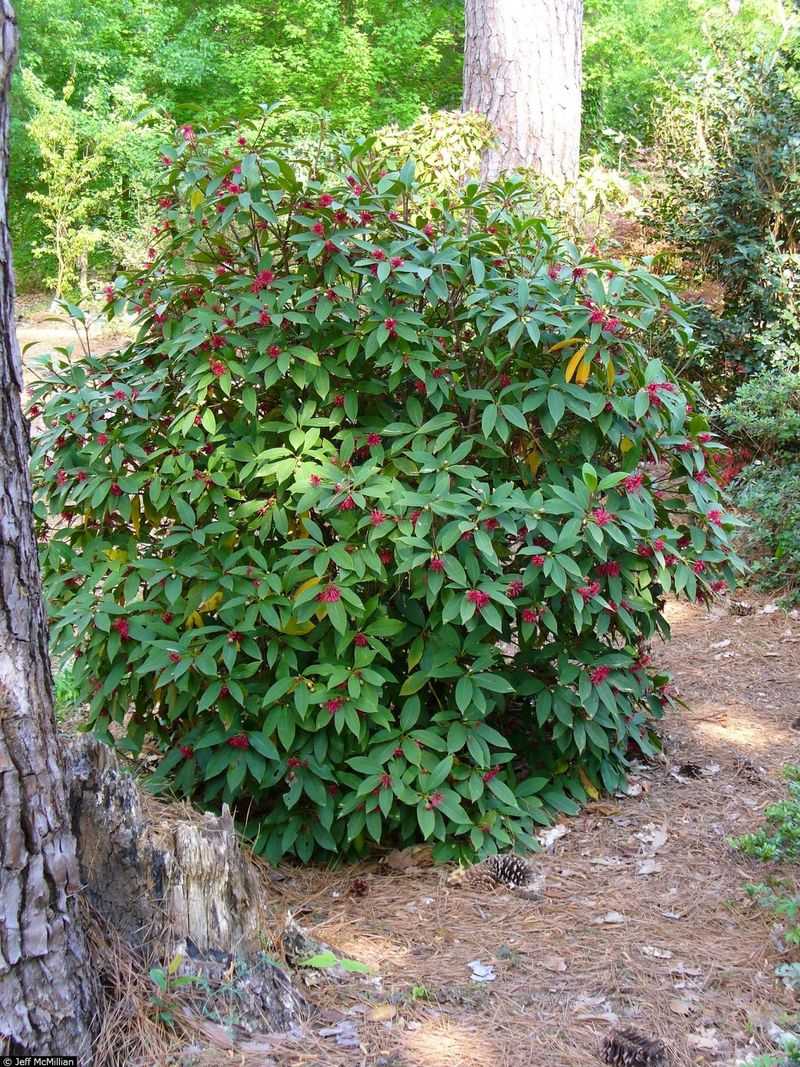
A small, tidy plant at the nursery can be deceptive. Many shoppers pick up a two-gallon container of Florida anise and imagine it staying at that manageable size for years.
That is not how this shrub works.
UF/IFAS Extension and NC State Extension describe the plant as capable of reaching 6 to 15 feet tall. Depending on growing conditions, its spread can match or exceed its height.
That is a significant footprint for a plant that sometimes gets treated like a compact foundation shrub.
Placing it too close to a house foundation, a window, a narrow walkway, or a fence line sets up a future crowding problem. The shrub’s natural growth habit is multi-stemmed and spreading, so it fills horizontal space generously over time.
Giving it adequate room from the start avoids the need for aggressive corrective pruning later.
Light shaping to maintain a clean edge or remove crossing branches is reasonable. Constant heavy shearing to keep an oversized plant in an undersized space is not a sustainable plan and can reduce flowering.
Choosing a location where the mature spread fits comfortably is the smarter approach. Think of it more like a large background shrub or screen plant than a tidy border specimen, and the size becomes an asset rather than a surprise.
7. Dense Evergreen Growth Can Replace A Plain Privacy Screen
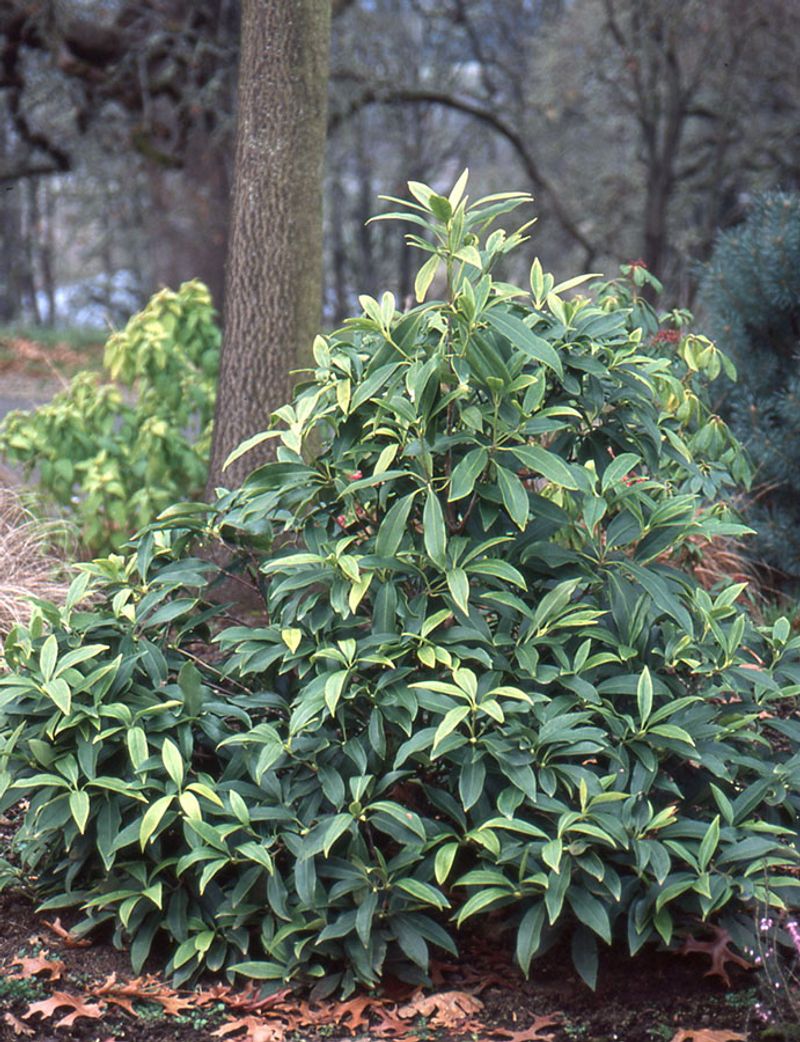
A row of identical arborvitae or a solid wood fence are the default answers for backyard privacy, but neither works well in a shaded, wet site. That is exactly the kind of problem where the native shrub offers a more practical solution.
Florida anise has dense, multi-stemmed growth and year-round evergreen foliage. Those traits make it a reasonable choice for informal screens, hedges, and background plantings in shaded landscapes.
Because the leaves stay on the plant through winter, the visual barrier does not disappear when temperatures drop.
Extension guidance suggests that adequate light, even if indirect, helps the shrub maintain fuller, denser growth. Plants grown in very deep shade may be somewhat looser in form, which is worth considering when planning a privacy planting.
Spacing plants appropriately and allowing them to grow into each other over time produces a more natural-looking screen than forcing tight formal shearing.
Mixed borders that combine the native shrub with other shade-tolerant natives can also create layered depth that a single-species hedge cannot match. Ferns, native gingers, and shade-loving groundcovers pair naturally with Illicium floridanum’s canopy.
The result looks more like a woodland edge than a planted barrier, which suits naturalistic garden styles well. For homeowners who want privacy without a high-maintenance formal hedge, this shrub offers a genuinely workable alternative.
8. That Licorice Scent Comes With One Important Catch
Brush against the foliage of Illicium floridanum and something unexpected happens. The leaves release a noticeable anise or licorice-like scent that catches most people off guard the first time.
It is one of the more memorable sensory details of this native shrub and part of what makes it interesting to grow.
That scent can create confusion, though. The common name and the aroma sometimes lead gardeners to assume the plant has culinary uses similar to star anise, which is used in cooking.
That assumption is wrong and worth correcting clearly.
UF/IFAS Extension and other authoritative sources are explicit on this point. Illicium floridanum should not be consumed.
The plant is not the same species as Illicium verum, which is the tree that produces culinary star anise. Eating any part of Illicium floridanum is not safe, and the aromatic foliage does not indicate edibility.
Keeping that distinction clear is especially important for households with children or anyone who might be tempted by the plant’s appealing scent and name. Label the shrub properly if you grow it, and treat it as the ornamental it is meant to be.
As a landscape plant, Illicium floridanum earns its place through its foliage, form, shade tolerance, and spring flowers. The licorice scent is simply an interesting bonus for anyone who appreciates a garden that engages more than just the eyes.