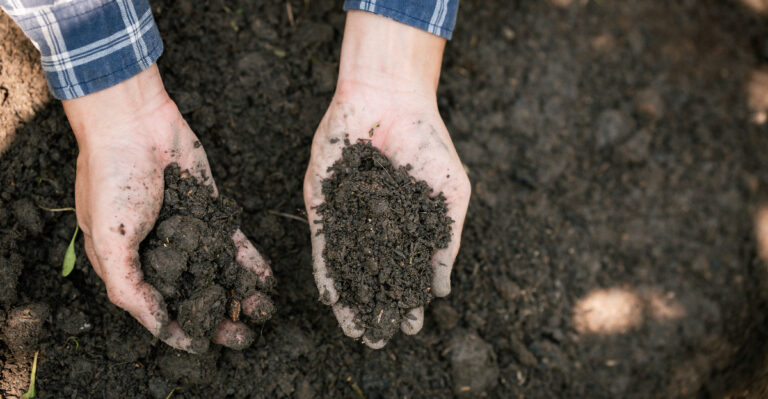
Things White Mushrooms In Your Texas Yard Might Be Telling You
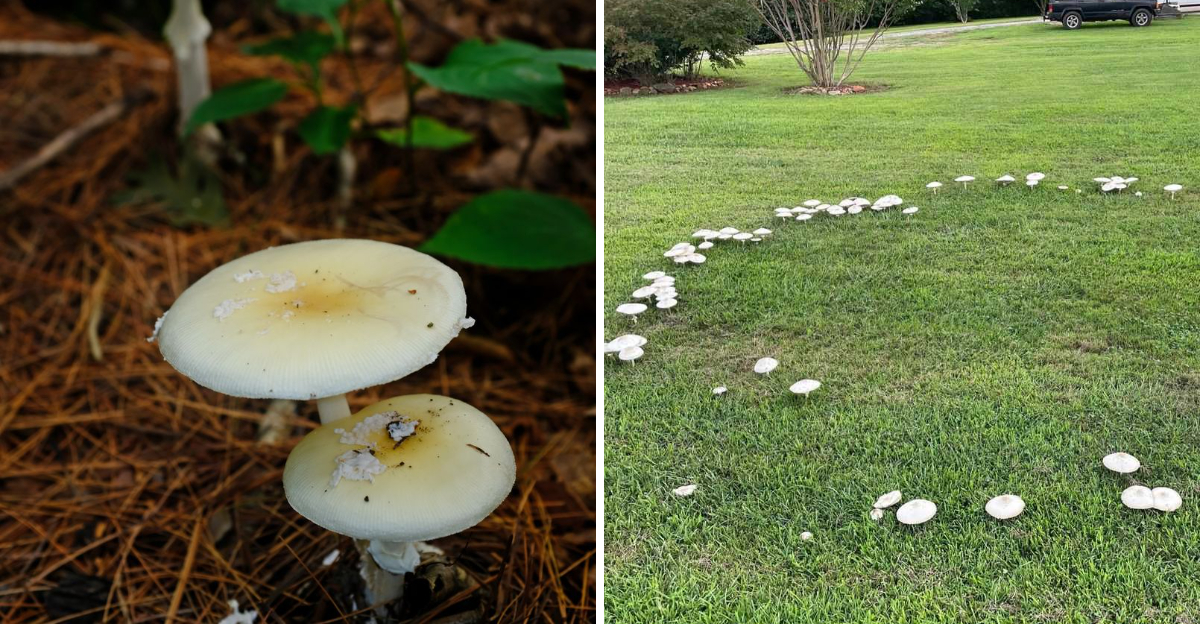
White mushrooms appearing in your Texas yard overnight are one of those garden discoveries that stops most people in their tracks.
One morning the lawn is clear, and the next there’s a cluster of them pushing up through the grass like they materialized out of nowhere.
The first question most homeowners ask is whether they’re dangerous. But the more interesting question is what they’re telling you. Because they’re telling you something. Mushrooms don’t appear randomly.
They’re the visible fruiting bodies of a fungal network that has been living in your soil, often for a very long time, and the conditions that trigger them to push up to the surface say something specific about what’s happening just below the ground in your Texas yard.
Some of what they’re signaling is genuinely useful information for a gardener. Some of it points to problems worth addressing.
And occasionally, the picture they’re painting about your soil ecosystem is actually a good one. Here’s how to read what those white mushrooms in your Texas yard are really trying to tell you.
1. Your Soil Is Staying Moist
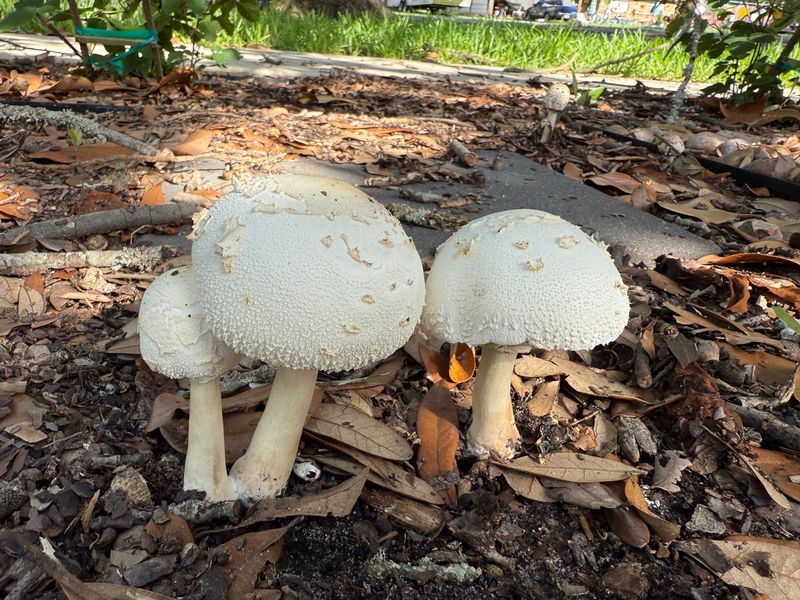
After a good rainstorm or a few days of heavy watering, white mushrooms can seem to appear almost overnight. That is not a coincidence.
Mushrooms need moisture to grow, and when your soil stays wet for long enough, fungal spores that were already in the ground get the signal to start producing fruiting bodies above the surface.
In Texas, the combination of summer heat, sudden rainstorms, and regular lawn irrigation creates the perfect setup for mushroom growth. If you are seeing mushrooms pop up often, your yard may be holding onto water longer than it should.
Compacted soil, poor drainage, or overwatering can all lead to consistently damp conditions underground.
One simple fix is to check your sprinkler schedule. Watering deeply but less frequently encourages grass roots to grow deeper while allowing the top layer of soil to dry out between sessions.
You can also try aerating your lawn to loosen compacted soil and improve drainage. Mushrooms tend to show up more in shaded areas where sunlight cannot dry out the ground as quickly.
Trimming back trees or shrubs to let in more light can make a real difference. If certain spots in your yard stay soggy after rain, consider adding a French drain or regrading the area to redirect water flow.
Seeing mushrooms after wet weather is completely normal and usually nothing to worry about. It is simply your lawn letting you know the soil moisture levels are high. Managing irrigation and improving drainage are the best long-term steps you can take.
2. Something Organic Is Decomposing Underground
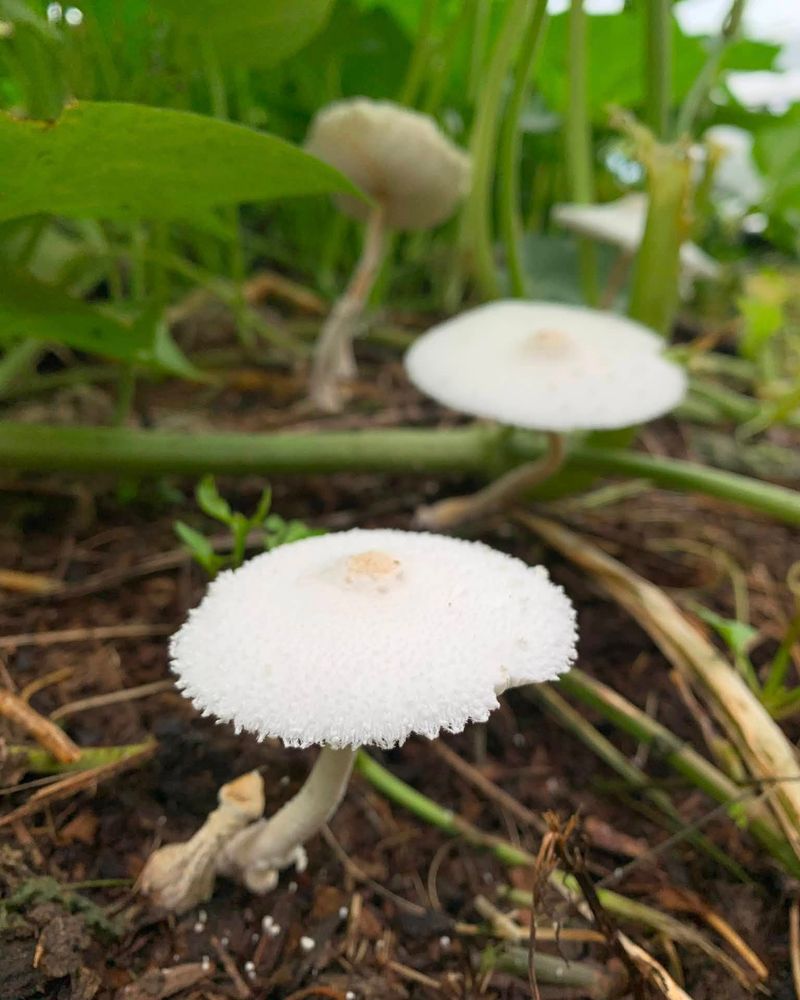
Fungi are nature’s cleanup crew. When white mushrooms show up in your yard, there is a good chance something organic is breaking down just beneath the surface.
Old tree roots, buried lumber from past construction, wood chips worked into the soil, and even thick layers of thatch can all serve as food sources for fungi.
Your Texas Garden Changes Every Week. Your Plan Should Too.
Gardening in Texas changes quickly throughout the season. Every Friday you’ll receive a simple weekly plan showing exactly what to plant, prune, fertilize, harvest, and protect so you never miss the right timing.
As fungi break down that organic material, they release nutrients back into the soil. In many ways, this process actually benefits your lawn.
The decomposing matter gets converted into nutrients that grass roots can absorb over time. So while the mushrooms might look strange, the underground activity they represent is part of a healthy natural cycle.
Homeowners in Texas sometimes discover that mushrooms keep returning to the same spot year after year. That is usually a clue that a buried food source has not fully broken down yet.
Common culprits include old fence posts, tree stumps that were ground down but not fully removed, and construction debris left behind when a home was built.
If you want to reduce mushroom growth in a specific area, try excavating the spot to find and remove whatever is decomposing. This is labor-intensive but effective.
For large buried roots or stumps, you may want to bring in a professional who can safely extract the material.
Keep in mind that simply removing the mushrooms you see above ground will not stop new ones from forming. The real solution is always addressing the underground food source. Patience matters here, because decomposition can take years to fully complete.
3. An Old Tree Root May Still Be Below The Lawn
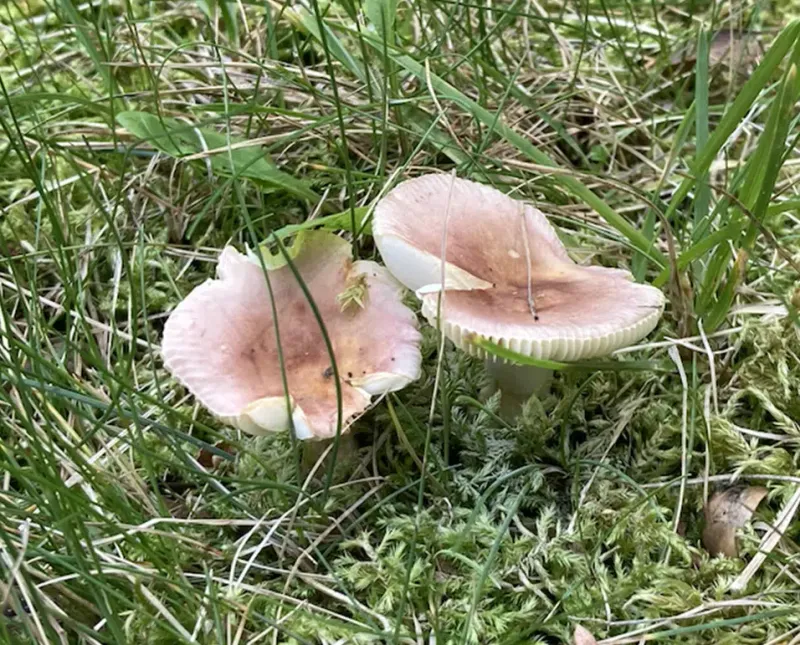
You might have had a tree removed years ago and assumed the job was done once the stump was ground away.
But here is something many homeowners do not realize: the root system can extend far beyond the stump and stay in the ground long after the tree itself is gone.
Those buried roots continue to decompose slowly, and that decomposing wood feeds fungi for years.
White mushrooms appearing in a line or scattered across a general area of your yard can be a telltale sign of an old root system below. The mushrooms essentially trace the path of the roots underground.
If you think back to where a tree once stood and notice mushrooms growing in that general zone, the connection is probably not a coincidence.
This is actually a well-known phenomenon in lawn care. Arborists and landscapers often call it ghost root activity, where the biological work of decomposition continues invisibly beneath a lawn long after the visible tree structure is gone.
The process is completely natural, but it can be frustrating if mushrooms keep reappearing season after season.
Speeding up decomposition is possible. Applying a nitrogen-rich fertilizer to the area can encourage faster breakdown of woody material below.
Some homeowners also choose to excavate and physically remove remaining root sections, though this can be a big project depending on the size of the original tree.
Until the roots fully break down, expect mushrooms to keep returning during wet periods. Staying consistent with lawn aeration and moisture management will help reduce how often you see them above ground.
4. Your Lawn Has An Active Fungal Community
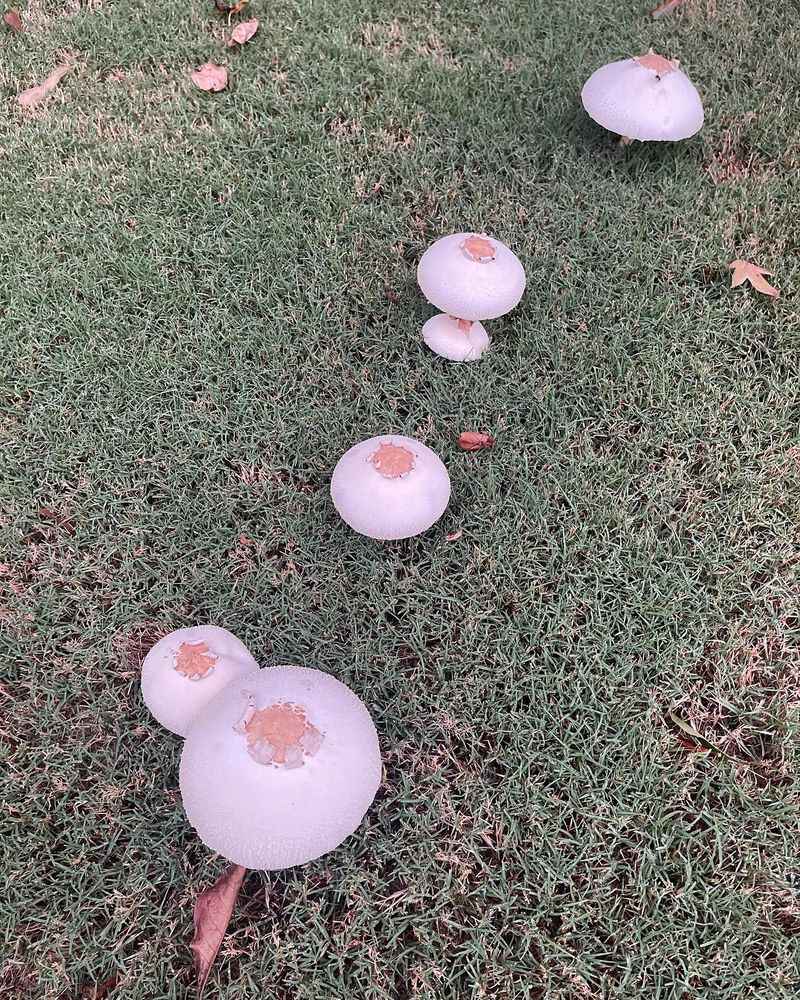
Most people think of mushrooms as the whole organism, but they are actually just the fruiting part of a much larger living structure.
Beneath your lawn, an extensive network of thread-like fibers called mycelium spreads through the soil, sometimes covering a surprisingly large area. The mushrooms you see above ground are just the tips of what is happening below.
Having an active fungal community in your soil is not automatically a bad thing. Many types of fungi form helpful relationships with grass and plant roots, sharing nutrients and improving the soil structure.
Some fungi even help grass handle drought stress better by extending the effective reach of root systems.
In a healthy Texas lawn, you might find dozens of different fungal species living quietly in the soil without ever producing visible mushrooms.
When conditions line up just right, usually a combination of moisture, warmth, and available organic matter, certain species produce mushrooms as their way of spreading spores and reproducing.
Think of the mushrooms as a sign that your soil is biologically active and alive. That is generally a positive indicator of soil health.
A dry, sterile soil would not produce mushrooms at all. Of course, some fungal activity can cause lawn diseases like brown patch or take-all root rot, so it is worth paying attention to whether your grass looks healthy in the areas where mushrooms appear.
If the grass around the mushrooms looks green and strong, you likely have nothing to worry about. If the turf looks yellowed or thinned out, consult a local lawn care professional for a proper diagnosis.
5. A Mushroom Ring Could Be A Fairy Ring
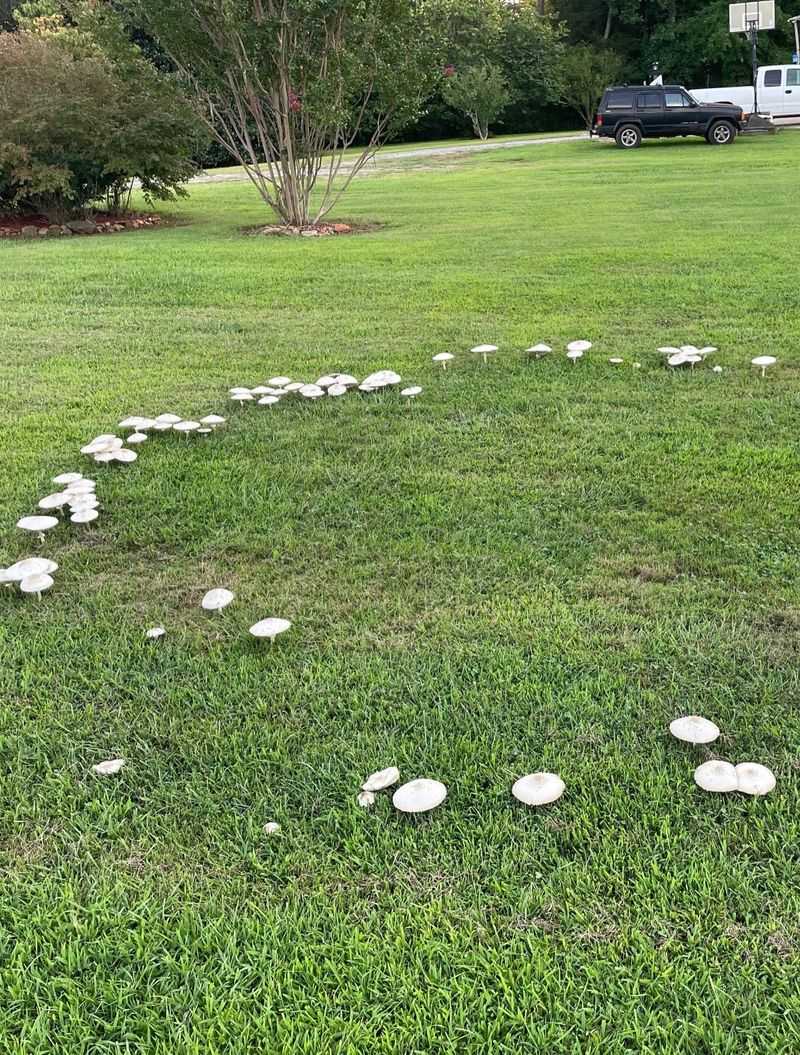
Ever noticed mushrooms arranged in a perfect circle or a curved arc in your yard? That unusual pattern has a name: a fairy ring.
Folklore from centuries past claimed these circles were made by dancing fairies or supernatural creatures, which is a charming story, but the real explanation is purely biological.
Fairy rings form when a single fungal colony grows outward from a central point in an even, radial pattern. As the mycelium spreads, it consumes organic matter in the soil.
The mushrooms appear at the outer edge of that expanding ring, which is where the most active fungal growth is happening. Over time, the ring can grow larger each season.
In Texas lawns, fairy rings are most commonly caused by species in the Marasmius, Agaricus, or Lycoperdon families.
Some fairy rings cause the grass inside or along the ring to grow darker green and faster than the surrounding turf because the fungal activity releases nitrogen into the soil. Others can cause the grass to thin out or turn brown in the ring zone.
Managing fairy rings can be tricky. Fungicide treatments rarely eliminate the underground mycelium completely.
The most reliable approach involves aerating the ring area heavily, watering deeply to dilute the hydrophobic layer that some fairy-ring fungi create, and applying a wetting agent to help moisture penetrate the soil more evenly.
Fairy rings can persist for many years, gradually expanding outward. Keeping the affected area well-watered and properly fertilized helps minimize the visual impact on your lawn while the fungal colony slowly works through its available food source.
6. The Mushrooms Aren’t Necessarily Hurting Your Grass
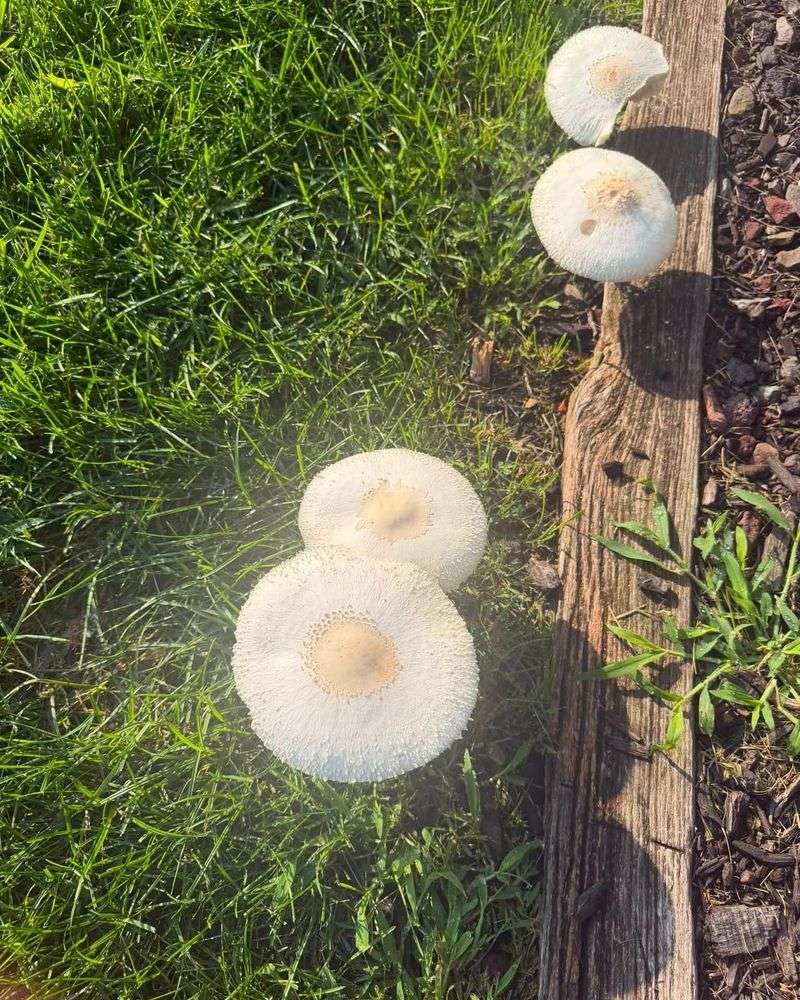
Spotting mushrooms in your yard might send you straight into panic mode, but slow down for a second. Most lawn mushrooms are saprophytic, which means they feed on dry organic matter rather than living grass.
Because of that, they typically do not harm your turf directly. In fact, as they break down organic material, they help recycle nutrients that can benefit your lawn over time.
The key thing to look at is the condition of the grass around the mushrooms. If the blades are green, upright, and healthy-looking, the mushrooms are almost certainly not causing damage.
You can simply mow them down or knock them over with a rake, and they will often stop reappearing once the weather dries out.
There are some exceptions worth knowing. Certain fairy-ring fungi can create a water-repelling layer in the soil, which prevents moisture from reaching grass roots properly.
This can cause yellowing or thinning along the ring. Pathogenic fungi like those responsible for brown patch or take-all root rot can also appear alongside mushrooms, though they are distinct issues with their own symptoms.
Before reaching for a fungicide, take a close look at your grass. Fungicides are not effective against most saprophytic mushrooms anyway, since the mycelium is deep in the soil and protected from surface sprays.
Improving drainage, reducing thatch, and managing irrigation are more useful long-term strategies.
Lawn mushrooms are largely a cosmetic issue for most Texas homeowners. Staying calm, observing your turf carefully, and making small adjustments to your lawn care routine is usually all that is needed to keep things looking great.
7. White Doesn’t Mean They’re Safe To Eat
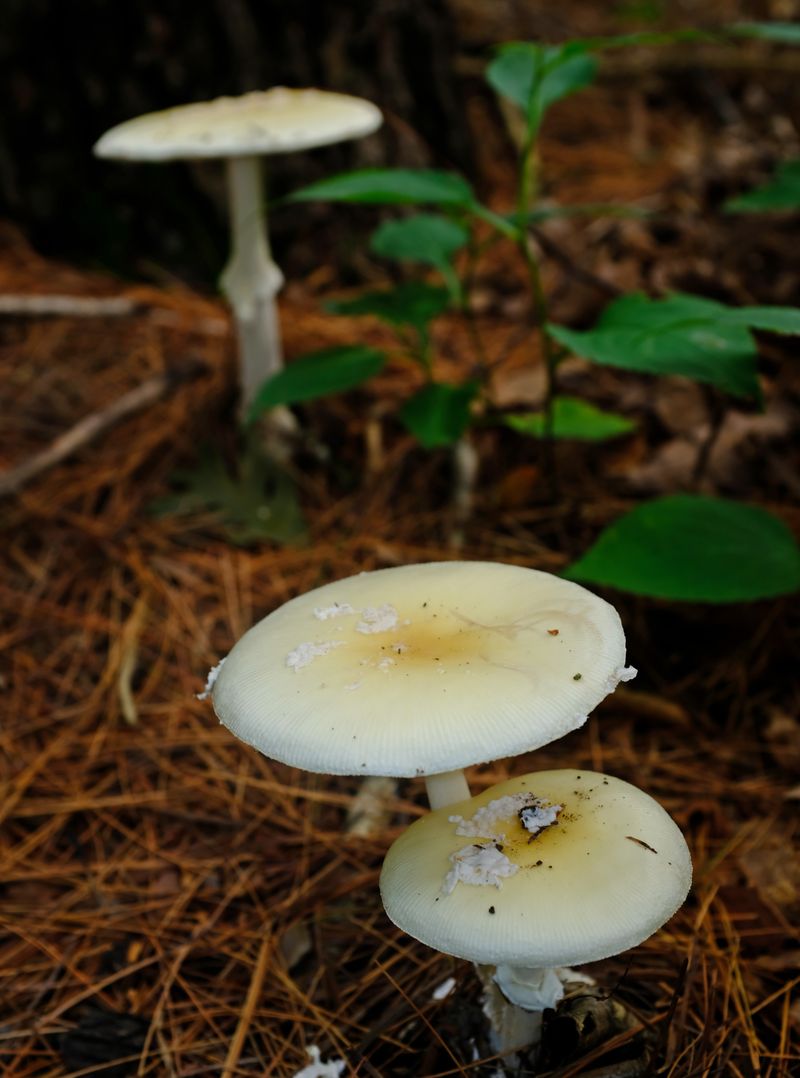
White mushrooms look clean, simple, and harmless. That appearance is deceiving. Some of the most toxic fungi in the world are completely white, including the Amanita phalloides, commonly called the death cap, and the Amanita bisporigera, known as the destroying angel.
Both can cause serious harm and have been responsible for severe poisonings across the United States.
Color alone tells you nothing about whether a mushroom is safe. Edible species and toxic species can look nearly identical to an untrained eye.
Even experienced foragers sometimes struggle to tell certain species apart without examining spore prints, gill structure, and other microscopic details. Relying on appearance to judge safety is genuinely risky.
Texas yards can host a wide variety of mushroom species depending on the region, soil type, and surrounding vegetation. The Houston area, with its humid climate and sandy soils, sees different species than the Hill Country or North Texas.
Without expert identification, there is simply no reliable way to know what you are looking at just by sight.
Keep children and pets away from any unidentified mushrooms growing in your yard. Children are naturally curious and may pick up or mouth mushrooms without understanding the risk. Dogs are also known to eat mushrooms they find while roaming the yard.
Removing mushrooms promptly by wearing gloves and disposing of them in a sealed bag is the safest approach. Never let appearance alone guide any decision about eating a wild mushroom found outdoors.