Ohio Just Banned The Sale Of These 10 Popular Perennials
Ohio gardeners have been walking into nurseries and finding empty spots where certain perennials used to be. Not out of stock.
Gone. Pulled from sale by state regulation that has been building for years and finally caught up with plants that have been on borrowed time for longer than most people realized.
Some of these perennials have been banned for a while. Others are recent additions to a list that keeps growing as the evidence against them becomes harder to ignore.
All of them have been staples of Ohio gardens. Some will feel like obvious calls in retrospect.
A few will genuinely surprise the gardeners who built entire beds around them without ever questioning whether they belonged here. The reasoning behind every ban traces back to the same pattern.
Beautiful in cultivation. Unstoppable outside of it.
The list has ten names on it. Chances are at least one of them is already in the yard.
1. Yellow Flag Iris Is Not As Harmless As It Looks
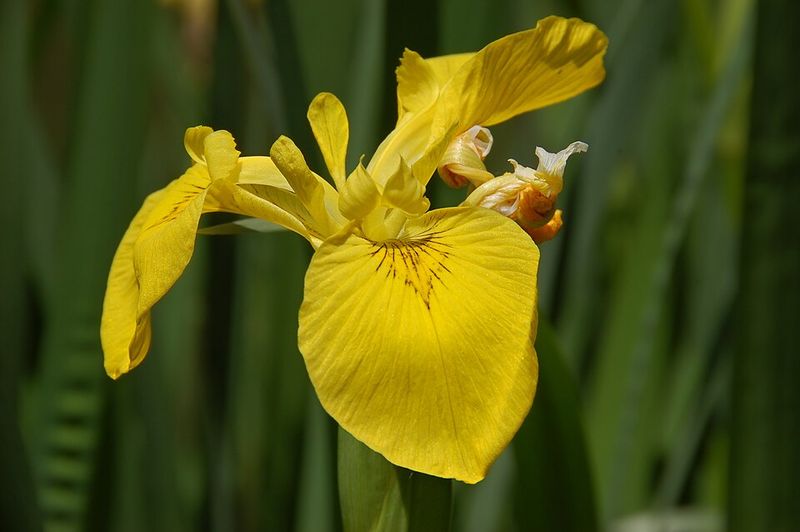
Tall stems rising above a garden pond with bold yellow blooms can make Iris pseudacorus look like a dream water plant. Gardeners have long admired it for its striking flowers and its tolerance of wet or waterlogged soil.
That same toughness is exactly what makes it a concern outside cultivated settings.
Yellow flag iris spreads through two pathways. Its rhizomes extend through saturated soil, anchoring new growth along shorelines, in ditches, and in shallow water.
Seeds also disperse by floating, which allows the plant to travel downstream and establish in new wetland areas.
Once it takes hold in a marsh or along a stream bank, it can form dense colonies that crowd out native wetland plants. Those native species support local wildlife in ways that a non-native iris cannot fully replace.
Before pulling any wild iris, correct identification matters greatly. Native blue flag iris, Iris versicolor, grows in similar wet habitats and should not be disturbed.
The yellow flower color of Iris pseudacorus is the clearest visual distinction. Under the current invasive plant rule, selling, propagating, or distributing this species is prohibited.
2. Purple Loosestrife Can Overrun Wet Ground Fast
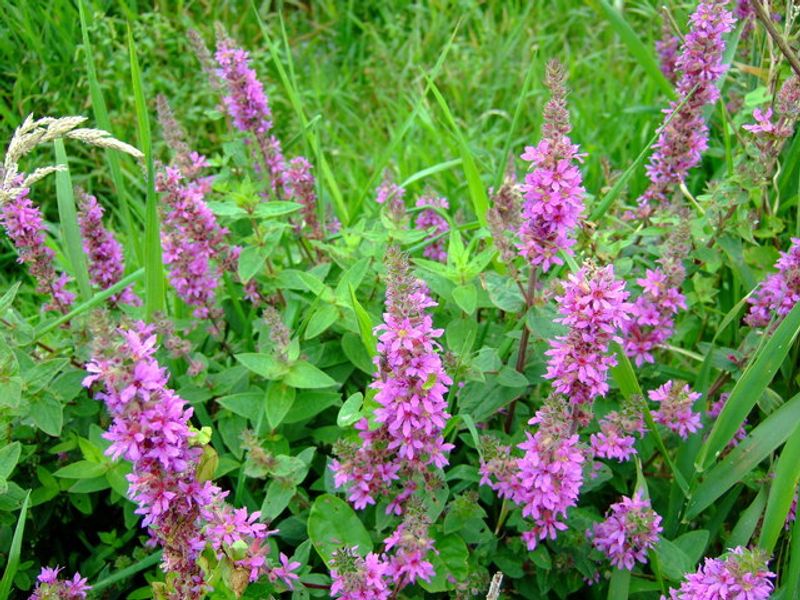
Tall spikes of rosy-purple flowers made Lythrum salicaria a popular ornamental for wet garden spots. Its color is genuinely striking, and for a long time, nurseries sold it freely for rain gardens and pond edges.
The problem became clear as plants began appearing far outside those planted areas.
Purple loosestrife produces an enormous number of seeds per plant each season, according to research cited by multiple university Extension programs. Those seeds disperse easily by water and wind.
That allows the plant to colonize marshes, wet meadows, and roadside ditches on a scale that is difficult to reverse once established.
Dense stands can displace native wetland vegetation, including cattails, sedges, and other plants that waterfowl and other wildlife depend on.
Your Ohio Garden Changes Every Week. Your Plan Should Too.
Gardening in Ohio changes quickly throughout the season. Every Friday you’ll receive a simple weekly plan showing exactly what to plant, prune, fertilize, harvest, and protect so you never miss the right timing.
The shift in plant community affects more than just the view from a canoe.
Biological control programs using host-specific beetles have been part of management efforts in some states. Releasing those insects is a regulated activity handled by trained professionals, not a backyard project.
Under the current invasive plant rule, Lythrum salicaria is prohibited from sale, propagation, distribution, and intentional dissemination across Ohio.
3. European Wand Loosestrife Lost Its Garden Center Pass
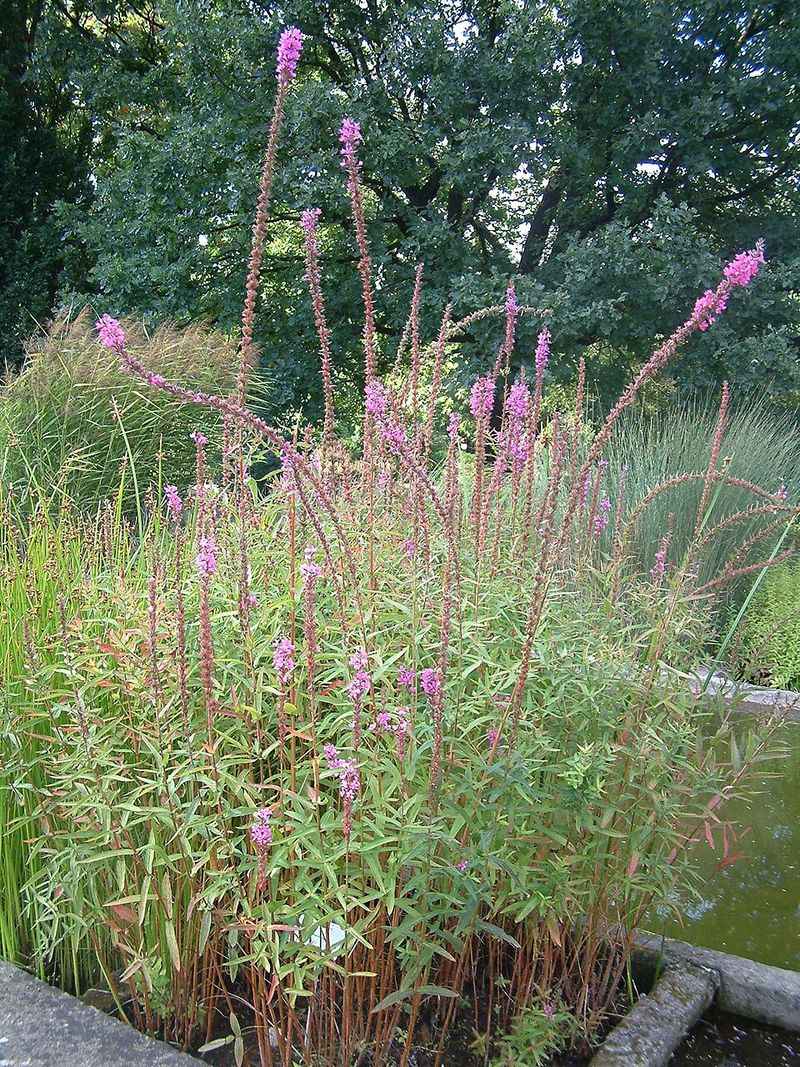
Lythrum virgatum was once sold as a nursery perennial alongside its close relative, purple loosestrife. The two look similar, but Lythrum virgatum is a distinct species with its own regulatory history.
Both belong to the genus Lythrum, and both appear on the Ohio’s invasive plant list, though gardeners sometimes assume they are the same plant.
European wand loosestrife tends to have narrower leaves and a slightly more slender flower spike than Lythrum salicaria, but the two are easy to confuse at a glance.
That similarity contributed to its popularity in ornamental plantings, where it was sometimes marketed as a refined alternative to its showier cousin.
Earlier versions of the invasive plant rule included a temporary transition period for certain regulated species, giving nurseries time to sell existing stock.
That transition period has ended, and Lythrum virgatum is currently prohibited from sale, propagation, distribution, and importation under Rule 901:5-30-01.
The concern with closely related loosestrife species centers on their potential to escape cultivation and establish in wet natural areas.
Specific biological behavior can vary between the two species, so claims about one should not be automatically applied to the other.
4. Dames Rocket Can Escape Far Beyond The Flower Bed
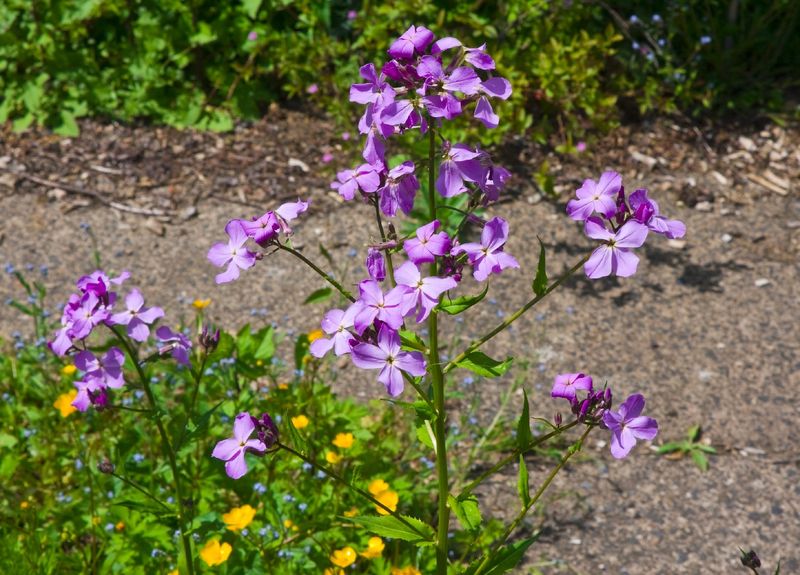
Clusters of fragrant purple or white flowers appearing along Ohio roadsides each spring have fooled many gardeners into thinking they were looking at garden phlox.
The plant responsible is usually Dame’s rocket, Hesperis matronalis, and the mix-up is understandable at first glance.
A reliable way to tell them apart is petal count. Dame’s rocket carries four petals per flower, while garden phlox has five.
That small difference is worth learning, because Dame’s rocket is listed as a regulated invasive under the current rule, while phlox is not.
Seed production drives its spread. A single plant can generate many seeds, which disperse into woodland edges, disturbed roadsides, and open areas near cultivated gardens.
Once established in those spots, it can form patches that persist and expand over multiple seasons.
Dame’s rocket was historically sold as a cottage garden biennial or short-lived perennial, valued for its fragrance and spring color. Its escape from gardens into natural areas, particularly along forest margins, led to its inclusion on the regulated invasive plant list.
Under the current rule, selling, propagating, distributing, or intentionally spreading Hesperis matronalis is not permitted.
5. Lesser Celandine Can Carpet The Ground Before Spring Wakes Up
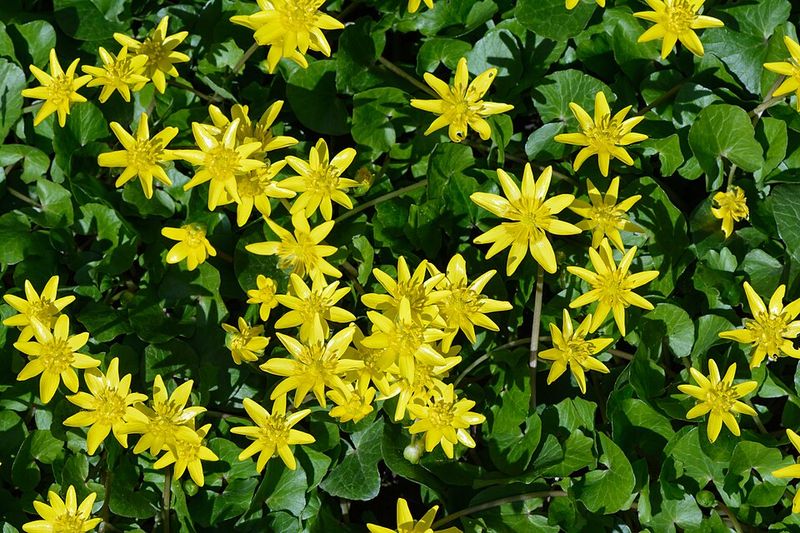
Glossy, heart-shaped leaves emerge from the soil weeks before most woodland plants even begin to stir. Ficaria verna, known as lesser celandine, takes advantage of that early window to establish dense ground cover.
It can spread through floodplains, stream banks, and shaded woodlands while native spring wildflowers are still dormant.
Its early emergence is one reason it raises concern in natural areas. By the time native ephemerals like trout lily or spring beauty break through, lesser celandine may already be covering the ground.
Light and space become limited for slower-starting plants.
Reproduction happens through several pathways. Tubers in the soil allow plants to regrow each season.
Tiny bulbils that form in leaf axils can detach and establish new plants nearby. Seeds add another route for spread, particularly along waterways where movement carries plant material downstream.
Lesser celandine can be mistaken for native marsh marigold, which also produces yellow flowers in wet spring settings. Correct identification before any action is essential.
Under Rule 901:5-30-01, Ficaria verna is currently prohibited from sale, propagation, distribution, and intentional dissemination.
Homeowners who find it already growing should consult current Ohio Department of Agriculture or Extension guidance for management options.
6. Japanese Knotweed Is Far Harder To Contain Than It Looks
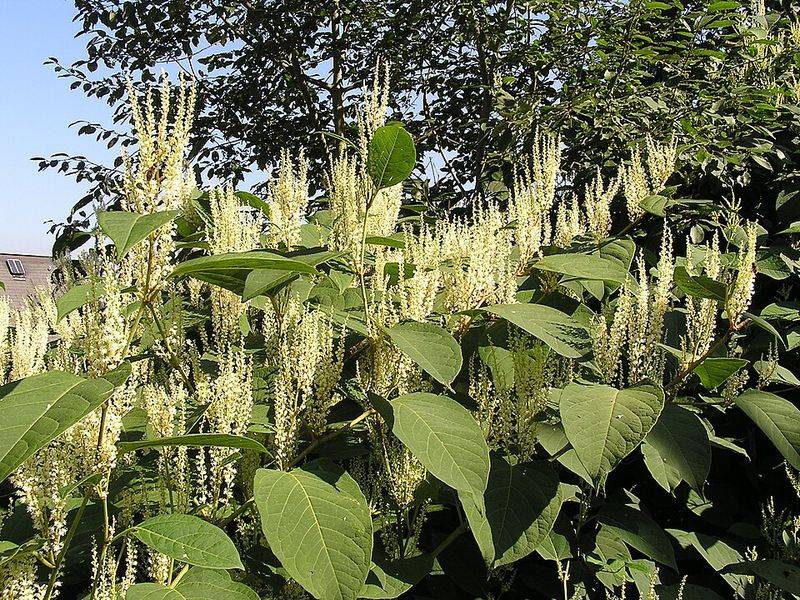
Bamboo-like stems returning from underground growth each spring signal one of the more persistent plants on the regulated list.
Fallopia japonica, listed under that name in the current invasive plant rule, is also recognized in botanical literature under the synonym Reynoutria japonica.
Those names refer to the same plant, not two separate species.
Its rhizome system is extensive and robust. Fragments of root material can produce new growth when disturbed and moved, which makes careless handling during any land disturbance a real concern.
Vegetative spread along stream corridors is well-documented, with rhizomes extending laterally over time and stems forming dense thickets that shade out other vegetation.
Claims about knotweed causing structural damage to buildings appear frequently, but the evidence varies. Researchers caution against assuming every nearby plant will cause foundation problems.
The more consistent and documented concern is its persistence and the difficulty of reducing established populations.
Under the current rule, selling, propagating, distributing, or intentionally spreading Fallopia japonica is prohibited.
Anyone managing an existing patch should follow current guidance from the Ohio Department of Natural Resources or university Extension programs.
Management approaches depend on site conditions and infestation size.
7. Japanese Honeysuckle Can Smother More Than A Garden Fence
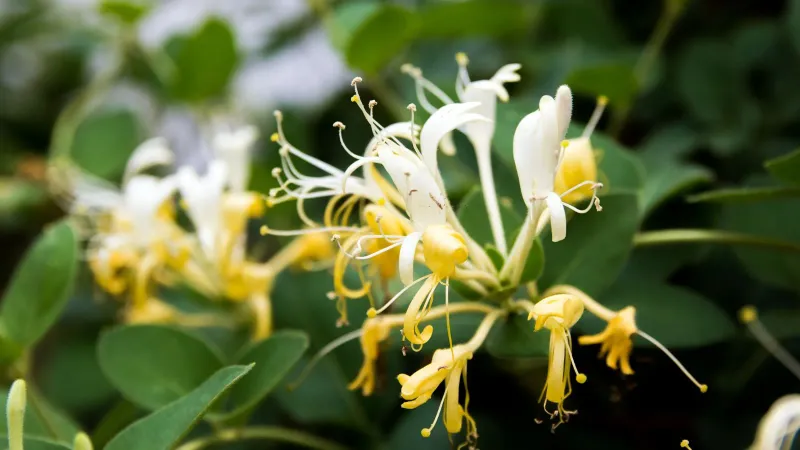
A fragrant vine climbing through a shrub or along a fence line can seem like a charming garden feature until the plant underneath starts struggling for light. Lonicera japonica is a twining woody vine, not a shrub.
Its growth habit allows it to drape over and through other plants, reducing their access to sunlight.
In milder climates, the vine holds its leaves into winter, giving it an extended growing season compared to native plants that drop their foliage earlier.
That semi-evergreen behavior contributes to its competitive advantage in disturbed areas, woodland edges, and roadsides.
Birds consume its small dark fruit and deposit seeds in new locations, which helps the vine establish beyond any original planting. Vegetative spread also occurs as stems contact soil and root at nodes.
Not every honeysuckle vine is regulated. Several native Lonicera species are appropriate landscape and habitat plants.
The current prohibition applies specifically to Lonicera japonica. Under Rule 901:5-30-01, it is restricted from sale, propagation, distribution, and intentional dissemination.
Ohio gardeners who enjoy honeysuckle fragrance have native alternatives worth exploring through university Extension plant lists.
8. Amur Honeysuckle Can Turn A Hedge Into A Thicket
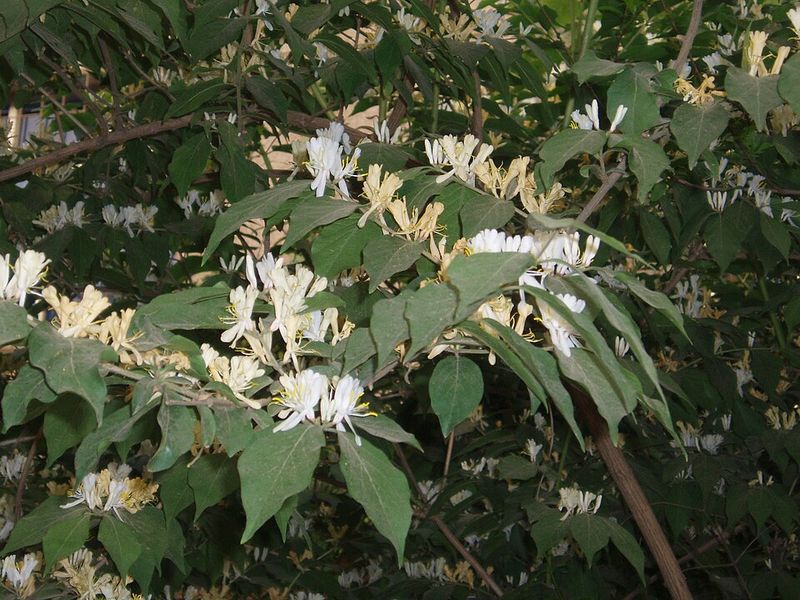
An old hedge leafing out noticeably earlier than the surrounding trees and shrubs may be worth a closer look. Lonicera maackii, a woody shrub native to northeastern Asia, was historically planted in the region for wildlife cover and screening.
Its early leaf emergence and late leaf retention give it a longer photosynthetic season than most native shrubs in the same understory.
That extended canopy period contributes to shading effects on the plants growing beneath it. Native woodland wildflowers and tree seedlings that depend on spring light before the canopy closes can be affected by Amur honeysuckle’s early-season leaf cover.
Red fruit ripens in fall and is consumed by birds, which carry seeds into woodland edges, forest interiors, and disturbed ground well beyond any original planting. Dense shrub layers can develop over time in areas where the plant has naturalized.
Amur honeysuckle is one of several exotic bush honeysuckles currently regulated. Its size and documented spread patterns give it some distinct characteristics compared with the other regulated species.
Under the current rule, Lonicera maackii is prohibited from sale, propagation, distribution, importation, and intentional dissemination.
9. Morrows Honeysuckle Does Not Stay Inside The Shrub Border
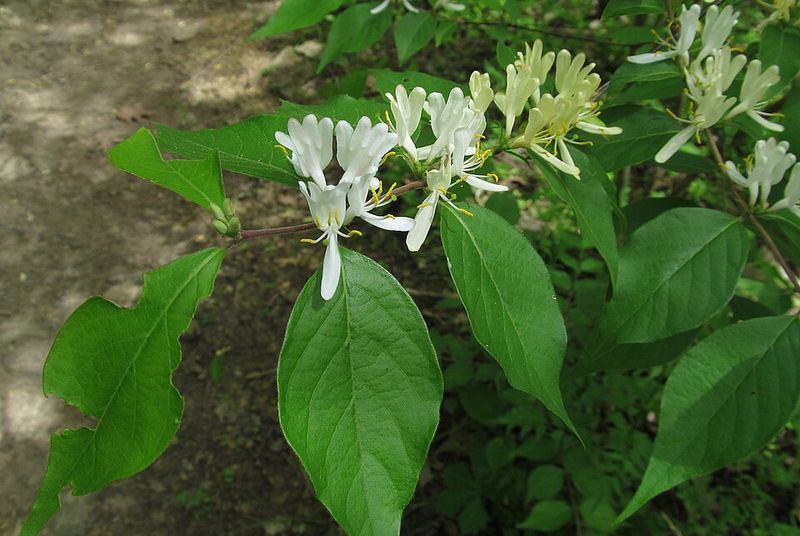
Berries carrying a shrub beyond its original border describe Morrow’s honeysuckle well. Lonicera morrowii is a woody shrub that produces paired creamy white flowers in spring.
Red or yellow fruit follows, and birds disperse it into surrounding natural areas. That bird-assisted movement is a primary way the plant establishes outside of planted landscapes.
Morrow’s honeysuckle tends to be smaller and more spreading than Amur honeysuckle. However, the two can hybridize where their ranges overlap, which complicates field identification.
Hollow stems are sometimes mentioned as a characteristic of exotic bush honeysuckles. That feature alone is not reliable enough to separate the regulated species without additional observation.
Like other exotic bush honeysuckles, Morrow’s honeysuckle leafs out early in spring in Ohio. That can extend its competitive window over native shrubs and ground-layer plants in woodland settings.
Under Rule 901:5-30-01, Lonicera morrowii is currently prohibited from sale, propagation, distribution, importation, and intentional dissemination. Existing plants already growing on a property are different from plants being actively propagated or sold.
Spreading or sharing plant material would likely fall within the prohibited activities.
10. Tatarian Honeysuckle Is Another Familiar Hedge On The List
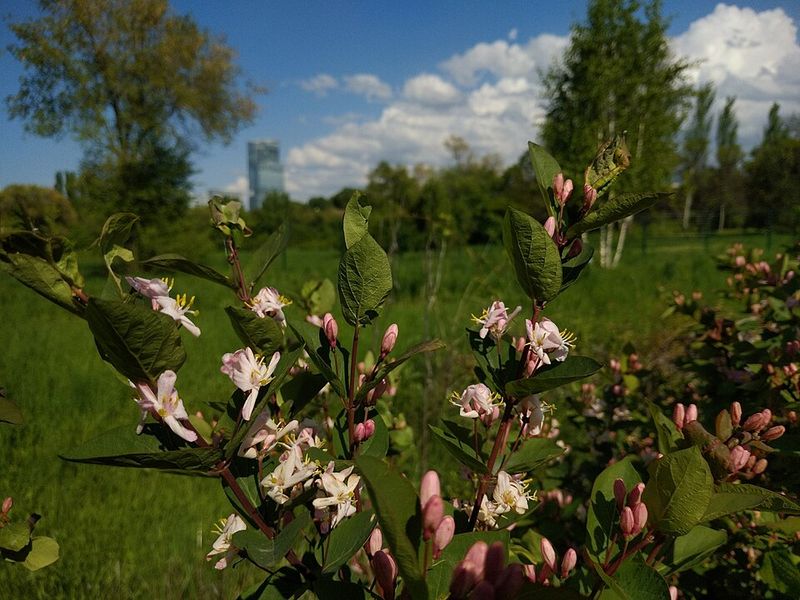
A familiar flowering hedge around an older property might be Tatarian honeysuckle. This woody shrub was once widely planted across the region for its early spring flowers and screening ability.
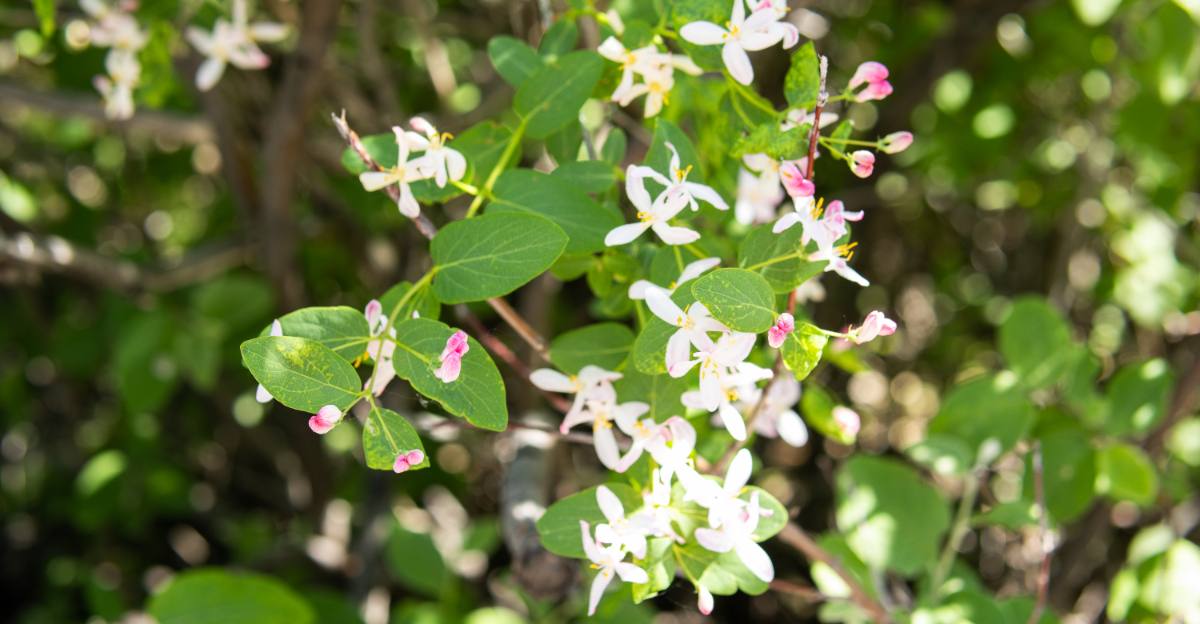
Lonicera tatarica produces paired flowers that range in color from white to pink and deep rose, so flower color alone is not a reliable identification tool.
Small red berries follow the flowers and attract birds. Those birds carry seeds into disturbed areas, roadsides, woodland edges, and open ground where the shrub can establish without human help.
Over time, plants from those dispersed seeds can build populations in natural areas far from the original hedge.
Tatarian honeysuckle may hybridize with other exotic bush honeysuckles, which adds complexity to identification in the field. Plants in older landscapes may represent hybrids rather than pure species.
The legal distinction matters here. An old shrub already growing along a property line is not automatically the same situation as a nursery selling or propagating Lonicera tatarica today.
The current rule prohibits sale, propagation, distribution, importation, and intentional dissemination of this species. Sharing divisions, transplanting rooted stems, or passing along cuttings would fall within those restricted activities under Rule 901:5-30-01.