The Connecticut Plants Moving From Legal To Illegal
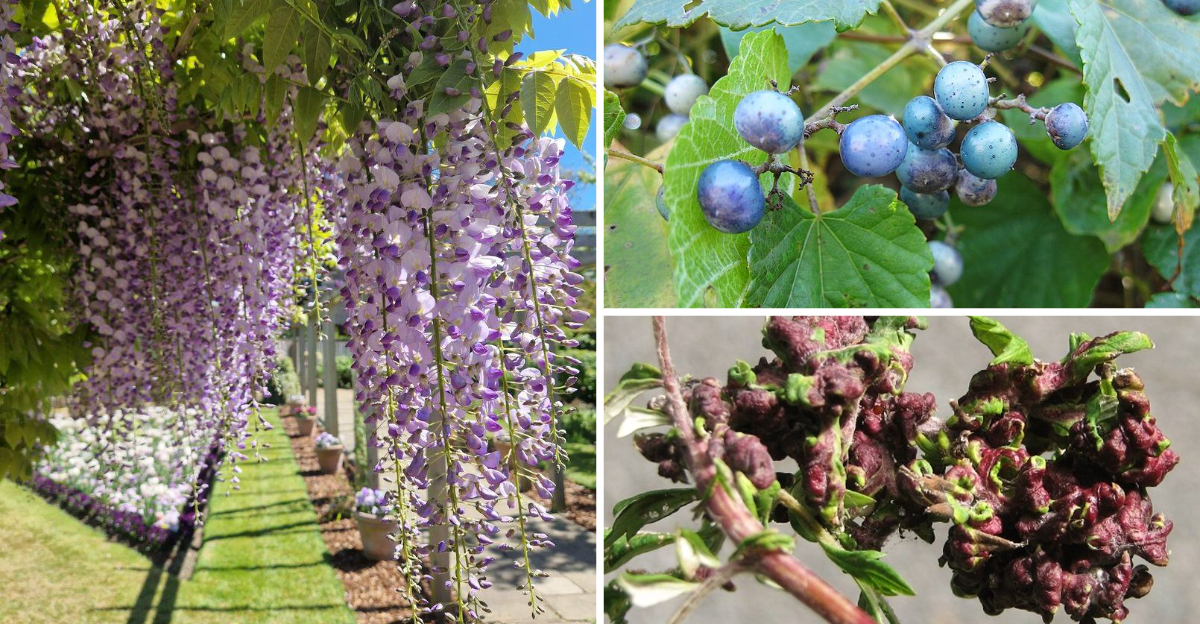
Danger is spreading quietly through your Connecticut garden beds. Familiar plants you have trusted for years just got labeled threats. Nurseries sold you these plants for decades without warning labels.
Officials are naming names now, and your yard could be on it. Every species on it thrived in suburban yards just like yours. Roots spread underground long before you notice the damage.
You bought them, planted them, and watched them multiply. Wildlife suffers around you while these plants crowd out natives. Birds lose food near you, and pollinators lose ground fast.
Connecticut is not asking gently anymore, it is enforcing rules on your land. Fines and removal orders could already be headed toward you.
Precision matters when identifying what’s rooted in your soil. Ignorance will not shield you from what is already spreading. What grows in your yard right now could decide what happens next.
1. Japanese Wisteria (Wisteria Floribunda)
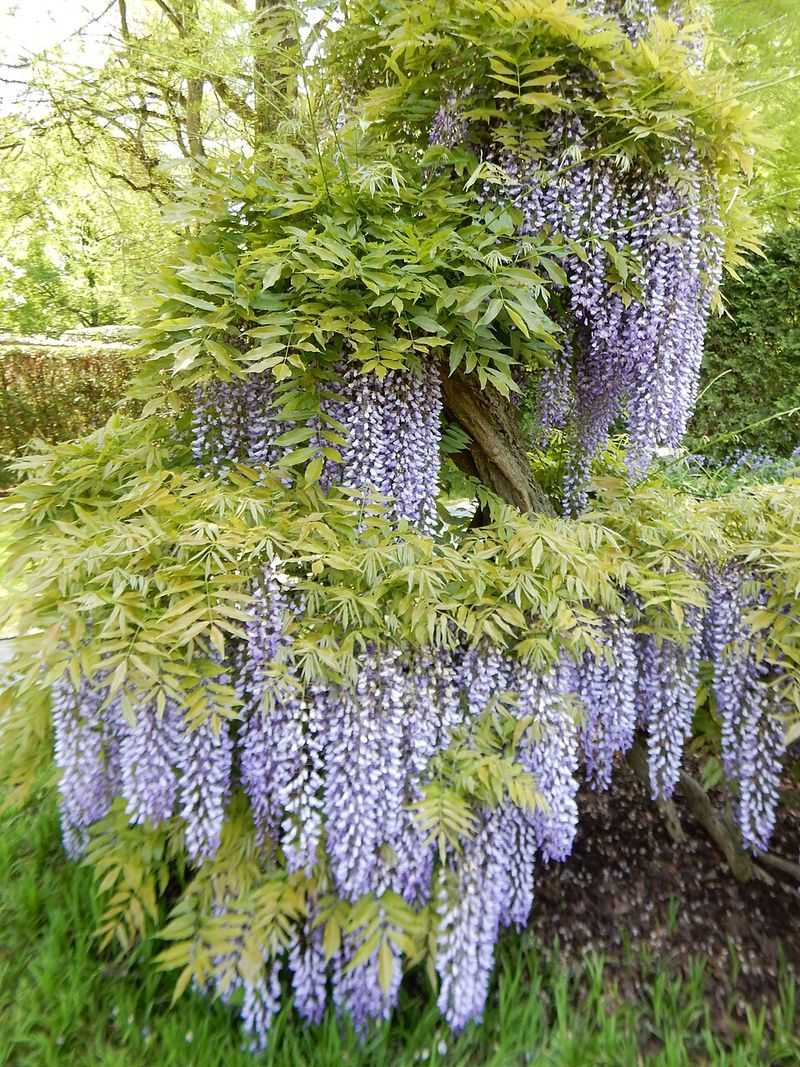
Picture a vine so aggressive it can swallow a tree whole. Japanese wisteria is exactly that plant, and Connecticut is done looking the other way.
This woody climber was brought from Japan in the 1800s. Gardeners loved the purple flower clusters that hang like grapes in spring.
The problem is those flowers lead to seeds, and those seeds spread fast. Birds eat them, wind carries them, and before long, wild areas fill up with this vine.
Japanese wisteria wraps around trees and shrubs with a grip that cuts off water and nutrients. The host plant weakens and eventually collapses under the weight.
Seed pods add another layer to the problem. They form as velvety pouches that split open with force, flinging seeds several feet from the parent vine.
State officials have solid reasoning behind restricting this vine. Once it escapes a yard, it forms dense mats that block sunlight from reaching native ground plants.
Removing it is no small task. The roots run deep, and even a small piece left behind can regrow into a full plant within a season.
Connecticut’s invasive plant list restricts propagation and sale, not private ownership. Existing vines on private property are not automatically illegal, but replacing them is strongly encouraged.
If you already have it, experts recommend cutting it back repeatedly and treating cut stems with an approved herbicide. Manual removal alone rarely works long-term.
Native alternatives like American wisteria offer similar beauty without the ecological damage. Swapping it out is one of the best moves a Connecticut gardener can make right now.
2. Chinese Wisteria (Wisteria Sinensis)
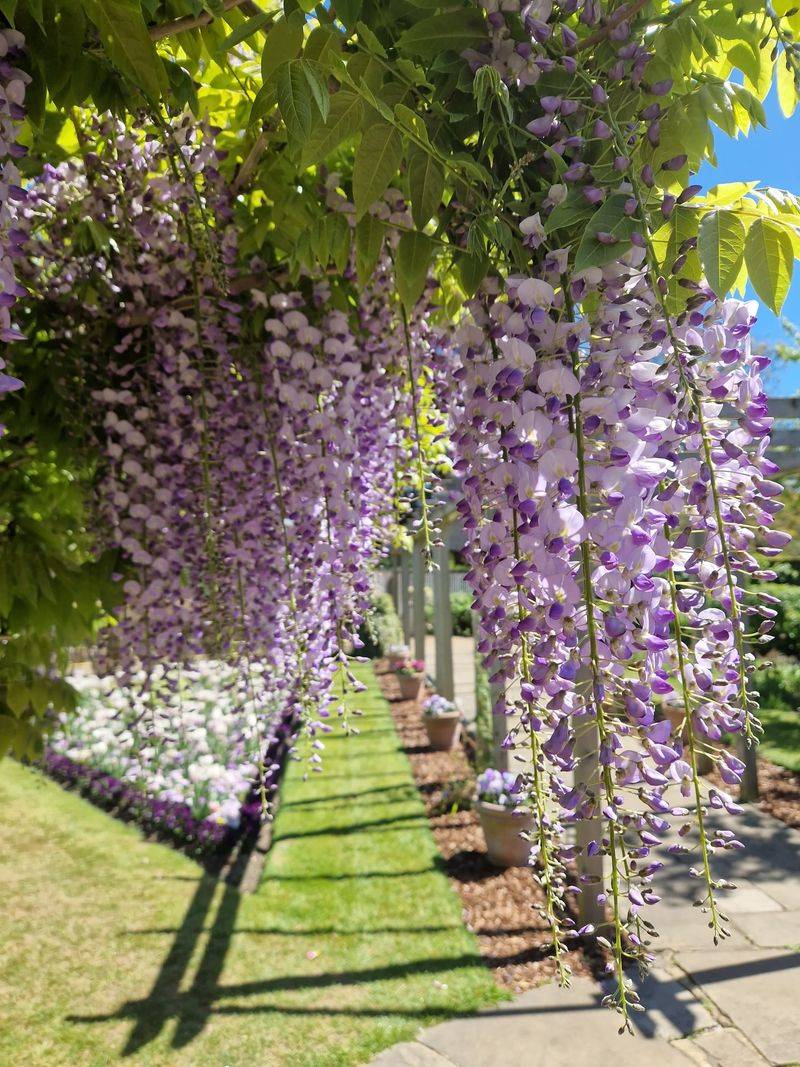
If Japanese wisteria is aggressive, Chinese wisteria is its even bolder cousin. Both are landing on Connecticut’s restricted list, but this one spreads just as fast.
Wisteria sinensis came from China and quickly became a landscape favorite across the eastern United States. Its flowers bloom before the leaves appear, making the display almost theatrical.
That beauty hides a serious ecological problem. The vines grow up to ten feet in a single season, smothering whatever stands in their path.
Your Connecticut Garden Changes Every Week. Your Plan Should Too.
Gardening in Connecticut changes quickly throughout the season. Every Friday you’ll receive a simple weekly plan showing exactly what to plant, prune, fertilize, harvest, and protect so you never miss the right timing.
Forests near residential areas are especially vulnerable. When this plant escapes into the woods, it climbs to the canopy and shades out native trees below.
Hybrid crosses between Chinese and Japanese wisteria are well documented in the wild. These crosses combine traits from both parents, making identification even harder.
One key difference from its Japanese relative is that Chinese wisteria twines counterclockwise. It may sound like a small detail, but it helps identify which species you are dealing with.
Mature vines can girdle a trunk over several years. The bark eventually cracks under constant pressure, leaving the tree vulnerable to disease.
Identification matters because both are now heading toward restricted status in the state. Selling or planting either one will soon carry legal consequences for nurseries and homeowners alike.
Getting ahead of the problem now saves a lot of work later. Young plants are far easier to remove than established ones with deep, woody root systems.
Look for native replacements like trumpet honeysuckle or native clematis varieties. These plants attract pollinators, support local birds, and stay where you put them without taking over the neighborhood.
3. Japanese Angelica Tree (Aralia Elata)
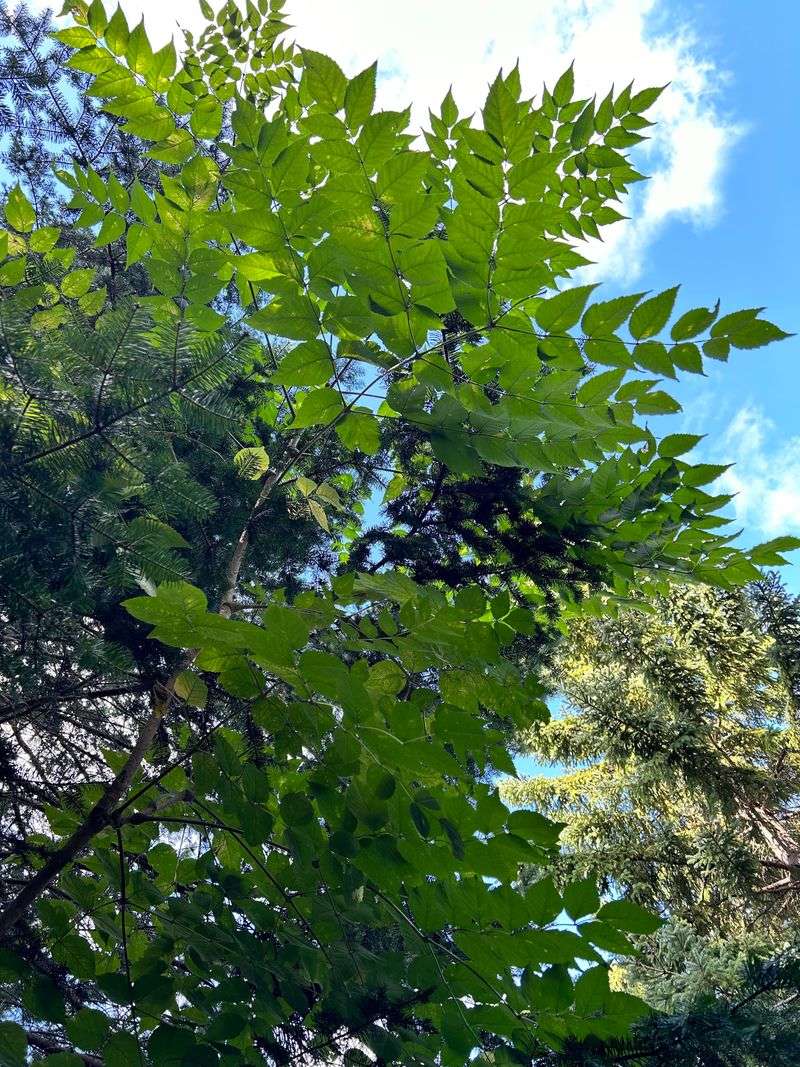
Most people have never heard of this plant, and that is exactly why it has been spreading quietly for decades. Aralia elata is now catching the attention of Connecticut regulators.
Originally from Japan and Korea, this small tree was introduced as an ornamental plant. Its large, feathery leaves and clusters of white flowers made it attractive for landscape use.
The trouble started when birds discovered the berries. They ate them and deposited seeds across forests, roadsides, and open fields far from any garden.
Japanese angelica tree forms dense thickets that push out native shrubs and wildflowers. Once it takes hold, the understory of a woodland can change dramatically in just a few years.
This species has expanded across parts of New England in recent decades. Neighboring states report similar spread patterns along woodland edges.
The stems are covered in sharp spines, which makes manual removal genuinely unpleasant. Thick gloves and long sleeves are non-negotiable when dealing with this plant.
This species reflects how serious the spread has become across the state. Nurseries are being asked to phase out sales ahead of the full ban.
Disposal matters as much as removal. Cut stems should be bagged rather than left on-site, since even discarded pieces can root under moist conditions.
Homeowners who spot it should act early. Young seedlings can be pulled by hand, but mature plants require cutting and targeted treatment to prevent resprouting.
Native alternatives like elderberry or serviceberry fill a similar role in the landscape. Both offer wildlife value, seasonal interest, and none of the invasive headaches that come with Aralia elata.
4. Quackgrass (Elymus Repens)
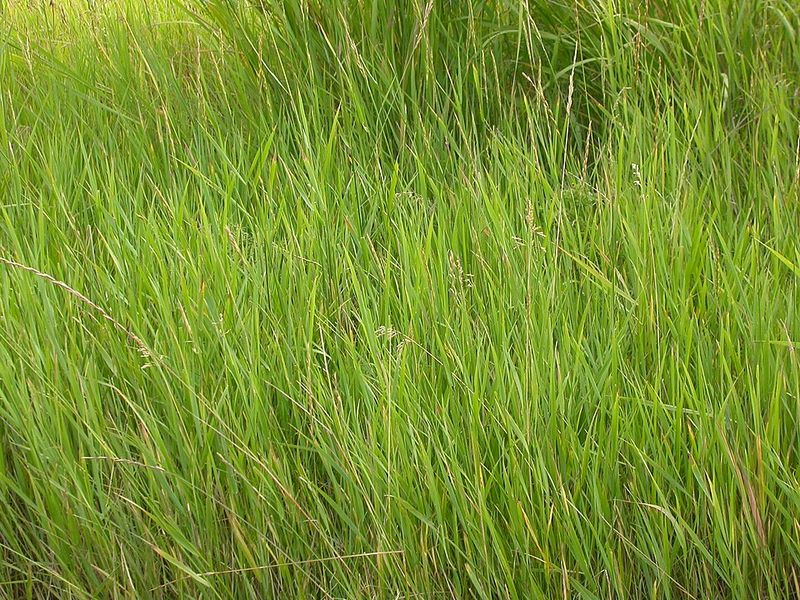
Quackgrass sounds almost friendly, but ask any gardener who has fought it and you will get a very different story. This grass is relentless, and Connecticut is finally taking action.
Elymus repens is a cool-season grass that arrived from Europe long ago. It blends in with lawns at first glance, which is part of what makes it so tricky.
The real danger lives underground. Quackgrass spreads through a network of white rhizomes that can stretch several feet in every direction from the parent plant.
Break one rhizome while weeding and each piece becomes a new plant. Tilling a quackgrass-infested bed can actually make the problem worse by spreading the fragments around.
Unlike showier invasives, quackgrass rarely appeared in nursery catalogs. It spread mainly through contaminated soil, hay, and farm equipment.
In natural areas, it outcompetes native grasses and wildflowers that local insects and birds depend on. Meadows and grassland habitats are especially at risk from heavy infestations.
Agricultural researchers have tracked its expansion for decades. Crop yields in affected fields can drop noticeably where infestations take hold.
The path toward restriction reflects how broadly it has spread across the state. Agricultural fields, roadsides, and natural lands all show signs of quackgrass pressure.
Managing it requires patience and a consistent approach. Smothering it with thick mulch or using targeted herbicide applications during active growth are two of the more effective strategies.
Replacing it with native bunch grasses like little bluestem or Pennsylvania sedge brings long-term ecological value. These plants support native bees and birds while holding their ground without spreading aggressively.
5. Porcelainberry (Ampelopsis Brevipedunculata)
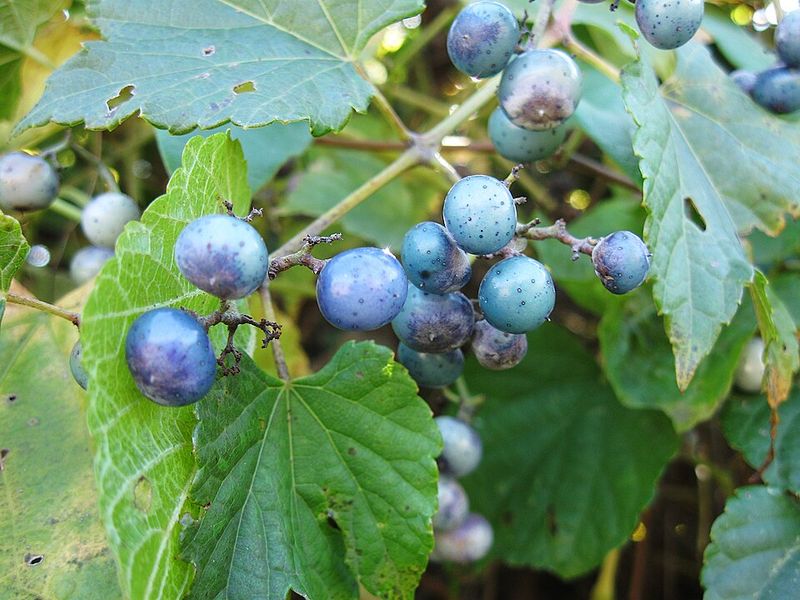
Few invasive plants look as stunning as porcelainberry in late summer. The clusters of blue, purple, and green berries are genuinely gorgeous, which is exactly the problem.
That visual appeal convinced generations of gardeners to plant it. Now those same gardeners are watching it crawl across fences, climb trees, and carpet roadsides with alarming speed.
Native to Asia, Ampelopsis brevipedunculata was first introduced as an ornamental vine in the late 1800s. Birds adore the berries and have scattered seeds across much of the eastern United States.
In natural areas, porcelainberry behaves like a green blanket. It covers shrubs and small trees, blocking light and eventually toppling them under its weight.
Porcelainberry is often confused with native wild grape at a glance. Checking the pith inside a cut stem reveals the difference, since porcelainberry’s is white rather than brown.
Forest edges and stream banks are particularly vulnerable. These are the same habitat zones that native wildlife depends on for food, shelter, and nesting.
The reasoning behind restricting this vine is straightforward. Its spread has accelerated and its impact on native ecosystems is well documented.
Berries shift through several colors before ripening fully. That gradual change from pale lilac to deep blue is part of what makes birds so eager to spread them.
Removing it takes effort, especially on older plants with established root systems. Cutting stems and treating the stump immediately gives the best chance of stopping regrowth.
Native alternatives like Virginia creeper offer similar vine coverage with real ecological benefits. Local birds use it for food, and its fall color rivals anything an invasive could offer.
6. Mugwort (Artemisia Vulgaris)
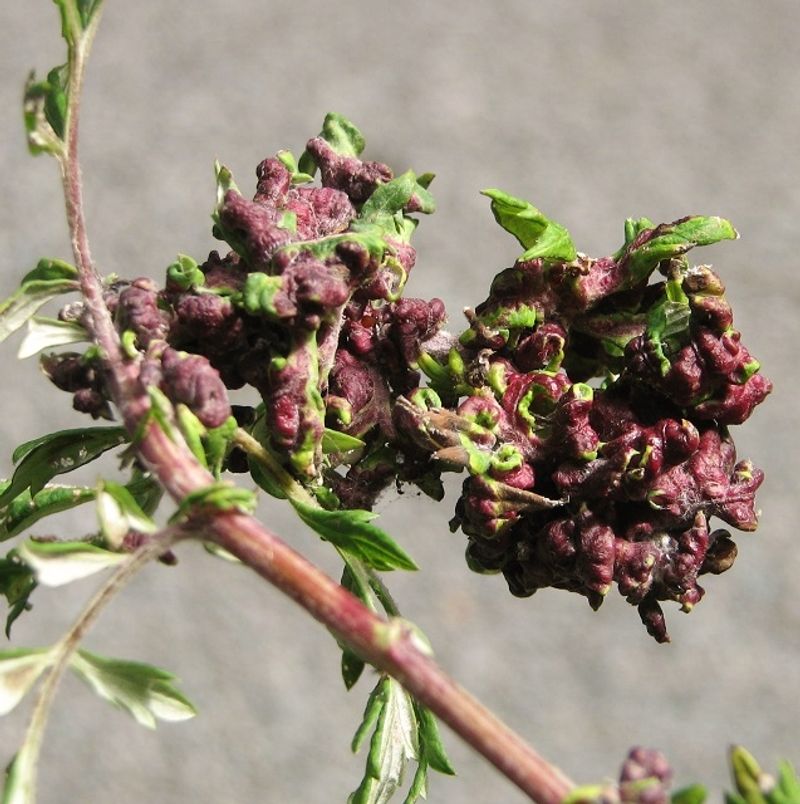
Mugwort has a long history in herbal medicine, but its reputation as a healer does not excuse what it does to native landscapes. This plant is a serious problem, and Connecticut agrees.
Artemisia vulgaris came from Europe and Asia and has been in North America for centuries. It established itself along roadsides, fields, and disturbed areas with very little help from anyone.
The plant spreads both by seed and through underground rhizomes, making it doubly difficult to manage. A small patch can become a dense colony within a single growing season.
Mugwort releases chemicals into the soil that suppress the growth of neighboring plants. This chemical advantage gives it an unfair edge over native species trying to compete in the same space.
Rhizomes can extend more than a foot below the surface in loose soil. Digging shallow only encourages fragments to resprout elsewhere.
The silver-green leaves and distinctive herbal scent make it easy to identify. Crushing a leaf releases a sharp, almost sage-like smell that is hard to forget once you know it.
Its pollen is also a significant allergen for many people. Late summer mugwort blooms coincide with peak allergy season, adding a public health angle to the ecological concern.
Roadside construction sites and disturbed lots see the heaviest colonization. Once soil is turned over, mugwort seeds already present often germinate within weeks.
Hand-pulling works on small plants but must be repeated consistently. Any root left behind will resprout, so persistence is the only real strategy for homeowners managing it manually.
Replacing mugwort with native ground covers like wild ginger or native asters helps stabilize the soil and support local pollinators. The ecological trade-off is well worth the effort of removal.
7. Callery Pear (Pyrus Calleryana)
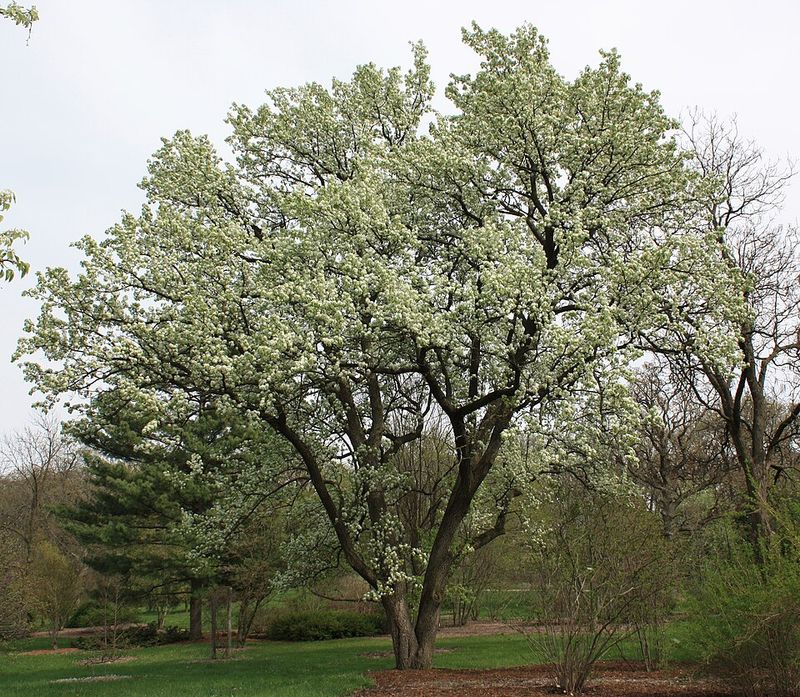
Every spring, those white-blooming trees lining suburban streets look like something out of a fairy tale. Many of them are Callery pears, and their story has a much darker second chapter.
Pyrus calleryana was introduced from China in the early 1900s as a disease-resistant rootstock. By the mid-20th century, nurseries were selling it by the millions as a landscape tree.
The Bradford pear, one of the most popular varieties, was marketed as sterile and safe. That claim turned out to be wrong in the worst possible way.
Different Callery pear varieties can cross-pollinate with each other, producing fertile seeds. Birds spread those seeds into forests and fields, where wild seedlings now grow with thorns sharp enough to puncture tires.
Wild seedlings differ sharply from the sterile trees originally sold. They grow dense thorns and form thickets that outcompete native saplings.
In natural areas, Callery pear forms thickets that crowd out native shrubs and wildflowers. Spring-blooming native plants like dogwood and serviceberry lose ground to these aggressive newcomers every year.
Several other states have already banned this tree outright. The science supporting the restriction is clear and consistent. Some communities have begun offering incentives to replace Callery pears with native trees.
Cutting down existing trees is a start, but stumps must be treated promptly. Callery pear resprouts aggressively from cut stumps and roots, so follow-up is essential.
Native flowering trees like eastern redbud or native crabapple offer stunning spring color without the ecological cost. Making that swap is one of the most impactful choices a homeowner can make for local wildlife.