The Shrubs Texas Fire Officials Want Removed Near Every Home
Texas fire officials have been delivering the same message for years, and it’s still not reaching enough homeowners.
There are specific shrubs growing in yards across the state, often positioned right up against homes and structures, that fire professionals identify as serious and preventable risks.
Not theoretical risks. Real ones that have contributed to faster spreading, more destructive home fires in conditions Texas increasingly faces.
Most homeowners who have these shrubs never consider them a problem. They were planted for privacy or aesthetics, they’ve been there for years without incident, and nothing about their appearance suggests danger.
That’s exactly what makes the issue so persistent. Certain shrubs ignite readily, burn intensely, and when positioned close to a structure, give fire a direct and fast moving pathway to reach the home itself.
The distance between the shrub and the wall matters enormously, and in many Texas yards, that distance is close to zero.
1. Ashe Juniper
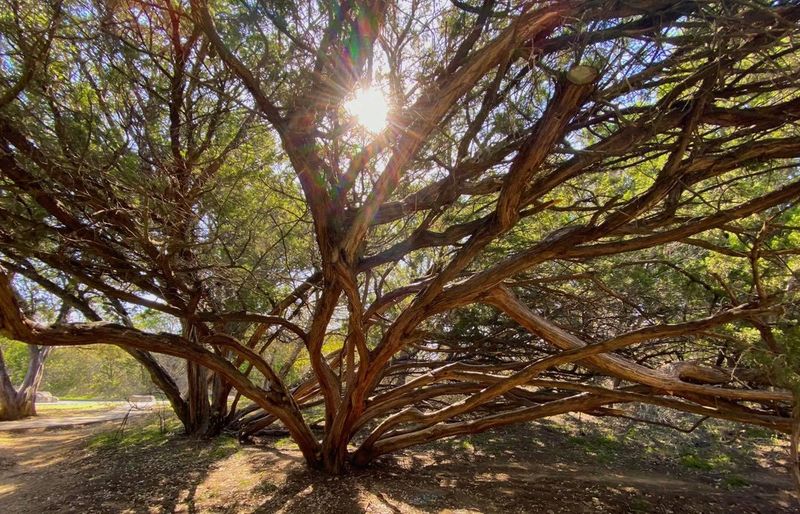
Walk through almost any Texas Hill Country neighborhood and you will spot Ashe Juniper growing just about everywhere. It is tough, drought-resistant, and evergreen, which makes it popular with homeowners.
But those same qualities are exactly what make it dangerous when a wildfire moves through.
Ashe Juniper is packed with oils that make it burn fast and hot. The plant holds onto dry branches inside its canopy, and that dry material builds up over time.
When fire reaches an Ashe Juniper close to a house, it can act almost like a torch, sending flames directly toward walls and eaves.
Fire officials in Texas consistently point to this shrub as one of the biggest concerns in the wildland-urban interface. Studies from the Texas A&M Forest Service confirm that Ashe Juniper ignites easily and burns with intense heat.
That is not a combination you want within arm’s reach of your siding or porch. The recommended action is simple. Remove any Ashe Juniper growing within five feet of your home’s structure.
If you love the look of the plant, relocate it further out in your yard where it has plenty of open space around it.
Keeping that five-foot noncombustible zone clear around your foundation is one of the most effective steps any Texas homeowner can take.
Replace removed junipers close to the house with low-growing, fire-resistant ground covers or decorative gravel instead.
Small changes in plant placement can have a big impact on how a home survives when fire is nearby.
2. Yaupon Holly
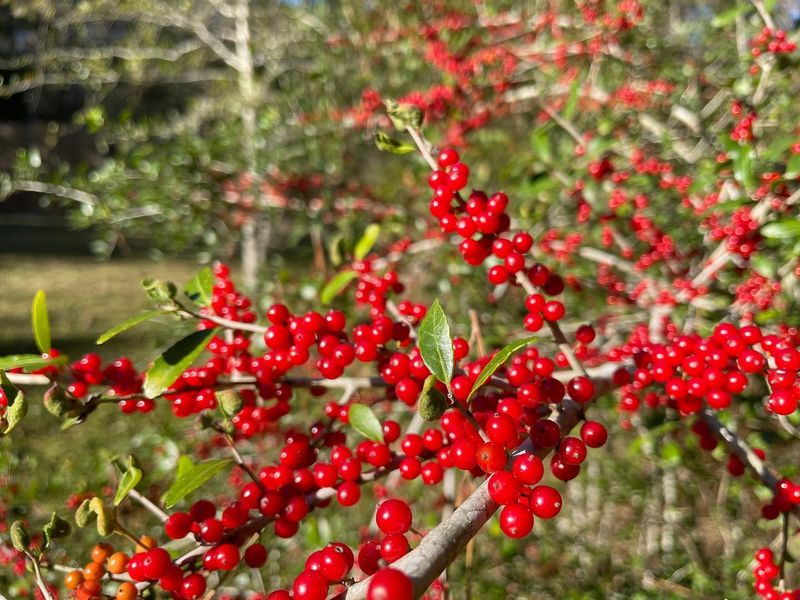
Yaupon Holly is one of the most widely planted shrubs in Texas landscaping. It is native, low-maintenance, and produces cheerful red berries that birds love.
Many homeowners plant it right against their foundations because it looks tidy and stays green all year long.
Here is the problem. Yaupon Holly develops thick, woody stems as it matures, and that woody growth becomes combustible material sitting right next to your home.
The dense canopy also traps dry leaves and debris inside, adding even more fuel to the mix. When shrubs grow flush against walls or decks, fire has a direct path from the plant to the structure.
Your Texas Garden Changes Every Week. Your Plan Should Too.
Gardening in Texas changes quickly throughout the season. Every Friday you’ll receive a simple weekly plan showing exactly what to plant, prune, fertilize, harvest, and protect so you never miss the right timing.
Texas fire officials want homeowners to think about separation. Even if you keep your Yaupon Holly well-trimmed, the woody base of a mature plant is still a fire concern when it is pressed against a wall or under a window.
Combustible vegetation that touches or nearly touches a structure removes the buffer zone that fire safety depends on.
A simple fix is to pull established Yaupon Holly shrubs away from walls and decks by at least five feet. You can also prune lower branches to raise the canopy off the ground, which helps reduce the ladder effect that lets ground fires climb into taller plants.
Yaupon Holly can absolutely stay in your yard. Just give it room to breathe and keep it separated from your home’s exterior.
That small adjustment is enough to significantly reduce the risk it poses during a fire event in your neighborhood.
3. Wax Myrtle
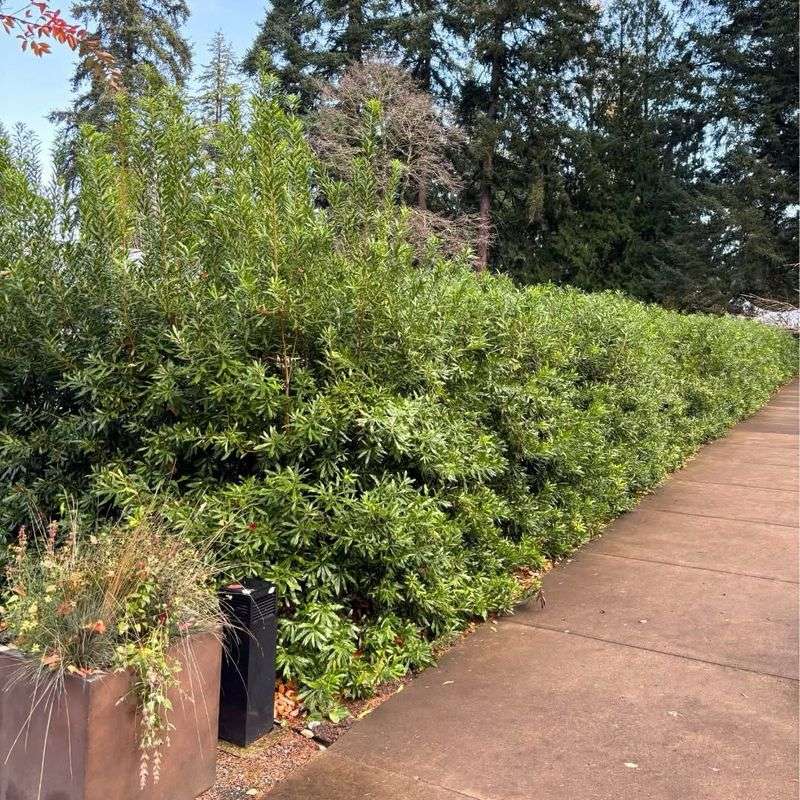
Wax Myrtle grows fast, stays green year-round, and can shoot up to 15 feet tall if left unchecked. Homeowners love it as a privacy screen or windbreak, and it handles Texas heat without much fuss.
But its speed and density are exactly what make it a fire concern near homes. Because Wax Myrtle grows so quickly, it can close in on a structure before a homeowner even notices. Dense evergreen foliage creates what fire officials call a continuous fuel load.
When vegetation forms an unbroken green wall from the ground up to roof level right beside a house, fire has a clear and easy route to the structure itself.
The foliage also contains aromatic compounds and waxy coatings that can help it burn more readily than you might expect from a plant that looks so lush. During dry Texas summers, even plants that appear healthy can ignite faster than people realize.
Fire officials recommend giving mature Wax Myrtle plants plenty of clearance from any structure.
A minimum of five feet of open, noncombustible space between the plant and your home is the general guideline. For taller specimens, even more separation is wise.
If Wax Myrtle is already established near your home, consider trimming it back significantly or relocating it to a spot further from the foundation. You can still enjoy its fast growth and privacy benefits without putting your home at unnecessary risk.
Strategic placement is the key to keeping this popular Texas shrub both beautiful and safe in your landscape plan.
4. Texas Sage
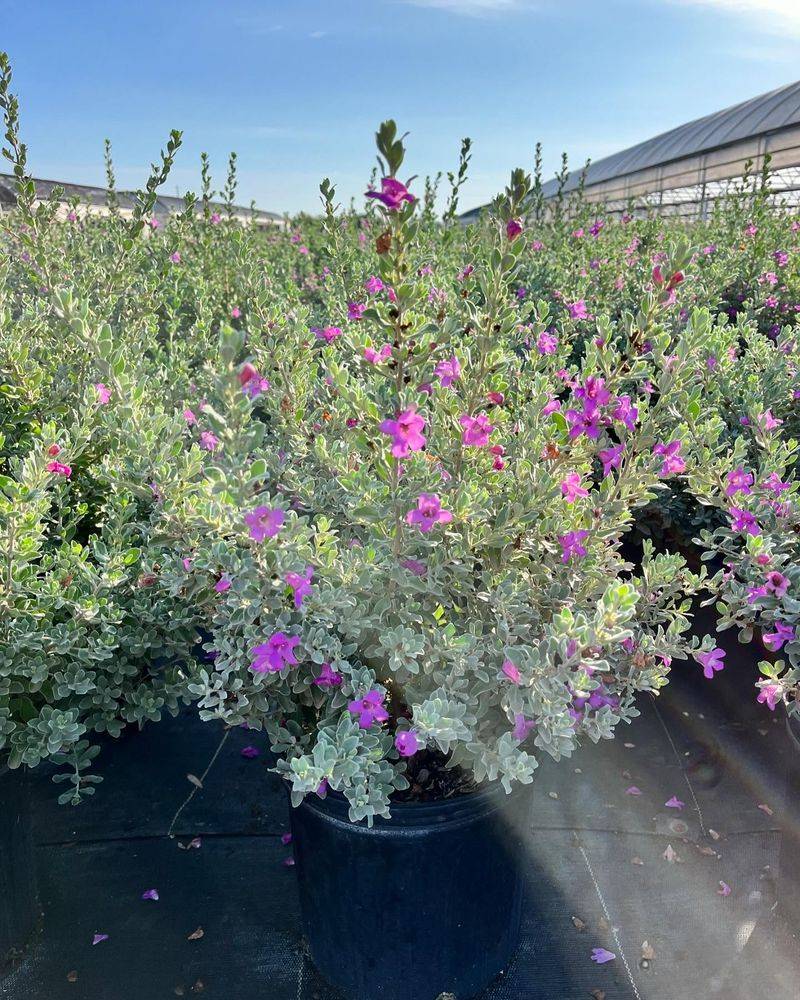
There is a common misconception floating around Texas neighborhoods that drought-tolerant plants are automatically fire-resistant.
Texas Sage is a perfect example of why that thinking can get homeowners into trouble. Yes, it survives on very little water. But that does not make it fireproof.
Texas Sage, sometimes called Cenizo or Purple Sage, is a beautiful native shrub with silvery foliage and vibrant purple blooms. It thrives in hot, dry conditions, which is exactly why it is so popular across the state.
However, during extended dry spells, the plant’s stems and leaves dry out significantly, increasing the amount of combustible material it holds.
Fire officials note that any woody shrub, regardless of its drought tolerance, becomes more flammable during dry weather.
Texas Sage develops a dense, twiggy structure over time, and that accumulated woody growth can carry a fire right to your home’s siding or porch if the plant is too close.
The right approach is to plant Texas Sage beyond your home’s immediate noncombustible zone.
Keep at least five feet of clear, non-vegetated space between the shrub and your foundation, walls, or deck. Decorative gravel, concrete, or stone pavers work well in that buffer zone.
Texas Sage is a wonderful addition to a fire-smart yard when it is placed thoughtfully. Further out in your landscape, away from structures, it provides color, habitat for pollinators, and low-maintenance beauty without posing a risk.
Placement, not removal, is often the answer with this beloved Texas native shrub.
5. Rosemary
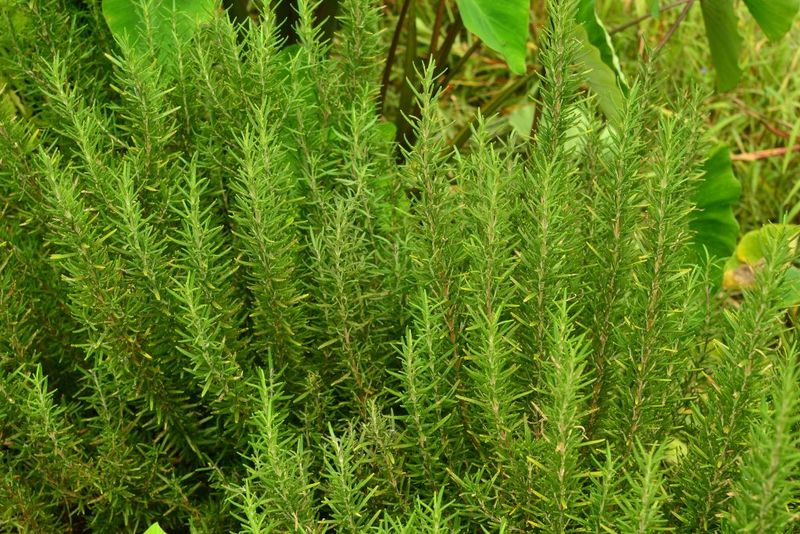
Most people think of rosemary as a kitchen herb, something small growing in a pot on the windowsill. But in Texas, rosemary can grow into a large, sprawling woody shrub that reaches several feet tall and wide.
That is when it stops being just a culinary plant and starts being a fire hazard. Rosemary contains highly aromatic oils in its foliage. Those oils are what give the herb its distinctive smell and flavor, but they also increase its flammability.
Plants with high oil content tend to ignite more easily and burn more intensely than plants without them. That is a well-documented concern among fire safety researchers who study landscape plants.
A small rosemary plant trimmed and kept tidy near a walkway is a very different situation from a large, unpruned woody rosemary shrub growing directly beside a wall or under a window.
The bigger and woodier the plant, the more fuel it holds. In a hot, dry Texas summer, that is a combination worth taking seriously.
Fire officials recommend avoiding large, woody rosemary shrubs directly beside walls, fences, or decks. If you have rosemary growing close to your home, consider cutting it back hard or replacing it with a less oil-rich alternative in that spot.
You do not have to say goodbye to rosemary entirely. Plant it further from the house in a spot where it has room to spread without creating a fire pathway to your structure.
Smaller, regularly trimmed rosemary plants are also much less of a concern than overgrown, neglected ones with years of woody growth at the base.
6. Oleander
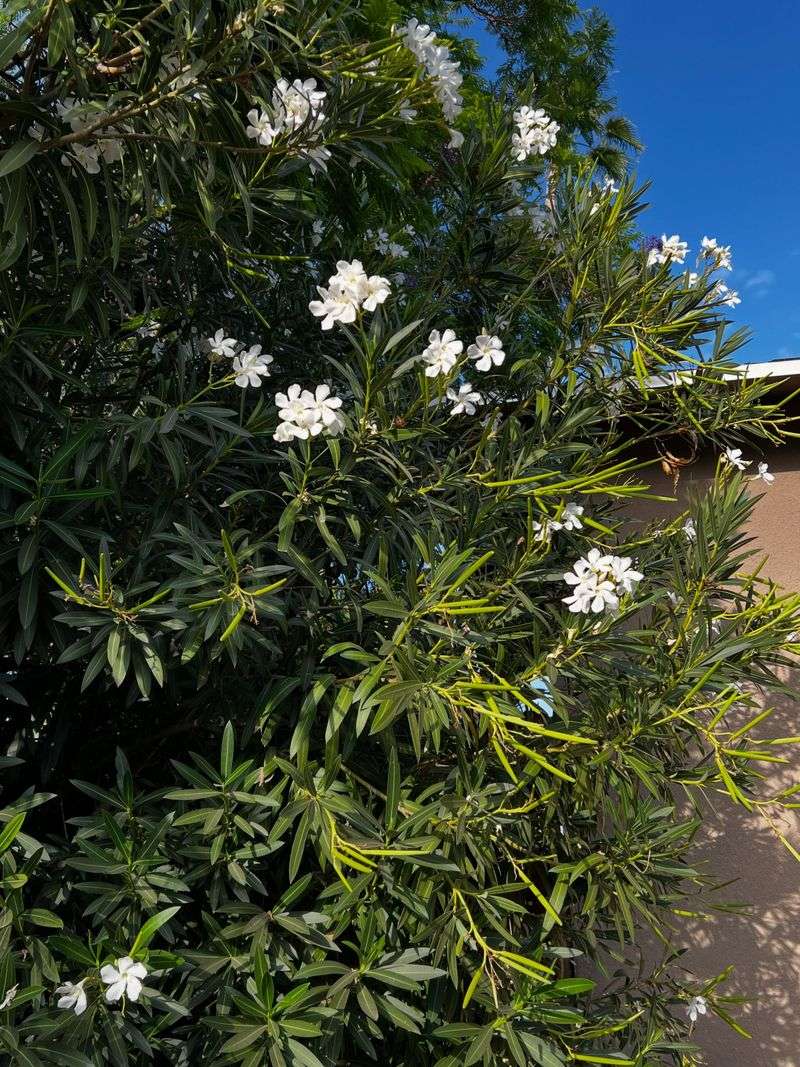
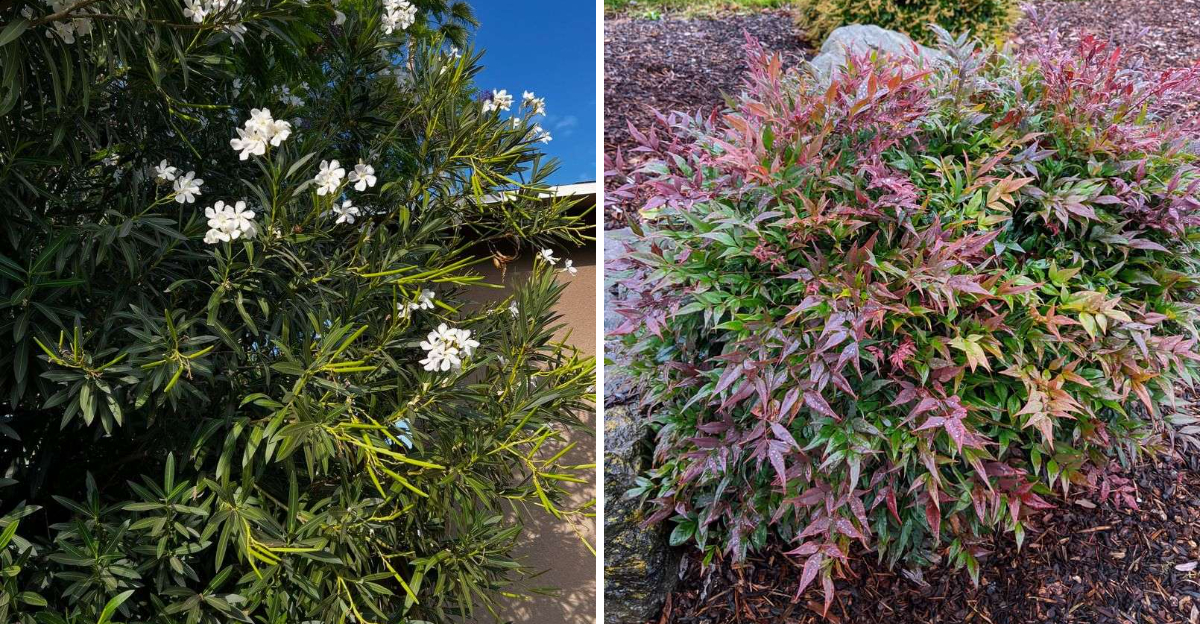
Oleander is one of those plants that seems to be everywhere in Texas landscapes. Drive through almost any neighborhood from Houston to San Antonio and you will see its bright blooms lining fences and driveways.
It is tough, showy, and tolerates heat and drought with ease. But fire officials have some serious concerns about where it gets planted.
Young Oleander plants look relatively harmless. Over time, though, they develop substantial woody trunks and branches.
A mature Oleander is not a soft, herbaceous plant anymore. It is a woody shrub with dense branching that holds a significant amount of dry, combustible material, especially during periods of drought stress.
When an Oleander is planted within the first five feet around a home, that woody mass sits right against the structure. If fire reaches it, the plant can sustain and direct flames toward walls, windows, and roof overhangs.
Fire officials point out that many homeowners underestimate how much a mature ornamental shrub can contribute to a fire’s intensity near a home.
Keeping Oleander outside the immediate five-foot zone around your home is the recommended approach. That buffer space should be free of woody vegetation and filled instead with noncombustible materials like gravel, stone, or concrete.
Oleander can still be a stunning part of your yard. Plant it further out in your landscape where its size and spread are assets rather than concerns.
Regular pruning to remove dry wood and reduce density also helps lower its overall fire risk, no matter where in the yard it is growing.
7. Nandina
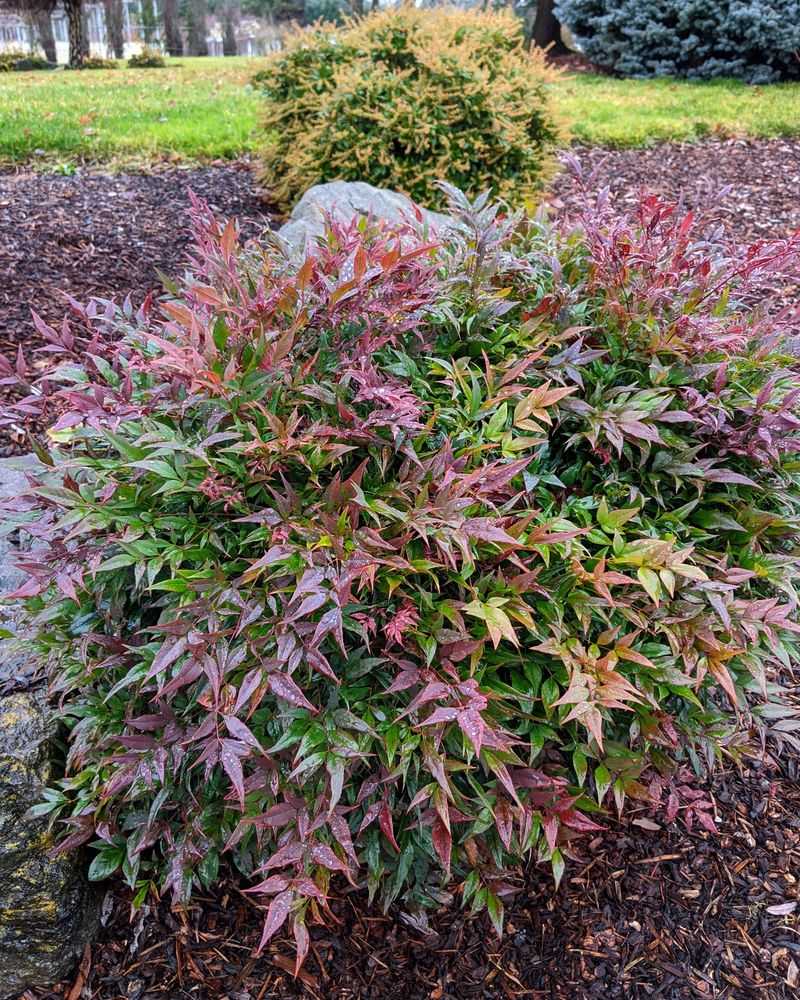
Nandina, also called Heavenly Bamboo, is one of the most common foundation plantings in Texas. Homeowners love it because it is compact, low-maintenance, and offers colorful foliage that shifts from green to red depending on the season.
It is also extremely tough, surviving in spots where other plants struggle. That toughness, however, comes with a trade-off when it comes to fire safety.
Nandina grows in tight clusters of upright stems. Over time, those stems multiply and the plant fills in densely.
Dry stems and accumulated dry foliage get trapped inside the clump, and that material does not break down quickly.
What you end up with is a shrub that holds a surprising amount of dry, flammable debris right at ground level, pressed directly against your home’s foundation or siding.
Fire safety experts explain that plants growing directly against a structure remove the critical buffer zone between combustible vegetation and the home itself.
Nandina’s dense stem clusters make it especially effective at trapping debris, which adds to the fuel load over time.
During a wildfire event, that accumulated material can ignite quickly and carry flames to the structure.
Fire officials recommend removing or relocating Nandina plants that are growing directly against the house. Clean out any dry stems and dry debris from existing clumps regularly if the plants are nearby.
Moving Nandina a safe distance from your foundation is a straightforward fix. Replace it in the five-foot zone with gravel, stone, or low-growing succulents that hold far less combustible material.
Nandina can thrive further out in your yard where its colorful foliage is an asset without posing a risk to your home.