Georgia Homeowners Should Check Crape Myrtles For This Problem In September
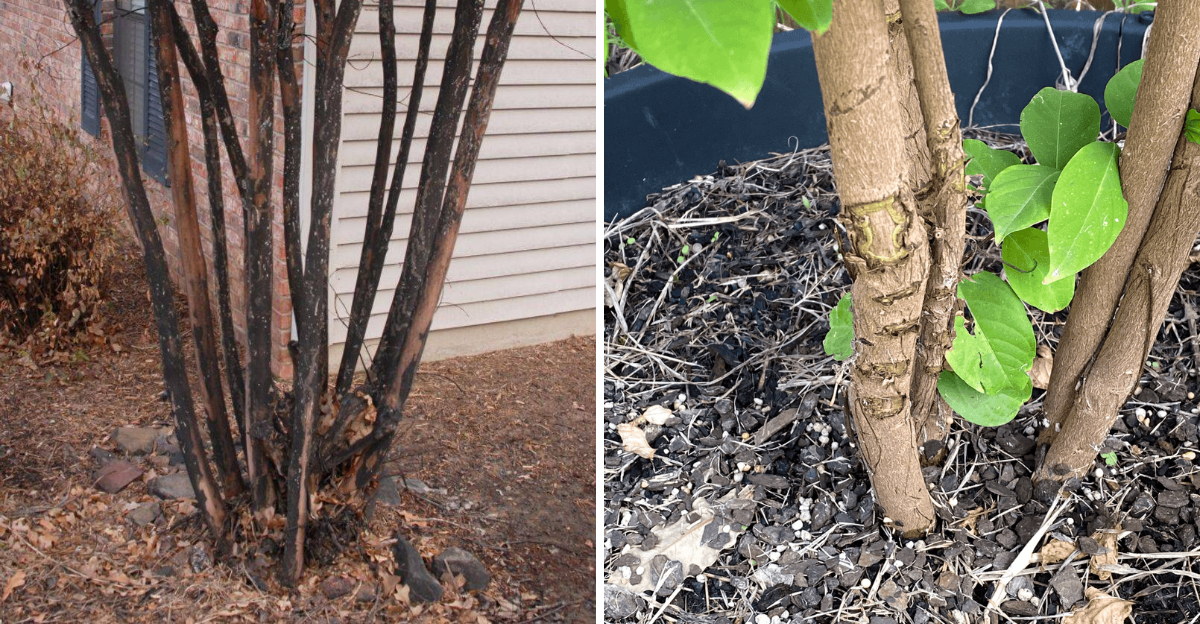
Take a closer look at your crape myrtles before September slips by. One small problem can become harder to manage when it goes unnoticed.
Georgia’s warm weather can keep certain crape myrtle troubles active into early fall. That makes this month a smart time to inspect your trees carefully.
Check the branches, leaves, and trunk instead of admiring the blooms from a distance. Subtle changes can tell you something needs attention.
You do not need to panic or start cutting everything back. Knowing what you are looking for makes the next move easier.
Some signs are easy to mistake for normal seasonal changes at first. Catching the difference early can save you trouble later.
Give your crape myrtle a few minutes today, and learn which warning signs deserve your attention.
1. Dark Trunks Can Be The First Sign Something Is Wrong
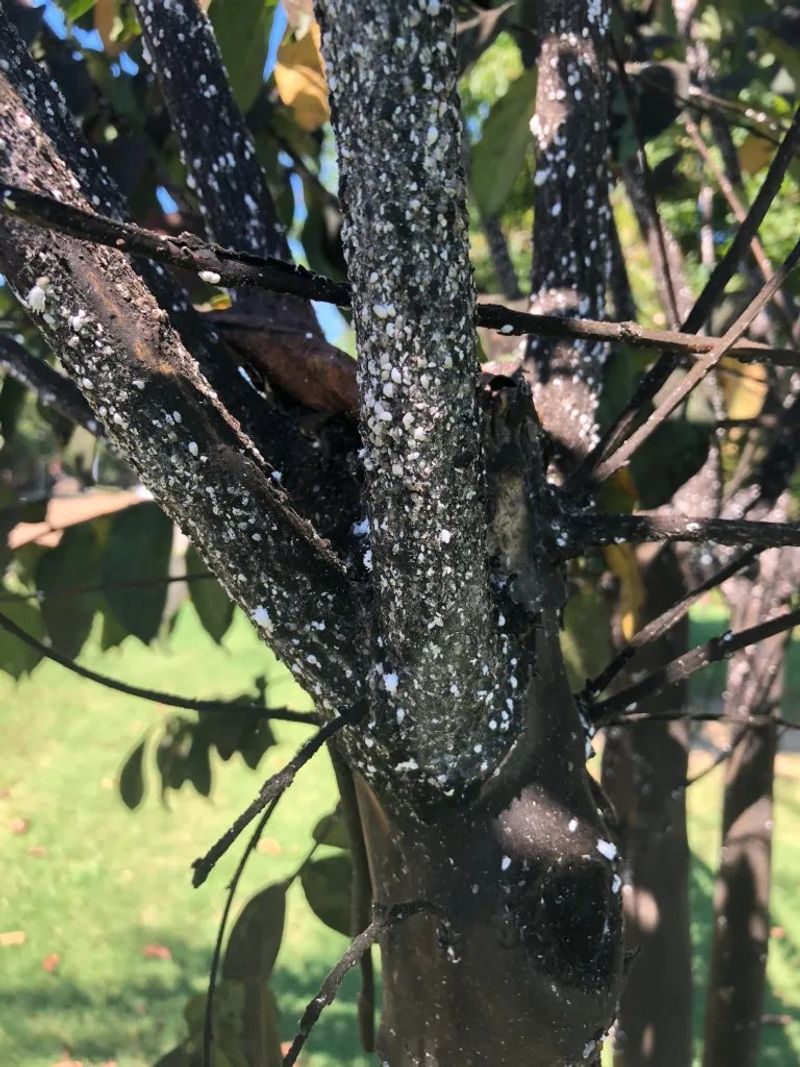
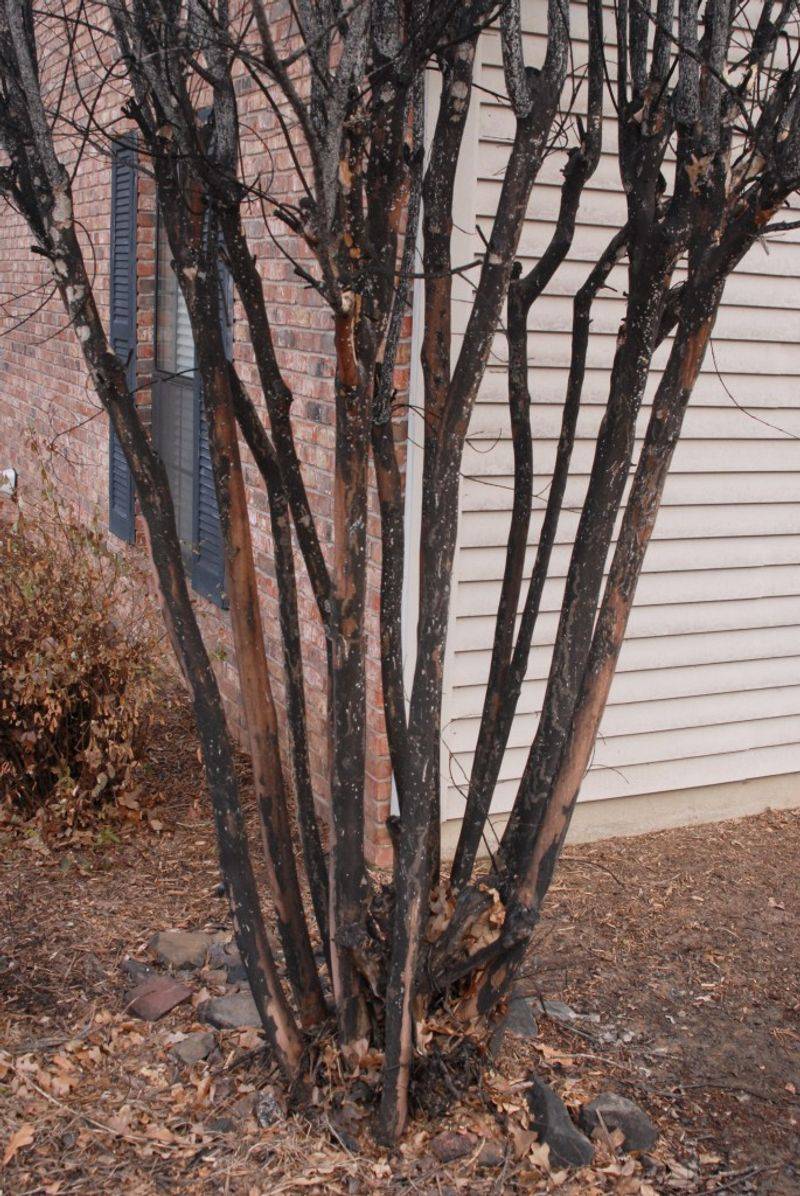
Your crape myrtle trunk turning dark is not just a cosmetic issue. That blackish color is a red flag worth investigating before the season ends.
A lot of homeowners assume it is just dirt or natural aging, but it can point to a pest problem that has been building for months.
Crape myrtle bark scale is a relatively new pest in the Southeast. It arrived in Texas years ago and has steadily moved east.
Georgia yards have seen increasing pressure from this insect over the past several years.
When the scale feeds on the tree, it releases a sticky liquid called honeydew. That honeydew coats the bark and branches, and then a black fungus called sooty mold grows right on top of it.
The result is that unmistakable dark, grimy look on the trunk.
Healthy crape myrtles have smooth, peeling bark with warm tan and gray tones. If yours looks charcoal-colored or stained, that is worth a closer inspection.
Walk up to the tree and look at the lower trunk first, since that is where infestations tend to show up earliest.
Catching this early gives you more options. Waiting until spring means the pest has had a full winter to settle in.
A quick check in September takes only a few minutes and can save you a lot of trouble later.
2. Look Closely For Small White Bumps Along The Bark
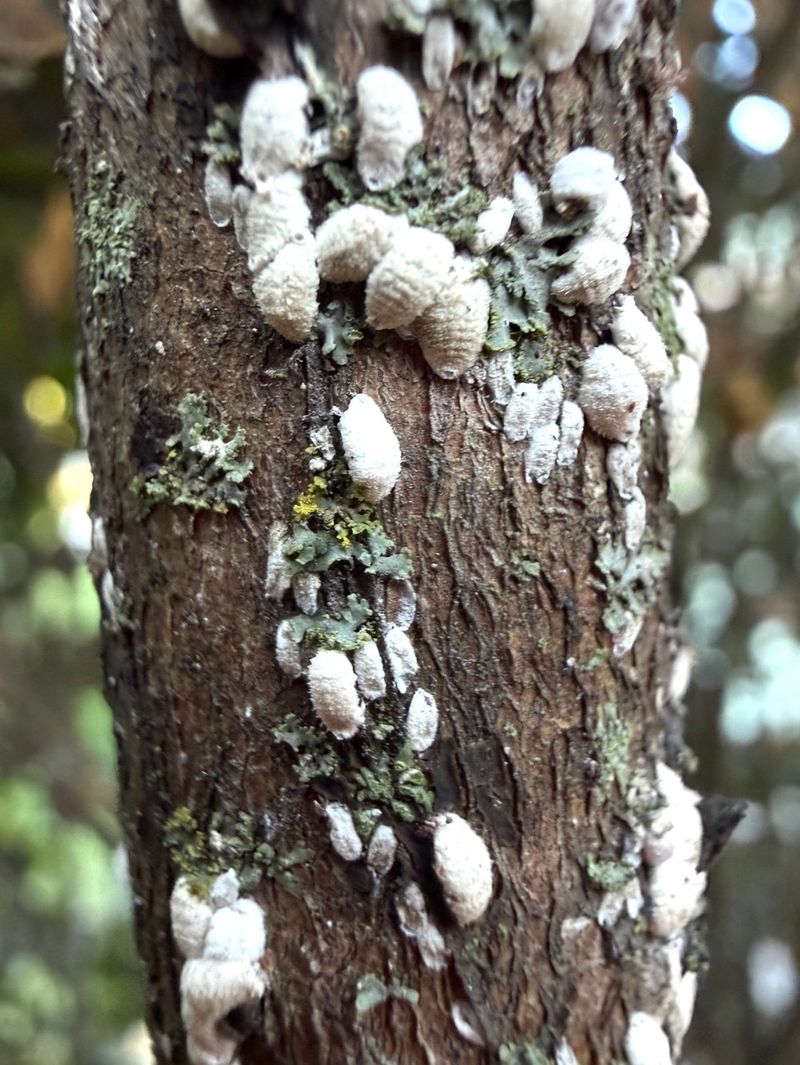
Tiny white bumps on your crape myrtle bark are one of the clearest signs of an infestation. At first glance, they might look like dried paint flecks or bird droppings.
Up close, though, they have a slightly fuzzy or waxy texture that sets them apart from natural bark features.
Crape myrtle bark scale insects are small, flat, and oval-shaped. Females produce a white or gray waxy coating that protects them while they feed.
Clusters of these insects can cover entire sections of trunk and branch, especially in spots where bark folds or crevices offer shelter.
Run your finger along the bark gently. If the bumps smear pink or leave a pinkish residue, that is a strong indicator of scale insects.
That pinkish color comes from the bodies of the insects underneath the waxy coating.
Your Georgia Garden Changes Every Week. Your Plan Should Too.
Gardening in Georgia changes quickly throughout the season. Every Friday you’ll receive a simple weekly plan showing exactly what to plant, prune, fertilize, harvest, and protect so you never miss the right timing.
Check branch crotches and the undersides of larger limbs too. Scale insects tend to hide in protected spots where predators have a harder time reaching them.
Younger branches are often affected alongside the main trunk.
Binoculars can help if your crape myrtle is tall. You do not need to climb the tree to do a solid inspection.
Scanning the lower four to five feet of trunk is usually enough to spot whether scale is present and how widespread it might be.
3. Crape Myrtle Bark Scale Is Behind These Warning Signs
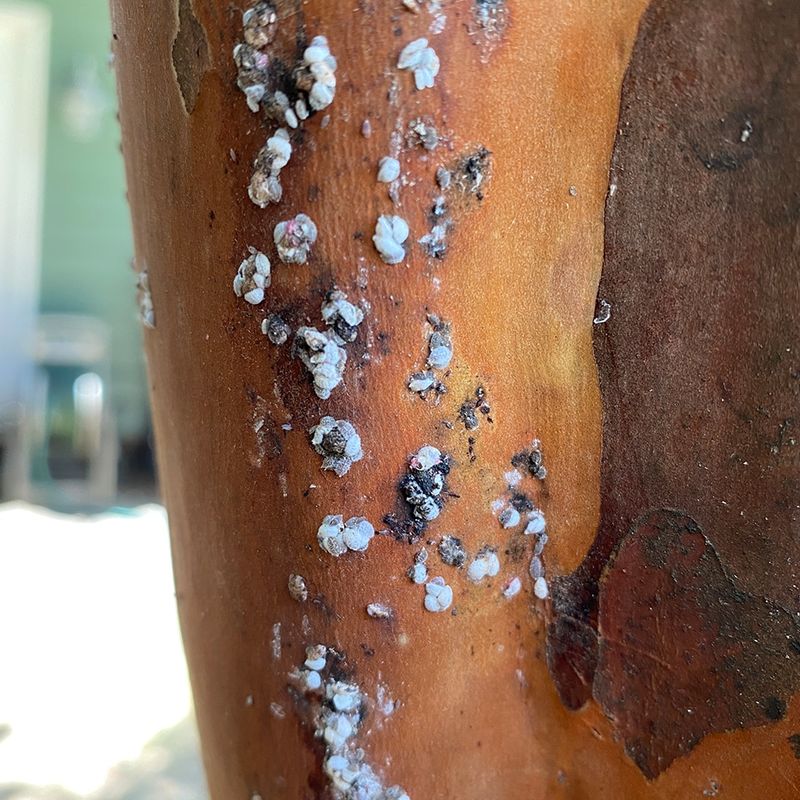
Not every pest that shows up in a Southern yard is familiar, and crape myrtle bark scale caught a lot of homeowners off guard when it first appeared in the region.
It is a soft scale insect, meaning it stays attached to the plant and feeds by piercing the bark to suck out sap. It does not move around much, which is why it often goes unnoticed for a long time.
Scale insects reproduce in cycles. Females lay eggs under their waxy coating, and those eggs hatch into tiny crawlers that spread to other parts of the tree or drift to nearby plants.
Wind and birds can carry crawlers to neighboring crape myrtles as well.
Identifying the pest correctly matters before taking any action. Bark scale looks different from other common scale types because of that distinctive white, felt-like coating.
Some people confuse it with lichen or fungal growth at first. Lichen tends to be flat and crusty, while scale clusters feel slightly raised and wipe away differently.
A magnifying glass helps a lot during inspection. Look for oval shapes and that telltale pinkish stain when pressed.
Once you know what you are dealing with, treating the right way becomes much easier.
Misidentifying the pest can lead to using the wrong product at the wrong time, which wastes money and does not help the tree recover.
4. Sticky Honeydew Leads To That Black Sooty Coating
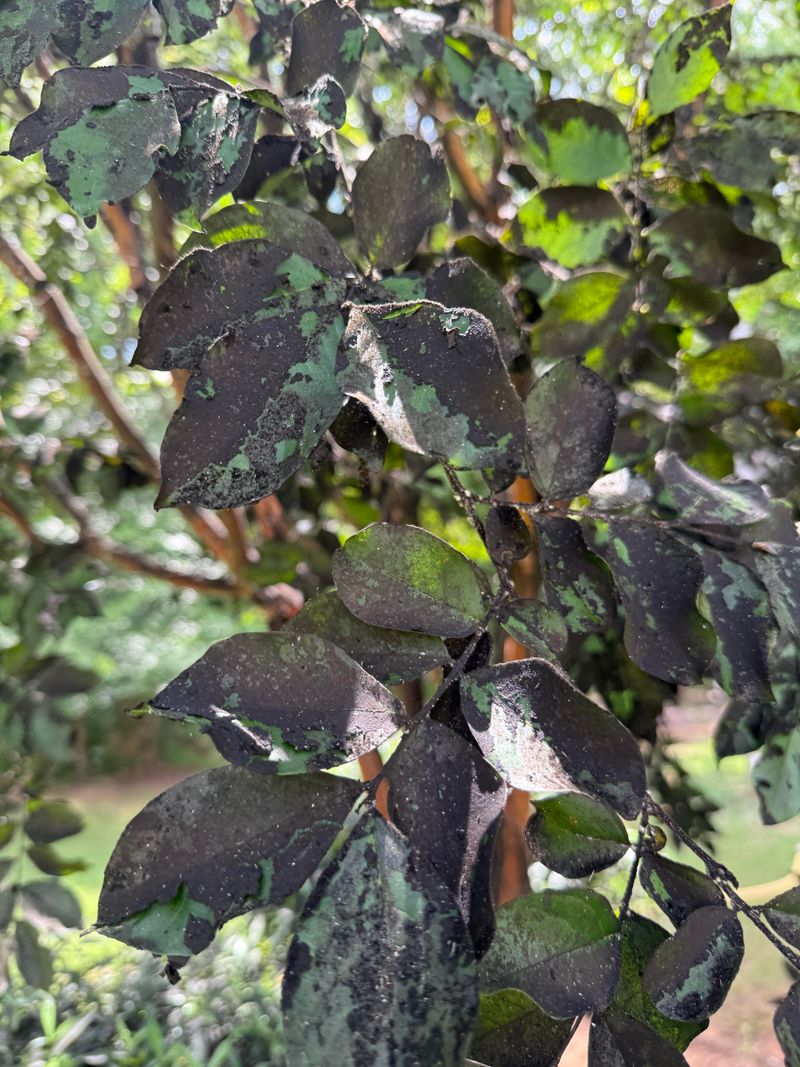
Sticky leaves and branches are not something most gardeners expect to find on a crape myrtle. If you brush against the trunk and your hand feels tacky, that stickiness is honeydew.
Scale insects produce it constantly as they feed, and it drips down onto whatever is below.
Honeydew itself does not harm the tree directly. The real problem comes after.
Sooty mold, a black fungus, colonizes the honeydew and spreads across bark, leaves, and even nearby surfaces like driveways or patio furniture.
Heavy sooty mold can block sunlight from reaching leaves, which reduces the tree’s ability to photosynthesize properly.
Cars parked under heavily infested crape myrtles sometimes end up coated in sticky residue and black mold. Ants are another clue.
Ants are attracted to honeydew and will farm scale insects to protect their food source. Spotting trails of ants running up the trunk is a useful early warning sign.
Sooty mold does wash off bark over time once the source of honeydew is removed. Leaves affected by sooty mold may drop, but new growth the following season is typically cleaner if the scale population has been reduced.
Addressing the scale insects is the key step. Scrubbing the mold off without treating the insects underneath will not solve the underlying problem.
Focus on the pest first, and the mold issue tends to improve on its own.
5. Heavy Infestations Can Weaken Growth And Reduce Flowering
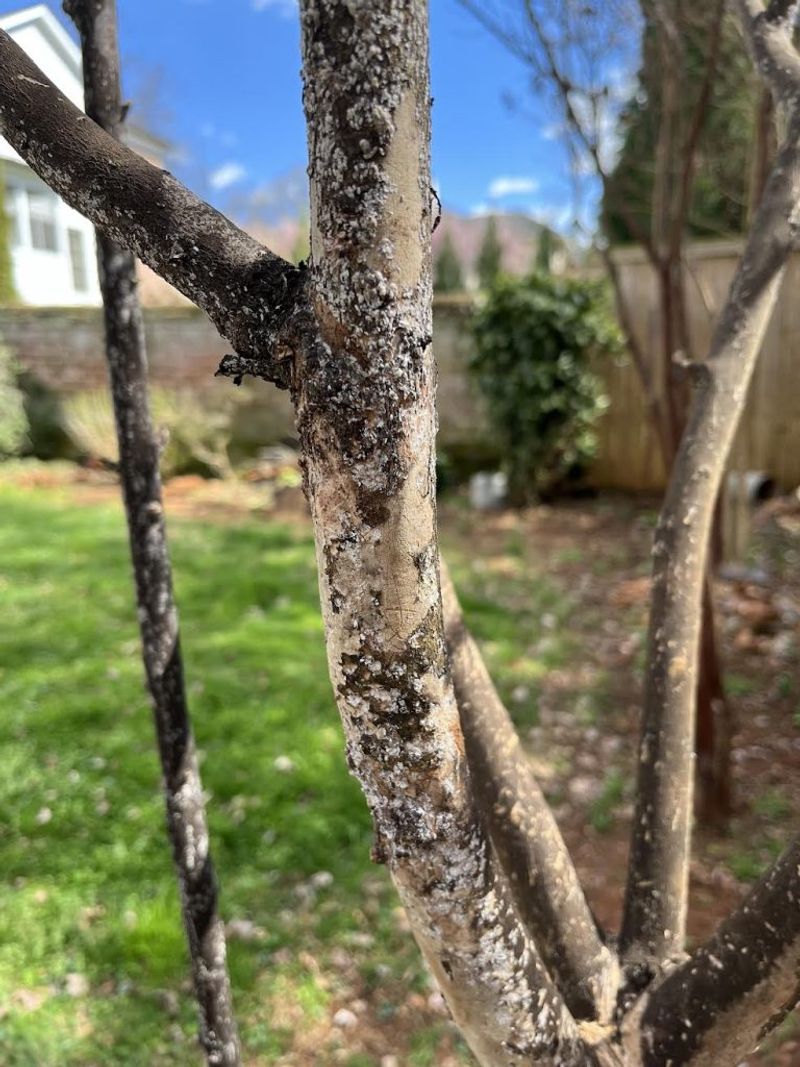
A crape myrtle with a heavy bark scale infestation often looks off before you can even spot the insects. Flowering may be sparse or delayed compared to previous seasons.
New growth can appear weak or stunted, with smaller leaves than usual.
Scale insects feed by drawing sap from the tree. Over time, a large population can put real stress on the plant, especially during hot, dry stretches.
Trees that are already stressed from drought or poor soil conditions tend to show the effects of infestation more noticeably.
Younger trees and recently transplanted crape myrtles are more vulnerable than established ones. A mature tree with a strong root system can often tolerate a moderate infestation without dramatic visible decline.
Younger trees may show more obvious symptoms sooner.
Reduced flowering is frustrating for homeowners who planted crape myrtles specifically for their summer blooms.
If your tree has been producing fewer flower clusters over the past couple of seasons, bark scale is worth ruling out as a contributing factor.
Other issues like improper pruning or nutrient deficiencies can also affect flowering, so a full assessment helps.
Keeping the tree well-watered during dry spells and avoiding heavy fertilization with high-nitrogen products can help it stay more resilient. Strong, healthy trees tend to handle pest pressure better than those already struggling with environmental stress.
6. September Is A Good Time To Check Trunks And Branches
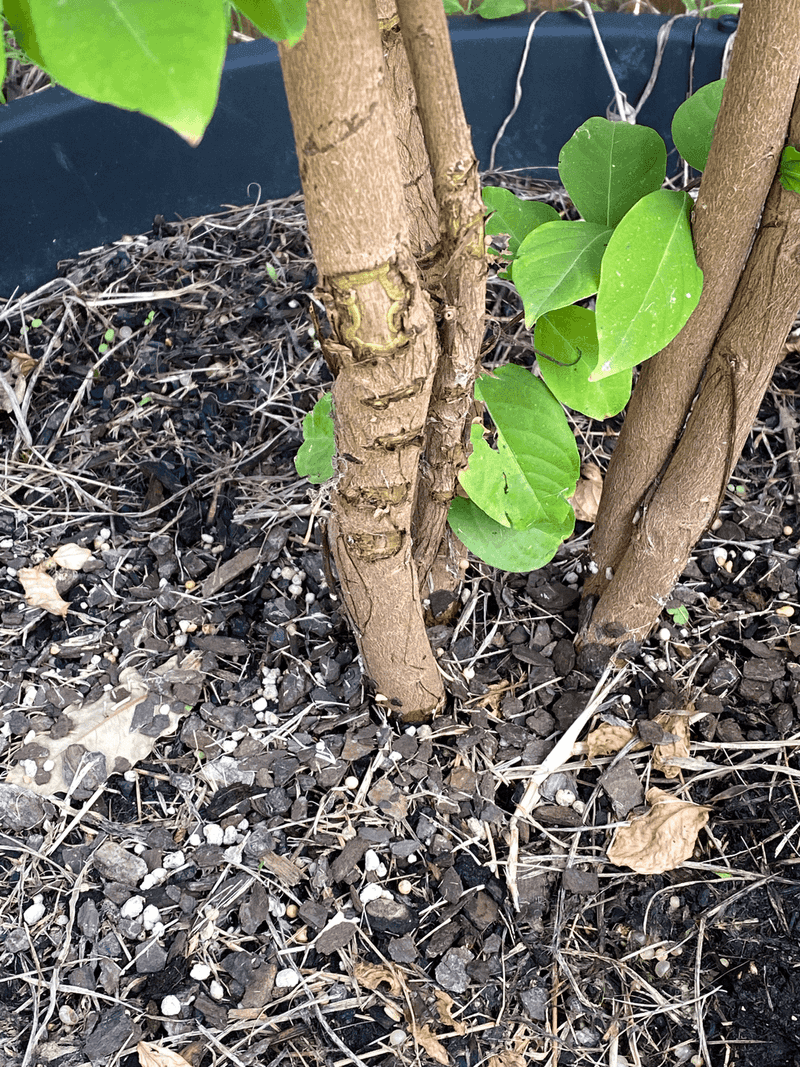
September hits a useful window for checking crape myrtles. The summer bloom has wound down, leaves are still on the tree, and you have a clear view of the bark before fall sets in.
Pest populations that built up over summer are also at a visible size by this point.
Walk around each crape myrtle in your yard and give the trunk a real look. Check from the base up to the first major branch splits.
Pay attention to any color changes, sticky patches, or white residue clinging to the bark surface.
Across the Southeast, September also marks a time when some systemic treatments can still be applied before trees go dormant. Timing matters with certain insecticides, so catching the problem now leaves options open.
Waiting until winter or early spring limits what treatments are practical to use.
Bring a flashlight if the bark is textured or deeply furrowed. Scale insects tuck into tight spaces, and good lighting helps you see what is actually there versus what just looks suspicious.
A small hand lens or magnifying glass makes the inspection even more reliable.
Check any crape myrtles growing near each other too. Scale crawlers can spread between trees in close proximity.
If one tree shows signs of infestation, the others nearby deserve a careful look as well. Early detection on all of them helps you stay ahead of a wider problem.
7. Early Action Can Keep The Infestation From Getting Worse
Spotting bark scale early puts you in a much better position. Small populations are easier to manage than large, established ones that have spread across the entire tree.
Acting in September rather than waiting until next spring gives the tree a head start on recovery.
Horticultural oil sprays are one option for managing bark scale on the trunk and branches. These oils work by coating the insects and disrupting their ability to breathe.
Coverage matters, so thorough application to all affected bark surfaces is important for this approach to be effective.
Systemic insecticides applied as a soil drench are another route that some homeowners and landscapers use. These products are taken up by the roots and move through the tree’s vascular system.
Timing and soil moisture conditions affect how well uptake occurs, so following label directions carefully is essential.
Consulting a licensed arborist or your local cooperative extension office is a solid move if you are unsure which option fits your situation.
Professionals familiar with conditions in your area can give advice that accounts for your specific tree size, infestation level, and time of year.
Avoid skipping the inspection step just because the tree still looks mostly fine. Bark scale can be present in moderate numbers without causing obvious symptoms yet.
Catching it at that stage, before it escalates, is genuinely the most practical approach for protecting your crape myrtles long-term.