Never Ignore These Yellow Striped Caterpillars In Your Ohio Boxwoods
Bright green invaders are stripping boxwood hedges bare from the inside out, and you might not notice until Ohio’s mildest fall turns your favorite hedge into kindling. Their camouflage blends into leaves you already trust, so you rarely catch movement until it’s too late.
Beneath the surface, you’ll find damage spreading long before any outward sign reaches your eyes. Ohio yards prized for crisp, tidy hedges are losing their shape while you’re not looking.
Every bite these caterpillars take chips away at wood you can’t easily replace. Nothing about this threat announces itself, yet it moves faster than you’d expect after feeding begins.
Spotting it early is the only thing standing between you and a hedge you’ll need to rip out entirely. You need to know exactly what to look for before your boxwoods pay the price.
Meet The Box Tree Moth Caterpillar Behind The Damage
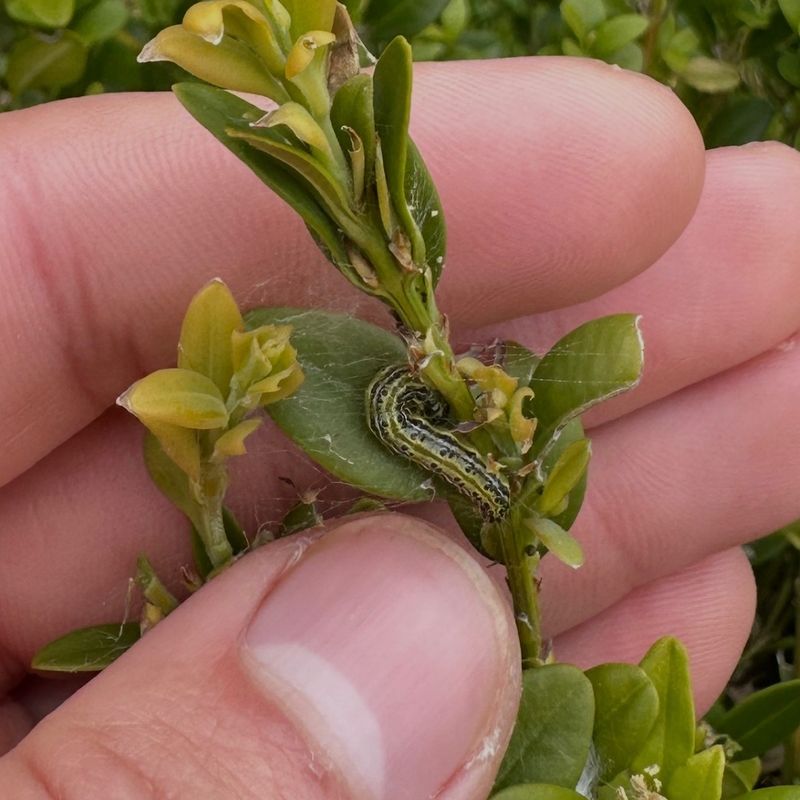
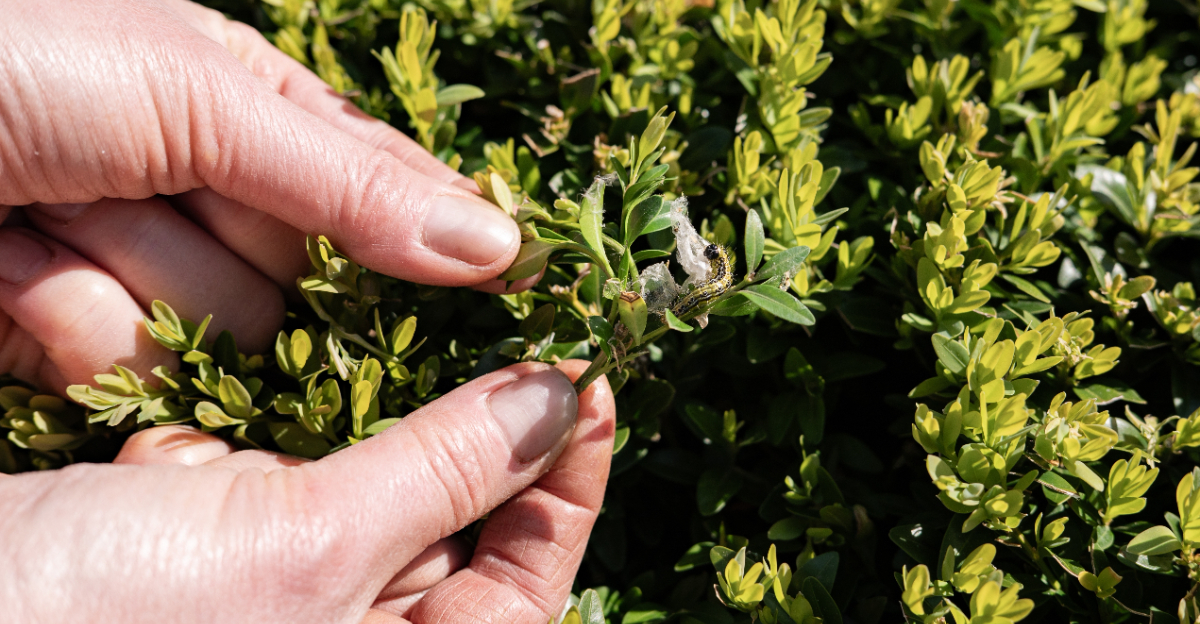
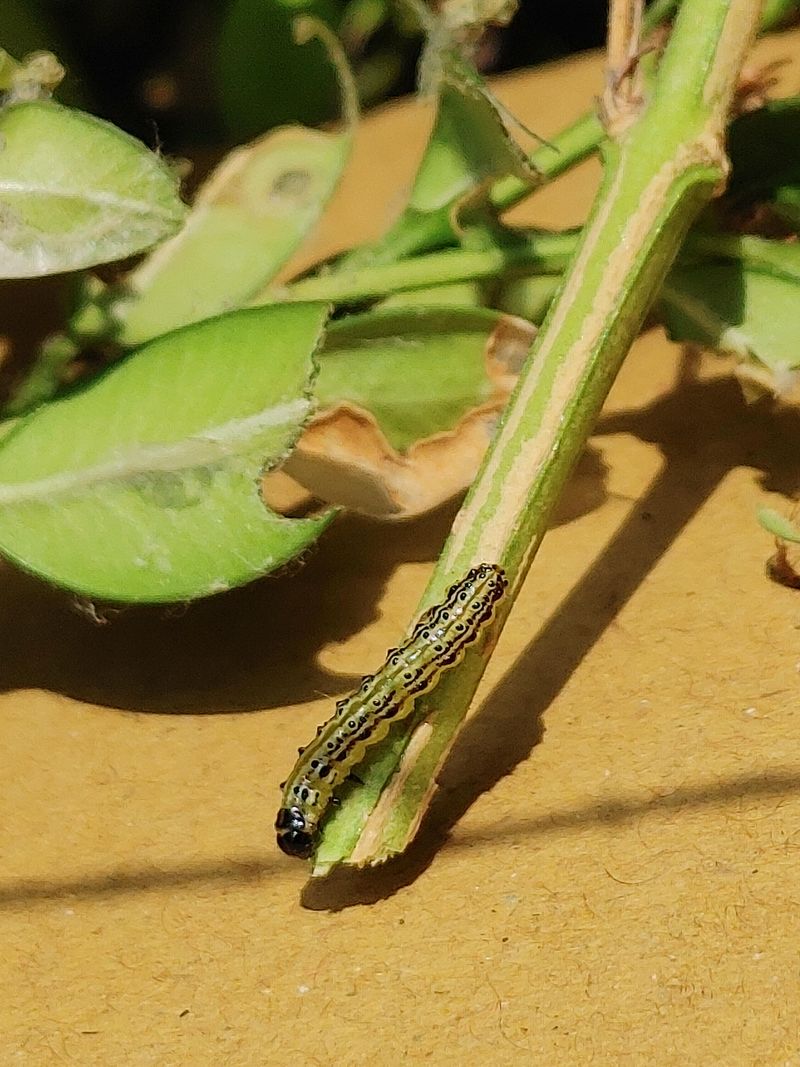
Picture a caterpillar dressed like a tiny hazard sign. The body is greenish yellow with thick black stripes and stiff white hairs.
A shiny, jet black head sits at the front. It stands out sharply against the yellow body.
Scientists know it as Cydalima perspectalis, the box tree moth. It traveled from Asia to Europe, then Canada, and Ohio has confirmed populations.
A fully grown larva stretches roughly an inch and a half. Young ones are smaller and paler, which is why people miss them.
Boxwood is basically the only plant this pest eats. It happens to be one of the most planted shrubs in Ohio yards.
Grab a flashlight and push the outer branches apart. The caterpillars hide near the center where sunlight barely reaches.
Check hedges in early May, again in July, and once more in September. Early detection is the difference between a trim and a replant.
The caterpillar molts several times before reaching full size, shedding its skin at each stage. Each new instar looks darker and more distinctly striped than the last.
Cool spring weather can delay the first generation by a couple of weeks. Warmer years push caterpillars to appear earlier and grow faster.
Leaves Chewed Down To Lace And Bare Twigs
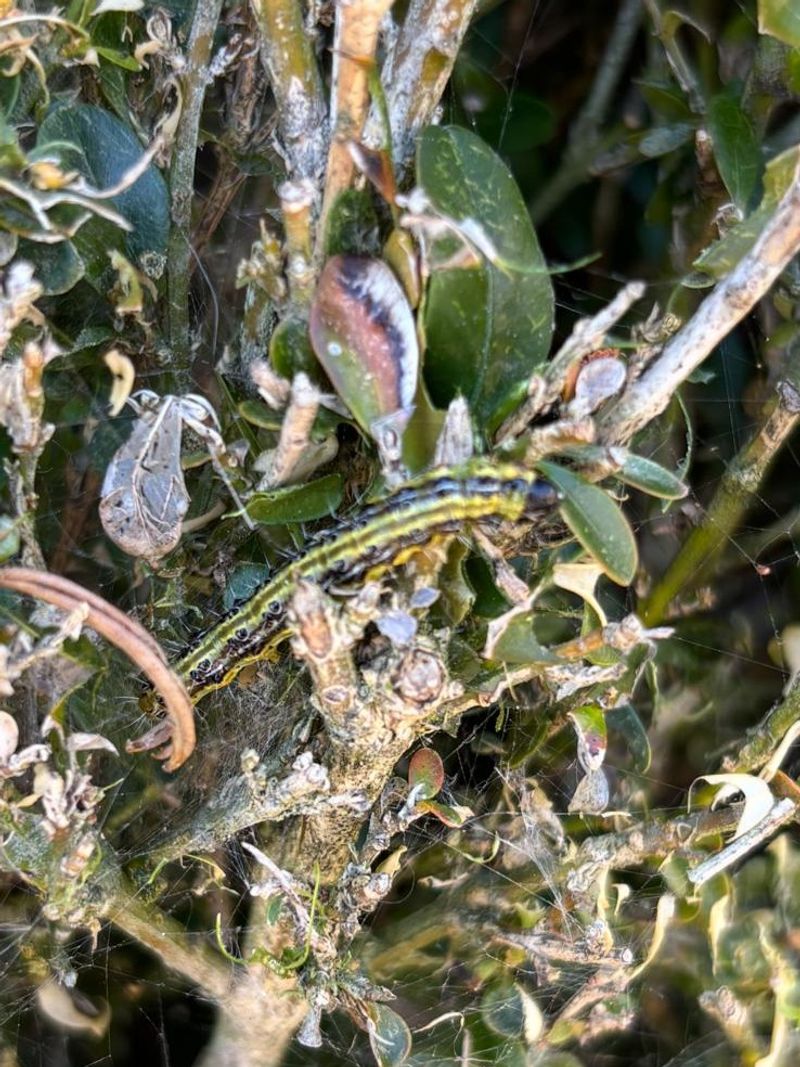
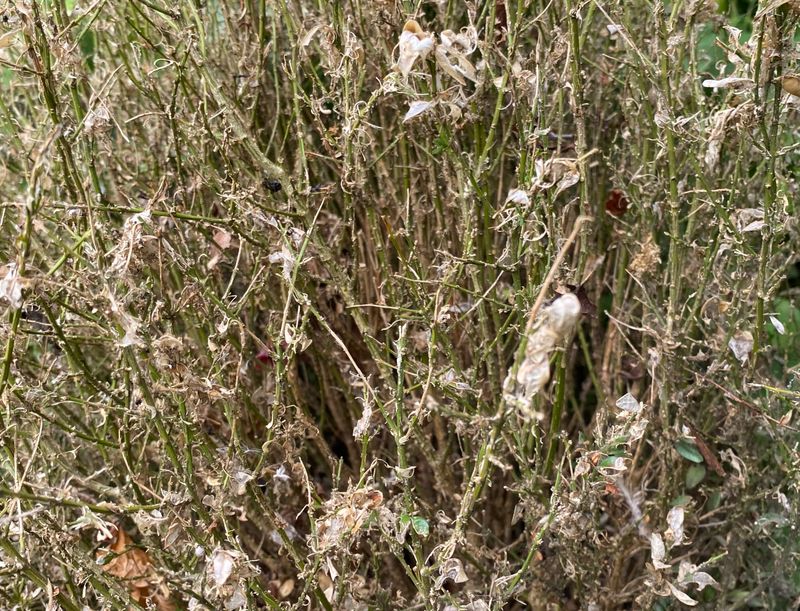
The first symptom is not the caterpillar at all. It is a patch of hedge that suddenly looks thin and see through.
Young caterpillars scrape away the leaf’s green underside and leave the top layer intact. That creates the pale, lacy look called skeletonized foliage.
Older larvae skip the delicate work and eat entire leaves down to the stem. When leaves run out, they strip bark from young twigs instead.
Any branch that loses its bark ring will not recover. A shrub in that shape rarely bounces back on its own.
Damage starts inside and works outward, so the hedge can look fine from the sidewalk. Shake a branch over white paper to check.
Ohio gardeners often blame blight or road salt for browning shrubs. Ragged bite marks instead of even discoloration point to this pest.
Your Ohio Garden Changes Every Week. Your Plan Should Too.
Gardening in Ohio changes quickly throughout the season. Every Friday you’ll receive a simple weekly plan showing exactly what to plant, prune, fertilize, harvest, and protect so you never miss the right timing.
Photograph the damage before touching anything. Clear pictures help extension agents confirm the pest and speed up treatment.
A hedge can lose most of its foliage within a few weeks once feeding accelerates. That speed often catches homeowners off guard entirely.
Repeated defoliation weakens the plant’s root system over time. A boxwood stressed this way struggles to survive a harsh winter.
Silky Webbing And Green Pellets Tucked Deep Inside
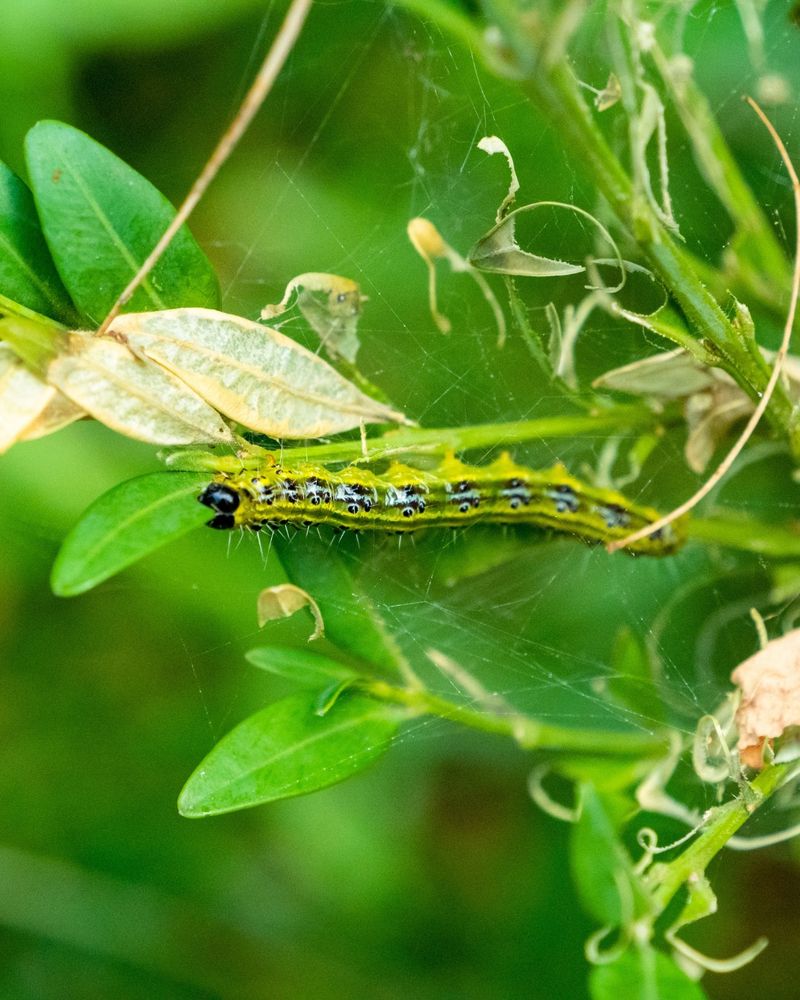
Box tree moth larvae spin loose, messy silk webbing inside the shrub. Trapped in that silk you’ll find chewed leaf bits and green droppings called frass.
Fresh frass is bright and moist, while old frass dries to dull brown. Bright frass means caterpillars are feeding somewhere within arm’s reach.
Eggs are laid in flat, overlapping clusters on leaf undersides. They look like pale yellow scales stuck together.
A quick glance from the porch tells you nothing. Kneel down and part the branches with both hands toward the base.
Winter is a decent time to hunt too, since larvae shelter in silk hibernacula. Prune those out before spring feeding resumes.
Wear gloves if you’re squeamish, though the caterpillars don’t sting or bite. Drop any you find into a jar of soapy water.
Bag pruned webbing and frass filled clippings instead of composting them. Sealed bags keep survivors from crawling back into the hedge.
Silk from this pest feels coarser and more tangled than typical spider webbing. It often traps bits of leaf debris within its strands.
Rain can wash lighter webbing away, making early infestations harder to spot. Checking hedges right after a dry stretch improves your odds of finding it.
Two Or Three Waves Of Hungry Larvae Each Summer
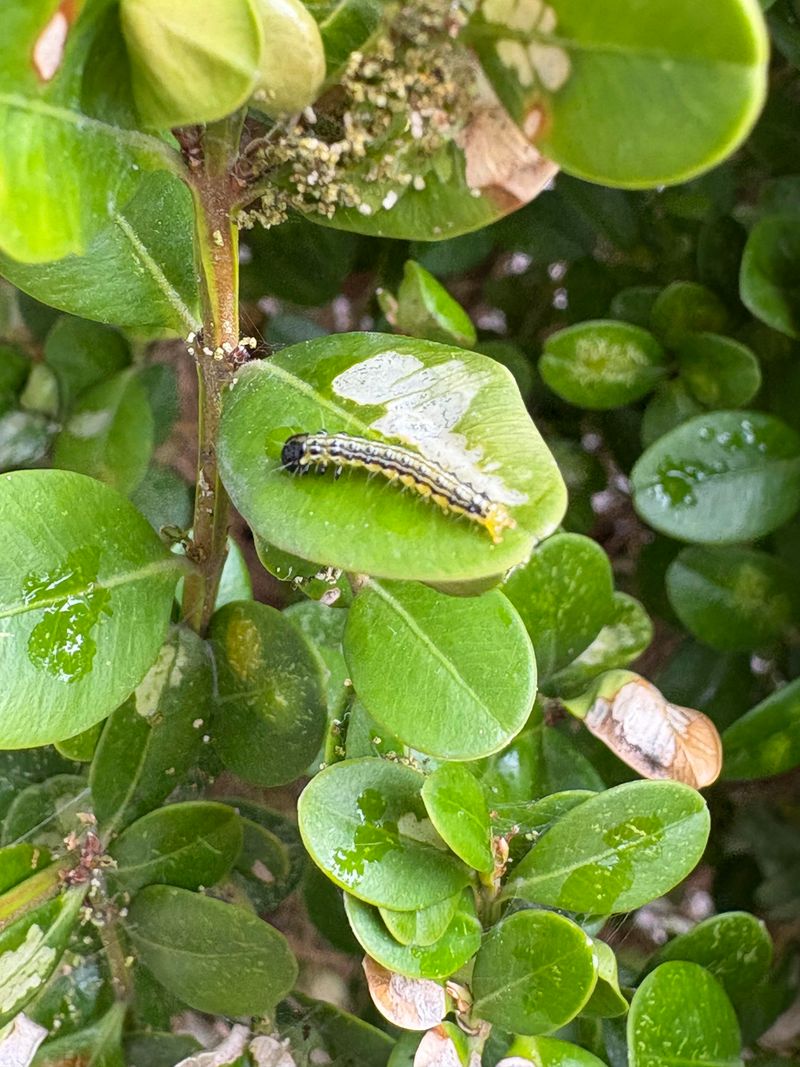
One round of treatment is almost never enough here. Box tree moths produce two, sometimes three generations between spring and fall.
Tiny larvae spend winter hidden in silk shelters between leaves. They wake as temperatures climb in April and feed through May.
Adult moths emerge, mate within a day or two, and females scatter eggs. Egg to adult takes roughly six weeks in warm weather.
That turnaround explains how a hedge healthy at Memorial Day looks burned by Labor Day. Late season generations do the heaviest visible damage.
Adult moths are strong fliers, capable of moving several miles alone. Wind and transported nursery stock speed the spread even further.
Mark your calendar rather than relying on memory. Inspect in mid spring, midsummer, and early fall, repeating treatment when larvae are small.
Moths fly freely between yards, so treating one hedge alone rarely holds. Check with neighbors and treat shrubs on the same timeline.
Pheromone traps can help confirm when adult moths are actively flying nearby. Extension offices sometimes lend these traps to homeowners for a season.
Southern Ohio counties tend to see the first generation emerge earlier than northern ones. Tracking local emergence timing sharpens your inspection schedule.
Sorting Real Trouble From Harmless Look Alikes
Not every bug on a boxwood deserves panic. Ohio shrubs host several older, less dramatic pests worth telling apart.
Boxwood leafminer larvae live inside the leaf, causing raised blisters and a puffy surface. Nothing gets chewed from the outside, and no webbing appears.
Boxwood psyllids cause cupped, spoon shaped new growth at branch tips. Spider mites leave a stippled, dusty bronze cast with tight fine webbing.
None of these pests produce inch long striped caterpillars with black heads. The yellowstriped armyworm has stripes too, but favors vegetables and weeds.
If the caterpillar is striped yellow and black with a glossy dark head in silk webbing on boxwood, it’s likely the box tree moth. That combination is the giveaway.
When unsure, seal one specimen in a jar. Contact your county OSU Extension office for a fast identification.
Boxwood leaf miner damage shows up as blister-like bumps rather than missing leaf tissue. That distinction alone rules out box tree moth immediately.
Send a photo to your extension office if any doubt remains. A quick second opinion beats guessing and treating the wrong pest.
Report Your Find To The Ohio Department Of Agriculture
Reporting sounds like a hassle, yet it genuinely helps. Box tree moth is a regulated invasive pest that officials track county by county.
Contact the Ohio Department of Agriculture Plant Pest Control division or your local OSU Extension office. Send clear photos and include your city and county.
Quarantine rules can restrict moving boxwood plants, cuttings, and yard waste out of affected areas. Following them keeps the pest from reaching a nursery or another town.
Inspect any new boxwood, pachysandra, or holly you bring home. Ask garden centers if their stock came from a certified source.
Do not haul infested clippings to a friend’s brush pile across the county. Bag and seal them with regular yard waste instead.
Boxwood is deeply tied to historic gardens and the nursery industry across Ohio. Early reports have already helped officials warn growers before large plantings were lost.
Community reporting apps like iNaturalist also help researchers track new sightings. Uploading a photo there adds your yard to a growing regional map.
Professional landscapers are often asked to report suspected sightings as well. A collective effort like this slows the pest’s spread across the state.
Practical Control Steps That Actually Save The Shrub
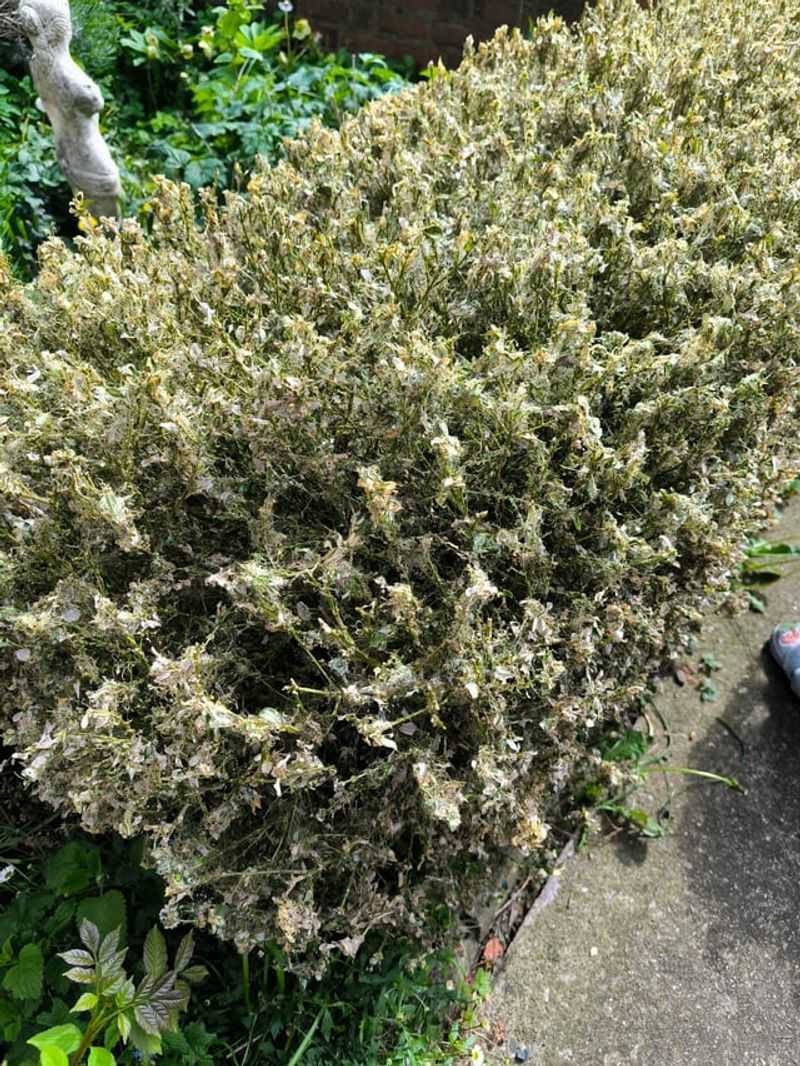
A boxwood caught early can recover beautifully. Timing beats brute force, so combine a few simple methods instead of relying on one.
Hand picking works well on a single shrub or short hedge. Wear gloves, work through the interior branch by branch, and drop larvae into soapy water.
Prune out heavily webbed sections and bag the clippings right away. This removes both larvae and their shelters in one pass.
Bt (Bacillus thuringiensis kurstaki) targets young caterpillars while sparing bees. Spinosad and insecticidal soaps help too, with stronger products for severe cases.
Read every label and spray into the shrub’s interior, not just the surface. That’s where the actual feeding happens.
Bt breaks down in sunlight within days, so repeat applications matter. Plan follow ups roughly seven to ten days apart while larvae are active.
Water deeply during dry Ohio summers and mulch a few inches deep. Skip heavy nitrogen fertilizer, since it pushes tender growth moths love.
If a shrub loses its bark and shows no green underneath, replacement is the honest answer. Inkberry holly, dwarf yaupon, or Japanese holly give the same look without the risk.
Newer boxwood cultivars bred for resistance are becoming more available at nurseries. Ask about resistant varieties before replanting a damaged hedge.
Avoid spraying during peak pollinator activity in the early morning or evening. Targeting midday application reduces harm to bees visiting nearby blooms.