The Florida Trees Most Likely To Fail During A September Storm Share These Warning Signs
September in Florida turns a blue sky into a bruise in about eleven minutes. Somewhere on your property, a tree already knows how it will handle that.
The evidence is out there right now, sitting in plain view, and many homeowners walk past it for years.
A trunk that meets the ground without flaring. A dark crease where two limbs come together. Fine reddish dust collected at the base of a pine. None of it looks urgent. All of it is a forecast.
Here’s the part that surprises people: failure follows patterns, and the patterns repeat by species.
Certain Florida trees fail in predictable ways for predictable reasons, which means the warning signs are learnable in an afternoon.
Some of these problems can be fixed. Some can only be managed. A few mean the tree has already decided.
Knowing which is which changes what you do about it, and it changes what your yard looks like when you walk it tomorrow.
Grab something cold and take a slow lap around the property. Keep reading.
1. Laurel Oak With A Hollow Trunk
Fast growth built the laurel oak’s reputation and its weakness.
These trees rise quickly while the wood stays relatively soft and susceptible to decay over time.
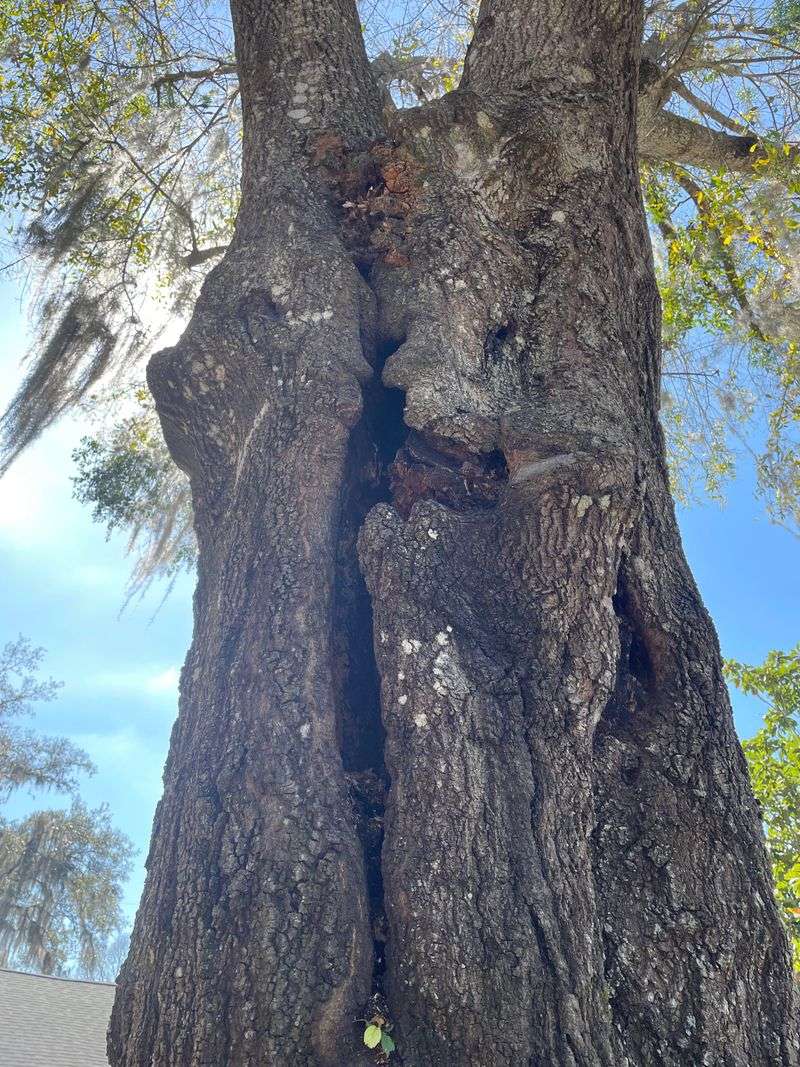
Start at the base of the trunk. A hollow sound when tapped, mushrooms growing near the roots, or a visible cavity all point toward internal decline.
A tree can carry a full green canopy while the core has been compromised for years.
Laurel oaks generally decline earlier than most oaks, often becoming structurally questionable around fifty to seventy years. That’s young for the genus.
Many Florida yards have them because they filled in fast after construction, so plenty are reaching that stage now.
During a September blow, a hollow laurel oak may snap at the trunk rather than bend. Heavy wood comes down with little warning when that happens.
Fungal conks are worth taking seriously. Bracket fungi on the trunk generally indicate decay already well underway inside.
Canopy thinning by a professional reduces wind load, though it does not repair compromised wood.
A certified arborist can assess remaining sound wood and tell you whether pruning helps or removal makes more sense. Handling it on your schedule beats handling it on the storm’s.
2. Water Oak Showing Split Bark
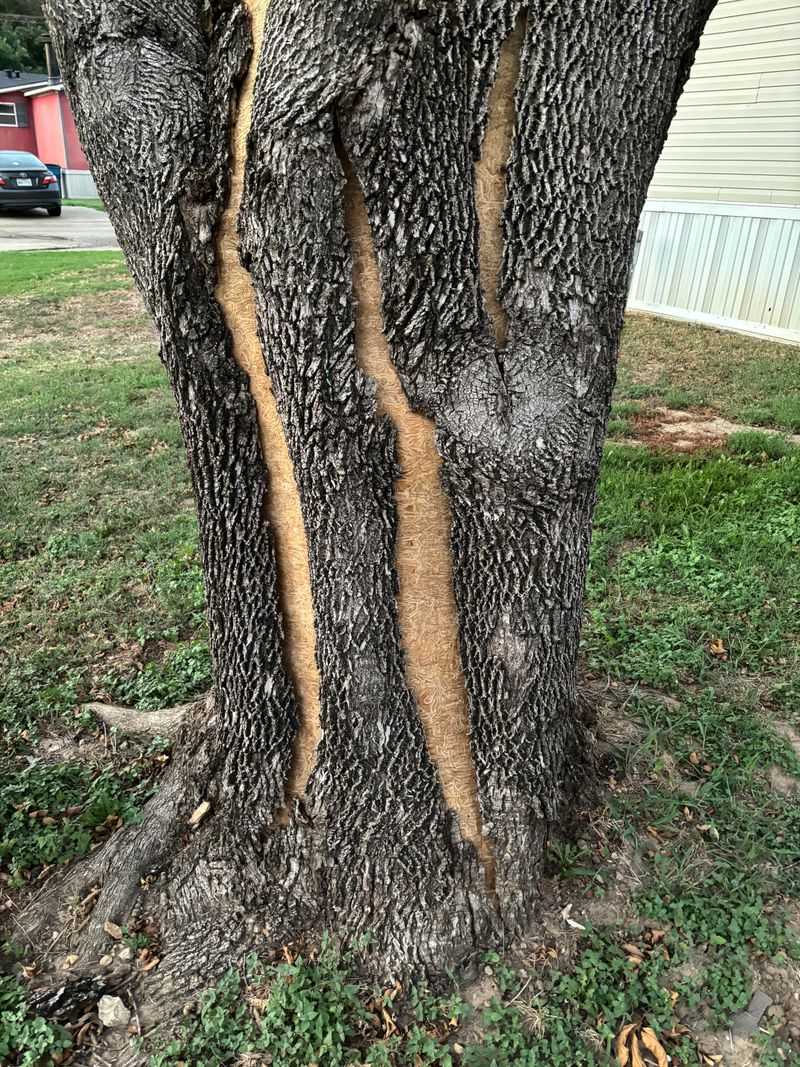
Water oaks blend into Florida neighborhoods so thoroughly that people forget how quickly they turn risky.
They grow tall and shady, then decline faster than most homeowners anticipate.
Bark carries much of the story. Long vertical cracks, peeling strips, and dark seeping areas often indicate stress with softening wood beneath.
These oaks have a reputation for dropping large limbs on calm days. Add forty mile per hour gusts and those weak branches become projectiles.
Check where major limbs meet the trunk, looking for tight V shaped joints. Narrow angles trap bark and moisture, creating unions that tear under load.
Water oaks typically begin declining around fifty to seventy years, and Florida heat and humidity contribute. A tree planted with the house may be entering that phase now.
Your Florida Garden Changes Every Week. Your Plan Should Too.
Gardening in Florida changes quickly throughout the season. Every Friday you’ll receive a simple weekly plan showing exactly what to plant, prune, fertilize, harvest, and protect so you never miss the right timing.
Crown dieback deserves attention too. Thinning leaves and bare twigs at the top often signal root or trunk problems below.
Regular professional pruning removes the heaviest hazard limbs before storms test them.
Both water oak and laurel oak get confused with live oak constantly, and they behave very differently in wind, so correct identification matters before deciding anything.
A splitting water oak leaning over a roof warrants evaluation soon. Planning now beats a cleanup crew later.
3. Sand Pine Leaning After Wet Weather
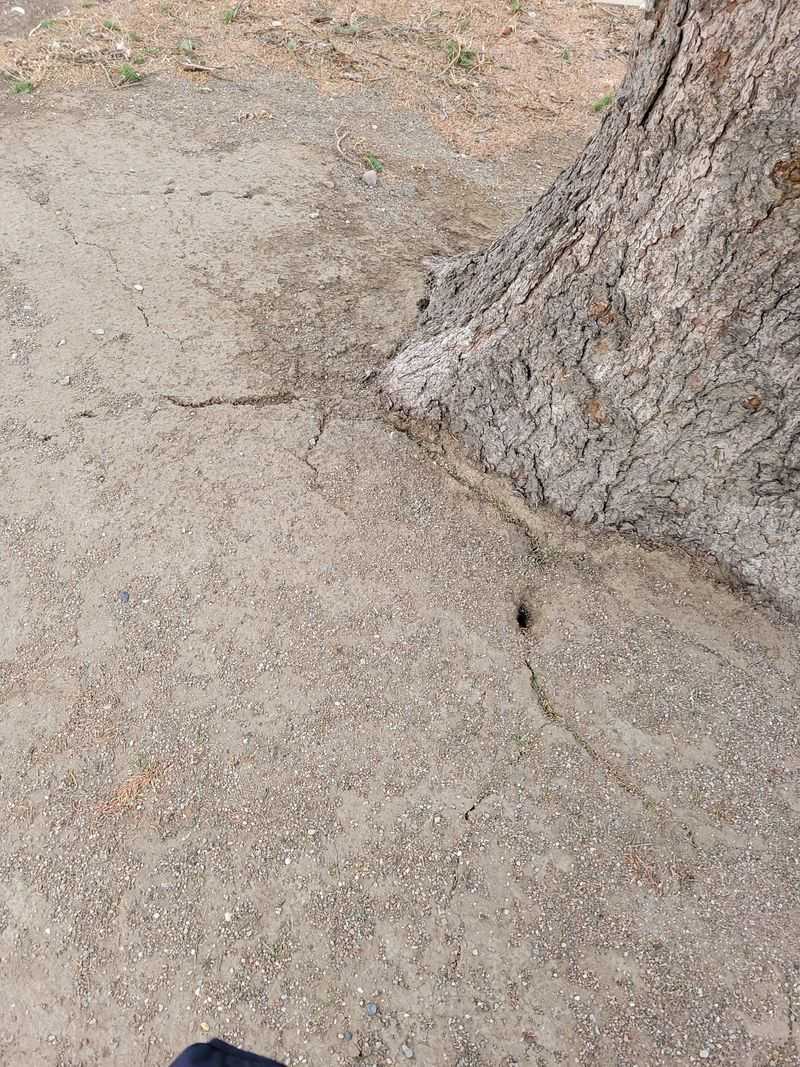
Sand pines have a scrappy quality, thriving in poor sandy soil where fussier trees quit.
That same loose ground gives their roots relatively little to grip.
After days of heavy September rain, watch for a fresh lean. Soil mounding on one side of the base, or roots visibly lifting, means the anchor is slipping.
These pines grow tall and narrow, catching wind while shallow roots work to hold position. Saturated soil shifts that balance considerably.
A tree that stood straight for years and suddenly tilts is signaling clearly. Even a slight new angle after a storm points toward root movement.
Sand pines run shorter lived than many natives, often declining by their forties or fifties. An older specimen near the house deserves a careful look.
Cracks in the soil forming a curved arc on one side of the trunk are a strong indication that roots are failing.
Height reduction is not always the right answer for pines. Topping a pine causes serious damage, so any work should come from someone who prunes conifers correctly.
A sand pine leaning toward anything you value calls for an arborist before the ground softens further. Wet Florida soil rarely gives second chances.
4. Bradford Pear With Tight Branch Angles
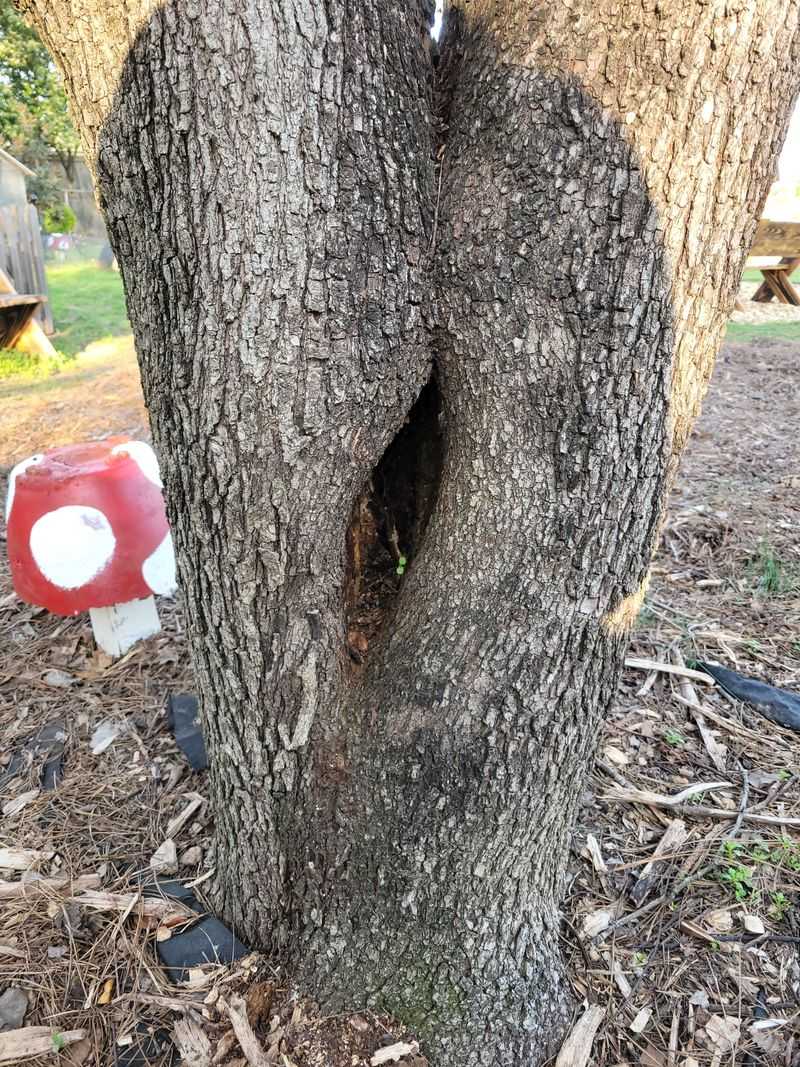
Bradford pears look tidy, with a neat rounded shape and heavy spring bloom.
Behind that appearance sits one of the weakest branch structures in common cultivation.
Trouble begins where limbs originate. Multiple branches emerge from nearly the same point, forming tight angles that trap bark and never bond properly.
Under a September gust, those crowded unions split with a loud crack. Whole sections peel away, sometimes taking much of the tree.
Look up into the canopy and note whether main limbs form narrow V shapes rather than broader U shapes. Tighter angles carry more risk.
Fast dense growth compounds the problem by adding weight above weak unions.
Bradford pears also age poorly, frequently failing structurally within fifteen to twenty five years even without a storm.
Many Florida yards planted them for quick curb appeal and are now dealing with the consequence.
Callery pear has also escaped cultivation and become invasive in parts of the Southeast, which is another argument against replanting it.
Structural pruning while the tree is young helps distribute weight. Once mature with poor angles, options narrow considerably, and replacement with a sturdier species often makes better sense.
5. Southern Magnolia With Root Damage
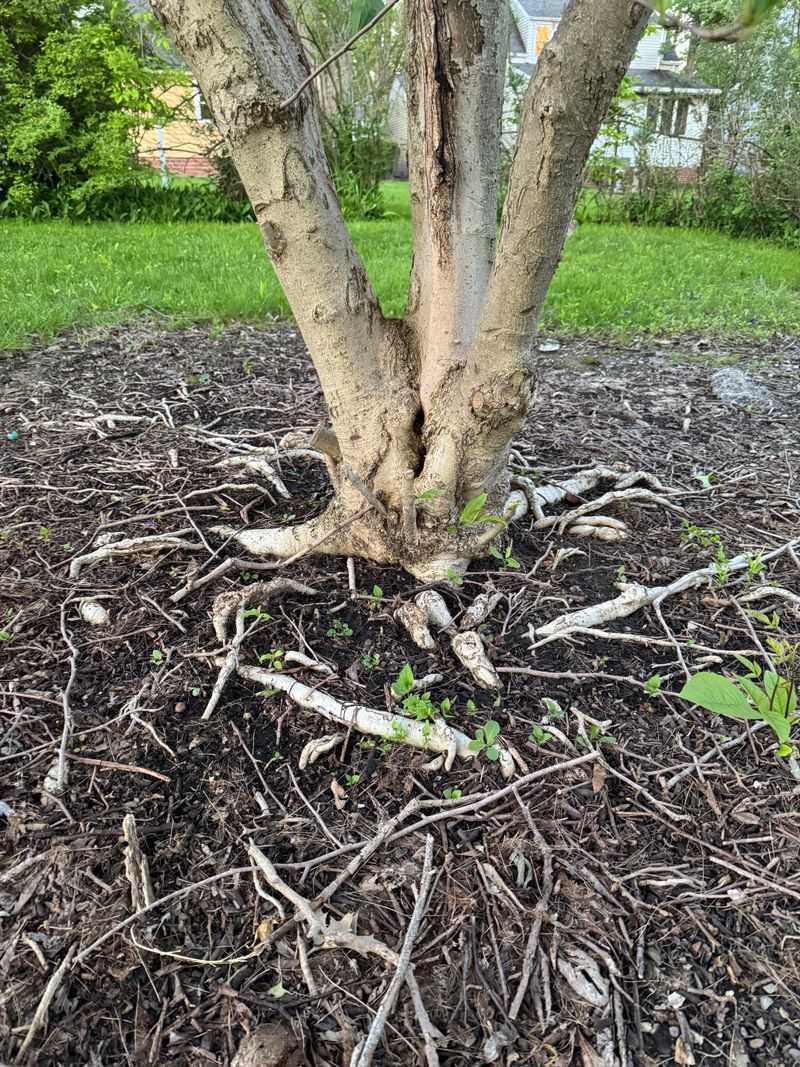
Few trees read as Southern the way a magnolia does, with those glossy leaves and heavy cream blossoms.
The beauty makes it easy to overlook problems developing below.
Magnolias have shallow, wide spreading roots that respond poorly to disturbance. Driveway work, trenching for utilities, or paving too close can sever the roots holding the tree upright.
Symptoms surface as thinning leaves, branch dieback, or loose soil around the base. A tree separated from its root system gradually loses stability.
Their evergreen canopy stays full year round, so they never shed that wind catching weight before storm season.
Walk the tree and note any recent digging or construction nearby. Damage from years earlier can weaken a tree well before it fails.
Timing matters in the diagnosis. Root injury often takes several years to show in the canopy, which makes people miss the connection entirely.
Mulch spread gently over the root zone, kept off the trunk, helps roots recover.
Avoid parking or paving across that root spread.
Light canopy thinning reduces load without destroying the classic form. A magnolia leaning over a house with a history of nearby excavation deserves professional assessment of remaining anchorage.
6. Queen Palm With Weak Fronds
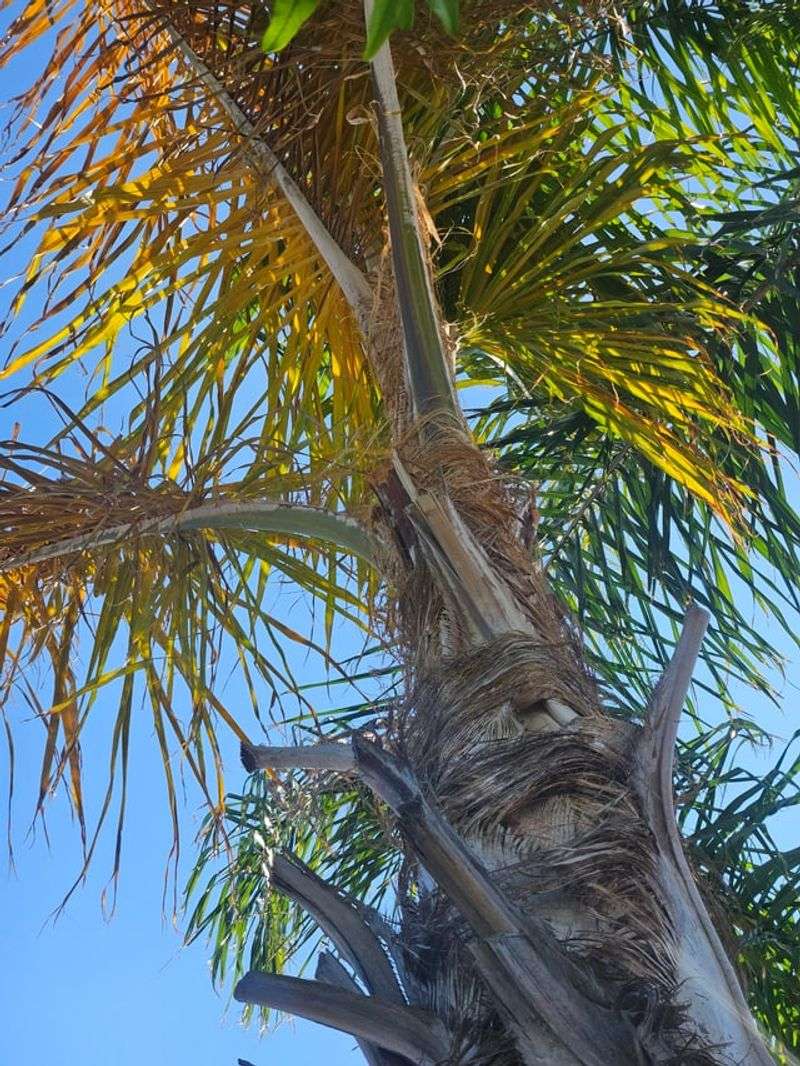
Queen palms bring a resort feeling to a yard, tall and graceful with feathery fronds.
They handle wind reasonably well without being invulnerable.
Warning signs appear in the crown. Yellowing or browning fronds, a drooping top, and a soft or discolored center all point toward nutrient problems or disease.
A healthy palm flexes with wind while a compromised one may snap or lose its crown entirely. Damage to the growing point at the top is not recoverable, since palms have a single growing tip.
Florida’s sandy soil often runs short on potassium and magnesium, which queen palms need in quantity. Deficiency leaves fronds weak and prone to tearing.
Older fronds turning spotty and brown from the tips inward typically indicate potassium shortage, correctable with an appropriate palm fertilizer.
Ganoderma butt rot is worth knowing about here. A shelf like conk at the base of a palm indicates a fatal condition with no treatment available.
Skip the hurricane cut habit. Removing green fronds leaves palms weaker rather than more storm ready, and it stresses the tree.
Heavy fruit stalks and seed pods become airborne debris, so clearing those before September lightens the load.
A mushy crown or leaning trunk needs prompt professional attention.
7. Chinese Elm With Included Bark
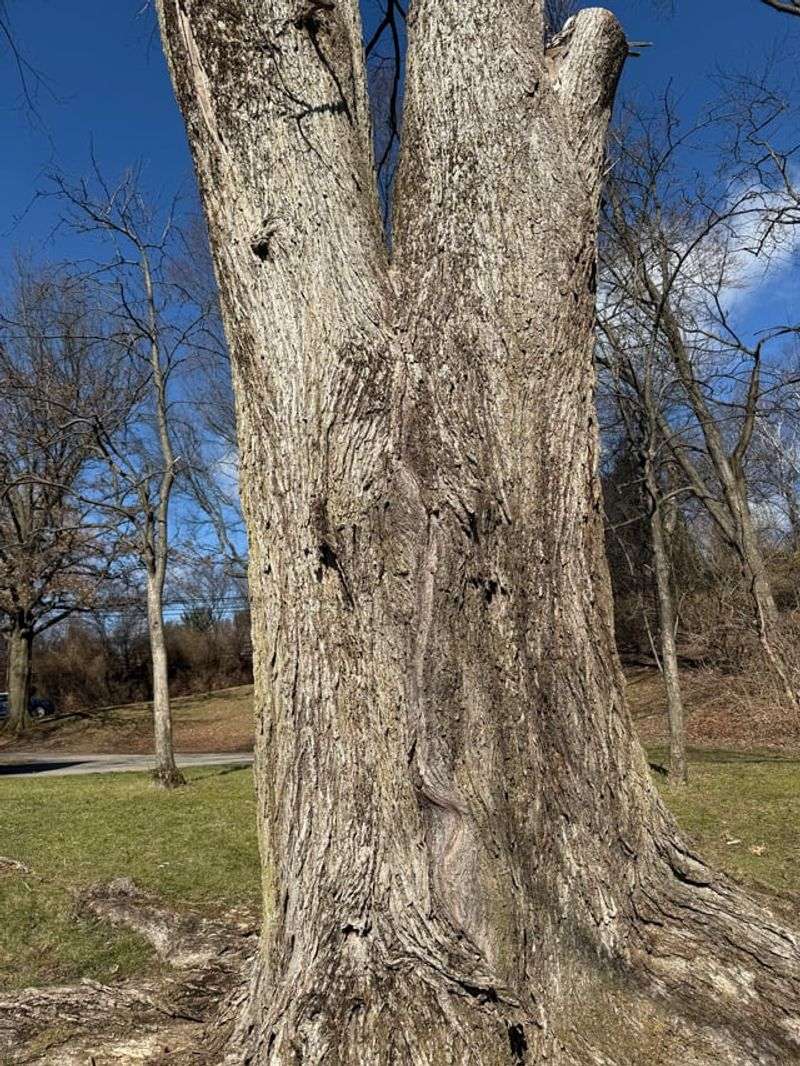
Chinese elms appeal to homeowners with mottled bark and fast easy growth.
That speed brings a complication visible right where limbs converge.
Many grow with several trunks squeezed together at one point. Bark gets trapped between them, forming a seam called included bark that never fuses into sound wood.
When wind loads the canopy, those crowded stems pull apart along that seam. A full thriving tree can split down the middle.
Trace the trunk to where major stems meet. A dark line or pinched crease rather than a smooth joint is the indicator.
Dense rounded crowns add wind load onto already questionable unions.
Early structural pruning helps by favoring one dominant trunk. Options shrink once the tree matures with competing stems.
Cabling and bracing exist as supplemental support, and they require professional installation plus regular inspection. They reduce risk rather than eliminating it.
Watch for cracks that widen after windy periods. Growing separation means the union is progressively failing.
Worth noting that Chinese elm has naturalized in parts of Florida, so it self seeds into places nobody planted it.
If your elm shades a patio or driveway, have those unions evaluated before storm season.
8. Slash Pine With Beetle Damage
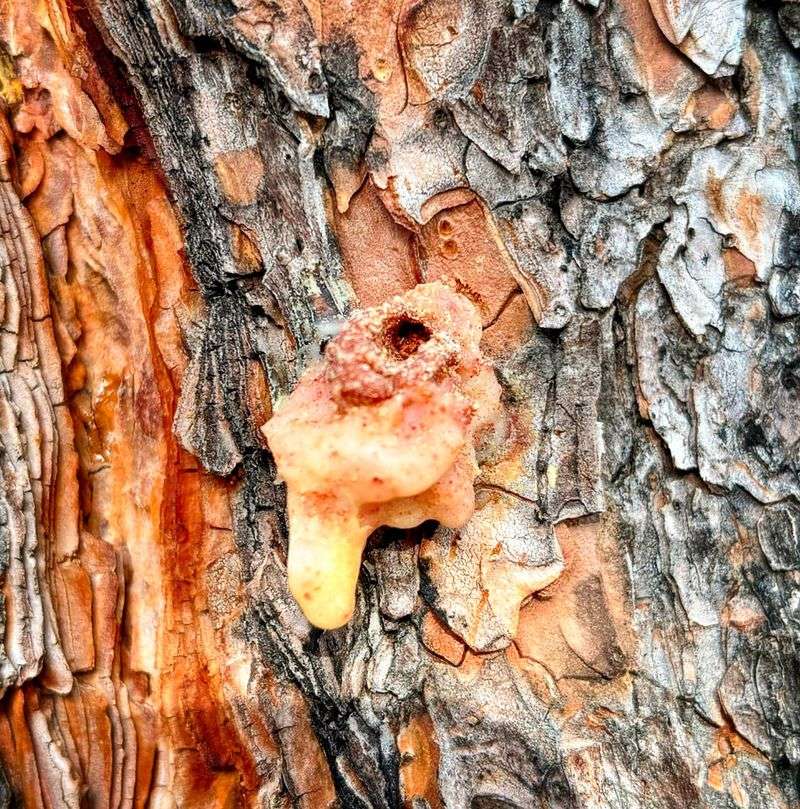
Slash pines tower over Florida landscapes, native and generally wind firm.
That strength erodes quickly once bark beetles establish under the bark.
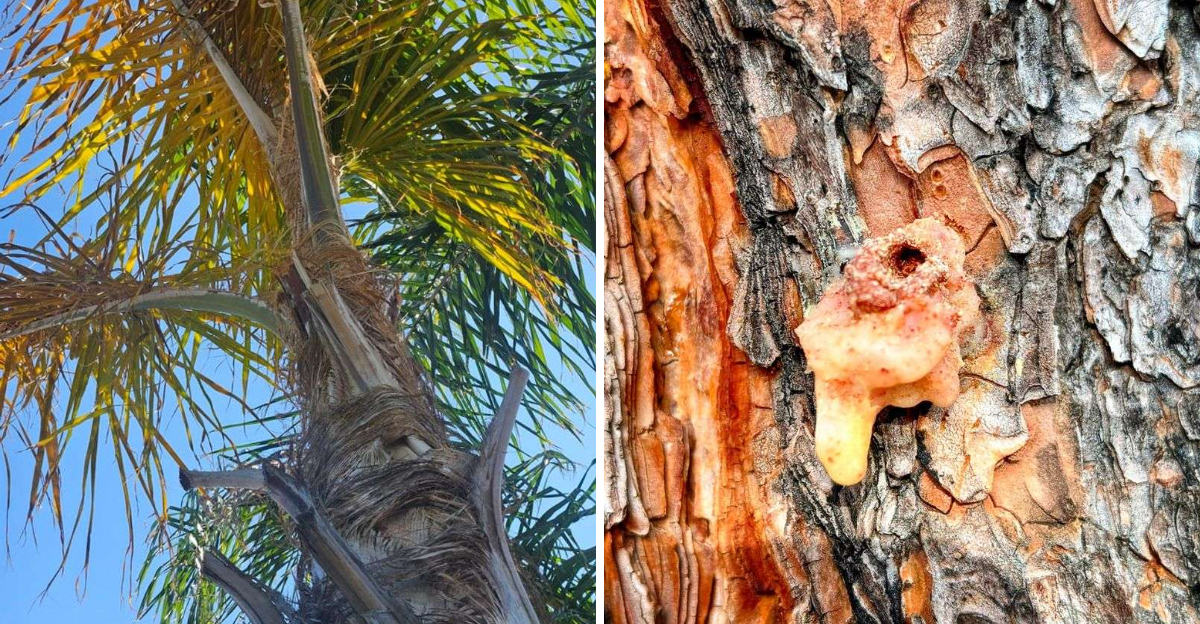
Clues run small. Pinhead sized holes in the bark, reddish boring dust collecting at the base, and small globs of resin oozing out.
Beetles tunneling through the inner bark disrupt the tissue that moves water and nutrients. Needles fade to yellow, then rust, often from the top down.
A beetle weakened pine loses internal strength while still standing tall. Wind then finds it far easier to break the trunk.
Drought and construction stress make slash pines vulnerable, since a struggling tree produces less defensive resin.
Root damage from nearby digging frequently starts the whole sequence, and the beetle attack follows months later.
Scan pine trunks for those dust piles. Early detection gives you more options.
Once beetles have fully colonized a pine, saving it is generally not realistic, and removal protects nearby healthy trees.
Handling the removed wood promptly matters, since infested material can produce another generation.
Watering pines during dry spells supports resin defense. Browning needles paired with entry holes calls for an arborist without much delay.
9. Silver Maple With Brittle Wood
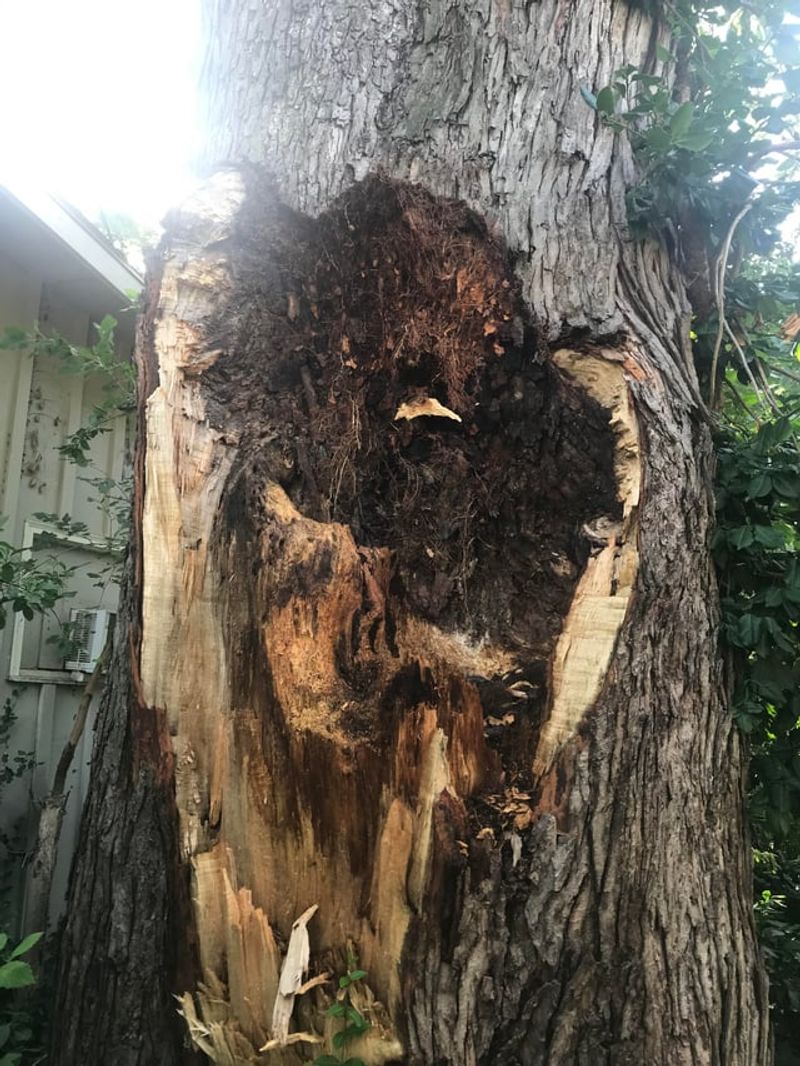
Silver maples grow as though racing, outpacing nearly any shade tree.
That speed produces wood that’s weak and notably brittle.
The tell is how readily branches break. Even moderate wind snaps limbs and scatters wood across a yard after an ordinary storm.
Look for cracked branches hanging in the canopy, old broken stubs, and long vertical splits along larger limbs. Brittle wood tears rather than flexes.
Rapid size increase means heavy branches accumulate quickly, adding load onto weak wood.
Roots run shallow and aggressive, sometimes lifting sidewalks and competing hard for soil moisture.
One honest note. Silver maple is uncommon in most of Florida, since it prefers cooler conditions and appears mainly in the northern panhandle. Red maple is the native maple across most of the state.
If you have one, it likely sits in a yard where it fits poorly, with limbs over roofs and cars.
Regular pruning to remove weak and crossing branches lowers risk meaningfully. Crown thinning lets wind pass through.
Check after windy stretches for hanging limbs that could drop later. Those dangling pieces come down eventually.
A silver maple leaning over anything valuable is worth weighing against a sturdier replacement.
10. Live Oak With Girdling Roots
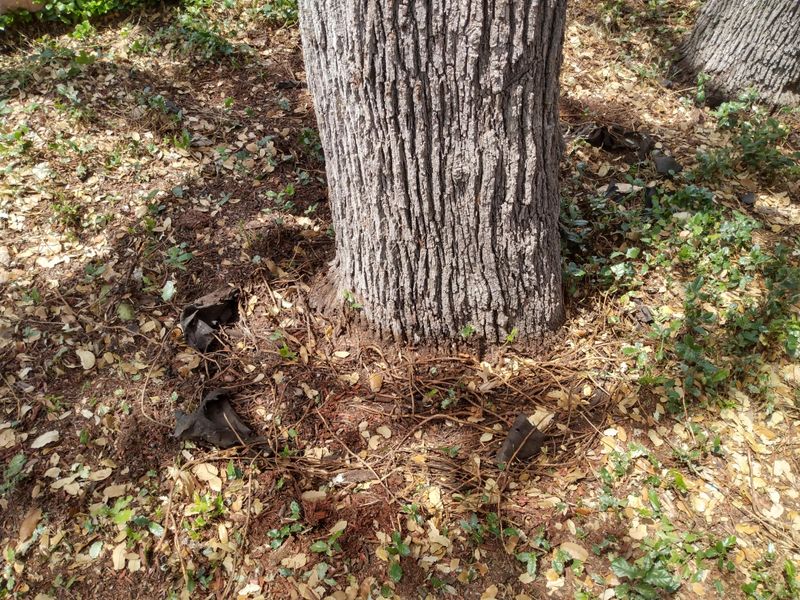
Even these natives can be undermined by a problem hidden at the base.
Girdling roots are the culprit. Instead of spreading outward, roots circle the trunk, gradually constricting it and compromising the tree’s grip.
A healthy live oak base flares outward like a planted foot. A trunk entering the ground straight, with no visible flare, suggests girdling roots may be present.
Those circling roots restrict water and nutrient flow over many years. The canopy can look grand while the foundation weakens.
The problem often begins at planting, either from being set too deep or from spending too long in a container. The circling habit continues in the ground.
Check the soil right around the trunk for roots crossing the base. Any root pressing tightly against the trunk warrants examination.
An arborist can sometimes remove girdling roots before lasting damage occurs. That work carries risk though, so it belongs to someone qualified rather than a weekend attempt.
Keep the root flare clear of mulch and accumulated soil, since burial encourages the problem.
Live oaks are usually worth the effort, and losing a mature one is a genuine loss.
11. Camphor Tree Growing Too Fast
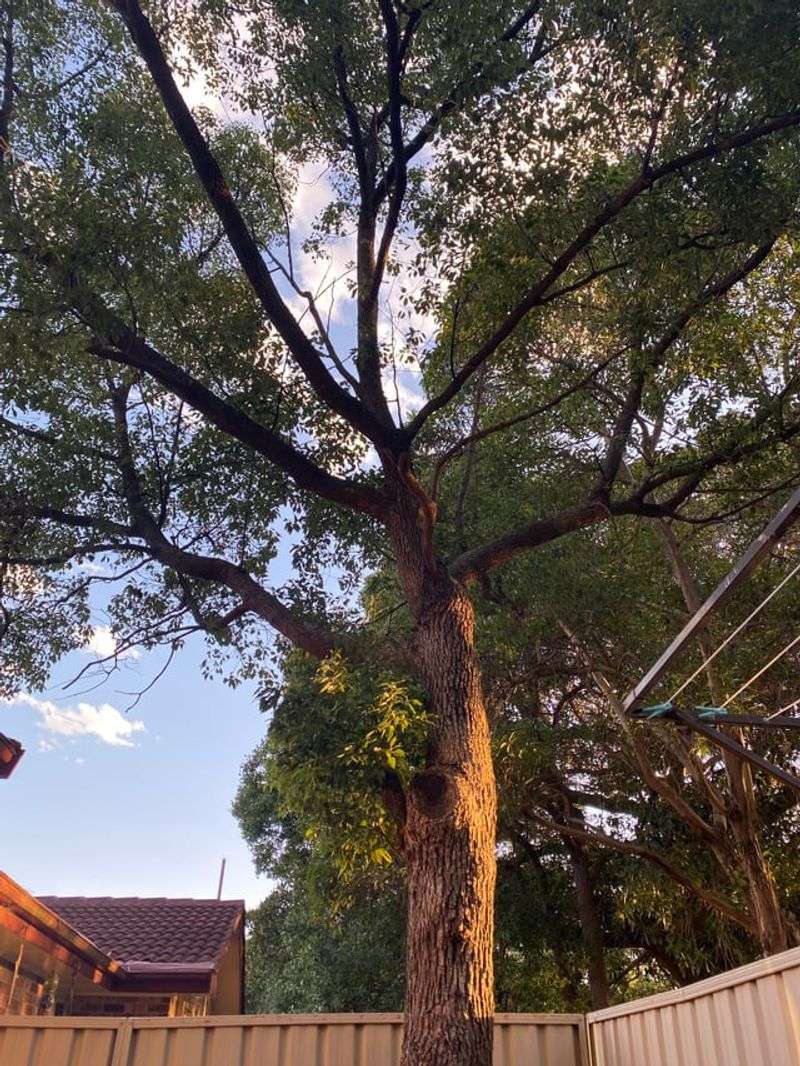
Camphor trees spread wide with generous shade and a spicy scent from crushed leaves.
Rapid growth builds a large canopy on wood that hasn’t developed much strength.
The primary concern is long heavy horizontal limbs extending far from the trunk. That reach creates leverage wind exploits readily.
Watch for limbs sagging under their own weight and cracks forming where branches attach.
Dense crowns catch wind like a sail. Heavy foliage pushes against every gust.
Camphor is not native and is listed as invasive in Florida, spreading by bird dispersed seed into natural areas.
That invasiveness is worth factoring into any decision about a struggling specimen. Replacement with a native shade tree solves two problems at once.
Canopy thinning is the main defense for a tree you’re keeping, letting wind through rather than into a solid wall of leaves.
Shortening far reaching branches reduces leverage, and proper cuts by an arborist keep the tree balanced.
Prioritize limbs hanging over roofs, fences, and play areas.
Regular thinning makes a camphor’s sprawling shade considerably less of a gamble when the sky darkens.
12. Washingtonia Palm With Rot At The Base
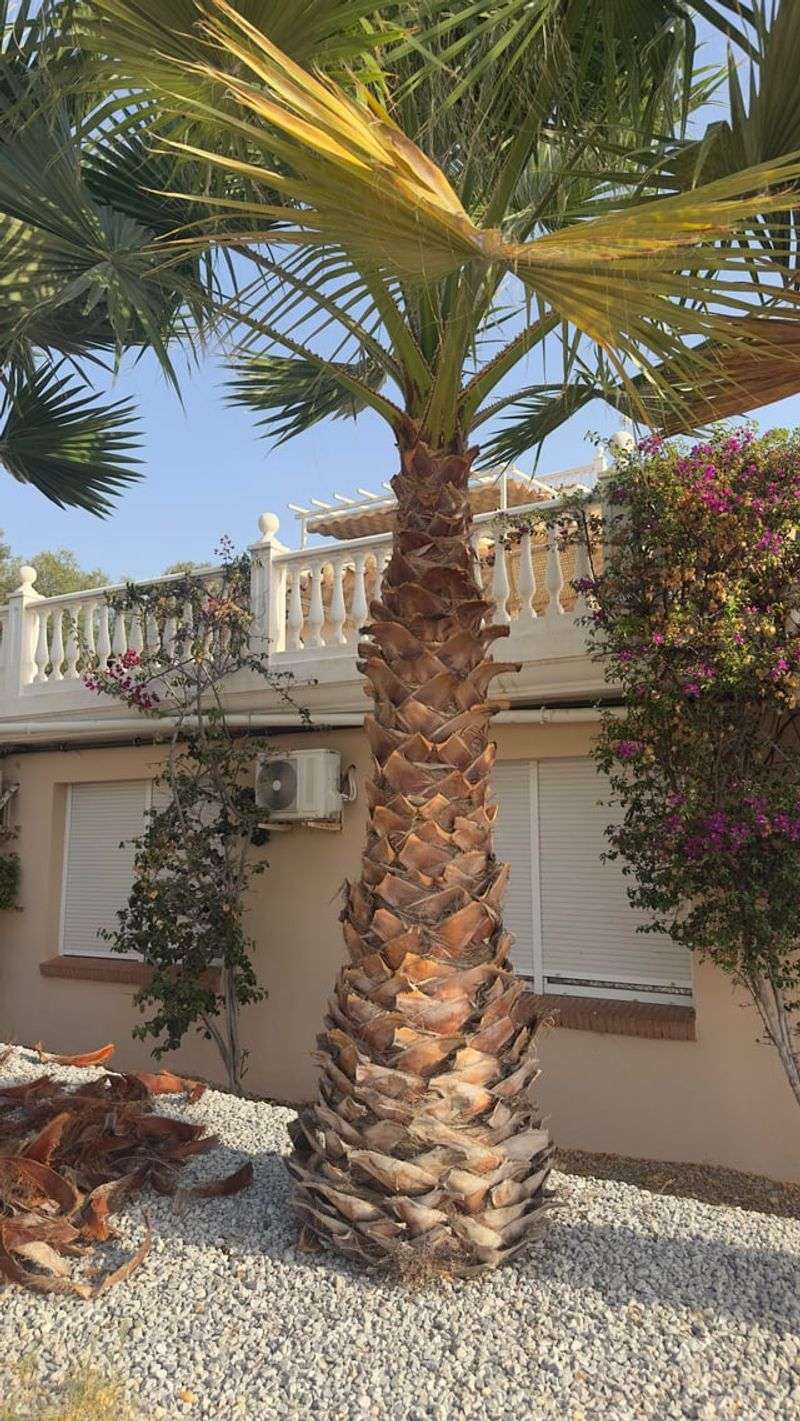
Washingtonia palms stretch upward like living lampposts, slim and towering with fan shaped leaves.
Impressive height becomes a liability once the base softens.
Tall skinny trunks put substantial leverage on a narrow support. A weak spot low down turns that height into real hazard.
Check the bottom of the trunk for soft spongy areas, oozing, or color change. Rot near the base means the support is failing.
Damp soil and heavy rain can invite fungal problems that consume lower trunk tissue.
Ganoderma butt rot affects Washingtonia as it does other palms. A shelf like conk at the base confirms a condition with no available treatment, and removal becomes the safe course.
Because they reach such height, these palms sway dramatically, and a compromised base cannot handle that stress.
Watch for a thinning crown or drooping fronds too, since a sparse top pairs badly with a soft bottom.
Old fronds hanging in a shaggy skirt add weight and wind resistance high up. Clearing that buildup helps.
Palms cannot compartmentalize decay the way trees do, so trunk damage does not heal over.
Keep the base dry, skip mulch against the trunk, and inspect promptly if anything feels soft.