Loose Winter Mulch Can Help Reduce Frost-Heave Damage To Vulnerable Wisconsin Perennials
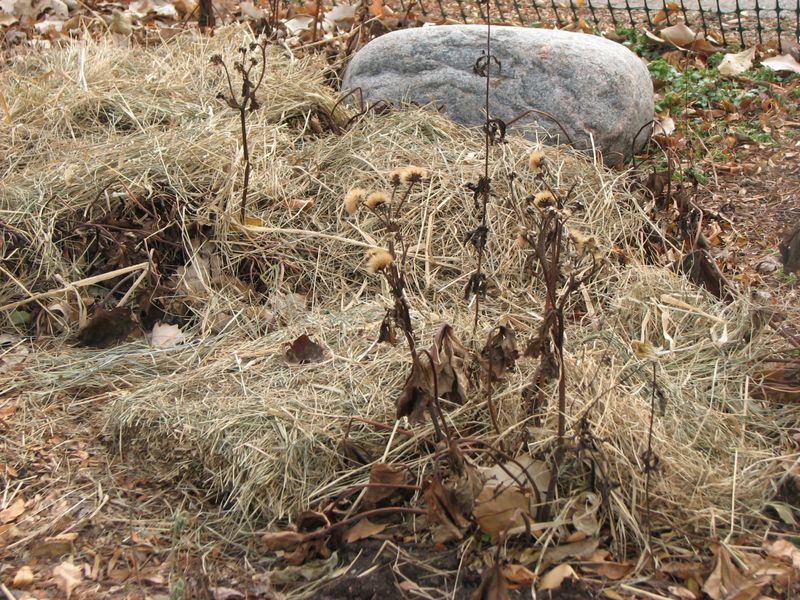
Every spring, some Wisconsin gardeners discover their perennials have been pushed partway out of the ground over winter, roots exposed and crowns sitting above the soil surface. That movement is called frost heave, and it can weaken or kill plants that otherwise might have survived a cold Wisconsin winter just fine.
Loose winter mulch, applied at the right time and in the right way, can help reduce that kind of damage for the plants most at risk. Not every Wisconsin perennial needs this treatment, but knowing which ones do and how to protect them can make a real difference when temperatures start swinging in late winter.
Why Wisconsin Perennials Can Rise Out of the Soil
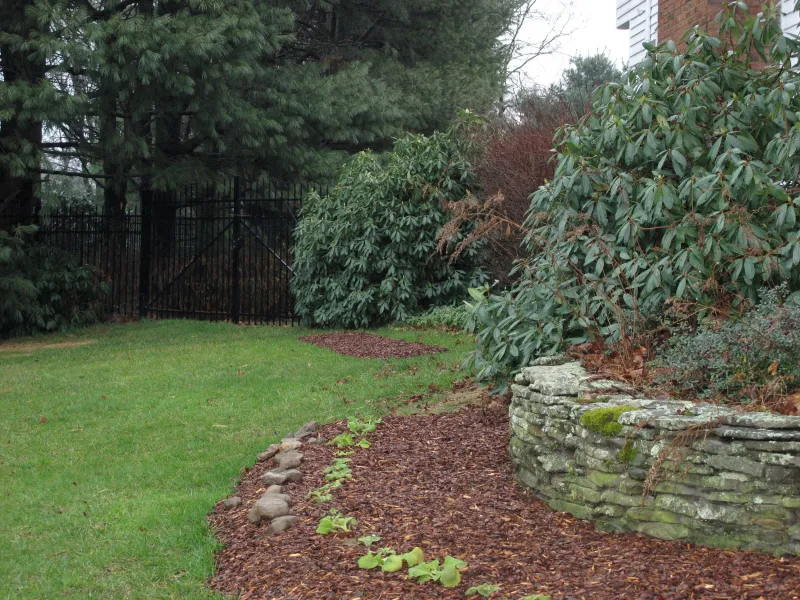
Walking out to a Wisconsin perennial bed in late March and finding a plant sitting noticeably higher than it was in autumn is a jarring experience. The crown may be raised an inch or two above the surrounding soil, roots fanning out into open air, and the ground nearby looks buckled or uneven.
That is frost heave, and it is worth understanding before reaching for a bag of mulch, because loose winter mulch can reduce the risk of this kind of damage for vulnerable plants, but it cannot guarantee that every root stays put, and it is not something every Wisconsin perennial actually needs.
The aftermath of a heaving episode is usually visible before the plant shows any other stress. Soil around the crown looks disturbed or cracked.
Fine roots that were once anchored in the upper few inches of ground may be snapped, dried out, or still dangling in cold air. In milder cases the plant settles back down as the soil thaws and recovers on its own.
In worse cases the exposed roots desiccate or freeze completely, and the plant does not come back at all.
UW-Madison Extension guidance on preparing landscape plants for winter makes clear that winter mulch is most useful for prized perennials exposed to severe cold and repeated freeze-thaw cycles, not as a blanket treatment for every Wisconsin bed. Established plants with deep, well-spread root systems and good drainage often make it through a typical Wisconsin winter without any added protection.
What this article covers is a selective protection plan: which Wisconsin plants face the greatest heave risk, when and how to apply a loose winter cover, and what to do in spring if heaving has already happened. Iowa State Extension reporting on frost heave in ornamental plantings confirms that early detection and gentle soil replacement can sometimes rescue a heaved plant, though badly broken roots may still mean plant loss.
The Wisconsin Frost-Heave Mechanism Starts Below the Surface
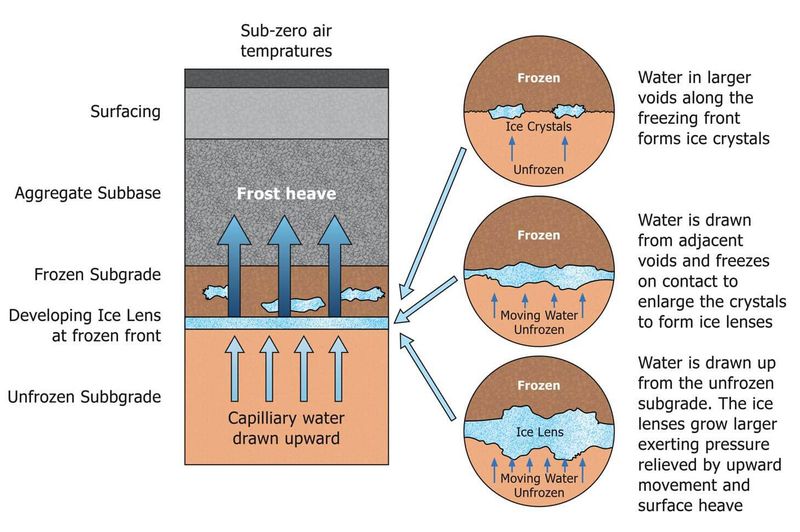
Frost heave in Wisconsin soil is more complicated than the common shorthand that water expands when it freezes. Expansion of water already in the pore spaces does play a small role, but the real driver is what happens when a freezing front moves down through the soil and liquid water migrates toward it from below.
As temperatures drop below freezing at the soil surface, a zone of freezing gradually advances downward. Water in the soil is drawn toward that front by capillary forces, much the way water wicks up through a paper towel.
Your Wisconsin Garden Changes Every Week. Your Plan Should Too.
Gardening in Wisconsin changes quickly throughout the season. Every Friday you’ll receive a simple weekly plan showing exactly what to plant, prune, fertilize, harvest, and protect so you never miss the right timing.
When enough water accumulates at the freezing zone, it can form distinct layers of ice called ice lenses. USDA Natural Resources Conservation Service guidance on soil risks and hazards identifies ice-lens growth as a central mechanism in frost heave, distinct from simple volumetric expansion of water already frozen in place.
As those lenses grow, they push the soil above them upward. A plant crown sitting near the surface gets lifted along with that soil.
When temperatures rise again and the ice melts, the soil may not settle back to exactly where it was, leaving the crown a little higher each time. National Research Council of Canada research on frost action in soils describes this ratcheting effect across repeated freeze-thaw cycles as a key reason plants end up with roots exposed by late winter.
Wisconsin soil texture matters considerably here. Silts, clays, and very fine sands hold water and have small enough pore spaces to support the capillary movement that feeds ice lenses, making them more frost-susceptible.
Coarse sands and gravels drain freely and do not sustain the same water movement, so they are generally less prone to heaving. That said, soil texture is not the only factor.
Available water, the depth and speed of freezing, and how many thaw-refreeze cycles occur through a Wisconsin winter all influence how much heave actually happens in a given bed.
Root architecture also shapes vulnerability. Iowa State Extension reporting on frost heave notes that plants with small, shallow, or poorly developed root systems are lifted more easily than plants with deep, wide-spreading roots that anchor the crown firmly in the soil.
That connection between root depth and heave risk is what makes newly planted Wisconsin perennials especially susceptible in their first winter.
Which Wisconsin Perennials Need the Most Help?
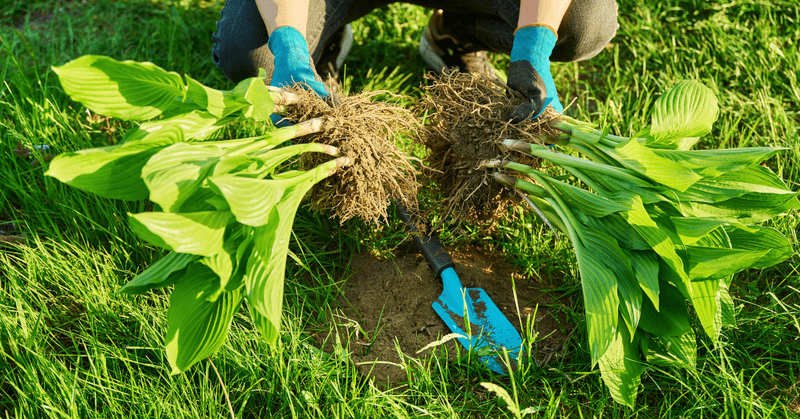
Rather than working from a fixed list of plant names, a more useful starting point is a set of conditions that signal higher heave risk. Any Wisconsin perennial that fits one or more of these descriptions deserves serious consideration for winter protection.
Fall-planted perennials top the list. A plant put in the ground in September or October has had only weeks to push roots into the surrounding soil before the ground begins to freeze.
That limited anchoring makes it far easier for ice lenses to lift the crown. Recently divided perennials face the same problem: the root system was cut back during division and has not yet re-established the depth and spread it had before.
UW-Madison Extension winter preparation guidance specifically calls out new plantings and divisions as priority candidates for winter mulch in Wisconsin.
Shallow-rooted perennials carry inherent vulnerability regardless of how long they have been in the ground. Plants that naturally concentrate roots in the upper few inches of soil, including many ornamental grasses, some groundcovers, and certain spreading perennials, sit closer to the zone where ice lenses form.
UW-Extension perennial growing guidance for Wisconsin notes that shallow-rooted and poorly established plants are more vulnerable to heaving than deep-rooted, well-established specimens.
Marginally hardy perennials, meaning those rated for a slightly warmer USDA zone than the Wisconsin site where they are growing, also benefit from extra protection. These plants may survive most Wisconsin winters but are more likely to suffer when freeze-thaw cycles are severe or prolonged.
Illinois Extension planting and care guidance reinforces that vulnerability increases when plants are not fully matched to local hardiness conditions.
By contrast, an established Wisconsin perennial that has grown in the same well-drained spot for three or more years, has a deep and spreading root system, and is rated for the local hardiness zone may need little or no special winter mulch in a typical year. UW-Madison crops and soils research on heaving in Wisconsin fields confirms that fibrous-rooted plants with strong anchoring are less affected by heaving than plants with smaller or less developed root systems.
The decision should be driven by honest assessment of each plant’s establishment and site, not by a one-size-fits-all rule.
When Should Wisconsin Gardeners Apply Winter Mulch?
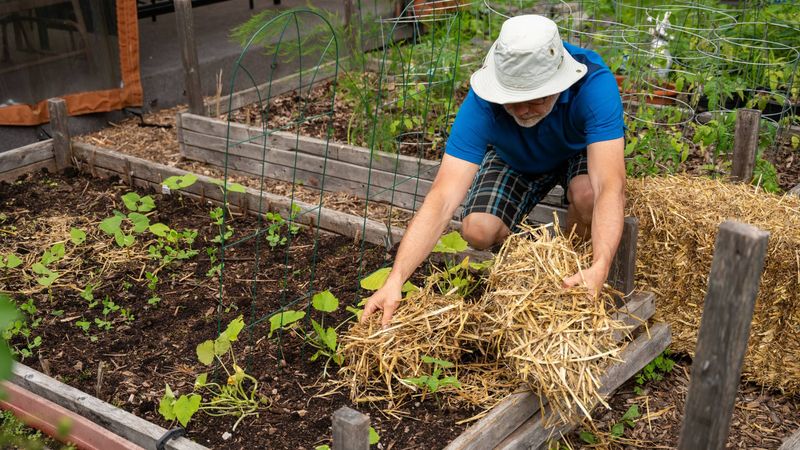
Timing matters almost as much as the material itself. Putting winter mulch down too early in Wisconsin can cause more problems than it prevents, while waiting too long leaves vulnerable plants exposed to the first hard freeze-thaw swings of the season.
The correct sequence begins with normal fall care: continue watering through dry autumn periods, allow foliage to die back naturally, and let the plant complete its transition into dormancy. Once the tops have died down and several hard freezes have occurred, watch for the soil surface to begin firming up.
That is the window for applying a protective winter cover. UW-Madison Extension winter preparation guidance uses Thanksgiving as a rough statewide reference point, but the same source makes clear that timing varies with Wisconsin location and the specific weather pattern of each fall.
Applying mulch while the soil is still warm and unfrozen can trap heat, encourage late-season growth beneath the cover, and delay the dormancy that protects plants from cold injury. A plant pushed into new growth by warm conditions under mulch is far more vulnerable when the real cold arrives.
UW-Madison Extension mulch guidance cautions against early application for exactly this reason.
A gardener in northern Wisconsin may be ready to mulch in early November, while someone in the southern part of the state near the Illinois border might wait until late November or even early December. Minnesota Extension guidance on mulching perennials and bulbs echoes this advice, recommending that gardeners wait until after the soil surface has frozen before applying a protective layer.
Watching the actual soil and weather, rather than the calendar, gives the most reliable signal for when Wisconsin perennials are ready for their winter cover.
Choose a Loose Wisconsin Winter Cover and a Sensible Depth
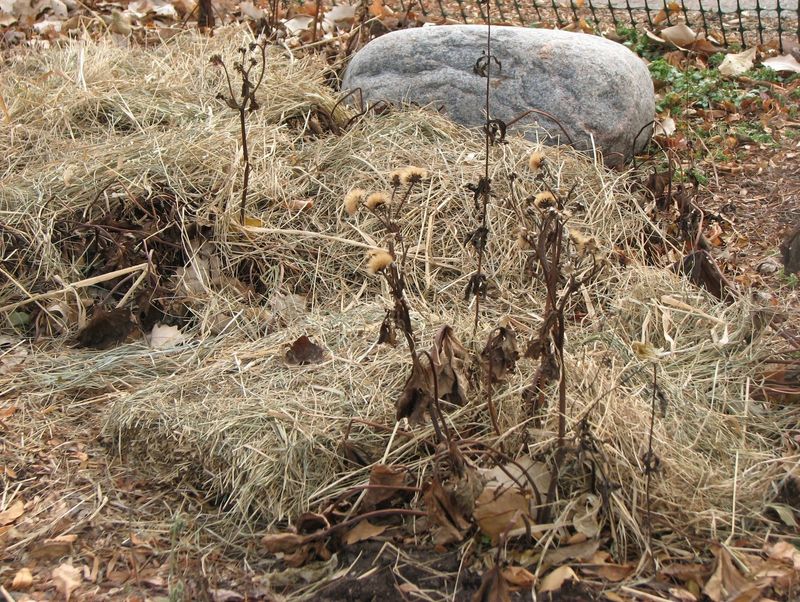
The material chosen for winter protection in a Wisconsin bed matters because how it behaves under snow, rain, and repeated freezing affects whether it helps or harms the plants beneath it. The goal is a cover that buffers temperature swings, allows some air exchange, and does not hold so much moisture that it promotes rot at the crown.
Loose straw is a reliable first choice for Wisconsin winters. It insulates without compacting tightly, allows air movement, and sheds excess moisture reasonably well.
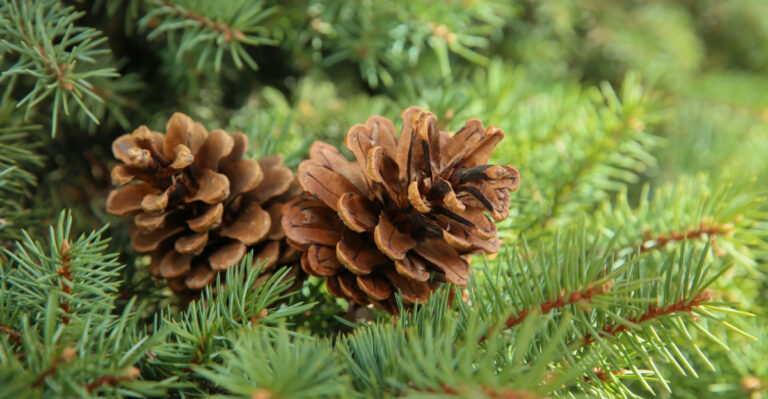
Marsh hay behaves similarly and has been used in Wisconsin gardens for generations. Evergreen boughs, such as branches from a discarded Christmas tree or pruned conifers, work well because they hold their structure through the winter and create natural air pockets above the crown.
UW-Madison Extension winter preparation guidance recommends all three as appropriate Wisconsin winter mulch materials.
Shredded leaves and partially decomposed compost are also useful, particularly when worked loosely around crowns rather than packed down. Chopped corn stalks provide similar loose coverage.
Whole, unshredded leaves are the material that most often causes trouble in Wisconsin beds. UW-Madison Extension mulch guidance warns that whole leaves can mat into a dense, wet layer that smothers crowns and promotes fungal problems.
If leaves are the most available material, shredding them first with a mower makes them substantially safer.
Depth recommendations from Wisconsin and neighboring extension sources span a range, and that range reflects real differences in material, plant type, and site. Illinois Extension planting and care guidance suggests roughly 3 to 4 inches of loose straw or evergreen boughs for vulnerable perennials.
Minnesota Extension guidance on mulching perennials recommends about 5 to 6 inches of leaves, compost, corn stalks, or straw. Kenosha County UW-Extension winter mulch guidance describes approximately 6 to 8 inches around herbaceous perennial crowns in Wisconsin.
These figures are ranges tied to specific materials and plant conditions, not a universal target. Denser materials need less depth; lighter, airier materials may need more to achieve the same buffering effect.
The aim is never to pile on as much as possible, because excessive or compacted mulch creates its own set of problems.
Good Wisconsin Mulching Protects Without Trapping Moisture
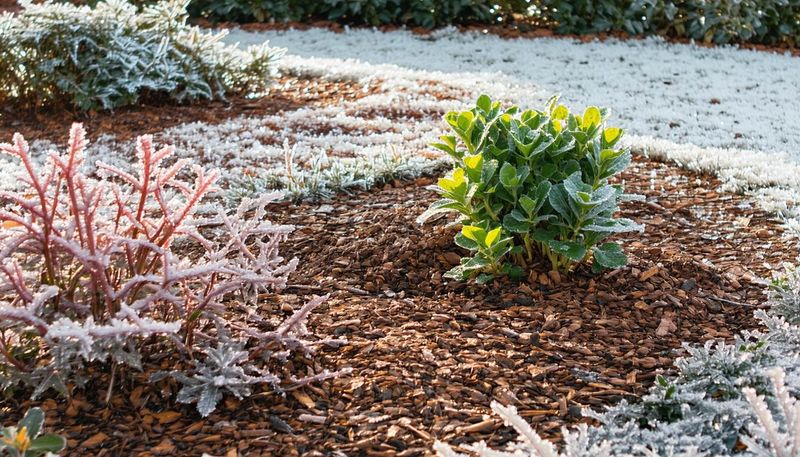
Applying winter mulch correctly in Wisconsin means thinking about what happens underneath the cover all season long, not just on the day it goes down. A well-installed cover buffers temperature swings and allows air to move; a poorly installed one holds moisture, encourages rot, and can attract rodents looking for a winter shelter.
Before mulching, water the bed adequately if the fall has been dry. Plants should not enter a Wisconsin winter already stressed by drought, because drought-stressed roots are less resilient when freeze-thaw cycles begin.
At the same time, beds should not be left soggy. UW-Madison Extension winter preparation guidance notes that plants should not be drought-stressed going into winter, while Iowa State Extension guidance on overwintering plants cautions that excessively wet conditions around crowns can encourage crown and root rot even in cold weather.
Good drainage may matter more than any amount of mulch added on top.
When the cover goes on, keep it loose and fluffy rather than packed down. Air space within the mulch layer is part of what moderates temperature.
Illinois Extension planting and care guidance advises leaving air space around perennial crowns rather than burying them under a tight, dense mass of material. Penn State Extension guidance on planting ornamentals warns against piling mulch against woody stems or trunks, where trapped moisture and the resulting fungal activity can cause significant damage over a Wisconsin winter.
Rodents, particularly voles, are drawn to the warmth and shelter of thick mulch layers in Wisconsin. Keeping mulch loose and avoiding direct contact with plant crowns reduces the appeal.
Illinois Extension perennial care guidance notes that dense mulch piled against crowns can provide overwintering habitat for mice and voles that then feed on roots and stems.
Healthy standing perennial stems left in place through winter can catch snow and provide some natural crown protection in Wisconsin. Chippewa County UW-Extension fall gardening reminders support leaving healthy stems as beneficial winter structure.
Diseased stems or foliage are a different matter and should be removed before winter rather than left as cover, because they can carry fungal spores or bacterial problems into the following Wisconsin growing season.
What Wisconsin Gardeners Should Do When Spring Reveals Heaving
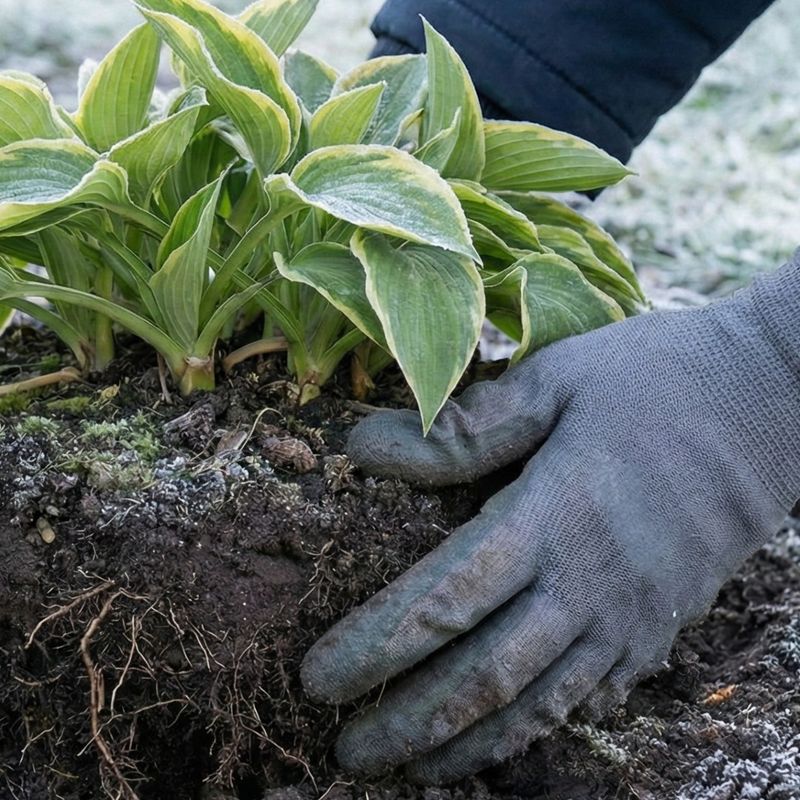
Spring in Wisconsin often arrives unevenly, with warm days followed by hard overnight freezes well into April. That pattern means the right time to pull back winter mulch is not a fixed date but a process of gradual adjustment as the soil thaws and new growth begins to push through.
Start by pulling the mulch back from the crowns when daytime temperatures are consistently above freezing and you can see the first signs of new growth. Minnesota Extension guidance on mulching perennials and bulbs recommends removing excess mulch promptly as growth begins, because leaving a thick layer in place once temperatures warm up can promote crown rot and delay emergence.
Keep some loose material nearby rather than hauling it all away at once, because a late Wisconsin freeze can still threaten tender new shoots, and you may want to pull the cover back over the bed on a cold night.
As the mulch comes back, check each crown carefully. A plant that has heaved will show visible signs: the crown sitting above the surrounding soil line, exposed roots in open air, or disturbed soil around the base.
UW-Madison Extension winter burn guidance describes a different kind of damage, where foliage browns and desiccates from moisture loss through leaves while roots cannot replace water from frozen soil. Crown and root rots, covered in UW-Madison Extension root and crown rot guidance, appear as soft, discolored tissue at or below the soil line and are associated with wet conditions and pathogens rather than physical lifting.
A Wisconsin perennial can suffer more than one of these problems in the same winter, so matching the response to the actual damage matters.
For a heaved plant, the recovery approach is straightforward but requires care. Gently firm the soil back around exposed roots, pressing it in without compacting it hard.
If the crown has lifted noticeably, try to settle it back down to the correct depth by carefully pressing down on the root ball while refilling soil underneath. Iowa State Extension reporting on frost heave recovery notes that a few inches of loose straw or pine needles placed over a recovered plant can help prevent additional freeze-thaw movement during the rest of early spring.
Roots that have been snapped or severely broken during heaving may not recover enough to sustain the plant, and loss is possible even after careful attention. Marinette County UW-Extension guidance on frost effects on plants confirms that the degree of root damage determines whether recovery is realistic.
UW-Madison Extension mulch guidance also notes that early spring removal of winter mulch reduces the risk of fungal problems developing at the crown, which can compound the stress a heaved Wisconsin perennial is already experiencing.
A Wisconsin Winter-Mulch Decision Comes Down to Stability
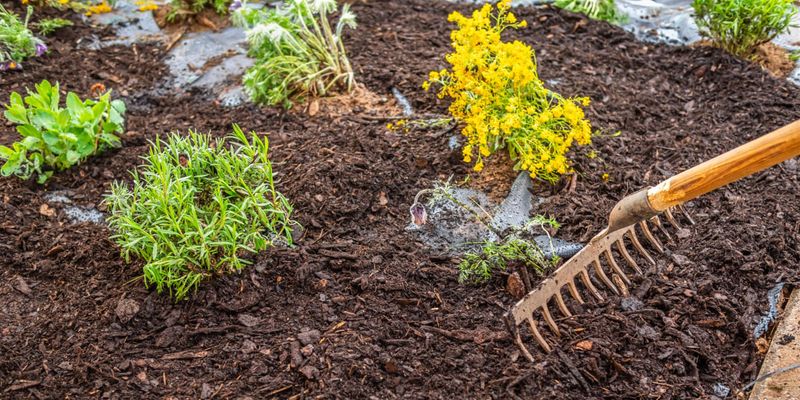
Protecting Wisconsin perennials from frost heave is not about covering every plant in the yard each fall. The decision starts with an honest look at each plant’s situation: how long it has been in the ground, how deeply its roots have spread, whether the site drains well, and whether the plant is fully hardy for that part of Wisconsin.
For plants that clear those bars, established and well-rooted in well-drained Wisconsin soil, a typical winter may require nothing more than leaving healthy stems standing to catch snow. For fall-planted perennials, recent divisions, shallow-rooted specimens, or plants pushing the edge of local hardiness, a loose cover of straw, marsh hay, evergreen boughs, or shredded leaves applied after dormancy and initial freezes gives the soil a better chance of staying stable through repeated freeze-thaw cycles.
UW-Madison Extension winter preparation guidance and UW-Madison Extension mulch guidance both frame winter mulch this way: as targeted protection for vulnerable plants, not a universal prescription.
Pull the cover back gradually in spring as the soil thaws and growth resumes, keep some material available for a late freeze, and check crowns for signs of heaving, rot, or winter burn as the season opens. Minnesota Extension mulching guidance reinforces that the real work of winter mulch is moderating freeze-thaw movement, not stopping Wisconsin soil from freezing or guaranteeing survival.
A plant that is well-matched to its Wisconsin site, properly established, and going into winter with adequate moisture and good drainage has already done most of the work of surviving; mulch simply helps keep the ground beneath it a little more stable.