Why New York Homeowners Are Hearing More Barred Owls This September
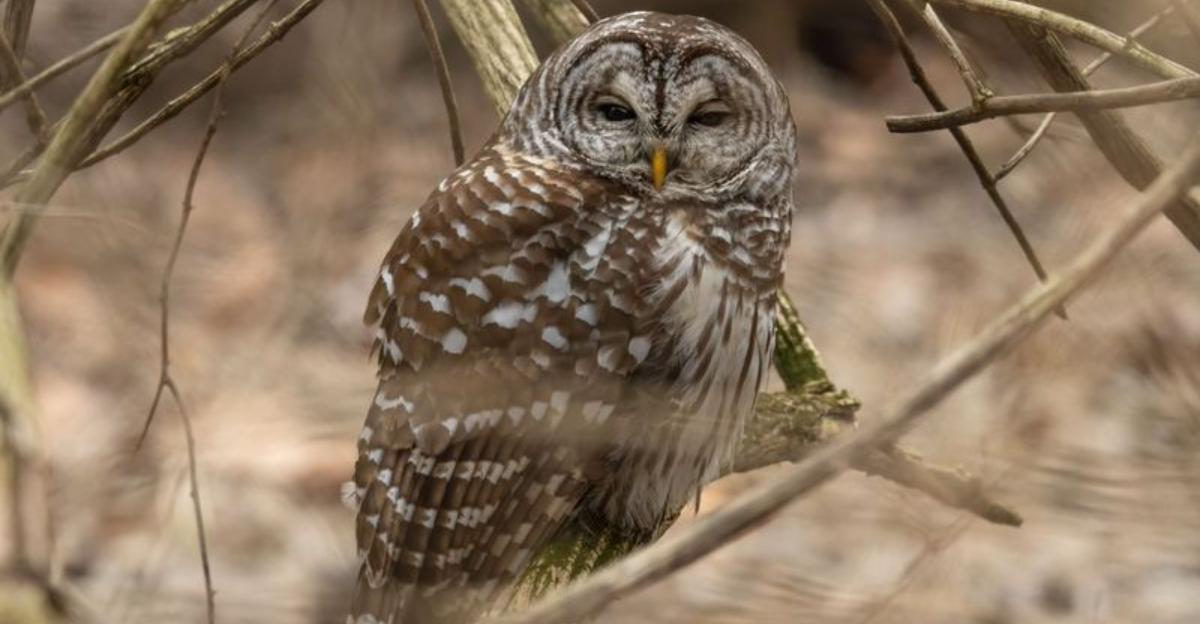
A strange, familiar hoot in the darkness can mean one thing: an owl is closer than you think. Barred owls have a voice that is almost impossible to mistake once you learn it.
Their famous “Who cooks for you?” call can echo through neighborhoods, parks, and wooded backyards across New York, especially when the evening gets quiet. These large, striking owls are often associated with mature forests, but they can also use wooded areas near homes.
September offers plenty of chances to notice them, and cooler evenings make their distinctive calls easier to hear. You may never spot the bird making the call, but once you know what to listen for, that familiar hoot becomes hard to ignore.
And there is plenty more to discover about the owl behind the sound.
The Barred Owl Call You May Hear After Dark
Picture stepping outside as twilight deepens, and suddenly a rich, deep hooting fills the air around your home.
That famous sound, often written as “Who cooks for you? Who cooks for you-all?”, is the barred owl’s signature call.
These vocalizations are wonderfully loud and travel a long way, making this one of the easiest forest owls to notice across the state.
Beyond that well-known phrase, barred owls have a whole collection of other sounds too. Listeners have described a “siren call,” a “wail,” and even a funny “monkey call” that shows off their impressive vocal range.
While they are mostly active after sundown, they aren’t strictly nighttime birds either. You might hear their calls or spot them hunting during the day, especially at dawn and dusk.
Their calling tends to be loudest between autumn and early spring, with males growing more territorial and vocal in November as they mark their space.
Courtship calling begins in February and can carry on through much of the summer, while general hooting happens year-round.
All this activity means if you hear an owl in your backyard, there’s a strong chance it’s a barred owl announcing itself.
Once you learn the tune, you’ll catch it again and again on quiet evenings.
Why Mature Trees Make Suburbs Attractive To Barred Owls
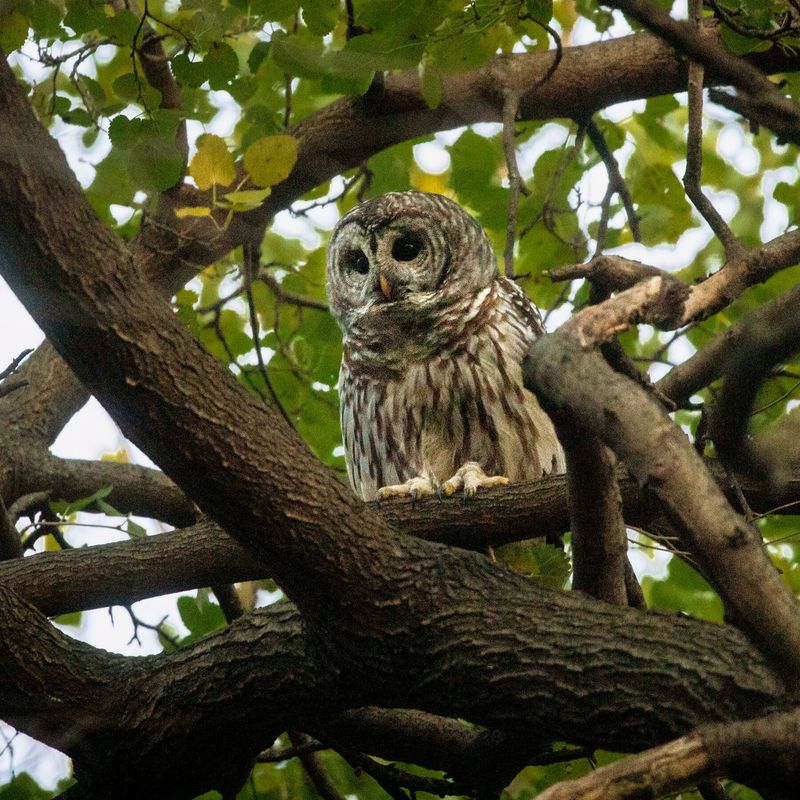
Big, old trees are an important reason barred owls can thrive in wooded areas across the state, including some places near homes.
Their preference for mature forests means neighborhoods with substantial tree cover can sometimes provide suitable habitat.
They look for large, layered woodlands that offer plenty of good roosting spots and safe cavities for nesting. Older woodlands matter because they give secure shelter and support more prey animals, which these clever hunters depend on.
Barred owls turn up in mixed forests and leafy woods, including places near swamps, streams, and higher wooded stands.
Over the years, many neighborhoods have grown mature tree cover, creating exactly the setting these owls love.
Because these birds are non-migratory, adults generally remain in the same general area and defend territories year-round. That makes the steady presence of sturdy, older trees an irresistible draw for them.
Your New York Garden Changes Every Week. Your Plan Should Too.
Gardening in New York changes quickly throughout the season. Every Friday you’ll receive a simple weekly plan showing exactly what to plant, prune, fertilize, harvest, and protect so you never miss the right timing.
The thick canopy and strong branches give owls ideal perches for hunting and solid protection from wind and rain. Homeowners who keep their large trees standing are quietly helping these birds settle in.
So the next time you see an owl overhead, thank the towering trees that made your yard feel like home to it.
In wooded suburbs, mature trees are the foundation of a comfortable, long-term owl home.
Backyard Habitat That Gives These Owls An Advantage
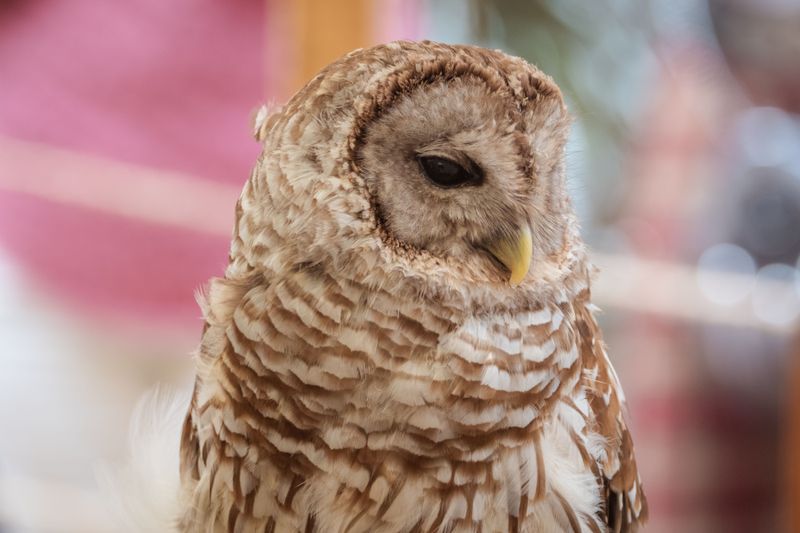
Setting up a welcoming yard can, without you realizing it, give barred owls a real boost in suburban New York.
These birds do best where trees are plentiful, especially spots with a mix of evergreens and older, partly hollow trees.
Sturdy trees serve several jobs at once: high perches for spotting prey, quiet roosts for daytime rest, and shelter from rough weather.
Keeping mature trees on your property, instead of cutting them unless safety demands it, directly boosts your land’s appeal.
Beyond trees, many yards offer bonus features owls appreciate. Tall posts and fence tops make handy lookout points while hunting.
Adding a deep birdbath in a quiet, shaded corner can attract owls looking for a spot to drink and bathe.
For folks who want to help even more, a properly designed nest box can provide another potential nesting option.
Place it securely in suitable wooded habitat and follow a species-specific nest-box design rather than improvising the dimensions or materials.
One big advantage of suburban New York is the steady supply of small rodents, a favorite food for these owls. Put those pieces together, and your backyard becomes a genuinely useful habitat.
A little thoughtful planning goes a long way toward sharing your space with these fascinating neighbors.
September Nights Bring More Owl Activity To Your Ears
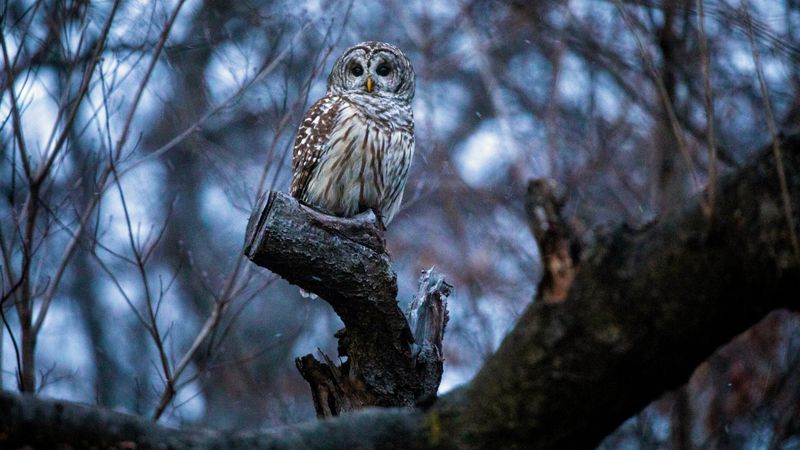
Noticing more owl calls on September nights is a neat window into their yearly rhythm.
Barred owls live here all year and are strongly territorial, so they don’t head off on long migrations.
Their breeding season actually starts much earlier, with males scouting nest sites in January and females laying eggs from January into early spring.
The owlets hatch after about 28 to 33 days, then take their first flight roughly five to six weeks later. Even after fledging, the parents keep feeding and caring for their young through much of the summer.
By late summer, including September, the breeding season has mostly wrapped up.
By late summer, young owls are becoming increasingly independent and exploring the area around their natal territory. They use a variety of calls while communicating with their parents, and their movements can make them easier to notice.
Adults remain territorial year-round and continue to call and defend their territories.
That combination can make September a lively time for anyone paying attention to barred owl sounds, although calling varies from one bird and location to another. It’s simply the sound of a new generation finding its place.
What Barred Owls Hunt Around Wooded Neighborhoods
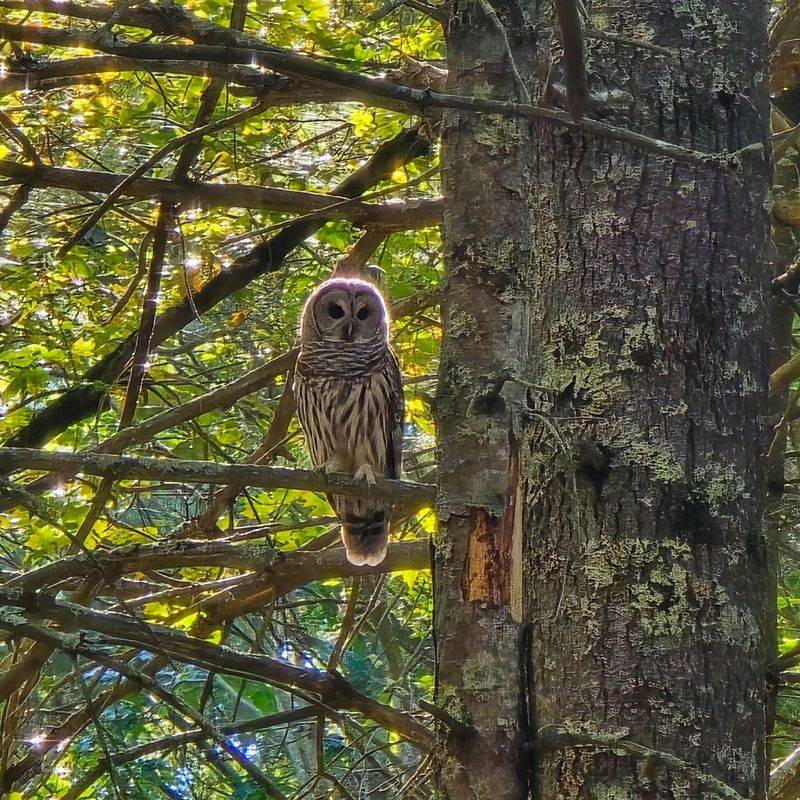
Talk about flexible eaters, barred owls will hunt just about anything that fits their menu in wooded neighborhoods.
These skilled hunters work mostly in the dark but also hunt at dawn and dusk, using sharp eyes and keen hearing.
Their main meals include small mammals like mice, voles, squirrels, flying squirrels, chipmunks, rabbits, shrews, moles, and rats. In suburban settings where rodents thrive, rats often become a common target, especially younger, smaller ones.
Their menu doesn’t stop at mammals, though. They’ll happily catch birds, including over a hundred species, some as big as grouse.
Frogs, salamanders, and snakes also show up in their diet.
Near water, which is common across the state, these owls wade into shallows or perch over streams to grab fish and crayfish. They even snack on beetles, crickets, slugs, scorpions, and grasshoppers.
What makes them so effective is their nearly silent flight. Soft feathers and serrated wing edges let them glide without a whisper.
They ambush prey from a high perch or by cruising low through the trees with stealth.
For homeowners, this appetite for rodents is actually a helpful form of natural pest control.
Having one of these quiet hunters nearby can keep your neighborhood’s rodent numbers in balance.
Why Your Backyard Lights Can Change The Nighttime Scene
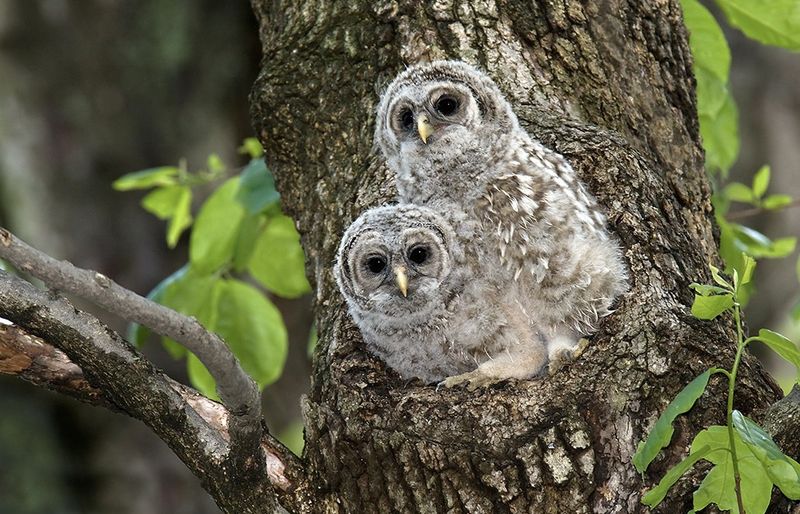
That gentle glow from your backyard lights can actually reshape the whole nighttime scene for barred owls.
Artificial light at night can change the conditions wildlife experiences after dark. Barred owls do most of their hunting at night, so keeping unnecessary lighting low helps preserve a more natural environment for them.
Their nighttime hunting depends on their senses, making darker conditions around wooded areas especially useful.
Excessive outdoor lighting can brighten spaces that would otherwise remain naturally dark, so keeping bright lights away from trees, roosting spots, and nesting areas is a simple way to minimize unnecessary disturbance.
When watching or photographing barred owls, avoid shining bright lights directly at them.
The fix is easy. Switch to motion-sensor lights, aim fixtures downward, and turn off lights you don’t need.
Small changes like these keep your yard more owl-friendly while preserving the quiet darkness these nighttime visitors depend on.
The Nesting Spots Barred Owls Look For
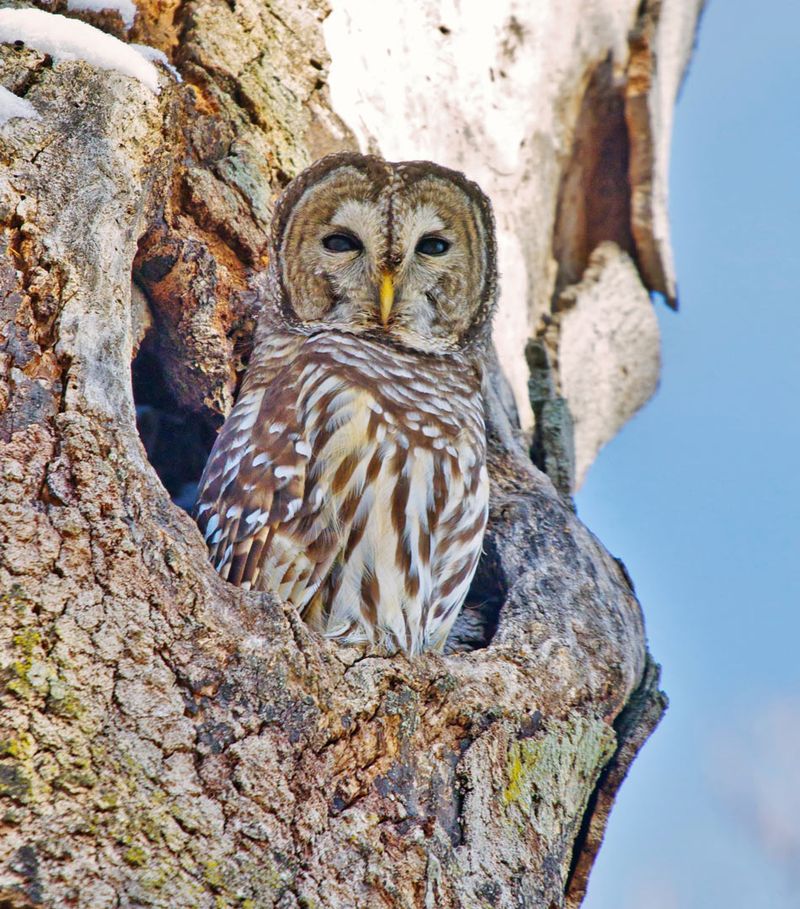
When it comes to raising a family, barred owls are pretty choosy about where they settle in woods and suburbs.
They favor deep, dark cavities inside tall, older trees, many of which were first carved out by woodpeckers. These preferred spots usually sit between 20 and 40 feet high, giving their young a safe, elevated home.
Being adaptable, they’ll also use old stick nests left behind by hawks, crows, ravens, or even squirrels. Sometimes they’ll accept a well-placed human-made nest box in a suitable wooded area.
Interestingly, these owls do very little remodeling once they move into a cavity or platform nest. They might add a few natural touches to a stick nest, like lichen, fresh green conifer sprigs, or a few feathers, for comfort and cover.
The ideal cavity measures about 10 to 13 inches wide and 14 to 21 inches deep, though some go deeper.
Males often scout out possible sites by January. The female then lays two to four smooth, white eggs sometime between December and March.
Barred owls are monogamous and tend to mate for life. Each year they raise a single brood in these carefully chosen spots.
Knowing what they seek helps homeowners understand why certain old trees are so precious to these birds.
How To Tell A Barred Owl From Other Nighttime Visitors
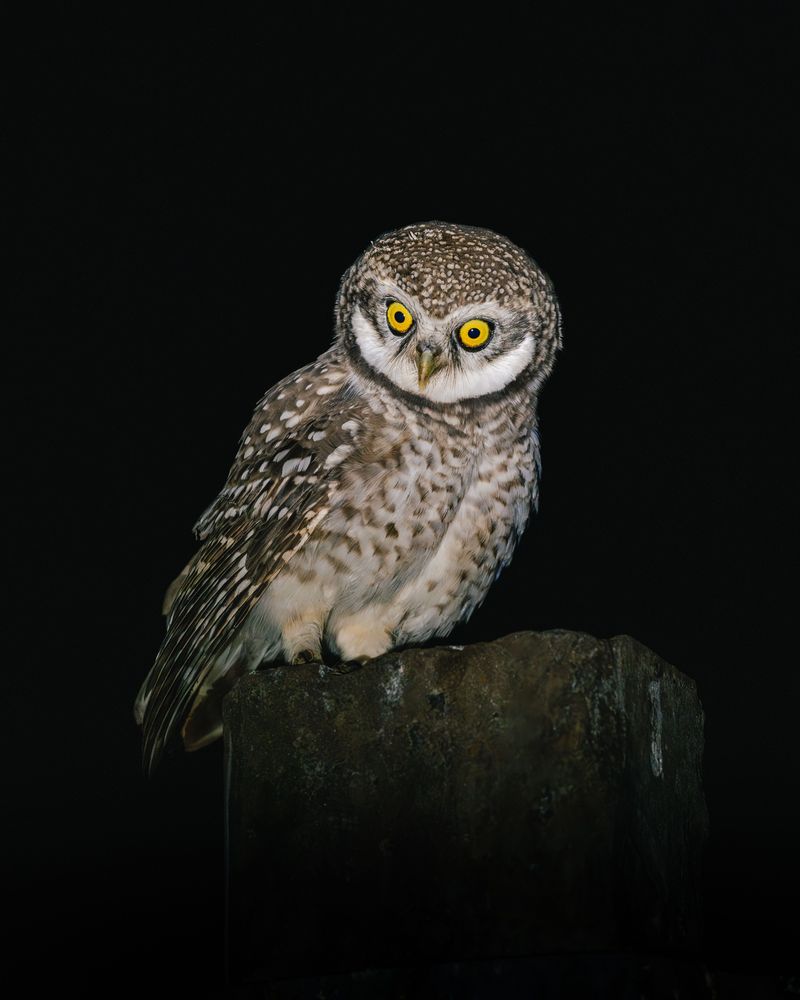
Once you know a few key features, spotting a barred owl among nighttime visitors is surprisingly simple.
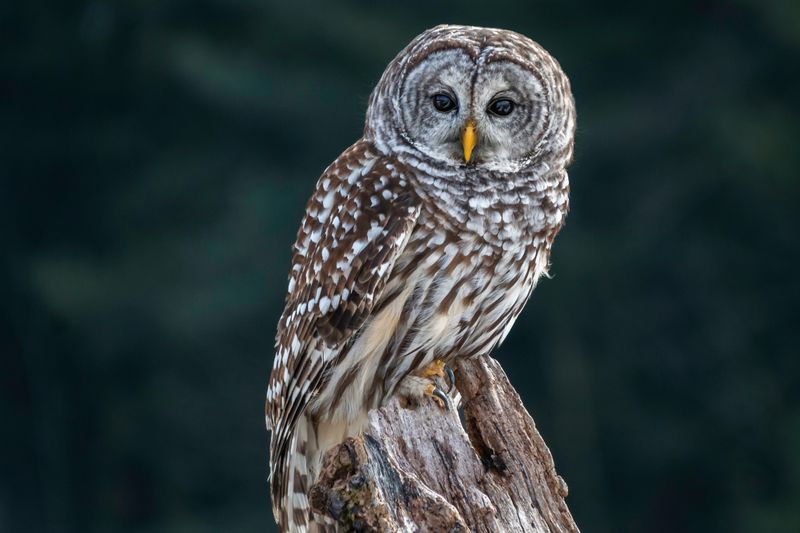
A barred owl is a fairly large, stocky bird with a smoothly rounded head and no “ear” tufts. Its most striking trait is its dark brown, almost black eyes, which is unusual since most owls have yellow eyes.
Its feathers are a mottled blend of gray-brown and white, giving it great camouflage against tree bark. Look for horizontal brown barring across the upper chest that shifts into vertical streaks down the belly.
These owls run about 17 to 20 inches long with a wingspan of 39 to 43 inches. Their famous “Who cooks for you?
Who cooks for you-all?” call is the quickest giveaway after dark.
By comparison, the larger Great Horned Owl has ear tufts, yellow eyes, and a deeper three-to-six-note hoot. The smaller Eastern Screech-Owl, common in New York yards, has short ear tufts and makes trilling or whinnying sounds.
Barn owls, rare across most of the state, look ghostly pale with a heart-shaped face and a harsh, raspy scream. Focus on those dark eyes, the rounded head, the barred feathers, and that cheerful “Who cooks for you?” tune.
With practice, you’ll confidently name this charming visitor every time.
What To Do When A Barred Owl Takes Up Residence Nearby
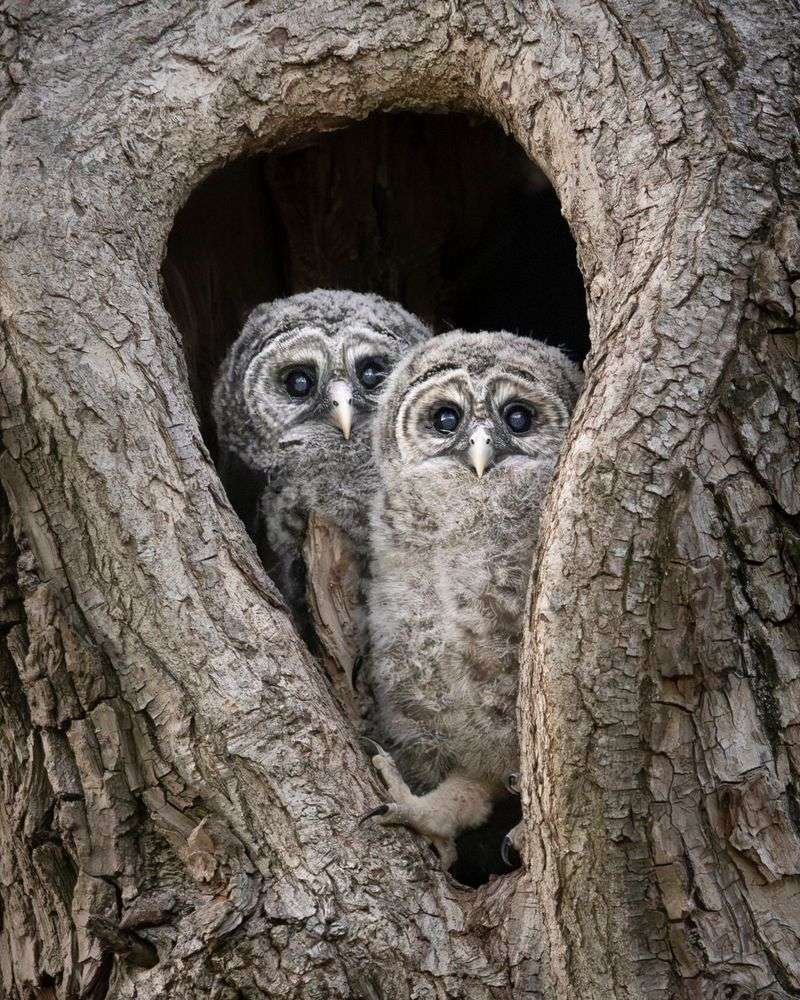
Finding that a barred owl has moved in near your New York home can be thrilling, and living together peacefully is very doable.
These owls tolerate people better than many raptors, but keeping a respectful distance is smart, especially near a nest.
During nesting season, females can turn protective and may strike with their feet if they feel cornered.
If you spot a fledgling on the ground, resist the urge to step in unless it’s clearly hurt. Its parents are usually close by, quietly keeping watch.
Give it space and watch from a distance unless it is clearly injured or in immediate danger. Never try to feed an owl, because the wrong food can do real damage.
To keep owls away from areas where small pets roam, remove tempting perches, clap or shout when you see one, or hang wind chimes. Bring small pets like chickens, rabbits, and tiny dogs indoors at night, or secure them in covered enclosures.
Skip rodenticides too, as those poisons can pass up the food chain and harm owls and other wildlife.
If an owl looks injured or in distress, call a local New York raptor center or wildlife rehabilitator for help.