Here’s What It Means When You Start Seeing These Entry Holes In North Carolina Apples
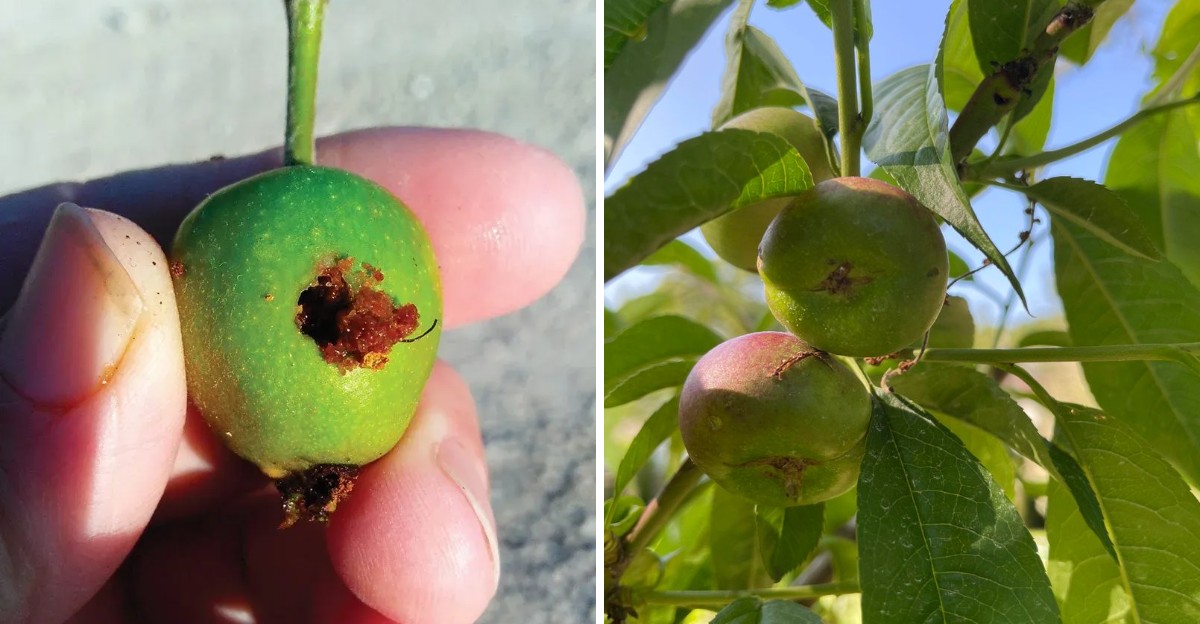
You bite into an apple from your own tree and stop mid-chew.
There’s a brown hole in the skin. Follow it inward and a tunnel runs toward the seeds, with something small still living in it.
Every backyard grower in North Carolina has had that moment. Orchard slopes near Hendersonville, a single tree in a Raleigh side yard, doesn’t matter.
Here’s what most people miss though.
That damage isn’t random. Different insects leave different marks, and each one has a specific season and a specific weakness.
A round hole with crumbly debris means one thing. A curved scar on the skin means something else entirely.
Reading those clues tells you which pest you have, and that determines everything about what you do next spring.
Guessing wrong costs you a whole season.
Curious what’s actually in your apples?
1. Codling Moth Larvae Bore Straight In
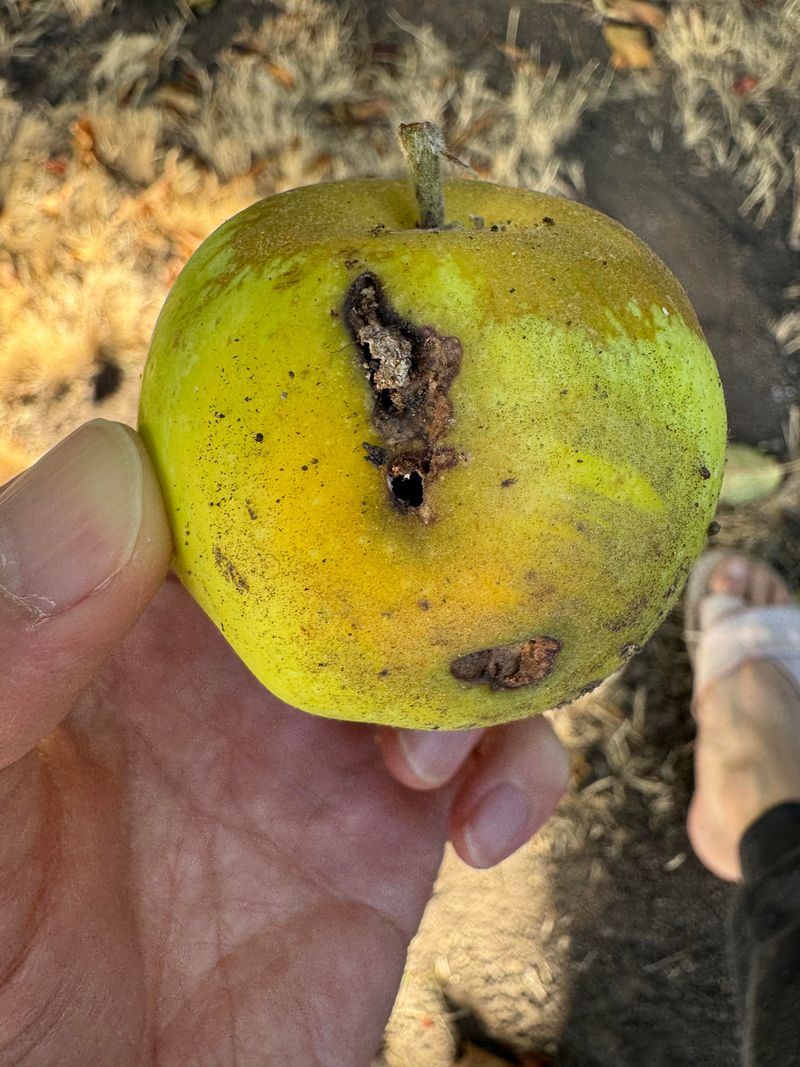
Slice open a backyard apple and you may find a narrow tunnel running toward the seeds. Codling moth larvae created it.
The path looks deliberate rather than wandering. That directness is the identifying feature.
Adult codling moths are small, grayish, and easy to overlook entirely. Females lay eggs on leaves, twigs, or young fruit.
Hatching caterpillars head for the nearest apple immediately. Timing between hatch and entry is brief.
Once a larva reaches the skin, it chews a direct entry hole and bores inward. Surface wandering isn’t part of the pattern.
The core is the destination, since seeds provide the richest food available inside the fruit.
Cut a damaged apple in half and the evidence is unmistakable. A brown crumbly tunnel runs from skin to seed cavity.
Chewed seeds and packed waste often line the route. Deep core-directed feeding is the codling moth signature.
Entry holes appear round and roughly pencil-lead width when fresh. As fruit grows, the hole may look sunken or capped with debris.
Larvae feed for several weeks, then leave to spin cocoons under loose bark or in orchard litter. Two or more generations occur across much of North Carolina.
One tunneled apple in July usually means more arriving in August. Weekly checks beat waiting for harvest.
2. Plum Curculio Leaves A Crescent Scar
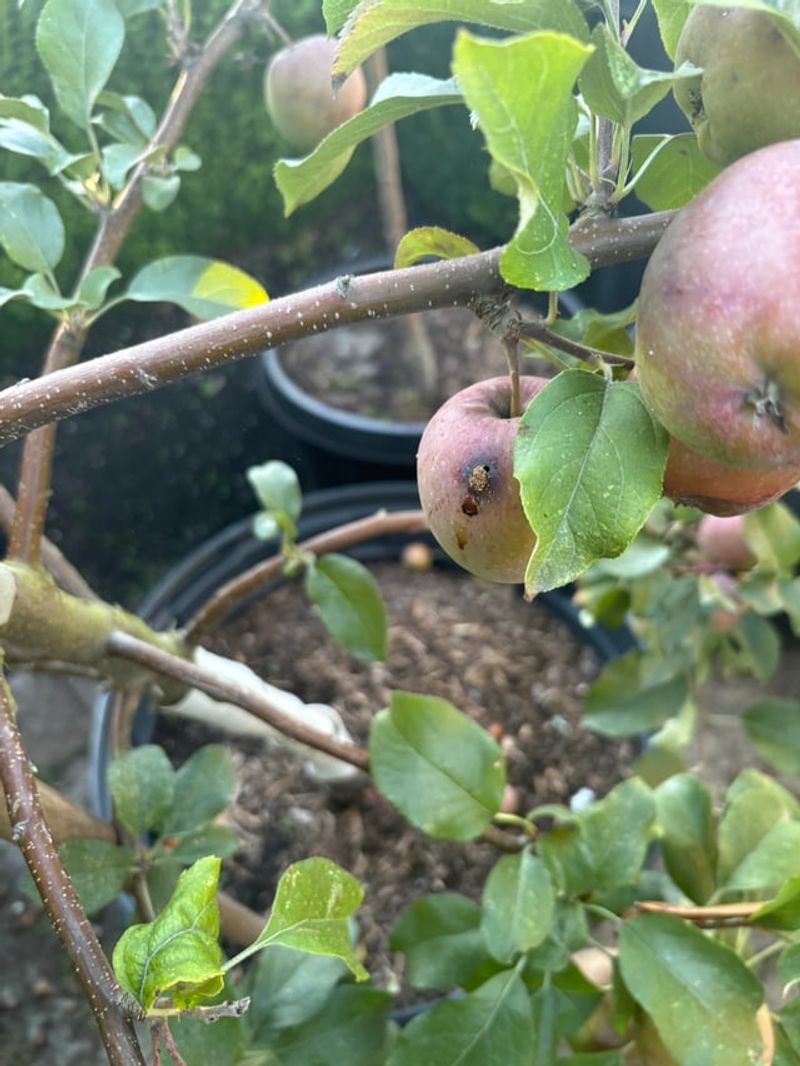
Run a thumb over an early-summer apple and you may feel a raised curved line. Plum curculio made that mark.
The shape resembles a small crescent moon pressed into the skin. Distinctive enough to identify by touch.
The pest is a small brownish weevil with a curved snout and bumpy back, generally under a quarter inch. Size makes it easy to miss.
Activity begins around bloom and early fruit set in North Carolina orchards. Marble-sized apples are the target.
A female chews a small slit in the fruit, tucks an egg inside, then cuts a crescent-shaped flap below it. That flap keeps swelling fruit from crushing the egg.
Clever, from her perspective. Frustrating from yours.
As the apple grows, the crescent becomes a corky dark scar visible until harvest. Many scarred apples remain perfectly edible once you cut the damaged area away.
Your North Carolina Garden Changes Every Week. Your Plan Should Too.
Gardening in North Carolina changes quickly throughout the season. Every Friday you’ll receive a simple weekly plan showing exactly what to plant, prune, fertilize, harvest, and protect so you never miss the right timing.
Not every crescent leads to a tunnel. Fast-growing tissue crushes plenty of eggs, so fruit heals over and simply looks lumpy.
When a larva survives, it feeds in the flesh and the apple typically drops early. Misshapen young fruit on the ground in June is the classic signal.
The crescent scar is the telltale mark, which makes shape more important than hole size.
Study the skin before assuming worms. A curved scar means curculio.
3. Holes Near The Core Signal Trouble
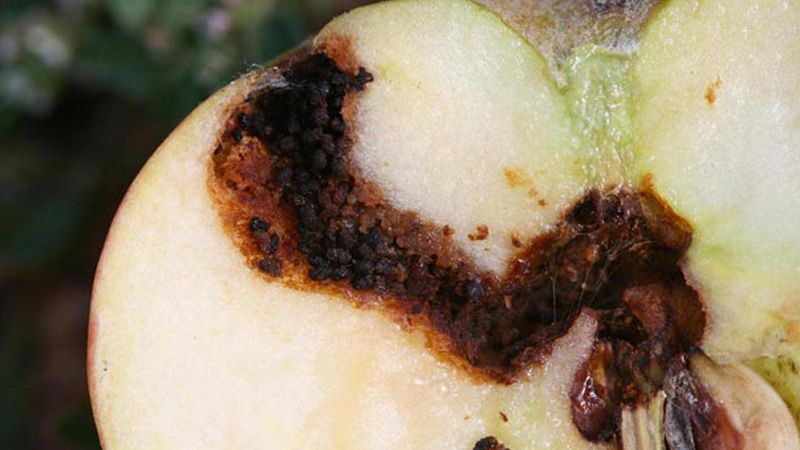
Location tells the story, and inside an apple that story appears in tunnels. Where damage sits usually names the culprit.
Depth matters as much as position. Both are readable.
Cut fruit from stem to blossom end rather than straight across. That orientation follows the tunnel properly.
A codling moth tunnel runs inward and terminates in the seed cavity. Hollowed or chewed seeds often appear there.
Plum curculio injury stays shallow by comparison. Feeding and egg scars occupy the outer flesh.
Corky brown patches under the skin result rather than a passage to the middle. Different insect, different pattern.
Depth determines what you can salvage. Surface scars trim away, leaving usable fruit for sauce.
Core damage usually means decay has already started. That fruit isn’t worth processing.
Brown soft wet flesh around a deep tunnel indicates secondary rot fungi following the insect. Those apples belong in the trash rather than storage.
Check the stem end and the calyx, meaning the dimple at the bottom. Young codling moth larvae favor those protected spots.
Keep a tally of deep tunnels versus surface scars across ten or twenty fruit. That number identifies which pest dominates in your yard.
4. Frass Around The Hole Confirms It
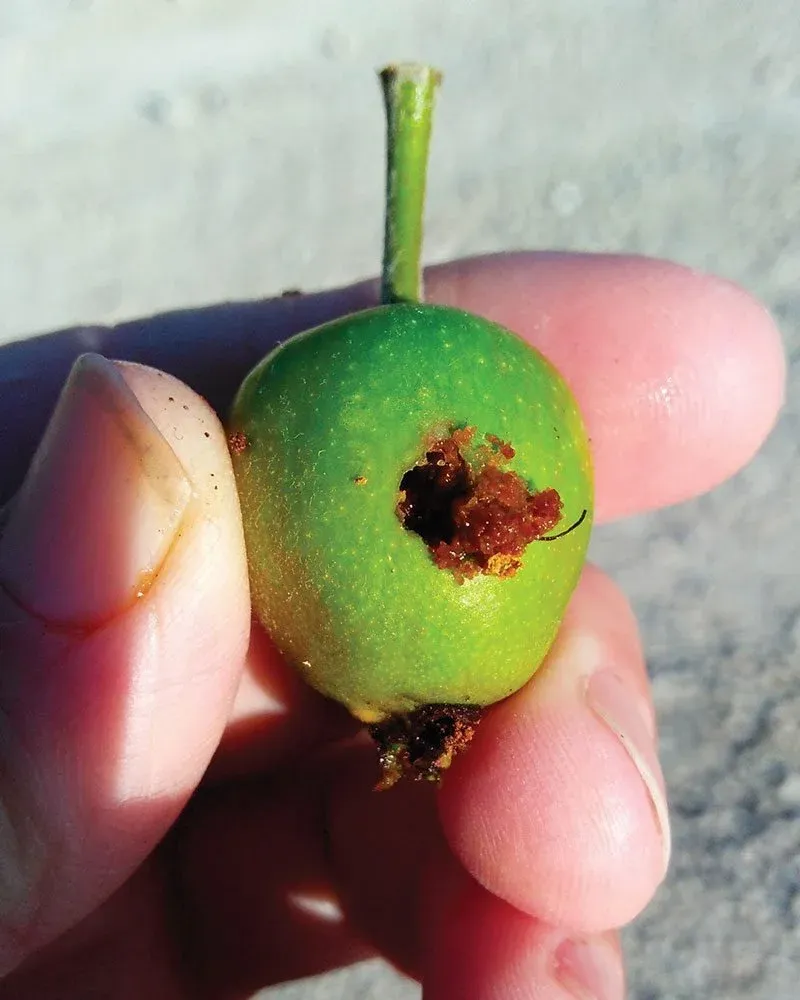
Gardeners call the crumbly brown material pushed from an apple hole sawdust. Entomologists call it frass.
It’s insect waste mixed with chewed fruit tissue. Either name works.
Frass is the strongest external clue that a codling moth larva is inside. As it tunnels, the larva pushes waste back out the entrance.
That material clumps and dries around the opening. Visible without cutting anything.
Fresh frass looks moist and reddish brown, similar to wet coffee grounds. Older piles turn pale and dusty.
Summer thunderstorms wash it away, which complicates identification after rain.
Plum curculio scars produce nothing comparable. A crescent mark stays clean and corks over as fruit expands.
So a hole ringed with a crusty collar of debris matches codling moth injury descriptions closely.
Check the calyx end too, since larvae often enter through that sheltered dimple. A hand lens helps considerably on overcast days.
One caution applies. A hole without frass isn’t automatically curculio.
Rain, birds, or a departed larva all clear the entrance. Cutting the apple open settles it when outside evidence has vanished.
Saving a couple of infested apples in a sealed jar reveals exactly what emerges.
5. Timing Sprays Matters More Than Type
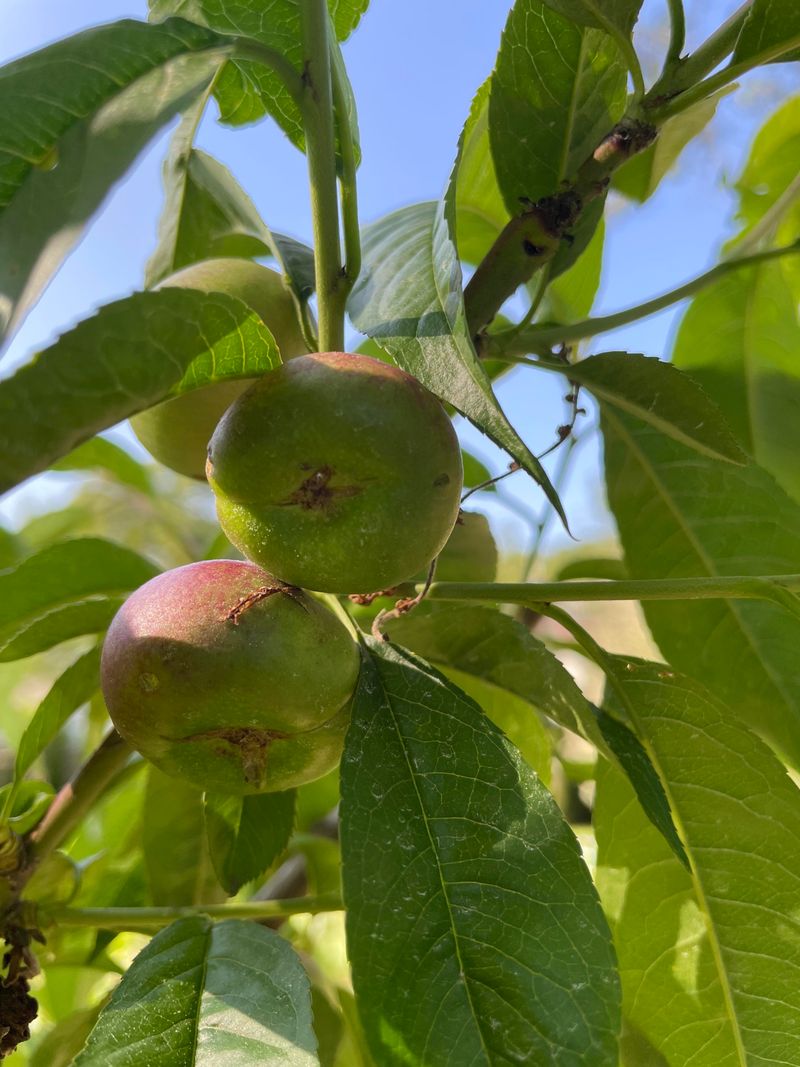
Here’s what surprises most first-time growers: a well-chosen spray fails completely when applied during the wrong week.
Product selection matters less than calendar accuracy. That reverses most people’s assumptions.
Both pests have narrow windows of exposure. Codling moth eggs hatch and larvae crawl briefly across the fruit surface before boring in.
That short walk is the only moment a surface treatment reaches them. Once inside, nothing sprayed externally touches the larva.
Plum curculio follows its own schedule, moving into orchards from woody edges around petal fall. Protecting fruit during that early wave matters far more than midsummer repeats.
Extension programs track these windows using degree days, meaning accumulated heat that predicts insect development better than dates do.
A warm March in the Piedmont pushes events a week or two ahead of a cool mountain year. Geography and weather both shift the schedule.
Copying a neighbor’s spray date frequently misses. So does following a date from a book written for another state.
Check your county Extension office or state apple pest updates for local timing. Pair that with your own trap counts.
Read every label direction including days-to-harvest limits. Those restrictions exist for good reason.
Fewer well-timed applications plus thinning and cleanup beat a shelf of products used randomly.
6. Fallen Fruit Should Not Stay On The Ground
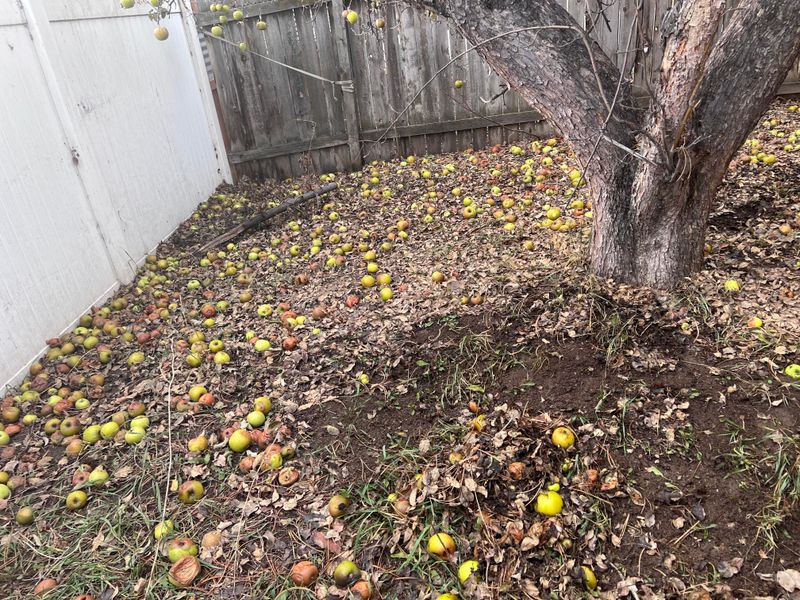
That scatter of small apples under the tree in June isn’t yard clutter. It’s next year’s pest population waiting.
Leaving it there completes the insect’s life cycle for it. Removal interrupts that.
Plum curculio larvae ride down inside dropped fruit, chew their way out, and burrow into soil to pupate. A week or two on the ground is all they need.
Codling moth larvae also abandon fallen apples, seeking sheltered spots for cocoons.
Picking up drops once or twice weekly through summer interrupts both cycles. More often after a windy storm, when fruit falls all at once.
Timing matters since larvae leave fallen fruit within days rather than weeks.
Collected fruit should leave the area entirely. Bury it deeply, bag it for trash, feed it to livestock, or use a hot actively working compost pile.
A loose heap behind the shed just relocates the problem twenty feet.
Remove damaged apples still hanging too, since larvae continue developing inside them. Thinning to one apple per cluster eliminates the touching-fruit hideouts larvae prefer.
Late season work includes raking leaf litter and inspecting loose bark for overwintering cocoons.
Cardboard trunk bands trap larvae seeking pupation sites, then get destroyed in winter.
Sanitation is the cheapest control available and costs nothing beyond a bucket and ten minutes.
7. Next Season Starts With Better Monitoring
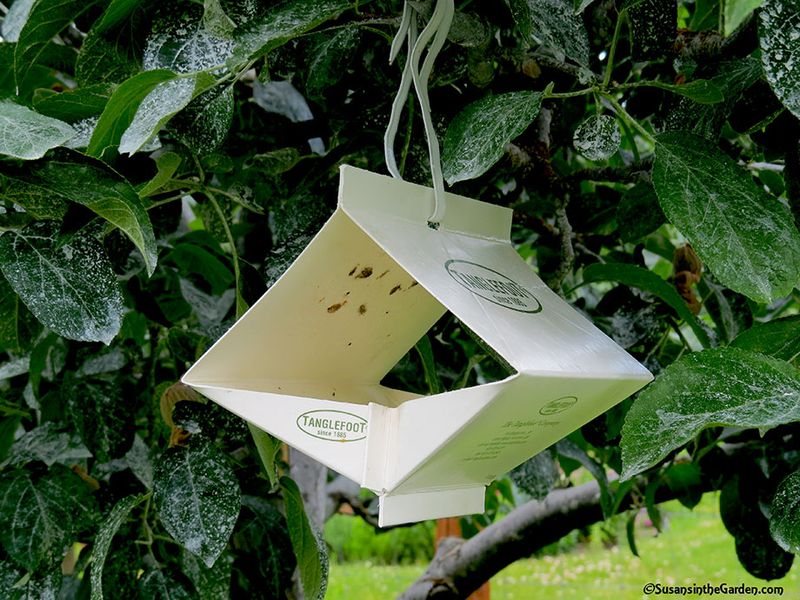
Every clean apple next August traces back to notes taken this year. Records beat memory consistently.
Pheromone traps are the standard tool for codling moth. Hung in the canopy before bloom, they catch males and reveal when flights begin.
Flight timing tells you when eggs are coming. That’s the actionable information.
Check traps weekly, record count and date, and replace lures on schedule. Old lures give misleading results.
Plum curculio proves trickier since trapping works less reliably. Many home growers tap branches over a sheet on cool mornings instead.
Weevils drop when disturbed, which makes them easy to spot against white fabric.
Scouting fruit carries equal value. Walk the tree twice weekly from petal fall through midsummer.
Examine twenty apples and record crescent scars, round holes, and frass separately. Categories matter more than totals.
Add weather notes, bloom dates, and spray dates to the same page. Across two or three seasons that becomes a calendar tuned to your specific site.
Pair your notes with regional pest alerts, since mountain and Piedmont timing differ meaningfully.
Winter work starts the cycle clean. Prune for airflow, pull mummified fruit, clear litter, and check bark for cocoons.
Damage rarely reaches zero in a home orchard, and that’s an acceptable outcome.
8. Other Culprits Worth Knowing
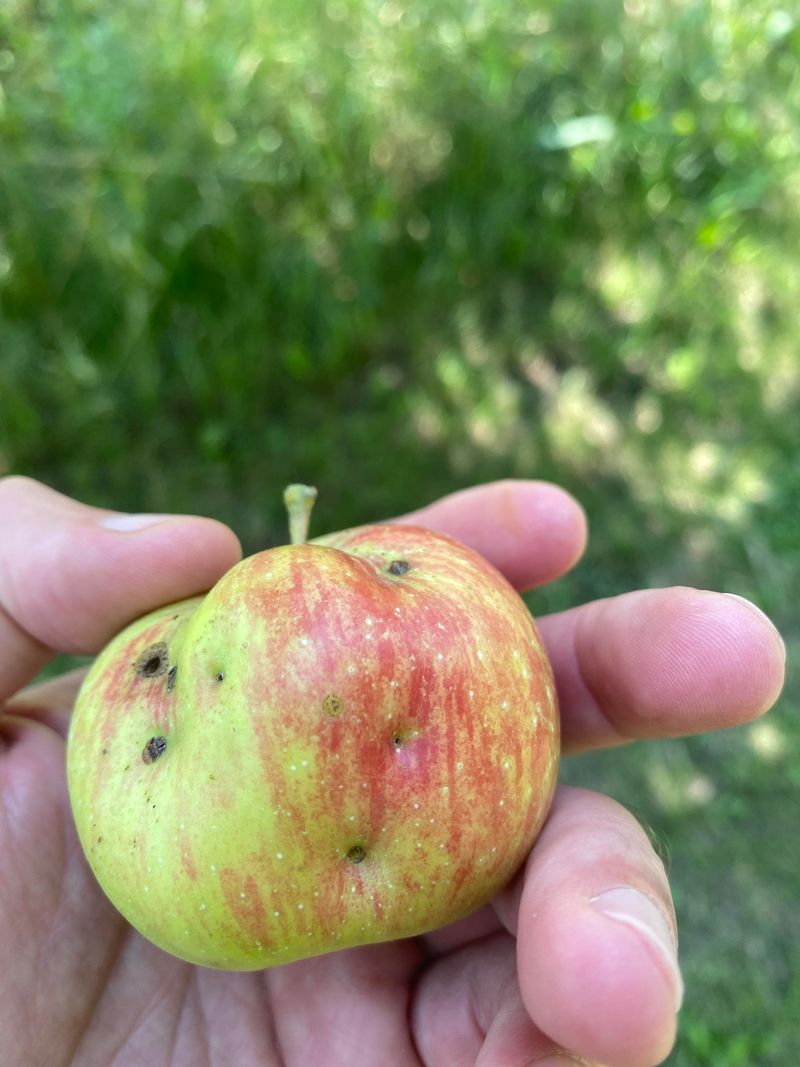
Codling moth and plum curculio cause most damage, and a few other insects leave marks people misidentify regularly.
Apple maggot produces different evidence entirely. Adults are flies rather than moths or weevils.
Females puncture the skin, leaving small dimples rather than round holes. Larvae then tunnel throughout the flesh in winding trails.
That wandering pattern distinguishes it from codling moth’s direct route to the core. Fruit often looks lumpy and pitted externally.
Oriental fruit moth attacks apples in North Carolina too, though peaches suffer more. Damage resembles codling moth closely enough to confuse.
Tunnels from oriental fruit moth tend to be shallower and less focused on seeds. Identification often requires rearing the larva.
Green fruitworms feed on the surface early in the season, leaving large irregular gouges rather than holes. Damage happens on small fruit and scars over as apples grow.
Those scars look dramatic and rarely affect eating quality. Cosmetic more than destructive.
Stink bugs and tarnished plant bugs cause dimpled corky areas without any tunnel. Feeding punctures rather than entry holes.
Bird damage sometimes gets blamed on insects. Pecks appear as irregular gouges without frass or tunnels.
When identification stalls, your county Extension office accepts samples. A photograph of both exterior and cut fruit usually suffices.