The White Webbing On Connecticut Branch Tips Is Not What Most Assume
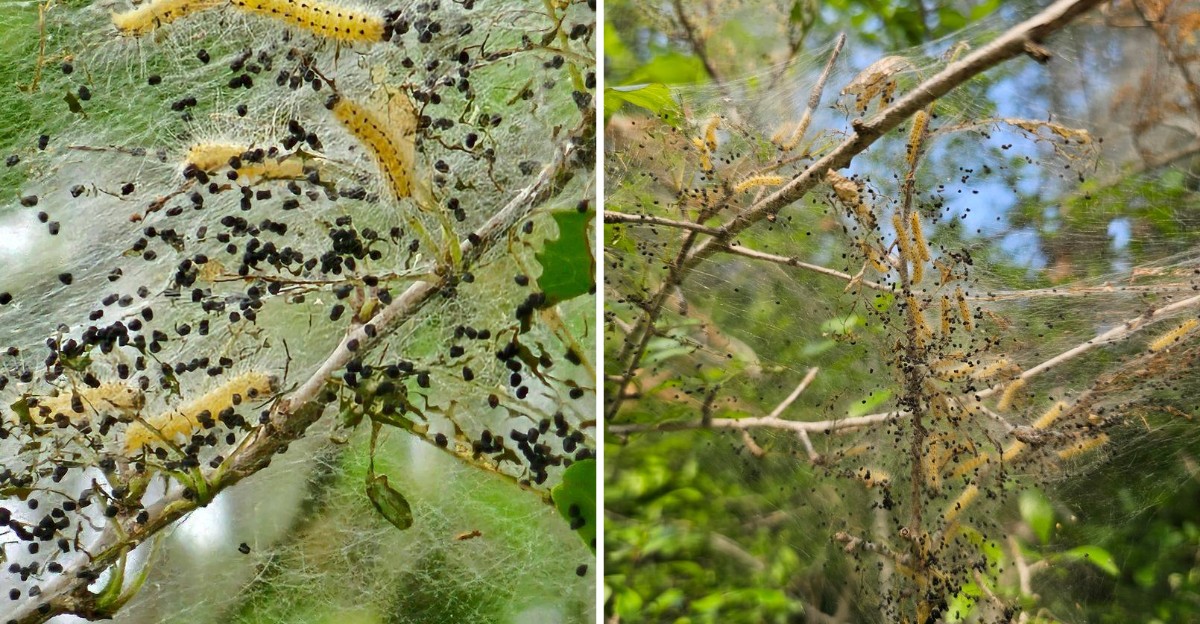
Late in a Connecticut summer, something pale and papery appears at the ends of tree branches. It catches the low evening light like a torn curtain and gives the whole yard a slightly spooky look.
Most folks look up, assume the worst, and start hunting for a spray bottle. Others reach for a hose, a ladder, or something a lot more dramatic.
Neighbors trade the same rumor every August, and most of it turns out backwards. The insect behind that silk causes far less damage than its reputation suggests, and the mistake homeowners make usually happens before they even look closely.
Learn who’s actually inside the tent and the whole situation gets a lot less alarming. What follows covers the timing, the mix-up that trips people up, and a fix that takes about ten minutes.
The Silky Tents At Branch Ends Belong To Fall Webworm
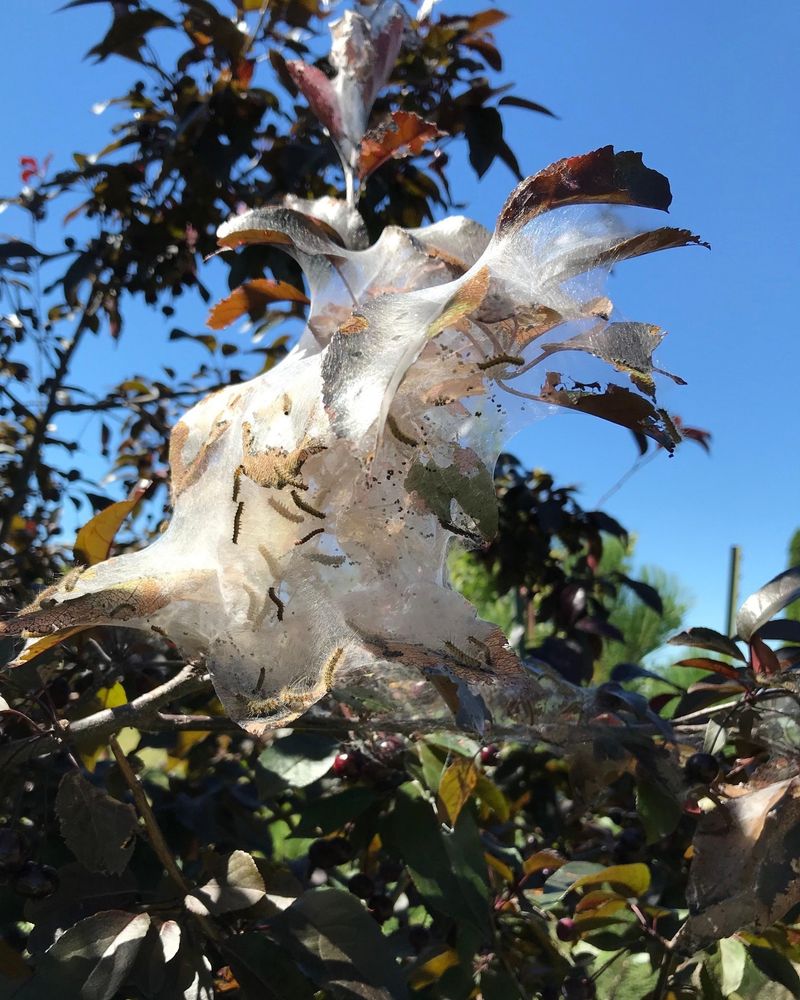
Walk under a maple in August and you might spot what looks like cotton candy snagged on the twigs. That gauzy pouch is the work of the fall webworm, a native caterpillar that’s decorated Connecticut trees for generations.
The adult is a small white moth, sometimes flecked with dark spots, that lays eggs on the underside of leaves. The young hatch, feed as a group, and spin silk around the leaves they eat, stretching the tent wider as they grow.
Inside you can see chewed leaf skeletons, dark specks of frass, and pale caterpillars covered in long hairs. Colors run from creamy yellow to gray, with either a black head or a red one depending on the race of the insect.
They favor the tips of branches because the freshest leaves sit there. Crabapple, cherry, walnut, birch, hickory, and elm are frequent hosts, though the menu in the Northeast runs past eighty species.
Because the nest hangs in plain sight, it reads as an emergency. In truth the feeding starts late in the season, after the tree has already banked most of the energy it needed for the year.
Knowing the name of the tenant changes the whole conversation. Instead of reaching for a spray, most homeowners can look, snip, and get on with the weekend. A native insect with a long local history earns a bit of patience.
Common Mix-Ups With Eastern Tent Caterpillar And Spongy Moth
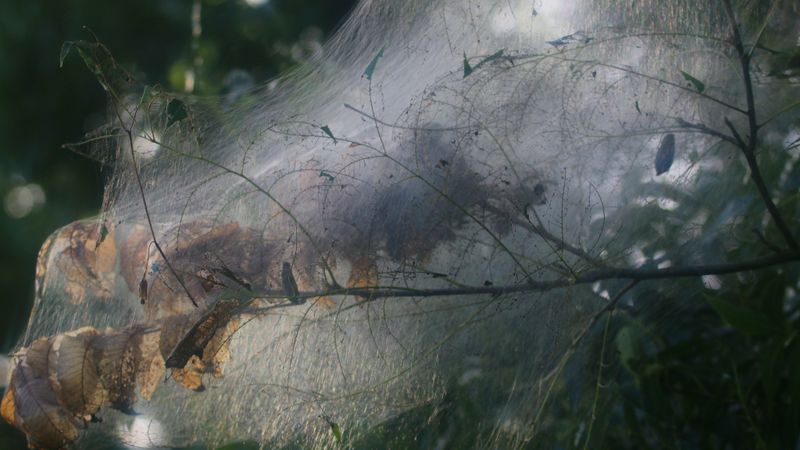
Ask ten neighbors to name the culprit and most will say tent caterpillar. The mix-up makes sense, yet those two insects keep different calendars and build in different spots.
Eastern tent caterpillar shows up in spring, right when cherry and crabapple leaves are unfolding. Its nest is a thick, shiny hammock tucked into the fork where limbs meet the trunk, and the caterpillars crawl out to feed and return home at night.
The late-season webbing works the opposite way. It sits at the outer tips of branches, wrapped loosely around the very leaves being eaten, so the tent grows outward as the group moves along the twig.
Spongy moth, once called gypsy moth, gets blamed too. That one builds no tent at all, laying tan, felt-like egg patches on bark and sending caterpillars out to chew oak leaves in late May and June.
Your Connecticut Garden Changes Every Week. Your Plan Should Too.
Gardening in Connecticut changes quickly throughout the season. Every Friday you’ll receive a simple weekly plan showing exactly what to plant, prune, fertilize, harvest, and protect so you never miss the right timing.
A few other look-alikes round out the list. Spider silk gathers dust and glistens but holds no leaves, spider mites leave fine webbing plus stippled foliage, and barklice spin a sheer sheet across trunks while tidying up algae.
Getting the identity right saves money and effort. Spring nests, bark egg masses, and branch-tip tents each call for a different response, and treating one like another wastes a Saturday.
A quick check helps. Note the month, look at where the silk attaches, and see whether leaves are trapped inside the netting, then compare notes with Connecticut Agricultural Experiment Station fact sheets before you buy anything.
Late Summer Timing In Connecticut Yards And Roadsides
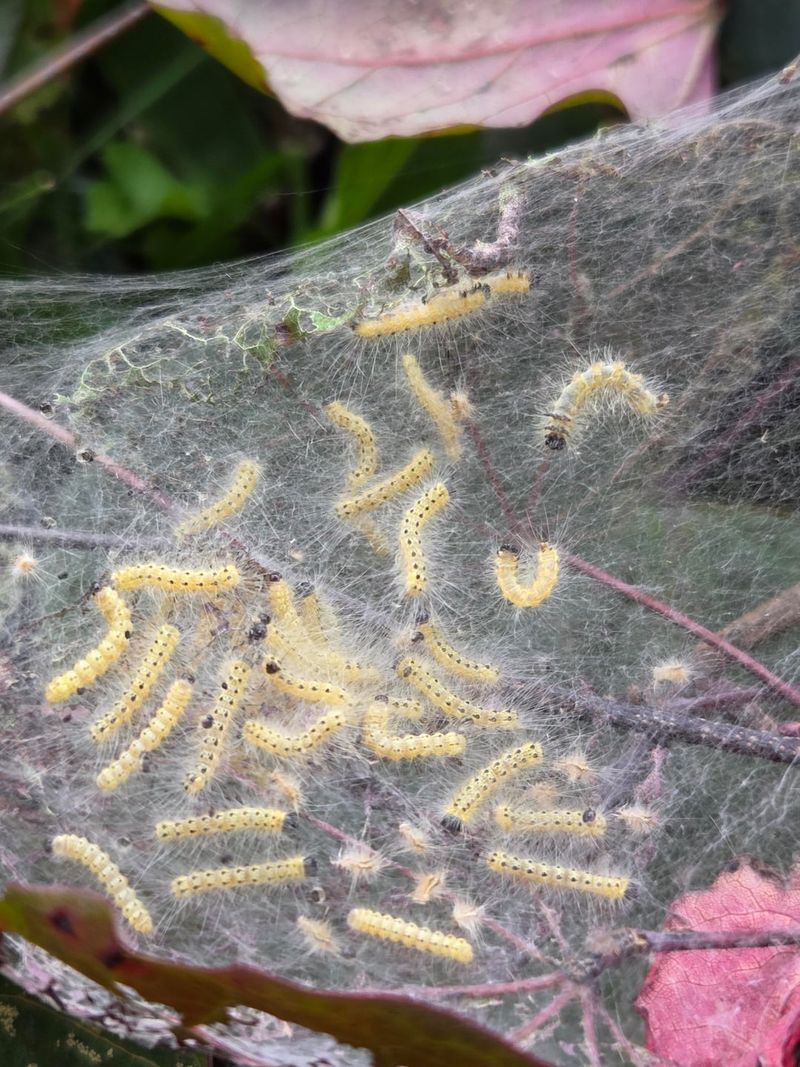
Calendars matter more than most homeowners expect. The moths fly on warm June and July nights, drawn to porch lights, and glue fuzzy egg patches under leaves.
Eggs hatch in about a week, and the first tents are the size of a fist. By the middle of August, some have swelled into baggy gray hammocks a foot or two across, especially along stone walls, fence lines, and sunny roadsides.
Connecticut sits in a zone where a second round can appear. A warm year may bring a partial second generation, which is why fresh silk sometimes turns up in September while the first tents already look tattered.
Location plays a role in what you notice. Roadside black cherry and walnut catch the most sun and the most eggs, so those trees light up with silk while a shaded backyard specimen stays clean.
The season also explains the low stakes. Leaves have spent June and July making sugar and shipping it to roots and buds, so chewing that starts in August takes far less from the tree.
Populations swing from year to year. One summer the roads look draped, and two summers later you may hunt to find a single nest, thanks to weather swings and a large crew of natural predators and parasites.
Mark your own calendar in mid-July. Checking branch tips then, while nests are small and low, turns a September chore into a two-minute snip, and you get a preview of how busy the season will be.
The Torch And Spray Reflex That Backfires
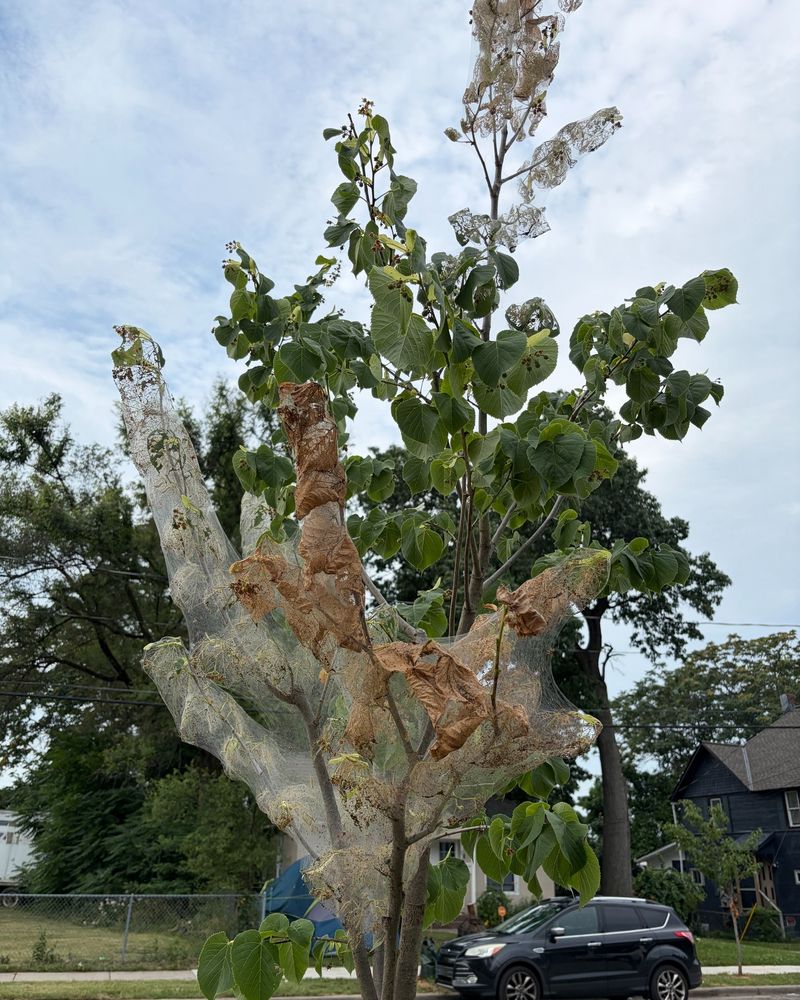
Every year a few brave souls tape a rag to a pole, soak it in fuel, and light up a nest. Fire scorches bark and opens the tree to decay. It’s a mistake that’s cost more than one homeowner a damaged garage.
Blasting with a pressure nozzle feels satisfying and mostly relocates hairy caterpillars onto the patio. Knocking nests down with a pellet gun, another local tradition, leaves splintered twigs and an intact colony.
Broad insecticides bring their own trouble. The webbing sheds droplets, so coverage is poor, and spray drifts onto flowers where bees and the tiny wasps that keep this insect in check are working.
Over-pruning ranks as the quiet mistake. Cutting a four-inch limb to reach a grapefruit-sized tent trades a cosmetic problem for a permanent gap in the canopy and a cut that takes years to close.
Panic timing hurts too. Homeowners often act in September, when caterpillars have already wandered off to spin cocoons in bark cracks and leaf litter, so the effort accomplishes little beyond exercise.
Then there is the assumption that the tree is in trouble. Late defoliation on a healthy shade tree looks rough and rarely changes next spring’s leaf-out, so drastic measures address a problem that was mostly visual.
Skipping the drama saves bark, money, and pollinators. A pole pruner, a bucket, and a little patience outperform fuel and force on any street in the state. Ask any arborist which method they would rather find in the yard.
Simple Removal Steps That Do The Job
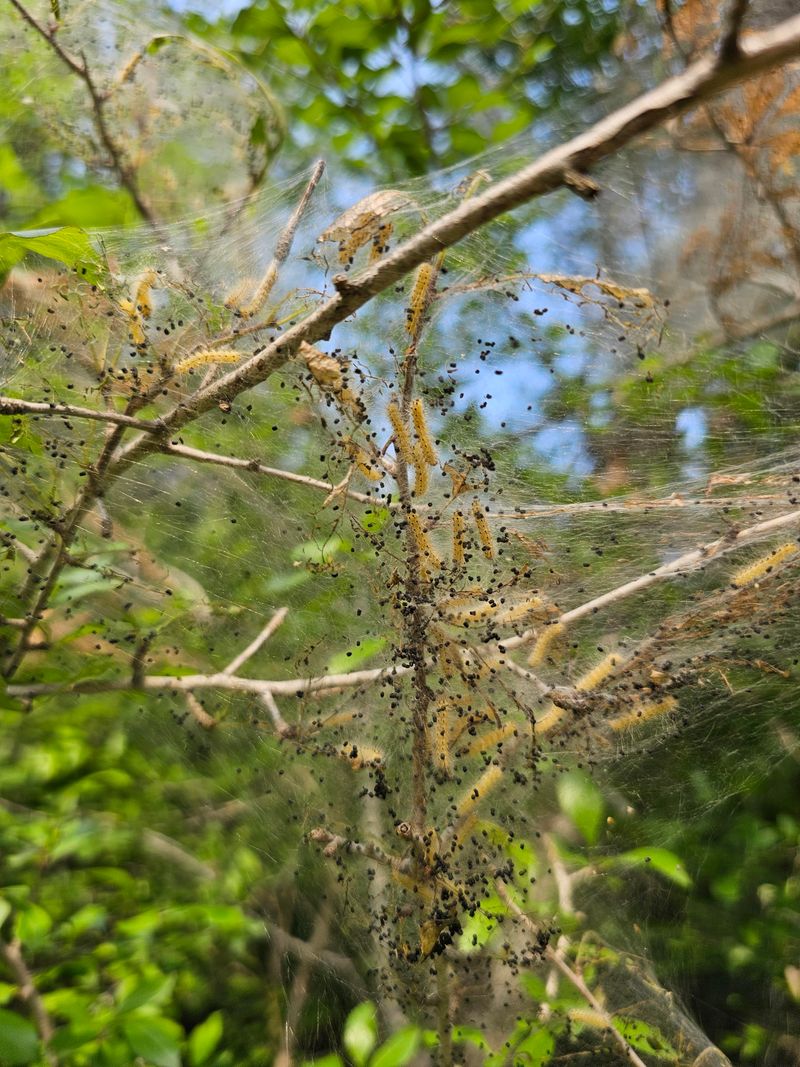
Grab a pole pruner on a cool morning and the whole task shrinks. Snip the twig a few inches behind the tent, lower it slowly, and drop the bundle into a bucket of soapy water.
For nests you cannot reach with a blade, a broom handle works. Twist the silk onto the stick like cotton candy and submerge the wad, or simply tear the tent open and let birds and paper wasps do the shopping.
Gloves are worth wearing. The hairs on these caterpillars can leave itchy skin on sensitive folks, and nobody enjoys picking silk out of a sleeve.
If a small ornamental tree keeps getting hit, a product containing Bacillus thuringiensis, sold as Bt, handles young caterpillars while sparing bees. Timing is everything, since it works on tiny larvae inside fresh tents rather than the plump ones in a September nest.
Support the tree while you are out there. A slow soak during dry spells, a ring of mulch kept off the trunk, and no string trimmer scars go further than any spray toward keeping a canopy full.
Fallen leaves and pruned tents belong in a bag or a hot compost pile, not tossed behind the shed. Cocoons overwinter in that debris, and moving it out lowers next year’s count on the same branches.
One pass in late July and a second in mid-August usually keeps a yard tidy. Ten minutes with a pruner beats an afternoon on a ladder every time.
The Long View On Tree Health And Natural Helpers
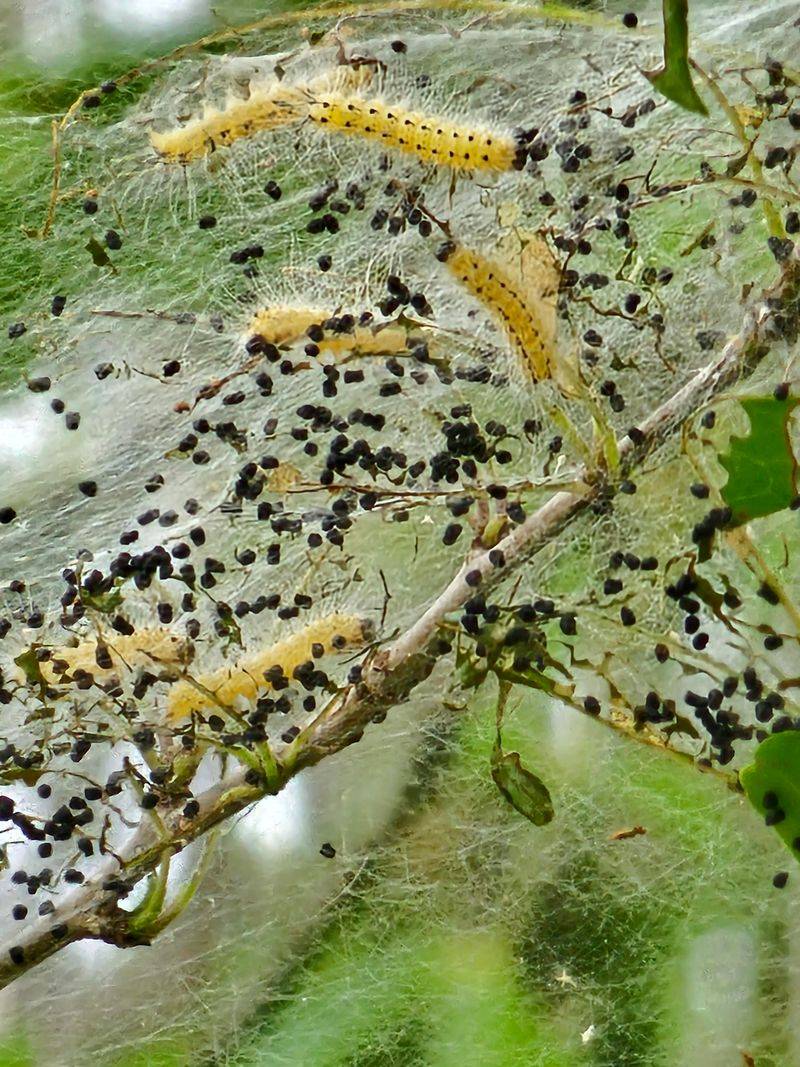
More than fifty predators and parasites in the Northeast pay attention to these tents. Tiny braconid and ichneumonid wasps slip through the silk and lay eggs, and paper wasps tear the netting apart for a protein delivery.
Birds join in once the web is opened. Chickadees, vireos, orioles, and cuckoos work the ragged nests, and cuckoos in particular seem fond of hairy caterpillars other birds skip.
That crowd of helpers explains the boom-and-bust rhythm. A heavy year builds a buffet, predator numbers catch up, and the following summers usually look quiet again.
Trees handle the loss better than the webbing suggests. A mature shade tree with a few stripped branch tips in August sets buds normally and leafs out on schedule the next May.
Young trees deserve closer attention. A newly planted whip that loses a big share of its foliage two or three seasons in a row can slow down, so hand removal matters more on small stock.
Winter tidies up the evidence. Rain, snow, and wind shred abandoned tents, and what hangs on through March is empty silk rather than an active colony.
Call a licensed arborist when webbing pairs with other symptoms. Thinning crowns, cracked bark, mushrooms at the base, or bare upper limbs point to problems the silk did not cause.
Mostly, though, the answer is a shrug and a snip. Connecticut trees have shared their branch tips with this insect for centuries, and the arrangement works out for the canopy more often than the webbing lets on.