What It Really Means When Desert Spiny Lizards Take Over Your Arizona Yard
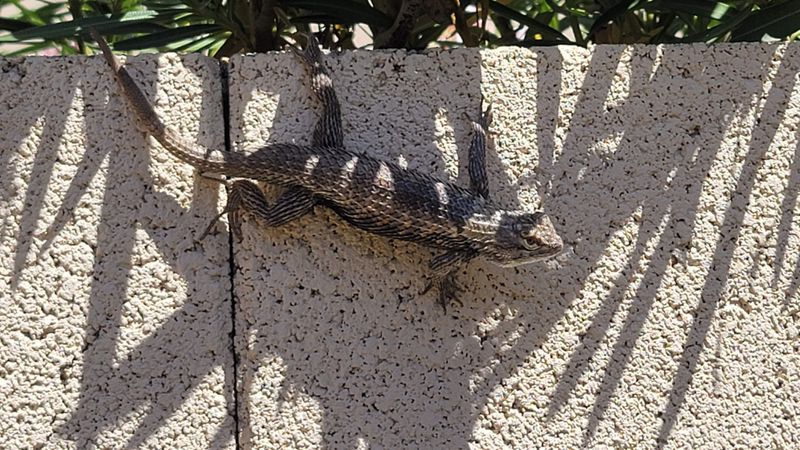
If you keep spotting a big, scaly lizard doing push-ups on your back wall or sunning itself on the fence, you are not imagining things. Repeated sightings of desert spiny lizards in a low-desert Arizona yard are worth paying attention to, but they tell a more modest story than the phrase “taking over” suggests.
What those sightings most likely mean is that your yard is offering something useful to a native desert animal, and understanding what that is can help you make smarter choices about your outdoor space.
Repeated sightings usually point to usable habitat
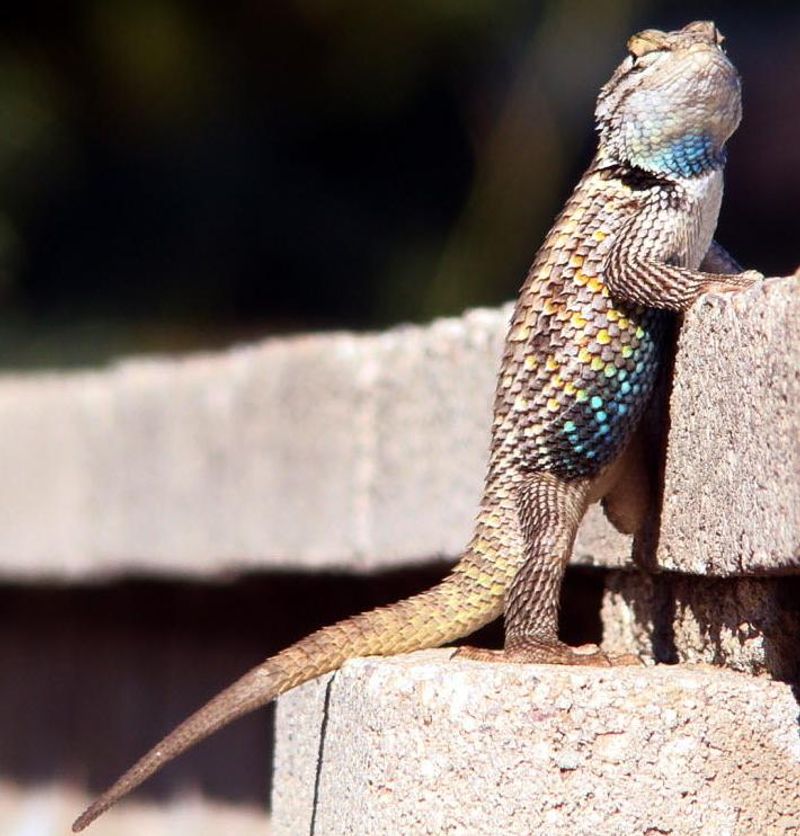
Spotting the same chunky lizard on your fence post three mornings in a row probably means one thing above all else: your yard is giving that animal something it needs. For desert spiny lizards, that something is usually a combination of warm basking surfaces, hiding spots, prey to hunt, and some connection to the broader desert landscape nearby.
A yard with a block wall, a woodpile, a palo verde tree, or even an old packrat nest can check several of those boxes at once.
Rocks, fences, trees, and similar surfaces serve as both thermal regulators and refuge, so a suburban yard with any of those elements can function as real habitat.
When people say lizards are “taking over,” they usually mean they are seeing them often and in several spots. That informal description is fair, but repeated sightings are not the same as a measured population increase or a statewide trend.
The more grounded reading is that your yard is working as usable habitat for a native desert species, which is a meaningful observation on its own terms.
Confirm the species before drawing conclusions
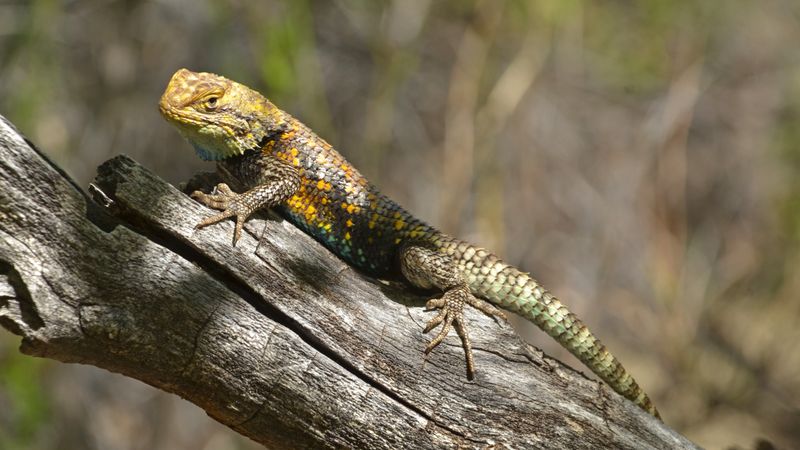
Before deciding what a lizard’s presence means for your yard, it helps to know which lizard you are actually looking at. Desert spiny lizards are stocky animals with overlapping, pointed scales that give them a rougher, spikier look than most other common yard lizards.
Adult body length generally runs from about 3.25 to 6 inches, not counting the tail. Males often show patches of blue or purple on the belly and throat, which can be striking when they flatten out to display.
The challenge is that Arizona has several visually similar species. Clark’s spiny lizard is a close relative that shares much of the same range and body shape.
Tree lizards, other Sceloporus species, and even some whiptails can cause confusion at a glance.
The practical solution is a photograph taken from a comfortable distance, ideally one that captures the scale pattern, leg markings, and any color on the underside. Recording the date and general location alongside the image gives you something useful whether you are simply curious or want to submit the sighting for a wildlife record.
Catching the lizard for a closer look is unnecessary and creates risks covered later in this article.
The habitat arrangement matters more than one plant
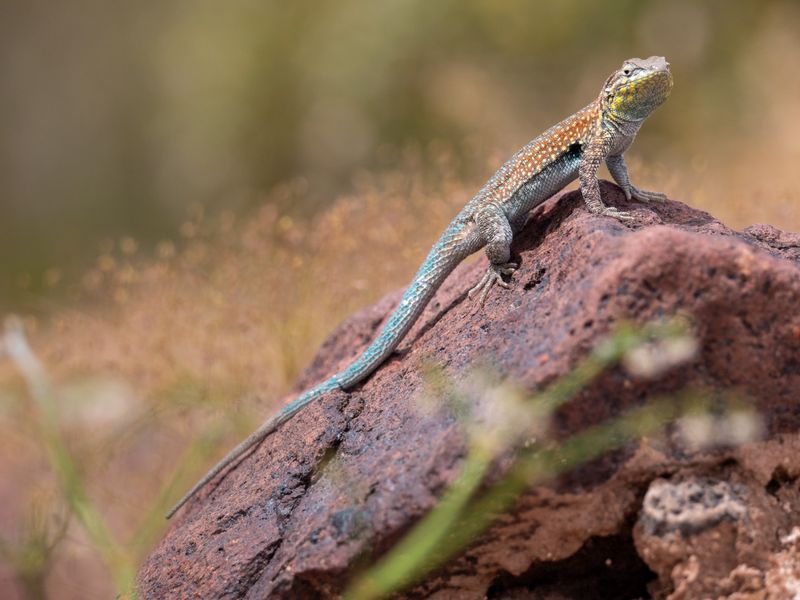
Rock walls, wooden fences, palo verde trees, woodpiles, and patches of gravel do not look like much from a landscaping standpoint, but to a desert spiny lizard they represent the full suite of daily needs. Basking surfaces warm the animal quickly in the morning, crevices and burrows offer shade and predator cover during the hottest part of the day, and connected pathways between shrubs or structural features let lizards move through a yard without crossing long stretches of open ground where they would be exposed.
Your Arizona Garden Changes Every Week. Your Plan Should Too.
Gardening in Arizona changes quickly throughout the season. Every Friday you’ll receive a simple weekly plan showing exactly what to plant, prune, fertilize, harvest, and protect so you never miss the right timing.
National Park Service habitat notes for the species at both Saguaro National Park and Montezuma Castle describe the lizard’s association with rocks, trees, fences, rodent burrows, and similar structures, which maps closely onto what many Phoenix and Tucson yards already contain. The arrangement of those features matters more than any single plant choice.
A yard with one native shrub surrounded by bare concrete offers far less than a yard with a mix of low ground cover, a few larger plants, a stacked rock border, and a fence line that connects to neighboring green space.
Arizona Cooperative Extension frames wildlife-friendly landscaping around four elements: food, water, cover, and space. Providing cover and space through a thoughtful mix of hardscape and vegetation is the part most directly relevant to lizards.
Native and desert-adapted plants can support the insects that lizards hunt, but no single plant species functions as a guaranteed lizard magnet. The goal is a yard that offers multiple overlapping resources, not a single feature that promises results.
More sightings do not prove a population boom
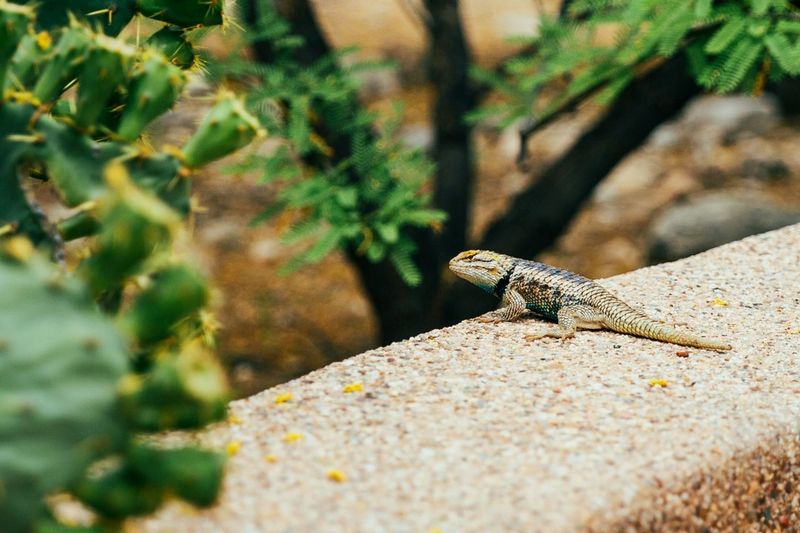
Seeing lizards more often than you used to does not automatically mean there are more of them. Seasonal patterns play a large role in how often a lizard crosses your line of sight.
Desert spiny lizards are most active when temperatures are in a comfortable range for them, which in low-desert Arizona typically means spring mornings, fall afternoons, and the cooler edges of summer days. A stretch of mild weather can push several individuals into the open at the same time, making a yard feel suddenly busier without any change in the actual number of animals using it.
Breeding season activity, prey abundance after a good monsoon, and even a change in where you spend time outdoors can all shift how many lizards you notice. The University of Arizona’s urban lizard research highlights how habitat connectivity and structural features influence where lizards show up, which means a new fence section or a recently pruned tree could redirect an animal that was always nearby into a more visible spot.
One yard’s worth of observations cannot establish a population trend, confirm pesticide exposure levels, or tell you anything definitive about the broader neighborhood ecosystem. Sightings are data points about individual animals moving through individual spaces.
They are worth recording carefully, but they should not be read as evidence of a statewide surge or a dramatic local event. The more useful question to ask is what the yard is currently providing, not how many lizards “should” be there.
Their diet does not make them a pest-control service
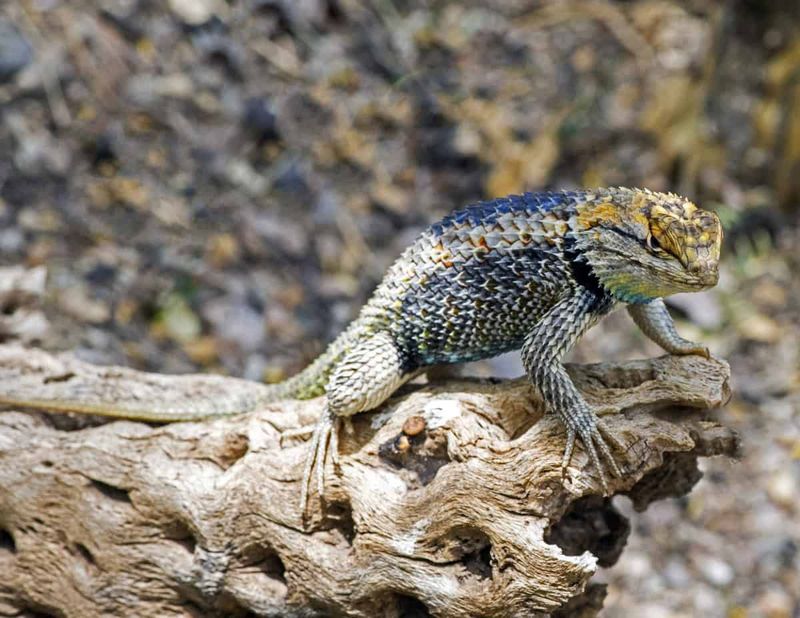
Desert spiny lizards eat a varied diet of arthropods. Documented prey includes ants, beetles, caterpillars, spiders, and centipedes, along with other small invertebrates that cross their path.
A field study published in the Great Basin Naturalist found ants to be a predominant food item in one population, while sources from Saguaro National Park and Tonto National Monument list a broader mix of insects and other arthropods. Some accounts also mention occasional plant material or small lizards as opportunistic additions to the diet.
That documented diet is genuinely interesting, but it does not translate into reliable control of household pests. An individual lizard hunting on your patio will catch some insects and spiders.
What it will not do is systematically reduce the scorpion population in your yard, eliminate mosquito breeding, or keep cockroach numbers in check. Predation by one or a few lizards is not the same as meaningful suppression of a pest population, and no authoritative source reviewed for this article establishes that desert spiny lizards routinely reduce Arizona bark scorpion numbers in residential settings.
The scorpion angle deserves specific attention because it circulates widely. Arizona bark scorpions are a genuine concern for homeowners, and the idea of a natural predator handling them is appealing.
The reality is that the reviewed sources, including accounts from Saguaro National Park and the Reptiles of Arizona database, do not list scorpions as established prey items or describe any measurable residential scorpion reduction tied to lizard presence. Appreciating a lizard’s diet and expecting it to solve a pest problem are two very different things.
Make room for wildlife without promising lizards
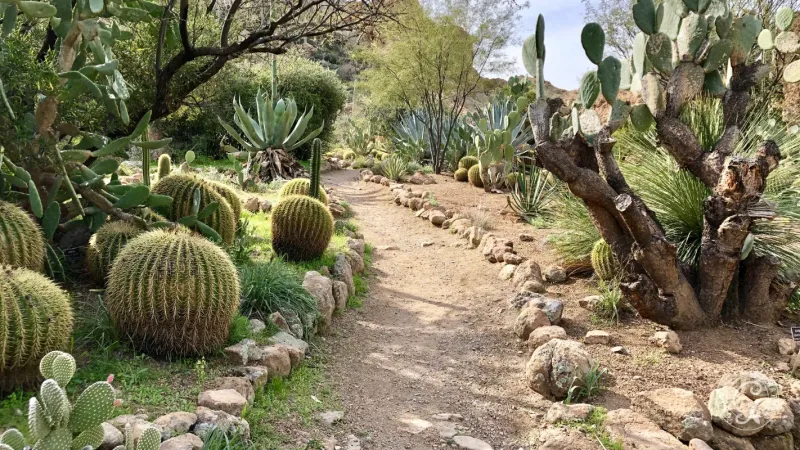
Homeowners who want to keep the yard welcoming to desert spiny lizards can focus on a few practical adjustments rather than a full redesign. Retaining existing basking surfaces, whether that means a south-facing block wall, a flat rock border, or a wooden fence rail, gives the animals a place to regulate their temperature without any additional investment.
Keeping some structural complexity in the yard, such as a brush pile in a corner or a gap beneath a raised planter, provides the kind of refuge that lizards use throughout the day.
Broad-spectrum pesticide applications are worth reconsidering, not because they are proven to drive lizards away, but because they reduce the insect community that lizards depend on for food. Arizona Cooperative Extension’s guidance on landscaping for wildlife habitat elements frames the goal as providing food, cover, and space in combination, noting that native plants can support native insects and the wildlife that eats them.
That guidance is practical for Phoenix and Tucson yards and does not require standing water or elaborate water features, which are not established requirements for this species.
Plant selection should always be matched to your specific site, elevation, irrigation system, and mature plant size. The Arizona Cooperative Extension publication on recommended plants for Sierra Vista is a useful example of site-specific plant guidance, but Sierra Vista sits at a higher elevation with different rainfall and temperature patterns than the Phoenix or Tucson metro areas.
Low-desert homeowners should look for plant recommendations developed specifically for their conditions, using resources from local extension offices, native plant societies, or university programs familiar with Sonoran Desert lowland gardening. Native and desert-adapted plants may support the habitat indirectly, but they do not guarantee that lizards will appear or stay.
Document sightings without handling the animals
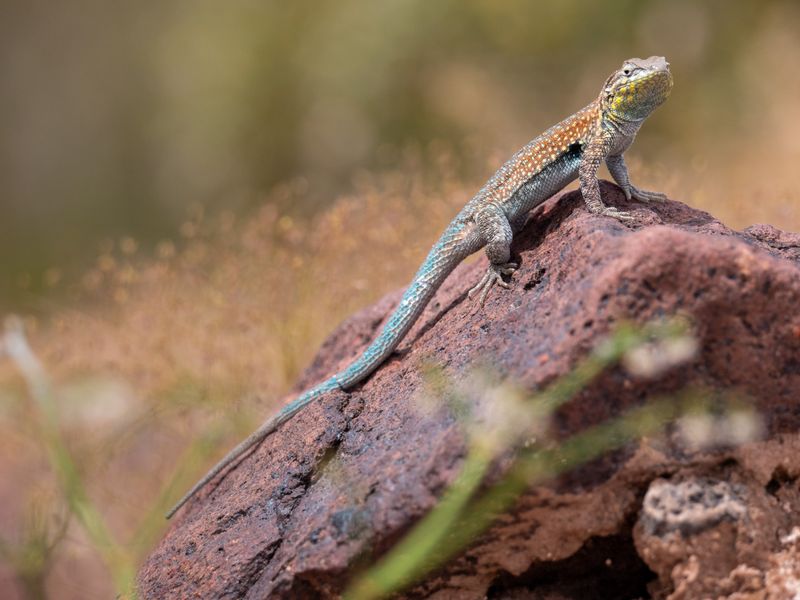
A clear photograph taken from a few feet away is genuinely useful, both for your own identification effort and for contributing to community wildlife records. When you photograph a lizard, try to capture the scale pattern, any color on the belly or throat, and the overall body shape.
Pair the image with the date, a brief description of the location, and any notes about the surface the animal was using, such as a rock, wall, or tree trunk.
Geotagged observations submitted to iNaturalist can contribute to local species distribution records. The platform hosts location-based species lists for many Arizona sites, including examples like the Sabino Canyon Recreation Area and Saguaro National Park checklists, which show how community-science records accumulate over time for a given area.
Those checklists are reference examples of what location-based records look like, not direct submission portals. To submit your own observation, create or log into an iNaturalist account and follow the platform’s standard submission process.
For more formal reporting or to connect with local research programs, the University of Arizona’s Lizard Urban Ecology Project is one example of an academic effort that has tracked urban lizard populations in Tucson. Local natural history museums, university extension offices, and regional wildlife agencies may have their own reporting programs or species atlases worth consulting.
Checking with those resources separately gives you the most accurate guidance for your specific area and ensures your sighting ends up where it can do the most good.
Observe wild lizards safely
The safest rule for wild lizards is a simple one: watch from a distance and leave them where they are. Catching a desert spiny lizard for a closer look is not necessary for identification, and restraining any wild animal stresses it and can provoke a defensive bite.
Relocating a lizard to a different part of the yard or a neighbor’s property disrupts its established territory and offers no benefit to the animal.
Reptiles, including lizards that look perfectly healthy, can carry Salmonella bacteria without showing any signs of illness. Salmonella from reptile contact is a documented public health concern.
Recent CDC outbreak investigations and published research in Emerging Infectious Diseases highlight that reptile-associated Salmonella cases continue to occur, and that transmission can happen through contact with a reptile’s skin or any surface the animal has touched. Anyone who handles a reptile or a contaminated object should wash their hands thoroughly with soap and water immediately afterward.
The risk is not equal for everyone. Young children under five, adults over 65, pregnant individuals, and people with weakened immune systems face a higher chance of serious illness from Salmonella infection.
CDC guidance recommends that households with members in those groups avoid keeping reptiles as pets and take particular care to prevent contact with wild ones. Feeding wild lizards is also discouraged, not only because of the Salmonella risk but because food provisioning can change animal behavior in ways that create problems for both the lizard and the household.
The useful takeaway is habitat, not hype
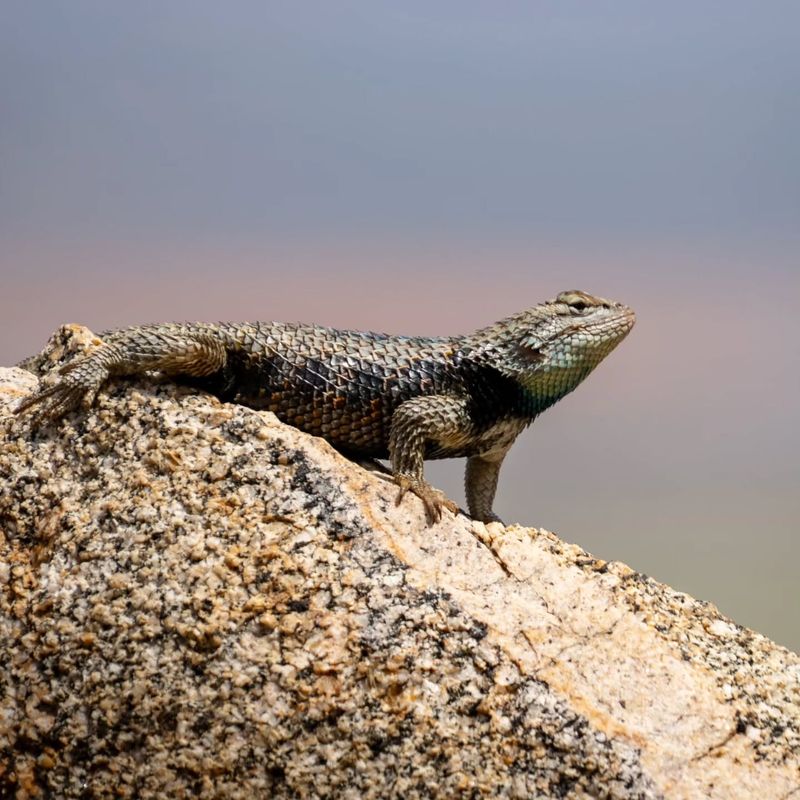
Recurring desert spiny lizard sightings in a low-desert Arizona yard carry a straightforward and grounded message: the yard is currently providing something this native desert species finds usable. That something is likely some mix of warm surfaces for basking, structural cover for refuge, arthropods to hunt, and a route connecting to the surrounding landscape.
That is a real and worthwhile observation.
What those sightings do not tell you is that the yard is ecologically pristine, that pest populations are being kept in check, or that a population boom is underway. A single yard’s worth of observations cannot carry that kind of interpretive weight.
The honest and practical response is to note what the yard already provides, consider modest adjustments that preserve or improve habitat structure, observe carefully from a distance, and report sightings accurately.
A lizard on your fence is not a problem to solve or a miracle to celebrate. It is a native desert animal doing exactly what native desert animals do when a space works for them, which makes it worth watching.