Venomous Spiders Are Entering Their Peak Mating Season Inside Tennessee Homes Right Now
A faint scratch behind the baseboard freezes you mid-step. Tennessee homes shift quietly once the season turns. Cooler night air pushes small bodies indoors seeking warmth.
Spiders sense that change before you even feel it. Male brown recluses wander farthest, hunting for mates instead of prey. Your closets, boots, and folded towels become new territory.
Humidity inside your home beats the outside chill. Porch lights pull insects closer, and insects pull spiders too. Nashville attics report a sudden spike in activity right now. Knoxville porches see the same restless pattern unfold.
Memphis basements hold quiet corners spiders find irresistible. Instinct tells them shelter beats exposure this week. Late summer through early fall marks peak movement across Tennessee.
Boxes untouched since spring suddenly seem occupied. Cardboard seams hide bodies you would rather not find. Curiosity replaces fear once you understand the pattern. What happens next inside your walls will surprise you.
Why Early Fall Turns Quiet Recluses Into Restless Wanderers
Cooler nights flip a switch in the brown recluse world. Males that spent the summer tucked inside wall voids and attic corners suddenly start roaming in search of females.
That roaming is the real reason sightings spike in September. The spider population has not surged overnight, but the spiders that were already living quietly in your walls are now out walking around where you can see them.
Tennessee sits squarely in prime brown recluse territory, along with Missouri, Arkansas, and Kansas. Middle and West Tennessee homes, especially older ones with basements or crawl spaces, tend to host the biggest populations.
Warm afternoons followed by chilly nights push these spiders toward heated interior spaces. They travel along baseboards, behind furniture, and through gaps around plumbing pipes.
Males do the majority of the traveling. Females stay closer to their retreats, guarding egg sacs and waiting for visitors.
Peak activity runs from roughly late August through October, then tapers as temperatures drop and the spiders settle into winter hiding spots. During that window, a single home might reveal several spiders in a week when previous months showed none.
Here is a comforting detail worth remembering. Brown recluses have terrible eyesight and no interest in people, so encounters happen by accident rather than by intent.
Knowing the calendar gives you an advantage. If you treat September as inspection season rather than panic season, you can stay ahead of the wandering without turning your house upside down.
How To Actually Identify A Brown Recluse
Half the spiders people swear are recluses turn out to be harmless wolf spiders or cellar spiders. Learning three quick features saves a lot of unnecessary worry.
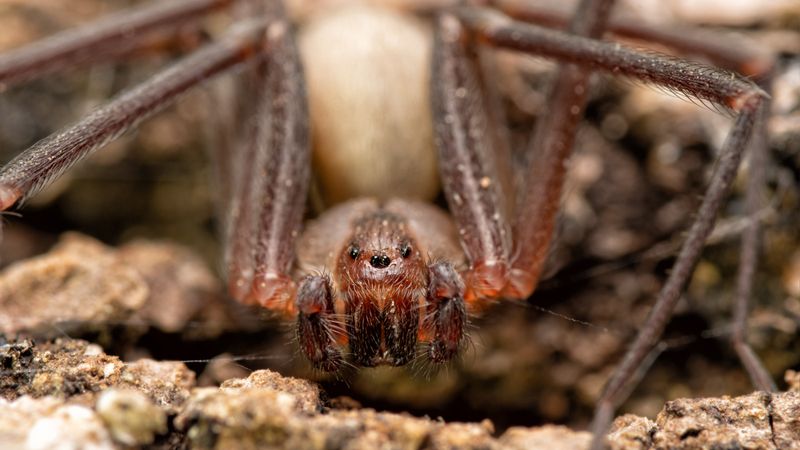
Start with the eyes if you can get a safe photo and zoom in. Brown recluses have six eyes arranged in three pairs, while the vast majority of spiders carry eight.
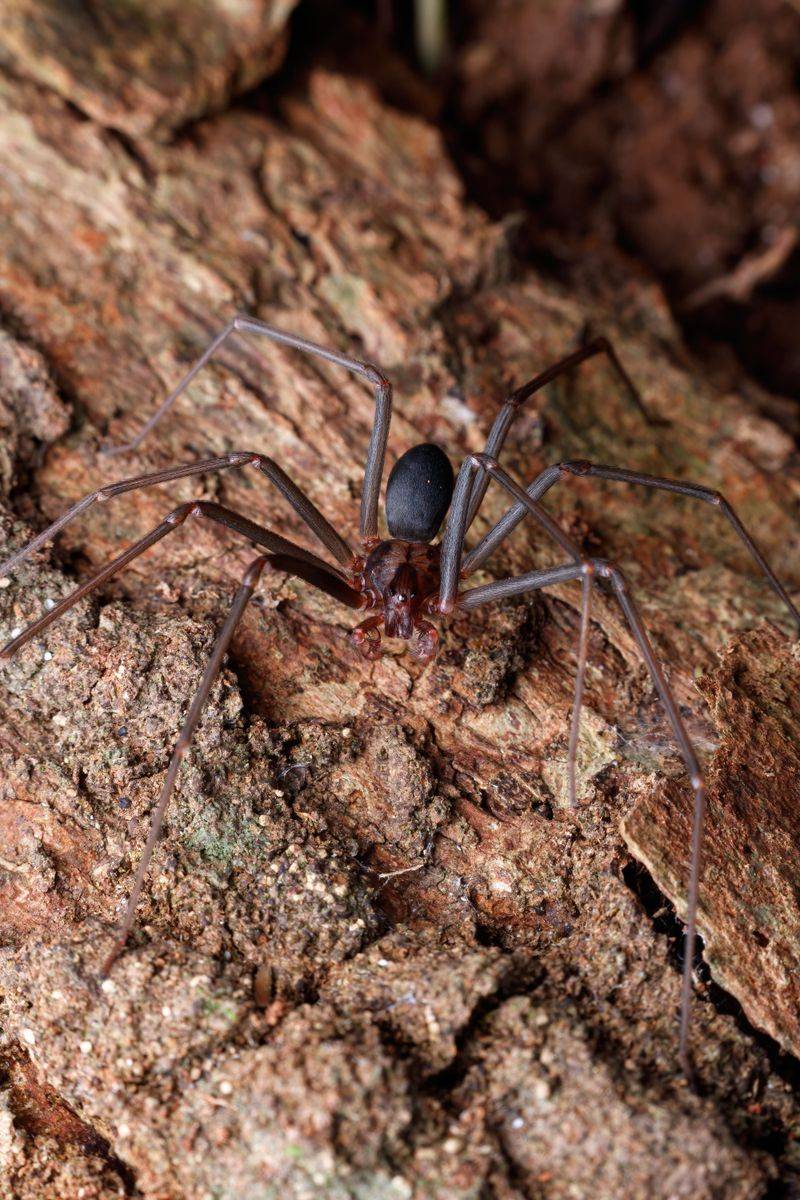
Next, check the legs. A genuine recluse has smooth, uniformly tan legs with no stripes, bands, or spiky hairs sticking out.
The famous violin marking sits on the flat back section behind the head, with the neck of the violin pointing toward the abdomen. That marking can be faint on younger spiders, so it should not be your only clue.
Your Tennessee Garden Changes Every Week. Your Plan Should Too.
Gardening in Tennessee changes quickly throughout the season. Every Friday you’ll receive a simple weekly plan showing exactly what to plant, prune, fertilize, harvest, and protect so you never miss the right timing.
Body size runs about a quarter to half an inch, roughly the diameter of a dime with legs included. The abdomen is a solid color with no patterns, spots, or mottling.
Wolf spiders, the ones that scare people the most, are chunky, hairy, and often carry visible markings. Their bulk alone usually rules them out.
Grass spiders and funnel weavers build obvious sheet webs in corners and shrubs. Recluse webs look messy and irregular, more like a loose scaffold tucked in a hidden crevice than a display piece.
Snap a photo from a safe distance before doing anything else. University of Tennessee Extension offices and local entomologists can often help confirm an identification, and that confirmation shapes how seriously you need to respond.
The Hiding Spots They Love
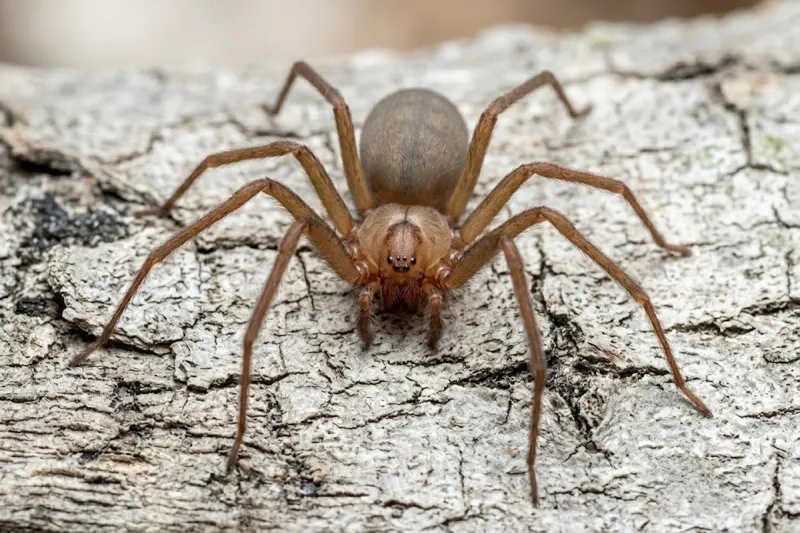
Think like a spider that avoids light, noise, and open space. The places you rarely disturb are the places a recluse considers prime property.
Cardboard boxes top the list by a wide margin. The corrugated layers create narrow tunnels that feel remarkably similar to the rock crevices these spiders use outdoors.
Attics and crawl spaces come next, particularly in homes built before 1980 with plenty of gaps and old insulation. Basements with stored holiday decorations rank right up there too.
Inside living areas, they favor the backs of closets, the undersides of dressers, and the gaps behind picture frames. Seldom-worn shoes, folded blankets, and laundry piled on the floor all qualify as attractive real estate.
Garages hold a special appeal because of stored tools, firewood, and rarely opened bins. Work gloves left hanging on a hook have produced more than a few unpleasant surprises across Tennessee.
Outdoors, look at woodpiles, stacked lumber, loose bark, and debris piles sitting against the foundation. Those spots serve as staging areas before spiders slip indoors.
Swapping cardboard for sealed plastic totes is the single most effective change most homeowners can make. Plastic bins with tight lids give a recluse nowhere to settle.
Pull furniture away from walls a few inches and vacuum behind it monthly. That small habit removes webs, egg sacs, and food sources in one pass.
Fun bit of history: this species was formally described by scientists in the mid-20th century, though it had likely lived alongside people in the South long before that.
What A Bite Really Looks Like, And Why Panic Rarely Helps
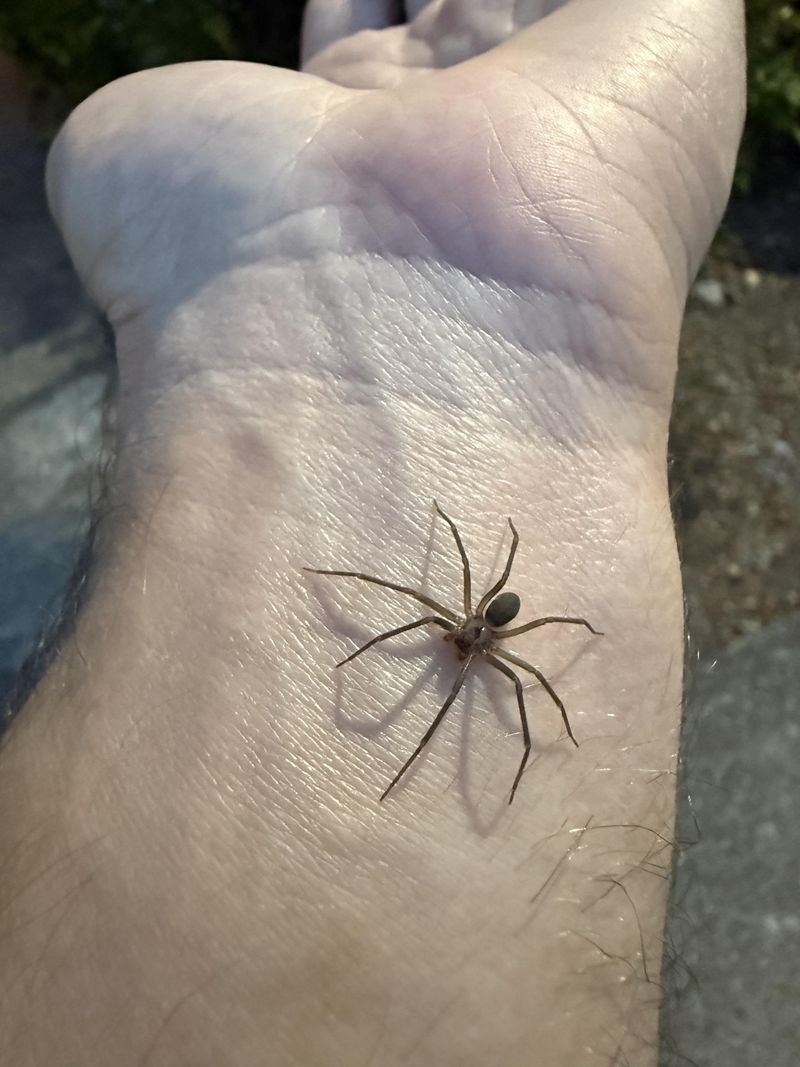
Medical records tell a calmer story than the internet does. Most documented recluse bites heal on their own with basic wound care.
Most bites happen when a spider gets pressed against skin. Rolling over on one in bed or pulling on a shirt that has been on the closet floor accounts for a large portion of cases.
The bite itself often goes unnoticed at first. Stinging or burning may show up two to eight hours later, followed by redness and a small blister at the center.
In a minority of cases, the tissue around the bite breaks down over several days, forming a slow-healing sore. Fever, chills, nausea, and a body rash can accompany the more serious reactions.
If you suspect a bite, wash the area with soap and water, apply a cold compress, and elevate the limb. Then contact a doctor, especially if the person bitten is a child or older adult.
Bring the spider in a sealed container if you safely can. Confirmed identification changes treatment decisions and rules out infections that look similar.
Skip the folk remedies. Cutting, burning, or applying harsh chemicals to the wound tends to make healing harder, not easier.
Poison control centers typically offer free, round-the-clock guidance, and calling costs you only a few minutes. Quick, level-headed action beats worry every time, and knowing the realistic timeline keeps a scary moment manageable.
The Cheap Detective Work Every Homeowner Should Try
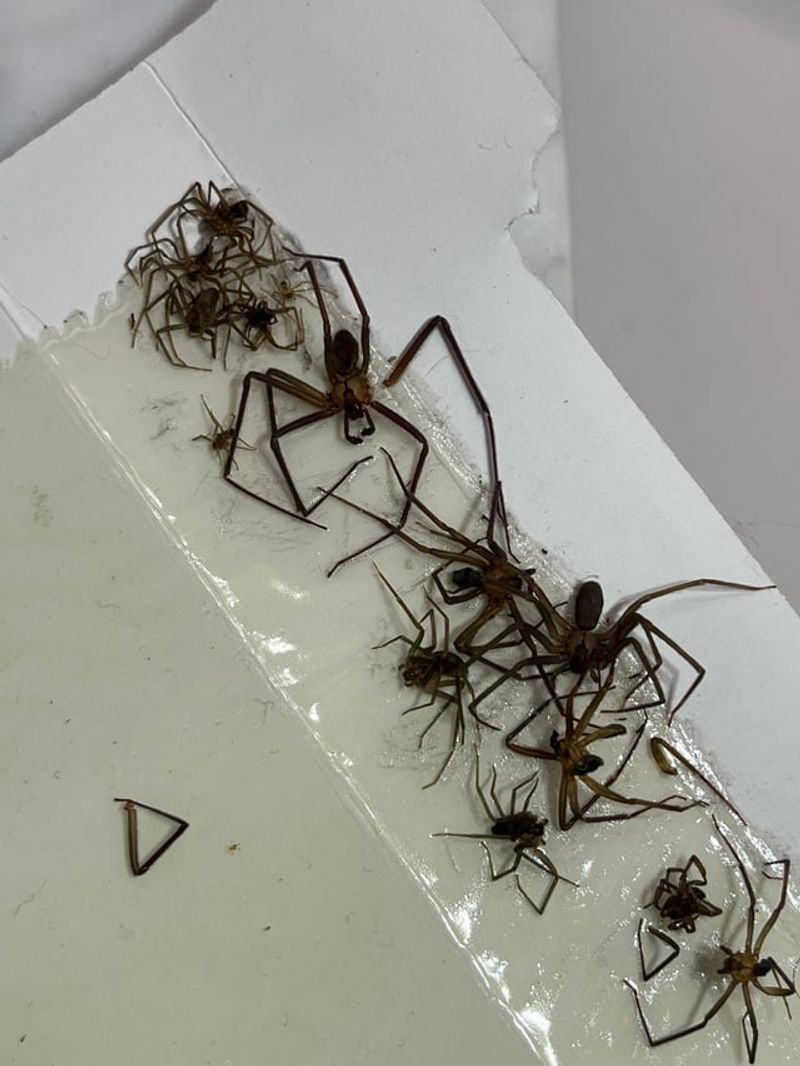
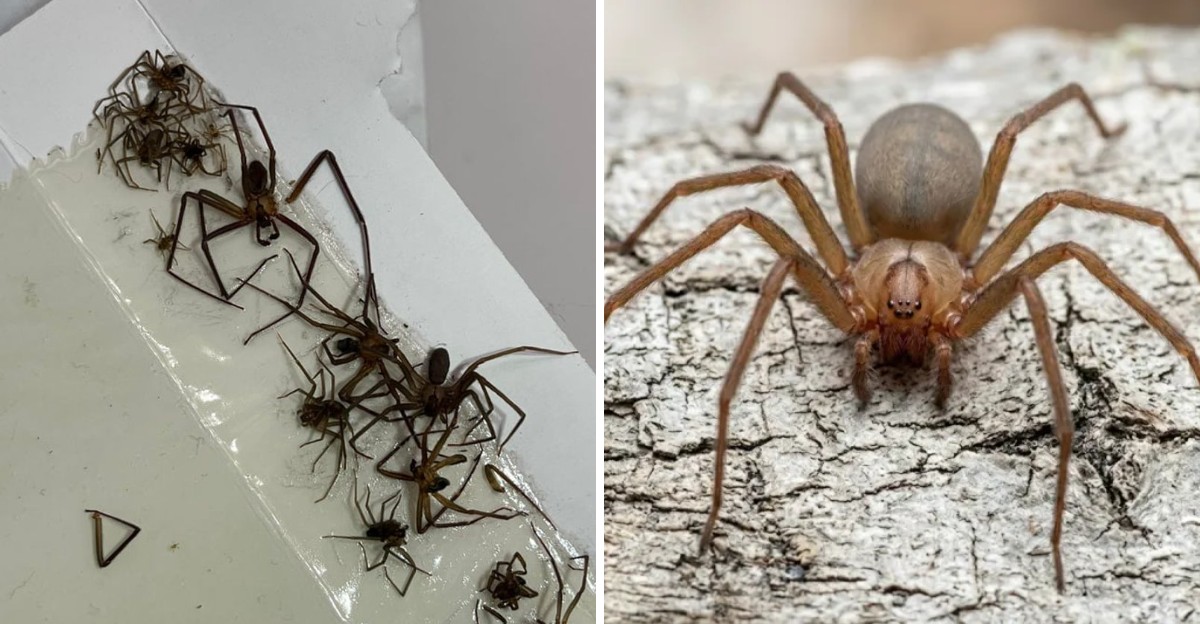
Pest professionals rely on a tool that costs less than a sandwich. Flat glue boards, placed in the right spots, reveal exactly how many spiders share your address.
Set them flush against walls in corners, since recluses travel along edges rather than crossing open floors. Behind furniture, under beds, inside closets, and along garage walls all make excellent placements.
Use plenty of them. A generous number of boards spread throughout the house gives you a real picture instead of a guess.
Check the traps weekly and write down what you catch and where. A single spider over a month suggests an occasional wanderer, while a dozen in one hallway points to an established population.
Traps do double duty as passive control. Every spider caught is one fewer roaming your baseboards at 2 a.m.
Place boards near bed legs if someone in the house is nervous about nighttime encounters. That simple move intercepts spiders before they reach bedding.
Keep them away from curious pets and small children by tucking them under furniture or behind appliances. Most glue boards come with folding covers for exactly that reason.
Replace boards when they get dusty, since a layer of dust ruins the adhesive. In dusty basements, monthly swaps work well.
Data from your own traps also helps any pest control company you hire. Handing a technician a written log of catch locations lets them target treatment instead of spraying blindly, which saves money and gets faster results.
Sealing Up The House Before The October Chill Arrives
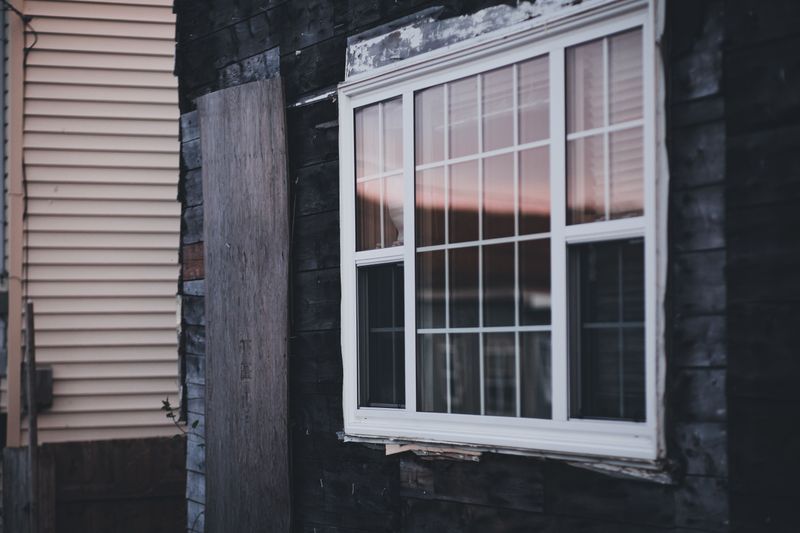
Sealing gaps beats chasing spiders around with a rolled-up magazine. A recluse can slip through openings smaller than you would expect, so small cracks matter more than you would think.
Walk the outside of your house with a tube of silicone caulk. Focus on gaps around utility lines, dryer vents, outdoor faucets, and where siding meets the foundation.
Install door sweeps on exterior doors, including the one leading to the garage. A quarter-inch gap under a door is a wide-open welcome mat.
Repair torn window screens and check that attic vents have intact mesh. Fine hardware cloth handles the job better than flimsy screening.
Move firewood, mulch piles, and stacked lumber at least twenty feet from the house. Those materials shelter both spiders and the insects they feed on.
Trim shrubs so branches do not touch siding. Vegetation contact gives spiders a bridge straight to the upper floors.
Swap outdoor white bulbs for yellow or sodium vapor lights. Fewer moths and beetles near the door means fewer reasons for a predator to hang around.
Inside, seal gaps around plumbing under sinks and behind washing machines. Expanding foam works well in larger voids behind appliances.
For heavy infestations, a licensed Tennessee pest control company can apply targeted dust treatments inside wall voids where sprays cannot reach.
Combining that professional step with your own sealing and decluttering gives you the strongest long-term results, and September is the ideal month to start.