The One Thing Arizona Hydrangeas Need This Fall Or They Skip Blooming Next Spring
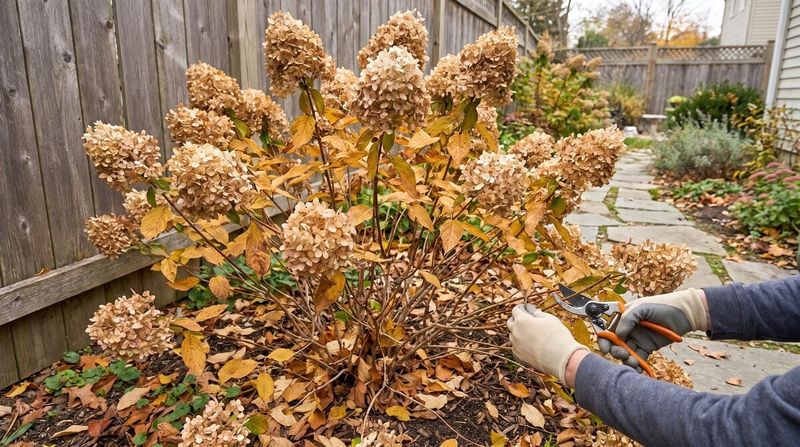
Hydrangeas can be one of the most rewarding shrubs in an Arizona yard, but they come with a catch: not every plant responds to the same care routine. Many Phoenix and Tucson gardeners cut their hydrangeas back in fall thinking they are helping, only to find the plant sits flowerless the following season.
The real issue is that pruning at the wrong time, or the wrong way, can quietly remove the flower buds your plant spent all summer building. Knowing your hydrangea type before you reach for the pruners is the step that changes everything.
For old-wood or unidentified hydrangeas, leave healthy stems alone in fall
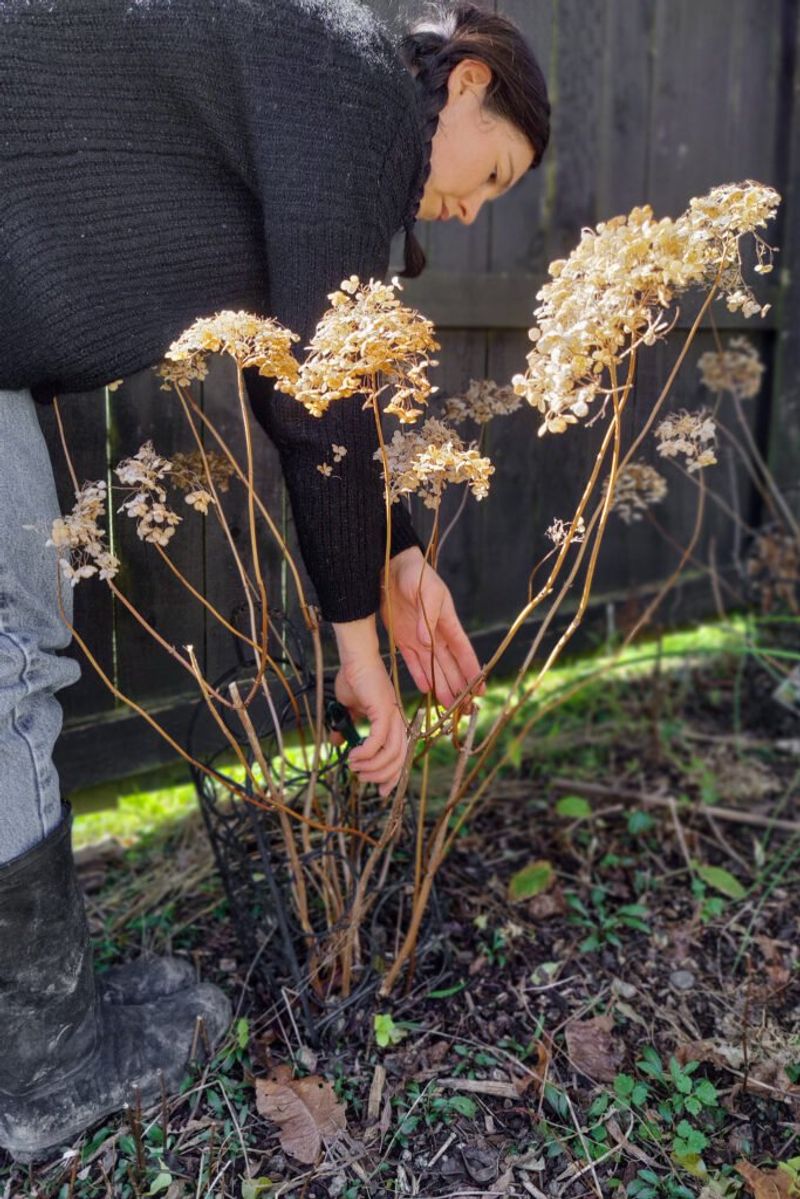
Healthy stems on an old-wood hydrangea are not dead weight waiting to be cleared away. When fall arrives and you are looking at a bigleaf, lacecap, mountain, oakleaf, or climbing hydrangea, those thick green or woody canes may already be holding the flower buds for next season.
Cutting them down now does not tidy up the plant; it removes the buds before they ever open.
The safest action at this point in the season is to remove only what is clearly dead, diseased, or physically damaged. A stem that snaps cleanly with no green tissue inside, shows obvious rot, or was broken by wind is a reasonable candidate for removal.
A stem that is simply old-looking, slightly woody, or still has dried flower heads attached is not.
Cutting healthy stems in fall or winter removes those buds before they can bloom. If the hydrangea in your yard has no label and you are not certain of its type, treat it as an old-wood plant until you can confirm otherwise.
That conservative approach costs little and protects the most.
Late pruning can remove buds formed on last year’s stems
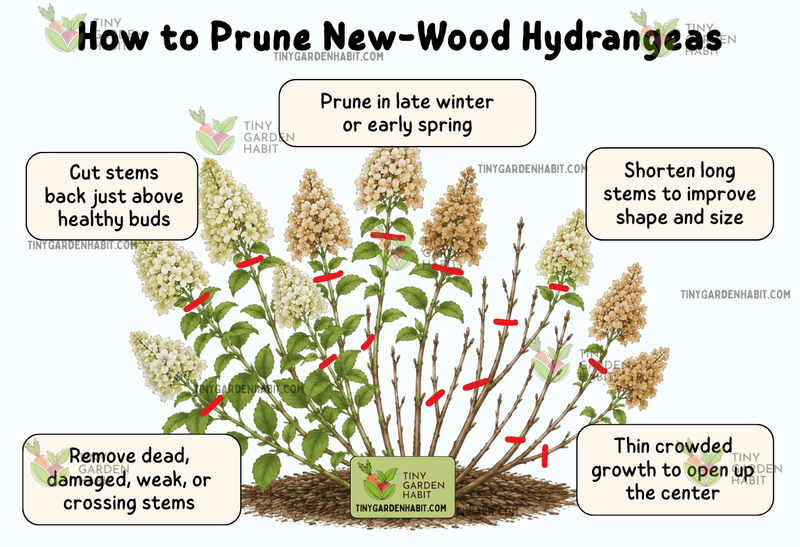
Timing is the part most gardeners underestimate. Bigleaf, mountain, oakleaf, and climbing hydrangeas all have something in common: they build their flowers on stems that grew the season before.
Those buds are not formed in spring when the plant starts pushing new leaves. They develop during summer and early fall and then sit on the stems through winter, waiting for the right conditions to open.
When structural pruning is necessary for these types, the preferred window falls shortly after flowering ends. That post-bloom period gives the plant time to grow new stems that will mature and set buds before the season closes.
A cut made during late summer, fall, or winter does not give the plant that recovery window.
In the Phoenix and Tucson area, the heat-driven growing calendar can compress or shift these windows compared to what national guides describe. A bigleaf hydrangea in a shaded Tucson courtyard may finish blooming earlier or later than one in a Phoenix backyard with afternoon western exposure.
The biological principle stays the same regardless of location: cut after the buds form and they are gone for that cycle. Waiting until you see what the plant does naturally in your specific microclimate before committing to a structural cut is the most sensible approach.
Your Arizona Garden Changes Every Week. Your Plan Should Too.
Gardening in Arizona changes quickly throughout the season. Every Friday you’ll receive a simple weekly plan showing exactly what to plant, prune, fertilize, harvest, and protect so you never miss the right timing.
Identify the hydrangea before choosing a pruning schedule
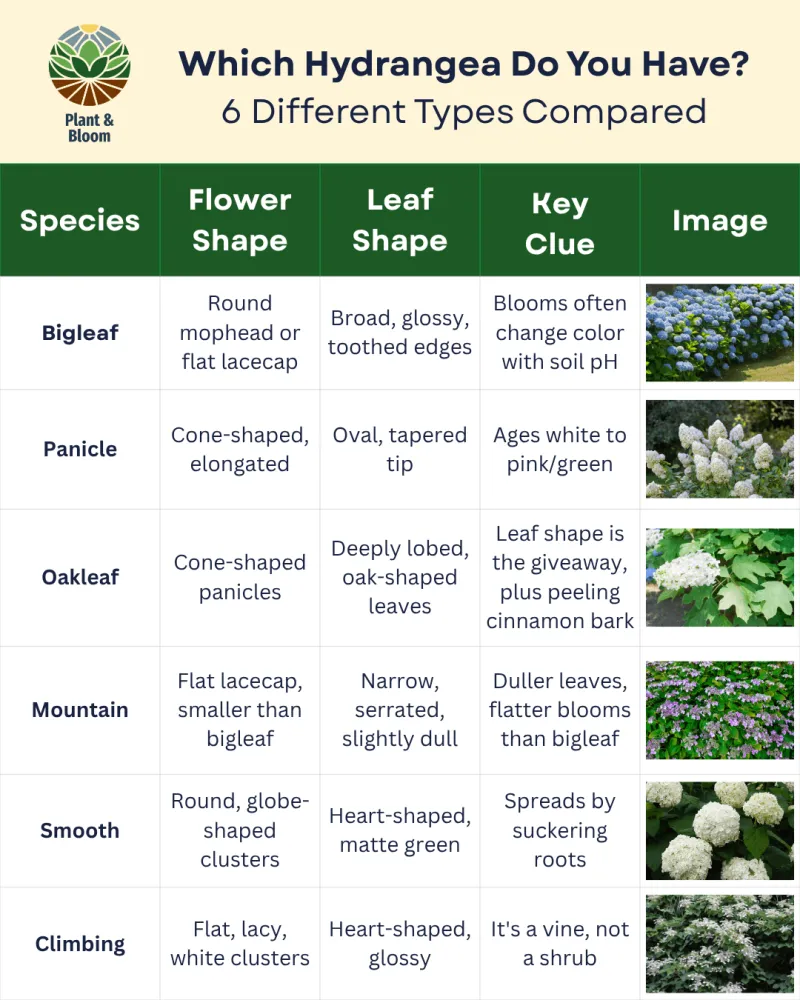
Not every hydrangea follows the old-wood rule, and treating them all the same is where most pruning mistakes begin. Two common species actually bloom on new wood, meaning they produce flowers on stems that grow during the current season.
Smooth hydrangea, Hydrangea arborescens, and panicle hydrangea, Hydrangea paniculata, fall into this group. These types generally tolerate late-winter or early-spring pruning, and some extension guidance permits fall pruning for them as well.
Reblooming bigleaf cultivars occupy a middle ground. Varieties bred to flower on both old and new wood, including some in the Endless Summer series, are more forgiving than once-blooming old-wood types.
Even so, cultivar-specific care instructions still apply, and more forgiving does not mean the timing is irrelevant.
The most reliable identification tools are the plant label, a cultivar tag, or a trusted identification source such as a local nursery professional or university extension office. Bloom timing can offer a supplemental clue, but Arizona’s heat, shade levels, and irrigation patterns can shift when a plant flowers by weeks.
Relying on timing alone as the basis for a structural pruning decision is risky, especially in a low-desert climate where conditions differ substantially from the cooler regions where most hydrangea guidance originates. Confirming the species or cultivar first takes a few minutes and prevents a mistake that costs an entire flowering cycle.
Use a conservative procedure when the pruning window has passed
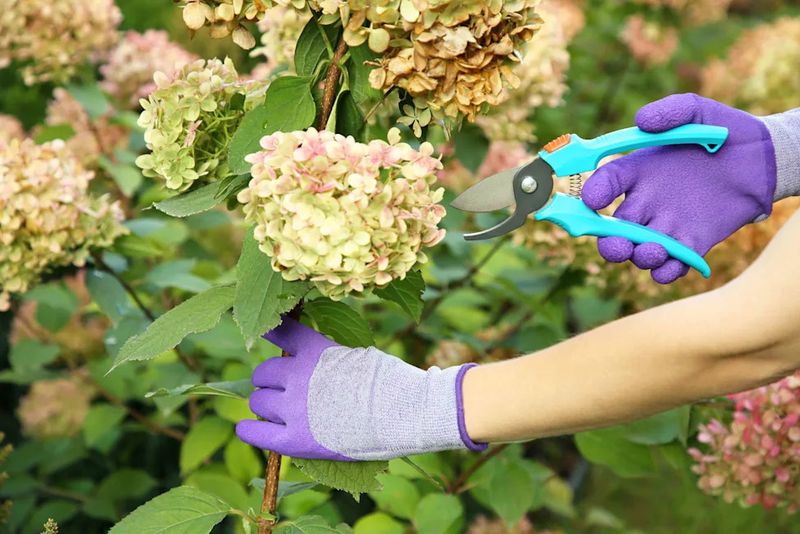
Fall in Phoenix or Tucson often arrives while a hydrangea’s buds are already developing or fully set. If the post-bloom pruning window has passed and the plant is an old-wood or unidentified type, the right move is a conservative cleanup rather than a structural overhaul.
Start by looking at each stem individually. A dead stem is usually brown or gray all the way through, brittle, and hollow or dry when scratched with a fingernail.
Remove those. A diseased stem may show cankers, unusual discoloration, or soft spots.
Remove those too. Everything else, meaning the green, pliable, healthy canes, stays in place.
Do not shorten them, do not cut them to a uniform height, and do not remove them because they look untidy.
Deadheading is a separate action from structural pruning and carries much lower risk when done correctly. Removing a spent flower head means cutting just above the highest healthy pair of buds on that stem, not cutting the stem itself back to the ground or to a low node.
University of California Cooperative Extension guidance on mophead, lacecap, and oakleaf varieties specifically recommends waiting another full year rather than performing heavy late pruning once the bud-setting window has closed. That advice applies directly to Arizona gardeners who missed the post-bloom window.
One conservative season of cleanup protects what the plant has already built, and the next flowering cycle will show you whether structural work is warranted afterward.
Build a protected growing site for Arizona’s low desert
Pruning decisions matter far less if the growing site is working against the plant. Hydrangeas are not desert-adapted shrubs.
They need filtered shade or morning sun with protection from afternoon and reflected heat, consistent root-zone moisture, and excellent drainage. In Phoenix and Tucson, those conditions rarely exist without deliberate planning.
Low-desert soils present a specific set of challenges. Arizona’s native soils are often alkaline, sometimes calcareous, and may contain compacted layers or caliche hardpan that blocks drainage and restricts root development.
The UA Cooperative Extension Soil Quick Guide notes that these conditions make non-desert-adapted plants consistently difficult to establish and maintain. Amending native alkaline or caliche soil to suit a hydrangea is possible in a limited area, but the correction tends to be temporary and requires ongoing attention.
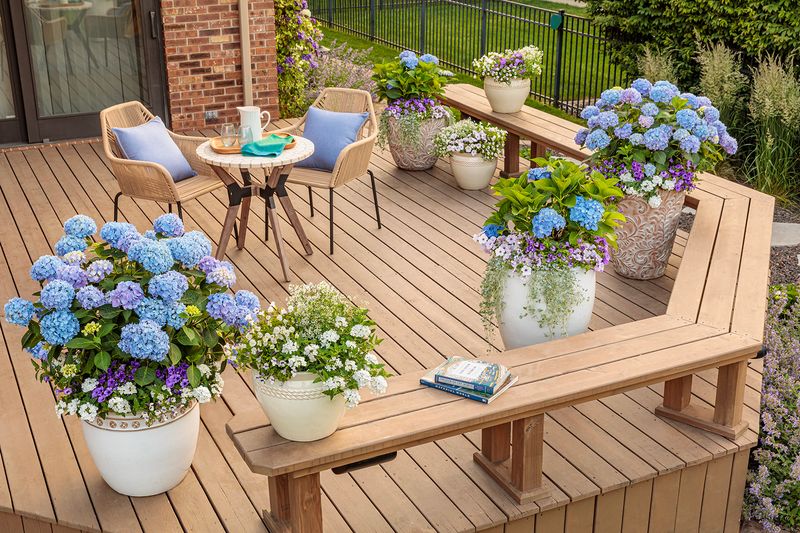
A large container filled with a suitable potting mix can offer more control than planting directly into problem soil. UA Cooperative Extension has noted that acid-loving plants sometimes perform better in containers with artificial potting media when desert soil is unsuitable.
Pair that container with a shaded east-facing wall or a spot that receives morning light and is shielded from afternoon sun and reflected heat off masonry or pavement. Irrigation should deliver water deeply at the root zone, adjusted for weather, season, and soil type rather than set to a fixed timer schedule.
The goal is consistent moisture without waterlogging, which means good drainage matters as much as regular watering.
Check other causes before blaming fall pruning
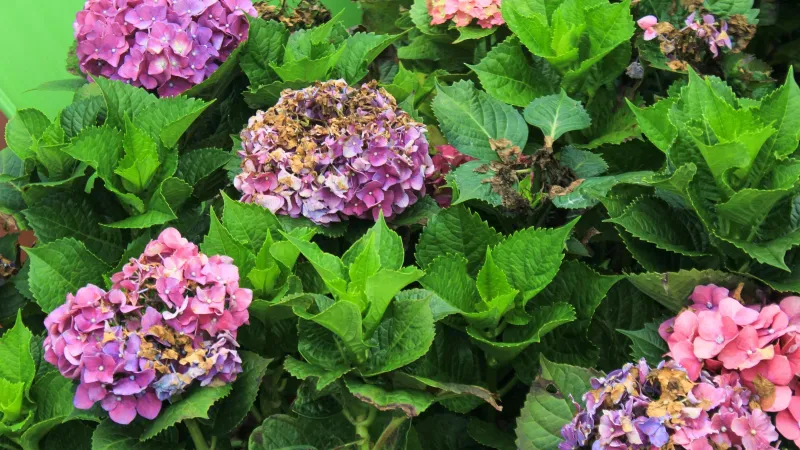
A hydrangea that produces no flowers is not automatically the result of one bad pruning decision. Several other factors can suppress blooming, and some of them are more common in Arizona’s low desert than pruning errors.
Excessive nitrogen is a frequent culprit. Heavy fertilization, especially with high-nitrogen formulas, pushes the plant into leafy vegetative growth at the expense of flowers.
Insufficient light is another common issue: a plant tucked too deep in shade may produce healthy foliage but lack the energy to form buds. Drought and heat stress can damage or abort developing buds even when the plant looks alive.
Late frost or a cold snap after bud break can kill flower buds while leaving the rest of the stem intact, which explains why a plant leafs out normally but shows no flowers.
Plant immaturity is worth checking as well. A newly planted hydrangea may not bloom for one to three seasons while it establishes.
Browsing by deer or rabbits can remove stems and buds without leaving obvious evidence. Arizona’s alkaline soil can shift bigleaf flower color toward pink, but soil chemistry alone does not explain missing blooms entirely.
Heavy fall fertilization is not a reliable fix for any of these problems and may make flowering less likely rather than more.
Protect the stems now and reassess after the next flowering cycle
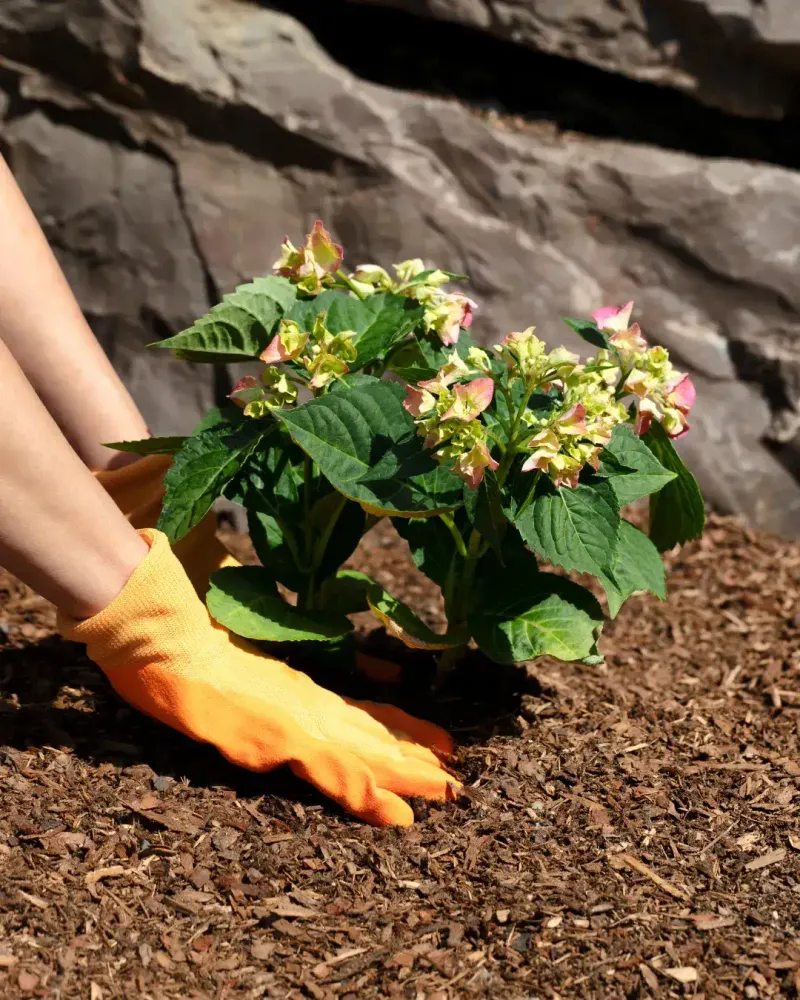
The clearest decision rule for fall is also the simplest: identify the plant first. If it is a confirmed new-wood type like smooth or panicle hydrangea, follow type-specific pruning guidance, which may include dormant-season cuts.
If it is an old-wood type or its identity is uncertain, leave the healthy stems alone and limit fall work to removing dead, diseased, or damaged wood.
Beyond pruning, the root zone deserves attention. A cool, evenly watered, well-drained root zone gives overwintering buds the best chance of surviving Arizona’s mild but unpredictable winters and the heat that returns quickly in spring.
Mulch over the root zone helps moderate soil temperature and slow moisture loss. Keep irrigation running through fall and winter on a reduced schedule rather than shutting it off entirely.
This approach improves the odds of preserving whatever buds the plant has already set, but no care step guarantees flowers. Arizona weather, unexpected frost, intense early heat, and plant stress can still affect the outcome regardless of what you do in fall.
The more useful habit is to evaluate the plant’s identity, site conditions, and overall health before making any structural cut, then let one full flowering cycle show you what the plant can actually do in your yard. A hydrangea that blooms well in a protected Phoenix or Tucson microclimate earned that result through the right site, not just the right pruning calendar.